


The Ultimate Guide to Subaru Off-Road Mods
It’s easy to get overwhelmed by photos of heavily modified Subarus online. With endless forums and product pages, where do you even begin? A successful build doesn't come from bolting on every part you see—it comes from a smart plan. This guide cuts through the noise to give you a straightforward roadmap. We’ll focus on the most effective Subaru off-road mods that offer the best bang for your buck. By prioritizing foundational changes first, you'll spend your money wisely and build a rig that’s both capable and reliable on the trail.
Key Takeaways
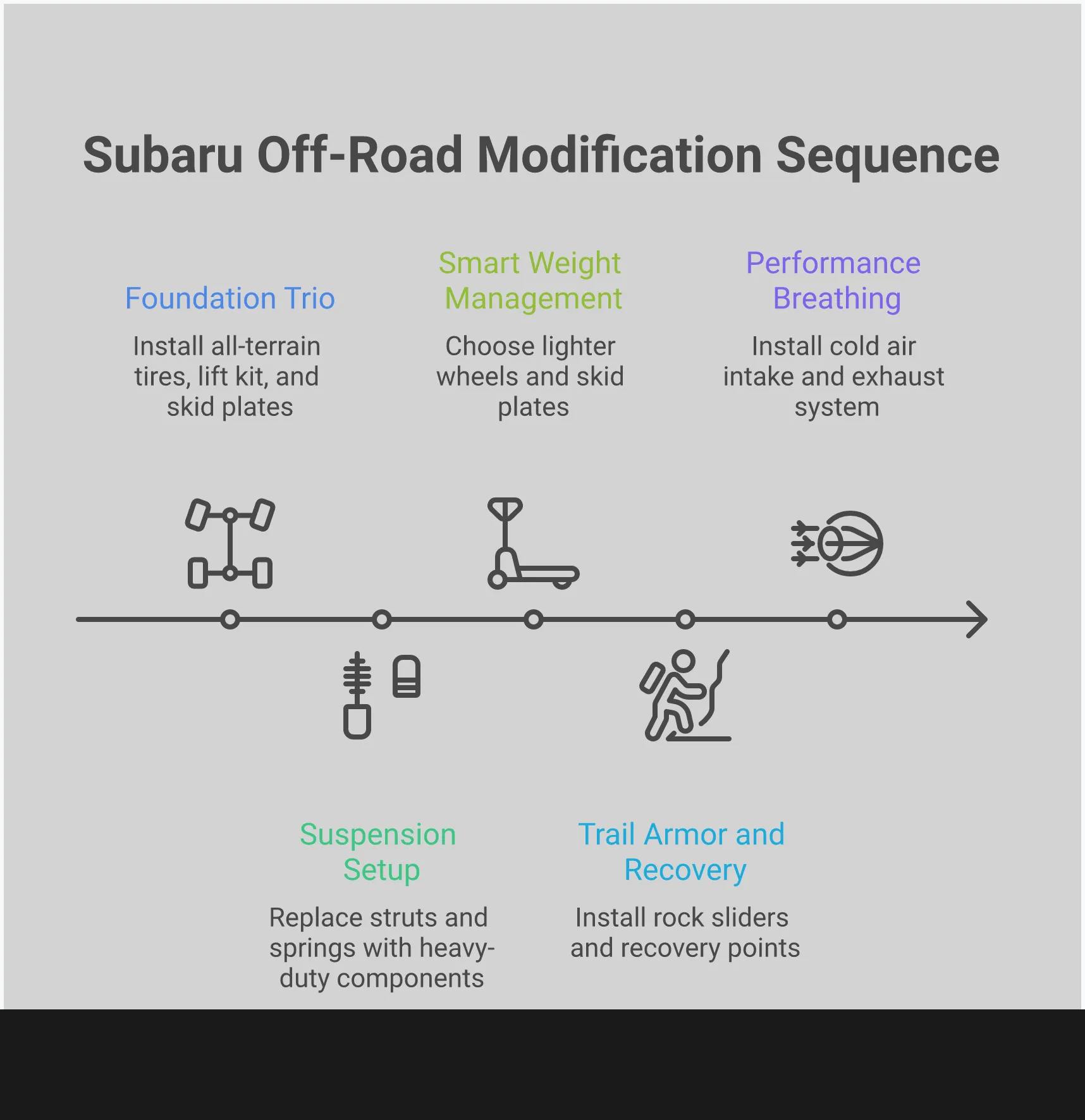
- Start with the Foundational Trio: The most effective first steps for any off-road build are upgrading to all-terrain tires for traction, installing a modest lift for clearance, and adding skid plates for underbody protection.
- Build for Your Reality, Not Just the Trail: Remember that every modification impacts daily driving. Select parts that strike a practical balance between off-road capability and the on-road comfort, handling, and fuel efficiency you rely on every day.
- Manage Weight to Maintain Performance: Excess weight is the enemy of a nimble Subaru. Prioritize strong yet lightweight components and be mindful of your vehicle's payload capacity to preserve the handling, braking, and reliability your car was designed for.
Why Subarus Are a Great Platform for Off-Roading
Subarus have a well-earned reputation for being dependable, practical, and fun to drive, but their real magic lies in the engineering that makes them surprisingly capable off the pavement. It’s not just about marketing; the core design of these vehicles provides a fantastic starting point for an off-road or overlanding build. Long before the Wilderness trim became popular, owners were hitting the trails, relying on the brand’s signature features that deliver stability and control when conditions get rough. The combination of a low center of gravity and a smart all-wheel-drive system creates a vehicle that feels planted and confident on loose surfaces, giving you a solid foundation to build upon with targeted modifications.
Symmetrical All-Wheel Drive for Superior Traction
At the heart of every Subaru is its Symmetrical All-Wheel Drive system. Unlike many AWD systems that only send power to the rear wheels when the front ones slip, Subaru’s system constantly powers all four wheels. This continuous engagement provides immediate grip and balanced power distribution, which is a game-changer on unpredictable terrain. Whether you’re navigating a muddy trail, a gravel road, or a snowy pass, the system works to maintain maximum traction without any delay. This proactive approach to control means you can drive with more confidence, knowing the vehicle is always working to keep you stable and moving forward, letting you focus on picking your line.
The Low Center of Gravity of the Boxer Engine
Another key piece of the puzzle is the Subaru Boxer engine. Instead of pistons moving up and down like in a traditional engine, the Boxer’s pistons move horizontally, creating a flat, low-profile design. This allows the engine to be mounted lower in the chassis, significantly dropping the vehicle's center of gravity. On the trail, this translates to exceptional stability and reduced body roll, especially when cornering on uneven ground or navigating side slopes. This inherent balance is something you can feel from the driver's seat; the car feels more planted and less top-heavy than many other SUVs, giving you a stable platform that’s less prone to tipping and more responsive to your inputs.
X-MODE® and Hill Descent Control Explained
Modern Subarus come equipped with X-MODE®, an intelligent driving feature that enhances the Symmetrical AWD system for tackling challenging terrain. When activated, X-MODE® optimizes engine output, transmission, and braking to improve traction on low-grip surfaces. It essentially tells the car you’re heading off-road and need more control. Many models feature a dual-function X-MODE® with specific settings for "Snow/Dirt" and "Deep Snow/Mud." Paired with Hill Descent Control, which automatically manages braking on steep declines, these features allow you to navigate tricky obstacles with precision and safety, making even a stock Subaru remarkably capable right out of the box.
Choosing the Right Subaru Model for Your Adventures
While nearly any Subaru can handle a bit of dirt, some models are better suited for specific types of adventures. Your ideal platform depends on your priorities, whether that’s maximizing cargo space for long trips, needing a nimble vehicle for tight trails, or bringing the whole family along. Each model offers a unique blend of size, capability, and comfort, so it’s worth considering how you’ll use your vehicle both on and off the road. From the spacious Outback to the agile Crosstrek, there’s a Subaru that fits your lifestyle and can serve as the perfect base for your dream build. The key is to match the vehicle’s strengths to your adventure goals.
The Outback: Stable, Spacious, and Capable
The Outback has long been a favorite for adventurers, and for good reason. It strikes an excellent balance between the comfort of a wagon and the capability of an SUV. With ample cargo space, it’s perfect for hauling camping gear, bikes, or supplies for an extended overland trip. The longer wheelbase contributes to a smooth, stable ride on rough forest service roads and highways alike. Standard X-MODE® and generous ground clearance make it ready for moderate trails right from the dealership, providing a solid and versatile platform that’s equally at home on a cross-country road trip or a weekend escape to a remote campsite.
The Forester: Unmatched Visibility for Trail Spotting
If you prioritize visibility and a commanding view of the trail ahead, the Forester is an outstanding choice. Its tall, boxy design and large windows offer an almost panoramic view from the driver’s seat, making it easier to spot obstacles and choose the best line through technical sections. This design also creates a cavernous interior with impressive cargo capacity, especially with the rear seats folded down. The Forester’s upright seating position and clear sightlines inspire confidence when navigating tricky terrain. For those looking to build a capable rig, we offer a range of Forester upgrades designed to enhance its natural strengths for any adventure.
The Crosstrek: Nimble for Narrow Trails
The Crosstrek is the compact adventurer of the Subaru lineup. Its smaller footprint and lighter weight make it incredibly nimble and agile, perfect for exploring tight, winding trails where larger vehicles might struggle. Despite its size, it boasts an impressive 8.7 inches of ground clearance, putting it on par with many larger SUVs. The Crosstrek feels sporty and responsive, making it fun to drive on any surface. It’s an ideal platform for those who want off-road capability without the bulk of a traditional SUV. To make it even more formidable, check out our performance-focused Crosstrek parts that help you get the most out of this versatile vehicle.
The Ascent: The Ultimate Family Off-Roader
For those who need to bring the whole crew along, the Ascent is Subaru’s three-row SUV that blends family-hauling duty with legitimate off-road credentials. It comes standard with Symmetrical AWD and X-MODE®, and its robust chassis can handle the demands of a fully loaded vehicle on unpaved roads. While it’s the largest vehicle in the lineup, it still offers the stability and control Subaru is known for. The Ascent proves that you don’t have to sacrifice adventure when your family grows, offering plenty of space for kids, gear, and everything you need for a memorable trip into the backcountry.
What Is the Subaru Wilderness Trim?
For drivers who want maximum capability straight from the factory, Subaru created the Wilderness trim. Available on the Outback, Forester, and Crosstrek, the Wilderness is more than just an appearance package; it’s a purpose-built off-road machine with significant hardware upgrades. These vehicles are engineered for those who plan to spend serious time on the trail, featuring increased ground clearance, more aggressive tires, and advanced drivetrain technology. The Wilderness trim represents Subaru’s commitment to adventure, offering a turnkey solution that’s ready for rugged exploration right off the showroom floor, while still providing a great platform for further customization with overlanding solutions.
Factory-Built for the Trail
The Wilderness models are designed from the ground up with exploration in mind. Subaru took its already capable platforms and systematically enhanced them for better off-road performance. This includes everything from retuned suspension for greater articulation and stability on rough terrain to reinforced roof rails capable of supporting a rooftop tent. Every upgrade is functional and integrated, ensuring the vehicle performs as a cohesive unit. This factory-backed approach gives you a highly capable and reliable rig that’s covered by a warranty, providing peace of mind as you push its limits on your adventures.
Key Wilderness Features and Specs
The Wilderness trim is defined by a specific set of upgrades that collectively improve its off-road performance. These enhancements go beyond aesthetics, directly addressing the physical demands of trail driving. From the suspension to the drivetrain, each component is chosen to increase capability and durability.
Ground Clearance and Off-Road Angles
One of the most significant upgrades on Wilderness models is the increased ground clearance, with all versions offering at least 9.2 inches. This extra height not only helps you clear rocks, ruts, and other obstacles but also improves the vehicle’s approach, breakover, and departure angles. These improved angles mean you can tackle steeper inclines and declines without scraping the front or rear bumpers, allowing you to navigate more aggressive terrain confidently.
Upgraded Drivetrain and Towing Capacity
Wilderness models feature an advanced version of X-MODE® with a specific setting for deep snow and mud, providing even more traction in the toughest conditions. The drivetrain is also revised with a different final-drive ratio, which improves low-end torque for better climbing ability. Additionally, these models often come with an increased towing capacity, making them a great choice for pulling a small off-road trailer or camper. These thoughtful drivetrain enhancements ensure you have the power and control needed when the trail gets challenging.
How a Wilderness Compares to a 4Runner or Wrangler
It’s important to set the right expectations for a Subaru Wilderness. While incredibly capable, it’s not designed to be a direct competitor to body-on-frame rock crawlers like the Toyota 4Runner or Jeep Wrangler. Instead, the Wilderness excels by offering a fantastic balance of off-road prowess and on-road comfort. It provides a smoother, more fuel-efficient daily driving experience than its truck-based counterparts while still being able to handle the vast majority of trails that most overlanders explore. It’s the perfect choice for someone who needs a practical daily driver during the week and a competent adventure rig on the weekend.
Upgrade Your Suspension for More Clearance
Your Subaru’s stock suspension is engineered for a smooth, comfortable ride on paved roads, which is perfect for daily commuting. But when you leave the asphalt behind, those same components can limit your vehicle's potential and leave its underbody vulnerable. Upgrading your suspension is one of the most effective ways to prepare your Subaru for the trail, serving as the foundation for any serious off-road build. A well-chosen setup gives you the ground clearance needed to clear rocks and ruts, improves handling on unpredictable surfaces, and creates the necessary space for larger, more capable tires. Without addressing the suspension first, other modifications simply can't deliver their full benefit.
Transforming your Subaru into a confident trail machine starts here. The goal is to create a system that is both resilient and flexible, allowing the vehicle to absorb harsh impacts while keeping the tires planted for maximum traction. This involves more than just making the car taller; it's about enhancing control and durability. Whether you're building a weekend adventure vehicle or a fully-equipped rig, a suspension overhaul will fundamentally change how your Subaru handles challenging terrain. From simple lifts that provide immediate clearance to comprehensive strut and spring replacements that refine performance, the right overlanding solutions will give you the confidence to explore further. Let's look at the key components you should consider upgrading to build a truly capable off-road Subaru.
Install a Lift Kit for Maximum Ground Clearance
One of the most direct ways to improve your Subaru's off-road capability is by installing a lift kit. This modification increases your vehicle's ride height, giving you more ground clearance to pass over rocks, logs, and other trail obstacles without damaging your undercarriage. For most Subaru models, a two-inch lift provides an excellent balance, offering a significant clearance gain without putting excessive strain on your CV joints and other drivetrain components. This added height is also a key enabler, giving you the room needed to fit larger all-terrain tires. Bigger tires further improve traction and your ability to conquer challenging terrain, making a lift kit a foundational mod for any serious Subaru Crosstrek upgrade plan.
Improve Handling with Upgraded Struts and Springs
While a lift kit raises your vehicle, upgraded struts and springs are what define its performance and handling on rough ground. Factory components are designed for comfort, not for absorbing the repeated, harsh impacts of off-roading. Aftermarket struts and heavy-duty springs provide better damping and support, which keeps your ride controlled and stable on uneven surfaces. Investing in high-quality performance parts ensures your suspension can handle the stress of the trail without fading or failing. This upgrade not only improves off-road handling but also enhances durability, giving you peace of mind when you're far from the nearest paved road. It’s a smart move for any build, from a modified Impreza to a trail-ready Forester.
Adjust Your Sway Bars for Better Articulation
Sway bars are designed to reduce body roll during cornering on the street, which is great for daily driving. Off-road, however, they can limit your suspension's ability to move freely. This independent wheel movement, known as articulation, is essential for keeping your tires in contact with the ground on uneven terrain, which is critical for maintaining traction. For maximum flexibility, many off-roaders use quick-disconnect end links or remove their sway bars entirely before hitting the trail. This allows each wheel to travel up and down independently, conforming to the terrain and keeping your Subaru moving forward. This is a popular modification for dedicated Subaru Forester upgrades aimed at tackling more technical trails.
Choose the Right Wheels and Tires for the Trail
After your suspension, your wheels and tires are the most critical components for off-road performance. They are your vehicle’s only connection to the ground, and making the right choice here will dramatically change your Subaru’s capability on any terrain. This is often one of the first and most impactful mods owners make when building a trail-ready rig. The key is to find the perfect balance between aggressive off-road traction and comfortable on-road manners, ensuring your vehicle is ready for any adventure.
When you start exploring different setups, you’ll find a huge community of builders who have tested countless combinations. The goal is to increase ground clearance, improve grip, and add durability without compromising the performance and handling that make a Subaru great. Properly selected wheels and tires work in harmony with your suspension lift to create a cohesive and capable package. This is a foundational part of any serious build, setting the stage for all your future overlanding solutions. Getting this combination right means you can confidently tackle more challenging trails, knowing your setup is built to handle the stress while maintaining the responsive feel you expect from your Subaru on the road.
All-Terrain vs. Mud-Terrain: Which Tire Is for You?
Your first big decision is the type of tire. For most Subaru builds, all-terrain (A/T) tires are the ideal choice. They offer a fantastic blend of on-road comfort and off-road grip, making them perfect for daily drivers that also see weekend trail duty. A/T tires feature a more aggressive tread pattern than stock tires, giving you better traction on dirt, gravel, and rock without being excessively loud on the highway. Popular options you’ll often see include the BFGoodrich KO2 and Falken Wildpeak A/T3W.
Mud-terrain (M/T) tires are a step up in aggression. They have large, widely spaced tread blocks designed to dig into soft surfaces like deep mud and sand. While they provide superior traction in extreme conditions, they come with trade-offs: they are heavier, louder on pavement, and wear faster. For the majority of Subaru owners, an M/T tire is overkill and the compromises in daily drivability aren’t worth it.
Why Wheel Size and Offset Matter
Choosing the right wheels is just as important as the tires. Many Subaru owners actually downsize their wheel diameter, for example, from a factory 18-inch wheel to a 17-inch wheel. This allows you to run a tire with a larger, thicker sidewall. A taller sidewall provides more cushion over rough terrain and gives you the ability to "air down"—or lower your tire pressure—for a wider footprint and significantly better traction on rocks and sand.
Wheel offset is another crucial factor. Offset determines how far your wheels stick out from the hub. The right offset is essential to prevent your new, larger tires from rubbing against your suspension components or fender liners, especially when turning or articulating the suspension. Getting the fitment right ensures you can use your vehicle’s full range of motion without any issues, which is especially important when paired with a 2-inch lift.
How Wheel Weight Impacts Your Ride
Weight is your enemy, especially when it comes to wheels and tires. This is called "unsprung weight"—the mass of everything not supported by the suspension—and it has a major effect on your vehicle’s handling, acceleration, and braking. Heavy-duty tires designed for large trucks are often too heavy for a nimble Subaru crossover. This extra rotating mass can strain your drivetrain, hurt fuel economy, and make the ride feel sluggish and harsh.
When choosing your setup, always look for the lightest wheel and tire combination that meets your durability needs. This principle extends to your entire build. While it’s tempting to add heavy-duty bumpers, racks, and other gear, every pound you add detracts from the fuel economy, comfort, and safety that likely drew you to a Subaru in the first place. A well-thought-out build focuses on adding capability through smart, lightweight performance parts rather than just bolting on heavy armor.
Armor Up: Protecting Your Subaru on the Trail
Once you’ve improved your Subaru’s capability with suspension and tires, the next logical step is to protect your investment. The factory components are designed for the pavement, and a single misplaced rock on the trail can lead to catastrophic damage and a very expensive tow. Adding armor is about giving your vehicle the resilience it needs to handle unpredictable terrain, so you can focus on the adventure instead of worrying about a punctured oil pan.
While it’s true that armor adds weight, the trade-off is well worth it for anyone serious about off-roading. Strategic protection shields the most vulnerable and critical parts of your vehicle, from the engine and transmission to the rocker panels. Think of it as insurance for the trail. Investing in quality protection ensures your Subaru can take a hit and keep going, allowing you to explore with confidence. Our overlanding solutions are designed to provide this peace of mind without unnecessary bulk.
Shield Your Underbody with Skid Plates
The plastic splash guard under your engine from the factory is not a skid plate. It’s designed to stop water and road grime, not a sharp rock or solid tree stump. A true skid plate is one of the most critical pieces of armor you can install. Made from steel or aluminum, it bolts to your vehicle's frame to shield vital components like the oil pan, transmission, and front differential. This single modification can be the difference between driving home and calling for a rescue. Protecting your vehicle’s underbody is a fundamental part of any off-road build and should be one of your first priorities.
Guard Your Doors and Sills with Rock Sliders
If you plan on tackling technical, rocky trails, rock sliders are non-negotiable. They are heavy-duty steel rails that mount directly to your vehicle's frame and run along the sides, just below the doors. Their job is to protect your rocker panels from being crushed by rocks and other obstacles. Unlike side steps, which are often mounted to the body and can’t support the vehicle's weight, rock sliders are built to take the full impact. They allow you to "slide" over or pivot around obstacles that would otherwise cause significant body damage, making them essential for serious trail driving.
Upgrade Bumpers for Durability and Recovery
Stock bumpers are primarily plastic covers designed for minor street collisions. Aftermarket off-road bumpers offer far more durability and utility. They can improve your approach and departure angles, allowing you to tackle steeper obstacles without scraping. Many also provide mounting points for winches and auxiliary lighting. However, it's important to be mindful of how much weight you add, as heavy bumpers can affect handling. Equally important are dedicated recovery points. The factory tie-downs aren't rated for the dynamic forces of a real recovery. Proper, frame-mounted recovery points are a crucial safety feature for getting you or a friend unstuck safely.
Get More Power: Engine and Drivetrain Upgrades
While suspension and tires get you over obstacles, your engine and drivetrain are what power you through them. Getting the most out of your Subaru’s boxer engine on the trail isn’t just about adding raw horsepower; it’s about improving efficiency, responsiveness, and control. When you’re tackling a tricky rock garden or powering up a steep, loose incline, you need your vehicle to respond precisely to your inputs. The right engine and drivetrain modifications ensure your Subaru delivers power smoothly and effectively, right when you need it.
These upgrades help your engine breathe better and transfer power to the ground more efficiently. Think of it as giving your vehicle the athletic conditioning it needs to perform at its peak in demanding off-road environments. From simple bolt-on parts that improve airflow to more involved drivetrain adjustments that enhance traction, each modification plays a role in creating a more capable and reliable off-road machine. By focusing on these core components, you’ll build a rig that’s not only fun to drive but also dependable when you’re far from paved roads. Explore our performance parts to see how you can get started.
Breathe Easier with a Cold Air Intake
One of the most straightforward yet effective engine mods is installing a cold air intake (CAI). Your engine creates power by mixing air and fuel, and the cooler and denser the air, the more efficient the combustion. A stock intake system is designed for quiet, everyday driving, but a performance CAI is built to pull in cooler air from outside the hot engine bay. This simple change helps your engine breathe more freely, reducing restriction and improving throttle response. On the trail, that translates to more immediate power when you press the pedal, which is crucial for clearing obstacles without losing momentum.
Improve Flow with an Upgraded Exhaust System
If a cold air intake helps your engine inhale, a performance exhaust system helps it exhale. A stock exhaust is often restrictive to keep the car quiet, but this creates back pressure that forces the engine to work harder. By upgrading to a high-flow exhaust, you allow exhaust gases to escape more easily. This reduction in back pressure frees up horsepower and torque, giving you more grunt to climb steep grades or pull through thick mud. While the aggressive sound is a definite plus, the real benefit for off-roading is the noticeable improvement in engine efficiency and power delivery across the RPM range, especially for models like the Subaru WRX.
Fine-Tune Your Drivetrain for the Trail
For serious off-road performance, look to your drivetrain. Your differentials are responsible for sending power to the wheels, but a stock differential can sometimes send power to the wheel with the least traction—not ideal when one tire is spinning in the air. Upgrading to a limited-slip or locking differential forces both wheels on an axle to turn together, ensuring you have traction even on uneven surfaces. Similarly, transmission modifications can fine-tune how power is delivered, improving your vehicle’s ability to handle the torque needed for challenging terrain. These are key components in our overlanding solutions for a reason: they provide the control and grip you need to conquer the trail.
Essential Lighting and Recovery Gear for Any Trail
Once your Subaru is mechanically prepared for the trail, it’s time to focus on the equipment that gets you through unexpected challenges. Off-roading and overlanding are all about self-reliance, and that means being equipped for poor visibility, getting stuck, and communicating when you’re far from cell service. The right lighting, recovery gear, and communication tools aren’t just accessories; they are essential safety systems that ensure you can handle whatever the trail throws at you.
Think of these mods as your adventure insurance policy. An LED light bar can turn a treacherous night trail into a clearly lit path, while a basic recovery kit can mean the difference between a minor delay and a trip-ending problem. Equipping your vehicle with these tools provides peace of mind, allowing you to push your limits and explore more remote areas confidently. These additions are fundamental to any serious overlanding solution and are just as crucial as your suspension or tires when you’re miles from the nearest paved road.
Light Up the Night with an LED Light Bar
Stock headlights are designed for the street, not for illuminating a dark, uneven trail. Installing an LED light bar on your Subaru is one of the most effective ways to improve nighttime visibility and safety. Modern LED bars throw a massive amount of light, helping you spot obstacles, navigate tight turns, and see trail markers long before your factory lights would. They are also incredibly durable and energy-efficient, with lifespans that can exceed 50,000 hours. When choosing a light bar, make sure it’s compliant with local regulations, as some states have specific rules for on-road use.
Your Must-Have Recovery Gear Checklist
It’s not a matter of if you’ll get stuck, but when. Having the right recovery gear on hand is non-negotiable for any off-road trip. Your essential kit should include a quality tow strap (without metal hooks), a set of recovery boards, and a sturdy shovel. These simple tools can help you self-recover from mud, sand, or snow without needing another vehicle. Learning how to use them safely is just as important as owning them, so practice in a controlled environment before you hit a challenging trail. This preparation ensures you can handle common recovery situations with confidence.
Stay Connected with the Right Comms Setup
Your smartphone is not a reliable communication device once you leave populated areas. For safety and coordination, you need a dedicated communication system. A CB radio is a classic, simple choice for vehicle-to-vehicle communication within a group. For longer range, many off-roaders are turning to GMRS or ham radios, which offer clearer signals over greater distances, though some may require a license to operate. Mounting a radio in your Subaru ensures you can stay in contact with your convoy or call for help in an emergency, providing a critical link to the outside world.
Which Mods Give You the Best Bang for Your Buck?
Building your dream off-road Subaru doesn't have to drain your bank account. While the world of modifications is vast, some upgrades deliver a much bigger impact than others, especially when you're starting out. The key is to be strategic and focus on the parts that provide the most significant gains in capability and protection. Think of it as building a solid foundation for your rig. By prioritizing these high-impact upgrades, you can immediately transform how your Subaru performs when the pavement ends. It’s about making smart, incremental changes that give you the confidence to tackle more challenging terrain. From there, you can always add more specialized performance parts as your skills and ambitions grow.
High-Impact Upgrades That Won't Break the Bank
If you can only make two changes to your stock Subaru, make them tires and skid plates. A quality set of all-terrain (A/T) tires is arguably the single most effective off-road modification you can make. They provide the traction you need to grip loose dirt, mud, and rocks, completely changing your vehicle's limits. Unlike standard road tires, their durable construction also offers better resistance to punctures on the trail. Next, protect your vehicle’s vulnerable underbelly. Your oil pan, transmission, and rear differential are all susceptible to damage from rocks and other obstacles. A set of skid plates acts as armor, giving you peace of mind and preventing a costly, trip-ending disaster. It’s one of the smartest overlanding solutions you can invest in for long-term durability.
Our Top Recommendations for New Builds
Once you have tires and protection sorted, a modest lift kit is the next logical step. A one- to two-inch lift provides a significant improvement in ground clearance, allowing you to clear obstacles more easily without drastically altering your vehicle's center of gravity or ride quality. This extra height is often all you need to prevent getting hung up on ruts and rocks, making it a popular choice for Subaru Crosstrek upgrades and other models. Beyond that, consider practical additions that enhance utility. Mud flaps are great for protecting your paint and side panels from flying gravel and debris, keeping your Subaru looking good. A roof rack is another excellent investment, providing a platform to carry extra gear, recovery tools, or a rooftop tent without sacrificing interior space.
How to Weigh Cost vs. Performance Gains
When you look at the numbers, the value of starting with tires and skid plates becomes clear. A good set of all-terrain tires might cost around $1,400, while a full set of skid plates can be had for about $550. For under $2,000, you’ve fundamentally improved your vehicle’s off-road capability and durability. These two upgrades alone will allow you to tackle trails that would be impossible in a stock vehicle. It’s also crucial to consider how weight affects performance. Every pound you add impacts your Subaru's handling, braking, and fuel efficiency. That’s why it’s important to choose lightweight yet durable parts. Prioritizing strong, light armor and avoiding unnecessarily heavy accessories will help maintain the nimble and responsive feel that makes Subarus so much fun to drive, both on and off the road.
How Do Off-Road Mods Affect Daily Driving?
Modifying your Subaru for the trail is exciting, but it’s important to remember that most of us still use our cars for daily commutes, grocery runs, and road trips. The same upgrades that make your vehicle a beast on the dirt can change how it behaves on the pavement. Understanding these trade-offs is key to building a capable rig that you still love to drive every day. It’s all about finding the right balance between off-road prowess and on-road comfort. When you choose your parts wisely, you can get the best of both worlds without sacrificing safety or drivability.
Making informed decisions about your build ensures your modified Subaru remains a reliable and enjoyable partner for all your adventures, both on and off the beaten path. Let's look at how off-road mods can impact your daily drive.
Will Your Handling and Ride Quality Change?
Adding off-road components will change your Subaru’s handling dynamics. A lift kit raises the center of gravity, which can lead to more body roll in corners. The biggest change, however, often comes from heavy wheels and tires. Large, aggressive tires add significant unsprung weight—weight that isn’t supported by the suspension. This can make the ride feel harsher over bumps and slow down your acceleration and braking.
Many overlanding solutions, like steel bumpers, winches, and roof racks, also add considerable weight. This can strain your suspension and affect the vehicle's balance. The goal is to add capability, not just looks, so choosing thoughtfully engineered parts designed for your specific model is crucial for maintaining a comfortable and safe ride.
What to Expect for Your Gas Mileage
It’s a simple fact: off-road modifications typically reduce fuel economy. Heavier, larger tires with aggressive tread patterns create more rolling resistance, forcing your engine to work harder to move the car. This change alone can lower your MPG by a noticeable amount. For example, heavy all-terrain tires can reduce a Crosstrek's fuel economy by as much as 10%.
When you add the extra weight and reduced aerodynamics from bumpers, skid plates, and roof-mounted gear, the impact on your fuel consumption becomes even greater. While a drop in MPG is an expected trade-off for increased capability, you can mitigate it by selecting lightweight performance parts and being mindful of how much gear you carry on a daily basis.
Will Mods Void Your Subaru Warranty?
Your Subaru was designed with specific safety features, like crumple zones and airbag sensors, that work together in a crash. Adding aftermarket parts, especially heavy-duty bumpers, can interfere with these systems if they aren't engineered correctly. These components are rarely crash-tested on crossover platforms, which means they could alter how your vehicle absorbs impact and protects you.
Furthermore, overloading your vehicle beyond its payload capacity can cause premature wear or failure of suspension and drivetrain components. It’s also important to know that some modifications could potentially void your manufacturer's warranty. This is why sourcing parts from a reputable manufacturer that understands Subaru engineering is so important—it ensures a proper fit and helps maintain your vehicle’s integrity.
How to Maintain Your Modified Subaru
Adding off-road mods is an exciting process, but it’s only half the battle. Proper maintenance is what keeps your modified Subaru reliable and ready for any adventure. Think of it as protecting your investment. After installing high-quality performance parts, you’re putting new demands on your vehicle. A consistent maintenance routine ensures every component works together seamlessly, preventing small issues from turning into major problems when you’re miles from the nearest road.
A well-maintained rig doesn't just perform better; it's also safer. Regular checks help you catch wear and tear before it leads to a failure on the trail. By staying on top of maintenance, you can confidently push your Subaru to its limits, knowing it’s been cared for with the same attention to detail that went into its modification. This isn't about being overly cautious; it's about being smart and prepared so you can focus on the adventure ahead without worrying about mechanical trouble.
Start with a Pre-Modification Inspection
Before you even think about installing a lift kit or new tires, give your Subaru a thorough inspection. Starting with a healthy vehicle is the most important step. You want to build on a solid foundation, not cover up existing problems. Check all your essential fluids, including oil, coolant, and transmission fluid. Take a look at your filters, belts, and spark plugs to ensure they’re in good shape. On older models, be particularly vigilant about checking for rust on the frame and underbody. Addressing these basic maintenance items first ensures your car is ready for the added stress of overlanding solutions and off-road driving.
Your Post-Modification Maintenance Checklist
Once your mods are installed, your factory maintenance schedule is no longer the whole story. Modified components require more frequent attention. Create a new routine that includes checking the torque on all new bolts after your first few hundred miles, especially on suspension parts. Regularly inspect your tires for uneven wear, which could indicate alignment issues from a new lift. You should also check your CV joints and boots for tears, as altered suspension angles can put more stress on them. Always carry essential recovery gear and understand your Subaru’s limits. It’s a capable machine, but proactive checks are what will keep it that way.
Avoid These Common Maintenance Mistakes
One of the biggest mistakes Subaru owners make is adding too much weight. Tires designed for heavy-duty trucks are often too heavy for a Subaru’s unibody chassis. This unsprung weight makes your ride rougher, slows acceleration, and increases stopping distances. The same goes for heavy steel bumpers, winches, and oversized roof racks. All that extra weight can quickly exceed your vehicle’s payload capacity, especially once you add passengers and gear. Stick with parts specifically designed for your model, like our lightweight WRX upgrades, to maintain the balance and performance your Subaru was built for.
What Mistakes Should You Avoid When Modifying Your Subaru?
Modifying your Subaru is an exciting process, but it's easy to make mistakes that can compromise performance, safety, and even your vehicle's lifespan. The goal is to build a more capable machine, not one that's weighed down by poor choices. By thinking through your build and understanding the "why" behind each upgrade, you can avoid common pitfalls and create a vehicle that’s truly ready for any adventure. Let's walk through a few key areas where things can go wrong and how you can get them right from the start. Making informed decisions now will save you from headaches and costly corrections down the road, ensuring every dollar you spend actually improves your driving experience.
Ignoring Your Vehicle's Weight Limits
Every vehicle has a specific payload capacity, which is the maximum weight it can safely carry, including passengers, cargo, and modifications. It’s tempting to add heavy-duty bumpers, winches, and roof-top tents, but this weight adds up fast. Exceeding your Subaru's payload limit puts immense stress on the suspension, brakes, and chassis, leading to premature wear or even component failure on the trail. It can also void your warranty. Before you buy any heavy gear, check your owner's manual for your vehicle's payload capacity and keep a running tally of the weight you're adding. Thoughtfully designed overlanding solutions often prioritize strength-to-weight ratios to help you stay within a safe limit.
Choosing Incompatible or Low-Quality Parts
Not all aftermarket parts are created equal. A common mistake is choosing modifications based on aesthetics rather than function. While a certain look might be appealing, if the part isn't engineered for the demands of off-road driving, it can hurt your vehicle's performance and safety. Always prioritize high-quality, purpose-built components designed for your specific model, whether it's a Crosstrek or a Forester. Investing in well-engineered performance parts ensures that each upgrade contributes to your Subaru's capability and durability, rather than becoming a weak link when you're far from home. Do your research, read reviews, and choose parts from reputable manufacturers who understand the Subaru platform.
Forgetting About Weight Distribution and Balance
How and where you add weight is just as important as how much weight you add. Loading heavy gear onto a roof rack, for example, raises your vehicle's center of gravity. This can make your Subaru feel less stable in corners and more susceptible to tipping on off-camber trails. It also increases wind resistance, which can negatively impact your fuel economy. When planning your build, think about how each modification will affect your vehicle's balance. A well-designed suspension system can help manage these changes, but it's always best to keep heavy items as low and centered as possible to maintain predictable and safe handling characteristics.
Related Articles
- Subaru Overland Build 101: The Complete Guide
- The Ultimate Guide to Subaru Crosstrek Offroad Mods
- Ultimate Guide: Best Forester Off Road Mods
Frequently Asked Questions
If I can only afford one upgrade right now, what should it be? Without a doubt, your first investment should be a quality set of all-terrain tires. They are the single most impactful modification for off-road capability, as they are your vehicle's only point of contact with the trail. A good set of A/T tires will provide the traction and durability needed to confidently handle dirt, rock, and mud, transforming what your stock Subaru is capable of. While a lift kit is great, it's the tires that do the real work of gripping the terrain.
How much of a lift is too much for a Subaru? For most Subaru models like the Crosstrek or Forester, a two-inch lift is the sweet spot. This height provides a significant gain in ground clearance without severely compromising the vehicle's suspension geometry. Going higher than two inches can put excessive strain on your CV joints and axles, leading to premature wear and potential failure. A taller lift often requires more extensive and costly modifications, like subframe spacers and custom control arms, to correct the geometry and maintain reliability.
Will adding armor and bigger tires really hurt my fuel economy? Yes, you should expect a noticeable decrease in your fuel economy. Larger, heavier all-terrain tires create more rolling resistance, which means your engine has to work harder to move the vehicle. The added weight from skid plates, bumpers, and other gear also contributes to this. Depending on your specific setup, it's common to see a drop of 2-4 MPG. It's a direct trade-off for the added capability and protection you gain on the trail.
Do I need to re-tune my engine after installing an intake and exhaust? While your vehicle will run without a tune after installing a cold air intake and a performance exhaust, you won't be getting the full benefit of those parts. A professional engine tune adjusts your engine's fuel and timing parameters to work with the increased airflow. This not only maximizes the horsepower and torque gains from your new parts but also ensures your engine is running efficiently and safely under the new conditions.
Can I still take my modified Subaru through an automatic car wash? You should be very cautious with automatic car washes after modifying your vehicle. Roof racks, LED light bars, and other exterior accessories can easily get snagged and damaged by the large rotating brushes. Additionally, if you've installed wider wheels and tires, they may not fit properly in the guide rails, which could damage your wheels. A touchless car wash or washing by hand is a much safer option to protect your investment.