

Subaru Impreza WRX 02: The Ultimate Buyer's Guide
For many enthusiasts, the 2002 WRX isn't just a car to be driven; it's a canvas waiting for an artist. Its robust EJ205 engine and rally-bred chassis make it one of the most rewarding project car platforms available today. The aftermarket support is immense, allowing you to build a car that perfectly suits your vision, whether for the track, a winding back road, or daily driving fun. If you see the subaru impreza wrx 02 as the foundation for your next build, this article is for you. We’ll explore the most effective performance parts, essential reliability modifications, and the smartest way to unlock its true potential.
Key Takeaways
- A True Driver's Car: The 2002 WRX is a legend because it delivers a raw, unfiltered driving experience. Its combination of a turbocharged boxer engine and Symmetrical All-Wheel Drive creates a unique, rally-bred character that is still thrilling today.
- Inspect Key Weak Points: Before buying, focus your inspection on known issues. Confirm the front control arm recall was performed, listen for transmission grinding, and check if the original up-pipe has been replaced to avoid potential turbo failure.
- Prioritize Smart Upgrades: The WRX is an excellent platform for performance parts. For the best results, start with foundational modifications like a professional ECU tune, suspension upgrades, and a high-flow exhaust to build a powerful and reliable car.
What Makes the 2002 WRX a Legend?
When the Subaru Impreza WRX landed in North America in 2002, it wasn't just another car release; it was a seismic event for enthusiasts. For the first time, drivers could get their hands on a street-legal machine with genuine rally DNA without paying a premium price. The "Bugeye" WRX, as it was affectionately nicknamed for its round headlights, delivered a potent combination of turbocharged power, all-wheel-drive grip, and a platform ripe for modification. It was an affordable performance car that could embarrass more expensive rivals on a winding road or a gravel track, making high performance accessible to a whole new generation of drivers.
This car brought a raw, unfiltered driving experience to the masses. Its success was built on a simple but effective formula: a punchy boxer engine, a robust drivetrain, and a chassis that begged to be pushed. The 2002 WRX wasn't just about straight-line speed; it was about the confidence it inspired in corners and its ability to perform in any weather condition. This blend of practicality and performance is why, decades later, it remains a celebrated icon in the automotive world and a favorite canvas for tuners and builders looking to create something truly special with performance parts. It established a legacy that future WRX models would build upon, but the original Bugeye holds a special place in the hearts of many.
Under the Hood: The Turbocharged EJ205 Engine
The heart of the 2002 WRX is its turbocharged 2.0-liter EJ205 engine. This boxer motor produces 227 horsepower and 217 lb-ft of torque, delivering a thrilling surge of acceleration once the turbo spools up past 3000 rpm. While there's a noticeable "turbo lag" at lower revs, the rewarding kick that follows is a defining part of the car's character. The engine is also famous for its distinct rumble, a sound that is instantly recognizable to any Subaru fan. It’s a powerplant with a personality, offering a fantastic foundation for those looking to add more power through engine tuning services and thoughtful upgrades.
The Symmetrical All-Wheel Drive Advantage
One of the key features that sets the WRX apart is Subaru's Symmetrical All-Wheel Drive system. Unlike many part-time systems of the era, this setup provides full-time power to all four wheels, dramatically improving traction and stability. On the road, this translates to incredible grip when accelerating out of tight corners and a feeling of sure-footedness on wet or loose surfaces. This rally-bred technology gives the WRX its playful yet predictable handling, allowing skilled drivers to explore its limits with confidence. It’s this exceptional drivetrain that makes a set of Subaru WRX upgrades, like suspension and tires, so effective at transforming the car’s performance.
On the Road: Acceleration and Handling
The combination of the EJ205 engine and Symmetrical AWD makes the 2002 WRX a joy to drive. It can sprint from 0 to 60 mph in under six seconds, which is still impressive today. The car feels nimble and responsive, with light, precise steering that gives you excellent feedback from the road. The five-speed manual gearbox is known for its smooth and direct shifts, further connecting you to the driving experience. Whether you're navigating city streets or carving up a mountain pass, the WRX delivers an engaging and visceral ride. It’s a car that constantly communicates with the driver, making every trip an adventure.
How Does the 2002 WRX Stack Up Against Its Rivals?
The 2002 WRX didn't just appear out of nowhere; it landed in a competitive field of sport compacts, each with its own loyal following. To truly appreciate what made the "Bugeye" so special, it helps to see how it measured up against the other key players of its time. From its legendary rivalry with Mitsubishi to its value proposition against front-wheel-drive heroes, the WRX carved out a unique space in the automotive world. Its performance wasn't just about numbers on a spec sheet; it was about a distinct driving experience rooted in a championship-winning pedigree.
WRX vs. Mitsubishi Lancer Evolution VIII
The most iconic battle was undoubtedly the Subaru Impreza WRX And STI VS. Mitsubishi Lancer Evolution. While the Evo VIII arrived a bit later, the rivalry was already cemented. The Evo was often seen as the sharper, more precise instrument, a car that felt incredibly grippy and explosive but could be prone to oversteer if pushed too hard. In contrast, the WRX was celebrated for being more playful and forgiving at the limit. Drivers found the WRX more fun to slide through corners, even if it sometimes felt like it lacked a bit of the Evo's raw punch. This difference in character is what defined one of the greatest rivalries in modern car history.
Measuring Value Against the Ford Focus SVT and Honda Civic Si
While the Evo was its direct rival in spirit, the WRX also competed against front-wheel-drive darlings like the Ford Focus SVT and Honda Civic Si. Here, the Subaru’s value was undeniable. It brought symmetrical all-wheel drive and a turbocharged engine to a price point dominated by naturally aspirated, front-wheel-drive cars. The WRX was consistently praised for being incredibly fun to drive and delivering impressive performance, with one long-term test noting it could outperform more expensive vehicles. For enthusiasts seeking all-weather capability and easily accessible power, the WRX was in a class of its own.
Its Unmistakable Rally Heritage
What truly set the WRX apart was its authentic rally DNA. The 2002 model marked the first time this high-performance car, famous for its success in the World Rally Championship, was available in the United States. This wasn't just a marketing gimmick; it was engineered into the car's soul. The symmetrical all-wheel-drive system was designed to let the car slide sideways in a controlled, predictable manner, capturing the essence of its rally-car appeal. This heritage gave the WRX a level of credibility and character that its rivals simply couldn't match, creating a legacy that continues with today's Subaru WRX upgrades.
What Common Issues Should You Look For?
The 2002 WRX is a tough, rally-bred machine, but even legends have their weak spots. After two decades on the road, these cars have a well-documented list of potential issues that any prospective buyer should know about. Going into a purchase with your eyes open is the best way to find a solid car and avoid inheriting someone else's problems. Think of this as your pre-flight checklist. Knowing what to look for will help you assess the car's condition, negotiate a fair price, and plan for any necessary maintenance or upgrades down the line.
Many of these common problems are also opportunities. A worn-out component can be the perfect excuse to install a high-performance part that makes your WRX even better. For example, a failing stock up-pipe is the ideal reason to swap in a more durable, better-flowing aftermarket piece. This mindset transforms potential headaches into planned improvements. Whether you're inspecting a stock example or one with a long list of modifications, paying close attention to these specific areas will give you a clear picture of the car's health. It helps you understand what it will take to keep it running strong for years to come, ensuring your new project car is a source of joy, not constant frustration.
The Front Control Arm Safety Recall
First things first: safety. One of the most critical issues for the 2002 WRX is a factory recall on the front lower control arms. Due to potential rust and corrosion in certain environments, the control arm could fail, which in the worst-case scenario, might lead to the front wheel detaching from the car. This is a serious concern, so it should be the first thing you verify. Ask the seller for the vehicle's VIN and contact a Subaru dealership to confirm whether the recall work has been completed. If it hasn't, you should factor in the time and effort to get it done immediately after purchase.
Known Transmission and Shifting Problems
The original 5-speed manual transmission in the 2002 WRX is known for being a bit delicate, earning it the nickname "glass transmission" among some enthusiasts. A common complaint is a crunching or grinding noise when shifting, particularly when downshifting from second to first gear. This issue can start to appear after about 30,000 miles and often gets worse over time. During your test drive, make a point to shift through all the gears, both up and down. Pay close attention to how the shifter feels and listen for any unusual noises. A transmission that feels vague or noisy could be a sign of expensive repairs down the road.
Potential Up-Pipe Catalytic Converter Failure
A major mechanical weak point on the stock 2002 WRX is the catalytic converter located in the exhaust up-pipe, just before the turbocharger. Over time, the catalytic material can break apart. When this happens, the debris can be sucked directly into the turbo, destroying it instantly. This is one of the most common causes of turbo failure on these cars. Many owners prevent this by replacing the stock part with a catless up-pipe, which is a smart and highly recommended reliability mod. When inspecting a WRX, ask the owner if this has been done. If not, it should be at the top of your list for Subaru WRX upgrades.
Spotting Red Flags in a Modification History
It's rare to find a 2002 WRX that hasn't been modified in some way. While upgrades can be great, they can also be a major red flag if they weren't done correctly. Poorly installed parts or a bad tune can create a host of reliability issues and even make the car slower. Always ask the seller for a detailed modification list and, if possible, receipts and records of who performed the work. Be especially wary of cars with significant engine work but no proof of a professional tune. A proper tune is essential for reliability, so if you have any doubts, consider getting a professional inspection or scheduling one of our expert engine tuning services.
How Much Does a 2002 Impreza WRX Cost Today?
Finding a clean 2002 "Bugeye" WRX is an exciting prospect for any Subaru enthusiast. These cars offer a direct line to rally history and a fantastic platform for performance builds. But before you start shopping for WRX upgrades, you need to find the right car. The market for these modern classics has held strong, and prices can vary quite a bit based on a few key factors. Understanding the current market will help you set a realistic budget and identify a great deal when you see one. Let's look at what you can expect to pay for this iconic sedan.
What to Expect to Pay Based on Condition
When you start your search for a 2002 Impreza WRX, you'll find prices typically fall between $6,300 and $16,000. This wide range is almost entirely dependent on the car's condition. A model at the lower end of that spectrum will likely be a higher-mileage example that needs some mechanical attention or has cosmetic issues. It could be the perfect project car if you plan on a full build. On the other hand, a WRX approaching the $16,000 mark should be a well-preserved, low-mileage car with a clean title and a detailed service history. These are the turn-key examples you can enjoy right away.
How Mileage Affects the Price Tag
Mileage is one of the biggest factors influencing the price of a 2002 WRX. It’s common to see these cars with anywhere from 92,000 to over 207,000 miles on the odometer. As you’d expect, lower mileage almost always means a higher price tag. A Bugeye with under 100,000 miles is becoming a rare find and will command a premium. While high mileage isn't necessarily a deal-breaker on a well-maintained EJ205 engine, it does mean you should budget for potential maintenance on wear-and-tear items. Always factor in the mileage when you're comparing listings and deciding what you're willing to pay.
Where to Find a Well-Maintained WRX
Your hunt for the perfect 2002 WRX will likely take you online. Websites like CarGurus are excellent resources for seeing what’s available nationwide, giving you a solid baseline for pricing and condition. You can also check enthusiast forums, local marketplace listings, and specialized used car dealerships. When you find a promising candidate, don't just look at the photos. Ask for extensive service records, check for rust (especially in the rear quarter panels), and get a pre-purchase inspection if possible. Finding a well-cared-for example is the best way to start your ownership journey on the right foot.
What's It Really Like to Own a 2002 WRX?
Beyond the spec sheets and performance numbers, owning a 2002 WRX is about the experience. It’s a car with a distinct personality, shaped by its rally heritage and early-2000s engineering. Living with one day-to-day means embracing its unique quirks, from the way it delivers power to its no-frills interior. If you’re considering adding one to your garage, it’s important to understand what you’re signing up for. This is a car that demands to be driven, and it rewards an engaged driver with a raw, unfiltered connection to the road that’s hard to find in modern vehicles.
The Feel of the Steering and Manual Shifter
One of the first things you’ll notice behind the wheel is the steering. It’s light but incredibly precise, giving you a clear sense of what the front tires are doing. This feedback makes the car feel agile and responsive, whether you’re navigating a tight parking lot or carving through your favorite back road. The manual gearbox is another highlight, offering smooth and satisfying shifts that encourage you to stay engaged with the driving process. This tactile connection is a core part of the WRX’s charm and a major reason why enthusiasts still seek them out. It’s a car that simply feels right.
Understanding and Managing Turbo Lag
The 2002 WRX’s turbocharged engine has a character all its own, defined by noticeable turbo lag. Below 3000 rpm, the engine feels relatively tame. But as the tachometer needle climbs past 3500 rpm, the turbocharger spools up and delivers an exhilarating surge of power. This sudden rush is a signature trait of the EJ205 engine and a huge part of the car's appeal. Learning to keep the engine in its power band is a rewarding skill that makes driving the WRX an active experience. While this is part of the classic feel, modern engine tuning services can help create a smoother and more responsive power curve.
A Look Inside the Cabin
The interior of the 2002 WRX is best described as "strictly business." The all-black, function-over-form design makes it clear that this car was built for driving, not for luxury. The front seats are supportive and hold you in place during spirited driving, but the back seats are a different story. Headroom and legroom are limited for rear passengers, and the relatively small rear doors can make getting in and out a bit of a squeeze. Think of it as a driver-focused cockpit rather than a spacious family sedan. It has everything you need and nothing you don’t.
The Reality of Daily Driving and Fuel Economy
For all its performance credentials, the 2002 WRX is a surprisingly practical car for daily use. Its compact size makes it easy to park and maneuver in the city, while the Symmetrical All-Wheel Drive provides confidence in all weather conditions. The EPA fuel economy ratings are 20 mpg in the city and 27 mpg on the highway, which is quite reasonable for a turbocharged, all-wheel-drive vehicle from this era. It strikes an excellent balance, offering thrilling performance that you can enjoy without making too many compromises in everyday usability.
Top Performance Upgrades for Your 2002 WRX
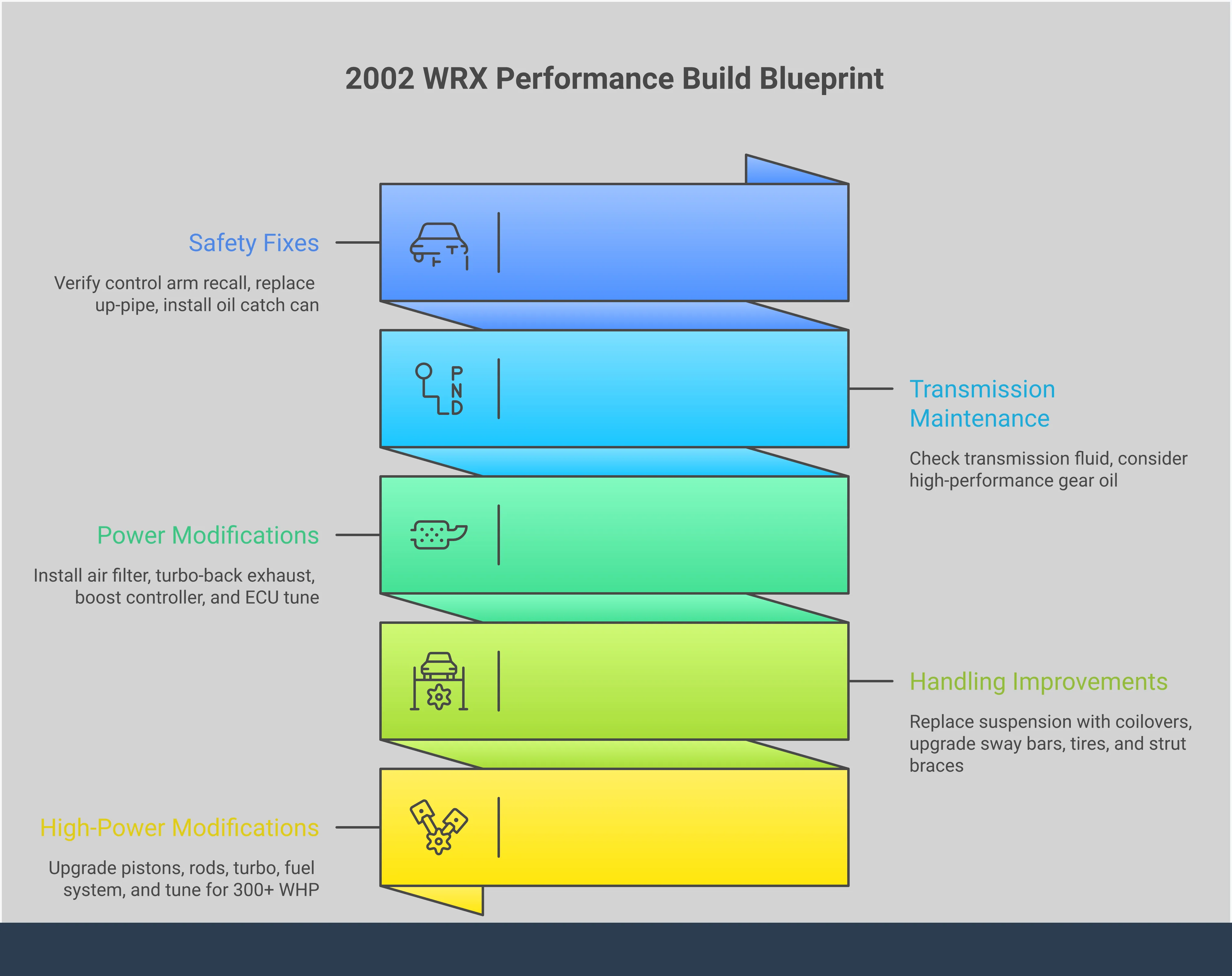
The 2002 WRX is a fantastic canvas for performance enthusiasts. Its solid foundation means that even a few well-chosen modifications can completely transform its character. Whether you're aiming for a weekend track car or a more responsive daily driver, starting with the right upgrades is key to building a car that’s both powerful and reliable. Here are the top areas to focus on to get the most out of your Bugeye.
Engine Modifications and ECU Tuning
The real magic of the EJ205 engine is its potential. To tap into it, combine key hardware changes with a professional tune. Upgrading components like the turbocharger, intake, and exhaust system allows the engine to breathe more freely, but they won’t deliver their full potential alone. An ECU tune is the essential final step that recalibrates your engine’s computer to optimize fuel and timing for the new hardware. This process ensures all your performance parts work together safely, giving you a serious and reliable increase in horsepower and torque.
Sharpening Your Ride with Suspension Upgrades
Power is only part of the equation; you also need the handling to back it up. Upgrading the stock suspension will give you a much sharper and more connected driving experience. A set of adjustable coilovers or performance shocks and struts can make a world of difference, improving cornering stability and reducing body roll. These WRX upgrades allow you to fine-tune your ride height and damping, giving you better grip and responsiveness. The result is a car that feels more agile and inspires confidence on winding roads or at the track.
Improving Flow with Exhaust and Up-Pipe Mods
To help your turbocharged engine perform its best, you need to improve its airflow. A high-flow exhaust system is a great place to start, as it reduces back pressure and allows the turbo to spool faster. For the 2002 WRX, upgrading the factory up-pipe is a critical modification. The original part contains a catalytic converter that is not only restrictive but can also disintegrate over time, potentially damaging your turbo. A catless up-pipe is one of the most effective Subaru WRX upgrades for improving turbo response and engine efficiency, all while adding that signature boxer rumble.
The Final Verdict: Is the 2002 WRX the Right Car for You?
Deciding on a 2002 Subaru WRX comes down to what you prioritize in a vehicle. If you’re looking for a car that delivers a raw, unfiltered driving experience and a direct connection to the road, it’s an exceptional choice. The combination of its turbocharged 2.0-liter engine, symmetrical all-wheel drive, and rally-bred chassis creates a machine that’s genuinely fun to drive. Reviewers and owners consistently praise its light, precise steering and the satisfying feel of its manual gearbox, making it a favorite for spirited drives on winding roads.
For its price, the WRX offers a level of performance that remains impressive. However, it’s important to be realistic. This is a car that is now over two decades old. While many are still used as reliable daily drivers, you should be prepared for the maintenance and potential repairs that come with any older performance vehicle. For many enthusiasts, this is part of the ownership experience. The 2002 WRX serves as a fantastic foundation for a project car, with a massive aftermarket community ready to support your vision with high-quality performance upgrades.
Ultimately, the 2002 WRX isn’t for everyone. If you need modern infotainment, a quiet cabin, and the latest driver aids, you’ll likely be happier with a newer model. But if you’re a purist who values mechanical feedback over digital interfaces and wants a car with a legendary motorsport heritage, the original “Bugeye” WRX is one of the most rewarding and engaging cars you can own. It’s a true driver’s car that continues to deliver thrills long after it first hit the showroom floor.
Related Articles
Frequently Asked Questions
Is the 2002 WRX a good car for a beginner to modify? Yes, it's an excellent starting point. The EJ205 engine and the car's overall platform are well-understood, and the aftermarket support is massive, so you'll find plenty of resources and parts. The key is to begin with a healthy, well-maintained car. Focus first on reliability and handling upgrades, like a catless up-pipe and better suspension, before you start chasing significant horsepower gains.
What is the first thing I should check or replace after buying one? Immediately verify that the front lower control arm safety recall has been completed by a Subaru dealer. After that, your top priority should be the factory exhaust up-pipe. The original part contains a catalytic converter that is known to fail, which can destroy your turbocharger. Swapping it for a quality aftermarket catless up-pipe is the most critical preventative upgrade you can make.
Can I make the 2002 WRX a reliable daily driver? Absolutely. When properly maintained, a 2002 WRX can be a dependable and incredibly fun daily driver. Its all-wheel-drive system makes it capable in all weather, and its compact size is great for city life. The secret is staying ahead of maintenance and addressing the known weak points proactively. A stock or tastefully modified example with a solid service history is a great choice for daily use.
How much power can the stock EJ205 engine handle safely? The stock EJ205 engine is quite robust, but its limits depend heavily on the quality of the tune and supporting modifications. With a larger turbo, upgraded fuel system, and a professional ECU tune, it's common to see these engines reliably produce around 300 to 350 wheel horsepower. Pushing beyond that often requires building the engine with stronger internal components to ensure long-term durability.
What's the difference between the WRX and the STI from this era? The STI model wasn't officially sold in North America until 2004, so there was no direct STI counterpart to the 2002 WRX here. When the STI did arrive, it was a significant step up. It featured a more powerful 2.5-liter engine, a much stronger 6-speed manual transmission, powerful Brembo brakes, and a more advanced all-wheel-drive system, making it a more track-focused machine from the factory.