

The Ultimate Subaru Crosstrek Off-Road Bumper Guide
Cutting your factory bumper is the one step that makes most owners hesitate. It’s a permanent modification and a big commitment—we get it. But that single cut is what allows you to fit a high-clearance bumper, dramatically improving your Crosstrek’s off-road performance and approach angle. Before you decide, you need all the facts. This guide walks you through every consideration, from model year compatibility to the installation process. We’ll give you the confidence to choose the right Subaru Crosstrek off-road bumper and understand exactly what it takes to get it on your rig.
Key Takeaways
- Focus on Function First: While looks are important, a bumper's main job is protection and capability. Prioritize strong materials like steel, integrated recovery points for safety, and a high-clearance design that improves your approach angle on steep trails.
- Double-Check Your Crosstrek's Specs: Not all bumpers fit all Crosstreks. Before you buy, confirm the bumper is compatible with your specific model year and trim level (like Sport or Limited) to avoid installation headaches and ensure it works with your factory sensors and lights.
- Plan for a System-Wide Upgrade: A heavy bumper affects more than just your vehicle's appearance. Be ready for potential changes in handling and consider a suspension upgrade to support the added weight, especially if you're adding a winch. Remember that installation often involves permanent modifications.
Is a Used Subaru Crosstrek a Good Buy?
The Subaru Crosstrek has earned a solid reputation as a versatile and dependable compact SUV, making it a popular choice on the used market. Its standard all-wheel drive and practical design appeal to a wide range of drivers, from city dwellers to outdoor adventurers. However, like any vehicle, its value as a used purchase depends heavily on its history, specific model year, and how well it was maintained. Because many Crosstreks are used in snowy climates or for light off-roading, it's crucial to look beyond the surface. A thorough inspection is key to ensuring you're getting a reliable partner for your adventures and not inheriting someone else's problems.
Before you commit, it's wise to investigate the vehicle's past. According to guidance from CarGurus, you should always get a vehicle history report and have a trusted mechanic inspect the undercarriage for signs of damage or neglect from off-road use. If a used Crosstrek has a clean history and passes a pre-purchase inspection, it can be an excellent investment. Understanding the common issues and best model years will help you make an informed decision and find a Crosstrek that will serve you well for years to come, whether you plan to keep it stock or build it into a capable off-road machine.
Understanding the Crosstrek's Durability
Subaru built the Crosstrek on the Impreza platform, giving it the reliable bones of a passenger car but with added toughness for more demanding conditions. Its durability is one of its main selling points, thanks to the robust Symmetrical All-Wheel Drive system and a higher ground clearance than most competitors in its class. This combination makes it a favorite in regions with harsh weather and for drivers who enjoy exploring unpaved roads. The vehicle's construction is generally solid, designed to handle the rigors of daily driving and weekend excursions alike. This inherent toughness is a great starting point for any owner, especially those looking to add performance parts for more serious adventures.
A Note on Long-Term Reliability
When properly maintained, a Subaru Crosstrek can be a very reliable vehicle for the long haul. The key phrase here is "properly maintained." Regular oil changes, fluid checks, and addressing minor issues before they become major problems are essential. As CarGurus notes, a used Crosstrek that has been well cared for and shows no red flags on a vehicle history report or during a test drive is generally a solid purchase. Long-term reliability often comes down to the previous owner's diligence. A car that has been pushed hard off-road without the proper protective gear or has a spotty service record is more likely to develop problems down the line.
Best and Worst Model Years to Consider
Navigating the different model years is crucial when shopping for a used Crosstrek. Generally, it's a good practice to be cautious with the first year of any major redesign, as this is when unforeseen bugs and manufacturing kinks are most likely to appear. For the Crosstrek, this pattern holds true. By targeting specific years, you can increase your chances of getting a more refined and reliable vehicle. Researching owner complaints and technical service bulletins for the year you're considering can provide valuable insight and help you avoid a model with known widespread issues, allowing you to invest your money in upgrades rather than repairs.
Years to Look For: 2015-2017 & 2020-2022
If you're looking for a sweet spot of value and reliability, the later years of the first generation (2015-2017) are a great place to start. By this point, Subaru had worked out many of the initial kinks from the 2013 launch. For those with a slightly larger budget, the 2020-2022 models from the second generation are also highly recommended. These years benefited from updates and refinements, including the introduction of the more powerful 2.5-liter engine option in the Sport and Limited trims, which addressed a common complaint about the Crosstrek's acceleration. These model years tend to have fewer owner complaints, making them a safer bet.
Years to Approach with Caution: 2013 & 2018
Experts at CarGurus suggest that the first model year after a redesign has historically generated the most complaints, advising buyers to be wary of the 2013 and 2018 Crosstreks. The 2013 model, being the first-ever Crosstrek, experienced several mechanical issues related to the drivetrain, steering, and wheels. Similarly, the 2018 model, which kicked off the second generation, had its own set of initial problems that were ironed out in subsequent years. While not every single 2013 or 2018 model will be problematic, the risk is statistically higher, so they warrant extra scrutiny during a pre-purchase inspection.
Common Issues and Potential Problems
While the Crosstrek is generally reliable, no car is perfect. Each generation has its own set of potential issues that prospective buyers should be aware of. Knowing what to look for can help you spot a potential money pit before you buy. For first-generation models, the concerns often center on mechanical components that showed wear earlier than expected. For the more technologically advanced second-generation models, some issues have emerged related to the newer electronic systems. Being informed about these specific problems allows you to ask the right questions and conduct a more targeted inspection when you're checking out a used Crosstrek.
First-Generation (2013-2017) Concerns
The first-generation Crosstrek, particularly the 2013 model, had several documented complaints. According to CarGurus, some of the most notable issues involved the drivetrain. Owners reported problems with the continuously variable transmission (CVT), including noise and occasional failure. There were also reports of excessive oil consumption in some early models. While Subaru addressed some of these issues through recalls and warranty extensions, it's essential to check the service history of any first-gen Crosstrek to see if these problems were rectified. A thorough test drive should also be conducted to listen for any unusual noises from the transmission.
Second-Generation (2018-Present) Issues
The second-generation Crosstrek introduced more technology, including advanced driver-assistance systems (ADAS). While these features are great for safety, they also introduce new complexities. For instance, a class-action lawsuit alleges that some recent Subaru models, including the Crosstrek, may have faulty collision-avoidance systems. While this is still a developing legal matter, it highlights a potential concern with the vehicle's electronic systems. Other minor complaints for the second generation include issues with the infotainment system and some interior rattles, which are less critical but still worth noting during a test drive.
Known Drawbacks and Considerations
Even in its best years, the Crosstrek has a few characteristics that some owners find lacking. These aren't necessarily "problems" but rather design choices that you should be aware of before you buy. The most frequently cited drawback is related to its powertrain. While adequate for daily driving, the standard engine can feel underpowered, especially when the car is loaded with gear or attempting to merge onto a busy highway. Understanding these inherent traits will help you set realistic expectations and decide if the Crosstrek is the right fit for your driving style and needs.
Engine Performance and Transmission Noise
A common critique of the Crosstrek, especially models with the base 2.0-liter engine, is its lackluster acceleration. As CarGurus points out, the base engines don't offer quick acceleration, and the CVT can be noisy under heavy throttle. While the optional 2.5-liter engine available in newer Sport and Limited trims helps significantly, many used models on the market will have the smaller engine. This is a key reason many owners look to performance parts to get more out of their vehicle. The CVT's tendency to drone during acceleration is another characteristic that some drivers dislike, so pay attention to how it feels and sounds during your test drive.
A Note on Class-Action Lawsuits
Class-action lawsuits can be a red flag for potential buyers, as they often point to widespread issues that a manufacturer has been unable or unwilling to resolve to the satisfaction of its customers. For Subaru, several lawsuits have been filed over the years concerning various models and systems. While the existence of a lawsuit doesn't guarantee that every vehicle will have the problem, it does indicate a pattern that's worth being aware of. These legal actions can provide valuable insight into potential long-term reliability concerns and areas that may require expensive repairs down the road.
Common Areas of Legal Action
Recently, Subaru has faced legal challenges related to its advanced safety features. As noted by ClassAction.org, one lawsuit claims that the collision-avoidance systems in some 2022-2026 models are prone to malfunctioning, which could pose a safety risk. In the past, other class-action suits against Subaru have targeted issues like excessive oil consumption and CVT transmission reliability. When considering a used Crosstrek, it's a good idea to do a quick search for any open recalls or class-action lawsuits related to that specific model year to understand any potential risks involved.
Tips for Buying a Used Crosstrek
Armed with knowledge about the best years and potential problems, you can approach the buying process with confidence. The goal is to find a well-maintained vehicle that fits your needs and budget. A few simple but crucial steps can make all the difference between a great purchase and a costly mistake. Taking the time to do your due diligence upfront will save you headaches and money in the long run, ensuring that your used Crosstrek is a source of enjoyment, not stress. These final checks are your last line of defense before you sign on the dotted line.
Get a Vehicle History Report
This is a non-negotiable step. A vehicle history report from a service like Carfax or AutoCheck provides a wealth of information, including accident history, title issues (like salvage or flood damage), and reported service records. As recommended by CarGurus, you should always get a report to verify the seller's claims and uncover any hidden history. Pay close attention to where the car has been registered—a vehicle from a snowy region might have more rust, while one from a hot climate could have sun-damaged plastics and paint. This report is your first clue to the vehicle's past life.
Perform a Pre-Purchase Inspection
Even with a clean history report, a pre-purchase inspection (PPI) by a qualified, independent mechanic is essential. This is especially true for a vehicle like the Crosstrek, which may have been used off-road. A mechanic can put the car on a lift and check for underbody damage, suspension wear, and leaks that you wouldn't be able to see otherwise. They can also assess the condition of the engine and transmission and give you an expert opinion on the car's overall health. A PPI might cost a hundred dollars or so, but it can save you thousands in potential repairs.
Understanding the Crosstrek's Off-Road DNA
The Subaru Crosstrek isn't just an Impreza on stilts; it's a vehicle engineered with a genuine dose of off-road capability right from the factory. While it may be a compact SUV, it was designed to be "smarter, not just bigger," allowing it to tackle surprisingly tough terrain. This philosophy is evident in its core design, which prioritizes a capable all-wheel-drive system, useful ground clearance, and intelligent software over sheer size and brute force. This built-in DNA is what makes the Crosstrek such a popular platform for building upon. It provides a fantastic starting point for anyone looking to create a versatile vehicle that's just as comfortable on the trail as it is on the morning commute.
Understanding this foundation is key to appreciating what the Crosstrek can do out of the box and where it can go with the right modifications. Its off-road prowess isn't an accident; it's the result of deliberate engineering choices by Subaru. From the Symmetrical All-Wheel Drive that provides constant power to all four wheels to the X-MODE system that optimizes traction in slippery conditions, the Crosstrek is equipped to handle more than just paved roads. This inherent capability means that even minor upgrades can have a significant impact, turning a good off-roader into a great one. It’s a platform that invites you to explore its limits and then push them even further.
Built-in Off-Road Features
From the moment it rolls off the assembly line, the Crosstrek is equipped with several features that give it a distinct advantage over many of its competitors. These aren't just marketing gimmicks; they are functional components that contribute directly to its ability to handle rough roads and challenging weather. The combination of its physical stance and advanced electronic aids creates a synergistic system that provides confidence and control when conditions are less than ideal. It's this thoughtful integration of hardware and software that forms the core of the Crosstrek's off-road identity and makes it a standout in the compact SUV segment.
Standard Ground Clearance and Symmetrical AWD
Two of the Crosstrek's most significant off-road assets are its standard 8.7 inches of ground clearance and Subaru's renowned Symmetrical All-Wheel Drive system. The generous ground clearance allows it to clear obstacles like rocks, ruts, and deep snow that would stop most other compact SUVs in their tracks. Meanwhile, the Symmetrical AWD system provides continuous power to all four wheels, ensuring maximum traction at all times. Unlike some "on-demand" AWD systems that only engage the rear wheels when slippage is detected, Subaru's system is always active, providing proactive grip and stability on any surface.
The Role of X-MODE
Standard on models with the CVT, X-MODE is an intelligent driving assistant that takes the Crosstrek's capability to the next level. With the push of a button, X-MODE optimizes the engine, transmission, AWD system, and brakes to tackle slippery surfaces and steep inclines. It also includes Hill Descent Control, which automatically maintains a slow, steady speed when going down steep hills, allowing the driver to focus on steering. On newer models, a dual-function X-MODE offers separate settings for "Snow/Dirt" and "Deep Snow/Mud," further tailoring the vehicle's response to specific conditions and making it even more capable.
Knowing Its Limits: Where the Crosstrek Shines
While the Crosstrek is surprisingly capable, it's important to understand its limitations. It's not a rock-crawling Jeep Wrangler or a desert-racing Ford Raptor. As we've noted in our own off-road guide, the Crosstrek excels on light to moderate trails, fire roads, gravel paths, and in snowy or muddy conditions. Its unibody construction and independent suspension, which provide a comfortable ride on the road, are not designed for extreme articulation or taking hard hits from large rocks. Knowing where the vehicle shines allows you to have fun within its capabilities and identify which upgrades will be most effective for the type of terrain you want to tackle.
How It Stacks Up: Crosstrek vs. Competitors
In the crowded compact SUV market, the Crosstrek carves out a unique niche. While competitors like the Honda HR-V or Toyota C-HR focus more on urban efficiency and style, the Crosstrek leans heavily into its rugged, adventurous persona. Its standard AWD and superior ground clearance set it apart from most of the competition right away. Vehicles like the Jeep Compass or Ford Bronco Sport are closer competitors in terms of off-road intent, but the Crosstrek often wins on reliability, fuel economy, and on-road comfort. It strikes a balance that few others can match, offering everyday usability with a genuine readiness for weekend adventures.
Building Your Off-Road Crosstrek: Where to Start
Once you have your Crosstrek, the real fun begins. The aftermarket support for this platform is extensive, allowing you to tailor your vehicle to your specific needs. But with so many options, it can be overwhelming to know where to start. The key is to think of your build as a system, where each component works together. The most effective approach is to start with the modifications that provide the biggest and most immediate improvement in capability. For off-roading, this means focusing on the parts of the car that interact directly with the trail: your tires, wheels, and suspension. These foundational upgrades will make the most significant difference in your vehicle's performance off the pavement.
Before you spend a dime, think about the kind of off-roading you plan to do. Are you looking to tackle muddy forest trails, explore desert washes, or build an overlanding rig for long-distance travel? Your goals will dictate your priorities. A build focused on overlanding might prioritize cargo capacity and reliability, while a trail-focused build might prioritize ground clearance and traction. Starting with a clear plan will help you make smart choices and build a capable, cohesive machine. Let's walk through the most logical progression for your first round of upgrades.
The Foundation: Why All-Terrain Tires Are #1
If you make only one modification to your Crosstrek for off-road performance, make it a set of quality all-terrain (A/T) tires. The stock tires are designed for quiet, efficient on-road driving and are the vehicle's weakest link on the trail. A/T tires provide a dramatic improvement in traction on dirt, gravel, mud, and snow, thanks to their more aggressive tread patterns and tougher sidewalls. This single upgrade will give you more confidence and capability than any other. It's the essential first step that unlocks the potential of the Crosstrek's excellent AWD system and allows you to start exploring more challenging terrain safely.
The Right Combination: Wheels and Tires
While you're upgrading your tires, it's a good time to consider your wheels. Many owners choose to downsize from the stock 17-inch or 18-inch wheels to a smaller 15-inch wheel. This allows you to run a tire with a taller sidewall, which offers several benefits for off-roading. A taller sidewall provides a larger contact patch when you air down for better traction, and it adds extra cushion to absorb impacts from rocks and ruts, improving ride quality and protecting your wheels from damage. Pairing the right wheels and tires is a crucial step in building a truly capable off-road Crosstrek.
Next Steps: Lift Kits and Skid Plates
Once you have your tire and wheel setup sorted, the next logical steps are a lift kit and skid plates. A lift kit, typically in the 1.5- to 2-inch range, increases your ground clearance even further, improving your approach, breakover, and departure angles. This allows you to clear larger obstacles without scraping the underbody. Speaking of which, that leads us to skid plates. The Crosstrek's underside contains critical components like the engine oil pan and transmission. Factory protection is minimal, so installing steel or aluminum skid plates is cheap insurance against a catastrophic impact that could leave you stranded on the trail.
How to Choose the Right Crosstrek Off-Road Bumper
Choosing the right off-road bumper for your Crosstrek is a big decision. It’s one of the most significant upgrades you can make, impacting your vehicle’s capability, protection, and appearance all at once. While the aggressive styling is a definite plus, a true performance bumper is a functional tool that prepares your Subaru for whatever the trail throws at it. It’s the first point of contact with obstacles, a mounting platform for essential recovery gear, and a critical piece of armor for your vehicle's front end.
Before you make a purchase, it’s important to understand the key features that separate a simple cosmetic add-on from a true piece of performance equipment. Factors like material strength, winch compatibility, and overall weight play a huge role in how your Crosstrek will perform both on and off the pavement. Getting this choice right means you’ll have a reliable, durable bumper that enhances your adventures instead of hindering them. Let’s walk through the essential factors to consider so you can find the perfect bumper for your build and drive with confidence.
Start with Material and Build Quality
The first thing to check is what the bumper is made of and how it’s put together. You want a bumper constructed from strong, heavy-gauge steel that can handle impacts without failing. A durable powder-coat finish is also critical, as it provides the first line of defense against rust and corrosion from mud, water, and road salt. This combination ensures your investment not only protects your vehicle from trail damage like rocks and branches but also lasts for years. When you browse high-quality Crosstrek upgrades, pay close attention to the material specs and construction details.
Plan for Winch and Recovery Points
If you plan on doing any serious overlanding or tackling difficult trails, a winch-ready bumper is non-negotiable. These bumpers are internally reinforced to handle the immense forces a winch exerts during a recovery. Equally important are integrated recovery points. These should be welded or bolted directly to the bumper’s main structure, giving you a solid, safe place to attach a tow strap or shackle. A bumper without properly engineered recovery points is a major liability when you’re stuck, so always confirm they are rated for real-world use.
Factor in Weight and Balance
Adding a steel bumper to the front of your Crosstrek introduces significant weight, which can affect your vehicle’s handling, braking, and suspension. A heavier front end may cause the suspension to sag and can alter its on-road driving dynamics. Before committing, consider how the added weight fits into your overall build. If you’re choosing a heavy-duty bumper with a winch, you may need to plan for a suspension upgrade with stiffer springs to compensate and maintain performance. It’s all about creating a balanced and capable system.
Balance Protection with Design Features
A good off-road bumper does more than just protect your grille. Look for designs that offer extended protection for your headlights and fenders. Many bumpers also incorporate functional features like integrated mounts for LED light bars or pod lights, which are essential for nighttime trail runs. Another key feature is compatibility with a front skid plate, which shields your engine and other critical components from damage. These integrated performance parts work together to create a cohesive and highly capable front-end protection system for your Crosstrek.
Considering Rear Bumpers and Brush Bars
While you’re focused on protecting the front of your Crosstrek, don’t forget that the trail can come at you from all angles. A robust rear bumper is essential for complete vehicle armor, safeguarding your quarter panels and underbody from rocks and ledges, especially on steep descents where your departure angle is tested. Much like their front-end counterparts, quality rear bumpers and brush bars are designed to absorb impacts and fend off trail hazards. Before you commit, you need to apply the same logic you used for the front. Consider the added weight and how it will affect your vehicle's balance and suspension. Most importantly, double-check compatibility. You need to ensure the bumper works with your specific model year and trim to avoid issues with factory backup sensors and lights. Getting this right ensures your Crosstrek upgrades work together as a cohesive, trail-ready system.
Which Bumper Fits Your Crosstrek Build?
Choosing an off-road bumper is one of the most significant upgrades you can make to your Crosstrek. It defines your vehicle’s capability and its look. The right bumper isn't just about aggressive styling; it's a functional tool that protects your investment and gets you out of tough spots. Your ideal choice depends entirely on your build goals, whether you're planning weekend trail runs or a full-blown overlanding expedition. Think about how you use your Subaru, and let that guide your decision.
The Crawford Performance Option: Made for Subaru
When you’re modifying a vehicle as unique as a Subaru, choosing parts from a brand that lives and breathes the platform makes all the difference. A generic bumper might fit, but a bumper engineered specifically for your Crosstrek will integrate perfectly. We design our Subaru Crosstrek upgrades to match the vehicle’s specific lines, mounting points, and sensor locations. This ensures a clean installation and optimal performance without unexpected modifications. You get a bumper that not only looks like it belongs but also functions seamlessly with the rest of your vehicle’s systems, giving you confidence on and off the trail.
Shopping for a Winch-Ready Bumper
If you plan on tackling serious terrain, a winch-ready bumper is non-negotiable. This feature is about more than just a mounting plate; it’s about structural integrity. A proper winch-ready bumper is built from heavy-gauge steel and reinforced to handle the immense forces of a recovery situation. When you’re evaluating options, look at the material thickness and weld quality. The design should allow for easy winch installation and access to the clutch and spool. This is a critical piece of your overlanding solutions, providing a reliable anchor point when you need to pull yourself or a friend out of a jam.
Prioritizing Protection and Durability
Your front bumper is the first line of defense against rocks, ruts, and wildlife. For maximum protection, look for bumpers constructed from robust steel and finished with a durable powder coat. This combination is designed to withstand harsh impacts and resist corrosion from mud, snow, and road salt. A well-built bumper shields critical components like your radiator and headlights from damage that could otherwise end your trip early. Investing in durable performance parts like a steel bumper gives you the peace of mind to push your Crosstrek further, knowing it’s protected from whatever the trail throws at it.
Balancing Off-Road Style and Function
Let’s be honest, aesthetics matter. An off-road bumper dramatically changes your Crosstrek’s appearance, so you want something that looks as good as it performs. The key is to find a design that complements your vehicle’s lines while providing real-world benefits. Whether you prefer a full-width bumper for maximum coverage or a more compact rally-style bar with integrated light mounts, the right choice enhances your Crosstrek’s rugged look. A great bumper strikes the perfect balance, giving you the aggressive style you want and the front-end protection you need against chips, scratches, and trail-side obstacles.
What Bumper Features Matter Most?
When you're ready to upgrade, it's easy to get lost in the details. The right features make a huge difference on the trail, so focusing on key areas helps you choose a bumper that truly enhances your Crosstrek's capabilities. Prioritizing function over flash ensures your investment pays off when you're miles from pavement. Let's break down the must-have features for any serious off-road build.
Improve Approach Angle and Ground Clearance
An off-road bumper's primary job is improving your approach angle, the steepest obstacle you can climb without the bumper hitting it. A high-clearance design lets you tackle bigger rocks and steeper inclines without scraping. This is essential for any serious overlanding solutions where terrain is unpredictable. A quality bumper gives you the confidence to point your Crosstrek up a challenging trail, knowing your front end has the clearance to make it over.
Don't Forget Integrated Light Mounts
Off-road adventures don't always end at sunset. A bumper with integrated light mounts is critical for visibility and safety in low-light conditions. These mounts provide a secure spot to install LED light bars or pods, eliminating extra brackets for a clean look. Powerful lighting helps you spot obstacles and navigate tricky trails at night. When looking at different Subaru Crosstrek upgrades, check for pre-drilled holes or tabs to simplify installation.
Make Sure Your Skid Plate is Compatible
Your Crosstrek’s undercarriage houses vital components like the oil pan and radiator. A bumper is your first defense, but it needs to work with a skid plate for complete protection. When choosing a bumper, confirm it’s compatible with a factory or heavy-duty aftermarket skid plate. Some bumpers are designed as part of a full protection system. Don't overlook this; a single rock can end your trip with expensive repairs if the underside is exposed.
Check Recovery Point Strength and Placement
Getting stuck is part of off-roading. When it happens, you need reliable recovery points to get pulled out safely. This is not a feature to compromise on. Look for bumpers with solid, frame-mounted recovery points designed for D-ring shackles, engineered to withstand incredible forces. Avoid bumpers with thin attachment points that can fail under load. Properly designed recovery points are a sign of a well-built bumper and are essential for your peace of mind.
How Much Should You Expect to Pay?
Deciding on a budget for your off-road bumper is a key step in your build. Prices can vary quite a bit, and what you pay often reflects the bumper’s material, features, and overall durability. While you might see basic bumper bars starting at a lower price point, a full-replacement off-road bumper is a more significant purchase, with prices generally starting around $700 and climbing from there. Think of it less as an accessory and more as a critical investment in your Crosstrek’s capability and protection.
The cost is directly tied to the engineering and materials that go into the bumper. A higher price often gets you stronger steel or lighter aluminum, integrated winch mounts, dedicated recovery points, and designs that maximize your approach angle for tackling tougher obstacles. As you explore your options, consider how you plan to use your vehicle. Your ideal bumper will match your ambitions on the trail, providing the right balance of protection, functionality, and price for your specific needs.
Entry-Level Bumpers: $700-$900
In this price range, you’ll find solid, no-frills bumpers that offer a massive improvement over the stock plastic cover. These are typically made from heavy-gauge steel and finished with a durable powder coat to resist corrosion and impacts. While they might not have integrated winch mounts or spots for multiple light pods, they provide essential front-end protection for light trail driving and give your Crosstrek a much more aggressive look. For anyone just starting to explore off-road trails, an entry-level bumper is a fantastic first step in building a more capable rig. These options deliver the core protection you need to venture out with more confidence.
What You Get for the Price
For this price, you get a huge step up in durability and function. These bumpers are typically made from heavy-gauge steel, offering a level of protection the factory plastic cover just can't provide. A tough powder-coat finish is standard, shielding your investment from rust and trail damage. While you might not find integrated winch mounts at this price, you are getting the essentials: better front-end armor and a more assertive look. It’s the ideal starting point for building a more capable rig. These foundational Crosstrek upgrades give you the confidence to tackle trails you might have avoided before, making it a smart investment in your vehicle's capability.
Mid-Range Upgrades: $900-$1,200
This price point is the sweet spot for many Crosstrek owners. Mid-range bumpers typically add crucial features for serious off-roading, such as integrated winch mounts and reinforced recovery points. The designs are often more refined, providing better ground clearance and improved approach angles compared to entry-level models. You’ll also find more options for mounting auxiliary lighting, which is essential for night runs or setting up camp after dark. If you’re building a dedicated overlanding rig or frequently tackle challenging terrain, a bumper in this range offers the perfect blend of robust functionality and value.
Premium Systems: $1,200+
When you need the absolute best in protection and performance, you’ll be looking at premium bumper systems. These are engineered for the most demanding conditions, featuring advanced designs that offer maximum clearance and durability. Many premium bumpers provide full-width protection that wraps around to the fenders and may integrate heavy-duty skid plates to shield your engine and radiator. Some are even constructed from high-strength aluminum to reduce weight on your front suspension. These top-tier performance parts are for the serious enthusiast who plans to push their Crosstrek to its limits and needs equipment that won’t fail.
Why a Good Bumper is a Long-Term Investment
It’s helpful to think of an off-road bumper as more than just a part; it’s insurance for your adventures. A single misstep on the trail can lead to a damaged radiator, cracked headlights, or other expensive front-end repairs that can quickly exceed the cost of a quality bumper. Investing in a durable steel or aluminum bumper provides a formidable shield for your vehicle’s most vulnerable components. This protection gives you the peace of mind to tackle more challenging obstacles without worrying about a costly recovery or a trip-ending failure. When you look at all the Crosstrek upgrades available, a bumper is one of the few that actively protects your other investments.
How Difficult Is the Installation?
So, you’ve found the perfect bumper, and now you’re wondering what it will take to get it on your Crosstrek. The installation process is a major consideration, and its difficulty really depends on your mechanical experience, your tools, and your patience. While some owners love a good DIY project, others prefer the peace of mind that comes with professional installation. There’s no right or wrong answer, but being prepared is everything. Let’s walk through what you should consider before you start turning wrenches, so you can make the best choice for you and your build.
Get the Right Tools and Equipment
Before you even think about removing the stock bumper, do a full inventory of your tools. A successful installation starts with having everything you need within arm’s reach. You’ll definitely need a comprehensive socket and wrench set, screwdrivers, and pliers. I also highly recommend a set of plastic trim removal tools to avoid scratching your paint. Since most off-road bumpers require cutting the factory plastic cover, a Dremel or a similar cutting tool is essential. Reading the bumper’s installation manual beforehand is the best way to get a complete list. Having the right tools makes the job smoother and helps you properly install the off-road bumper that protects your front end.
DIY vs. Professional Installation: Which Is Right for You?
This is the big question. If you’re comfortable working on your car and have the tools and space, a DIY installation can be a really rewarding weekend project that saves you a few hundred dollars in labor. However, it’s important to be honest about your skill level. If you’re new to this kind of work, or if the thought of cutting into your factory bumper gives you anxiety, there’s no shame in calling a professional. A trusted shop will get the job done right, ensuring everything is secure and aligned perfectly. To get a better feel for the job, I suggest finding owner forums or Facebook groups where you can ask others about their experience with the specific bumper you’re considering.
Common Installation Hurdles to Expect
Even with the best instructions, you can run into a few snags. It’s just the nature of working on cars. You might encounter a rusted bolt that refuses to budge or have trouble getting the new bumper perfectly aligned by yourself (an extra set of hands is a huge help here). If your bumper includes light mounts or a winch plate, you’ll also have to manage the electrical wiring, which adds another layer of complexity. The goal isn’t to get discouraged but to go into the project with realistic expectations. Knowing you might need to do a little on-the-fly troubleshooting will help you stay calm and focused.
What to Know About Stock Bumper Modifications
This is probably the most important step to understand before you start. To fit a high-clearance off-road bumper that improves your approach angle, you will almost certainly have to cut your original plastic bumper cover. This is a permanent modification, so you need to be 100% on board with it. I strongly recommend watching a detailed installation video for your specific bumper model. This will show you exactly where to cut and what the final result will look like. Take your time with this step, measure carefully, and remember the old rule: measure twice, cut once.
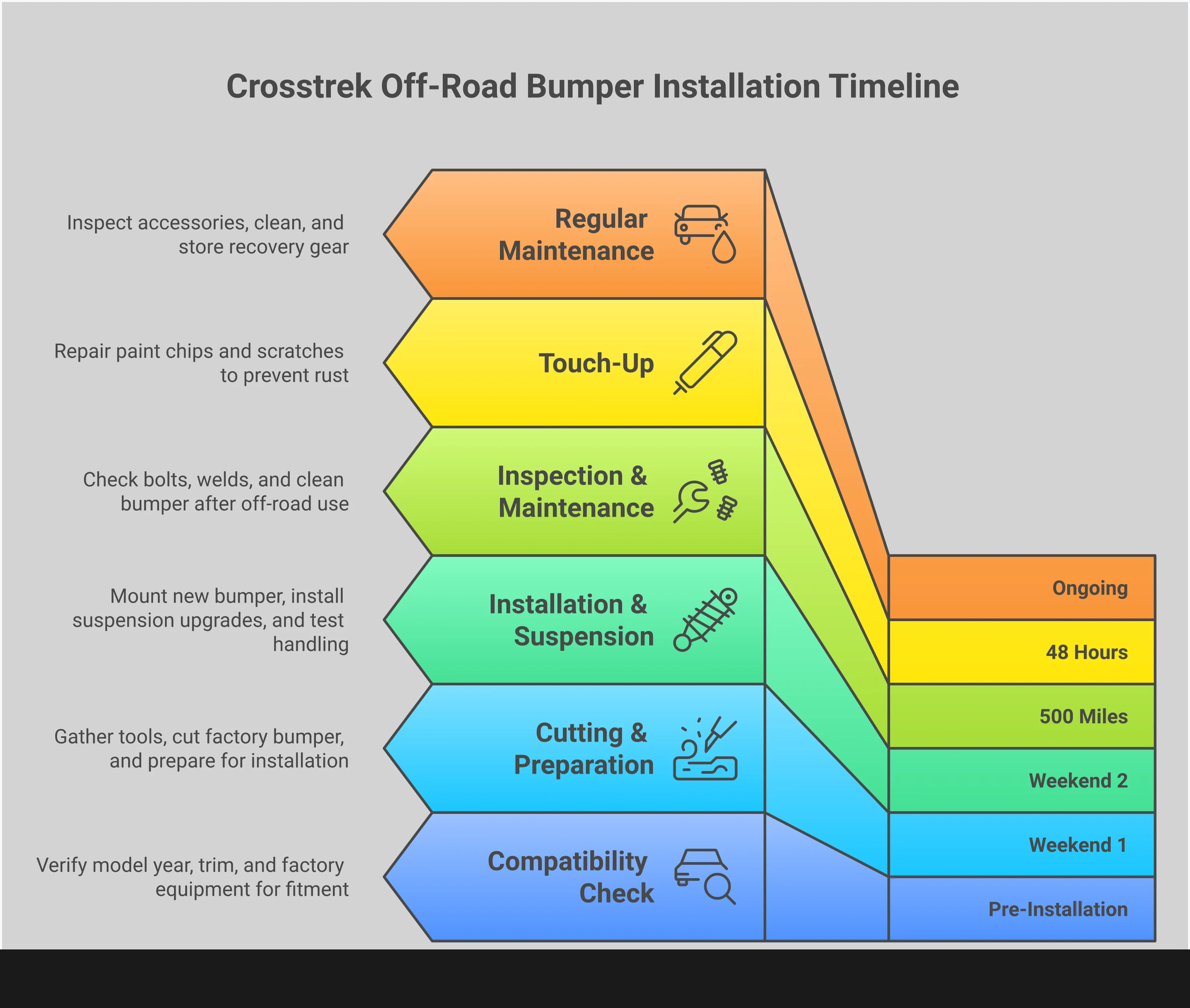
How to Plan Your Installation Timeline
Don’t try to rush this job in a couple of hours before you have to be somewhere. I recommend setting aside at least a full afternoon, if not an entire weekend, especially if it’s your first time. Rushing is how you strip bolts, scratch paint, or make a bad cut. Before you start, read the installation manual from start to finish. This helps you visualize the entire process and ensures there are no surprises halfway through. A well-planned installation is a successful one, and our Crosstrek bumper guide can help you think through all the details before you begin.
What Compatibility Issues Should You Know About?
Nothing is more frustrating than getting a new part, only to find it doesn’t fit. When it comes to off-road bumpers, compatibility is everything. The Subaru Crosstrek has seen a few changes over the years, and different trim levels add another layer of complexity. Before you add a bumper to your cart, it’s essential to confirm it will work with your specific vehicle. A little homework now will save you a major headache during installation. Here’s what you need to check to ensure a perfect fit.
Check Fitment for Your Model Year (2018-2024)
The second-generation Subaru Crosstrek, spanning from 2018 to 2023, and the newer 2024 models have specific body lines and mounting points. Most aftermarket bumpers are designed to fit within this range, but you should never assume. Always double-check the product description for the exact model years listed. Even a minor refresh from Subaru can alter the front fascia enough to cause fitment issues with a bumper designed for an earlier year. Taking a moment to verify this detail is the most important first step. When you shop for Crosstrek upgrades, pay close attention to the listed years to guarantee a seamless installation.
Factor in Your Trim Level and Factory Equipment
Beyond the model year, your Crosstrek’s trim level (like Base, Premium, Sport, or Limited) plays a big role in bumper compatibility. Different trims can come with unique factory equipment, such as different fog light housings or front camera placements, that can interfere with an aftermarket bumper. For example, many bumpers require some trimming of the factory bumper cover or grille, especially on 2021 and newer models. Always read the manufacturer's notes carefully. They will usually specify if a bumper is incompatible with certain features or requires modifications for a particular trim, ensuring you know exactly what the job entails before you start.
A Note on Trimming for Sport Models
If you drive a Crosstrek Sport, pay extra attention to installation requirements. The Sport model’s aggressive front-end styling, while great looking, often requires additional trimming to accommodate an off-road bumper. This is a common point of feedback from owners and something to be prepared for. This isn't a sign of a poor-quality part; it's simply a necessary adjustment to fit a rugged bumper onto a uniquely designed trim. Reputable manufacturers will provide detailed instructions or templates to guide you through the process. High-quality performance parts are typically designed with these variations in mind, but it's always best to confirm the specifics.
Special Considerations for Hybrid Models
If you drive a Crosstrek Hybrid, you need to be extra diligent when choosing an off-road bumper. Hybrid models have unique components behind the factory bumper, including parts of the powertrain and specific cooling systems, that can interfere with the fitment of many aftermarket designs. As a result, a lot of bumpers are simply not compatible with the hybrid variant. This is a critical detail to confirm before you purchase, especially when you're sourcing reliable overlanding solutions for your build. Always read the product description and installation notes carefully, and look for an explicit statement confirming hybrid compatibility. This simple check will save you the frustration and expense of receiving a part that doesn't fit.
Planning the Electrical for Your Accessories
A new bumper isn't just about protection; it's a platform for your accessories. If you plan to add a winch or an LED light bar, your bumper choice is just the beginning. You also need to think about the electrical work. Does the bumper have pre-drilled holes or mounts for a light bar? Are there channels or cutouts to run the wiring cleanly and keep it protected from snags on the trail? Planning your wiring route ahead of time will make the final installation much smoother. Thinking through your complete build is a key part of creating effective overlanding solutions that are both functional and reliable.
How Do Bumper Styles Affect Performance?
An off-road bumper does more than just protect your Crosstrek; it directly influences how your vehicle drives, both on and off the pavement. The style, weight, and design of your bumper are key factors that can change your vehicle’s handling, fuel economy, and overall capability. Before you commit to a specific model, it’s important to understand these trade-offs so you can build a rig that’s perfectly balanced for your adventures. Choosing the right bumper is about matching its performance characteristics to your driving needs.
Full-Width vs. Stubby: Which is for You?
The first decision you’ll face is between a full-width and a stubby bumper. A full-width bumper extends across the entire front of your Crosstrek, offering maximum protection for your grille, headlights, and fenders. A full steel, winch-ready bumper is essential for serious overlanding solutions, where encounters with trail hazards or wildlife are more likely. On the other hand, a stubby bumper is more compact, covering only the frame rails and grille area. This minimalist design is lighter and significantly improves your approach angle, making it easier to tackle steep obstacles. For many, a lighter guard or tube bumper provides a practical balance of protection and performance for daily driving and weekend trail runs.
How Will It Affect Handling and Fuel Economy?
Adding any aftermarket bumper will change your Crosstrek’s dynamics, and it’s important to know what to expect. Choosing the right bumper can significantly affect your vehicle's handling and fuel economy, as heavier bumpers may add weight that impacts performance. A heavy steel bumper adds considerable mass to the front axle, which can cause the front end to "nosedive" more during hard braking and slightly alter steering feel. You might also notice a small dip in fuel economy. While it may only be a mile or two per gallon, that can add up on a long trip. This is the classic trade-off: enhanced durability and recovery options in exchange for a minor adjustment in on-road manners.
Will You Need a Suspension Upgrade?
If you opt for a heavier bumper, especially one equipped with a winch, you may need to consider a suspension upgrade to maintain proper handling and ride quality. Your Crosstrek’s factory suspension is engineered for its original weight. Adding 100 pounds or more to the very front can cause the suspension to compress, leading to a visible sag. This not only reduces your ground clearance but can also throw off your wheel alignment and create a bouncy ride. Upgraded springs or a full suspension lift kit can easily correct this by supporting the extra weight, restoring your vehicle’s stance and ensuring your Crosstrek upgrades work together as a cohesive system.
What Are Other Crosstrek Owners Saying?
One of the best ways to research a major upgrade like an off-road bumper is to see what other owners are saying. Diving into forums and owner groups gives you unfiltered feedback on what works, what doesn’t, and what to expect. When it comes to the Subaru Crosstrek, drivers are vocal about what they need from an aftermarket bumper, and their experiences can guide your decision.
Real-World Durability and Performance Feedback
A common theme among Crosstrek owners who venture off-pavement is the need for better front-end protection. The factory bumper is fine for daily driving, but it’s not designed to handle trail hazards. Owners report that if you don’t want to deal with a constant barrage of chips, scratches, and dents, an off-road bumper is a must. It’s seen less as an accessory and more as essential armor for anyone serious about exploring.
This feedback highlights that durability is a top priority. A well-built steel bumper provides peace of mind, protecting critical components like the radiator and engine accessories from impacts. For many, it’s a practical investment that prevents bigger, more expensive repairs down the line, making it a core part of their overlanding solutions. The consensus is clear: a quality bumper is fundamental for pushing your Crosstrek’s limits safely.
Popular Bumper Brands in the Community
When you start digging into forums, you’ll see a few names pop up repeatedly. Brands like F44 Offroad are frequently praised by owners for being "really nice and tough," making them a top contender for those who prioritize durability. Another option that gets mentioned is the Warn partial bumper, which offers a more minimalist approach to front-end protection. The key takeaway from community discussions is that owners value bumpers that are proven to withstand real-world abuse. While we stand by the engineering of our own Crosstrek upgrades, seeing what other drivers trust can help you narrow down the style and features that matter most to you.
A Note on Discontinued Brands
One thing you’ll quickly learn when researching parts is that brands come and go. A perfect example is the Relations Race Wheels (RRW) bumper. It was incredibly popular and well-loved in the Crosstrek community, but the company stopped producing them. This can be frustrating, especially if you see a build you love online and want to replicate it, only to find the key part is no longer available. It’s a good reminder to always check if a product is still in production before you get too attached to it. This is why it’s often better to focus on established brands that are actively developing performance parts and supporting their products.
The Counterpoint: Is a Bumper Always Necessary?
It’s also important to ask yourself if you truly need an off-road bumper. For every owner planning a rugged build, there’s another who bought their Crosstrek for its compact size, efficiency, and all-weather security. If your adventures are limited to gravel roads and the occasional trip to the mountains for a ski weekend, the stock bumper is likely more than enough. A heavy steel bumper is a specialized tool for a specific job. If you aren't tackling terrain that puts your front end at risk, the added weight and cost may not be justified. It’s all about being honest with yourself about how you use your vehicle and choosing upgrades that align with your actual needs.
Installation Insights from Other Owners
Installation is another hot topic in the Crosstrek community. While some bumpers are designed for a relatively simple bolt-on process, others require cutting the factory bumper cover, drilling, and more extensive modifications. Getting an accurate assessment from owners who have installed the specific bumper you’re considering can save you a lot of headaches. Their firsthand accounts offer a realistic preview of the project's difficulty.
These insights help you decide whether to tackle the installation yourself or budget for a professional. Owner forums and build threads often include step-by-step photos and tips that you won’t find in the official instructions. Learning from their experiences is a great way to prepare for any challenges and ensure your Crosstrek upgrades go on smoothly.
How Owners Balance Looks and Function
Crosstrek owners want a bumper that strikes the right balance between aggressive styling and real-world functionality. It’s not enough for a bumper to just look tough; it has to enhance the vehicle’s capability. When you browse owner discussions, you’ll see a clear focus on practical features that support off-road adventures.
Key priorities include strong recovery points, winch integration, and mounts for auxiliary lighting. Owners carefully weigh these functional benefits against factors like cost and material quality. The ultimate goal is to find a bumper that complements the Crosstrek’s lines while adding the rugged utility needed for the trail. It’s about choosing performance parts that are both purposeful and visually appealing.
How Do You Maintain Your Off-Road Bumper?
Once you’ve installed your new off-road bumper, the job isn’t quite done. Taking care of it is key to ensuring it protects your Crosstrek for years to come, especially after tough trail runs. An aftermarket bumper is a significant investment, with prices ranging from a few hundred to over a thousand dollars. A little routine maintenance protects that investment, keeps your rig looking sharp, and ensures your bumper is ready to perform when you need it most. By creating a few simple habits, you can prevent rust, catch minor issues before they become major problems, and keep your front end secure.
Protecting Your Bumper's Finish
Most off-road bumpers come with a durable powder-coated finish designed to resist rust and corrosion. However, scrapes from branches and rocks are an inevitable part of off-roading. The best way to protect your bumper is to wash it regularly, especially after hitting the trails. Mud, dirt, and road salt can trap moisture and accelerate corrosion if left sitting. Use a gentle automotive soap and a soft cloth to clean the surface. If you find any deep scratches or chips that expose the bare metal, it’s important to address them quickly. A simple touch-up paint pen designed for powder coating can seal the metal and stop rust in its tracks, preserving the integrity of your performance parts.
Set Up a Simple Inspection Routine
Getting into the habit of inspecting your bumper will save you a lot of headaches. A quick check after every off-road adventure or during your regular car wash is all it takes. Run your hands over the mounting points and give the bumper a firm shake to check for any loose bolts or hardware. Visually inspect all the welds for any signs of stress or cracking. You should also check on any integrated accessories, like light bars or a winch, to make sure their mounts are still secure. This proactive approach helps you spot and fix small issues, like a loose bolt, before they lead to bigger repairs. It’s a core part of keeping your overlanding solutions reliable trip after trip.
Check the Warranty and Parts Availability
Before you even make a purchase, it’s smart to understand the manufacturer’s warranty. Some companies offer a limited lifetime warranty, while others might provide coverage for just a few years. Read the fine print to see what’s covered; often, the finish is excluded, but manufacturing defects are included. It’s also wise to ask about the availability of replacement parts. If a specific component of a modular bumper gets damaged, can you order just that piece? Knowing you can easily get service or parts provides peace of mind and makes your choice of Subaru Crosstrek upgrades a more confident one.
Related Articles
Frequently Asked Questions
Do I really need to upgrade my suspension if I add an off-road bumper? Not always, but it’s something you should seriously consider, especially if you choose a heavy steel bumper and plan to add a winch. A lighter bumper guard might not affect your ride much, but a full bumper system adds significant weight to the front of your Crosstrek. This can cause the front suspension to sag, which reduces ground clearance and can negatively affect handling. If you’re investing in a heavy-duty bumper, planning for at least upgraded front springs is a smart move to maintain a balanced ride and get the most out of your setup.
Will installing an aftermarket bumper void my Subaru warranty? This is a common concern, and the short answer is no, it won't void your entire vehicle warranty. However, you need to be aware of the details. If a problem arises that can be directly attributed to the aftermarket bumper or its installation, like an electrical issue caused by wiring new lights, the dealership could deny a warranty claim for that specific repair. The key is to use high-quality parts and ensure the installation is done correctly, whether you do it yourself or hire a professional.
Is cutting my factory bumper cover always necessary for installation? For most high-clearance off-road bumpers, yes, some cutting of the original plastic bumper cover is required. This is what allows the new bumper to sit higher and tighter against the body, which is how you gain a better approach angle for tackling obstacles. While it can feel intimidating to make a permanent modification, manufacturers provide templates and detailed instructions to guide you. If you are not comfortable with this step, a professional installation is your best bet.
What's the real-world fuel economy impact of a steel bumper? You can expect a small decrease in your miles per gallon, but it’s usually not dramatic. The exact impact depends on the weight of the bumper and your driving habits. Most owners report a drop of about one to two MPG after installing a full steel bumper. While that can add up on a long road trip, many drivers find the trade-off is well worth the incredible increase in protection and capability that the bumper provides on the trail.
How do I choose between a steel and an aluminum bumper? Your choice between steel and aluminum comes down to balancing strength, weight, and cost. Steel is the traditional choice because it is incredibly strong and more affordable, offering maximum protection against heavy impacts. Its downside is the significant weight. Aluminum is much lighter, which puts less strain on your suspension and has a smaller effect on handling, but it comes at a higher price and is more susceptible to denting than steel. If you’re building a hardcore rock-crawling rig, steel is often preferred; for a lighter overlanding build where every pound counts, aluminum is an excellent option.