


2005 WRX Buyer's Guide: Specs, Price & Problems
The 2005 WRX is more than just a car; it's a starting point for STi-level performance without the price tag. For the true enthusiast, this car is the perfect canvas. Its legendary EJ205 engine is famously responsive to modifications, and the Symmetrical All-Wheel Drive system can handle far more power than stock. Whether you're building a sharp daily driver or a dedicated track car, the path to your dream WRX starts with smart choices. This guide breaks down the most effective performance upgrades—from exhaust and ECU tuning to suspension and turbo modifications—to help you build a powerful and balanced machine.
Key Takeaways
- Understand its common issues: The 2005 WRX is a reliable car when maintained, but be aware of potential head gasket and turbo wear. A professional pre-purchase inspection is the best way to confirm you're starting with a healthy engine.
- Prioritize maintenance history over mods: A car with a clean title and complete service records is a smarter buy than a project with an unknown past. Verifying that critical jobs, like the timing belt replacement, have been done is non-negotiable.
- Upgrade strategically for the best results: Start with the most effective modifications first. A turbo-back exhaust and a professional ECU tune will deliver significant power, while suspension upgrades are essential for improving handling to match.
What's Under the Hood of a 2005 WRX?
The 2005 Subaru WRX, affectionately known as the "Blobeye," is a legend for a reason. It delivers a rally-inspired experience straight from the factory, offering a fantastic foundation for enthusiasts. Its stock specifications are impressive, but they also represent a starting point for serious performance gains. Whether you're aiming for a track weapon or a spirited daily driver, understanding the original specs is the first step in planning your build. Let's look at what makes this car a favorite among tuners and drivers.
The Boxer Engine and Powertrain
Under the hood, the 2005 WRX has a 2.0-liter turbocharged boxer engine, the EJ205. This powerhouse produces 227 horsepower and 217 lb-ft of torque. The boxer engine's design provides a low center of gravity, which contributes to the car's nimble handling. While these numbers are solid, the real magic of the EJ205 is its potential. It responds incredibly well to modifications, making it a perfect canvas for a few key performance parts. With the right tuning and hardware, you can significantly increase its output and create a personalized driving machine.
Horsepower and RPM Specs
The 2005 WRX is equipped with the 2.0-liter turbocharged boxer engine, known as the EJ205. This iconic powerplant delivers 227 horsepower and 217 lb-ft of torque in its stock form. The engine's design not only provides a satisfying punch but also contributes to the car's low center of gravity, which is a key factor in its excellent handling. While these numbers are impressive for a car of its era, they are just the beginning. The EJ205 is famously receptive to modifications, making it an ideal platform for enthusiasts looking to install performance parts and create a truly personalized driving experience.
How the 2005 Engine Compares to Later Models
When comparing the 2005 WRX to the model that followed, the most significant change is under the hood. The 2006 WRX featured a larger 2.5-liter engine that produced 230 horsepower. While the 2005 model's EJ205 engine is revered for its high-revving nature and tuning potential, the larger displacement in the 2006 model provides a slight edge in low-end torque. This evolution shows Subaru's commitment to refining the WRX platform. Both engines serve as excellent foundations for a build, but they offer different characteristics, allowing owners to choose the platform that best suits their performance goals and driving style.
Symmetrical AWD and Transmission Options
A defining feature of the WRX is its Symmetrical All-Wheel Drive system, standard on all models. This system provides exceptional grip and stability, giving you confidence on winding roads, wet pavement, or even gravel. For the 2005 model year, you had a choice between a 5-speed manual for a more connected driving experience or a 4-speed automatic for convenience. The robust AWD system is a key reason the WRX handles so well, and it’s a platform that can easily manage more power as you begin to add WRX upgrades.
What Came Standard on the 2005 WRX?
The 2005 WRX was a well-rounded performance package. It came equipped with a sport-tuned suspension, 16-inch alloy wheels, and strong brakes to match its power. Inside, you’ll find sport bucket seats that hold you firmly in place during spirited driving. Owners consistently praise its sharp handling and all-weather capability, making it both fun and practical. These standard components provide a competent base, but they also leave plenty of room for improvement. Upgrading the suspension, for example, can transform the car's cornering ability and take its impressive handling to the next level.
Convenience and Comfort Features
While the 2005 WRX is celebrated for its performance, Subaru didn't forget about the daily drive. The interior features thoughtful touches like a leather-wrapped steering wheel and an alloy shift knob, adding a premium feel to the cabin. For practicality, a center console provides storage, and cruise control makes longer trips more comfortable. The car also came standard with an AM/FM stereo and automatic climate control, ensuring a pleasant environment no matter the weather. These features made the WRX a perfectly capable daily driver right off the lot, but for most enthusiasts, the real excitement comes from enhancing the driving experience itself with targeted performance parts that sharpen its rally-bred instincts.
Fuel Economy and Requirements
For a performance-oriented, all-wheel-drive car, the 2005 WRX offers reasonable fuel economy. Models with the manual transmission see around 20 MPG in the city and 29 MPG on the highway. The automatic version is quite similar. More importantly, the turbocharged boxer engine requires premium fuel with a minimum octane rating of 91. Using the correct fuel is critical for preventing engine knock and maintaining the health of the engine, especially if you're planning modifications. To truly optimize performance and fuel maps for higher-octane fuel and new hardware, professional engine tuning services are essential for unlocking the engine's full, reliable potential.
Original Factory Warranty
When it was new, the 2005 WRX came with a 3-year/36,000-mile basic warranty and a 5-year/60,000-mile powertrain warranty from Subaru. Of course, these warranties have long since expired. For today's owner, this means the responsibility for maintenance and repairs falls entirely on them. It highlights the importance of a thorough pre-purchase inspection and a complete service history. When you start modifying the engine for more power, you also take on more risk. That’s why having a professionally built engine is so valuable. At Crawford Performance, we stand behind our work with a 12-month/12,000-mile warranty on our engines, giving you peace of mind that you just can't get with a stock, out-of-warranty motor.
How Much Should You Pay for a 2005 WRX?
Figuring out the price of a 2005 WRX isn't as simple as looking up a new car's sticker price. You're dealing with a car that has nearly two decades of history, and its value is tied to its story. The price can swing dramatically based on mileage, condition, and the quality of any modifications. A well-preserved, low-mileage example will command a premium, while a high-mileage daily driver with some wear and tear will be much more affordable. Think of it less as buying a used car and more as investing in a piece of rally-inspired history.
Original MSRP and Depreciation Over Time
When it first rolled into dealerships, the 2005 Subaru WRX offered incredible performance for its price. The standard model had an original MSRP starting around $27,000, with the top-tier WRX STI coming in closer to $32,770. This positioned it as an attainable rally-inspired car for enthusiasts who wanted both daily drivability and weekend fun. While it has certainly depreciated since then, the WRX line is known for holding its value better than many other performance vehicles, thanks to its dedicated following and legendary status in the tuning community.
The strong value retention is a key factor to consider. While a typical car loses a significant chunk of its value in the first few years, the WRX's desirability keeps prices from plummeting. Data from automotive research sites like CarEdge shows that the model line depreciates slower than average. This means a well-maintained 2005 WRX isn't just an old car; it's a modern classic that has found a stable price point in the used market, making it a solid purchase for someone looking to join the Subaru community.
What's a Fair Price in Today's Market?
On the open market, you can expect to find a 2005 Subaru WRX priced anywhere from around $4,000 to $13,000. The lower end of that spectrum will typically get you a car with higher mileage and visible signs of use, which could be a perfect starting point for a project build. On the higher end, you’ll find cleaner, lower-mileage examples that have been well-maintained by enthusiasts. These cars often have detailed service records and are closer to stock condition. This price range reflects the car's journey from an affordable performance sedan to a modern classic with a dedicated following.
Fair Purchase, Private Party, and Trade-In Values
Let's get down to the numbers so you know what to expect when you're shopping. Reputable guides like Kelley Blue Book provide a solid baseline, suggesting a fair dealer purchase price is often around $4,975. When you're looking at a private sale, the car's condition is everything. A well-cared-for example might go for about $4,750, whereas one needing some attention could be closer to $3,725. If you're thinking about a trade-in, be prepared for a lower figure, usually between $2,425 and $3,175, since dealers need to account for their own costs. Arming yourself with these values helps you negotiate confidently and ensures you walk away with a fair deal, no matter which side of the transaction you're on.
Key Factors That Influence Price
Several key factors determine a 2005 WRX's value. Mileage is the most obvious one, but a comprehensive service history is just as important. A car with a clean, accident-free record is also highly desirable, as it suggests the frame and core components are in good shape. Owner reviews are consistently positive for this model, so finding a good one is worth the effort. Modifications can be tricky; tasteful, high-quality performance parts from reputable brands can add value for the right buyer. However, extensive or poorly documented mods can sometimes lower the price, as they introduce uncertainty about the car's reliability and history.
Mileage and Condition
When you're looking at a 2005 WRX, the number on the odometer is a major factor in its price. A low-mileage gem will naturally fetch a higher price, while a high-mileage daily driver can be a great entry point if you're prepared for potential maintenance. But mileage only tells part of the story. A complete service history is equally vital, as it shows how well the car was cared for. A clean, accident-free title is another non-negotiable, giving you confidence in the car's structural integrity. Before you commit, always get a professional pre-purchase inspection. It's the best way to verify the engine's health and ensure you're starting with a solid foundation for your future performance parts.
Where to Find a 2005 WRX for Sale
Your best bet for finding a 2005 WRX is to check a mix of online marketplaces and enthusiast communities. Websites like CarGurus and Autotrader will give you a broad overview of what’s available at dealerships and private sellers nationwide. Don’t forget to look through Subaru-specific forums and Facebook groups, as you’ll often find meticulously cared-for cars being sold by fellow enthusiasts. You can find both sedan and wagon body styles, so decide which fits your needs best. Before you commit, always run a vehicle history report through a service like CARFAX to verify the car’s past and check for any red flags.
Safety Ratings and Standard Features
While the thrill of the turbo spooling up is a big part of the WRX experience, it’s just as important to know that the car has a solid safety foundation. The 2005 WRX was built with performance in mind, but Subaru didn't overlook the fundamentals of driver and passenger protection. Understanding its safety ratings and standard equipment gives you a complete picture of the car, confirming it’s not just fun but also a sensible choice. Let's look at how it holds up in crash tests and what features come standard to keep you secure on the road.
NHTSA Crash Test Results
When you're looking at any car from this era, it's wise to check its official crash test results. The National Highway Traffic Safety Administration (NHTSA) is the go-to source for this information in the U.S. While the agency didn't publish specific ratings for the 2005 WRX variant, it did evaluate the broader Subaru Impreza lineup it belongs to. This gives you a reliable baseline for its performance in frontal and side-impact collisions. For those who like to see the specifics, the NHTSA provides details on its website, allowing you to review the data directly and make an informed decision about the car's structural integrity.
Standard Safety Equipment
Beyond crash test scores, the 2005 WRX came equipped with several key safety features that were competitive for its time. Every model included standard front airbags for both the driver and passenger, along with anti-lock brakes (ABS) to help maintain control during hard braking. The car is also built on a robust body structure designed to absorb and redirect impact energy away from the cabin during a collision. The Insurance Institute for Highway Safety (IIHS) rated the crashworthiness of the 2005 Impreza as "Good" in several key tests, reinforcing its reputation as a well-built and dependable vehicle for daily driving and spirited runs alike.
What Are the Common Problems with a 2005 WRX?
Every enthusiast car has its own set of quirks, and the 2005 WRX is no exception. Knowing what to look for before you buy can save you from major headaches and help you find a solid car that’s ready for the road or the track. While the "Blobeye" WRX is a durable and rewarding car to own, nearly two decades of driving can expose a few common weak points. Being aware of these issues allows you to inspect a potential purchase with a critical eye and plan for future maintenance or upgrades. Think of these not as deal-breakers, but as key areas to focus your attention on during your search.
Common Engine and Head Gasket Failures
Let's address the elephant in the room: head gaskets. The EJ255 engine in the 2005 WRX can be susceptible to head gasket failure, a known issue for Subarus from this period. This often happens due to the design of the original composite gaskets. When you're inspecting a car, keep an eye out for the classic symptoms: unexplained overheating, the smell of coolant, or white smoke coming from the exhaust. A pre-purchase inspection from a qualified mechanic is your best friend here. If a car needs the work done, it can be a great opportunity to install higher-quality gaskets and other performance parts for a more robust engine build.
Potential Turbo and Fuel System Issues
The turbocharger is what gives the WRX its signature punch, but it also requires proper care to perform reliably. Check for any signs of oil leaks around the turbo unit and its associated lines, as this can indicate failing seals. The fuel system is another area to watch. Over time, fuel injectors can become clogged, leading to poor performance and potential engine issues. Ask for maintenance records to see if the previous owner was diligent with oil changes and used quality fuel. A well-maintained turbo and fuel system are crucial for longevity, but they also serve as the foundation for any future Subaru WRX upgrades you might be planning.
Transmission Weak Spots and Maintenance
The 2005 WRX came with a 5-speed manual transmission that is generally tough, but its condition heavily depends on how it was treated. Cars that have been driven hard or poorly modified can suffer from worn synchros, which will make shifting feel notchy or cause gears to grind. During your test drive, pay close attention to how the transmission feels through all the gears, both on acceleration and deceleration. The clutch is another wear item, so check its engagement point and feel for any slipping. Consistent maintenance, especially regular transmission fluid changes, is vital. A car with a spotty service history should be approached with caution.
Rust and Suspension Issues
Given its age, rust is a major factor to consider, especially for cars from regions with harsh winters. The most common trouble spots are the rear quarter panels, right above the wheel wells, and the front and rear subframes. You need to inspect these areas thoroughly, as significant corrosion can compromise the car's structural integrity and become a serious safety concern. While surface rust can often be managed, advanced decay in these critical areas is a potential deal-breaker, so don't be afraid to get underneath the car for a close look.
Beyond rust, the original suspension components will almost certainly be showing their age. After nearly two decades of use, worn struts, cracked bushings, and tired control arms can create a sloppy, unresponsive feel on the road, taking away from the car's rally-bred handling. Think of this less as a problem and more as an opportunity. Replacing these worn-out parts gives you the perfect chance to install modern performance suspension components. Upgrading to coilovers or stiffer sway bars will not only restore the car's sharpness but will let you tailor its handling to your exact preferences.
How Does the 2005 WRX Compare to Its Rivals?
When you look at the 2005 Subaru WRX, it’s impossible not to talk about its competition. For years, the rally-bred WRX was locked in a legendary battle with one primary rival: the Mitsubishi Lancer Evolution. This showdown defined an entire generation of affordable, all-wheel-drive performance cars. While other AWD sports cars were on the market, the head-to-head comparison with the Evo is the one that truly matters to most enthusiasts.
This rivalry wasn't just about specs on a page; it was about two different philosophies for achieving speed and driver engagement. The WRX, with its signature boxer engine rumble, and the Evo, with its aggressive, high-revving inline-four, both offered incredible performance for the price. For a potential buyer, understanding how the 2005 WRX stacks up against the Evo in terms of raw performance, parts availability, and long-term value is essential. This comparison helps clarify why the WRX has remained such a popular and enduring choice for tuners and drivers alike.
WRX vs. Mitsubishi Lancer Evolution
The WRX vs. Evo debate is one of the greatest in automotive history. While the Lancer Evolution's 4G63 engine is often praised for its high-power potential, the reality for owners is more complex. The Evo's engine was discontinued years ago, making parts increasingly rare and expensive. In contrast, the Subaru EJ engine in the 2005 WRX was part of a long-running family, ensuring a massive and affordable supply of aftermarket performance parts. This accessibility makes the WRX a far more practical platform for building and maintaining a high-performance machine. On the track, the WRX holds its own, often showing a distinct advantage in high-speed cornering, proving its rally heritage translates directly to superior handling dynamics.
How It Stacks Up Against Other AWD Sedans
Beyond its rivalry with the Evo, the 2005 WRX stands out as a fantastic value in the broader AWD sports car market. Its reliability is solid for a performance vehicle of its age, with an average annual repair cost of around $682. This makes ownership much more approachable than many of its European counterparts. The key is finding a well-maintained example and staying on top of regular service. For enthusiasts looking for a car that delivers thrilling performance without a punishing price tag, the 2005 WRX is a top contender. Its blend of affordability, tuning potential, and all-weather capability makes it a smart investment for anyone looking to add some excitement to their garage with a few WRX upgrades.
Considering Newer WRX and STi Models
While the 2005 WRX holds a special place in the hearts of enthusiasts, it's smart to consider what newer WRX and STI models bring to the table. Later generations, particularly the STI, offer a more powerful starting point with the 2.5-liter turbocharged boxer engine and a more advanced Symmetrical All-Wheel Drive system. This higher baseline means you're already several steps ahead in your performance journey. The aftermarket support for these newer platforms is massive, giving you access to a wide array of modern Subaru STI upgrades, from ECU tunes to suspension components, designed to work together seamlessly. For drivers who want a more refined chassis, modern amenities, and an even higher performance ceiling, a newer model can be a more practical and powerful foundation for a serious build.
What Do Owners Say About the 2005 WRX?
Reading spec sheets is one thing, but hearing from people who actually live with the car day-to-day gives you the real story. The 2005 WRX has a dedicated following for a reason. Owners consistently praise its blend of practicality and performance, making it a standout choice even years after its release. Let's look at what the community has to say about its handling, daily drivability, and overall value.
Owner Ratings and Reviews
The consensus among owners is clear: the 2005 WRX is a special car. It consistently earns high marks, with an impressive overall rating of 4.8 out of 5 stars across numerous owner reviews. Drivers frequently praise its sharp, responsive handling, often describing the feeling as being "on railroad tracks" through corners. This confidence is backed by its legendary all-wheel-drive system, which provides reliable grip in any weather. Many also appreciate its "raw" driving feel, a direct and connected experience that's harder to find in modern cars. Beyond the fun factor, owners describe the build quality as incredibly solid, with some even calling it "built like a tank." This combination of thrilling performance, practicality, and durability is why the Blobeye WRX remains so beloved.
What Owners Love About the Drive
If there’s one thing owners agree on, it’s that the 2005 WRX is incredibly fun to drive. Its symmetrical all-wheel-drive system gives it fantastic grip, providing confidence on winding roads and in tricky weather conditions like rain or snow. Many drivers describe the handling as sharp and responsive, making the car feel agile and connected to the road. While the stock setup is impressive, it also serves as a great foundation for improvement. With the right performance parts, you can sharpen the steering response and cornering ability to match your exact driving style.
Praise for Durability and Performance
Beyond its nimble handling, the 2005 WRX has earned a reputation for being incredibly durable. Owners often describe the car as "built like a tank," praising its reliability and the robust nature of its core components. This toughness is a key reason it has become such a beloved platform for modification. The legendary EJ205 engine and Symmetrical All-Wheel Drive system create a foundation that can easily handle more power. It’s a car that not only performs well from the factory but also welcomes thoughtful performance parts, allowing you to build upon its strengths without compromising its dependable character.
Is It a Good Daily Driver?
As a daily driver, the 2005 WRX delivers a thrilling experience. It’s practical enough for commutes and errands but always ready for a spirited drive. One common characteristic owners mention is turbo lag, which is a slight delay in power delivery at lower RPMs. Once the turbo spools up, however, the car pulls hard and feels genuinely quick. This trait is just part of the car's character. For those looking for a smoother power curve, professional engine tuning services can help optimize the engine’s response, making the car even more enjoyable for everyday use.
The Owner's Verdict: Is It Worth It?
The 2005 WRX consistently earns high marks for owner satisfaction, with many calling it one of the best performance bargains available. It offers a huge amount of excitement for a fraction of the cost of many other sports cars. While the STi model has more power, the standard WRX provides a similar thrill and leaves you with more budget for maintenance and modifications. This value proposition is a huge part of its lasting appeal. You get a reliable, capable, and endlessly fun car with a massive aftermarket community ready to help you personalize it with Subaru WRX upgrades.
Common Owner Complaints
Even the most beloved cars have their quirks, and the 2005 WRX is no different. Owners have pointed out a few common issues that are important to watch for when you're shopping. The most frequently discussed complaint is the potential for head gasket failure, often due to the original composite gasket design, which can lead to overheating or coolant loss. Another area to inspect is the turbocharger; after years of use, its seals can wear out, sometimes causing oil leaks around the unit. Finally, the 5-speed manual transmission, while generally durable, can suffer from worn synchros if it's been driven hard. This often results in a notchy or grinding feeling when shifting gears. These are all manageable problems, but they underscore the importance of a thorough pre-purchase inspection.
How to Inspect a 2005 WRX Before You Buy
Finding a clean 2005 WRX is exciting, but a thorough inspection is your best defense against buying someone else’s problems. This car is a popular platform for modification, so you need to know what to look for, from essential maintenance items to signs of abuse. A careful check can be the difference between driving home in your dream car and inheriting a money pit. Before you even think about performance upgrades, make sure you’re starting with a solid, reliable foundation.
Your Pre-Purchase Engine Checklist
The first question you should ask the seller is about the timing belt. This is a critical maintenance item that needs to be replaced every 100,000 miles or every six years, whichever comes first. If the seller can’t provide proof of this service, you should factor the cost of a replacement into your offer. While you’re looking under the car, inspect the CV boots on the axles. These rubber covers often crack and tear over time, slinging grease everywhere. It’s not an expensive fix, but it’s a common wear item that tells you a bit about the car's upkeep. A well-maintained engine is the perfect canvas for our expert engine tuning services.
Using a Scanner for a Deeper Dive
To get a true picture of the car's health, you need to look beyond the surface. An OBD2 scanner is an essential tool that plugs directly into the WRX's diagnostic port, giving you a window into the engine's computer. This allows you to check for any stored trouble codes that might not be obvious during a test drive. For a comprehensive look, a full-system scanner can provide deep insights into the engine, transmission, and ABS. Many owners also use affordable Bluetooth scanners paired with a smartphone app to view real-time data. This is especially critical on a modified car, as it can help you verify that emission systems are functioning correctly. A scanner gives you the data you need to confirm you're buying a healthy car, not inheriting someone else's mistakes from a questionable tune, which is why many new owners opt for professional engine tuning services to establish a reliable baseline.
Deal-Breakers and Red Flags to Watch For
Be cautious of heavily modified project cars. While some upgrades are great, a car with a long list of aftermarket parts from different owners can hide a history of mechanical issues or improper installations. Look for signs of a hard life, like mismatched paint, uneven panel gaps, or a stripped interior. Rust is another major deal-breaker, so inspect the rear quarter panels, rocker panels, and subframes carefully. A little surface rust might be treatable, but significant corrosion can compromise the car’s structural integrity. A car with a solid frame is essential before you start planning your Subaru WRX upgrades.
Don't Skip the Vehicle History Report
Never buy a used car without checking its vehicle history report. Services like CARFAX provide a detailed history of the car, including previous owners, service records, and any reported accidents. Pay close attention to any red flags on the report, such as an "Accident Reported" or "Odometer Rollback" warning. A clean title is a must, but a history report gives you the full story. This step helps you verify the seller’s claims and ensures you’re making an informed decision. A car with a clean and documented history is the only kind you should consider for building a high-performance machine.
What Are the Best Performance Upgrades for a 2005 WRX?
The 2005 WRX is a fantastic canvas for performance modifications. While impressive from the factory, a few strategic upgrades can transform it into a true powerhouse. Whether you're aiming for a responsive daily driver or a track-ready machine, starting with the right parts is key to building a powerful and reliable car. Here are the most effective upgrades to get the most out of your WRX.
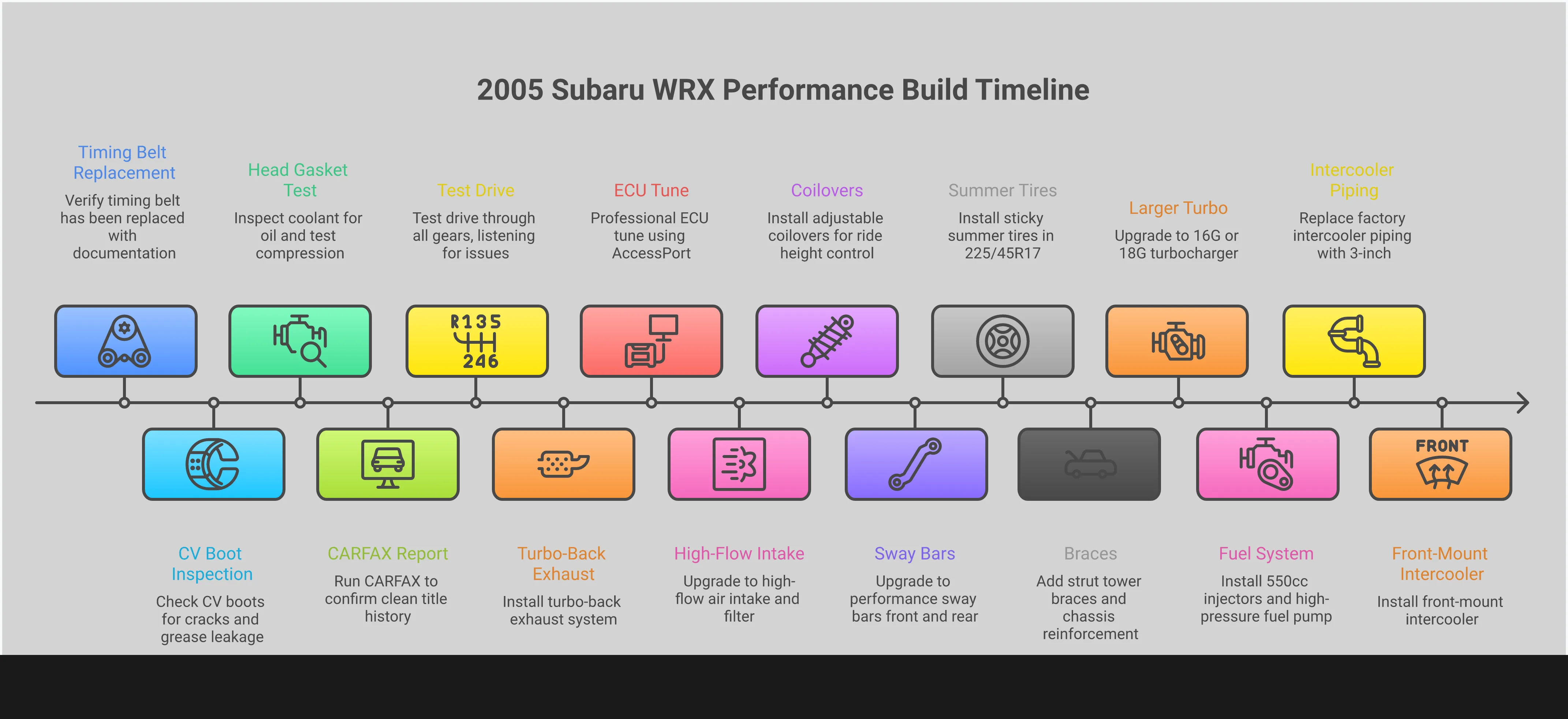
Achieving STi-Level Performance on a Budget
Many enthusiasts wonder if they should hold out for an STi, but the truth is, you can achieve incredible performance with the standard WRX for a fraction of the cost. The secret is the EJ205 engine, which responds exceptionally well to a few smart modifications. You can make your WRX as quick as the more expensive STi model with a couple of key aftermarket parts. Start with the most effective upgrades: a high-flow turbo-back exhaust paired with a professional ECU tune. This combination alone can deliver a dramatic increase in power and torque. At Crawford Performance, we specialize in expert engine tuning services that safely maximize your engine's potential. By focusing on these strategic performance parts, you can build a car that delivers STi-level excitement without the STi price tag.
Getting More Power with an Exhaust and Tune
For the biggest bang for your buck, start with the exhaust and an ECU tune. The factory exhaust is restrictive, and a turbo-back system immediately frees up airflow, allowing the engine to breathe better. This change alone produces noticeable gains in horsepower and torque. To maximize this, you'll need a professional tune. An expert can remap your ECU to optimize fuel and timing, ensuring your engine runs safely with its new potential. Our Engine Tuning Services are designed to dial in your specific setup for peak performance.
Suspension Upgrades for Sharper Handling
Power is only part of the equation; you also need control. The stock suspension on the 2005 WRX is capable, but upgrading it makes the car feel much more connected to the road. Enhancements like performance coilovers or lowering springs reduce body roll and lower the center of gravity for sharper cornering and improved stability. Adding stiffer sway bars can further refine handling. These Subaru WRX upgrades work together to give you the confidence to use that extra power, creating a more balanced and enjoyable driving experience.
Next-Level Mods: Turbo and Intake
When you're ready for a serious power increase, look at the turbo and intake. Swapping the stock turbo for a larger unit, like a 16G or 18G, is a popular choice for the 2.0L engine. A bigger turbo pushes more air but needs supporting mods to work effectively. This includes an upgraded fuel pump, larger injectors, and a high-flow intake to meet the engine's increased demands. All of these performance parts must be paired with a custom ECU tune to prevent engine damage and create a reliable power curve.
What Does It Cost to Own a 2005 WRX?
The sticker price of a 2005 WRX is just the starting point. To get a true picture of what it costs to have one in your garage, you need to look at the total cost of ownership. This includes everything from routine upkeep and insurance to those unexpected repairs that can pop up with any performance car, especially one that’s been on the road for a while. Thinking about these expenses ahead of time will help you decide if this iconic Subaru is the right fit for your budget. A little planning ensures you can enjoy the drive without financial stress, keeping your focus on the road ahead instead of your bank account. Let’s break down the main costs you should prepare for.
Budgeting for Routine Maintenance
Staying on top of regular maintenance is non-negotiable with a turbocharged car like the 2005 WRX. Consistent upkeep keeps it running efficiently and helps you avoid much larger, more expensive problems down the road. Key tasks include frequent oil changes with quality synthetic oil, regular fluid checks, and careful attention to the turbocharger. You’ll also want to keep a close eye on the brake system, tires, and timing belt, which is a critical component that needs replacement at scheduled intervals. When parts do wear out, consider it an opportunity to install high-quality WRX upgrades that can handle the demands of spirited driving better than stock components.
Don't Forget Insurance and Registration
Before you even start negotiating a price, it’s a smart move to get an insurance quote. The 2005 WRX is a turbocharged, all-wheel-drive sports sedan, and insurance companies often place it in a higher-risk category. Rates can vary dramatically based on your age, driving record, and location, so you don’t want any surprises after you’ve already made the purchase. On top of insurance, you’ll have annual registration fees. While these are typically more predictable, they are still a fixed cost you need to include in your yearly budget. Factoring these expenses in from the start gives you a much clearer picture of your total annual cost.
Setting Aside Money for Unexpected Repairs
Even a well-maintained WRX can have unexpected issues, so it’s wise to set aside a fund for repairs. On average, owners can expect to spend around $700 a year on fixes. These cars are known for their longevity, often pushing past 200,000 miles with proper care. However, if the car has been modified, particularly with aggressive tunes or aftermarket parts, you might face more significant work, like engine repairs, sooner than you would with a stock example. To ensure any modifications are done correctly and reliably, it’s always best to rely on professional engine tuning services that can optimize performance without compromising durability.
Is the 2005 WRX the Right Car for You?
Deciding on a car, especially a modern classic like the 2005 WRX, comes down to what you value in a vehicle. It’s a fantastic machine, but it’s not for everyone. This car shines for a specific type of driver who appreciates its unique blend of rally-bred performance and everyday usability. If you’re weighing your options, let’s break down who this car is truly for and the final details you should consider before making a decision.
The Ideal 2005 WRX Owner
The 2005 WRX is an excellent choice for the hands-on enthusiast who craves an engaging driving experience. If you love the feeling of a turbocharged engine and the confidence of all-wheel drive, this car delivers. Owners consistently praise its sharp handling and quick performance, making it incredibly fun to drive on back roads or even just on your daily commute. It’s also a practical option for those living in areas with harsh weather, as its AWD system provides excellent traction in snow and rain. This model is a perfect platform for modifications, allowing you to build a car that truly fits your performance goals with quality Subaru WRX upgrades.
Daily Driver vs. Weekend Project Car
Deciding how you'll use your 2005 WRX is a key first step. As a daily driver, it’s surprisingly practical. The Symmetrical All-Wheel Drive provides confidence in any weather, making your commute engaging and secure. It’s a car that adds a dose of excitement to everyday errands. For daily use, you can improve the driving experience with carefully selected Subaru WRX upgrades that enhance reliability and response without sacrificing comfort. This approach allows you to enjoy the car's performance character while maintaining its practicality for the daily grind.
Alternatively, the WRX truly shines as a weekend project car. Its EJ205 engine is a legendary platform for modification, and the aftermarket support is massive. This is where you can build a dedicated track machine or a personalized street car, starting with foundational performance parts that unlock its true potential. The robust chassis and AWD system can handle significant power increases, making it a rewarding canvas for any enthusiast. Whether you keep it mild or go for a full build, the WRX is a versatile and rewarding platform.
The Final Verdict: Should You Buy One?
Before you commit, the most critical factor is the car's maintenance history. A well-cared-for 2005 WRX can easily surpass 200,000 miles, but neglect can lead to costly problems. When inspecting a potential purchase, ask for service records and pay close attention to major items. The timing belt, for instance, is a crucial component that should be replaced every 100,000 miles or so. A solid service history is the best indicator of a healthy car. Regular maintenance not only ensures longevity but also keeps the car running efficiently. Proper care and expert engine tuning services will help you get the most out of your WRX for years to come.
Related Articles
Frequently Asked Questions
What's the most important thing to check before buying a 2005 WRX? Without a doubt, you need to verify the car's maintenance history, paying special attention to the timing belt service. This is a critical job that should be done around the 100,000-mile mark. A seller who can't provide proof of this service should make you cautious. A solid service history is the best indicator that you are starting with a healthy car, not inheriting someone else's neglected project.
Should I buy a WRX or hold out for an STi? This really depends on your goals. The STi is more capable right out of the box with its stronger transmission and more powerful engine. However, the standard WRX is often the smarter choice for enthusiasts who plan to build their car. It costs less upfront, leaving you with more budget to invest in high-quality performance parts and create a build that is personalized to your exact preferences.
What is the first upgrade I should make to my 2005 WRX? The best place to start for immediate and noticeable gains is with a turbo-back exhaust system paired with a professional ECU tune. The stock exhaust is quite restrictive, and opening it up allows the engine to breathe much more freely. The tune is essential to safely optimize your engine's fuel and timing parameters to take full advantage of the new hardware, giving you a significant power increase you can feel.
Are these cars really prone to head gasket failure? The head gasket issue on this era of Subaru is a well-documented concern, so it's something to be aware of. It's not a guarantee that every car will have the problem, but it is a known weak point. The best approach is to get a pre-purchase inspection from a mechanic who knows these cars. If a car needs the work done, you can use it as a negotiating point and install upgraded, more durable gaskets for long-term peace of mind.
How much does it really cost to maintain one of these cars? Owning a 2005 WRX will cost more than your average commuter sedan, but it's quite reasonable for a performance vehicle. You should budget for frequent oil changes using quality synthetic oil, premium fuel, and a separate fund for unexpected repairs. Proactive maintenance is key; staying on top of fluid changes and wear items will prevent small issues from becoming expensive problems.