

STI WRX 2004: What to Know Before You Buy
Forget paddle shifters and digital dashboards. Some cars offer a connection that feels refreshingly real, and the 2004 WRX STI is one of them. It’s a machine that communicates every detail of the road, demanding your full attention and rewarding it with an unfiltered, exhilarating driving experience. The distinctive rumble of the boxer engine, the mechanical feel of the six-speed shifter, and the incredible grip of the all-wheel-drive system create a symphony of performance. For many, the STI WRX 2004 represents the peak of accessible, analog performance. This guide is for anyone who wants to find, maintain, or enhance one of these modern icons.
Key Takeaways
- A Rally-Bred Legend: The 2004 WRX STI became an icon by delivering a complete performance package to the US, featuring a powerful 2.5L turbocharged engine and a sophisticated all-wheel-drive system that set a new benchmark for accessible performance.
- Prioritize a Professional Inspection: This model has known issues like potential head gasket failure and rust in the rear quarter panels; a pre-purchase inspection from a Subaru specialist is the most critical step to verify the car's mechanical health and avoid inheriting expensive problems.
- Plan for Smart Ownership and Upgrades: Successful ownership means budgeting for high-quality fluids, premium fuel, and proactive maintenance. When modifying, always pair new performance parts with a professional engine tune to ensure you gain power reliably and safely.
Why Is the 2004 WRX STI a Legend?
The 2004 Subaru WRX STI wasn't just another car; it was an event. As the first STI to officially land on American shores, it brought a level of rally-bred performance that was previously the stuff of import dreams and video games. It delivered raw power, sophisticated handling, and an aggressive design that made it an instant icon. For years, enthusiasts had watched its predecessors dominate the World Rally Championship, and finally, they could own a piece of that legacy. The car was an unapologetic performance machine, from its oversized hood scoop to its towering rear wing.
What truly cemented its legendary status was the complete package. It wasn't just fast in a straight line; it was a master of corners, thanks to its symmetrical all-wheel drive and advanced differential. The combination of its turbocharged engine, a slick six-speed manual, and track-ready components created a driving experience that was, and still is, utterly addictive. For many enthusiasts, this was the car that defined a generation of accessible performance, setting a benchmark that rivals struggled to meet. Its legacy is built on a foundation of pure, unadulterated driving fun, backed by engineering that was years ahead of its time.
The "Blobeye": Unique Features of the 2004 Model
Affectionately nicknamed the "Blobeye" for its distinct, rounded headlights, the 2004 model stands out in the Subaru lineage. This specific design was exclusive to the 2004 model year in the United States, making it a particularly sought-after version for collectors and tuners. Its uniqueness isn't just skin-deep; the Blobeye introduced a potent new engine to the American market and featured aggressive, functional styling that screamed performance. These elements combined to create a car that was not only a formidable performer right out of the box but also a perfect platform for personalization and enhancement.
North American Engine Advantage
What truly set the first American STI apart was its heart: the 2.5-liter turbocharged boxer engine, the EJ257. While other markets received a 2.0-liter engine, the US version was gifted this larger, more powerful unit, producing a solid 300 horsepower and 300 lb-ft of torque. This engine delivered a raw, visceral punch that defined the car's character, offering thrilling acceleration and a broad powerband. The EJ257's robust design also made it a favorite in the tuning community, providing a strong foundation for those looking to extract even more power with high-quality Subaru STI upgrades.
Distinctive Styling Cues
The 2004 WRX STI's styling was aggressive and purposeful. Every design choice served a function, from the massive hood scoop that fed cool air to the intercooler to the towering rear wing that provided genuine downforce at speed. These weren't just cosmetic additions; they were integral components of the car's performance-oriented design. The flared fenders housed wide, 17-inch BBS wheels, giving the car a planted and muscular stance. This combination of functional aerodynamics and rally-inspired aesthetics created an unmistakable look that continues to turn heads and signifies a golden era of Japanese performance parts engineering.
The Boxer Rumble: A Look at the 2.5L Turbo Engine
At the core of the 2004 STI is the legendary EJ257, a 2.5-liter turbocharged boxer engine. This powerhouse produced an impressive 300 horsepower and 300 lb-ft of torque right out of the box, numbers that were seriously potent for the era. The engine's design delivered a low center of gravity and a distinctive rumble that became synonymous with Subaru performance. This wasn't just about straight-line speed; the torque provided a thrilling pull that made daily driving exciting and track days unforgettable. The EJ257 is also highly receptive to modifications, making it a favorite for tuners looking to extract even more power with quality performance parts.
How the DCCD Puts You in Control
What truly set the 2004 STI apart from its competitors was its sophisticated drivetrain. Paired with a robust six-speed manual transmission, the Driver Controlled Center Differential (DCCD) gave drivers an unprecedented level of control. This system allows you to manually adjust the torque split between the front and rear wheels, effectively changing the car's handling characteristics on the fly. You could dial it in for tight corners on a track or adjust for slick conditions on a back road. This technology, trickled down from Subaru's rally program, transformed the STI from a fast car into a precise driving instrument, creating a direct connection between the driver and the road.
Why Brembos and BBS Wheels Are a Winning Combo
Subaru understood that a performance car needs to stop as well as it goes. That's why the 2004 STI came equipped with a high-performance Brembo braking system from the factory. These powerful calipers and large rotors provided consistent, fade-free stopping power that inspired confidence during spirited driving. Complementing the brakes were the iconic gold-painted 17-inch BBS wheels, which were not only stylish but also lightweight and strong, reducing unsprung weight to improve handling and suspension response. This factory-installed package of premium components demonstrated Subaru's commitment to building a true, track-capable machine. Today, these serve as a fantastic foundation for further STI upgrades.
That Iconic Wing: More Than Just Looks
The aggressive styling of the 2004 STI was impossible to ignore, and every element served a purpose. The massive hood scoop wasn't just for looks; it directed cool air straight to the top-mounted intercooler, a critical function for a turbocharged engine. In the back, the towering rear wing provided genuine downforce, keeping the car planted and stable at high speeds. The sculpted front bumper and side skirts were also designed to manage airflow effectively. This "form follows function" approach gave the STI an unmistakable presence and reinforced its rally heritage, proving that its wild appearance was backed by serious engineering.
What to Inspect Before Buying a 2004 WRX STI
The 2004 WRX STI is an icon, but even legends have their quirks. As a two-decade-old performance car, it's likely been driven hard and seen its share of miles. Knowing what to look for before you buy can be the difference between scoring your dream car and inheriting a project you didn't sign up for. A thorough inspection is your best tool for making a smart investment. This guide will walk you through the most common issues so you can check out any potential STI with confidence and know exactly what you're getting into.
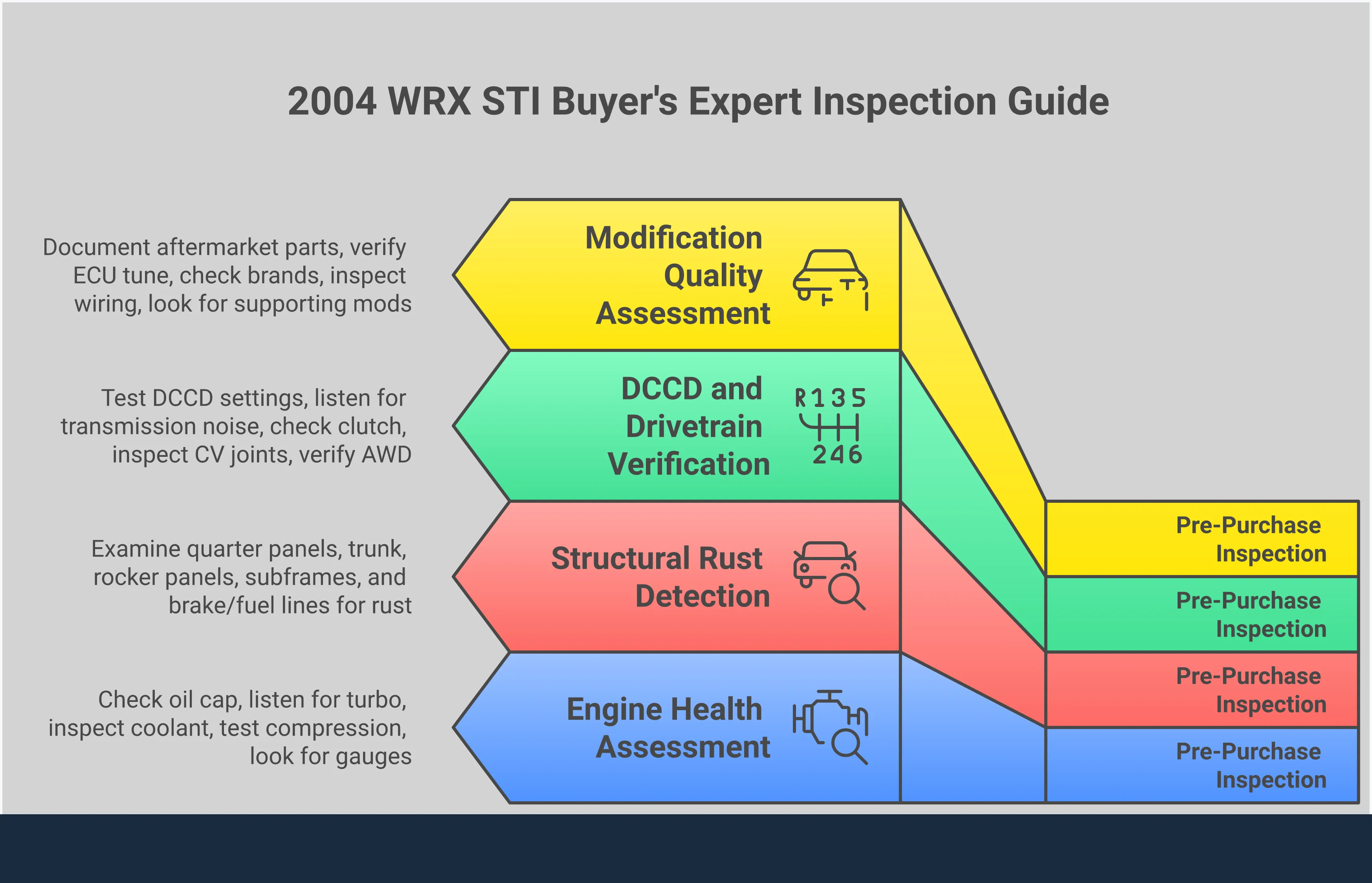
From the infamous head gaskets to hidden rust, we'll cover the key areas that demand your attention. Being prepared doesn't mean you should be scared off; it means you can negotiate a fair price or walk away from a money pit. For the right car, addressing these potential weak points is just the first step in building a truly personalized and reliable machine. Remember, many of these cars have been modified over the years, so you're not just inspecting the car Subaru built, but also the work of previous owners. A careful eye now will save you countless headaches and dollars down the road, freeing you up to focus on the fun part: driving and upgrading your STI.
Spotting the Signs of Head Gasket Failure
The EJ257 engine is a powerhouse, but it's also known for potential head gasket issues. This is probably the most significant concern for any potential buyer. A failed head gasket can allow coolant and oil to mix, leading to overheating and catastrophic engine damage. When you inspect the car, check for a milky residue on the oil cap, sweet-smelling white smoke from the exhaust, or any signs of the engine running hot. Ask the seller for maintenance records, as a proactive owner may have already addressed this. If you find a car with this issue, be prepared for a costly repair, or see it as an opportunity to build a stronger engine from the ground up.
Key Symptoms: Oil Cap and Exhaust Smoke
When you're checking out a 2004 STI, two specific signs should be on your radar. First, unscrew the oil cap and look at the underside. If you see a milky, frothy residue, that's a major red flag. This "milkshake" means coolant is mixing with the oil, which is a classic symptom of a failing head gasket. The second sign is sweet-smelling white smoke coming from the exhaust, especially on startup. This isn't just condensation; it indicates that coolant is leaking into the combustion chambers and being burned off. If you spot either of these symptoms, ask the owner for service records. A known issue that hasn't been fixed can be a powerful negotiation tool or a clear signal to walk away. Alternatively, it could be the perfect reason to invest in high-quality performance parts and build an engine that's stronger than stock.
Where to Look for Hidden Rust and Corrosion
Rust is the enemy of any older vehicle, especially one that has lived in a region with harsh winters or salty air. On the 2004 STI, pay close attention to the rear quarter panels, rocker panels, and front and rear subframes. Pull back the trunk carpet and check the spare tire well for any signs of moisture or corrosion. While a little surface rust can often be treated, significant rot in the frame or body panels is a major red flag. A solid, rust-free chassis is the best foundation for any future modifications and will ensure the car's structural integrity for years to come.
Beyond the Obvious: Checking Side Skirts and Trunk
While you’re inspecting the main body panels, don’t forget to look where rust often hides. Make a point to pull back the carpet in the trunk and thoroughly check the spare tire well. Any evidence of moisture, standing water, or corrosion could point to a leaky seal or even hidden damage from a past rear-end collision. Similarly, the side skirts are notorious for trapping dirt and water against the rocker panels, which can lead to rust developing from the inside out. A solid, rust-free chassis isn't just about aesthetics; it's the essential foundation for the car's structural integrity, especially if you plan to install performance parts and push the car to its limits.
How to Check the Turbo and Cooling System
The turbocharger is central to the STI's thrilling performance, so you'll want to make sure it's in good health. During your test drive, listen for unusual whining sounds and watch for blue or gray smoke from the exhaust, as these can be signs of a failing turbo. The cooling system is just as critical. Old rubber hoses can become brittle and crack, leading to coolant leaks and overheating. Check all the coolant lines for leaks or bulging. Upgrading to more durable Subaru STI upgrades like silicone hoses and an aluminum radiator is a smart move for long-term reliability and performance.
Telltale Signs of a Failing Turbo
The turbo is what gives the STI its signature punch, so keeping it healthy is critical. Listen closely during your test drive for a high-pitched whining noise that sounds like a siren and intensifies with acceleration—that’s a classic sign of worn bearings. You should also watch the rearview mirror for puffs of blue or gray smoke when you step on the gas, which points to failing turbo seals burning oil. A noticeable loss of power is another giveaway that the turbo isn't delivering the boost it should. If you spot any of these symptoms, don't just see it as a costly repair. Consider it the perfect opportunity to install a more robust turbo and build a more powerful machine with modern STI upgrades.
Don't Ignore These Electrical Warning Signs
While not as mechanically critical as engine or rust issues, electrical problems can be a real headache. On a car of this age, it's common to find little electronic quirks. Take the time to test everything inside the cabin. Roll all the windows up and down, check the radio and speakers, test the climate controls, and make sure all the dashboard lights work as they should. While a faulty window switch isn't a deal-breaker, multiple small electrical issues can point to larger, more complex problems with the wiring harness. It’s better to know exactly what you’re getting into before you finalize the deal.
How Does the 2004 WRX STI Compare to Its Rivals?
When the 2004 WRX STI landed in North America, it didn’t just enter the market; it ignited a rivalry. This car was built with a clear target in its sights, and its arrival gave enthusiasts a tough choice to make. Understanding how it compared to its primary competitor and what it was like to live with every day reveals why it remains such a sought-after vehicle. Its legacy is defined not just by its performance specs, but by the experience it delivers on and off the track.
The Classic Rivalry: STI vs. Evo
You can't talk about the 2004 STI without mentioning its arch-nemesis: the Mitsubishi Lancer Evolution. This was the definitive performance car showdown of the early 2000s, a rivalry as intense as any in automotive history. While the Evo was often praised for its razor-sharp handling and slightly faster straight-line speed, the STI brought its own unique strengths to the fight. Many drivers found the STI to be more compliant and stable on imperfect roads, making its power more accessible in real-world conditions. The Evo might have been the scalpel, but the STI was the masterfully balanced sword, ready for any battle. This ongoing competition pushed both platforms forward, inspiring owners to continually seek out new Subaru STI upgrades to gain an edge.
Can You Daily Drive a 2004 STI?
While born from rally racing, the 2004 STI is more than just a weekend warrior. For daily driving, its broad powerband and responsive Brembo brakes make for an exciting commute. However, living with one requires some trade-offs. The interior is functional but far from luxurious, fuel economy is not its strong suit, and maintenance can be costly if neglected. These are the compromises you make for a raw, analog driving experience. The car communicates everything the road is doing directly to you, a feeling often lost in modern performance vehicles. Investing in quality performance parts not only sharpens its capabilities but can also improve its durability for daily use, making the experience even more rewarding.
Owner Feedback: Ride Quality and Interior Downsides
Owners consistently give the 2004 STI high marks, with an overall rating of 4.8 out of 5 stars. However, that praise is almost entirely directed at the driving experience and mechanical reliability, which many describe as "priceless." If you're looking for a plush, quiet ride with luxury appointments, this isn't your car. The interior is a common point of criticism, with owners noting that while the mechanical parts are robust, the cabin is filled with plastics that can feel cheap. The focus is clearly on performance over comfort, making it an ideal foundation for meaningful STI upgrades that enhance its core strengths.
Passenger Room: The Backseat Experience
While the 2004 STI has four doors and a backseat, it's best to think of it as a car for the driver, with occasional passenger capacity. The back seats are small and can be quite cramped for adults, especially on longer journeys. It can certainly function as a daily driver, but it comes with compromises. The ride is firm, the interior is basic, and you should budget for high running costs between premium fuel and regular maintenance. The backseat is useful in a pinch, but if you frequently need to transport adults comfortably, you might find its limitations frustrating. This car prioritizes the person behind the wheel above all else.
Why Its Rally Heritage Still Matters
The 2004 model holds a special place in automotive history as the very first WRX STI officially sold in North America. This debut made it an instant icon. Its signature look, often in World Rally Blue with gold BBS wheels and a towering rear wing, is immediately recognizable. That pink "STI" badge wasn't just branding; it was a symbol of its rally-proven pedigree. Beyond the car itself, owning a 2004 STI means joining a passionate and dedicated community. This shared enthusiasm for the brand's heritage is a huge part of the ownership experience. It’s why so many owners are committed to preserving and enhancing their vehicles with thoughtful WRX upgrades that respect the car’s legendary DNA.
How Much Should You Pay for a 2004 WRX STI?
Figuring out the right price for a 2004 WRX STI can feel like hitting a moving target. Because these cars are nearly two decades old and have a massive enthusiast following, their values are driven by much more than just age. Prices can range from a few thousand dollars for a project car to six figures for a collector-grade example, so it's crucial to know what you're getting into. The key is to understand what factors influence the price tag the most: condition, mileage, and originality. A car that looks like a bargain might hide expensive problems, while a higher-priced STI could be a solid investment that’s ready for the road or track. Before you start your search, it’s helpful to set a realistic budget based on what you’re looking for, whether it’s a daily driver, a weekend warrior, or a pristine show car. This will help you filter your options and focus on cars that fit your goals. Knowing what to expect will help you identify a fair deal when you see one and avoid overpaying for a car that needs more work than it's worth. Remember, the initial purchase price is just the beginning; you'll also need to budget for maintenance and any potential upgrades you have in mind.
How Condition Affects Market Value
The single biggest factor determining a 2004 STI's price is its overall condition. A well-maintained, mechanically sound example is a completely different vehicle from one that's been neglected or abused. As a general rule, a 2004 STI in good condition is now a $15,000 to $20,000 car. "Good condition" means it has a clean title, minimal rust, a solid service history, and an interior that isn't falling apart. Be cautious of cars priced significantly below this range. They often have hidden issues like pending engine trouble or severe rust that will cost you far more in the long run. Modifications can also be a wild card. A car upgraded with quality performance parts and a professional tune might command a higher price, but one with cheap, poorly installed mods should be approached with caution.
How Mileage Impacts the Price Tag
Mileage is another critical piece of the pricing puzzle. While you might find some outliers, most 2004 STIs on the market are drivers, not garage queens. It’s common to see listed cars with between 75,000 and 145,000 miles, and their prices often range from about $18,499 to $31,999. This shows that even within the typical mileage range, there’s a lot of variation based on maintenance and condition. Don’t let high mileage scare you off entirely. A car with 150,000 miles that has a binder full of service records can be a much safer bet than a 90,000-mile car with a questionable history. These engines are robust when cared for, and a well-loved STI is a great foundation for a build. Many owners use them as a platform for Subaru STI upgrades to create their perfect performance machine.
Is It a Collector's Item? Predicting Future Value
The 2004 "Blobeye" STI is rapidly gaining status as a modern classic, and its potential as a collector's item is pushing prices up for pristine examples. A completely stock, low-mileage 2004 STI is incredibly rare. Because of its perfect, original condition and very low miles, a car like this can sell for a very high price, sometimes over $100,000. These are investment-grade vehicles, preserved in time-capsule condition with all original parts intact. For most enthusiasts who plan to actually drive and enjoy their car, a collector-grade example isn't the goal. The real value is in the driving experience, not letting it sit in a garage. Finding a solid, well-cared-for driver allows you to enjoy the car's legendary performance and even personalize it with your own Subaru WRX upgrades without worrying about diminishing its collector value.
What Does It Really Cost to Own One?
Owning a legendary performance car like the 2004 WRX STI is an incredible experience, but it’s important to go in with your eyes open about the costs. Beyond the initial purchase price, you’ll need a solid budget for maintenance, potential repairs, and the inevitable upgrades you’ll want to make. This isn’t your average daily commuter; it’s a high-strung, rally-bred machine that demands quality care to perform its best and maintain its value. A proactive approach to budgeting will be the difference between enjoying every drive and feeling stressed by unexpected bills.
Think of your ownership budget in a few key categories. First, there are the non-negotiable running costs like premium fuel and high-quality fluids, which are the foundation of a healthy engine. Next is proactive maintenance, especially for critical areas like the cooling system, which works hard to keep the turbocharged engine happy under pressure. Finally, there’s the fun part: performance modifications. Almost no one buys an STI to leave it stock, so planning for those performance parts and the labor to install them is a realistic part of the financial picture. By anticipating these expenses from the start, you can build a financial cushion that allows you to enjoy your STI to the fullest without any surprises.
A Word of Caution for New Drivers
While the 2004 WRX STI is an incredibly rewarding car to drive, it's not the best choice for a new driver. Its raw power and immediate responsiveness can be a handful for someone still developing their skills behind the wheel. With 300 horsepower from its turbocharged engine and a sophisticated all-wheel-drive system, the car reacts instantly to every input. This is fantastic for an experienced driver on a track, but it can easily lead to trouble on public roads if you're not prepared for it. The STI demands a high level of respect and car control, which typically comes with time and experience. It's a car that can get away from you quickly if you're not careful.
Beyond the performance, there are practical reasons to reconsider the STI as a first car. Insurance costs for young drivers in a high-performance vehicle like this are often extremely high, which can be a major financial hurdle. The maintenance requirements are also more demanding than your average sedan. These cars need diligent care, premium fuel, and high-quality fluids to stay healthy. If the car has been modified, it's even more critical to ensure it has been properly maintained and tuned. For any performance car, especially a classic like the STI, relying on expert knowledge for maintenance and performance parts is key to its longevity, which is a significant responsibility for a new owner.
Choosing the Right Oil and Fluids
When it comes to a turbocharged engine like the one in the WRX STI, the fluids are its lifeblood. This is not the place to cut corners. Using a high-quality, full-synthetic oil that meets factory recommendations is one of the most critical things you can do for engine longevity. Paired with a premium oil filter, clean oil protects vital internal components from the extreme heat and pressure of performance driving. Don’t forget about other essential fluids, including transmission fluid, differential fluid, and brake fluid. Regularly checking and changing these fluids according to a strict schedule will pay dividends in reliability and save you from costly repairs down the road.
The Go-To Engine Oil: Synthetic 5W-30
For most 2004 WRX STI owners, the factory-recommended full-synthetic 5W-30 is the ideal choice for engine oil. The "5W" indicates its viscosity in cold temperatures, ensuring smooth startups, while the "30" represents its thickness at operating temperature. This specific weight provides the perfect balance of protection and efficiency for the EJ257 engine under normal to spirited driving conditions. A high-quality synthetic is non-negotiable; it resists breaking down under the intense heat generated by the turbocharger, providing consistent lubrication and preventing premature wear on critical performance parts. Sticking with a trusted synthetic 5W-30 is a simple, effective way to protect your investment and ensure your STI's engine remains healthy and responsive for years to come.
How to Prevent Overheating: Cooling System Care
The 2.5L turbocharged engine in the 2004 WRX STI is known for generating a lot of heat. Because of this, a healthy and efficient cooling system is absolutely essential to prevent overheating, which can lead to serious issues like head gasket failure. As a potential owner, you should make it a habit to keep a close eye on coolant levels and regularly inspect the entire system for any signs of leaks. Check the radiator, coolant hoses, and water pump for wear or drips. For many owners, upgrading to a more robust aftermarket radiator or more durable silicone hoses provides extra peace of mind, especially if you plan on tracking the car or adding Subaru STI upgrades.
Budgeting for Repairs and Upgrades
Let’s be honest: you’re probably already dreaming about the modifications you want to make. The STI is a platform built for enhancement, and the aftermarket support is massive. Many owners quickly find themselves planning for a new intake, a full exhaust system, a larger intercooler, and fuel system upgrades. While these parts can dramatically improve performance, it’s crucial to budget for them realistically. Remember to account for not just the cost of the components themselves, but also for professional installation and proper engine tuning services. A well-planned build with a corresponding tune is key to making reliable power.
What to Expect at the Gas Pump
The thrill of driving a 2004 WRX STI comes with a price, and you’ll feel it every time you visit the gas station. This car was built for performance, not fuel economy. It requires premium fuel, typically 91 octane or higher, to run safely and prevent engine knock. Your actual mileage will vary depending on your driving style, but don’t expect it to be a fuel-sipper. Spirited driving will see the fuel gauge drop quickly. Be prepared to factor this higher fuel cost into your monthly budget. It’s a significant and recurring expense that is simply part of the cost of admission for owning such a capable and exciting car.
Real-World Fuel Economy: What Owners Report
Let's be clear: nobody buys a 2004 STI for its gas mileage. While the official numbers might suggest something in the high teens, real-world owner reports often hover around a combined 19 miles per gallon. This figure can swing wildly depending on how you drive. If you're constantly enjoying that turbo boost and the thrill of acceleration, you can expect to see that number dip significantly lower. It's the price you pay for the exhilarating performance that makes this car so special. A well-maintained engine is key to getting the best possible mileage, and ensuring your car has a professional engine tune can help it run as efficiently as possible, even after adding performance parts.
Ready to Modify? Top Upgrades to Consider
The 2004 WRX STI is an incredible machine right out of the box, but its true potential lies in thoughtful modification. Whether your goal is to build a weekend track warrior, a reliable daily driver with more punch, or even an overlanding solution, the EJ257 engine and rally-bred chassis provide a fantastic canvas. Before you buy a single part, it's important to define your goals. Are you chasing lap times, or do you want a car that feels more responsive on your favorite back road? Your answer will guide your upgrade path.
The key is to follow a smart, balanced approach that adds power and sharpens handling without sacrificing the reliability that makes these cars so great. It's easy to get caught up in chasing big horsepower numbers, but adding a huge turbo won't do you much good if your suspension and brakes can't keep up. A truly well-built car feels cohesive, where every component works in harmony. Similarly, a world-class suspension setup feels incomplete without the power to push it to its limits. We'll look at three core areas for improvement: adding power through engine and turbo work, sharpening the car's reflexes with suspension and handling upgrades, and improving efficiency with intake and exhaust modifications. With the right combination of quality performance parts, you can tailor your STI to your exact driving style and create a machine that is uniquely yours.
Getting More Power: Engine and Turbo Upgrades
The heart of your STI is its 2.5L turbocharged boxer engine, and it responds very well to modifications. Before you start adding hardware, the single most important step is a professional ECU tune. An expert engine tuning service can remap your car’s computer to safely optimize performance for any new parts you install. Once you have a plan for tuning, you can explore upgrades like high-flow fuel systems and larger intercoolers. These components are essential for maintaining engine performance under high-stress conditions, ensuring your engine runs strong and reliably whether you're on the street or the track.
How to Make Your STI Handle Even Better
A great car isn't just about straight-line speed; it's about how it feels in the corners. To improve your STI's handling, consider investing in a quality set of coilovers. This allows you to fine-tune your ride height and damping for the perfect balance of comfort and performance. Upgraded front and rear sway bars can drastically reduce body roll, making the car feel more planted and responsive during quick transitions. Don't forget about stopping power. As you add horsepower, upgrading your brake pads and rotors becomes critical for safety and confidence. These Subaru STI upgrades work together to create a more connected and engaging driving experience.
Essential Bolt-Ons: Intake, Exhaust, and Cooling
Think of your engine as a giant air pump: the more efficiently it can breathe, the more power it can make. Installing a cold air intake and a high-performance exhaust system is a fundamental step for improving engine efficiency. A quality intake delivers cooler, denser air to the turbo, while a less restrictive exhaust allows gases to exit faster, reducing backpressure. This combination not only adds horsepower but also gives you that iconic Subaru rumble. To protect your engine during spirited driving, an Air/Oil Separator (AOS) is a must-have. It prevents oil from contaminating your intake, which helps maintain performance and long-term engine health.
How to Find and Buy the Right 2004 WRX STI
Finding a clean 2004 WRX STI is a rewarding hunt, but it requires patience and a sharp eye. These cars were often driven hard, so knowing where to look and what to look for is key to bringing home a gem instead of a project car that drains your wallet. With the right approach, you can find a solid foundation for your dream build.
Where to Find a 2004 WRX STI for Sale
Your search will likely start online. Websites that aggregate listings from across the country are your best friend here, allowing you to compare prices, mileage, and condition from a single screen. When you're searching for a used 2004 Subaru Impreza WRX STI, you'll find that prices can vary significantly based on the car's history and modifications. A nationwide search on platforms like CarGurus can reveal options ranging from around $18,000 for higher-mileage examples to over $30,000 for well-preserved ones. Don't limit your search to your local area; the perfect STI might be a state or two away, and the trip is often worth it for the right car.
Your Pre-Purchase Inspection Checklist
Before you even think about handing over cash, a thorough pre-purchase inspection (PPI) is non-negotiable. Many enthusiasts will tell you that a neglected 2004 STI can quickly become a money pit. Common failure points include head gaskets, rust in the rear quarter panels, leaking turbo hoses, and worn-out ball joints. A PPI from a mechanic who specializes in Subarus is your best defense. They know exactly where to look for these issues and can give you an honest assessment of the car's health. This step is crucial because it helps you identify potential problems before they become your financial burden and ensures you're starting with a reliable platform for any future performance parts.
Why the Subaru Community Is Your Best Resource
The Subaru community is one of the most passionate and knowledgeable groups out there. Engaging with fellow owners on forums and in local clubs can uncover hidden gems for sale and provide invaluable advice. Once you’ve secured your STI, this community becomes an incredible resource for your ownership journey. The aftermarket support for these cars is massive, meaning you can tailor the vehicle to your exact goals. Whether you plan on building a dedicated track machine or simply want to improve its street performance, you can find the specialized WRX STI modifications to make it happen. Connecting with other owners and trusted shops helps you choose the right parts for a reliable and powerful build.
Related Articles
Frequently Asked Questions
What's the first upgrade I should make to my 2004 STI? Before you buy any hardware, your first investment should be a professional engine tune. The stock ECU map is designed for stock parts, and a quality tune is the foundation for making safe, reliable power. After that, the best path depends on your goals. A great starting point for improving engine efficiency and getting that signature boxer rumble is a high-flow exhaust system and a cold air intake. These modifications work together to help the engine breathe better, and a good tune will maximize their benefits.
Is the 2004 STI practical enough to be a daily driver? It can be, but you have to be realistic about the trade-offs. The car offers an incredibly engaging driving experience that can make any commute exciting. However, it demands premium fuel, and its fuel economy is not great. The ride is firm and the interior is functional rather than luxurious. If you're prepared for higher running costs and a more raw, connected driving experience, it can absolutely serve as a daily driver. Just be sure to stay on top of maintenance to ensure its reliability.
Why is everyone so concerned about head gaskets on the EJ257 engine? The head gasket issue is a well-known weak point for this engine platform. The gasket creates a seal between the engine block and the cylinder heads, and when it fails, it can allow coolant and oil to mix. This can lead to overheating and, if left unchecked, severe engine damage. The concern is valid because the repair is labor-intensive and costly. That's why a pre-purchase inspection is so critical; a specialist can check for early signs of failure and save you a major headache.
Is a high-mileage 2004 STI a risky purchase? Not necessarily. A car's maintenance history is far more important than the number on its odometer. A well-maintained STI with 150,000 miles and a thick folder of service records can be a much smarter buy than a lower-mileage car with a questionable past. These cars were built to be driven, and a diligent owner who used high-quality fluids and addressed issues proactively likely has a very solid car. Always prioritize a thorough inspection over a low mileage number.
How does the 2004 STI compare to a modern WRX? A modern WRX is more comfortable, more fuel-efficient, and filled with more technology, but the 2004 STI offers a completely different experience. The STI provides a much more raw and unfiltered connection to the road. Its hydraulic steering gives you direct feedback, and the Driver Controlled Center Differential (DCCD) offers a level of manual control you won't find in newer models. Driving the 2004 STI is a visceral, analog experience that reminds you why its rally heritage is so legendary.