

STI AOS Explained: Stop Oil Blow-By for Good
The term "ringland failure" haunts Subaru forums for a reason. This catastrophic engine problem isn't just bad luck—it's caused by oil contaminating your combustion chamber. When oil vapor from the crankcase mixes with fuel, it tanks your octane and can cause detonation, the destructive force that kills pistons. An STI AOS (Air Oil Separator) is the most effective way to stop this. It’s not a flashy power upgrade, but critical engine insurance that protects your investment and lets you drive with confidence.
Key Takeaways
- Prevent catastrophic engine failure: An AOS is your best defense against detonation and ringland failure by stopping oil vapor from contaminating your intake system and lowering your fuel's octane rating.
- Maintain consistent power and engine health: A clean intake system ensures your engine performs reliably and efficiently, preventing the gradual power loss and carbon buildup that can shorten its lifespan.
- Choose a true, maintenance-free system: A quality AOS automatically returns oil to the engine, providing constant protection without the need for manual draining like a catch can.
What is an Air Oil Separator (AOS) and Why Your STI Needs One
If you're serious about protecting your Subaru's boxer engine, an Air Oil Separator (AOS) is one of the most critical modifications you can make. It’s a device designed to solve a problem inherent to the flat engine design: oil getting into the combustion chamber where it doesn’t belong. An AOS intercepts the oil-filled vapor from your engine's crankcase ventilation system, separates the oil, and returns it to the engine, ensuring only clean air re-enters your intake. This simple process prevents a host of performance issues and potential engine damage, making it a foundational upgrade for both daily drivers and track-built STIs. By installing an AOS, you're not just adding a part; you're investing in the longevity and reliability of your engine, allowing you to push your car with greater confidence.
How an AOS Guards Your STI Engine
Think of an Air Oil Separator as a dedicated filter for your engine's oil vapor. As your engine runs, pressure builds in the crankcase, and this pressure needs to be vented. The vented air, however, is mixed with fine oil droplets. An AOS is plumbed into this system to catch that vapor. It works by slowing down and cooling the air, causing the heavier oil particles to condense and separate. This collected oil is then safely drained back into the oil pan. The result is that your engine’s intake receives cleaner air, which is essential for proper combustion and long-term health. This makes an AOS one of the most effective performance parts for preserving engine integrity.
Why Your Factory PCV System Falls Short
Subaru’s unique boxer engine design is prone to higher-than-average oil consumption, a condition known as blow-by. The horizontal layout of the pistons can allow more oil to get past the piston rings and into the crankcase ventilation system. While the factory Positive Crankcase Ventilation (PCV) system is designed to handle this, it can be quickly overwhelmed, especially in modified or hard-driven vehicles. When the stock system can't keep up, oil-laden air is fed directly into your intake manifold. This lowers your fuel's octane rating and can lead to uncontrolled combustion events, a dangerous condition known as detonation. That's why so many owners consider an AOS one of the essential Subaru STI upgrades.
Common STI Problems an AOS Can Fix
The primary job of an AOS is to prevent the catastrophic engine damage that can result from oil entering the combustion chamber. When oil mixes with your air and fuel, it effectively lowers the octane of the fuel, making it more likely to ignite prematurely under pressure. This is detonation, and it can destroy pistons and lead to the infamous "ringland failure" that many Subaru owners fear. By keeping oil out of the intake, an AOS maintains your fuel's octane rating, allowing for a more complete and controlled combustion. This not only protects your engine from expensive damage but also helps maintain consistent power output and efficiency.
AOS vs. Catch Can: What's the Real Difference?
While both an AOS and a catch can are designed to remove oil from crankcase vapor, they function differently. A catch can is a simpler, passive system; it’s a container that collects oil, water, and fuel vapors, which you must manually drain at regular intervals. An AOS, on the other hand, is an active system. It separates the oil and automatically returns it to the engine, making it a maintenance-free solution. While a catch can holds everything it collects, an AOS is designed to primarily return oil. For a set-it-and-forget-it solution that ensures your engine always has clean air, an AOS is the superior choice for most drivers.
Signs Your STI Has an Oil Blow-By Problem
Recognizing the early signs of oil blow-by can save you from a world of headaches and expensive repairs. Your STI will often give you clues that its factory PCV system is struggling to keep up. These symptoms can start small, but they point to a larger issue of oil contaminating your intake system. Paying attention to changes in your car's behavior is the first step in diagnosing the problem. If you notice any of these signs, it’s a clear signal that your engine is asking for help and that it might be time to consider essential Subaru STI upgrades to protect its long-term health. Ignoring these warnings can allow a manageable issue to escalate into something far more severe, so it's crucial to act proactively.
Common Symptoms of a Failing PCV System
Exhaust Smoke, Rough Idle, and Unusual Noises
One of the most obvious signs of excessive blow-by is visible exhaust smoke. If you see puffs of white or blue smoke coming from your tailpipe, especially during acceleration, it’s a strong indicator that oil is being burned in the combustion chamber. You might also notice your engine idling rougher than usual or hear strange whistling or squealing sounds. These noises can be caused by air being forced through failing seals or gaskets due to excessive crankcase pressure. These symptoms suggest the stock PCV system is overwhelmed and can no longer effectively separate oil from the crankcase vapor, allowing it to circulate where it shouldn't.
Increased Oil Consumption
While boxer engines are known to consume a bit more oil than other engine types, a sudden or significant increase in oil consumption is a major red flag. If you find yourself needing to top off your oil much more frequently between changes, it’s likely that oil is being lost through the PCV system and burned off during combustion. This not only costs you money in extra oil but also means your engine isn't running as cleanly or efficiently as it should. Tracking your oil levels closely is a simple yet effective way to monitor your engine's health and catch blow-by issues before they cause more serious problems.
The Risk of Severe Engine Damage
The consequences of unchecked oil blow-by go far beyond smoke and oil consumption. When oil vapor enters your intake and mixes with the air-fuel charge, it effectively lowers your fuel's octane rating. Lower octane fuel is less stable under compression and can ignite prematurely, causing a violent, uncontrolled explosion known as detonation. This is the root cause of the dreaded ringland failure that has plagued many Subaru engines. Detonation puts immense stress on your pistons, and over time, it can crack the small sections of the piston between the rings (the ringlands), leading to catastrophic engine failure. Installing one of the right performance parts, like an AOS, is the best way to prevent this destructive chain of events.
How to Check for Oil in Your System
The Intercooler Inspection Method
If you’re comfortable with some basic work under the hood, you can perform a quick check for oil in your intake system yourself. The top-mounted intercooler on your STI is a common place for oil residue to collect when blow-by is an issue. Carefully remove the intercooler and inspect the inside of its inlet and outlet ports. A very light film might be present on a higher-mileage car, but if you find a noticeable coating of oil or any pooling, it’s a definitive sign that your PCV system isn't doing its job. This simple visual inspection can give you the evidence you need to confirm a blow-by problem.
Professional Diagnosis: Crankcase Vacuum Testing
For a more precise and scientific diagnosis, the best method is to measure the engine's crankcase vacuum. This test requires a specialized tool called a manometer, which measures air pressure. A healthy engine should maintain a specific level of vacuum in the crankcase, and a reading that is too low or too high indicates a problem with the PCV system or a failing AOS. This is typically a job for a professional shop with the right equipment and expertise. If you suspect an issue, having a diagnostic test run by experts who specialize in engine tuning services can provide a definitive answer and peace of mind.
How an STI AOS Improves Your Drive
Installing an Air Oil Separator is one of the most effective upgrades you can make for your Subaru STI. It’s not just about adding power; it’s about protecting the engine you already have. An AOS provides a multi-layered defense against common issues that plague turbocharged boxer engines, ensuring your vehicle runs stronger for longer. From preventing catastrophic failure to maintaining consistent performance, the benefits directly address the unique needs of your STI, making it a foundational part of any reliable build.
Prevent Detonation and Ringland Failure
The single most important job of an AOS is to protect your engine from detonation. When oil vapor from the crankcase gets into your combustion chamber, it lowers the octane of your air-fuel mixture. This can cause the fuel to ignite prematurely, creating a destructive force known as detonation or knock. For Subaru engines, this is a primary cause of ringland failure, a costly and catastrophic piston failure. An AOS intercepts that oil vapor, ensuring only clean air enters the intake. This simple function is your best defense against detonation, safeguarding your engine’s internal components, especially when pushing your car with performance parts.
Stop Excessive Oil Consumption and Carbon Buildup
Without an AOS, oil-laden vapor from the PCV system coats everything in its path, including your intercooler, intake manifold, and valves. Over time, this oily residue bakes into hard carbon deposits that restrict airflow and insulate components, reducing efficiency. It can also contribute to increased oil consumption between changes. By separating the oil and returning it to the crankcase, an AOS keeps your entire intake tract clean. This helps your engine breathe better and operate more efficiently, preventing the slow degradation of performance caused by carbon buildup. A cleaner system ensures your engine runs as smoothly as it did from the factory.
Restore Lost Horsepower and Torque
A healthy engine is a powerful engine. While an AOS doesn't add horsepower directly, it allows your STI to make its full power safely and consistently. By preventing detonation, it ensures your ECU doesn’t have to pull timing to protect the engine, a process that significantly reduces power output. A clean intake system also ensures your engine is getting the clean, cool air it needs to perform at its peak. This is especially critical for modified and tuned vehicles. Proper engine tuning services rely on a stable engine, and an AOS provides the stable environment needed to maintain your target power levels lap after lap or pull after pull.
Extend Your Engine's Life (and Save Money)
Think of an AOS as an investment in your STI’s future. The cost of an AOS is a fraction of what you would spend on an engine rebuild due to ringland failure. By addressing the root cause of this common issue, you are actively extending the life of your engine. For anyone who plans to keep their STI for years to come, or for those who have already invested in other Subaru STI upgrades, an AOS is essential. It’s a preventative measure that provides peace of mind and saves you from potentially thousands of dollars in repairs down the road, making it one of the smartest financial decisions for any owner.
Get Maintenance-Free Engine Protection
One of the best features of a high-quality AOS system is its maintenance-free design. Unlike a catch can, which requires you to periodically drain collected oil and condensation, a true AOS is a closed-loop system. It automatically drains the separated oil back into the engine’s oil pan, so there is nothing for you to empty or service. This "set it and forget it" functionality means you get constant, reliable protection without adding another task to your vehicle’s maintenance checklist. You can install it and have confidence that it’s doing its job to protect your engine every time you drive.
How to Choose the Right AOS for Your STI
Selecting an Air Oil Separator for your STI isn't just another modification; it's a crucial investment in your engine's health and longevity. With different designs and brands on the market, it can be tough to know which one is the right fit for your build. A quality AOS is a protective part first and foremost, designed to keep your intake system clean and prevent harmful oil vapor from causing issues like detonation. To make the best choice, you need to look beyond the marketing and focus on compatibility, technology, and build quality. Let’s walk through the key factors to consider so you can find a reliable AOS that protects your engine for years to come.
First Step: Confirm It Fits Your Model Year
This might seem obvious, but it’s the most important first step. An AOS is not a universal part. The layout of the engine bay, PCV hose routing, and mounting points can vary significantly between different generations of the STI, from the early 2000s models to the latest versions. An ill-fitting kit will lead to installation headaches, potential leaks, and improper function, defeating the purpose of installing one in the first place. Always confirm that the AOS kit is specifically designed for your vehicle’s year. Reputable manufacturers will clearly list which Subaru STI Upgrades are compatible with specific model years, taking the guesswork out of your purchase.
Not All Systems Are Equal: What Tech Matters
The core function of an AOS is to separate oil from crankcase vapor and return that oil to the engine. The best systems do this automatically, making them a true "set it and forget it" solution that requires no regular maintenance. Unlike a catch can that needs to be manually emptied, a high-efficiency AOS manages the process on its own. Look for designs that have a proven method for coalescing oil vapor and a reliable return system that sends liquid oil back to the crankcase. This ensures your engine always has the oil it needs without you ever having to intervene.
How Coolant Lines Prevent Sludge Buildup
A top-tier AOS does more than just separate oil; it ensures the oil it returns is clean and uncontaminated. This is where coolant lines come in. Some AOS units are heated by engine coolant, which keeps the separator at a consistent operating temperature. This is critical for preventing condensation—water and unburnt fuel—from mixing with the collected oil. Without this heating element, especially in colder weather or on short trips, these contaminants can create a thick, milky sludge. This sludge is useless for lubrication and can cause serious engine problems if it gets back into your oil pan. By using coolant to maintain temperature, the AOS allows these harmful vapors to pass through to the intake to be burned off, ensuring only pure oil is returned to your engine.
The Benefit of Filterless Designs
When you're looking at different AOS systems, you might notice some use internal filters or media. While that sounds effective, it introduces a major failure point. Filters can clog over time with oil and carbon deposits. A clogged filter restricts crankcase ventilation, which can dangerously increase pressure inside your engine, potentially leading to blown seals and oil leaks. A superior system uses a filterless design. Instead of a screen, it relies on principles like centrifugal force and baffling to separate oil from vapor. This approach is not only highly effective but also completely maintenance-free. You never have to worry about a filter clogging or needing replacement, giving you one of the most reliable performance parts for long-term engine protection.
DIY or Pro Install? What to Expect
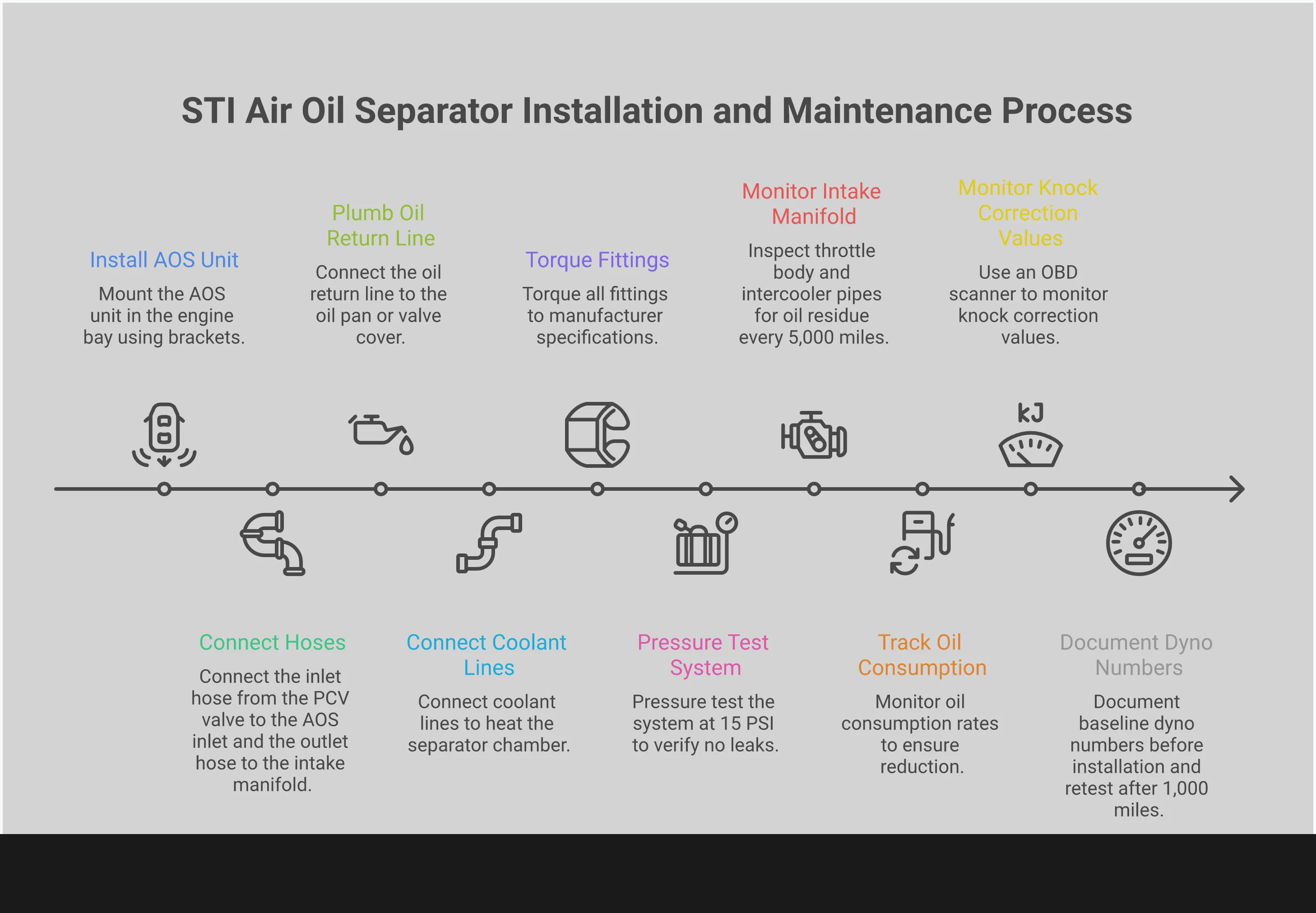
AOS kits can range from relatively straightforward to highly complex installations. Some systems require significant plumbing, rerouting of coolant lines, and even minor modifications to fit properly in a crowded engine bay. Before you buy, review the installation instructions or watch a few videos to understand what’s involved. Decide whether it’s a project you can handle yourself or if you’ll need professional help. If you’re not comfortable with the process, factoring in the cost of a professional installation from a shop that offers expert engine tuning services is a smart move to ensure everything is hooked up correctly.
Why Build Quality and Warranty Matter
An AOS operates in a harsh environment, dealing with heat, pressure, and oil. That’s why build quality is so important. Look for units made from durable materials like billet aluminum that can withstand engine bay temperatures and resist corrosion. High-quality hoses, fittings, and mounting hardware are also signs of a well-made kit. A manufacturer that stands behind its product will offer a solid warranty. For example, Crawford Performance provides a 12-month/12,000-mile warranty on its performance parts, giving you confidence that you’re buying a product built to last and perform as advertised.
Maintenance, Longevity, and Driving Style
Once you’ve installed a quality Air Oil Separator, you’re well on your way to long-term engine protection. But like any critical component, its effectiveness is tied to the health of the surrounding system and how you use your car. A well-built AOS is designed to be a permanent fixture, but understanding how to maintain the system and how your driving habits affect its performance is key. Proper care ensures your AOS can do its job effectively, whether you’re commuting to work or pushing the limits on a track day. It’s not about adding another complex task to your maintenance list, but about being smart with your regular check-ups.
Recommended Replacement Schedules
A high-quality, billet aluminum AOS isn't a standard wear item like a filter or brake pads; it’s engineered to last the lifetime of your engine. Because of this, there isn't a recommended replacement schedule. Instead, it’s better to view an AOS as a permanent investment in your STI’s future. The upfront cost is minimal compared to the thousands you might spend on an engine rebuild from ringland failure. By installing a durable AOS, you are addressing a core weakness of the boxer engine. The focus shouldn't be on replacing the unit itself, but on maintaining the hoses and connections that support it to ensure it functions flawlessly for years to come.
How Track Use Impacts AOS Lifespan
Your driving style directly impacts how hard your AOS has to work. During aggressive driving or track use, your engine operates at sustained high RPMs, generating significantly more heat and crankcase pressure. This forces a larger volume of oil-laden vapor through the PCV system. While a quality AOS is built to handle this, the increased workload means any weaknesses in the system are more likely to show. For vehicles that see regular track time, choosing a proven, high-efficiency AOS is non-negotiable. These performance parts are designed to handle extreme conditions, ensuring they can effectively separate oil even when the engine is under maximum stress, protecting your investment when it matters most.
The Importance of Quality Hoses
The AOS unit itself is incredibly durable, but the hoses connecting it to your engine are not. Over time, rubber hoses are exposed to intense heat and oil, causing them to become brittle and crack. A cracked hose can create a vacuum leak, which can disrupt your engine’s air-fuel ratio and cause poor idling or performance issues. This can easily be misdiagnosed as a problem with the AOS itself. When installing your AOS, or during regular maintenance, always inspect the associated hoses. Upgrading to high-quality silicone hoses is a smart move, as they offer far better resistance to heat and oil, ensuring your entire AOS system remains sealed and functions correctly.
Don't Fall for These Common AOS Myths
You might hear myths circulating on forums, like the idea that an AOS will hide serious oil consumption issues. This is a dangerous misconception. An AOS is designed to manage oil vapor from normal blow-by, not mask a failing engine component like a cracked piston ringland. Its job is to maintain a clean intake, not to be a bandage for a bigger problem. The most important thing is to choose a system that works properly and efficiently. Don’t get swayed by flashy designs or unproven claims. Stick with a trusted, well-engineered solution that prioritizes engine protection above all else.
Myth: An AOS Will Void Your Warranty
One of the biggest hesitations for installing any aftermarket part is the fear of voiding your car’s warranty. The good news is that an Air Oil Separator is generally considered a reliability modification, not a performance-enhancing one. Its purpose is to help the engine run as it was designed to, just more cleanly. Many Subaru dealerships understand the benefits of an AOS in preventing common engine issues and don't flag them as a cause for warranty denial on an otherwise stock vehicle. While policies can vary by dealer, the consensus is that adding a part designed to protect your engine is a responsible move, not a reckless one that should impact your coverage.
Myth: An AOS Can Fix a Damaged Engine
It’s crucial to understand that an AOS is a preventative measure, not a cure for existing mechanical problems. If your STI is already consuming excessive oil, smoking, or showing signs of a failing piston ringland, an AOS will not fix it. The system is designed to manage the normal amount of oil vapor produced by a healthy engine's blow-by. It is not a bandage for a major internal issue. Installing an AOS on a damaged engine will not solve the root problem and may only mask symptoms temporarily. True engine health comes from a combination of quality performance parts and proper maintenance, with the AOS serving as a key piece of that protective strategy.
Myth: Every Stock STI Absolutely Needs an AOS
You'll find a lot of debate on this topic. Is an AOS a day-one necessity for a brand new, completely stock STI? Not necessarily, but it is highly recommended. While a stock engine driven gently might not immediately suffer from oil contamination, the factory PCV system can still be overwhelmed under spirited driving. For this reason, many experienced owners consider an AOS one of the very first Subaru STI upgrades they perform. It’s inexpensive insurance for your engine’s long-term health. If you plan to keep your car for a long time, drive it hard, or eventually add other modifications, installing an AOS early is one of the smartest decisions you can make.
Which STI AOS is Right for You? A Comparison
Once you decide an Air Oil Separator is the right move for your STI, the next step is choosing the right one. With several options on the market, it’s easy to get lost in different designs and features. The key is to focus on what matters most: effective, reliable engine protection. A quality AOS is more than just a part; it’s an investment in your Subaru’s health and longevity. To make the best choice, you need to compare systems based on their core technology, overall value, and the support behind them. Let’s break down what to look for.
Why We Recommend the Crawford Performance AOS
The Crawford Performance Air Oil Separator was designed with one primary goal: to provide absolute protection for your Subaru engine. Its main job is to prevent oil from contaminating your air intake system, which is the leading cause of detonation and catastrophic ringland failure. As the original and most proven AOS on the market, our design has been refined through years of racing and street applications to ensure it performs under the most demanding conditions. By safely returning liquid oil to the engine and leaving harmful vapors behind, it offers a set-it-and-forget-it solution that keeps your engine running strong for years to come.
Other Brands on the Market
When you're researching a critical component like an Air Oil Separator, it’s smart to look at all the available options. While the Crawford Performance AOS has a long-standing reputation built on years of real-world racing and street use, two other names you'll frequently see are IAG Performance and GrimmSpeed. Both companies make quality performance parts and offer their own solutions to the oil blow-by problem inherent in Subaru's boxer engines. Understanding the differences in their designs and features will help you make a fully informed decision that aligns with your build goals and priorities for your STI.
Comparing IAG and Grimmspeed Systems
IAG Performance offers a popular AOS that is engineered to safeguard your engine by preventing oil vapor from contaminating the intake system, a crucial function for any modified Subaru. On the other hand, GrimmSpeed’s AOS is also designed to be a maintenance-free system that stops oil from getting into the intake and automatically returns it to the engine. Both are effective solutions aimed at preventing detonation and preserving engine health. The primary differences often come down to the specifics of their internal baffling design, the materials used, and the complexity of the installation. As you evaluate your options, consider these factors alongside long-term reliability and track record to choose the system that gives you the most confidence.
Reading the Spec Sheet: What Numbers Matter
When comparing different AOS kits, remember that this is a protective modification, not a power-adder. Its performance is measured by how well it prevents oil contamination. Look at the internal design. Does it use a centrifuge or a series of baffles? How efficiently does it separate oil from vapor? A superior system will also use engine coolant to heat the unit, preventing the condensation and sludge buildup that can clog lesser designs, especially in colder climates. The goal is consistent, maintenance-free operation that supports all your other performance parts by keeping the engine clean and safe.
Is a More Expensive AOS Worth the Money?
A quality AOS is a significant purchase, with many systems costing around $500 or more. While it’s tempting to shop by price alone, it’s more important to consider the long-term value. Think about the cost of an AOS versus the potential expense of an engine rebuild due to ringland failure, which can easily run into thousands of dollars. A well-engineered AOS is insurance for your engine. The value comes from its reliability, durable construction, and the peace of mind knowing your investment is protected. It’s a foundational part of any list of Subaru STI upgrades for a reason.
Understanding the Price Range for Quality Kits
Let's be direct: a high-quality Air Oil Separator isn't a cheap part. You can expect to see prices for well-engineered kits starting around the $500 mark, which can feel like a steep investment for a part that doesn't add horsepower. But it's crucial to reframe that cost. Think of it less as an expense and more as an insurance policy for your engine. When you compare the price of a reliable AOS to the potential cost of an engine rebuild from ringland failure—a repair that can easily run into the thousands—the value becomes crystal clear. That price tag reflects superior engineering, durable materials, and features like coolant integration to prevent sludge buildup, ensuring consistent, maintenance-free protection. It's one of the smartest investments you can make to safeguard your other Subaru STI upgrades and ensure your engine's longevity.
Finding Professional Installation and Support
The installation process is another critical factor. A system that is difficult to install or has poor instructions can lead to improper function, defeating its purpose. The Crawford AOS is designed as a direct bolt-on kit that integrates seamlessly with your STI. One of its best features is that it’s completely maintenance-free, so you never have to empty a catch can. If you’re not comfortable performing the installation yourself, professional support is always a great choice. Pairing an AOS installation with other engine tuning services can ensure every component of your build works together perfectly.
Where to Buy a Quality STI AOS
Once you’ve decided to invest in an Air Oil Separator for your STI, the next step is finding a reliable place to buy one. The quality of your AOS is only as good as the company that designs and sells it. You want to source your parts from a supplier that understands the specific needs of Subaru engines and stands behind their products. Let’s walk through the best places to find a high-performance AOS and what to look for in a seller.
Why You Should Use an Authorized Dealer
Starting your search at an authorized dealer or a shop specializing in Subaru performance is always a solid move. These retailers are selective about the brands they carry and can offer expert advice tailored to your specific build and driving style. The staff at these shops are often enthusiasts themselves and have hands-on experience with the products they sell. They can answer technical questions and help you confirm compatibility with your STI. Reputable shops typically stock well-known brands, giving you confidence that you’re purchasing a proven and reliable part for your vehicle.
Tips for Shopping at Online Retailers
For convenience and a wider selection, online retailers are an excellent resource. Shopping online allows you to compare different AOS systems, read reviews, and find competitive pricing from the comfort of your home. The best approach is to buy directly from a manufacturer that specializes in Subaru performance. For example, our Crawford Performance Subaru Air Oil Separators are engineered specifically to solve common Subaru engine issues. Buying directly from the source ensures you get an authentic product designed by experts who live and breathe these platforms, not a generic part that might not perform as expected.
How to Choose a Reputable Supplier
When choosing a supplier, their reputation is everything. Look for a company with a long history of engineering high-quality performance parts and positive feedback from the Subaru community. A trustworthy supplier will provide detailed product descriptions, clear specifications, and transparent information about their design philosophy. They should explain why their AOS is effective, not just what it does. A strong warranty is another key indicator of quality, as it shows the manufacturer is confident in their product’s durability and performance. Choose a supplier who is invested in your engine’s health and longevity.
What About After-Sale Support?
A quality product is only effective if it’s installed correctly. Before you buy, check what kind of support the supplier offers. The best companies provide detailed installation guides, video tutorials, and access to a knowledgeable technical support team that can help you or your mechanic with the process. Proper installation is critical, and having reliable support ensures your AOS functions exactly as intended. If you prefer a professional touch, a supplier connected to a network of tuners or one that offers in-house engine tuning services can provide peace of mind and guarantee a flawless setup.
Related Articles
- 4 Best WRX STI Air Oil Separator Kits Reviewed
- 2015–2021 Subaru STI V2 Air Oil Separator – Crawford
- 2008-2021 Subaru STI 2008-2021 Air Oil Separator V3 w/TMIC
Frequently Asked Questions
Is an AOS necessary if my STI is completely stock? Yes, it's one of the most important protective modifications you can make, even on a stock vehicle. The Subaru boxer engine design is naturally prone to oil blow-by, which can cause issues over time. Installing an AOS early on helps prevent carbon buildup and protects against detonation from the very beginning, preserving your engine's long-term health and reliability.
What's the simplest way to understand the difference between an AOS and a catch can? Think of a catch can as a simple trap that collects oil, which you have to empty yourself. An Air Oil Separator is a more advanced, active system. It not only separates the oil from the air but also automatically drains the clean oil back into your engine. This makes an AOS a truly maintenance-free solution for engine protection.
Will installing an aftermarket AOS void my car's warranty? This is a common concern for many owners. Legally, a manufacturer must prove that an aftermarket part directly caused a specific failure before denying a warranty claim. While adding an AOS shouldn't void your entire warranty, individual dealership policies can differ. If you have concerns, it's always best to discuss them with your service advisor.
How difficult is it to install an AOS myself? The difficulty really depends on your comfort level working on your car. A well-designed kit, like the Crawford Performance AOS, is engineered to be a direct bolt-on part with clear instructions. If you have basic mechanical skills and the right tools, it's a manageable weekend project. If you're not confident, having a professional shop perform the installation is a great way to ensure it's done right.
Does an AOS add horsepower to my STI? An AOS doesn't directly add horsepower, but it allows your engine to perform at its full potential safely and consistently. By keeping oil out of the combustion chamber, it prevents detonation, which can cause your car's computer to pull timing and reduce power. In short, it doesn't create new power, but it protects the power you already have.