

The Buyer's Guide to a Forester Exhaust System
Your Forester’s engine is basically a big air pump—the more air it moves, the more power it makes. The problem is the factory exhaust. It creates a major bottleneck, forcing your engine to work harder and robbing it of precious horsepower and torque. Installing a high-flow aftermarket Forester exhaust system is one of the most effective ways to let your engine breathe freely. This single upgrade reduces restriction, resulting in better throttle response, increased power, and improved efficiency. This guide breaks down the performance benefits and helps you choose a system that delivers real, tangible results.
Key Takeaways
- An Exhaust Upgrade Is a Foundational Performance Mod: Beyond just sound, a high-flow system allows your engine to operate more efficiently. This directly improves horsepower, torque, and throttle response, making it one of the most effective first upgrades for your Forester.
- Prioritize Material, Fit, and Sound When Choosing: Select a system made from corrosion-resistant 304 stainless steel that is guaranteed to fit your Forester's specific model year. From there, choose the sound profile—from subtle to aggressive—that best matches your driving style.
- A Proper Installation and Simple Care Protect Your Investment: A professional, leak-free installation is crucial for getting the performance you paid for. Protect your new hardware with regular inspections for loose connections and corrosion to ensure it delivers consistent power and sound for years.
What Is a Forester Exhaust System?
Think of your Forester’s exhaust system as its respiratory system. Its primary job is to channel hot, used gases away from the engine and out the tailpipe, quieting the noise of combustion along the way. This network of pipes, which includes the headers, catalytic converter, resonator, and muffler, is critical to your engine’s health and performance. While the factory system does its job, it’s designed with mass-market appeal in mind—meaning it prioritizes quietness and low cost over power.
For enthusiasts, upgrading the exhaust is often one of the first and most rewarding modifications. A high-quality aftermarket system can completely change your Forester’s personality, improving how it sounds, feels, and performs. By optimizing the flow of exhaust gases, you can unlock hidden power and give your Subaru that iconic boxer rumble it was meant to have. These performance parts are engineered not just to fit your vehicle, but to enhance the entire driving experience, whether you're on your daily commute or exploring a new trail.
Stock vs. Performance: Which Exhaust Is Right for You?
The difference between a stock and a performance exhaust is night and day. Your Forester’s original exhaust is built to be as quiet and unobtrusive as possible. Manufacturers use restrictive mufflers and narrow-diameter piping to dampen sound and meet broad consumer expectations. This design creates backpressure, which forces the engine to work harder to expel exhaust gases, ultimately limiting its power output. It’s a system built on compromise.
A performance exhaust, on the other hand, is built for efficiency and sound. Using wider, mandrel-bent pipes and high-flow mufflers, these systems reduce backpressure significantly. This allows your engine to "breathe" more freely, resulting in a noticeable increase in horsepower and torque. The sound is also a major upgrade; instead of a muted hum, you get a deeper, more aggressive tone that highlights the unique sound of the Subaru boxer engine. It’s a direct path to making your Forester feel and sound like a true performance machine.
How an Exhaust Upgrade Affects Performance
Upgrading your exhaust system is one of the most effective ways to improve your Forester's performance. By reducing the backpressure that chokes the engine, a performance exhaust allows it to operate more efficiently. This improved efficiency translates directly into more power you can feel. The engine doesn't have to waste energy pushing out old gases, so it can put more of that energy toward turning the wheels. This results in better throttle response and quicker acceleration.
Beyond raw power, a well-designed exhaust system can also lead to modest gains in fuel economy, since a more efficient engine uses less fuel to produce the same amount of power. To get the most out of your new hardware, pairing it with professional engine tuning services can recalibrate your vehicle’s computer to take full advantage of the increased airflow. This synergy between parts and tuning is what unlocks your Forester’s true potential.
Signs Your Forester Exhaust Needs an Upgrade
Even the most reliable parts eventually wear out, and your Forester's stock exhaust is no exception. Before it fails completely, your vehicle will usually give you a few clear signals that it’s time for a change. Ignoring these signs can lead to bigger problems, including poor performance, failed emissions tests, and even damage to other engine components. Recognizing the early warnings gives you the perfect opportunity to move from a restrictive factory system to one that enhances your driving experience. Instead of just replacing a broken part, you can install a performance upgrade that delivers more power, better sound, and greater durability for all your adventures.
Common Warning Signs of a Failing Exhaust
Your Forester is great at communicating, you just have to know what to listen for. Unusual noises are often the first sign of trouble. A persistent hissing sound when the engine is running could point to a crack in a pipe or a leaking gasket, while a rattling noise from underneath the car often means a heat shield or an internal muffler baffle has come loose. You should also perform a quick visual check. Look for any black soot collected around the pipe joints, as this is a telltale sign of an exhaust leak. Finally, pay attention to how your car feels. If you notice a drop in power, sluggish acceleration, or worse fuel economy, your exhaust system could be clogged and creating excessive backpressure.
Why Forester Exhausts Fail in Harsh Conditions
Foresters are built to handle tough environments, but the factory exhaust system is often the first component to suffer. Constant exposure to moisture, road salt in winter climates, and extreme temperature cycles can accelerate corrosion, leading to rust and eventual failure. The mild steel used in many stock systems simply isn't designed for long-term resilience against these elements. Whether you're navigating snowy mountain passes or muddy backroads, your exhaust is on the front line, taking a beating from debris and corrosive materials. This is why investing in high-quality performance parts made from corrosion-resistant 304 stainless steel is a smart move. It ensures your system can withstand the harsh conditions you and your Forester thrive in.
Considering an Upgrade for Problematic Model Years
You don't have to wait for your stock exhaust to fail before making a change. For many Forester owners, especially those with turbocharged models from 2004 onward, upgrading the exhaust is a proactive step toward better performance. On these models, the factory downpipe and cat-back system are known bottlenecks that restrict the engine's potential. Swapping them out for a high-flow alternative is one of the most common and effective first modifications. This simple change can significantly improve turbo spool, throttle response, and overall power output. By choosing the right Subaru Forester upgrades for your specific model year, you can address a known weak point while unlocking the performance and sound your vehicle was always capable of.
The Best Forester Exhaust Brands Compared
Choosing an exhaust system is one of the most personal upgrades you can make. The right one transforms your daily drive, delivering a sound that matches your style and performance that you can feel. Each brand offers a unique approach to engineering, materials, and acoustics. Whether you’re looking for a subtle, deep rumble for your daily commute or an aggressive roar for off-road adventures, there’s a system built for you. Let’s break down what some of the top brands, including our own, bring to the table for your Subaru Forester.
Crawford Performance
At Crawford Performance, we engineer our exhaust systems with a legacy of track-tested and rally-proven performance. Our designs focus on maximizing exhaust flow to unlock horsepower and torque while producing our signature boxer rumble without annoying highway drone. Built from high-grade stainless steel, our Forester upgrades are designed for durability, whether you're navigating city streets or rugged trails. We tune each system to complement the Forester's unique characteristics, ensuring a perfect fit and a sound that’s aggressive when you want it and refined when you need it. Our exhausts are a direct reflection of our commitment to building parts that deliver real-world results.
BORLA
BORLA is a well-known name in the exhaust world, offering its "S-Type" Axle-Back systems for newer Forester models from 2019 to the present. These systems are engineered specifically for the 2.5L engine to create a much more aggressive sound than the stock setup, emphasizing the classic Subaru boxer rumble. One of BORLA's main selling points is its acoustic engineering, which delivers an exciting sound under acceleration while promising a "drone-free" experience at cruising speeds. This makes it a popular choice for owners who want a louder, more engaging sound without sacrificing comfort on long drives.
System Specifications and Pricing
As you compare systems, you’ll find that pricing often depends on whether you choose an axle-back or a full cat-back system. For instance, you can find options from Nameless Performance for the 2019–2024 Forester, with their Axleback Exhaust starting around $449 and a complete Catback system priced closer to $1,133. Similarly, BORLA’s S-Type Axle-Back for the same models is about $640, while a full 3-inch Cat-Back from XFORCE is around $899. These prices illustrate how an axle-back is a great budget-friendly starting point, while a full cat-back system is a larger investment for those seeking maximum performance gains.
Nameless Performance
Nameless Performance provides a range of exhaust options for 2019-2024 Foresters, including both axle-back and cat-back systems. Their products are designed to enhance power, sound, and longevity. Like other top brands, Nameless focuses on creating systems that balance performance with daily usability. They offer configurations designed to minimize drone during steady driving while still providing an aggressive note when you get on the throttle. This makes their exhausts a solid option for drivers looking for a customizable sound profile that can be both civil and assertive.
System Options and Pricing
When you're ready to invest in an upgrade, it helps to compare the specific offerings and price points from each brand. At Crawford Performance, our systems are engineered for maximum gains, and you can explore our full line of Forester upgrades on our website for detailed specifications. For those with a 2019-2024 model, BORLA’s "S-Type" Axle-Back system is available for around $639.99 and focuses on delivering an aggressive sound without highway drone. Nameless Performance offers a tiered approach, with their Axleback Exhaust starting at $449.00 and their full Catback system priced at $1,133.00. Meanwhile, XFORCE provides a 3-inch Cat-Back system for $899.00, designed to significantly improve exhaust flow. Each of these options provides a distinct combination of sound, performance, and value, allowing you to find the perfect fit for your goals and budget.
XForce
XForce offers a unique solution for Forester XT owners with its Varex valved cat-back exhaust system. This technology is the brand’s standout feature, giving you direct control over the exhaust sound. Using a remote, you can switch between a quiet "street mode" and an aggressive "race mode" on the fly. The system is built from durable 304 stainless steel with 3-inch piping that splits into dual 2.25-inch pipes, designed to optimize airflow for the turbo engine. This is an ideal choice for the enthusiast who wants total command over their vehicle’s sound profile.
Model Compatibility
Ensuring an exhaust system is designed for your specific model year is the most critical step in the buying process. Fitment can vary significantly between generations, and even minor mid-cycle refreshes can change mounting points and pipe routing. For instance, brands like BORLA and Nameless Performance focus on newer models, with BORLA offering systems for the 2019–2022 Forester and Nameless covering 2019–2024. XForce caters specifically to the turbocharged Forester XT models, which have different requirements than their naturally aspirated counterparts. At Crawford Performance, we design our Forester upgrades for a precise, bolt-on fit, but it's always essential to confirm compatibility before purchasing any system to guarantee a seamless installation and the performance you expect.
What Are the Benefits of a Forester Exhaust Upgrade?
Swapping out your stock exhaust is one of the most rewarding first steps in modifying your Subaru Forester. While many are drawn to the promise of a more aggressive sound, the benefits go far beyond just acoustics. A high-quality aftermarket exhaust system is a foundational upgrade that can improve your engine's power, responsiveness, and overall efficiency.
Your factory exhaust is designed as a compromise, balancing performance with noise regulations and production costs. This often results in a restrictive system that holds back your engine’s true potential. By installing a performance exhaust, you’re essentially allowing your engine to breathe freely, which unlocks a host of improvements that you can feel and hear every time you get behind the wheel. From a more engaging driving experience on your daily commute to tangible gains on the trail, it’s an investment that pays off in multiple ways.
Gain More Horsepower and Torque
The primary performance benefit of an exhaust upgrade is the increase in horsepower and torque. Your stock system creates significant backpressure, which is the force required for the engine to push exhaust gases out. A well-designed aftermarket exhaust features wider diameter piping and smoother, mandrel-bent curves that reduce this restriction. This allows exhaust gases to exit the engine more quickly and with less effort. As a result, your engine breathes more efficiently, leading to a direct increase in power output and a sharper throttle response. This is one of the most effective ways to get more out of your engine with a single bolt-on modification.
Improve Your Forester's Sound and Feel
Let’s be honest—a huge part of the appeal is the sound. An aftermarket exhaust transforms your Forester’s quiet hum into the deep, iconic rumble the Subaru Boxer engine is famous for. It’s not just about being louder; it’s about achieving a more refined and aggressive tone that enhances the entire driving experience. A quality system brings out that signature sound without creating an annoying drone at highway speeds. This auditory feedback connects you more directly to your vehicle, making every acceleration and downshift more satisfying. It turns a simple drive into a more engaging event, reminding you of the performance potential under the hood.
Shed Weight for Better Handling
Factory exhaust systems are typically built with heavy, thick-walled steel to keep costs down. In contrast, many aftermarket Subaru Forester upgrades are constructed from lighter materials like T304 stainless steel. While it might only be a difference of 15 to 30 pounds, reducing your vehicle's overall weight has a noticeable impact on performance. This is especially true for weight located behind the rear axle. Less weight improves your car's power-to-weight ratio, which can lead to slightly quicker acceleration, more responsive braking, and sharper handling in corners. It’s a subtle but important benefit that contributes to a more nimble and athletic feel.
Better Flow for Improved Engine Efficiency
A performance exhaust doesn't just reduce backpressure; it actively improves the flow of gases leaving the engine. This concept, known as exhaust scavenging, uses the velocity of the exhaust stream to help pull spent gases out of the combustion chamber more completely. This allows for a cleaner, more potent air-fuel mixture on the next intake stroke. By making the engine’s cycle more efficient, you’re not only making more power, but you’re also helping the engine run healthier. While aggressive driving will always consume more fuel, some drivers even report modest MPG improvements during normal cruising thanks to this increased efficiency. To fully capitalize on these gains, consider pairing your new exhaust with professional engine tuning services.
Finding Your Forester's Perfect Sound
One of the most rewarding parts of an exhaust upgrade is the immediate change in your Forester's sound. The right exhaust note transforms your driving experience, making every trip more engaging. But "perfect" is subjective—what one driver finds exhilarating, another might find distracting. Your ideal sound depends on your personal taste and how you use your vehicle, whether you're commuting, hitting the trails, or heading to the track. Let's break down the common sound profiles to help you find the one that speaks to you.
Want an Aggressive, Loud Exhaust?
If you want your Forester to make a bold statement, an aggressive exhaust profile is for you. These systems are designed for maximum volume, turning the signature Boxer rumble into a commanding roar that announces your arrival. This sound is perfect for the enthusiast who wants their vehicle’s audio to match its performance capabilities. High-quality systems achieve this aggressive tone without creating a harsh or raspy sound. They amplify the engine's natural character, giving you a track-inspired note that's thrilling on acceleration. When shopping for these systems, look for performance parts engineered to deliver a powerful sound without excessive interior drone.
Prefer a Deep and Throaty Rumble?
For many drivers, the ideal exhaust note is a deep, throaty growl that adds character without being overly loud. This sound profile is synonymous with classic performance, giving your Forester a muscular and refined tone. It’s a noticeable step up from the stock system, providing a satisfying rumble during idle and a rich, powerful sound when you get on the gas. This is a great middle-ground option that enhances the driving experience on every level, from daily commutes to spirited weekend drives. The best Forester upgrades in this category are designed to bring out the best of the Boxer engine’s unique sound.
Looking for a Subtle, Moderate Sound?
You don't have to be loud to enjoy the benefits of a performance exhaust. Subtle and moderate systems offer a tasteful improvement over the quiet stock exhaust without drawing unwanted attention. These systems are ideal for daily drivers or overlanding enthusiasts who spend long hours on the road and prioritize comfort. You’ll get a slightly deeper tone and a more audible presence during acceleration, but the sound remains civilized at cruising speeds. This allows you to enjoy a more connected driving feel and improved engine feedback while maintaining a quiet cabin that’s perfect for conversations, music, and long-distance travel.
How to Control Sound and Eliminate Drone
No matter which sound profile you prefer, eliminating drone is essential. Drone is the annoying, low-frequency humming or buzzing noise that can occur at constant cruising speeds, typically on the highway. It can cause headaches and ruin an otherwise great driving experience. Premium exhaust systems are specifically engineered with features like resonators and carefully designed mufflers to cancel out these undesirable frequencies. This ensures you hear the powerful, clean notes of your engine, not a monotonous hum. Proper engine tuning can also complement your exhaust system to ensure optimal sound and performance across the entire RPM range.
The Role of a Resonator
A resonator is a critical component for fine-tuning your exhaust note, and its job is often misunderstood. Unlike a muffler, which is designed to reduce overall volume, a resonator acts more like a sound frequency tuner. It's an echo chamber specifically engineered to target and cancel out a narrow range of undesirable sound frequencies—most notably, the irritating drone you can get while cruising at a steady speed on the highway. By eliminating these harsh, high-pitched noises and annoying hums, the resonator refines the exhaust sound before it even reaches the muffler. This allows the deep, clean tones of your Boxer engine to come through, giving you a powerful sound without the fatiguing drone.
What Makes a Great Performance Exhaust?
When you start shopping for a Forester exhaust, you'll quickly realize there are a lot of options out there. To find the right one, you need to know what separates a great system from a mediocre one. A high-performance exhaust isn't just about being loud; it's a carefully engineered component designed to improve your driving experience from multiple angles. Key features like the materials used, the specific performance gains you can expect, and how the system manages sound all play a huge role. Understanding these details will help you choose an exhaust that delivers the power, tone, and quality you're looking for.
Durable Materials and Quality Construction
The foundation of any great exhaust system is the material it's made from. You want something that can handle heat, moisture, and road debris without failing. That's why top-tier systems are typically built from 304 stainless steel, a material known for its exceptional strength and resistance to rust and corrosion. This ensures your investment lasts for years. Beyond the metal itself, pay attention to the build quality. Look for smooth, mandrel-bent tubing, which allows for unrestricted airflow, and clean, strong welds that prevent leaks and cracks. These details are what make a system a reliable, long-term performance part.
Material Lifespan: Aluminized vs. Stainless Steel
When you're comparing exhaust systems, the materials used will tell you a lot about their longevity. Aluminized steel is a common budget-friendly option that offers a basic level of protection against corrosion. However, it’s a temporary solution, especially if you live in a climate with harsh winters where roads are salted. Over time, it will inevitably rust and fail. On the other hand, T304 stainless steel is the gold standard for a performance exhaust. It provides superior resistance to rust, corrosion, and high temperatures, ensuring your system can handle anything the road or trail throws at it. While the initial cost is higher, a stainless steel exhaust is a long-term investment in your Forester's performance and durability.
OEM vs. Aftermarket Parts
Your next choice is between OEM and aftermarket parts. OEM (Original Equipment Manufacturer) parts are identical to what your Forester had when it left the factory. They offer a guaranteed fit and meet Subaru's specifications, but they are also designed to be quiet and cost-effective, not to maximize performance. Aftermarket parts are engineered by companies like ours to unlock your engine's potential. While quality can vary across the market, reputable Subaru Forester upgrades are built from superior materials and designed for better airflow, resulting in real gains in power and sound. For any owner serious about improving their driving experience, a well-engineered aftermarket system is the clear choice for achieving tangible results.
What Performance Gains Can You Expect?
Let's be honest—one of the biggest reasons to upgrade your exhaust is for better performance. A well-designed aftermarket system reduces backpressure, allowing your engine to breathe more freely. This improved efficiency translates directly into tangible gains. You can expect a noticeable increase in horsepower and torque, which you'll feel every time you press the accelerator. This also leads to a quicker throttle response, making your Forester feel more agile and responsive. By optimizing exhaust flow, you’re not just changing the sound; you’re making your engine work more effectively, which can even lead to modest improvements in fuel economy during normal driving.
Pipe Diameter: 2.5-inch vs. 3-inch Systems
The diameter of your exhaust piping is a critical decision that directly impacts your Forester's performance, and the right choice depends entirely on your power goals. A 2.5-inch system is generally the perfect fit for a stock or lightly modified Forester, especially if you plan to stay under 350 horsepower. It provides a noticeable improvement in throttle response and a modest power gain without being overkill for a daily driver. However, if your plans are more ambitious—think a larger turbo, E85 fuel, or pushing past the 350 horsepower mark—a 3-inch system becomes essential. This larger diameter is crucial for minimizing restriction on high-output engines, allowing the turbo to operate more efficiently and unlocking significant power gains from your performance parts. Choosing the right size from the start ensures your exhaust supports your build, rather than holding it back.
Understanding Backpressure in Turbo Engines
Backpressure is essentially the resistance your engine fights against to push exhaust gases out. The stock Forester exhaust, designed primarily to be quiet, is full of restrictive bends and chambers that create a lot of this resistance. This forces your engine to work harder just to breathe, which robs it of power and efficiency. A high-flow performance exhaust system tackles this problem head-on. By using wider, mandrel-bent pipes and less restrictive mufflers, it creates a much smoother and more open path for the gases to escape. This significant reduction in backpressure allows your engine to cycle more freely, translating that saved energy directly into more horsepower, more torque, and a more responsive feel every time you touch the throttle.
Does It Have Sound Control Features?
A performance exhaust should sound good, but that doesn't mean it has to be deafening. The best systems are engineered to enhance your Forester's natural boxer engine rumble without creating an annoying interior humming noise, often called "drone." Drone is a low-frequency resonance that can be exhausting on long drives. Quality manufacturers use resonators and specifically designed mufflers to filter out these undesirable frequencies, leaving you with a deep, aggressive tone when you accelerate and a comfortable, quiet cabin when you're cruising. It’s all about finding that perfect balance between an exhilarating sound and daily drivability.
Ensure a Perfect Fit and Compatibility
Nothing is more frustrating than ordering a part that doesn't fit. A high-quality exhaust system should be designed for your specific vehicle, offering a guaranteed, bolt-on fit without any need for cutting or welding. This ensures all the hangers line up with the factory mounting points and that the pipes have proper clearance around other components. Before buying, always confirm that the system is compatible with your Forester's model year and trim. Choosing model-specific Subaru Forester upgrades not only makes installation much easier but also ensures a perfect seal, preventing exhaust leaks that can hurt performance and sound.
Look for Adjustable Components
For drivers who want ultimate control over their vehicle's sound and performance, some high-end exhaust systems offer adjustable components. The most common feature is a valved system, which uses a butterfly valve in the pipe to redirect exhaust gases. With the push of a button, you can switch between a quiet mode that routes exhaust through the muffler and a loud mode that bypasses it for a straight-through, aggressive sound. This gives you the flexibility to keep things subtle in your neighborhood or unleash the full roar on a back road or at the track. It’s the perfect solution for anyone who wants one exhaust that can do it all.
Tuning Requirements: Cat-Back vs. Turbo-Back
Understanding the tuning needs for different exhaust systems is crucial for your engine's health and performance. A cat-back system, which replaces the components from the catalytic converter to the tailpipe, generally does not require a tune. It's a straightforward upgrade that primarily enhances sound with a modest performance gain, as your Forester's factory ECU can typically adjust to the minor change in airflow. A turbo-back system, however, is a much more involved modification. By replacing the entire exhaust from the turbocharger back, including the restrictive factory downpipe, it dramatically increases airflow. This significant change is more than the stock engine map can safely handle, creating a risk of running lean and causing potential engine damage. To safely achieve the substantial power gains from a turbo-back system, professional engine tuning services are not just a recommendation—they are essential for protecting your engine and getting the performance you paid for.
How Much Does a Forester Exhaust Upgrade Cost?
The cost of a new exhaust system for your Forester can range from a few hundred dollars to well over a thousand. The final price tag depends on several factors, including the brand, the materials used (like stainless steel versus aluminized steel), and the type of system you choose. An axle-back system, which replaces only the muffler and tips, will be the most affordable option. A cat-back system, which replaces everything from the catalytic converter back, costs more but delivers greater performance gains.
Deciding on your budget is a great first step, as it helps narrow down your options. Whether you're looking for a simple sound upgrade or a full system to maximize power, there are quality Subaru Forester upgrades available at every price point. Let's break down what you can expect to find in each budget category.
Repair vs. Full System Replacement Costs
When a part of your exhaust fails, you have to decide whether to repair it or invest in a full system. A simple fix, like replacing a muffler or a section of pipe, will often cost under $500 plus labor, which typically runs from $80 to $150 per hour. This can be a good short-term solution, but it's important to weigh it against the long-term value of a complete upgrade. If your catalytic converter is the culprit, the repair cost can quickly jump to over $1,000. In contrast, a complete cat-back system generally costs between $500 and $1,500. While the initial investment is higher, you're getting more than just a repair—you're getting a performance enhancement that improves power, sound, and durability. When a single repair starts to creep up in price, choosing from the available Forester upgrades often becomes the smarter financial move, giving you a brand-new, high-performance setup instead of just patching an old one.
Entry-Level Systems ($200-$600)
If you're just getting started with modifications or want a more aggressive sound without a major investment, an entry-level system is a perfect choice. These are typically axle-back exhausts that focus on improving your Forester's tone and providing a small performance bump. While you can find basic components for less, most quality kits in this range will cost between $250 and $600. These systems are a fantastic way to get rid of the quiet factory muffler and give your Subaru a voice that matches its personality, all while staying on a tight budget.
Mid-Range Systems ($600-$1,000)
This price range is the sweet spot for many enthusiasts, offering a great balance of performance, sound, and build quality. In the mid-range, you’ll find high-quality axle-back and some entry-level cat-back systems from reputable brands. For example, a BORLA axle-back system often falls in this category, providing a refined, aggressive tone and noticeable performance improvements. These exhausts are typically made from higher-grade stainless steel for better durability and corrosion resistance, making them a solid long-term investment for your daily driver or weekend adventurer.
Premium Systems ($1,000+)
For those who want the absolute best in performance, sound, and technology, premium systems are the way to go. In this tier, you're primarily looking at full cat-back exhausts engineered for maximum horsepower and torque gains. These systems often feature advanced technologies like valved exhausts, which allow you to change the sound from mild to wild with the push of a button. Made from top-tier materials, these are the ultimate performance parts for drivers who demand uncompromising quality and are looking to get the most out of their Forester on the road or trail.
Factoring in Professional Labor Costs
When you're budgeting for your new exhaust, remember that the price of the parts is just the starting point. Professional installation is a critical part of the equation, and it's an investment in getting the performance you paid for. A proper, leak-free installation ensures your new system works exactly as it was designed to, preventing power loss and annoying rattles. Mechanics typically charge between $80 and $150 per hour, and the total time required will depend on the complexity of the job. Installing a simple axle-back system might only take an hour, while a full cat-back replacement could take longer. To get the most from your hardware, you might also consider professional engine tuning services to optimize your vehicle's new capabilities. Always get a quote from a trusted shop beforehand to avoid surprises and budget accurately.
How to Find Deals
A little research can help you get a great exhaust system without paying full price. Keep an eye out for seasonal sales events from manufacturers and retailers, like Black Friday or holiday promotions. It’s also a good idea to join online Subaru forums and enthusiast groups on social media. These communities are excellent resources for user reviews, installation tips, and sometimes even group buys or member-exclusive discounts. Before you buy, always double-check that the system complies with your local emissions laws to avoid any legal headaches down the road.
Exhaust Compatibility by Forester Model Year
Finding the right exhaust system for your Forester isn't a one-size-fits-all process. Subaru has updated the Forester platform over the years, meaning an exhaust designed for a 2010 model won't fit a 2020 model without serious modifications. Each generation has unique mounting points, exhaust routing, and bumper designs that dictate compatibility. To ensure a perfect fit and the performance gains you’re looking for, it’s essential to shop for parts designed for your vehicle’s year range. Here are the common upgrade paths for each generation.
2002-2012 Models
If you own a Forester from this era, your most effective upgrade path focuses on the cat-back and downpipe. While header upgrades are less common for these models, a quality cat-back system combined with a high-flow downpipe can significantly open up your exhaust flow. Many owners find that this combination, paired with a professional engine tuning service, is the key to achieving real performance gains. This approach not only improves horsepower and torque but also gives your Forester that classic, aggressive Subaru rumble that many enthusiasts are after.
2013-2018 Models
For Foresters made between 2013 and 2018, you have some interesting cross-compatibility with certain WRX exhaust systems. However, this isn't always a direct bolt-on solution, as you may need to make small modifications like trimming the rear bumper for a clean fitment. For those who want a simpler upgrade without the custom work, an axle-back muffler is a fantastic starting point. It’s a practical and cost-effective way to improve your vehicle’s sound and aesthetics without committing to a full system overhaul, making it a popular first mod.
2019-Present Models
The latest generation of Subaru Foresters has seen a surge in high-quality exhaust options designed to enhance sound and performance. Systems like the Borla S-Type are popular for delivering a noticeable increase in volume and a more aggressive tone that brings out the Boxer engine’s signature rumble. These modern Forester upgrades are engineered to provide an exciting sound under acceleration while minimizing drone at cruising speeds. This balance makes them an excellent choice for daily drivers and weekend adventurers who want a more engaging driving experience without sacrificing comfort.
Should You Install Your Exhaust System Yourself?
Deciding whether to install your new Forester exhaust yourself or hand the keys to a professional is a big question. On one hand, there’s a huge sense of accomplishment that comes from upgrading your own vehicle. It’s a great way to get more familiar with your car and save on labor costs. On the other hand, a professional installation guarantees the job is done right, saving you from potential headaches and ensuring you get the performance you paid for.
The right choice really comes down to your mechanical experience, the tools you have available, and how much time you’re willing to spend under your car. A simple axle-back or cat-back system can be a manageable weekend project for a confident enthusiast. However, more complex installations like headers or a full turbo-back system can quickly become challenging. Before you break out the tools, it’s important to honestly assess your skill level and what the job truly entails. This section will walk you through the key factors to consider so you can make the best decision for you and your Forester.
What to Know Before a DIY Install
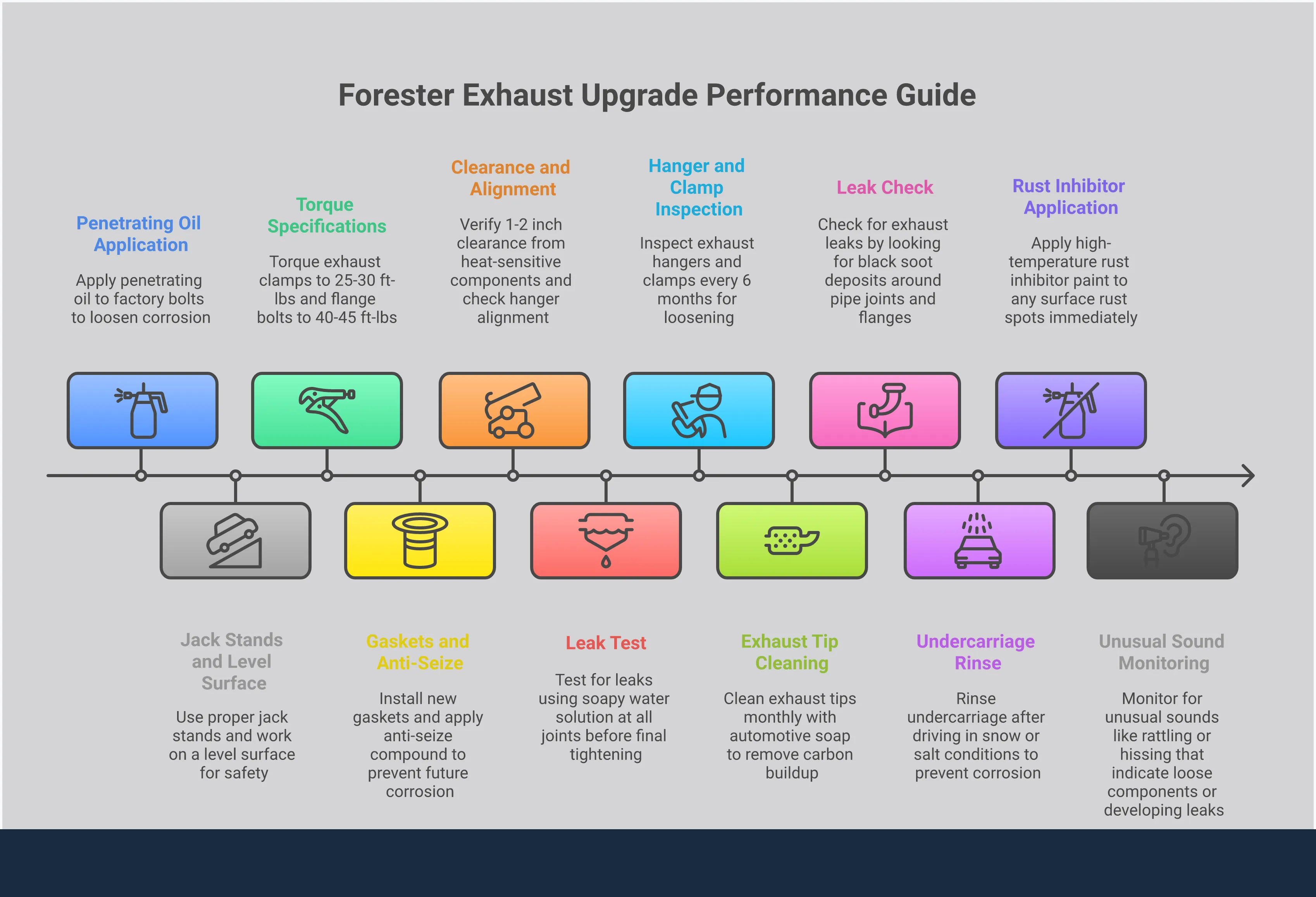
If you’re leaning toward a DIY install, preparation is everything. First, make sure you have a safe, flat space to work, like a garage or level driveway. You’ll absolutely need a good set of jack stands—never work under a car supported only by a jack. Remember that you’ll be dealing with parts that have been exposed to heat and the elements for years. As one owner wisely noted, "There's 5 years of invisible corrosion on the other side of your muffler wall." Be prepared for stubborn, rusted bolts. A liberal amount of penetrating oil and a good breaker bar will be your best friends. Work slowly and be gentle to avoid damaging hangers or flanges.
When to Hire a Professional
While DIY can be rewarding, there’s no substitute for experience. Hiring a professional ensures your new exhaust system is installed correctly, preventing frustrating issues like leaks, rattles, or improper fitment. An experienced technician can spot potential problems you might miss and has the specialized tools to handle any challenge that comes up. Their expertise is critical for getting optimal performance from your Subaru. Plus, a professional install saves you a weekend of work and gives you peace of mind. For a perfect fit and function, consider pairing your new parts with our expert engine tuning services to maximize your gains.
The Tools and Time You'll Need
Before you start, take inventory of your tools. For most exhaust jobs, you’ll need a comprehensive socket set with extensions, a set of wrenches, penetrating oil, anti-seize lubricant, and sturdy jack stands. A torque wrench is also crucial for tightening bolts to the correct specifications. The time required can vary widely. A simple cat-back exhaust might take a beginner 2-4 hours, while a more involved downpipe or header installation could take a full day or more. As many owners find, a cat-back system is one of the more common and straightforward first mods, while headers are a much more intensive project.
Avoiding Common Installation Hurdles
The most common hurdle in any exhaust installation is dealing with rusted hardware. Bolts can seize or snap, turning a simple job into a major project. Another challenge is ensuring proper alignment. A poorly aligned system can cause rattling against the chassis or bumper and create stress on the components. Most importantly, you need to avoid exhaust leaks. Even a small leak at a flange can create a buzzing sound, rob you of power, and throw off your engine’s sensors. Proper installation is key to exhaust longevity and ensuring your engine operates efficiently. Starting with high-quality Subaru Forester upgrades designed for a precise fit can help you avoid many of these issues from the start.
How to Maintain Your New Forester Exhaust
You’ve invested in a high-quality exhaust system to get more power, a better sound, and improved efficiency from your Forester. Now, the key is to protect that investment. Proper maintenance isn't just about keeping things clean; it's about ensuring your system delivers the performance you expect for years to come. A well-maintained exhaust runs efficiently, prevents small issues from becoming costly repairs, and keeps your Subaru sounding exactly how you want it to. Neglecting it can lead to more than just an annoying rattle—it can cause exhaust leaks that trigger check engine lights, fail emissions tests, and create backpressure that hurts your engine's health.
Regular checks and a little preventative care will help you catch common issues like loose connections, corrosion, and wear before they impact performance. Your exhaust is constantly exposed to extreme heat cycles, vibrations, and road hazards like salt and debris, making it one of the most vulnerable parts of your vehicle. By adhering to a simple maintenance routine, you can ensure your upgraded exhaust system provides consistent power and sound. Think of it as part of your overall vehicle care, just as important as an oil change or tire rotation. It’s the best way to guarantee you continue to get the full benefit of your Subaru Forester upgrades and keep your engine running strong.
How to Inspect and Clean Your Exhaust
Set aside time every few months, or after driving in harsh conditions, for a quick inspection. Get under your vehicle safely with jack stands and look for any signs of trouble. Check all hangers, clamps, and bolts to ensure they are secure and haven't loosened from road vibrations. A quick look at the connections between pipes is also important; any black soot around the joints is a clear sign of an exhaust leak that needs to be addressed. A simple wash with automotive soap and water, especially on the exhaust tips, will remove road grime and carbon buildup. This not only keeps it looking great but also prevents corrosive materials from sitting on the metal.
How to Deal with Corrosion and Wear
Corrosion is the primary enemy of any exhaust system, even those made from high-grade stainless steel. Road salt, moisture, and constant heat cycles create a perfect environment for rust to form. After driving in snow or rain, make a point to rinse your vehicle's undercarriage to wash away these corrosive materials. Even with careful installation, years of invisible corrosion can build up on connecting parts. If you spot surface rust, you can often treat it with a wire brush and a high-temperature, rust-inhibiting paint. This simple step stops the rust from spreading and compromising the integrity of the metal, extending the life of your system significantly.
Keeping Your System Performing Its Best
A healthy exhaust system is directly linked to your engine's ability to operate efficiently. When you focus on exhaust longevity, you’re not just postponing a repair bill; you're supporting your engine's performance. Leaks, clogs, or physical damage can create unwanted backpressure that robs your engine of horsepower and can even hurt your fuel economy. Regular inspections ensure that exhaust gases flow freely, allowing your engine to breathe properly. This maintenance is a critical part of a complete performance package, working alongside other performance parts to deliver the consistent power and responsiveness you expect from your Forester.
Exhaust Maintenance Myths to Ignore
One of the biggest myths is that premium exhaust systems are "maintenance-free." While quality materials like T304 stainless steel offer excellent corrosion resistance, they aren't invincible. All systems are subject to the daily abuse of vibrations, heat cycles, and road debris. Another common misconception is that any new noise is just the system "breaking in." While the exhaust note may settle slightly as carbon builds up, new rattles, hisses, or metallic vibrations are signs of a problem. These sounds often point to a loose heat shield, a failing hanger, or an exhaust leak. Don't ignore them—investigate any unusual sounds right away to prevent further damage.
Related Articles
Frequently Asked Questions
Will installing a new exhaust system void my Subaru warranty? This is a common concern, and the short answer is no, it shouldn't. Thanks to consumer protection laws, a manufacturer can't void your entire vehicle warranty just because you installed an aftermarket part. However, if that specific part causes a failure in another component, the dealer could deny a warranty claim for that related repair. To protect yourself, choose a high-quality system from a reputable brand and ensure it's installed correctly.
Do I absolutely need an engine tune after installing a new exhaust? For a simple axle-back system, a tune isn't required. Your Forester's computer can adapt to the minor change in airflow. However, if you install a full cat-back system or other performance parts that significantly alter airflow, a professional tune is highly recommended. Without one, you're leaving potential horsepower and torque on the table. A tune recalibrates your engine's parameters to take full advantage of the new hardware, ensuring it runs safely and efficiently.
What’s the real difference between an axle-back and a cat-back exhaust? Think of it in terms of how much of the system you're replacing. An axle-back is the simplest upgrade, replacing only the muffler and exhaust tips—everything from the rear axle backward. It's primarily for improving sound and aesthetics. A cat-back system is more comprehensive, replacing all the piping from the catalytic converter to the tips. This offers more significant performance gains by reducing backpressure throughout a larger portion of the exhaust.
Will a louder exhaust get me in trouble with the law? Exhaust noise regulations vary widely by state and even by city, so it's important to check your local laws. Most aftermarket systems from reputable brands are designed to be "street legal," meaning they provide an aggressive sound without exceeding legal decibel limits. The key is to choose a system that balances a great tone with daily usability and avoids excessive volume that could attract unwanted attention.
Can a performance exhaust really improve my gas mileage? While it sounds counterintuitive, it is possible to see a modest improvement in fuel economy. A performance exhaust helps your engine operate more efficiently by reducing the energy it wastes pushing out exhaust gases. This efficiency means it can produce the same amount of power with slightly less fuel during normal cruising. However, your driving habits will always be the biggest factor, and the temptation to enjoy your new, aggressive sound might offset any potential gains.