

Crosstrek Lift Kit: Your Complete Guide
If you're looking to improve your vehicle's off-road performance, you've likely been buried in conflicting advice, especially about lift kits. It's easy to get lost in forum debates over spacer lifts versus suspension lifts. The truth is, choosing the right Crosstrek lift kit isn’t about following trends. It’s about understanding the engineering and how each component impacts your vehicle’s performance and reliability. This guide cuts through the noise to give you the essential facts. We'll help you understand the real costs, what to look for in a quality kit, and how to ensure your lifted Crosstrek is safe and dependable.
Key Takeaways
- Focus on Function First: A lift kit's main purpose is to improve off-road performance by increasing ground clearance for obstacles and creating space for larger, more capable tires.
- Budget for the Complete Project: The total cost goes beyond the kit itself; be sure to factor in professional installation, a mandatory four-wheel alignment, and potential EyeSight system recalibration for a safe and successful upgrade.
- A Quality Kit Protects Your Vehicle: A well-engineered system includes components that correct suspension geometry, which is crucial for maintaining proper handling and preventing accelerated wear on your axles and other parts.
What is a Crosstrek Lift Kit?
If you’re looking to take your Crosstrek beyond the pavement, a lift kit is one of the most effective upgrades you can make. In simple terms, a lift kit modifies your vehicle's suspension to increase its height. This modification gives you better ground clearance to clear obstacles and allows you to fit larger, more capable tires for improved traction on trails. It’s a foundational step for anyone serious about building a capable off-road or overlanding vehicle.
Lifting your Crosstrek isn’t just about looks, though it certainly gives your car a more aggressive stance. The primary goal is to improve its performance in challenging environments. By raising the chassis, you reduce the risk of scraping the underbody on rocks, ruts, and other hazards you might encounter off-road. A quality lift kit is engineered to achieve this height increase while maintaining as much of the vehicle's original ride quality and handling characteristics as possible. It’s the key to unlocking your Crosstrek’s true potential when the asphalt ends.
Breaking Down the Types of Lift Kits
When you start looking at Crosstrek upgrades, you'll find that most lift kits are spacer lifts. A common misconception is that spacer lifts aren't a "real" lift, but that isn't accurate. These kits use spacers, typically made from aluminum, that are installed on top of your factory strut assemblies to raise the vehicle. This method is effective and maintains the stock ride quality since you're keeping the original springs and struts. However, not all spacer kits are created equal. The best lift kits include more than just spacers; they have components like subframe spacers to correct suspension angles and prevent premature wear on your CV joints and other driveline parts.
How Does a Lift Kit Actually Work?
Installing a lift kit does more than just raise your car; it changes its fundamental suspension geometry. When you lift your Crosstrek, you alter the angles of control arms, axles, and other critical components. A well-engineered lift kit is designed to correct these changes, ensuring your vehicle remains safe and reliable. For example, subframe spacers help realign the engine and transmission to maintain proper axle angles. This thoughtful engineering is what separates a quality kit from a basic one. Understanding how raising your vehicle’s center of gravity and altering its geometry can impact daily performance is key to making an informed decision and choosing the right performance parts for your build.
Why Lift Your Subaru Crosstrek?
The Subaru Crosstrek is already a capable vehicle right from the factory, but if you’re looking to push its boundaries on the trail, a lift kit is one of the most effective upgrades you can make. Lifting your Crosstrek is about much more than just aesthetics; it’s a functional modification that directly enhances its off-road performance. By increasing the vehicle's height, you gain the ability to clear larger obstacles, fit more aggressive tires, and tackle more demanding trails with confidence.
This modification transforms your daily driver into a more versatile adventure vehicle, ready for everything from muddy backroads to rocky mountain passes. Whether you're building a dedicated rig for weekend getaways or looking for an edge in snowy conditions, a lift kit provides the foundation for serious capability. It’s a popular starting point for many owners creating their ideal overlanding solutions, allowing you to build a Crosstrek that perfectly matches your adventurous goals. The added height and improved geometry work together to make your vehicle more resilient and prepared for whatever the trail throws its way.
Handle More Challenging Terrain
A lift kit fundamentally improves your Crosstrek’s ability to handle challenging environments. The added height allows your vehicle to drive over rocks, ruts, and other obstacles that would stop a stock-height car in its tracks. This is especially true in deep snow or mud, where a few extra inches can be the difference between getting through and getting stuck. While a lift kit won't turn your Subaru into a rock crawler, it significantly expands the range of trails you can confidently explore. It gives you the peace of mind to venture further off the beaten path, knowing your vehicle’s underbody is better protected from scrapes and impacts.
Gain Crucial Ground Clearance
The most direct benefit of a lift kit is increased ground clearance, which is the distance between the lowest point of your vehicle’s frame and the ground. Every inch of clearance matters when you’re off-road. More space means you can clear larger rocks and deeper ruts without damaging critical components like your oil pan, exhaust, or suspension parts. A lift also creates the necessary room to install larger, more capable all-terrain tires. These tires not only provide better traction but also add even more ground clearance, further enhancing your vehicle's overall off-road prowess. This combination is a cornerstone of effective Subaru Crosstrek upgrades.
Improve Your Approach and Departure Angles
Lifting your Crosstrek also improves its approach and departure angles. The approach angle determines how steep of an incline you can drive up without your front bumper hitting the ground, while the departure angle does the same for the rear bumper when descending. By raising the chassis, a lift kit makes these angles less restrictive, allowing you to tackle steeper obstacles without scraping or damaging your bumpers. This change in geometry is critical for navigating ditches, creek beds, and sharp inclines, giving you more flexibility and confidence on uneven terrain.
Get That Aggressive Off-Road Look
While function is key, there’s no denying that a lifted Crosstrek simply looks more capable. A lift kit gives your vehicle a taller, more aggressive stance that sets it apart from stock models. This isn't just for show; the commanding presence reflects the vehicle's enhanced capabilities. Paired with a set of larger, rugged tires, a lift transforms the Crosstrek’s appearance from a crossover into a purpose-built adventure machine. This visual upgrade is a popular reason for lifting, as it makes your vehicle look as ready for adventure as it truly is.
What Are Your Crosstrek Lift Kit Options?
When you decide to lift your Crosstrek, you’ll find two main paths you can take: spacer lifts and suspension lifts. Each approach achieves the goal of raising your vehicle, but they do so in fundamentally different ways that impact performance, ride quality, and your budget. The right choice depends entirely on what you plan to do with your Subaru. Are you looking for a more aggressive look for daily driving, or are you building a capable rig for serious off-road adventures?
Understanding the mechanics behind each option is key to making a smart investment. A simple lift might get you the height you want, but a well-engineered system will give you height and performance without compromising your vehicle's handling or reliability. It's about more than just fitting bigger tires; it's about creating a balanced vehicle that feels confident both on and off the road. Before you choose, think about the types of trails you want to explore and how much you value your car's on-road manners. This decision will guide you toward the components that best suit your lifestyle. We'll break down the differences so you can find the perfect Crosstrek upgrades for your goals.
The Lowdown on Spacer Lift Kits
Spacer lift kits are the most straightforward way to add height to your Crosstrek. These kits use spacers, typically made from aluminum or high-density polyethylene, that are installed on top of your factory strut assemblies. This physically pushes the entire suspension down, lifting the body of the car.
Because they don't replace major suspension components, spacer kits are generally more affordable and easier to install. However, they are often misunderstood. While they provide clearance for larger tires, they don't improve suspension travel or performance. A poorly designed spacer kit can also alter your suspension geometry in ways that lead to a stiffer ride and accelerated wear on other components.
The Details on Suspension Lift Kits
A true suspension lift kit is a more comprehensive solution that modifies your vehicle's suspension to increase its height. Instead of just adding spacers, these kits often include components like longer springs, new struts, and redesigned control arms. This approach not only lifts your Crosstrek but is also designed to improve off-road performance by increasing wheel travel and articulation.
Lifting your Crosstrek changes its geometry, and a quality suspension kit is engineered to correct this, preserving ride quality and handling. While they are a larger investment and require a more involved installation, suspension lifts provide a significant performance advantage for anyone serious about taking their Subaru off the pavement.
The Crawford Performance Difference
We designed our lift kits to give you the best of both worlds: a straightforward installation and a true performance gain. Our kits use a combination of billet aluminum spacers and multi-link spacers that are engineered to lift your vehicle while maintaining factory alignment specs and suspension geometry. This means you get the added ground clearance for bigger tires and tougher trails without sacrificing the comfortable ride you expect from your Crosstrek.
We directly address the myth that a lifted Crosstrek is a maintenance nightmare by building kits engineered for the long haul. Our overlanding solutions are designed to enhance performance while maintaining reliability, so you can confidently take on any adventure.
Exploring Other Brands and Options
Spacer Kits vs. Full Suspension Kits
When considering lift kits for your Subaru Crosstrek, it’s essential to understand the differences between spacer kits and full suspension kits. Spacer lift kits are the most straightforward way to add height to your Crosstrek. These kits utilize spacers, typically made from aluminum, that are installed on top of your factory strut assemblies. This method effectively raises the body of the car without replacing major suspension components, making them generally more affordable and easier to install. However, it's important to note that while spacer kits provide clearance for larger tires, they do not improve suspension travel or performance. A poorly designed spacer kit can also alter your suspension geometry, potentially leading to a stiffer ride and accelerated wear on other components.
In contrast, a true suspension lift kit is a more comprehensive solution that modifies your vehicle's suspension to increase its height. These kits often include new performance parts like longer springs, new struts, and redesigned control arms, which not only lift your Crosstrek but are also designed to improve off-road performance by increasing wheel travel and articulation. While suspension lifts require a larger investment and a more involved installation, they provide a significant performance advantage for those serious about off-road capabilities. A quality suspension kit is engineered to correct changes in geometry caused by lifting, preserving ride quality and handling.
Ultimately, the choice between spacer kits and full suspension kits should be guided by your specific needs and how you plan to use your Crosstrek. If you're looking for a simple height increase for aesthetic purposes or light off-roading, a well-designed spacer kit may suffice. However, for serious off-road adventures, investing in a full suspension lift kit will enhance your vehicle's performance and reliability on challenging terrain. Thinking about your goals is the best way to select the right Subaru Crosstrek upgrades for your build.
How Much Does a Crosstrek Lift Kit Cost?
When you decide to lift your Crosstrek, it’s important to look at the total investment, not just the price tag on the kit itself. The final cost is a combination of three key things: the kit, professional installation, and a few essential follow-up services. Budgeting for all three components from the start is the best way to ensure you get the job done right without any financial surprises down the line. Think of it as a complete project with a few distinct phases, each with its own associated cost. By understanding the full picture, you can plan effectively and make sure your newly lifted Crosstrek is ready for any adventure, both safely and reliably. This approach prevents the common mistake of buying a kit only to realize the installation and alignment will stretch your budget too thin. A well-planned lift project results in a capable vehicle you can trust on and off the trail. Let's break down what you can expect to spend.
Understanding the Price of the Kit Itself
The cost of a lift kit can vary quite a bit, generally ranging from around $300 to over $800. This price difference often comes down to the brand, the materials used, and the complexity of the kit. For example, a basic spacer lift kit from a brand like Anderson Design & Fabrication might be on the lower end of that spectrum. In contrast, a more comprehensive kit from a company like LP Aventure, which might include additional hardware and a durable powder-coat finish, will sit at the higher end. The price reflects the engineering and components included, so it's important to compare what you get with each option.
Example Pricing for Popular Kits
To give you a clearer idea, let's look at some popular options on the market. A 1.5-inch lift kit from a well-known brand like LP Aventure, designed for newer Crosstrek models, typically costs around $760. This price reflects a comprehensive kit that includes quality components designed for durability. On the other hand, you can find various kits from companies like Anderson Design & Fabrication that fit within the broader $300 to $800 range, depending on the specific components included. At Crawford Performance, our 2-inch lift kit is priced competitively around $550, offering a balance of performance and value. It's engineered with all the necessary hardware, including subframe spacers, to ensure your vehicle's geometry is corrected, making it one of the more complete Subaru Crosstrek upgrades available in this price bracket.
Budgeting for Professional Installation
Unless you have the right tools and significant experience working on vehicle suspensions, professional installation is the recommended path. The cost for a shop to install your lift kit typically falls between $800 and $1,500. This price can change based on the shop’s hourly labor rate and the specific kit you’ve chosen, as some are more time-consuming to install than others. Getting quotes from a few trusted shops that specialize in overlanding solutions will help you find a fair price and an experienced technician for the job.
What Are the Other Potential Costs?
Beyond the kit and installation, there are a couple of other costs to plan for. First, you will absolutely need a four-wheel alignment immediately after the lift is installed. This is non-negotiable for safety and to prevent uneven tire wear. Second, if your Crosstrek has Subaru’s EyeSight Driver Assist Technology, the system will need to be recalibrated to function correctly with the new ride height. Investing in well-engineered Crosstrek upgrades from the start helps maintain proper suspension geometry, preventing premature wear on other components and saving you from costly repairs down the road.
How to Choose the Right Lift Kit for Your Crosstrek
Picking the right lift kit for your Crosstrek involves more than just choosing a height. It’s about finding the perfect balance between off-road capability, on-road comfort, and long-term reliability. A lift kit is a foundational modification that affects your vehicle's suspension, handling, and overall performance, so it’s important to get it right. By focusing on a few key areas like material quality, your ideal height, and the total cost of installation, you can make a confident choice that aligns with your goals and sets your Subaru up for success on any terrain. Let's walk through the essential factors to consider.
Look for Quality Materials and Construction
Not all lift kits are created equal. The quality of the materials and the engineering behind the design will directly impact your Crosstrek’s safety and durability. Look for kits made from high-strength steel or aluminum that are finished with a protective coating to resist corrosion. A proper, complete lift kit will also include all the necessary components, like rear subframe spacers, to ensure the vehicle’s suspension geometry remains correct. A well-engineered kit with durable Crosstrek upgrades is designed to handle the increased stress of off-roading, reducing the frequency of repairs and giving you peace of mind on the trail.
Durable Materials and Manufacturing Standards
The materials used in a lift kit are a direct reflection of its quality and longevity. When you’re comparing options, look for kits made from high-strength materials like billet aluminum or steel, as these are built to withstand the demanding conditions of off-roading. A protective finish, such as a powder coat, is also essential to prevent rust and corrosion, especially if you live in an area with harsh winters or plan on tackling muddy trails. A well-engineered kit with durable Crosstrek upgrades is designed to handle the increased stress of off-roading, reducing the frequency of repairs and giving you peace of mind when you're far from home. Investing in quality materials from the start means you’re building a more reliable vehicle for the long haul.
Key Design and Safety Features
A quality kit protects your vehicle. Lifting your Crosstrek changes its suspension geometry, and if these changes aren't corrected, you can cause accelerated wear on your axles, CV joints, and other critical components. A well-engineered system includes components like subframe spacers specifically designed to correct these angles, which is crucial for maintaining proper handling and safety. This thoughtful engineering ensures your vehicle drives predictably on the highway and remains stable on the trail. It’s about finding the perfect balance between off-road capability and long-term reliability. Choosing the right performance parts ensures your lift is a true enhancement, not a compromise.
Decide on Your Ideal Lift Height
The right lift height depends entirely on your goals. Are you looking for a subtle change to fit slightly larger tires, or are you building a serious off-road machine? A one-inch lift is a great starting point for slightly increasing your ride height without significantly altering road handling. For those who want to access more challenging trails and achieve a more commanding presence, a two-inch lift provides a noticeable increase in ground clearance and allows for much larger tires. Think about the type of driving you do most often and choose a height that enhances your adventures without compromising daily drivability.
Make Sure Your Tires Will Fit
One of the primary reasons for lifting a Crosstrek is to fit larger, more capable tires. A lift kit modifies your vehicle's suspension to increase its height, giving you the ground clearance and wheel well space needed for bigger rubber. Before you buy a kit, decide on your target tire size. This will help you select a lift that provides adequate clearance and prevents rubbing during suspension travel or tight turns. Planning your wheel and tire setup in conjunction with your lift kit ensures all components of your overlanding solutions work together seamlessly for optimal performance.
Popular Tire and Wheel Combinations
Once your lift kit is installed, the next step is choosing the right wheels and tires to complete your build. Many Crosstrek owners opt to downsize their wheels from the factory 17- or 18-inch options to a 15-inch wheel. This allows for a tire with a much larger sidewall, which provides a smoother ride on rough terrain and better protection for your wheels. A popular and effective setup for a two-inch lift is a 215/75R15 or a 235/75R15 all-terrain tire. This combination not only improves off-road traction but can also be lighter than the stock setup, reducing unsprung weight and improving suspension response. Choosing the right pairing is a critical part of your Subaru Crosstrek upgrades and ensures you get the most capability out of your new lift.
Dealing with Potential Tire Rub
Fitting larger tires often comes with a common trade-off: the potential for tire rub. This happens when the tire makes contact with the fender liner or suspension components during turns or when the suspension compresses. While a well-designed lift kit helps, an aggressive tire size like a 235/75R15 may still require minor trimming of the plastic fender liner for full clearance. It’s also important to set realistic expectations for fuel economy. For example, some owners report a drop of 5-6 MPG after installing a two-inch lift and larger tires. This is a normal consequence of increased rolling resistance and aerodynamic drag. Factoring these adjustments into your plan is part of building capable overlanding solutions that are ready for real-world use.
DIY vs. Pro: What's the Installation Like?
The price tag on the kit itself is only part of the equation. The true cost of lifting your Crosstrek includes the kit, professional installation, a four-wheel alignment, and the potential recalibration of safety systems like Subaru EyeSight. While a DIY installation is possible for experienced mechanics, we always recommend a professional install to ensure every bolt is torqued to spec and all components are fitted correctly. An alignment is not optional; it’s essential for correcting your suspension geometry post-lift to ensure proper handling and prevent premature tire wear. Factoring these costs in from the start will give you a realistic budget.
How Will a Lift Affect Your Daily Drive?
Lifting your Crosstrek raises its center of gravity and alters its suspension geometry, which has a direct impact on handling and long-term component wear. A higher center of gravity can lead to more body roll in corners, and incorrect geometry can cause accelerated wear on CV joints, ball joints, and tie rods. However, a high-quality, well-engineered lift kit is designed to minimize these effects. By including components like subframe spacers and offset strut tops, a good kit corrects the geometry to maintain a safe, predictable ride and protect your drivetrain components from unnecessary stress.
What Are the Downsides of Lifting Your Crosstrek?
Lifting your Crosstrek opens up a new world of off-road possibilities, but it’s smart to go into it with a clear understanding of the trade-offs. Modifying your vehicle’s suspension is a significant change, and it affects more than just its appearance. Being aware of the potential downsides helps you make an informed decision and properly care for your lifted Subaru. When you know what to expect, you can plan ahead and ensure you get the best possible experience from your upgraded ride, whether you're on the trail or the highway.
Does a Lift Kit Cause More Wear and Tear?
Altering your Crosstrek's factory suspension geometry places new demands on its components. By lifting the vehicle, you change the angles of parts like the CV axles and driveshaft. This can accelerate wear over time if not addressed with quality components and proper installation. The added stress isn't just on the drivetrain; other suspension parts like ball joints and tie rods may also experience a shorter lifespan. Investing in well-engineered performance parts designed to handle these new angles is key to building a reliable and durable setup that’s ready for adventure.
How Lifting Affects Your Fuel Economy
One of the most common questions is about fuel efficiency. The short answer is yes, you will likely see a decrease in your miles per gallon. Lifting your Crosstrek raises its center of gravity and creates a larger frontal profile, which increases aerodynamic drag. This means your engine has to work a bit harder to push through the air, especially at highway speeds. If you also add larger, heavier all-terrain tires, the increased rolling resistance will contribute to lower fuel economy. It’s a direct trade-off for the capability you gain with enhanced overlanding solutions.
Real-World MPG Changes to Expect
It’s important to set realistic expectations for your fuel economy after installing a lift. You should anticipate a noticeable drop in gas mileage, as it’s a direct trade-off for the added capability. For example, some owners report their MPG dropping from the high 20s on the highway down to the low 20s after adding a two-inch lift and larger all-terrain tires. One driver with a 2-inch lift and 235/75r15 tires saw their city mileage fall from around 26 MPG to 20 MPG. The exact numbers will vary based on your specific setup and driving habits, but a decrease of 3 to 6 MPG is a common outcome.
How Tire and Wheel Weight Impacts Fuel Use
The weight of your new wheels and tires plays a massive role in how much your fuel economy is affected. Heavier setups increase unsprung weight and rotational mass, which means your engine needs more power—and more fuel—to get them spinning and keep them moving. This is why simply adding aggressive tires, even without a lift, can impact your MPG. When planning your build, consider the weight of your chosen components. Opting for lighter wheels and tires can help minimize the fuel penalty, giving you the off-road performance you want without as significant a hit at the pump. It’s all part of creating a balanced build with the right overlanding solutions for your needs.
What to Expect from Your On-Road Handling
Your Crosstrek is known for its nimble, car-like handling, but a lift kit will change that dynamic. Raising the center of gravity can lead to more body roll when cornering, making the vehicle feel less planted than it did at stock height. While a quality lift kit is designed to minimize these effects, you should expect a difference in how your vehicle feels during daily driving. A professional four-wheel alignment after installation is absolutely essential to correct the suspension geometry and ensure your Crosstrek drives straight and handles predictably. Proper setup is crucial for both safety and performance.
Will Lifting Your Crosstrek Void Your Warranty?
It’s a common concern that a lift kit will void your vehicle’s warranty. While installing aftermarket Crosstrek upgrades doesn't automatically void your entire factory warranty, it can complicate things. A dealership can deny a warranty claim if they can prove that the aftermarket part directly caused the failure of a stock component. For example, if a CV axle fails prematurely, they might point to the lift kit. Additionally, advanced safety systems like Subaru EyeSight will require professional recalibration after a lift, which is an extra step and cost to consider.
Common Myths About Crosstrek Lift Kits
When you start researching lift kits, you'll quickly find a lot of strong opinions and conflicting information. It can be tough to separate fact from fiction, especially with so much noise online. Let's clear up some of the most common myths you'll encounter so you can make a decision based on solid information, not forum hearsay. Understanding these points will help you invest in your Crosstrek with confidence and get the results you're looking for.
Myth: Spacer Lifts Aren't "Real" Lifts
You might hear some enthusiasts claim that spacer lifts aren't "real" lifts because they don't replace your entire suspension system. This is a narrow view that misses the point. Spacer lifts are an incredibly effective and practical way to get the ground clearance you need for bigger tires and better off-road capability. They work by adding a spacer on top of your factory strut assembly, giving you a lift without the cost and complexity of a full suspension overhaul. For many Crosstrek owners looking to improve their vehicle for overlanding solutions and trail driving, a high-quality spacer kit is the perfect solution.
Myth: Lifting Means Constant Maintenance
There's a common fear that lifting your Crosstrek will turn it into a maintenance headache, requiring constant attention and repairs. This myth usually stems from experiences with poorly designed kits or improper installations. A well-engineered lift kit, made from durable materials, is designed to handle the added stress and maintain factory-like reliability. When you choose a reputable kit and have it installed correctly, you shouldn't see a significant increase in maintenance. The key is to invest in quality Crosstrek upgrades from the start to ensure your setup is built for the long haul.
Myth: All Lift Kits Are Created Equal
This is one of the most dangerous myths out there. A two-inch lift kit from one brand can be vastly different from another. Cheaper kits often cut corners by leaving out critical components, like subframe spacers. These spacers are essential for correcting your Crosstrek's suspension geometry after it's been lifted, ensuring your alignment is correct and your axles aren't overextended. A complete kit will include all the necessary brackets and hardware to maintain vehicle safety and performance. Always look at what's included in a kit, not just the price tag or lift height. Quality performance parts make all the difference.
Myth: The Kit Is All You Need
Buying the lift kit is just the first step. The total cost of lifting your Crosstrek includes several other essential expenses that you need to budget for. First, unless you're an experienced mechanic with the right tools, you'll need to pay for professional installation. After the kit is installed, a four-wheel alignment is non-negotiable to correct your vehicle's geometry and prevent premature tire wear. Finally, if your Crosstrek has Subaru's EyeSight driver-assist technology, it will need to be recalibrated to function correctly with the new ride height. Factoring in these additional costs from the beginning ensures there are no surprises along the way.
Considering Other Essential Off-Road Parts
A lift kit is a fantastic starting point, but it's really the foundation of a larger system. To build a truly capable off-road machine, you'll want to think about the other components that work with your new lift. The most immediate consideration is tires; the extra clearance from a lift allows you to fit larger, more aggressive all-terrain tires that provide the traction you need on loose surfaces. Beyond tires, think about protecting your vehicle's vital organs. Skid plates for your engine, transmission, and rear differential are smart investments that guard against damage from rocks and other trail hazards you'll now be able to tackle. Building a reliable rig is about creating a cohesive package where every part complements the others. Investing in a complete set of high-quality overlanding solutions ensures your Crosstrek is not just lifted, but genuinely prepared for adventure, with components engineered to handle the increased stress and maintain long-term durability.
How to Ensure a Successful Installation
Installing a lift kit correctly is just as important as choosing the right one. A proper installation ensures your Crosstrek performs safely and reliably, both on and off the road. While some enthusiasts with the right tools and experience might tackle this at home, a few post-installation steps are non-negotiable for getting the best results from your upgrade. These steps guarantee your vehicle’s handling, safety systems, and components work together as they should.
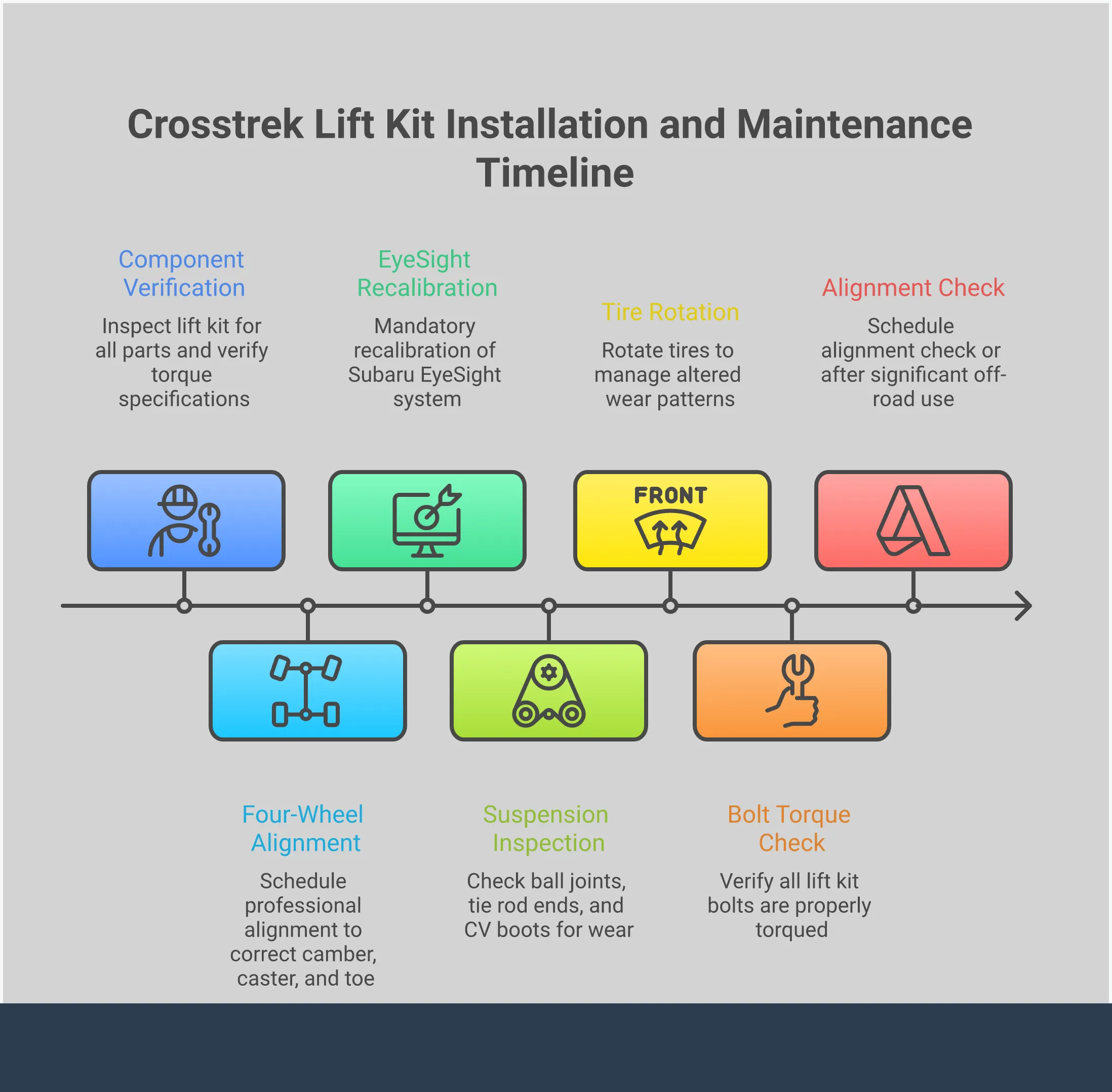
Why Professional Installation Is Worth It
Getting your lift kit installed by a qualified technician is the surest way to avoid headaches down the road. The true cost of lifting your Crosstrek includes the kit itself, professional installation, a wheel alignment, and recalibration of safety systems like EyeSight. A professional shop has the specialized tools and experience to handle the complexities of your Subaru’s suspension and advanced safety features. This ensures every component is installed correctly, torqued to spec, and ready for the trail, giving you peace of mind and protecting your investment in high-quality Crosstrek upgrades.
Why You Can't Skip a Four-Wheel Alignment
After installing a lift kit, your Crosstrek’s suspension geometry is altered. This change can affect everything from tire wear to handling stability. A professional four-wheel alignment is essential to correct it. The alignment adjusts the angles of your wheels (camber, caster, and toe) back to the optimal specifications for your newly lifted ride height. Skipping this step can lead to premature tire wear, a crooked steering wheel, and unpredictable handling, especially at higher speeds. Think of it as the final, critical step in dialing in your suspension for peak performance and safety.
Recalibrating Your Subaru EyeSight System
If your Crosstrek is equipped with Subaru's EyeSight Driver Assist Technology, recalibration after a lift is a critical safety measure. Lifting the vehicle changes the height and angle of the forward-facing cameras, which can disrupt the accuracy of features like pre-collision braking, adaptive cruise control, and lane-keep assist. A certified technician must perform a recalibration to ensure these systems function correctly from the new ride height. This process ensures your vehicle’s advanced safety net is working as intended, keeping you safe on your way to your next adventure.
Double-Checking Your Tire Clearance
A successful installation ends with a thorough check of all clearances. This means ensuring your new, larger tires don’t rub against the fenders, suspension components, or frame, especially when turning or articulating the suspension. A well-engineered lift kit will include all the necessary components, like rear subframe spacers, to maintain proper geometry and clearance. Verifying that everything has enough room to move freely prevents damage to your tires and vehicle, ensuring your setup is trail-ready and reliable. These are the details that separate quality performance parts from the rest.
How to Maintain Your Lifted Crosstrek
A lift kit is a fantastic upgrade, but it’s not a one-and-done modification. Changing your Crosstrek’s ride height alters its suspension geometry and puts new demands on its components. A proactive maintenance routine is the best way to protect your investment, ensure your vehicle performs reliably on any terrain, and keep it safe for the long haul. Focusing on these key areas will make all the difference.
Schedule Regular Wheel Alignments
The very first thing you should do after installing a lift kit is get a professional four-wheel alignment. This step is non-negotiable, as it corrects the suspension angles altered by the lift. Proper alignment is essential for safety, predictable handling, and preventing premature tire wear. After the initial setup, plan to have your alignment checked more frequently than you would with a stock vehicle, especially if you regularly push your Crosstrek on rough trails. Consistent alignments are a core part of maintaining your overlanding solutions and keeping your rig adventure-ready.
Inspect Your Suspension Components
Your suspension is working harder than before, so regular inspections are key to catching small issues before they become big problems. A quality, complete lift kit includes all the necessary components to keep the vehicle safe, but the added stress means you should keep a close eye on things. Periodically check that all bolts are tight and that bushings and ball joints are in good condition. Look for any cracks, leaks, or unusual wear on your shocks, struts, and control arms. These simple checks help ensure your Crosstrek upgrades continue to perform as intended.
Monitor Your Tire Pressure and Wear
Your tires are your connection to the road or trail, and a lift kit changes how they interact with both. Maintaining your vehicle's handling and suspension geometry is the best way to prevent premature wear on tires and other performance parts, saving you from future repair costs. Check your tire pressure often, as incorrect pressure can cause uneven wear and affect handling. It’s also a good idea to rotate your tires more frequently than the standard interval. This practice helps manage new wear patterns, extending the life of your tires and ensuring predictable performance.
Is a Crosstrek Lift Kit Right for You?
Deciding to lift your Crosstrek is a big step, and it’s one that can completely transform your vehicle’s capabilities and appearance. But before you commit, it’s important to be honest with yourself about your driving habits, budget, and long-term goals. A lift kit is more than just a cosmetic upgrade; it’s a functional modification that changes how your Subaru performs both on and off the pavement. By thinking through a few key areas, you can make a confident choice that aligns perfectly with your adventurous spirit and practical needs.
How Much Off-Roading Will You Actually Do?
First, let’s get real about where you plan to take your Crosstrek. Are you looking to handle snowy roads and the occasional forest trail, or are you planning serious overlanding solutions that involve rocky climbs and uneven terrain? Lifting your Subaru is an excellent way to increase its off-road capability, but it’s crucial to remember that a lift kit and bigger tires won’t magically transform your Crosstrek into a different class of vehicle. Be realistic about your ambitions. If your goal is to gain extra clearance for tackling more challenging trails and fitting larger tires, a lift kit is a fantastic investment. If you just want a more aggressive look for city driving, make sure you’re prepared for the other changes that come with it.
What's Your All-In Budget?
The price of the lift kit itself is only one part of the equation. To get a clear picture of the investment, you need to account for the total cost. The true cost of lifting your Crosstrek includes the kit, professional installation, a wheel alignment, and the potential recalibration of safety systems like Subaru’s EyeSight. You’ll also want to factor in the cost of larger all-terrain tires, which are often the next purchase after a lift. Creating a comprehensive budget that covers all these elements will prevent surprises and ensure you can complete the project correctly. You can start by exploring different Crosstrek upgrades to get a sense of kit pricing before adding in these other essential costs.
Are You Ready for the Long-Term Commitment?
Lifting your Crosstrek is not a set-it-and-forget-it modification. A well-engineered lift kit is designed to maintain vehicle integrity, but it’s still important to understand how raising your vehicle’s center of gravity and altering its suspension geometry can impact its daily performance. While some believe a lifted Crosstrek is a maintenance nightmare, quality performance parts are engineered for the long haul to minimize issues. Still, you should be prepared for a slightly different on-road feel and plan for regular inspections of your suspension components and tires. Understanding this long-term commitment ensures you’ll enjoy your lifted Crosstrek for years to come without unexpected headaches.
Related Articles
- DIY Subaru Crosstrek Lift Kit Installation Guide
- Do It Yourself: How to Install a Subaru Crosstrek Lift Kit
Frequently Asked Questions
Will a lift kit affect my Subaru's warranty? Installing a lift kit does not automatically void your entire vehicle warranty. However, it can give a dealership grounds to deny a warranty claim if they can prove the aftermarket part directly caused a failure. For instance, if a CV axle fails, they might attribute it to the altered suspension angles from the lift. It’s a good practice to understand this relationship before modifying your vehicle.
How much lift is right for my Crosstrek? The ideal height depends on your specific goals. A one-inch lift is a great choice if you want to fit slightly larger tires and gain a bit of clearance without dramatically changing your vehicle's on-road manners. For those planning more serious off-road adventures, a two-inch lift provides the clearance needed for larger, more aggressive tires and helps you clear more significant obstacles on the trail.
What is the true total cost of lifting my Crosstrek? The price of the kit is just the starting point. A realistic budget should also include the cost of professional installation, which can vary by shop. After the installation, a four-wheel alignment is absolutely necessary for safety and to prevent uneven tire wear. Finally, if your Crosstrek has Subaru's EyeSight system, you must also factor in the cost of having it professionally recalibrated.
How will a lift kit change the way my Crosstrek drives? You should expect some changes to your daily driving experience. Lifting your vehicle raises its center of gravity, which can result in more noticeable body roll in corners. You may also see a slight decrease in fuel economy, especially after adding larger tires. A well-engineered kit and a proper alignment are designed to keep the ride safe and predictable, but it will feel different from the stock setup.
Do I need anything else besides the lift kit itself? Yes, the kit is just one component of the overall project. A four-wheel alignment is a non-negotiable step immediately following the installation to correct your suspension geometry. Most people also install larger all-terrain tires to take full advantage of the new height, so you should plan for that expense as well. Lastly, any vehicle equipped with EyeSight will require a system recalibration to ensure the safety features function correctly.