


The Essential 2015 STI Stage 2 Clutch Guide
The world of performance clutches is filled with myths that can make upgrading feel like a risky decision. Many drivers worry that a performance clutch means a rock-hard pedal, jerky engagement, and a car that’s a nightmare to drive in traffic. While that might be true for aggressive track-only setups, it’s a common misconception for street-focused upgrades. A modern 2015 STI Stage 2 clutch is engineered to provide a perfect balance between holding power and everyday usability. This article will cut through the noise, explaining the truth about break-in periods, what to realistically expect from the driving experience, and why this upgrade is the ideal choice for an enthusiast who needs their car to perform on the weekend without compromising comfort during the week.
Key Takeaways
- Match Your Clutch to Your Modifications: A Stage 2 clutch is a necessary upgrade once you add power through tunes or performance parts. It’s engineered to handle the increased torque from a modified engine, providing the clamping force needed for aggressive driving without sacrificing daily usability.
- Prioritize Torque Ratings and Quality Components: The most critical spec is the clutch's torque capacity, which must exceed your engine's output. Choose a complete kit with high-grade materials where the pressure plate, disc, and flywheel are designed to function as a cohesive system for your STI's 6-speed transmission.
- Installation and Break-In Are Non-Negotiable: The long-term performance of your clutch depends entirely on a professional installation and a proper 500-mile break-in period. Skipping either of these steps will lead to premature wear and prevent you from getting the reliability you paid for.
What Exactly Is a Stage 2 Clutch?
If you’ve started modifying your 2015 STI, you’ve probably realized that more power puts more stress on your stock components. The clutch is one of the first parts to show its limits. A Stage 2 clutch is a performance upgrade designed specifically for this scenario. It provides a much stronger clamping force and a more aggressive friction material than the factory clutch, allowing it to handle a significant increase in engine power and torque without slipping.
Think of it as the essential link between your tuned engine and the wheels. When you add STI upgrades like a larger turbo, a high-flow exhaust, or a custom engine tune, the stock clutch simply can’t keep up. A Stage 2 clutch is engineered to transfer that newfound power to the pavement reliably. It’s the perfect solution for drivers who enjoy aggressive street driving or occasional track days but still need their car to be manageable for daily use. It strikes a fantastic balance, offering the durability required for performance driving while maintaining a level of comfort that won't make your left leg ache in traffic. This upgrade isn't just about holding more power; it's about improving the entire driving experience by providing a more direct and responsive feel through the pedal, giving you greater control over your vehicle's performance.
Stage 2 vs. Stage 1 and Stage 3
Choosing the right clutch stage is all about matching the hardware to your car’s power output and your driving style. A Stage 1 clutch is a great entry-level upgrade, offering a modest increase in holding power over stock while keeping a very similar pedal feel. It’s ideal for a daily driver with light bolt-on mods. On the other end of the spectrum, a Stage 3 clutch is built for the track. It offers immense clamping force for high-horsepower builds but often comes with a harsh, on/off engagement and a stiff pedal, making it a poor choice for street driving.
A Stage 2 clutch sits perfectly in the middle. It’s the go-to for the majority of modified Subaru STIs that are driven enthusiastically on the street and see occasional track time. It provides a significant jump in torque capacity over Stage 1 without the compromises of a Stage 3, offering a balanced blend of performance and drivability.
Performance Gains for Street and Track
Upgrading to a Stage 2 clutch delivers tangible benefits you can feel every time you drive. For street use, it gives you a more direct and confident connection to the engine. You’ll notice quicker, crisper shifts and the assurance that your clutch won’t slip when you accelerate hard. This is especially important in a modified STI, ensuring all the power you’ve invested in actually makes it to the road. It transforms spirited driving from a worry into a thrill.
On the track, the advantages are even more pronounced. A Stage 2 clutch is built with materials that can withstand much higher temperatures than a stock unit, preventing clutch fade during intense lapping sessions. This durability allows you to push your car to its limits with confidence, executing fast, high-RPM shifts without hesitation. It’s a foundational upgrade for anyone serious about improving their car’s performance capabilities.
Understanding Torque and Horsepower Ratings
When selecting a Stage 2 clutch, the most important specifications to consider are its torque and horsepower ratings. While horsepower is a familiar number, it’s the engine’s torque—its rotational force—that puts the most direct strain on the clutch. A clutch must be able to handle your engine’s peak torque output to prevent slipping. That’s why clutch kits are always rated for a specific torque capacity.
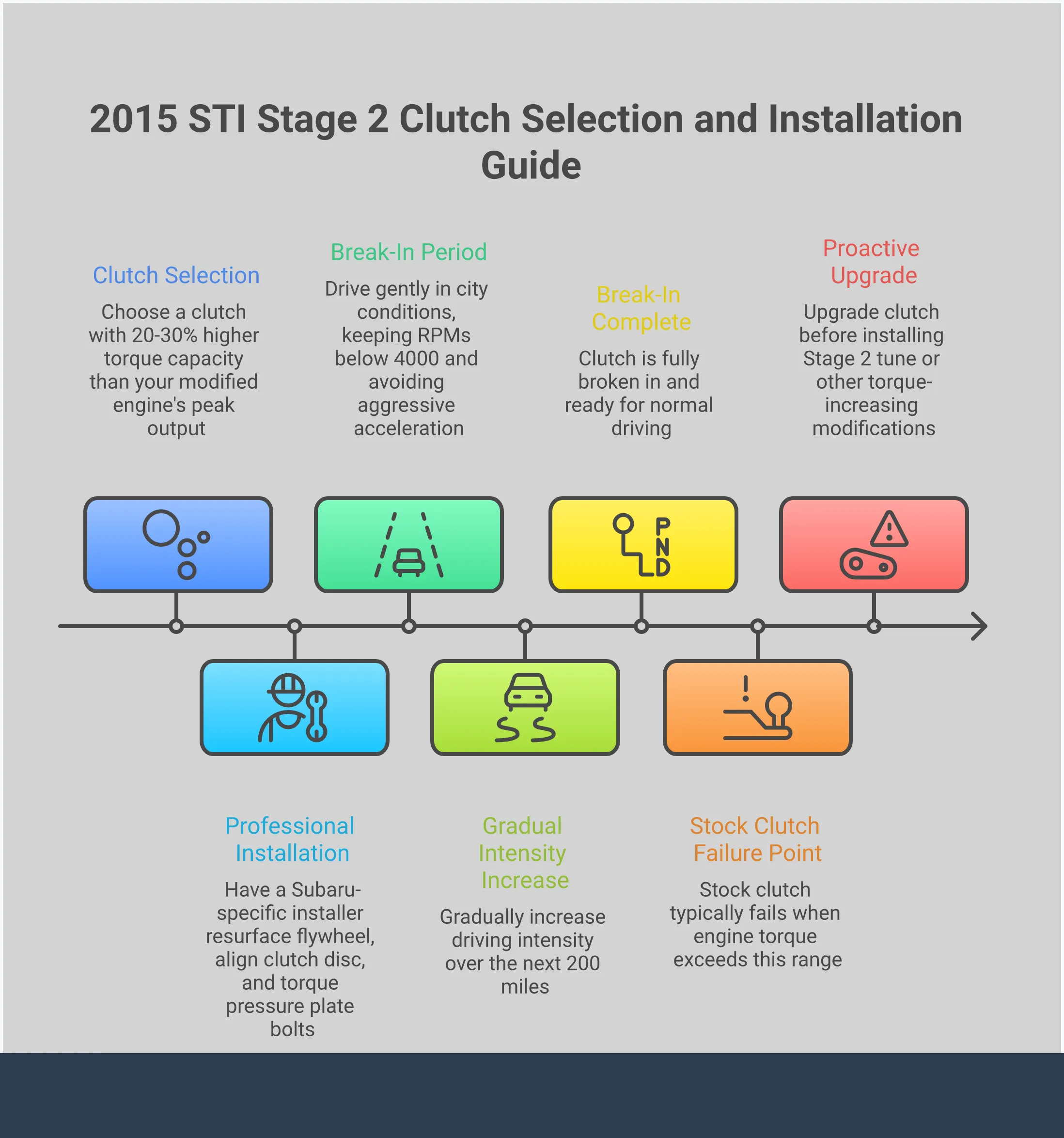
As a rule of thumb, you should choose a clutch with a torque rating that’s slightly above your engine’s current or projected output. This provides a safety buffer and ensures the clutch will last. For example, many Stage 2 clutches are designed to handle torque levels well over 400 lb-ft, making them a perfect match for STIs that have received professional engine tuning services and other power-adding modifications. Matching the clutch to your power goals is the key to a reliable and rewarding build.
How to Choose the Right Stage 2 Clutch for Your 2015 STI
Selecting the right Stage 2 clutch isn't just about grabbing the first one you see online. It’s about matching the component to your car’s power output, your driving style, and your long-term goals. A well-chosen clutch feels like a natural extension of your vehicle, while the wrong one can make daily driving a chore. Let’s break down what you need to look for to make the right choice for your STI.
Key Features of a High-Performance Clutch
A true high-performance clutch is engineered specifically for your vehicle's powertrain. For the 2015 STI, this means finding a kit designed for the 2.5L EJ257 engine and its robust 6-speed transmission. Unlike a stock clutch, a Stage 2 kit is built to handle the increased torque from modifications like a new tune or a bigger turbo. It provides a stronger clamping force to prevent slippage under heavy acceleration. This ensures that all the power your engine is making actually gets to the wheels, giving you the responsive performance you expect from your Subaru STI upgrades.
Why Material and Build Quality Matter
The materials used in a clutch kit directly influence its performance, feel, and lifespan. Look for kits that use high-grade components. For example, a flywheel machined from 4140 Chromoly steel is significantly stronger and lighter than stock, allowing your engine to rev more freely. The clutch disc itself is just as important. Many performance discs use a hybrid carbon-Kevlar friction material that offers an aggressive grip for spirited driving while still being durable enough for daily use. Investing in quality performance parts with superior materials means you get a clutch that’s reliable, predictable, and built to last.
The Crawford Performance Advantage
The ideal Stage 2 clutch offers a perfect balance of track-ready capability and street-friendly drivability. You want a clutch that can handle aggressive launches without sacrificing a smooth pedal feel in traffic. This is where expert guidance makes a difference. We help drivers select kits, like the Competition Clutch Stage 2, that provide a significant upgrade in holding capacity without compromising everyday usability. Pairing the right clutch with our expert engine tuning services ensures your entire powertrain works in harmony, delivering a driving experience that’s both thrilling and refined.
Key Tech Specs to Look For in a Stage 2 Clutch Kit
When you're ready to upgrade, the technical specifications on a clutch kit can feel like a different language. But understanding a few key details is the difference between a perfect match for your STI and a component that just doesn't cut it. It’s not about finding the most aggressive option; it’s about finding the right option for your specific power goals and driving style. Let's break down the most important specs so you can choose your next clutch with confidence.
Matching Torque Capacity to Your Build
The single most important spec is torque capacity. This number tells you how much engine torque the clutch can handle before it starts to slip. Your clutch’s capacity needs to be higher than your engine's peak torque output. If you’ve added performance parts like a bigger turbo or an E85 tune, your engine’s torque has increased significantly. Choosing a clutch that can’t manage that power is a recipe for premature wear and failure. Always pick a clutch with a torque rating that gives you a comfortable safety margin above your engine's output.
Clutch Disc Materials and Design
The material of the clutch disc dictates how the clutch engages and how long it lasts. You'll see materials ranging from organic compounds to more aggressive options like carbon, Kevlar, and ceramic blends. A carbon-Kevlar mix, for instance, offers a great balance of strong grip and durability for spirited street driving. A cushioned ceramic disc provides even more aggressive holding power, making it ideal for track use, though it can be grabbier during daily driving. The right material depends on your primary use for the car, so match the material to your Subaru STI upgrades and driving habits.
Pressure Plate and Flywheel Synergy
The clutch disc doesn't work alone. It's sandwiched between the pressure plate and the flywheel, and all three parts need to work in harmony. A Stage 2 kit will include a heavy-duty pressure plate designed to provide significantly more clamping force than the stock unit. This increased pressure is what holds the disc firmly against the flywheel, allowing it to transfer more power without slipping. Many kits also pair well with a lightweight flywheel, which can improve throttle response. The key is ensuring these components are designed to function as a system to handle the demands of your modified engine.
Ensuring 6-Speed Transmission Fitment
This might seem obvious, but it’s a critical final check. Not all clutches fit all Subarus. Your STI has a specific 6-speed manual transmission, and you need a clutch kit designed explicitly for it. Reputable manufacturers will clearly list the model years and transmission types their kits are compatible with, often covering a range like 2004-2021 for the 2.5L STI. Before you click 'buy,' double-check that the part number matches your vehicle's exact specifications. This simple step will save you from the massive headache of receiving a part that won't bolt up, ensuring your engine tuning services and hard work aren't wasted on an incompatible part.
What's the Real Cost of a Stage 2 Clutch Upgrade?
When you’re planning a Stage 2 clutch upgrade for your 2015 STI, it’s easy to focus on the price of the kit itself. But the true cost involves more than just the parts. To get a clear picture, you need to consider the price of the components, the cost of professional installation, and the long-term value a high-quality clutch adds to your vehicle. Thinking about these three elements together will help you budget properly and understand why a quality clutch is one of the smartest investments you can make for your Subaru.
A performance clutch is the critical link between your engine and the road. Skimping here can undermine every other modification you’ve made. Let’s break down what you should expect to invest in an upgrade that delivers both thrilling performance and peace of mind.
Breaking Down the Price Tag
A Stage 2 clutch kit isn't just a single component; it's a complete system designed to work together. Most kits include a high-performance pressure plate, a carbon-Kevlar or ceramic clutch disc, and often a lightweight flywheel. The price can vary significantly based on the brand and the materials used, but you're paying for the ability to handle substantially more torque than the stock setup. These kits are engineered for spirited street driving and occasional track days, offering a perfect balance of performance and daily usability.
When you browse for STI upgrades, you’ll see that a complete package often provides the best value. A kit that includes a matched flywheel ensures all components are designed to work in harmony, which is crucial for smooth engagement and long-term durability.
Factoring in Professional Installation
While the clutch kit is the main expense, professional installation is a non-negotiable part of the equation. A clutch replacement is a labor-intensive job that requires precision, specialized tools, and a deep understanding of the Subaru drivetrain. Improper installation is a common cause of premature failure, leading to issues like clutch slipping, poor engagement, or damage to the transmission. A simple mistake, like failing to properly align the clutch disc or incorrectly bleeding the slave cylinder, can turn your exciting upgrade into a costly repair job.
Hiring an experienced technician is an investment in getting the performance you paid for. They will ensure every component is installed to spec, the flywheel is correctly surfaced or replaced, and the system is properly adjusted. This expertise protects your new clutch and ensures it can reliably handle the power from your engine.
Why a Quality Clutch Is a Smart Investment
Ultimately, a quality Stage 2 clutch is more than just an expense—it's a foundational element of your build. Your engine can produce all the horsepower in the world, but it’s useless if the clutch can’t transfer that power to the wheels. A cheap or poorly made clutch is a weak link that can fail under pressure, potentially causing catastrophic damage to your engine or transmission. Investing in a reputable kit from our selection of performance parts means you’re getting a component built to withstand aggressive driving and increased power levels.
This upgrade is about reliability and confidence. A durable clutch allows you to push your STI to its limits without worrying about failure. Paired with proper driving habits and routine maintenance, a quality clutch protects your entire drivetrain, making it a smart, long-term investment in your car’s performance and longevity.
Debunking Common Stage 2 Clutch Myths
When you start exploring performance upgrades for your STI, you’ll quickly run into a lot of opinions, especially about clutches. A Stage 2 clutch is a significant step up from stock, but it's surrounded by myths that can make the decision feel complicated. Some drivers worry about a stiff pedal, others question the durability, and many are unsure what to expect from the driving experience. Let's clear the air and separate fact from fiction. Understanding the truth behind these common misconceptions will help you choose the right components for your build with confidence and ensure you get the performance you’re paying for. A well-chosen clutch doesn't just handle more power; it transforms how your car feels with every shift.
The Truth About Break-In Periods
One of the most persistent myths is that a performance clutch is ready for action the moment you drive out of the shop. The reality is that properly breaking in a new clutch is absolutely essential for its performance and lifespan. This process allows the friction material on the clutch disc to properly mate with the surfaces of the pressure plate and flywheel. Skipping this step can lead to glazing, chatter, and a significantly shorter service life. A typical break-in period involves around 500 miles of gentle, in-town driving with plenty of shifting but no hard launches or high-RPM shifts. It’s a small investment of time that pays off with smooth engagement and long-term durability.
Setting Realistic Performance Expectations
It’s easy to assume a Stage 2 clutch is only about holding more power, but that’s just part of the story. A quality upgrade is engineered to deliver smoother and quicker gear changes, giving you a more connected and responsive driving experience. While it’s designed to handle the increased torque from engine mods, it also improves the overall feel of your transmission. The pedal feel will be slightly heavier than stock, which provides better feedback for precise engagement during spirited driving. However, it’s not an on/off switch. The goal of a great Stage 2 clutch is to find the perfect balance between track-ready capability and street-friendly manners.
Durability: What Really Matters
Some enthusiasts believe that any performance clutch will wear out faster than its stock counterpart. While a Stage 2 clutch is subjected to greater forces, its durability is largely determined by the quality of its components and, just as importantly, how it’s maintained. The lifespan of your clutch is directly influenced by regular maintenance and proper driving habits. Simple practices like checking your clutch fluid and ensuring the pedal is correctly adjusted can make a huge difference. A high-quality kit made from premium materials is built to last, but it still relies on the owner for care. Think of it as a crucial part of your high-performance ecosystem—it needs attention to perform at its best.
Daily Driving with a Performance Clutch
The fear of a rock-hard pedal and jerky engagement makes many drivers hesitate to upgrade, but the idea that a Stage 2 clutch ruins a car for daily use is outdated. Modern performance clutches are designed for the enthusiast who uses their STI for everything from commuting to weekend track days. A Stage 2 kit is specifically engineered to be perfectly manageable for daily driving. While the engagement is more direct and the pedal feel is firmer, it’s far from unmanageable. This setup provides the clamping force you need for aggressive driving without making your left leg regret every traffic jam. It’s the ideal solution for drivers who demand more from their car without sacrificing everyday usability.
Is It Time to Upgrade to a Stage 2 Clutch?
Deciding to upgrade your clutch is a big step, but how do you know it's the right time? It's a question of listening to your car and looking at your build sheet. A stock clutch is designed for stock power. Once you start adding performance parts and increasing output, your clutch becomes the bottleneck, unable to handle the extra demand. Recognizing the signs of failure or anticipating the need based on your modifications will save you from being stranded and ensure you get the most out of your STI.
Mods That Signal an Impending Upgrade
If you've started down the path of performance modifications, your stock clutch is living on borrowed time. As soon as you add significant power through engine tuning services, a larger turbo, or other engine enhancements, you're pushing beyond the factory torque capacity. The stock clutch simply wasn't built to clamp down with enough force to handle that extra twist. If you're planning a Stage 2 tune or have already installed bolt-on performance parts, consider a clutch upgrade a required part of the package. Waiting for it to slip isn't a strategy; it's a guarantee that you'll lose power and eventually face a failure. A Stage 2 clutch is designed to be the perfect companion to these initial power upgrades.
Telltale Signs Your Stock Clutch Is Done
Your STI will give you clear warnings when the stock clutch is about to give up. The most common sign is clutch slip. You'll notice it when you accelerate hard in a higher gear; the engine RPMs will shoot up, but your speed won't increase to match. It’s a frustrating feeling, as your engine's power is literally slipping away before it reaches the wheels. Another major red flag is difficulty shifting. If you hear a grinding sound when you try to change gears or the shifter feels unusually resistant, it means the clutch isn't disengaging completely. These symptoms are your car's way of telling you it needs attention before a minor issue becomes a major breakdown. When you notice these signs, it's time to start looking at Subaru STI upgrades.
Matching Your Clutch to Your Power Goals
Upgrading your clutch isn't just about replacing a worn-out component; it's a strategic move to support your car's performance. A Stage 2 clutch is engineered to handle the increased torque from common modifications while offering a more aggressive engagement for quicker, more precise shifts. This is essential for maximizing your STI's potential on the street or at a track day. Think of your clutch as the bridge between your engine and your wheels. If that bridge can't support the load, all your other performance parts are wasted. Choosing a clutch that matches your horsepower and torque goals ensures every bit of power your engine makes is transferred efficiently to the pavement, giving you the responsive and engaging driving experience you're building toward.
How to Install and Maintain Your New Clutch
Once you’ve selected the perfect stage 2 clutch, the next steps—installation and maintenance—are critical for getting the performance and durability you paid for. A proper install and break-in period will set you up for success, while good driving habits will keep your clutch performing at its peak for years to come.
Pro Install vs. DIY: Making the Right Call
Deciding between a professional installation and doing it yourself comes down to your experience, tools, and comfort level. A clutch replacement is a significant job that involves dropping the transmission. If you don’t have the right equipment, like a transmission jack and a full set of tools, or the expertise to ensure perfect alignment, it’s best to leave it to the pros. A professional installer will get the job done right, preventing costly issues like premature wear or engagement problems down the road. If you're curious about what the process entails, watching a detailed installation video can help you appreciate the complexity and make an informed decision.
The Essential Break-In Procedure
After your new clutch is installed, you need to break it in properly. This step is non-negotiable if you want your clutch to last. The goal is to allow the clutch disc and flywheel surfaces to mate perfectly, creating an even contact patch. For the first 300 to 500 miles, avoid aggressive driving. That means no hard launches, high-RPM shifting, or heavy engine braking. Stick to city driving with plenty of stop-and-go to help the surfaces wear in evenly. Following the manufacturer's clutch break-in guidelines is the best way to ensure your clutch performs as expected and has a long, healthy life.
Driving Tips to Extend Your Clutch's Life
Beyond the break-in period, a few simple habits can significantly extend the life of your stage 2 clutch. First, don't ride the clutch. Keep your foot completely off the pedal unless you are actively shifting. Resting your foot on the pedal can cause slight disengagement, leading to unnecessary slippage and wear. Second, perform regular checks. Once a month, take a look at your clutch fluid reservoir to make sure the level is between the minimum and maximum marks. Adopting these small habits and following general clutch care tips will help you get the most out of your performance upgrade.
Related Articles
Frequently Asked Questions
Will a Stage 2 clutch make my daily commute miserable? Not at all. This is a common concern, but modern Stage 2 clutches are designed with drivability in mind. While you will notice a firmer pedal feel, which actually gives you better feedback, it’s not the harsh, on/off switch you might find in a dedicated race clutch. A quality Stage 2 kit provides the clamping force needed for performance driving without making you regret every red light. It’s the perfect middle ground for a car that serves as both a daily driver and a weekend warrior.
Do I have to replace my flywheel when I upgrade my clutch? While you don't always have to replace it, it is highly recommended. At a minimum, the flywheel must be professionally resurfaced to provide a fresh, flat surface for the new clutch disc to mate with. However, many Stage 2 kits are designed to work best with a matched lightweight flywheel. This ensures the entire clutch system works in harmony and can even improve your engine's throttle response. Think of it as ensuring the foundation for your new clutch is perfect.
What’s the most important spec to look at when choosing a clutch? Pay closest attention to the torque capacity. While horsepower gets all the glory, it’s the engine's torque—its rotational force—that the clutch has to manage. Your chosen clutch must have a torque rating that is comfortably higher than your engine's peak output. This provides a crucial safety margin and ensures the clutch can transfer power effectively without slipping, which is the key to both performance and longevity.
What actually happens if I skip the break-in period? Skipping the break-in period is one of the fastest ways to ruin your new clutch. This crucial time allows the friction material on the disc to properly mate with the flywheel and pressure plate. If you go straight to aggressive driving, you can overheat the surfaces and cause glazing. This creates a hardened, slick surface that prevents the clutch from gripping properly, leading to chatter, slippage, and a drastically shorter lifespan for the component you just invested in.
My car is mostly stock right now. Is it too early for a Stage 2 clutch? If your stock clutch is still in good health and you have no immediate plans for major power upgrades, you can probably wait. However, if you know that an engine tune or a bigger turbo is in your near future, upgrading your clutch proactively is a smart move. It prepares your drivetrain for the power to come. It's also the perfect upgrade if your stock clutch is already showing signs of wear and you want a replacement that will support your future build goals.