

Escape trasero turbo para WRX: Guía completa del comprador
El motor de tu WRX es básicamente una potente bomba de aire, pero el escape de fábrica lo obliga a respirar a través de una estrecha boquilla. Esta restricción, conocida como contrapresión, obstruye el turbo y limita la potencia. La solución es un escape trasero del turbo WRX , un sistema diseñado para eliminar por completo estos cuellos de botella. Al reemplazar todo, desde el turbocompresor hasta el parachoques trasero, se crea una vía de escape completamente abierta para los gases de escape. Explicaremos cómo esta sencilla mejora ofrece un aumento significativo de la potencia, afina la respuesta del acelerador y produce ese sonido profundo y agresivo que tu coche merece, convirtiéndolo en el coche de alto rendimiento que siempre estuvo destinado a ser.
Conclusiones clave
- Concentrarse en el tubo de escape para obtener potencia real : Un sistema turbo-back es la mejora definitiva del sistema de escape, ya que reemplaza el tubo de escape de fábrica, el mayor obstáculo que limita el rendimiento del motor. Esto lo distingue de las opciones menos efectivas de cat-back o shaft-back.
- Considere la optimización como parte de la instalación : Una optimización profesional de la ECU no es un complemento opcional; es un paso obligatorio. Su motor debe recalibrarse para que el gran aumento del flujo de aire funcione de forma segura y aproveche al máximo la potencia de su nuevo escape.
- Elija materiales de calidad y un sistema catalítico : Invierta en un escape de acero inoxidable T304 con curvas de mandril para garantizar un ajuste perfecto, durabilidad a largo plazo y un flujo óptimo. Para cualquier WRX de calle, un convertidor catalítico de alto flujo es necesario para cumplir con las normas de emisiones y evitar problemas legales.
¿Qué es un escape Turbo-Back del WRX?
Un escape turbo-back es un reemplazo completo e integral del sistema de escape original. Reemplaza cada tubo y componente, desde la parte trasera del turbocompresor hasta las puntas pulidas del parachoques trasero. Es como crear una vía de escape completamente abierta, permitiendo que el motor y el turbo respiren con la máxima eficiencia. Este enfoque integral lo convierte en la mejora definitiva para quienes buscan mejoras significativas en potencia, par y respuesta. Es la diferencia entre respirar profundamente y con una pajita.
A diferencia de modificaciones más sencillas que solo alteran el sonido de tu coche, un sistema de turbo-back es una mejora fundamental del rendimiento. Aborda todo el recorrido del escape, abordando los componentes de fábrica más restrictivos, especialmente el tubo de escape, para liberar todo el potencial de tu motor. Si de verdad quieres sacar el máximo partido a las mejoras de tu Subaru WRX, un escape turbo-back es una de las modificaciones más efectivas que puedes hacer. Se trata de transformar la sensación y el rendimiento de tu coche, no solo su sonido. Notarás una respuesta del acelerador más rápida, sentirás que el turbo acelera más rápido y oirás un sonido de escape mucho más decidido y agresivo, acorde con la nueva potencia.
Turbo-Back vs. Cat-Back vs. Axle-Back
Al comprar un escape, verá constantemente estos tres términos. Un turbo-back es el sistema más completo, ya que reemplaza todo, desde la salida del turbocompresor hasta la punta del escape, para obtener el mayor aumento de potencia posible. Un sistema cat-back comienza después del convertidor catalítico, ofreciendo un sonido más agresivo y mejoras de rendimiento modestas al actualizar el tubo intermedio y el silenciador. Finalmente, un shaft-back es la modificación más sencilla, ya que reemplaza solo el silenciador y las puntas. Se trata principalmente de una mejora estética y de sonido con un impacto mínimo en el rendimiento. Para un rendimiento real, el turbo-back es el claro ganador.
Componentes clave de un sistema Turbo-Back
Un sistema de escape turbo-back completo consta de varias piezas cruciales que funcionan en conjunto. Todo comienza con el tubo de escape , que se conecta directamente al turbocompresor y es el componente más importante para reducir la restricción inicial. Desde allí, el escape fluye a través de un tubo intermedio , que suele incluir un resonador para moldear el sonido y reducir el zumbido. La pieza final es la sección del eje trasero , que contiene el silenciador que define el sonido final del escape y las puntas que se ven en el parachoques. Cada una de estas piezas de alto rendimiento está diseñada para ser menos restrictiva que su equivalente de fábrica, creando un recorrido suave y eficiente para los gases de escape.
Desmintiendo mitos comunes sobre el Turbo-Back
Aclaremos el mayor mito en el mundo de los escapes: la contrapresión. Quizás hayas oído que los motores necesitan cierta contrapresión para un buen rendimiento, pero en un coche turboalimentado como el WRX, esto simplemente no es cierto. El turbo funciona utilizando los gases de escape para hacer girar una turbina. Cuanto más rápido se puedan expulsar esos gases una vez que hayan cumplido su función, más eficientemente girará el turbo y más potencia se podrá generar. Un escape con turbo-back bien diseñado minimiza la contrapresión, permitiendo que el turbo funcione libremente. Lo que a menudo se confunde con una "buena contrapresión" es, en realidad, mantener una alta velocidad de los gases de escape, lo cual se logra con tuberías de tamaño adecuado.
¿Cómo mejorará un escape turbo-back su WRX?
Cambiar el escape de fábrica por un sistema turbo-back completo es una de las mejoras más transformadoras que puedes hacer a tu WRX. No se trata solo de un sonido más potente; es una mejora integral del rendimiento que sentirás cada vez que te pongas al volante. Al reemplazar todos los componentes, desde el turbocompresor hasta el tubo de escape, eliminas las piezas restrictivas y fabricadas en serie que frenan el motor.
Esta mejora impacta directamente en cuatro áreas clave: potencia, respuesta, eficiencia y sonido. Un sistema de turbocompresor permite que el motor respire con mayor libertad, lo que genera ganancias significativas en caballos de fuerza y par. Notarás que el turbo acelera más rápido, reduciendo el retardo y haciendo que la respuesta del acelerador sea más nítida e inmediata. En esencia, todo esto es posible gracias a un mejor flujo de escape y una contrapresión drásticamente reducida. Y, por supuesto, obtienes ese sonido de escape profundo y agresivo que deja claro que tu WRX va en serio. Es un paquete completo que cambia por completo el carácter de tu auto.
Más caballos de fuerza y torque
Un escape turbo-back ofrece un aumento sustancial de potencia, ya que abarca todo el recorrido del escape. A diferencia de un sistema cat-back, que solo reemplaza componentes después del convertidor catalítico, un sistema turbo-back incluye un tubo de escape de alto flujo. Esta es la parte más restrictiva de la configuración de serie. Al optimizar todo el sistema, se permite que un volumen mucho mayor de gases de escape salga del turbocompresor de forma rápida y eficiente. Este proceso permite que el motor funcione con mayor eficacia, lo que se traduce directamente en aumentos notables de potencia y par en toda la banda de potencia. Estas son mejoras reales y tangibles que hacen que las mejoras de su Subaru WRX se sientan durante la aceleración y la conducción diaria.
Carrete turbo más rápido y respuesta más rápida
Una de las ventajas más satisfactorias de un escape turbo-back es la mejora en la respuesta del coche. La reducción de la contrapresión permite que la turbina del turbocompresor gire a mayor velocidad. Esto es lo que llamamos "carrete turbo más rápido", y significa menos retraso entre el acelerador y la entrada de potencia. La respuesta del acelerador se vuelve más directa y lineal, lo que hace que el coche se sienta más conectado y ágil. Para aprovechar al máximo este flujo de aire mejorado y garantizar un funcionamiento seguro y eficiente del motor, es esencial contar con servicios profesionales de puesta a punto. Una puesta a punto adecuada ajusta los parámetros de la ECU para que coincidan con el nuevo hardware, maximizando así el rendimiento.
Mejor flujo de escape, menor contrapresión
Piense en su motor como una bomba de aire: cuanto más eficiente sea su capacidad para mover el aire hacia adentro y hacia afuera, mayor potencia puede generar. El sistema de escape de serie está diseñado con soluciones que reducen el ruido y las emisiones, creando una contrapresión significativa: la resistencia que el motor debe contrarrestar para expulsar los gases de escape. Un sistema de turbocompresor de alto rendimiento se construye con tuberías dobladas con mandril de mayor diámetro que crean un recorrido suave y sin obstrucciones. Este diseño reduce drásticamente la contrapresión, permitiendo que el motor "exhale" libremente. Esta mayor eficiencia es la base de todas las demás ventajas de rendimiento, desde el aumento de potencia hasta un mejor ahorro de combustible, y es un principio fundamental en todas las piezas de alto rendimiento de calidad.
Un sonido de escape más agresivo
Seamos honestos: el sonido es una de las principales razones por las que los entusiastas mejoran sus escapes. Un sistema turbo-back transforma por completo el sonido de tu WRX, reemplazando el suave y soso sonido de fábrica con un rugido profundo y agresivo que refleja fielmente el rendimiento del coche. Al reemplazar todo el sistema, un escape turbo-back produce un sonido más potente y contundente que un sistema cat-back o axis-back. No se trata solo de sonorizar, sino de lograr un carácter refinado y deportivo que realza la experiencia de conducción cada vez que arrancas el motor o aceleras. Este es el sonido que se adapta al rendimiento, dándole a tu WRX la presencia que merece.
Las mejores marcas de escapes Turbo-Back para tu WRX
Elegir el escape turbo-back adecuado para tu WRX puede resultar abrumador con tantas opciones excelentes en el mercado. Cada marca ofrece algo único, desde un perfil de sonido específico hasta un enfoque en la máxima ganancia de potencia. Tu decisión final dependerá de tus objetivos personales para el vehículo, tu presupuesto y la experiencia de conducción que desees. Analicemos algunas de las marcas más respetadas de la industria para ayudarte a encontrar la opción perfecta para tu Subaru.
Actuación de Crawford
Nos hemos forjado una reputación diseñando sistemas de escape de alta calidad que ofrecen resultados excelentes. Nuestros sistemas de escape de 3 pulgadas están diseñados para reducir drásticamente la contrapresión, permitiendo que el turbo respire libremente y funcione a máxima eficiencia. Esto se traduce directamente en notables aumentos de par y potencia en toda la banda de potencia. Para los conductores que desean sacar el máximo provecho de su motor y lograr ese rugido profundo y característico de Subaru sin ruidos molestos, nuestros sistemas están diseñados para el máximo rendimiento. Nos centramos en una construcción duradera y un ajuste perfecto, lo que convierte a nuestros escapes en la mejor opción para los entusiastas que exigen fiabilidad y potencia.
Invidia
Invidia es una marca popular en la comunidad WRX, conocida por sus diseños innovadores y sistemas de escape de alto rendimiento. Logran un equilibrio perfecto entre un sonido agresivo y una conducción cómoda, lo que los convierte en una opción versátil para muchos propietarios. Los sistemas Invidia están fabricados con materiales de alta calidad, como el acero inoxidable T304, que proporciona una excelente durabilidad y resistencia a la corrosión. Si busca un sistema integral que ofrezca una mejora notable en el rendimiento y un sonido refinado pero agresivo, Invidia es una marca que vale la pena considerar para su vehículo. Su ingeniería se centra en ofrecer una sólida combinación de potencia, sonido y durabilidad.
Afinación Cobb
Cobb Tuning es una potencia en el mundo del rendimiento de Subaru, y sus escapes turbo-back hacen honor a su nombre. Estos sistemas están diseñados para entusiastas que buscan un aumento significativo de potencia y un sonido distintivo y agresivo. Los escapes de Cobb están diseñados para funcionar a la perfección con sus otros productos de rendimiento y soluciones de tuning, creando una ruta de actualización integral para su WRX. Combinar uno de sus escapes con los servicios de tuning de motor adecuados es clave para sacar el máximo provecho del hardware. Para los conductores que buscan maximizar el rendimiento de su vehículo en pista o calle, Cobb ofrece una solución probada que cumple sus promesas.
Borla
Con una larga trayectoria en la fabricación de escapes de alto rendimiento, Borla es sinónimo de calidad artesanal y un sonido característico. Sus sistemas turbo-back para el WRX están diseñados con tecnología patentada para mejorar el flujo de escape y reducir la contrapresión. Esto se traduce en un aumento considerable de la potencia y el par motor, a la vez que produce un sonido de escape distintivo y gutural que muchos entusiastas adoran. Borla se centra en el uso de acero inoxidable de primera calidad de grado aeronáutico, lo que garantiza que sus sistemas estén diseñados para durar. Si prioriza un perfil de sonido único y el rendimiento comprobado de una marca legendaria, Borla es una excelente opción.
Grimmspeed y otros contendientes destacados
Grimmspeed se ha ganado una base de seguidores fieles creando piezas de alto rendimiento de alta ingeniería para el WRX, y sus escapes turbo-back no son la excepción. Sus sistemas están diseñados para proporcionar un sonido profundo y agresivo, a la vez que mejoran el flujo de escape para un mejor rendimiento. Además de Grimmspeed, otras marcas destacadas incluyen HKS, conocida por su estilo y sonido JDM clásico, y AWE Tuning, que ofrece sistemas de alta ingeniería enfocados en una experiencia sin zumbidos. Explorar estas marcas puede brindarte una perspectiva más amplia de los diferentes perfiles de sonido y filosofías de diseño disponibles, ayudándote a encontrar la opción perfecta para tus objetivos y gustos.
Instalación y mantenimiento: Qué saber antes de comprar
Elegir el escape turbo-back perfecto es solo el principio. Para obtener el rendimiento, el sonido y la fiabilidad que busca, debe considerar la vida útil completa de la pieza, desde la instalación hasta el cuidado a largo plazo. Un poco de planificación es fundamental para evitar problemas en el futuro. Antes de comprar ese sistema, repasemos los aspectos esenciales que necesita saber para instalarlo en su WRX y mantenerlo en óptimas condiciones durante años. Estos pasos garantizan que su inversión no solo funcione bien, sino que también dure, protegiendo su motor y su tranquilidad.
Instalación profesional vs. bricolaje
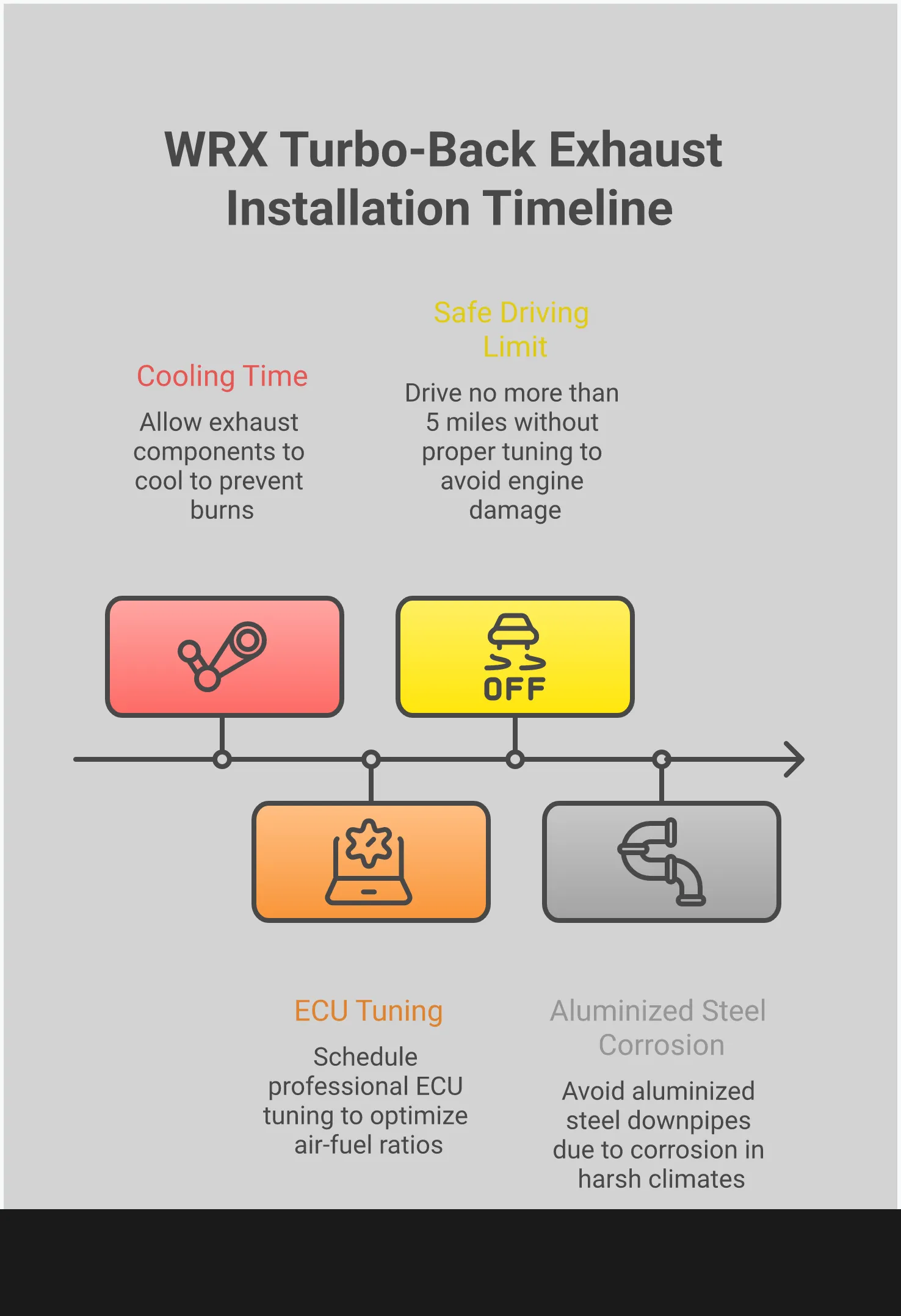
Decidir entre instalar el escape usted mismo o contratar a un profesional depende de su experiencia, herramientas y tiempo. Una instalación casera puede ser un proyecto gratificante y ahorrarle cientos de dólares en mano de obra. Sin embargo, requiere un espacio de trabajo adecuado, un juego de herramientas que incluya soportes de gato y un buen conocimiento de cómo trabajar de forma segura debajo de un vehículo. Si opta por esta opción, asegúrese siempre de que el coche se haya enfriado por completo durante varias horas antes de empezar a trabajar con la llave.
Si no se siente cómodo con el proceso, la instalación profesional es la mejor opción. Un técnico cualificado contará con el equipo y la experiencia necesarios para realizar el trabajo de forma rápida y correcta, garantizando un ajuste sin fugas y una alineación correcta. Esto puede evitar problemas frustrantes como fugas en el escape o traqueteos, lo que la convierte en una inversión rentable para muchos propietarios.
Por qué es esencial una puesta a punto de la ECU
Esto es innegociable: instalar un escape turbo-back en tu WRX requiere una calibración de la ECU. Un sistema turbo-back cambia drásticamente la dinámica del flujo de aire del motor al reducir la contrapresión. La ECU de fábrica no está programada para este cambio, y sin una calibración adecuada, el motor funcionará con una mezcla pobre (demasiado aire, poco combustible). Esto puede provocar detonaciones, bajo rendimiento y daños potencialmente catastróficos en el motor.
Una puesta a punto profesional del motor reasigna los parámetros de combustible y sincronización del encendido de la ECU para que coincidan con el nuevo flujo de escape. Este paso crucial no solo libera todo el potencial de potencia y par de la actualización, sino que también garantiza un funcionamiento seguro y fiable del motor. Piense en el escape y la puesta a punto como dos partes de un todo: no puede haber una sin la otra.
Elegir los materiales y la construcción adecuados
La calidad de su sistema de escape depende de sus materiales y su fabricación. La mayoría de los sistemas de posventa están fabricados en acero inoxidable, generalmente T304 o T409. El T304 ofrece la mejor resistencia a la corrosión y suele estar pulido para un acabado de alta calidad, mientras que el T409 es una opción más económica que, aun así, ofrece buena durabilidad. Para quienes buscan lo último en rendimiento y ligereza, el titanio es una opción, aunque su precio es elevado.
Más allá del material, busque características de construcción de calidad, como tubos doblados con mandril, que garantizan un diámetro constante para un flujo fluido y sin restricciones. Unas soldaduras resistentes y limpias también son señal de un sistema bien construido. Invertir en piezas de alto rendimiento de una marca reconocida garantiza un mejor ajuste, una mayor vida útil y una mayor fiabilidad para todo el sistema del turbo.
Comprensión de la garantía y las políticas del concesionario
Si su WRX aún está bajo la garantía de fábrica, debe tener en cuenta los posibles riesgos de la modificación. En Estados Unidos, la Ley de Garantía Magnuson-Moss establece que un concesionario no puede anular su garantía simplemente por haber instalado una pieza de repuesto. Debe demostrar que su modificación específica causó directamente la falla que intenta reclamar.
Sin embargo, eso no significa que no enfrentará un desafío. Un escape turbo-back es una modificación importante, y un concesionario podría argumentar fácilmente que contribuyó a un problema en el motor o la transmisión. Antes de instalar cualquier pieza, es recomendable hablar con su asesor de servicio para comprender su postura. Tenga en cuenta que modificar su auto puede complicar futuras reclamaciones de garantía.
Mantenerse legal en la calle: sonido y emisiones
Antes de actualizar, consulte las normativas locales y estatales sobre ruido y emisiones vehiculares. Muchos sistemas turbo-back son significativamente más ruidosos que el escape original y pueden superar los límites legales de decibelios, lo que genera atención no deseada y multas costosas. Algunos fabricantes ofrecen sistemas con resonadores o silenciadores diseñados para mantener el volumen a un nivel más razonable.
Las emisiones son una preocupación aún mayor. La mayoría de los sistemas de turbocompresor reemplazan los convertidores catalíticos de fábrica. Para vehículos de calle, necesitará un sistema con un convertidor catalítico de alto flujo para cumplir con las normas de emisiones y evitar que se encienda la luz de verificación del motor. Circular sin convertidor catalítico es ilegal en los 50 estados y resultará en una prueba de emisiones fallida.
Cuidado a largo plazo de su sistema de escape
Un escape turbo de calidad debería durar años, pero con un poco de mantenimiento se mantendrá en óptimas condiciones. Revise periódicamente debajo del vehículo y realice una inspección visual. Compruebe que todos los soportes estén bien fijados y que los aisladores de goma no estén agrietados ni desgastados. Asegúrese de que todos los pernos y abrazaderas estén bien apretados, ya que las vibraciones pueden aflojarlos con el tiempo.
Preste atención a cualquier sonido nuevo o inusual, ya que una fuga de escape suele presentarse como un tictac o un silbido, especialmente cuando el motor está frío. Si vive en una zona donde las carreteras se salan en invierno, asegúrese de enjuagar los bajos de su coche con regularidad para evitar la corrosión, incluso en sistemas de acero inoxidable.
Cómo encontrar el mejor precio para el escape Turbo-Back de su WRX
Encontrar el escape turbo-back ideal para tu WRX no se trata solo de buscar el precio más bajo, sino de invertir inteligentemente en el rendimiento de tu auto. La mejor relación calidad-precio se obtiene con un sistema que se ajuste a tus objetivos de potencia, esté diseñado para durar y provenga de un proveedor confiable. Para aprovechar al máximo tu dinero, necesitas saber dónde buscar, qué buscar y cuándo comprar. Analicemos cómo encontrar un sistema de escape de alta calidad que se ajuste a tu presupuesto y a tu auto.
Distribuidores autorizados vs. talleres de alto rendimiento
Cuando esté listo para comprar, generalmente tendrá dos opciones: un concesionario autorizado Subaru o un taller especializado en rendimiento. Si bien un concesionario puede suministrar piezas originales y garantizar el cumplimiento de la garantía, a menudo carece de la experiencia específica para la optimización del rendimiento. Su enfoque se centra en los reemplazos de fábrica, no en las mejoras posventa.
En un taller especializado en rendimiento, encontrarás asesoramiento personalizado y una cuidada selección de piezas diseñadas para funcionar en conjunto. Nos apasiona el rendimiento de Subaru, por lo que podemos guiarte hacia un escape que se ajuste a tus objetivos específicos, ya sea que construyas un vehículo para uso diario o para circuito. Entendemos las particularidades de las diferentes marcas y materiales, y cómo un sistema de escape se integra con otras modificaciones.
Compras inteligentes en tiendas online
Comprar en línea te da acceso a una amplia selección de mejoras para el WRX y a precios competitivos. Sin embargo, es fundamental comprar en una fuente confiable que ofrezca información detallada del producto y un buen servicio al cliente. Una gran oferta en un sitio desconocido puede echarse a perder rápidamente si recibes una pieza de mala calidad o el artículo equivocado.
Antes de comprar, confirme que el escape sea compatible con el año del modelo de su WRX. Además, revise el contenido del kit. Muchos sistemas económicos no incluyen juntas ni herrajes nuevos, esenciales para una instalación sin fugas. Siempre utilice juntas nuevas, especialmente entre el tubo de escape y el resto del escape, para asegurar un sellado perfecto.
Cómo elegir el momento adecuado para su compra: ofertas y promociones
Si no tienes prisa, planificar tu compra puede ahorrarte mucho dinero. Muchos minoristas, como Crawford Performance, tienen ofertas durante días festivos importantes como el Black Friday o durante el verano. Suscribirse a los boletines de tus tiendas de rendimiento favoritas es una excelente manera de enterarte de las próximas promociones y lanzamientos de nuevos productos.
Al elaborar su presupuesto, recuerde que el precio del escape es solo una parte del costo total. Un sistema de turbocompresor requiere una calibración profesional de la ECU para ajustar los parámetros del motor al mayor flujo de aire. Considerar esto desde el principio le garantiza un presupuesto completo y preciso para su actualización.
Precio vs. Calidad: ¿Qué buscar?
Con los sistemas de escape, casi siempre se obtiene lo que se paga. Un sistema más económico puede ser tentador, pero probablemente esté hecho de acero aluminizado de menor calidad, que puede oxidarse y fallar, especialmente en climas severos. Un sistema de calidad hecho de acero inoxidable T304 o T316 resistirá la corrosión y durará años. Además, busque características como tubos doblados con mandril para un flujo de aire uniforme y soldaduras limpias y resistentes.
También es importante adaptar el escape a tus objetivos de potencia. Un escape de 3 pulgadas es ideal para autos muy modificados que generan mucha potencia, pero puede ser excesivo en un WRX de serie o ligeramente modificado. Para niveles de potencia de entre 250 y 300 hp, un sistema de 2.5 pulgadas suele proporcionar el equilibrio ideal de flujo y velocidad sin gastar una fortuna.
Artículos relacionados
- Los 5 mejores sistemas de escape turbo para tu WRX
- Los 5 mejores escapes Turbo-Back de 3 pulgadas para WRX
Preguntas frecuentes
¿Es realmente necesario ajustar la ECU después de instalar un escape turbo-back ? Sí, es absolutamente esencial y no se puede omitir. Un sistema turbo-back cambia radicalmente la respiración del motor al reducir drásticamente la contrapresión. La computadora de fábrica de su auto no está programada para este mayor flujo de aire y funcionará con una mezcla peligrosamente pobre, lo que puede causar graves daños al motor. Un ajuste profesional ajusta los mapas de combustible y sincronización para que funcionen con el nuevo hardware, garantizando un funcionamiento seguro del motor y aprovechando al máximo el potencial de rendimiento de su nuevo escape.
¿Cuántos caballos de fuerza obtendré realmente con un escape turbo-back? El aumento exacto de potencia depende de varios factores, como el sistema de escape específico, la calidad del ajuste de la ECU y cualquier otra modificación que haya realizado. Sin embargo, un sistema turbo-back correctamente instalado y ajustado puede ofrecer aumentos significativos y notables tanto en caballos de fuerza como en torque. Es una de las modificaciones individuales más efectivas para agregar potencia real y útil que notará cada vez que acelere.
¿Un escape turboback hará que mi auto sea demasiado ruidoso para conducir a diario? Esto depende de las preferencias personales y del sistema específico que elija. Si bien un escape turboback será notablemente más ruidoso y agresivo que el de fábrica, muchos sistemas de alta calidad están diseñados para minimizar el molesto zumbido a velocidades de autopista. Las marcas que incluyen resonadores o utilizan silenciadores de diseño avanzado pueden producir un sonido profundo y deportivo, emocionante cuando lo desea, pero a la vez manejable para sus desplazamientos diarios. Siempre recomendamos escuchar fragmentos de sonido de diferentes sistemas en un auto como el suyo para encontrar un volumen y un tono que le resulten satisfactorios a largo plazo.
¿Debería elegir un tubo de escape con o sin catalizador para mi sistema? Para cualquier vehículo que circule por la vía pública, un tubo de escape con catalizador de alto flujo es la opción correcta. Circular sin catalizador es ilegal en las calles de los 50 estados y provocará un fallo en la prueba de emisiones. Los catalizadores modernos de alto flujo son increíblemente eficientes y ofrecen casi todas las ventajas de rendimiento de una configuración sin catalizador, a la vez que mantienen el vehículo en conformidad y evitan la luz de verificación del motor persistente. Los sistemas sin catalizador solo deben considerarse para vehículos todoterreno dedicados a circuitos.
¿Instalar un escape turbo-back anulará la garantía de mi auto? Técnicamente, un concesionario no puede anular la garantía completa solo por instalar una pieza de repuesto. Sin embargo, puede denegar una reclamación de garantía si puede demostrar que la modificación causó directamente la falla específica. Dado que un escape turbo-back y la puesta a punto requerida afectan el motor y la transmisión, un concesionario podría argumentar razonablemente una conexión si falla un componente relacionado. Siempre es recomendable comprender el riesgo potencial y aceptar que modificaciones significativas pueden complicar futuras reclamaciones de garantía.