

The Ultimate Subaru Track Day Build Guide
Building a car for the track is a journey filled with common pitfalls that can cost you time, money, and a frustrating day cut short. Many enthusiasts learn the hard way that stock brakes aren't enough, that engine cooling is non-negotiable, or that adding power without supporting mods is a recipe for failure. This guide is your shortcut past those expensive lessons. We’ve distilled years of experience into a clear plan that helps you make the right decisions from the start. By focusing on a logical progression of upgrades, you can create a dependable and well-sorted machine, ensuring your Subaru track day build is a success from its first shakedown lap.
Key Takeaways
- Build from the ground up: A successful track car starts with a solid foundation. Prioritize upgrades to your suspension, brakes, and safety systems before adding significant engine power to create a balanced, predictable, and safe vehicle.
- Prioritize reliability to protect your engine: Track driving puts immense stress on your engine. Protect your investment with essential reliability upgrades like a professional tune, an improved cooling system, and an Air Oil Separator (AOS) to prevent overheating and oil contamination.
- Adopt a rigorous maintenance routine: Your work isn’t finished after the build. Implement a strict pre-track inspection and a thorough post-track assessment to check fluids, brakes, and tires. This habit helps you catch small issues before they become major failures and informs your future upgrade plan.
Key Upgrades for Your Subaru Track Build
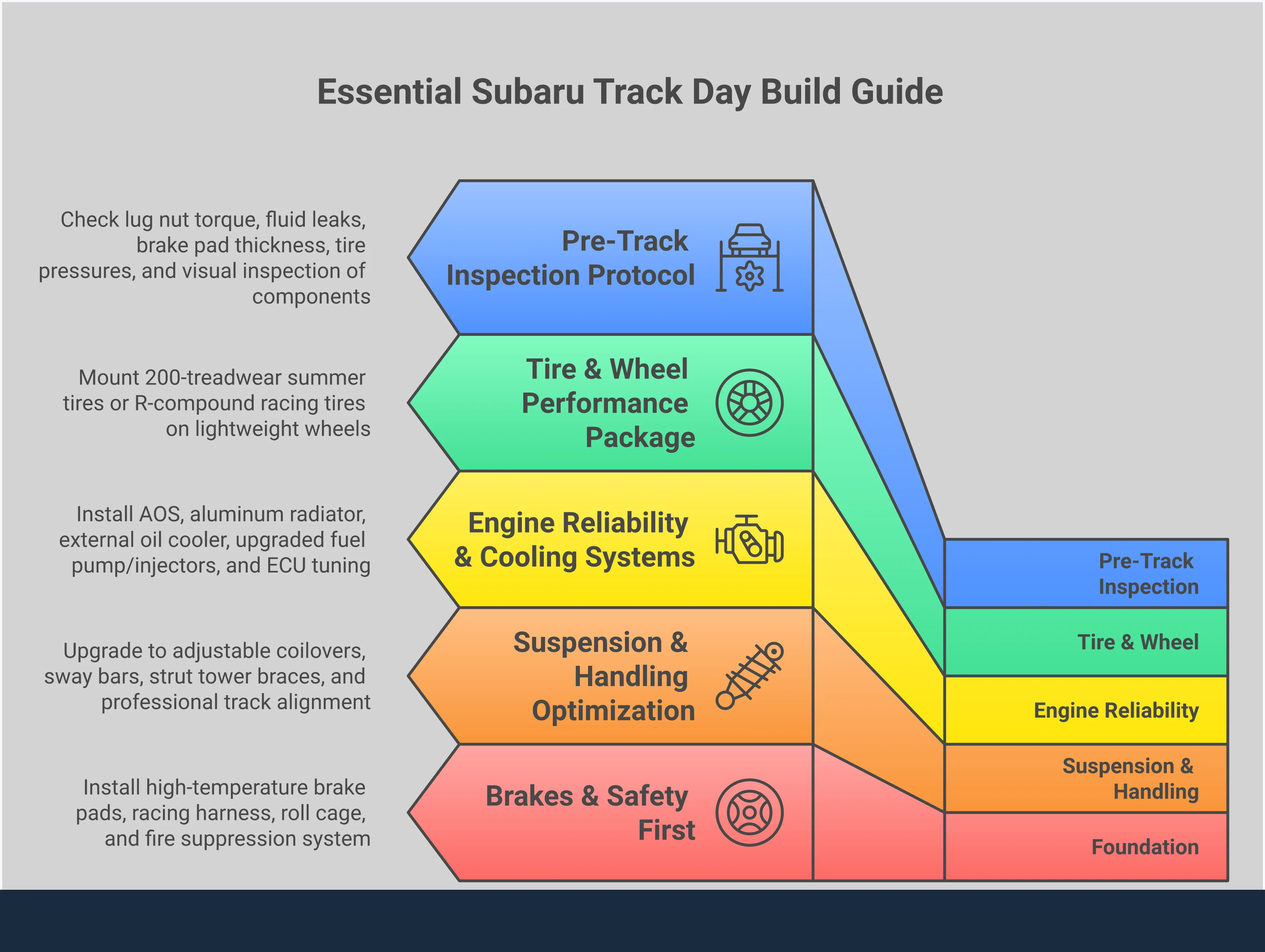
Transforming your daily driver into a capable track machine is an exciting process. While it’s tempting to chase horsepower right away, a successful track build focuses on balance. The key is to create a car that is not just fast in a straight line, but also controlled, responsive, and reliable lap after lap. Think of it as building a pyramid: you need a wide, stable base of handling and braking before you can add the peak of engine power. Skipping these foundational steps can lead to a car that’s difficult to control and potentially unsafe at speed, which is the last thing you want when you're pushing for a new personal best.
A well-sorted track car inspires confidence, allowing you to push your limits and improve your driving skills. The goal is to make the car an extension of yourself, responding predictably to every input. This means addressing suspension to manage weight transfer, upgrading brakes to handle repeated high-speed stops, and ensuring the engine can perform reliably under stress. These foundational upgrades work together to build a cohesive performance package, ensuring your Subaru is safe, predictable, and incredibly fun on the circuit. In the following sections, we'll walk through the essential areas to focus on for your build, starting with the parts that will give you the most control and confidence behind the wheel.
Upgrade Your Suspension: Coilovers & Sway Bars
Your car’s suspension is the foundation of its handling. Before adding power, you need to ensure your car can put that power down effectively through the corners. Coilovers are a significant step up from stock, giving you adjustable ride height and damping so you can fine-tune how your car responds. Paired with adjustable sway bars to manage body roll, your Subaru will feel much more planted and predictable. To further stiffen the chassis and help the suspension work more efficiently, consider adding strut tower bars. A professional track alignment is the final touch, optimizing your tire contact patch for maximum grip. These performance parts are the building blocks of a great handling car.
Install High-Performance Brakes & Cooling
On the track, your brakes work much harder than they do on the street. Stock brake pads can quickly overheat and experience "brake fade," where your pedal feels soft and stopping power diminishes. This is not only slow but also dangerous. Upgrading to track-specific brake pads that can handle higher temperatures is essential. For even more consistent performance, consider larger rotors and multi-piston calipers, which dissipate heat more effectively. Always use a high-temperature brake fluid to prevent it from boiling under pressure. For dedicated track cars, brake cooling ducts that direct air to the rotors can make a world of difference. These are critical Subaru STI upgrades for any serious track build.
Increase Engine Performance
Once your handling and braking are sorted, you can focus on adding power reliably. The single most important step is professional engine tuning services to ensure all your components work together safely and efficiently. From there, improving airflow with an upgraded intake and exhaust system helps the engine breathe better. For turbocharged models like the WRX or STI, a larger turbo and a more efficient intercooler will deliver a substantial power increase. However, more power requires more fuel. A stronger fuel system, including upgraded fuel pumps and injectors, is necessary to support the engine’s demands and prevent it from leaning out, which can cause catastrophic damage.
Choose Track-Ready Tires & Wheels
Tires are your car's only connection to the track, making them one of the most impactful upgrades for lowering lap times. Start with a set of aggressive summer tires (often in the 200-treadwear range) for a great balance of grip and longevity. For more dedicated use, R-compound tires offer near-slick levels of grip. These tires are best mounted on lightweight wheels, which reduce unsprung weight and allow your suspension to react more quickly to the track surface. Proper wheel and tire fitment is crucial; you want the widest setup possible for maximum grip without any rubbing against the suspension or fenders. This is a cornerstone of our Subaru WRX upgrades.
What Safety Gear Does Your Subaru Need for the Track?
When you're pushing your Subaru to its limits on the track, performance and safety go hand in hand. It’s easy to get caught up in the excitement of adding power and improving lap times, but a solid safety plan is the true foundation of any successful track build. This isn't just about meeting regulations or preparing for a worst-case scenario; it's about building a car that gives you the confidence to drive at ten-tenths. The right safety equipment does more than just protect you. It connects you more directly to the car, enhances feedback, and can even improve the vehicle's structural rigidity and handling.
Before you purchase any parts, your first step should always be to check the rulebook for the track day organization or racing series you plan to join. Requirements can vary significantly, and you want to ensure your build is compliant from the start. From there, you can focus on the core components that transform your Subaru from a daily driver into a secure and capable track machine. We'll cover the non-negotiable systems that protect both you and your investment, including chassis reinforcement, driver restraints, fire suppression, and your own personal gear. These are the performance parts that allow you to focus completely on your driving.
Install a Roll Cage & Reinforce the Chassis
A roll cage is one of the most critical safety installations for any car that sees serious track time. Its primary job is to protect you by creating a reinforced safety cell inside the cabin in the event of a rollover or major impact. But its benefits don't stop there. A properly installed roll cage significantly increases the torsional rigidity of your Subaru's chassis. This added stiffness prevents the frame from flexing under heavy cornering loads, which allows your suspension to work more effectively and predictably. The result is sharper, more responsive handling and a car that communicates its limits more clearly.
Fit Racing Seats & Harnesses
Your factory seats and three-point seatbelts are designed for comfort and daily driving, not for the intense G-forces of a racetrack. Upgrading to a proper racing seat is essential for holding you securely in place. Instead of using your arms and legs to brace yourself against corners, a bucket seat with deep bolsters lets you relax and focus entirely on steering and pedal inputs. Paired with the seat, a 4, 5, or 6-point racing harness keeps you firmly planted, providing a level of security that a standard seatbelt simply can't match. Proper installation is key, as both the seat and harness must be mounted to reinforced points on the chassis.
Add Fire Safety & Emergency Equipment
The risk of fire is a serious reality in high-performance driving, where hot engine components, high-pressure fuel lines, and electrical systems are pushed to their extremes. Installing a fire suppression system is a life-saving measure. These systems use strategically placed nozzles in the engine bay and cockpit to quickly extinguish a fire, often before it can spread. At a minimum, every track car should have a handheld fire extinguisher mounted within the driver's reach. It's also smart to pack an emergency kit with a first-aid kit, extra water, and spare parts like brake pads and fluids for any unexpected issues in the paddock.
Know Your Personal Safety Gear Requirements
Your car isn't the only thing that needs to be properly equipped; your personal safety gear is just as important. Always start with a Snell SA-rated helmet. These helmets are specifically designed and tested for automotive racing, offering superior impact protection and fire resistance compared to motorcycle helmets. You'll also need a fire-resistant racing suit, gloves, and shoes. This gear protects you from heat and fire while also improving your grip on the steering wheel and feel on the pedals. Before heading to an event, double-check the track's specific rules, as many organizations have strict mandates on the type and rating of the gear you must wear.
How to Optimize Your Subaru's Handling for the Track
Raw power is exciting, but on the track, precise handling is what separates a good lap time from a great one. Optimizing your Subaru’s handling makes the car feel like an extension of yourself, responding instantly to every input. It’s about creating a balanced, agile machine that can carry more speed through corners and give you the confidence to push its limits. By focusing on suspension, weight, alignment, and chassis stiffness, you can transform how your car feels and performs when it matters most. These adjustments work together to create a cohesive, track-focused driving experience.
Fine-Tune Your Suspension Settings
Your stock suspension is designed for comfort on public roads, not for the demands of a racetrack. Upgrading to a quality set of coilovers is one of the most impactful changes you can make, giving you precise control over ride height and damping. This allows you to dial in the car's response for different tracks and conditions. To complement this, install adjustable sway bars to manage body roll during aggressive cornering and keep the car level. Adding strut tower bars will further stiffen the chassis, allowing your new suspension to do its job more effectively and providing a more connected feel to the road.
Implement Weight Reduction Strategies
On the track, weight is the enemy of speed. Reducing your car's overall mass improves everything: acceleration, braking, and cornering agility. You can start with simple changes by removing unnecessary items like the rear seats, spare tire, and sound-deadening material. Every pound you shed makes a difference. For more significant gains, consider investing in lightweight wheels and racing seats. This not only lowers the car's total weight but also reduces unsprung mass (for wheels) and lowers the center of gravity (for seats), leading to a much more responsive and nimble vehicle on the track.
Dial In Your Track Alignment
A standard alignment from your local tire shop won't cut it for track use. You need a specialized track alignment to maximize grip and performance. This process involves adjusting your car’s camber, toe, and caster settings beyond factory specifications. A more aggressive negative camber, for example, allows the tire to maintain a larger contact patch with the pavement during hard cornering. This translates to higher cornering speeds and more predictable handling. Getting your alignment dialed in by a professional who understands track dynamics is a critical step in preparing your Subaru for a track day.
Upgrade Steering & Chassis Components
To get the most out of your tires and suspension, you need a stiff chassis and a responsive steering system. Upgrading key chassis and steering components will give you sharper turn-in and better feedback from the road. Installing a steering dampener lockdown, for instance, can eliminate the vague feeling or "slop" in the steering wheel, providing a more direct connection to the front tires. Additionally, adding braces, like a rear shock tower brace, reduces chassis flex during cornering. This helps maintain your alignment settings under load and improves overall stability, allowing you to attack corners with more confidence. These performance parts are essential for a truly dialed-in feel.
Why Professional Tuning & Engine Management Matter
Adding more power to your Subaru is exciting, but it’s about more than just bolting on bigger parts. To build a reliable track car that performs consistently lap after lap, you need to manage the engine as a complete system. This means ensuring your engine gets the right amount of fuel and air, stays cool under pressure, and operates safely with its new performance upgrades. Neglecting engine management is one of the fastest ways to end a track day early, so let's get it right from the start.
Get a Professional Tune from Crawford Performance
After installing performance parts, a professional tune is not optional; it's essential. Think of it as teaching all your new components how to work together. A proper tune adjusts your Subaru’s ECU parameters, like fuel maps and ignition timing, to match the new hardware. This process ensures your engine runs efficiently and, more importantly, safely. Without it, you risk running lean, experiencing engine knock, and causing serious damage. Our expert engine tuning services are designed to optimize your build, giving you reliable power you can count on at the track while keeping your engine protected.
Upgrade Your Fuel System
When you increase airflow with a larger turbo or more pressure, your engine needs more fuel to maintain a safe air-to-fuel ratio. The stock fuel pump and injectors are often the first components to reach their limit, and asking too much of them can starve the engine of fuel. This lean condition dramatically increases combustion temperatures and can lead to catastrophic failure. To support your power goals, you’ll need to upgrade to a higher-flow fuel pump and larger injectors. These supporting performance parts are the foundation of a reliable engine build, ensuring your motor gets the fuel it needs to perform safely.
Improve Your Cooling System
Track driving pushes your engine to its limits, generating far more heat than daily driving ever could. Your Subaru's stock cooling system is simply not designed for sustained high-RPM operation and can quickly become overwhelmed. An overheated engine can lead to warped heads, blown head gaskets, and other major failures. To keep temperatures in check, upgrading your cooling system is critical. Installing a high-capacity aluminum radiator and an external oil cooler are two of the most effective mods you can make. These Subaru WRX upgrades are vital for maintaining optimal engine temperatures and ensuring your track day doesn't end on the back of a tow truck.
Tune Your ECU & Install an Air Oil Separator
While the ECU tune is the brain of your engine, an Air Oil Separator (AOS) is its bodyguard. During high-G cornering on the track, oil can slosh around in the crankcase and get sucked into your intake system through the PCV valve. This oil vapor contaminates the air-fuel mixture, lowering your fuel's octane rating and increasing the risk of engine knock. A Crawford Performance Air Oil Separator prevents this by capturing that oil vapor and returning it to the crankcase. This keeps your intake clean, helps maintain consistent power, and protects your engine from potential damage during high-performance driving.
Common Mistakes to Avoid with Your Track Build
Building a car for the track is an exciting process, but it’s easy to make a few common missteps that can cost you time, money, and even a trip home on a flatbed. Learning from the mistakes of others is the fastest way to get your Subaru performing reliably on the track. By avoiding these pitfalls, you can build a car that is not only fast but also safe and dependable, letting you focus on what really matters: improving your driving and having a great time. Let’s walk through the most frequent errors we see so you can steer clear of them with your build.
Mistake: Assuming Stock Brakes Are Enough
Your Subaru’s stock brakes are designed for public roads, not for the repeated, high-stress braking of a racetrack. One of the first things you’ll notice during a track session is brake fade, where the pedal feels soft and braking power diminishes as temperatures soar. This is a safety issue. At a minimum, you should switch to high-performance brake pads and fresh, high-temperature brake fluid before your first track day. For more serious use, consider upgrading to larger rotors and calipers to better manage heat and provide consistent stopping power lap after lap. Don't let your brakes be the weak link that cuts your day short.
Mistake: Overlooking Engine Cooling Needs
The Subaru Boxer engine is a fantastic power plant, but it generates a lot of heat, especially under the constant high RPMs of track driving. Your stock cooling system can quickly become overwhelmed, leading to dangerously high oil temperatures and potential engine damage. An oil cooler is one of the most important reliability modifications you can make. Additionally, installing a Crawford Performance Air Oil Separator (AOS) is critical. During hard cornering, an AOS prevents oil from being pulled into your engine's intake, which can lower your fuel's octane and lead to detonation. Protecting your engine is paramount.
Mistake: Adding Power Without Supporting Mods
It’s tempting to chase horsepower right away, but adding power without the right supporting modifications is a recipe for disaster. A powerful engine is useless if the rest of the car can't handle it. Before you add a bigger turbo or get an aggressive tune, you need to assess your fuel system, clutch, and drivetrain. An upgraded fuel pump and injectors may be necessary to prevent the engine from running lean. Your stock clutch will likely slip under the new torque load, and you could even damage your transmission or axles. A professional tune from an expert who understands these relationships is essential for creating a balanced and reliable performance package.
Mistake: Rushing the Build Without a Plan
A successful track build happens in stages, not all at once. A common error is to throw parts at a car without a clear plan, resulting in a vehicle that’s difficult to drive and troubleshoot. Start by addressing safety, brakes, and tires. Once you feel confident in the car's ability to stop and turn, you can move on to suspension modifications to fine-tune its handling. Only after you’ve mastered the car in this state should you begin adding significant power. This phased approach allows your driving skills to grow with the car's capabilities. It also helps you create a reliable machine by ensuring each system works in harmony with the others.
How to Choose the Right Tires for Track Day
Your tires are the only part of your Subaru that actually touches the track, making them one of the most critical components for performance and safety. The right set of tires can transform your car's handling, braking, and cornering capabilities, directly translating to faster, more consistent lap times. Investing in quality rubber is not a corner you want to cut; it’s the foundation of a successful track day. Choosing the right tire involves understanding compounds, ensuring proper fitment, and managing them correctly throughout the day.
Understand Performance Tire Compounds
The world of performance tires boils down to grip. For track use, you need a tire with a soft rubber compound that gets sticky as it heats up, so your all-season tires won't cut it. A great place to start is with an aggressive summer tire, often in the 200-treadwear category, which offers a fantastic blend of grip and durability. For a dedicated setup, R-compound tires are some of the best performance parts you can buy, providing near-slick levels of grip but wearing out much faster.
Get the Right Tire Size & Fitment
Once you’ve picked a compound, you need the right size. Generally, a wider tire provides a larger contact patch for more grip. However, you must ensure your wheels and tires fit without rubbing against the suspension, brakes, or fenders, especially under cornering loads. Achieving the perfect fit might require testing different wheel offsets or even rolling your fenders. Proper fitment is essential for safety and allows you to get the most out of your Subaru STI upgrades.
Manage Tire Temperature & Pressure
Your work isn’t done after the tires are mounted. Managing tire pressure is a continuous job at the track. As tires heat up, the air inside expands, increasing the pressure. You'll need a quality tire pressure gauge to monitor these changes. Start with a baseline cold pressure, run a few laps to get them to temperature, and then pit to check the hot pressures. From there, you can bleed off air to hit your target hot pressure, which is where the tire performs best. This ensures your contact patch is optimized and prevents the tire from rolling onto its sidewall.
How to Prep Your Car Before a Track Day
You’ve put in the work to assemble your ideal Subaru track build. Now it’s time for the reward: track day. But before you head for the tarmac, a thorough pre-session prep is non-negotiable. This routine isn’t just about finding an extra tenth of a second on your lap time; it’s about making sure your car performs reliably and, most importantly, safely from the first lap to the last. Skipping these checks can turn an exciting day into a frustrating and short one. Let’s walk through the essential prep work to get your Subaru truly ready for action.
Follow a Critical Inspection Checklist
Make a pre-track inspection your ritual. A simple but detailed walk-around can save you from a major headache later. Start by checking your tire pressures and setting them to your preferred track settings. Next, confirm your lug nuts are torqued to the correct specification; wheels can and do come off. Get on the ground and look for any new fluid drips or leaks from the engine, transmission, or differentials. Finally, give all your hoses and belts a quick visual check for cracks or wear. This critical inspection ensures all your performance parts are in good working order before you push your car to its limits. Finding an issue in your garage is much better than discovering it in the paddock.
Complete Fluid Changes & System Checks
Track driving generates an incredible amount of heat, which is the number one enemy of your engine and drivetrain fluids. An oil change before a track day is always a good idea, as fresh oil provides maximum protection against wear when your engine is living at high RPMs. But don't stop there. Your brake fluid and coolant are just as important. Old, moisture-contaminated brake fluid can boil under hard use, leading to a soft pedal or total brake failure. Likewise, old coolant is less effective at heat transfer, increasing your risk of overheating. These simple fluid services are the best insurance you can buy for the health of your engine and your safety on the track, especially after receiving professional engine tuning services.
Prepare & Test Your Brake System
Your Subaru’s factory brakes are designed for public roads, not for the repeated, high-energy stops required on a racetrack. Relying on stock pads and fluid is a common mistake that often leads to severe brake fade and a serious loss of confidence. At an absolute minimum, you need fresh, high-temperature brake fluid and a set of quality track-oriented brake pads. As many drivers discover, the standard brakes on some Subarus are too small for hard track use. Always make sure your car can stop reliably before you add more power. Upgrading your Subaru STI’s brakes is one of the most effective ways to improve lap times and stay safe.
What Post-Track Day Maintenance is Necessary?
Your work isn’t over once the checkered flag waves. What you do after a track day is just as important as your preparation. Pushing your Subaru to its limits puts significant stress on its components, and a thorough post-track routine is essential for ensuring its longevity and readiness for the next event. Think of it as a cool-down for your car that helps you catch small issues before they become major problems. By creating a consistent maintenance habit, you protect your investment and make every future track day safer and more enjoyable.
This process involves more than just a quick glance under the hood. It’s a three-step method: an immediate post-session check, a deeper assessment of component wear, and a forward-looking maintenance plan. This isn't just about fixing what's broken; it's about proactively managing your vehicle's health. A meticulous post-track inspection gives you valuable data on how your car performs under stress, guiding your decisions on what to improve next. It’s the difference between reacting to failures and building a truly reliable, high-performance machine that you can trust lap after lap. Taking these steps seriously will save you time, money, and potential heartache down the road.
Conduct Immediate Post-Session Inspections
Before you even load your car onto the trailer or head home, perform a detailed inspection. This initial check is your first line of defense. Start by giving the car a visual once-over, looking for any new fluid leaks under the engine bay and around the wheels. Check your fluid levels, especially engine oil, coolant, and brake fluid, as high temperatures can cause them to break down or be consumed. Next, examine your tires for any unusual wear patterns, cuts, or debris. Pay close attention to your brakes; check the pads and rotors for signs of extreme wear or damage. Finally, take a moment to check that all critical bolts are still tight, particularly on your wheels and suspension components. This immediate inspection helps you identify and address any urgent issues right away.
Assess Component Wear & Tear
A day at the track accelerates the wear on almost every part of your car. Stock components, in particular, are not always designed for the intense heat and stress of performance driving. Issues like spun rod bearings can happen when an engine is pushed too hard without proper preparation, highlighting the importance of monitoring your vehicle's health. After you get home and the car has cooled, it’s time for a more in-depth assessment. Carefully inspect your brake pads, rotors, and fluid. If the pedal felt soft or you noticed brake fade during your sessions, it might be time for an upgrade. Examine your suspension for any signs of leaks from the shocks or damage to bushings. High-quality performance parts are built to withstand this abuse far better than their factory counterparts, but even they require regular inspection to ensure they are performing correctly.
Create a Long-Term Maintenance Plan
Each track day is a learning experience, not just for you as a driver, but also for understanding your car's limits. Use your post-track assessment to inform a long-term maintenance and upgrade plan. Did you feel the engine struggling to keep temperatures down? It might be time to improve your cooling system. Were you losing traction in the corners? Perhaps it’s time to look at different tires or suspension adjustments. This is where you turn observations into action. If you’ve added significant modifications, scheduling a professional tune is the best way to ensure all your components are working together efficiently. An expert engine tuning service can optimize your setup for reliability and power. By continuously assessing your Subaru’s performance and planning your next set of WRX upgrades, you create a cycle of improvement that makes your car more capable and dependable over time.
Get Track-Ready with Crawford Performance
Transforming your Subaru into a track-capable machine is an exciting process, but it requires a thoughtful approach and parts you can trust. This is where we come in. At Crawford Performance, we live and breathe Subaru performance. Our philosophy is simple: we engineer, test, and rigorously use our upgrades on real cars to ensure they deliver reliable power, superior control, and pure driving enjoyment. We don’t just sell parts; we provide a clear path to achieving your performance goals, backed by decades of racing heritage and engineering expertise.
Whether you're just starting your track journey or you're a seasoned driver aiming for a competitive edge, we have the solutions to match your ambition. You can begin with our track-proven packages designed for specific models or work with us to create a completely custom build tailored to your vision. Every component we offer is designed to work in harmony, giving you a balanced and predictable car on the track. Our goal is to give you the confidence to push your limits, knowing your vehicle is equipped with parts built to withstand the pressure and perform lap after lap.
WRX & STI Performance Packages
For Subaru WRX and STI owners, our performance packages are the perfect starting point for a track build. We’ve taken the guesswork out of the equation by curating collections of our most effective, track-proven upgrades that work together seamlessly. These aren't just random parts bundled together; they are integrated systems designed to improve handling, power, and reliability. From air oil separators to power packs, each component has been rigorously tested on our own vehicles to validate its performance. By choosing one of our Subaru WRX upgrades, you’re building on a foundation of proven results, ensuring your car is ready for the demands of the track from day one.
Custom Builds & Our Engine Warranty
When you have a specific vision for your track car, a custom build is the ultimate expression of performance. Selecting the right combination of performance parts is critical for achieving your goals while maintaining long-term reliability. This is where our expertise truly shines. We can guide you in creating a build that is perfectly balanced for your driving style and track day aspirations. To show how much we stand behind our work, we offer a unique 12-month/12,000-mile engine warranty on our custom builds. This warranty is our promise of quality and gives you the peace of mind to drive your Subaru the way it was meant to be driven.
Specialized Track Day Support
Our parts are forged in the crucible of motorsport. The same precision engineering that powered Ken Block's iconic Gymkhana WRX goes into every component we make. This means your Subaru will be equipped with parts designed to handle the extreme stresses of the track while delivering a thrilling and responsive driving experience. This level of engineering provides more than just performance; it provides confidence. When you’re heading into a corner at speed, you can trust that your car is supported by components built to the highest standards. Our expert engine tuning services further ensure your vehicle is perfectly dialed in, giving you the support you need to perform at your best.
Related Articles
- The Ultimate Subaru Track Car Preparation Parts Guide
- Building a Subaru Track Car: The Complete Guide
Frequently Asked Questions
Why shouldn't I just add more horsepower to my Subaru first? Think of it this way: power is useless if you can't control it. A car that can't stop effectively or turn predictably is not only slow on the track, but it's also unsafe. By upgrading your brakes, tires, and suspension first, you build a stable foundation. This allows you to learn the car's limits and develop your skills with a machine that responds confidently to your inputs. Once you have the control sorted, adding power makes the car faster, not just more difficult to drive.
You mention an Air Oil Separator (AOS) a lot. Is it really that necessary? Yes, for any Subaru seeing track time, it's one of the most important reliability modifications you can make. During the high G-forces of cornering, oil from your engine can get into the air intake system. This oil vapor contaminates your air and fuel mixture, which effectively lowers your fuel's octane and increases the risk of engine knock. An AOS acts as a filter, capturing this oil and returning it to the engine, ensuring your intake gets nothing but clean air for consistent, safe performance.
I'm taking my daily driver to the track for the first time. What's the most important upgrade I should make? Before you do anything else, focus on your brakes and tires. Your factory brake pads will overheat and fade quickly, so upgrading to a set of high-performance track pads and flushing the system with high-temperature brake fluid is essential for safety. Paired with a good set of summer performance tires, these two changes will give you the biggest improvement in confidence and lap times, allowing you to focus on your driving line instead of worrying about your car.
Can't I just use an off-the-shelf tune for my new parts? While an off-the-shelf tune is better than nothing, it's a generic, one-size-fits-all solution. A professional tune is tailored specifically to your car, your exact combination of parts, your fuel, and even your local climate. This custom approach ensures all your components work together safely and efficiently. It optimizes the engine for both maximum reliable power and long-term health, which is something a generic map simply cannot guarantee.
This seems expensive. What's the best way to build a track car without breaking the bank? The key is to build in smart, deliberate stages. Don't just buy a catalog of parts. Start with the safety and control basics we've discussed: brakes and tires. Then, spend time on the track. This "seat time" is the most valuable investment, as it will teach you what the car needs next. Maybe you feel too much body roll, so sway bars are your next step. Or maybe you're ready for more grip, so you invest in coilovers. This methodical approach spreads out the cost and ensures every dollar you spend directly addresses a real need.