

Wie man den richtigen Motorenbauer für Hochleistungsmotoren auswählt
Vergessen Sie für einen Moment die PS-Zahlen. Was wünschen Sie sich wirklich von Ihrem Auto? Schnellere Rundenzeiten? Mehr Fahrspaß im Alltag? Oder das Drehmoment, um anspruchsvolles Gelände zu meistern? Bei den besten Motorumbauten geht es nicht um maximale Leistung, sondern um die optimale Leistung für Ihre individuellen Ziele. Ein generisches, PS-starkes Setup fühlt sich unpassend an, wenn es nicht zu Ihrem Fahrstil passt. Ein guter Subaru-Leistungsmotorenbauer versteht das. Er arbeitet mit Ihnen zusammen, um die richtige Leistung genau dort zu liefern, wo Sie sie brauchen. Dieser Leitfaden hilft Ihnen, Ihre Ziele zu definieren und den passenden Motorenbauer für Ihr Projekt zu finden.
Wichtigste Erkenntnisse
- Wählen Sie einen Spezialisten, keinen Generalisten : Der Erfolg Ihres Projekts hängt mehr von der Expertise des Mechanikers im Umgang mit Subarus einzigartigem Boxermotor ab als allein von der Teileliste. Ein echter Spezialist versteht die Besonderheiten der Plattform, wendet präzise Montageverfahren an und bietet eine Garantie, die sein Vertrauen in seine Arbeit widerspiegelt.
- Planen Sie das gesamte Leistungspaket : Ein leistungsstarker Motor ist nur ein Teil der Gleichung. Für zuverlässige Leistung müssen Sie auch in unterstützende Systeme wie eine verbesserte Kraftstoffpumpe, einen größeren Ladeluftkühler und weitere Kühllösungen investieren. Eine professionelle ECU-Optimierung ist der letzte, unverzichtbare Schritt, der alles zusammenfügt.
- Definieren Sie Ihre Ziele, bevor Sie investieren : Seien Sie ehrlich, wie Sie Ihren Subaru nutzen werden – ob für Rennstrecken, den täglichen Arbeitsweg oder Offroad-Touren. Ein auf Ihren Fahrstil abgestimmtes Fahrzeug ist zuverlässiger, bietet mehr Fahrspaß und ist kostengünstiger als eines, das nur auf hohe PS-Zahlen setzt.
Ihre Checkliste zur Auswahl eines Subaru-Motorenbauers
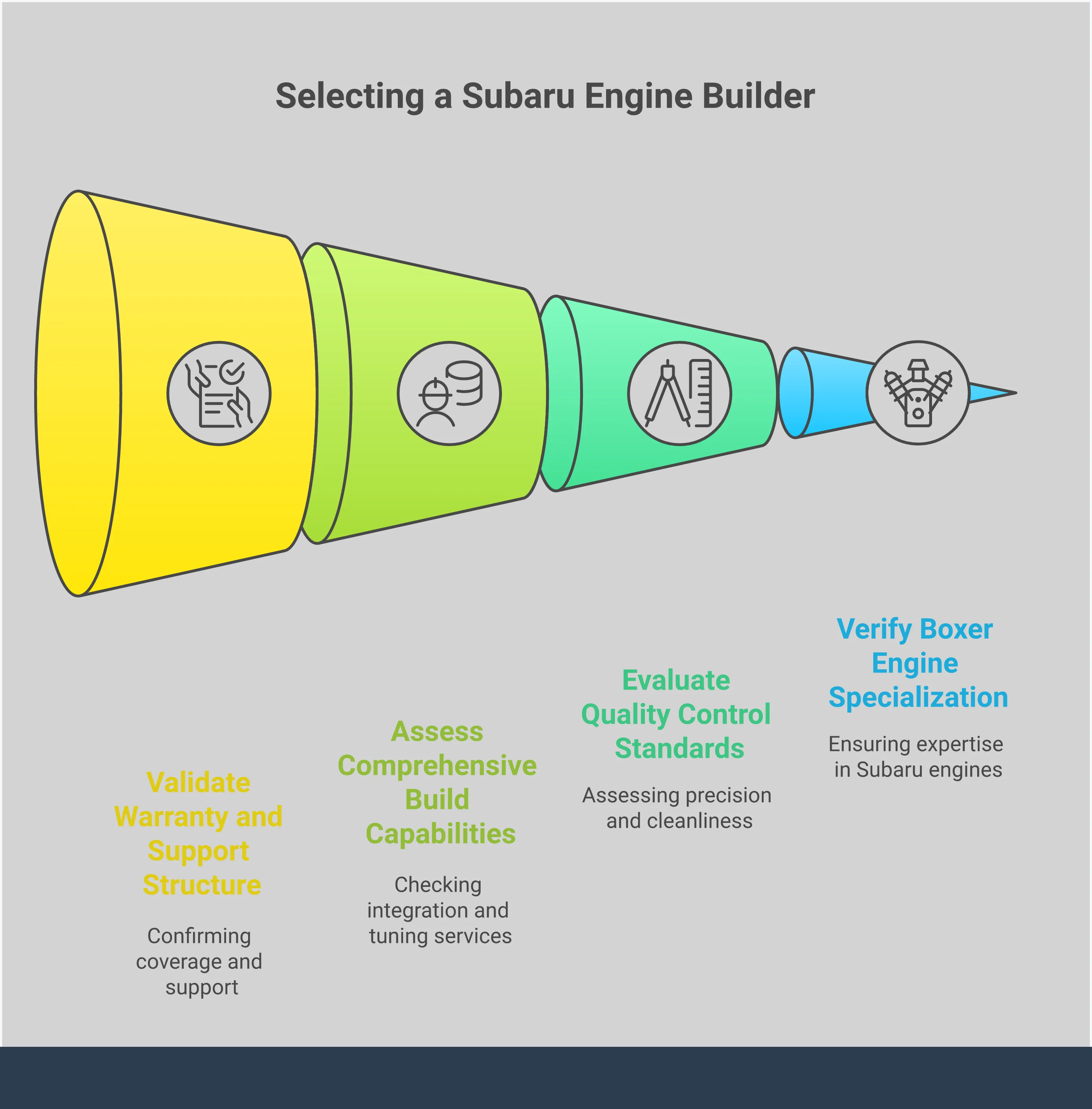
Die Wahl des richtigen Partners für den Motorumbau Ihres Subaru ist eine wichtige Entscheidung. Es handelt sich nicht einfach um ein weiteres Upgrade; der Motor ist das Herzstück Ihres Fahrzeugs, und die Qualität des Umbaus prägt Ihr gesamtes Fahrerlebnis. Der richtige Partner unterstützt Sie bei der Erreichung Ihrer Leistungsziele und sorgt dafür, dass Ihr Motor nicht nur leistungsstark, sondern auch über Jahre hinweg zuverlässig ist. Bei der Auswahl einer Werkstatt sollten Sie auf fundiertes Fachwissen, sorgfältige Arbeitsabläufe und die Bereitschaft, zu ihrer Arbeit zu stehen, achten. Hier ist nicht der günstigste Anbieter die richtige Wahl, denn hier kann das Sparen an der Qualität zu katastrophalen und kostspieligen Ausfällen führen. Ein schlecht gebauter Motor kann Sie langfristig deutlich mehr kosten, als von Anfang an in einen hochwertigen Umbau zu investieren. Um sicherzustellen, dass Sie Ihr Fahrzeug in die richtigen Hände geben, sollten Sie sich stets auf drei Kernbereiche konzentrieren: die Spezialisierung, die Qualitätsstandards und den Kundenservice nach Abschluss des Umbaus. Wenn Sie diese drei Punkte beachten, sind Sie bestens für den Erfolg auf der Rennstrecke, im Gelände oder auf der Straße gerüstet.
Achten Sie auf bewährte Subaru-Expertise.
Wenn Sie einen Motorenbauer suchen, der leistungsstarke Motoren baut, brauchen Sie einen Spezialisten, keinen Generalisten. Subarus Boxermotor hat eine einzigartige Konstruktion und seine Eigenheiten, die spezifisches Fachwissen erfordern. Ein Motorenbauer mit nachgewiesener Expertise versteht die Feinheiten dieser Motoren, vom Ölsystem bis hin zu den idealen Toleranzen für geschmiedete Innenteile. Er weiß, welche Tuningteile am besten zusammenpassen und wie man typische Fehler vermeidet, die bei einem Hochleistungsmotor auftreten können. Eine auf Subarus spezialisierte Werkstatt verfügt über ein Portfolio erfolgreicher Umbauten an verschiedenen Modellen, egal ob es sich um einen rennstreckentauglichen WRX oder einen geländegängigen Forester handelt. Fragen Sie nach der Erfahrung mit Ihrem spezifischen Fahrzeugmodell und Ihren Zielen; die Antworten geben schnell Aufschluss über die Expertise des Motorenbauers.
Wie testen sie ihre Motoren?
Ein leistungsstarker Motor ist nutzlos, wenn er nicht zuverlässig ist. Deshalb sollten Sie einen Motorenbauer wählen, der strenge Qualitäts- und Prüfstandards einhält. Das geht weit über die bloße Montage von Teilen hinaus. Es bedeutet, in einer sauberen, kontrollierten Umgebung zu arbeiten, präzise Messgeräte zu verwenden und jede Toleranz und Spezifikation sorgfältig zu prüfen. Hochwertige Motorenbauer verfügen oft über eigene Bearbeitungsmaschinen, um die perfekte Passform aller Komponenten zu gewährleisten. Sie sollten außerdem über ein umfassendes Testverfahren, einschließlich Prüfstandsläufen, verfügen, um die Motorleistung zu validieren und einen sicheren Betrieb zu gewährleisten, bevor der Motor das Werk verlässt. Dieses Qualitätsversprechen macht einen Motor stark und zuverlässig, insbesondere wenn er an seine Leistungsgrenzen gebracht wird.
Welche Garantie und welchen Support bieten sie an?
Die Beziehung zu Ihrem Motorenbauer sollte nicht mit der Abfahrt enden. Zuverlässiger Support und eine solide Garantie sind entscheidend, denn sie spiegeln das Vertrauen des Unternehmens in seine Arbeit wider. Ein seriöser Motorenbauer steht mit einer transparenten Garantie hinter seiner Arbeit und schützt so Ihre Investition. Fragen Sie vor der Beauftragung nach dem Kundendienst. Steht er Ihnen während der wichtigen Einfahrphase für Fragen zur Verfügung? Bietet er fortlaufende Tuning-Services für zukünftige Modifikationen an? Ein Motorenbauer mit exzellentem Kundenservice und einer starken Garantie gibt Ihnen die Gewissheit, einen vertrauenswürdigen Partner für die gesamte Lebensdauer Ihres Hochleistungsmotors an Ihrer Seite zu haben.
Lernen Sie die besten Subaru-Leistungsmotorenbauer kennen
Wenn Sie in das Herzstück Ihres Subarus investieren möchten, ist die Wahl des richtigen Tuners entscheidend. Die Subaru-Community beherbergt zahlreiche hoch angesehene Werkstätten, jede mit ihrer eigenen Philosophie und ihrem eigenen Spezialgebiet. Der Schlüssel zu einem erfolgreichen Tuning-Projekt liegt darin, diejenige zu finden, die Ihren Leistungszielen und Ihrem Budget entspricht. Wir haben einige der Top-Namen der Branche für Sie zusammengestellt, um Ihnen einen Überblick zu verschaffen. Diese Tuner haben sich ihren guten Ruf durch jahrelange Erfahrung, Innovation und nachweisliche Erfolge auf der Straße, der Rennstrecke und im Gelände erworben.
Crawford Performance
Mit langjähriger Erfahrung im Motorsport hat sich Crawford Performance auf maßgefertigte Subaru-Motoren spezialisiert, die rennerprobte Leistung mit höchster Zuverlässigkeit verbinden. Ihre Motorblöcke sind für die extremen Anforderungen im Rennsport ausgelegt, eignen sich aber ebenso für leistungsstarke Alltagsfahrzeuge. Besonderer Wert wird auf die Verwendung hochwertiger Komponenten und präzise Montage gelegt, um die Langlebigkeit jedes Motors zu gewährleisten. Dieses Engagement für Robustheit wird durch eine umfassende 12-monatige/12.000-Meilen-Motorgarantie unterstrichen – ein in der Performance-Welt seltenes Gefühl der Sicherheit. Ihre Expertise deckt eine breite Modellpalette ab, vom WRX und STI bis hin zu geländetauglichen Crosstrek- und Forester-Umbauten.
IAG Performance
IAG Performance hat sich einen hervorragenden Ruf für seine Premium-Motoren erworben, die für ihre Robustheit und sorgfältige Verarbeitung bekannt sind. Sie verwenden hochwertige Komponenten namhafter Hersteller und fertigen so leistungsstarke und zuverlässige Short- und Longblocks. Viele Subaru-Fans vertrauen auf IAG, wenn sie eine solide Basis für signifikante Leistungssteigerungen suchen. Ihre Motoren sind so konstruiert, dass sie hohen Belastungen standhalten und sind daher eine beliebte Wahl für ambitionierte Renn- oder Straßenfahrzeuge. Entdecken Sie die verschiedenen Motorbau-Optionen und finden Sie die Lösung, die Ihren Leistungszielen und Ihrem Budget entspricht.
Vincebuilt
Vincebuilt ist bekannt für die Herstellung von Hochleistungsmotoren für Subaru, die Kraft und Zuverlässigkeit perfekt vereinen. Durch die Verwendung von Komponenten in Motorsportqualität sind ihre Motoren für die Anforderungen des Rennsports bestens gerüstet und gleichzeitig alltagstauglich und alltagstauglich. Dieser Ansatz macht sie zu einer idealen Wahl für Fahrer, die ein Auto suchen, das am Wochenende auf der Rennstrecke Höchstleistungen erbringt und am Montag problemlos den täglichen Arbeitsweg meistert. Ihr Fokus auf die Entwicklung leistungsstarker und zuverlässiger Motoren hat ihnen in der Subaru-Tuning-Szene einen hervorragenden Ruf eingebracht. Mehr über ihre Leistungen und ihre Philosophie erfahren Sie auf der Website von Vincebuilt .
P&L Motorsports
P&L Motorsports mit Sitz in der Region Chicago hat sich als erste Adresse für Subaru-Tuning etabliert. Neben umfassenden Motorprogrammen erstreckt sich ihre Expertise auf das gesamte Fahrzeug. Sie bieten eine breite Auswahl an Performance-Teilen, darunter fortschrittliche Kühlsysteme, maßgeschneiderte Abgasanlagen und komplette Turbo-Kits, die optimal auf ihre Motoren abgestimmt sind. Dank dieses ganzheitlichen Ansatzes können sie komplette Fahrzeugumbauten von der ersten Modifikation bis zum finalen Tuning durchführen. Ihre langjährige Erfahrung macht sie zur ersten Anlaufstelle für Subaru-Besitzer, die die Gesamtleistung ihres Fahrzeugs steigern möchten.
Weitere Geschäfte zur Auswahl
Die hier genannten Tuner zählen zu den bekanntesten Namen, doch die Subaru-Tuningszene ist landesweit mit talentierten Werkstätten gefüllt. Viele regionale Anbieter bieten hervorragende Leistungen an, von allgemeiner Wartung und Anbauteilen bis hin zu kompletten Motorumbauten und professionellem Tuning. Mit etwas Recherche vor Ort entdecken Sie oft einen Geheimtipp in Ihrer Nähe, der über umfassende Erfahrung mit Ihrem spezifischen Subaru-Modell verfügt. Wichtig ist, einen Tuner mit nachweislicher Erfolgsbilanz, transparenter Kommunikation und einem hohen Qualitätsanspruch zu finden, damit Ihr Projekt von Anfang bis Ende in kompetenten Händen ist.
Leistungsstarke Motoren – eine Erklärung
Wenn Sie sich mit dem Thema Leistungssteigerung Ihres Subaru-Motors beschäftigen, werden Sie schnell auf viele neue Fachbegriffe stoßen. Das Verständnis der Fachsprache im Motorenbau ist der erste Schritt zu fundierten Entscheidungen für Ihr Auto. Es geht nicht einfach darum, Teile von der Stange zu kaufen, sondern darum zu verstehen, wie diese zusammenwirken, um Ihre individuellen Ziele zu erreichen. Ob Sie einen zuverlässigen Alltagsfahrer mit mehr Leistung oder eine Rennmaschine anstreben – das Wissen um den Unterschied zwischen einem Shortblock und einem Longblock oder die Bedeutung der verschiedenen „Stage“-Optionen ermöglicht Ihnen ein produktiveres Gespräch mit Ihrem Motorenbauer.
Dieses Wissen hilft Ihnen, realistische Erwartungen an Leistung und Budget zu entwickeln. Ein gut geplanter Umbau berücksichtigt nicht nur den Motor selbst, sondern das gesamte System der unterstützenden Komponenten – vom Kraftstoffsystem bis zur finalen Motorsteuerungsabstimmung. Wenn Sie sich mit diesen grundlegenden Konzepten vertraut machen, können Sie gemeinsam mit Ihrem Tuner einen stimmigen Plan erstellen, der die gewünschte Leistung, Zuverlässigkeit und das gewünschte Fahrgefühl liefert. Im Folgenden erläutern wir einige der wichtigsten Begriffe und Konzepte.
Kurzblock oder Langblock: Was ist der Unterschied?
Wenn Motorenbauer über Motoren sprechen, fallen häufig die Begriffe „Shortblock“ und „Longblock“. Ein Shortblock bildet das Herzstück Ihres Motors. Er umfasst typischerweise den Motorblock selbst sowie die wichtigsten rotierenden Bauteile: Kurbelwelle, Pleuelstangen und Kolben. Man kann ihn sich als das komplette Unterteil vorstellen. Die Wahl eines Shortblocks gibt Ihnen oder Ihrem Motorenbauer die Flexibilität, Zylinderköpfe und Ventiltrieb selbst auszuwählen und zu montieren – ideal für individuelle Projekte.
Ein Longblock hingegen ist ein umfassenderes Paket. Er basiert auf einem Shortblock und beinhaltet Zylinderköpfe, Nockenwellen und Ventiltrieb. Dies ist oft eine hervorragende Option für alle, die eine optimal aufeinander abgestimmte, bewährte Kombination von Hochleistungskomponenten suchen, die vom Motorenbauer montiert und getestet werden.
Turnkey-Kistenmotoren verstehen
Ein schlüsselfertiger Kistenmotor ist die umfassendste und einbaufertigste Option. Er basiert auf dem Rumpfmotor und enthält nahezu alles, was zum Starten des Motors benötigt wird, wie Ansaugkrümmer, Einspritzdüsen, Sensoren und manchmal sogar Turbolader und Kabelbaum. Der Name ist Programm: Er ist so konzipiert, dass er einfach in Ihren Subaru eingebaut, angeschlossen und mit minimalem Aufwand gestartet werden kann. Diese Lösung ist ideal für Enthusiasten, die ein bewährtes, professionell montiertes Triebwerk wünschen, ohne sich mit der Komplexität und den potenziellen Kompatibilitätsproblemen der Beschaffung und Montage einzelner Komponenten auseinandersetzen zu müssen. Es ist der direkteste Weg zu einem zuverlässigen und leistungsstarken Motortausch.
Der größte Vorteil eines schlüsselfertigen Motors liegt in der Gewissheit, dass alle Komponenten optimal aufeinander abgestimmt sind. Der Motorenbauer übernimmt die Verantwortung für die Zusammenstellung der Teile und führt strenge Tests durch, oft inklusive Einlaufphase und Leistungsprüfung auf dem Prüfstand, um Leistung und Zuverlässigkeit zu gewährleisten, bevor der Motor die Werkstatt verlässt. So wird sichergestellt, dass der Motor seine Leistungsversprechen einhält und vom ersten Moment an sicher läuft. Ein entscheidender Bestandteil dieses Pakets ist die abschließende Kalibrierung. Nur durch professionelles Motortuning werden alle Komponenten optimal aufeinander abgestimmt, sodass Sie ein zuverlässiges und leistungsstarkes Herzstück für Ihr Projekt erhalten.
Was bedeuten „Stufen“ und Leistungsstufen wirklich?
Viele Motorenhersteller bieten gestaffelte Pakete für ihre Shortblocks und Longblocks an. Diese Stufen sind im Wesentlichen vorkonfigurierte Motoren, die für die zuverlässige Bewältigung bestimmter Leistungsziele ausgelegt sind. Beispielsweise gibt es Shortblocks der Stufe 2 mit einer Nennleistung von 550 PS oder solche der Stufe 4 mit über 900 PS. Diese Nennleistungen beziehen sich nicht nur auf die Spitzenleistung, sondern spiegeln auch die Robustheit der internen Komponenten wider, wie z. B. geschmiedete Kolben, verstärkte Pleuelstangen und einen verstärkten Motorblock.
Die Wahl der richtigen Leistungsstufe hängt davon ab, die Motorleistung an Ihre Ziele und Ihr Budget anzupassen. Es ist entscheidend, ehrlich zu sein, wie Sie das Auto nutzen werden und welche Umbauten Sie vorgenommen haben. Ein leistungsstarker Motor benötigt professionelle Motorabstimmung, um einen sicheren Betrieb und die angestrebte Leistung ohne Kompromisse bei der Zuverlässigkeit zu gewährleisten.
Warum ein individueller Build das Richtige für Sie sein könnte
Während vorgefertigte Motoren einen klaren Weg zu bewährten Leistungsstufen bieten, ermöglicht ein komplett individueller Aufbau ein Höchstmaß an Personalisierung. Bei diesem Ansatz arbeiten Sie direkt mit Ihrem Motorenbauer zusammen und wählen jede einzelne Komponente nach Ihren individuellen Anforderungen aus. Ein individueller Aufbau ist ideal, wenn Sie sehr spezifische Ziele verfolgen, die über typische vorgefertigte Pakete hinausgehen, wie beispielsweise den Bau eines Hochkompressionsmotors für eine bestimmte Rennklasse oder eines drehmomentstarken Motors für robuste Offroad-Lösungen. Dieser Prozess stellt sicher, dass die Leistungsentfaltung, die Langlebigkeit und die Gesamteigenschaften des Motors perfekt auf Ihren geplanten Einsatzzweck abgestimmt sind und so ein wahrhaft einzigartiger Antriebsstrang entsteht.
Fallen Sie nicht auf diese Mythen zum Motorenbau herein!
Einer der größten Irrtümer beim Motorenbau ist die Annahme, dass das bloße Zusammenfügen teurer Teile einen zuverlässigen und leistungsstarken Motor garantiert. Tatsächlich sind das Können des Motorenbauers und die Qualität der Abstimmung genauso wichtig wie die Komponenten selbst. Viele Motorschäden lassen sich auf eine fehlerhafte Abstimmung zurückführen, die den Motor über seine mechanischen Grenzen hinaus belastet. Ein weiterer häufiger Fehler ist die alleinige Fokussierung auf den Motor unter Vernachlässigung der unterstützenden Systeme. Für eine zuverlässige Leistung müssen Kraftstoffsystem, Kühlung und Antriebsstrang berücksichtigt werden. Ein umfassender Ansatz, wie die gemeinsame Planung aller Upgrades für Ihren Subaru WRX , stellt sicher, dass alle Fahrzeugteile die neue Leistung verkraften.
Essenzielle Komponenten für Ihren Performance-PC
Ein leistungsstarker Subaru-Motor ist mehr als nur eine Ansammlung starker Teile; er ist ein sorgfältig abgestimmtes System, in dem alle Komponenten harmonisch zusammenarbeiten. Bei der Planung eines solchen Projekts konzentriert man sich leicht auf die maximale PS-Zahl, doch wahre Leistung entsteht durch eine durchdachte Kombination aus Robustheit, Luftzufuhr, Kühlung und intelligentem Motormanagement. Einfach einen größeren Turbolader anzubauen, ohne die Motorbasis zu verstärken, ist ein sicheres Rezept für Probleme. Ein zuverlässiger Motoraufbau erfordert einen ganzheitlichen Ansatz, der sicherstellt, dass der Motorkern die zusätzliche Leistung verkraftet, die Kraftstoff- und Luftzufuhr darauf abgestimmt ist und das Kühlsystem die zusätzliche Wärme abführen kann.
Von den Kolben und Pleuelstangen tief im Motorblock bis zur finalen ECU-Kalibrierung spielt jedes Element eine entscheidende Rolle. Verbesserungen in einem Bereich erfordern oft Anpassungen in einem anderen. Beispielsweise benötigt der erhöhte Ladedruck eines neuen Turboladers ein entsprechend leistungsstarkes Kraftstoffsystem und einen Ladeluftkühler, der die höheren Ansaugtemperaturen bewältigen kann. Zu verstehen, wie diese Schlüsselkomponenten zusammenwirken, ist der erste Schritt zum Bau eines Motors, der nicht nur beeindruckende Leistung erbringt, sondern auch die konstante und zuverlässige Performance liefert, die Sie auf der Rennstrecke, im Gelände oder auf der Straße erwarten. Wir analysieren die wichtigsten Puzzleteile, beginnend mit dem Inneren des Motors.
Warum geschmiedete Innenteile ein Muss sind
Die Basis jedes leistungsstarken Motorumbaus liegt im Motorblock. Ihr serienmäßiger Subaru-Motor ist mit gegossenen Kolben und Pleuelstangen ausgestattet, die für den Alltagsgebrauch völlig ausreichend sind, aber bei deutlicher Leistungssteigerung zu einer Schwachstelle werden. Geschmiedete Innenteile sind die Lösung. Unter enormem Druck gefertigt, sind geschmiedete Komponenten deutlich dichter und fester als ihre gegossenen Pendants. Dadurch halten sie der intensiven Hitze und dem hohen Zylinderdruck eines aufgeladenen Motors stand. Der Umstieg auf geschmiedete Kolben und Pleuelstangen ist für jeden, der zuverlässige und hohe PS-Zahlen anstrebt, unerlässlich. Diese innere Festigkeit gewährleistet, dass Ihr Motor die Belastungen einer sportlichen Fahrweise problemlos bewältigt und gibt Ihnen das Vertrauen, Ihr Fahrzeug bis an seine Grenzen zu bringen.
Auswahl Ihres Turboladers und Ladedruckreglers
Der Turbolader ist das Herzstück der Leistung Ihres Subaru, und ein Upgrade ist eine der effektivsten Methoden, die Leistung zu steigern. Größer ist jedoch nicht immer besser. Der richtige Turbolader hängt ganz von Ihren Zielen ab. Ein kleinerer, schnell ansprechender Turbolader ist ideal für ein agiles Alltagsauto oder ein Auto für Autocross-Rennen, während ein massiver Turbolader unglaubliche Spitzenleistung für die Dragstrip liefert. Ebenso wichtig sind die Komponenten, die den Ladedruck regeln, wie Wastegate und Ladedruckregler. Diese Systeme regulieren den Ladedruck, verhindern gefährliche Überladung und gewährleisten eine gleichmäßige Leistungsentfaltung. Die richtige Abstimmung von Turbolader und Ladedruckregelung auf Ihre Tuningteile und Ihren Fahrstil ist der Schlüssel zu einem ausgewogenen und effektiven Setup.
Leistungssteigerung: Turbolader, Kompressoren und mehr
Die Zwangsbeatmung ist der Schlüssel, um die volle Leistung Ihres Subaru-Boxermotors freizusetzen. Zwar gibt es Kompressoren, doch der Turbolader ist in der Subaru-Welt unbestritten die Nummer eins. Er funktioniert, indem er Abgase nutzt, um eine Turbine anzutreiben, die wiederum ein Verdichterrad dreht und so ein größeres Luftvolumen in den Motor presst. Mehr Luft ermöglicht mehr Kraftstoff, und diese Kombination führt zu einem kraftvolleren Verbrennungsprozess. So erzielen Sie die deutlichen Leistungs- und Drehmomentsteigerungen, die die Performance Ihres Fahrzeugs grundlegend verändern. Doch der bloße Einbau eines der vielen verfügbaren Tuningteile reicht nicht aus; die Auswahl des richtigen Turboladers für Ihre spezifischen Anforderungen ist die wahre Kunst des Leistungsaufbaus.
Die richtige Turbolader-Konfiguration auswählen
Bei der Wahl des richtigen Turboladers geht es weniger um die maximale PS-Zahl, sondern vielmehr darum, die Leistungsentfaltung an Ihren Fahrstil anzupassen. Ihre Leistungsziele sollten ausschlaggebend sein. Wenn Sie im Alltag oder bei Autocross-Veranstaltungen ein agiles und direktes Fahrgefühl wünschen, ist ein kleinerer, schnell ansprechender Turbolader die beste Wahl. Für ein Rennstreckenfahrzeug, das auf hohe Drehzahlen ausgelegt ist, ist ein größerer Turbolader mit starker Leistung im oberen Drehzahlbereich sinnvoller. Selbst bei drehmomentorientierten Umbauten, wie unseren Overlanding-Lösungen, ist die richtige Turboladerwahl entscheidend. Denken Sie daran: Ein Turbolader ist Teil eines Gesamtsystems. Um den erhöhten Luftdurchsatz zu bewältigen, benötigen Sie ein optimiertes Kraftstoffsystem und einen effizienteren Ladeluftkühler. Unverzichtbar ist außerdem eine professionelle Motorabstimmung, um die neue Hardware sicher zu integrieren und die Leistung zu optimieren.
Kühlung gewährleisten: Ansaug- und Kühlsysteme
Ein leistungsstarker Motor braucht Luft zum Atmen und muss kühl bleiben. Mehr Leistung erzeugt mehr Wärme, und deren Ableitung ist entscheidend für Leistung und Langlebigkeit. Ein optimiertes Ansaugsystem reduziert den Strömungswiderstand und ermöglicht dem Turbolader, kühle, dichte Luft effizienter anzusaugen. Anschließend ist ein größerer Ladeluftkühler (oben oder vorne montiert) unerlässlich, um die komprimierte Luft vor dem Eintritt in den Motor zu kühlen. Kühlere Luft ist dichter, was eine kraftvollere Verbrennung und ein geringeres Risiko von Motorklopfen bedeutet. Ebenso tragen ein verbesserter Kühler und Ölkühler zur Regulierung der Motorflüssigkeitstemperaturen bei und schützen Ihre Investition bei anspruchsvollen Rennstreckeneinsätzen oder Offroad-Touren.
Warum eine professionelle ECU-Optimierung unverzichtbar ist
Die beste Hardware der Welt funktioniert nicht einwandfrei ohne ein Steuergerät. Das Motorsteuergerät (ECU) ist dieses Steuergerät. Nach dem Upgrade der Motorkomponenten muss es neu programmiert – oder optimiert – werden, damit alles perfekt zusammenarbeitet. Eine professionelle Optimierung passt kritische Parameter wie Luft-Kraftstoff-Verhältnis, Zündzeitpunkt und Ladedruck an Ihre spezifische Konfiguration an. Dieser Prozess maximiert nicht nur die Leistung auf sichere Weise, sondern gewährleistet auch ein ruhiges Fahrverhalten und die Zuverlässigkeit des Motors. Auf eine professionelle Optimierung zu verzichten, ist der schnellste Weg, einen frisch aufgebauten Motor zu beschädigen. Professionelle Motoroptimierung ist der letzte, unerlässliche Schritt, der Ihr Projekt zum Leben erweckt und Ihre Investition schützt.
Beschaffung einzelner Leistungsteile
Wenn Sie Ihren Motor von Grund auf selbst aufbauen, anstatt mit einem vormontierten Block zu beginnen, müssen Sie jede Komponente einzeln beschaffen. Dieser Weg bietet maximale Individualisierungsmöglichkeiten, erfordert aber sorgfältige Planung, um sicherzustellen, dass alle Teile als stimmiges System zusammenarbeiten. Es reicht nicht aus, einfach nur hochwertige Schmiedekolben oder einen großen Turbolader zu kaufen; jedes Teil muss auf Ihre Leistungsziele und die anderen Komponenten abgestimmt sein. Ein häufiger Fehler ist die Schaffung eines Engpasses, bei dem eine Komponente das Potenzial des gesamten Systems einschränkt – beispielsweise eine serienmäßige Kraftstoffpumpe, die einen Turbolader mit der doppelten Serienleistung versorgen soll. Bei der Auswahl Ihrer Komponenten, von den Kurbelwellen und Kurbeltrieben bis hin zum Ansaugkrümmer, ist es ratsam, die Performance-Teile von Herstellern zu beziehen, die das gesamte Subaru-Ökosystem kennen. So stellen Sie sicher, dass die Teile nicht nur hochwertig sind, sondern auch so konstruiert und getestet wurden, dass sie optimal zusammenwirken – egal, ob Sie einen rennstreckenorientierten STI bauen oder Ihren Subaru Forester für mehr Leistung aufrüsten.
Warum Qualitätskontrolle wichtig ist
In der Motorenentwicklung ist Präzision alles. Der Unterschied zwischen einem zuverlässigen Kraftpaket und einem Totalausfall liegt oft im Mikrometerbereich. Deshalb ist die Qualitätskontrolle von höchster Bedeutung. Seriöse Motorenbauer wenden sorgfältige Montageverfahren an und messen Toleranzen und Spielräume mit höchster Genauigkeit, um die perfekte Passform und Funktion jeder Komponente zu gewährleisten. Dazu gehören beispielsweise das Planen des Motorblocks für eine optimale Zylinderkopfdichtung und die Verwendung hochwertiger Befestigungselemente namhafter Hersteller. Wenn Sie in einen Hochleistungsmotor investieren, bezahlen Sie nicht nur für die Teile, sondern auch für das Fachwissen und die akribische Detailgenauigkeit, die ein reibungsloses Zusammenspiel aller Komponenten unter extremen Belastungen sicherstellt – von WRX-Upgrades bis hin zu kompletten Rennmotoren.
Wie man den richtigen Motorenbauer für Hochleistungsmotoren auswählt
Die Wahl des richtigen Motorenbauers ist eine der wichtigsten Entscheidungen für Ihren Subaru. Es geht nicht nur darum, einen Mechaniker zu finden, sondern einen Partner, der Ihre Vision versteht und über das technische Know-how verfügt, sie sicher und zuverlässig umzusetzen. Ein exzellenter Motorenbauer vereint Kunstfertigkeit mit Ingenieurskunst und schafft so ein Kraftpaket, das perfekt auf Ihren Fahrstil abgestimmt ist. Die richtige Wahl bedeutet jahrelangen Fahrspaß und zuverlässige Leistung, während die falsche zu endlosen Problemen und kostspieligen Reparaturen führen kann. Um die beste Entscheidung zu treffen, sollten Sie sich nicht nur auf PS-Angaben verlassen, sondern die Motorenbauer anhand ihrer Erfahrung, Qualität, Kompetenz und ihres Kundenservice bewerten. Dies ist eine bedeutende Investition in die Zukunft Ihres Fahrzeugs. Nehmen Sie sich daher die Zeit, Ihre Optionen gründlich zu prüfen – es wird sich jedes Mal auszahlen, wenn Sie den Motor starten.
Überprüfen Sie deren Erfahrung und Reputation.
Wenn es um den Boxermotor Ihres Subaru geht, ist Erfahrung nicht nur ein Pluspunkt, sondern unerlässlich. Diese einzigartige Motorkonstruktion weist spezifische Besonderheiten auf, die eine allgemeine Tuningwerkstatt möglicherweise nicht versteht – von der komplexen Ölschmierung bis hin zu den präzisen Toleranzen, die für geschmiedete Innenteile erforderlich sind. Der Ruf einer Tuningwerkstatt basiert auf einer Reihe erfolgreich abgeschlossener Projekte und zufriedener Kunden. Suchen Sie nach einer Werkstatt, die sich auf Subarus spezialisiert hat und Ihnen ein Portfolio ihrer Arbeiten zeigen kann. Ob sie nun einen rennstreckentauglichen STI oder einen geländetauglichen Crosstrek aufbauen – ihre bisherigen Projekte sind der beste Indikator für ihre Expertise. Ein echter Spezialist weiß, welche Tuningteile optimal zusammenwirken und wie man häufige Fehler vermeidet, damit Ihr Fahrzeug vom ersten Tag an leistungsstark und zuverlässig ist.
Kennen sie Ihr Subaru-Modell in- und auswendig?
Nicht alle Subaru-Motoren sind gleich, und auch die Werkstätten, die sie bearbeiten, unterscheiden sich. Eine Werkstatt, die sich auf Drag-Racing-STIs spezialisiert hat, verfügt möglicherweise nicht über das nötige Fachwissen für einen robusten Crosstrek-Umbau für Offroad-Touren. Suchen Sie nach einer Werkstatt mit nachweislicher Erfahrung mit Ihrem spezifischen Modell, egal ob WRX, Forester oder BRZ. Lassen Sie sich Beispiele abgeschlossener Projekte zeigen, die Ihren Zielen entsprechen. Eine erfahrene Werkstatt kennt die Eigenheiten der Plattform, typische Schwachstellen und weiß, welche Komponentenkombinationen die besten Ergebnisse liefern. Dieses Fachwissen gewährleistet, dass Ihr Fahrzeug nicht nur Leistung bringt, sondern auch langfristig zuverlässig für Ihre spezifischen Anforderungen ist.
Erkundigen Sie sich nach den verwendeten Teilen und Materialien.
Ein leistungsstarker Motor ist nur so stark wie sein schwächstes Bauteil. Erstklassige Motorenbauer setzen daher ausschließlich auf hochwertige Performance-Teile, denn sie wissen: Sparen an der Qualität führt zu Ausfällen. Fragen Sie bei der Auswahl eines Motorenbauers nach den Marken, die er für wichtige Innenteile wie Kolben, Pleuelstangen und Lager verwendet. Seriöse Werkstätten verwenden Teile, die Ihren Subaru-Motor – insbesondere bei sportlicher Fahrweise – leistungsstärker und zuverlässiger machen. Viele führende Motorenbauer, darunter Crawford Performance , entwickeln und fertigen ihre Komponenten selbst. Dadurch haben sie die volle Kontrolle über die Qualität und stellen sicher, dass jedes Teil den Belastungen durch die erhöhte Leistung standhält. So können Sie sich auf die Langlebigkeit Ihres Motors verlassen.
Warum die hauseigene Dyno-Abstimmung wichtig ist
Der Aufbau eines Motors ist nicht mit dem Anziehen der letzten Schraube abgeschlossen. Der letzte, entscheidende Schritt ist die Abstimmung, und es ist ein enormer Vorteil, wenn diese vom selben Team durchgeführt wird, das den Motor gebaut hat. Motorenbauer mit eigener Motorabstimmungsabteilung gewährleisten einen reibungslosen Ablauf von der Montage bis zur Kalibrierung. Sie bauen den Motor mit einer spezifischen Abstimmungsstrategie im Hinterkopf und stellen sicher, dass jede mechanische Komponente perfekt mit dem Motormanagementsystem harmoniert. Dieser integrierte Ansatz eliminiert das Risiko von Missverständnissen zwischen Motorenbauer und Abstimmungsspezialist und garantiert, dass Ihre Upgrades vom ersten Tag an einwandfrei funktionieren. Zudem ist eine einzige Werkstatt für das Endergebnis verantwortlich.
Beurteilen Sie ihre Kommunikations- und Kundenserviceleistung
Der Bau eines Hochleistungsmotors ist ein gemeinschaftlicher Prozess, bei dem klare Kommunikation unerlässlich ist. Von der ersten Beratung bis hin zur Unterstützung nach dem Einbau benötigen Sie einen Motorenbauer, der Ihre Ziele versteht, realistische Erwartungen formuliert und Sie stets auf dem Laufenden hält. Achten Sie auf Werkstätten, die für Transparenz und schnelle Reaktionszeiten bekannt sind. Bewertungen und Erfahrungsberichte geben Ihnen Aufschluss über deren Kommunikationsstil. Gute Motorenbauer legen Wert auf Zuverlässigkeit und sind ehrlich, was nötig ist, um Ihre Leistungsziele sicher zu erreichen. Sie sollten Ihnen auch lange nach dem Einbau für Fragen zur Verfügung stehen und Sie unterstützen, damit Sie einen verlässlichen Partner für die gesamte Lebensdauer Ihres Motors haben.
Berücksichtigung des Ladenstandorts und des Versands
Auch wenn es verlockend ist, die nächstgelegene Werkstatt zu wählen, befindet sich der beste Motorenbauer für Ihr Projekt möglicherweise nicht in Ihrer Stadt – oder gar in Ihrem Bundesland. Ein lokaler Motorenbauer bietet den Vorteil einfacher Abgabe und persönlicher Beratung. Die Entfernung sollte jedoch niemals die Qualität beeinträchtigen. Viele der führenden Subaru-Motorenbauer des Landes haben optimierte Prozesse für den Versand von Motoren und sogar kompletten Fahrzeugen bundesweit. Wägen Sie bei Ihrer Entscheidung die Expertise, den Ruf und die Spezialisierung des Motorenbauers gegen die logistischen Herausforderungen ab. Bei komplexen oder besonders wichtigen Projekten ist die Reise oder der Versand Ihres Fahrzeugs zu einem renommierten Spezialisten oft eine lohnende Investition, um sicherzustellen, dass die Arbeit gleich beim ersten Mal perfekt ausgeführt wird.
Was Sie während des Bauprozesses erwarten können
Der Aufbau eines Hochleistungsmotors ist ein detaillierter, gemeinschaftlicher Prozess, der Ihren Subaru vom Serienmodell in ein Fahrzeug verwandelt, das perfekt auf Ihre Wünsche zugeschnitten ist. Wenn Sie den gesamten Ablauf von Anfang bis Ende verstehen, können Sie klare Erwartungen formulieren und fundierte Entscheidungen treffen. Ein professioneller Motorenbauer folgt einem strukturierten Vorgehen, um sicherzustellen, dass alle Komponenten optimal zusammenarbeiten und sowohl Leistung als auch Zuverlässigkeit bieten. Vom ersten Gespräch bis zum Einfahren ist jede Phase entscheidend für den Erfolg Ihres Projekts. Diese Schritt-für-Schritt-Übersicht erklärt Ihnen den Prozess und zeigt Ihnen, was Sie erwartet, wenn Sie mit einer Expertenwerkstatt zusammenarbeiten, um Ihren Traum-Subaru-Motor zu realisieren. Der richtige Motorenbauer begleitet Sie bei der Auswahl der idealen Performance-Teile und sorgt für eine einwandfreie Montage.
Schritt 1: Das Erstgespräch
Der gesamte Umbauprozess beginnt mit einem Gespräch. In diesem ersten Beratungsgespräch legen Sie und Ihr Fahrzeugbauer Ihre Vision für Ihr Fahrzeug fest. Bereiten Sie sich darauf vor, Ihre Ziele detailliert zu besprechen: Bauen Sie ein Rennstreckenfahrzeug fürs Wochenende, einen zuverlässigen Alltagsbegleiter mit mehr Leistung oder ein robustes Expeditionsfahrzeug? Welche PS- und Drehmomentwerte streben Sie an? Wie hoch ist Ihr Budget? Die ehrliche Beantwortung dieser Fragen ist entscheidend. Experten betonen, dass die Auswahl der besten Subaru-Performance-Teile für Ihr Projekt nicht nur die Leistung Ihres Fahrzeugs verbessert, sondern auch dessen langfristige Zuverlässigkeit sichert. Dieses grundlegende Gespräch prägt jede weitere Entscheidung, von der Komponentenauswahl bis hin zum finalen Motortuning.
Schritt 2: Auswahl der Teile
Nachdem Ihre Ziele klar definiert sind, geht es im nächsten Schritt um die Auswahl der Hardware. Ihr Motorenbauer empfiehlt Ihnen eine Kombination von Komponenten, die Ihre Leistungsziele sicher und zuverlässig erreichen. Dazu gehören typischerweise geschmiedete Motorteile wie Kolben und Pleuelstangen, verbesserte Lager und Befestigungselemente, die erhöhter Belastung standhalten. Je nach Ihren Zielen für Ihren Subaru WRX oder STI können Sie auch Turbolader-Upgrades, optimierte Kühlsysteme und ein robusteres Kraftstoffsystem besprechen. Wichtig ist ein ausgewogenes Gesamtpaket, bei dem alle Teile optimal aufeinander abgestimmt sind. Die Verwendung hochwertiger, bewährter Komponenten ist unerlässlich für einen Motor, der über Jahre hinweg konstante Leistung und Langlebigkeit bietet.
Schritt 3: Die Kunst der Montage
Hier zeigt sich wahre Expertise. Der Bau eines Hochleistungsmotors ist weit mehr als nur das Zusammenschrauben von Teilen. Es ist ein akribischer Prozess präziser Bearbeitung und Montage. Techniker messen Toleranzen und Spielräume bis auf den Tausendstel Zoll genau, um eine perfekte Passform zu gewährleisten. In dieser Phase werden oft Arbeiten wie das Planen des Motorblocks für eine optimale Abdichtung, das Auswuchten der rotierenden Teile zur Vibrationsreduzierung und die sorgfältige Montage des Kurzblocks durchgeführt. Diese Liebe zum Detail unterscheidet einen professionell aufgebauten Motor von einem Standardmotor. Sie stellt sicher, dass der Motor den enormen Belastungen beim Fahren mit hoher Leistung standhält und bildet eine solide Basis für alle Upgrades des Subaru STI.
Schritt 4: Der Leistungsnachweis auf dem Prüfstand
Sobald der Motor montiert ist, folgt die Funktionsprüfung. Bevor er wieder in Ihr Fahrzeug eingebaut wird, wird er häufig auf einem Motorenprüfstand getestet, um sicherzustellen, dass alles einwandfrei funktioniert. In dieser kontrollierten Umgebung kann der Motorenbauer den Motor einlaufen lassen, auf Undichtigkeiten prüfen und die einwandfreie Funktion aller mechanischen Systeme bestätigen. Nach dem Einbau ins Fahrzeug erfolgt die Feinabstimmung auf einem Fahrgestellprüfstand. Hier optimiert ein erfahrener Tuner die Motorsteuerung (ECU), um die maximale Leistung sicher aus Ihrem neuen System herauszuholen. Professionelle Motorabstimmung ist unerlässlich, um das Luft-Kraftstoff-Gemisch, den Zündzeitpunkt und den Ladedruck optimal einzustellen und so ein leistungsstarkes und zuverlässiges Fahrzeug zu schaffen.
Wichtige Qualitätskontrollen während der Dyno-Tests
Die Leistungsprüfung auf dem Prüfstand ist weit mehr als nur eine einfache Leistungsmessung; sie ist ein entscheidender Schritt der Qualitätskontrolle, in dem der Motorenbauer die Funktionsfähigkeit und Stabilität des Motors unter realen Belastungsbedingungen überprüft. Dabei überwacht ein erfahrener Techniker präzise wichtige Parameter wie Öldruck, Kühlmitteltemperatur und Luft-Kraftstoff-Verhältnis, um sicherzustellen, dass alles innerhalb sicherer Parameter arbeitet. Dieses strenge Testverfahren dient dazu, potenzielle Probleme – von kleinen Lecks bis hin zu Abstimmungsfehlern – in einer kontrollierten Umgebung zu erkennen, bevor das Fahrzeug an Sie zurückgegeben wird. Es ist ein grundlegender Bestandteil umfassender Motortuning-Services und bestätigt, dass der Motor nicht nur leistungsstark, sondern auch zuverlässig für Straße und Rennstrecke ist.
Schritt 5: Befolgen der Einbruchsprozedur
Die letzte und wichtigste Phase liegt nun in Ihren Händen. Ein neuer Hochleistungsmotor benötigt eine spezielle Einfahrzeit, damit sich Bauteile wie die Kolbenringe optimal an die Zylinderwände anpassen können. Ihr Motorenbauer wird Ihnen detaillierte Anweisungen geben, die in der Regel unterschiedliche Motordrehzahlen, das Vermeiden von starkem Beschleunigen und hohem Ladedruck sowie einen frühzeitigen Ölwechsel beinhalten. Die Einhaltung dieser Anweisungen ist absolut entscheidend für die langfristige Gesundheit und Zuverlässigkeit Ihres Motors. Ein übereiltes Einfahren ist eine häufige Ursache für vorzeitigen Ausfall. Indem Sie die Einfahrrichtlinien geduldig befolgen, schützen Sie Ihre Investition und stellen sicher, dass Ihr neuer Motor für die Anforderungen auf der Rennstrecke oder im Gelände, insbesondere für anspruchsvolle Offroad-Touren, bestens gerüstet ist.
Wie Sie den Motoraufbau an Ihre Ziele anpassen
Der erfolgreichste Motoraufbau zeichnet sich nicht nur durch eine bestimmte PS-Zahl aus, sondern durch ein Triebwerk, das perfekt zu Ihrem Fahrstil passt. Ein für die Rennstrecke optimiertes Setup wird im Stop-and-go-Verkehr frustrierend sein, während ein für den Alltag konzipierter Motor den Belastungen eines Trackdays nicht standhält. Bevor Sie in auch nur eine Komponente investieren, ist es entscheidend, sich über Ihren Hauptnutzungszweck im Klaren zu sein. Diese Klarheit leitet jede Entscheidung, die Sie und Ihr Motorenbauer treffen – von der Auswahl geschmiedeter Innenteile bis hin zur finalen Abstimmung. Ein auf Ihre Ziele abgestimmter Motor bietet ein zufriedenstellenderes, zuverlässigeres und letztendlich genussvolleres Fahrerlebnis, egal ob Sie kurvenreiche Bergstraßen bezwingen, zur Arbeit pendeln oder im Gelände Staub aufwirbeln.
Das ultimative Trackday-Projekt
Wenn es darum geht, Ihre Rundenzeit um Sekunden zu verbessern, muss Ihr Motor dauerhaft hohen Drehzahlen, extremer Hitze und ständiger Belastung standhalten. Ein auf die Rennstrecke ausgelegter Motor legt daher größten Wert auf Langlebigkeit und konstante Leistungsentfaltung. Das bedeutet oft Investitionen in ein robustes Kühlsystem, eine Ölwanne mit Schwallblechen oder eine Trockensumpfschmierung, um Ölmangel in Kurven mit hoher Querbeschleunigung zu verhindern, sowie in geschmiedete Innenteile, die auch aggressives Tuning verkraften. Motorenbauer mit Erfahrung im Motorsport, deren Motoren beispielsweise im Rallye- und Straßenrennsport eingesetzt wurden, verstehen diese besonderen Anforderungen. Sie wissen, wie man einen Motor baut, der nicht nur überlebt, sondern unter härtesten Bedingungen Höchstleistungen erbringt und Ihnen so das Vertrauen gibt, Ihren Subaru WRX bis an seine Grenzen zu bringen.
Einen zuverlässigen und unterhaltsamen Alltagsfahrer bauen
Für den täglichen Gebrauch ist das Ziel, mehr Fahrspaß zu bieten, ohne dabei Zuverlässigkeit oder Alltagstauglichkeit einzubüßen. Gewünscht ist ein reaktionsschneller Motor mit einem breiten, nutzbaren Drehzahlband, der das Einfädeln auf die Autobahn und das zügige Fahren im Stadtverkehr mühelos und angenehm macht. Die Auswahl der richtigen Tuningteile ist entscheidend, um die Leistung Ihres Fahrzeugs zu steigern und gleichzeitig die langfristige Zuverlässigkeit zu gewährleisten. Dieser Umbau setzt auf Ausgewogenheit: Verbesserter Luftstrom durch optimierte Ansaug- und Abgasanlage, ein aufgerüsteter Turbolader für schnelleres Ansprechverhalten und eine professionelle Abstimmung zur Optimierung der Leistungsentfaltung. Das Ergebnis ist ein Auto, das sich deutlich kraftvoller und dynamischer anfühlt als das Serienmodell und dennoch zuverlässig genug für den täglichen Arbeitsweg bleibt.
Energieversorgung für Ihre Offroad- und Overland-Abenteuer
Offroad- und Overlanding-Fahrzeuge stellen völlig andere Anforderungen. Statt hoher PS-Zahlen bei hohen Drehzahlen benötigen Sie ein hohes Drehmoment im unteren Drehzahlbereich, um Hindernisse zu überwinden und Ihr Fahrzeug durch anspruchsvolles Gelände zu ziehen. Langlebigkeit und Kühlung sind von größter Bedeutung, da Sie oft über längere Zeiträume mit niedrigen Geschwindigkeiten und hoher Motorlast unterwegs sind. Bei diesen Umbauten liegt der Fokus häufig auf der Verstärkung des Motorkerns, um sicherzustellen, dass er der Belastung durch größere Reifen und das zusätzliche Gewicht der Ausrüstung standhält. Die spezialisierten Overlanding-Lösungen von Crawford sind darauf ausgelegt, die robuste Zuverlässigkeit zu bieten, die Sie benötigen, um abseits befestigter Wege unterwegs zu sein und – was noch wichtiger ist – sicher nach Hause zurückzukehren.
Wie man realistische PS-Ziele setzt
Man verliert sich leicht in der Jagd nach beeindruckenden Leistungswerten auf dem Prüfstand, doch ein realistisches Leistungsziel ist die Grundlage für einen erfolgreichen Motorumbau. Die meisten Motorschäden entstehen durch Überbeanspruchung der Bauteile oder durch unerfahrene Tuner, die die Motormechanik nicht vollständig verstehen. Ein fachgerecht ausgeführter 400-PS-Umbau mit einer sicheren, professionellen Abstimmung ist wesentlich zuverlässiger und bietet mehr Fahrspaß als ein unberechenbarer 600-PS-Umbau, der ständig am Limit läuft. Ein seriöser Motorenbauer hilft Ihnen, ein Ziel zu definieren, das zu Ihrem Budget, Ihrem Fahrstil und den geplanten Modifikationen passt. Professionelle Motorabstimmung ist der letzte, entscheidende Schritt, um sicherzustellen, dass Ihr neuer Motor über Jahre hinweg optimal und sicher läuft.
Lohnt sich der Preis für einen Hochleistungsmotor?
Ein leistungsgesteigerter Motor ist eine der bedeutendsten Investitionen, die Sie in Ihren Subaru tätigen können. Dabei geht es um mehr als nur den Preis; es geht darum, die Gesamtkosten, den Nutzen in puncto Leistung und Zuverlässigkeit sowie die langfristige Verpflichtung zum Schutz Ihrer Investition zu verstehen. Wenn Sie das Gesamtbild betrachten, können Sie eine fundierte Entscheidung treffen, die Ihren Zielen entspricht und Ihnen auf jedem Kilometer ein sicheres Gefühl gibt.
Was kostet der Bau eines Hochleistungsmotors?
Bei der Budgetplanung für einen Motorumbau ist es wichtig, nicht nur den Motorblock selbst zu berücksichtigen. Die Gesamtinvestition umfasst den Zusammenbau des Motors, notwendige Modifikationen, Arbeitskosten, Betriebsflüssigkeiten und eine professionelle Abstimmung. Die Kosten können je nach Leistungsziel und gewählten Komponenten stark variieren. Ein Motor für ein zuverlässiges 350-PS-Alltagsfahrzeug kostet etwas anderes als ein 800-PS-Rennwagen. Hochwertige Performance-Teile für Subaru-Modelle ab 2002 sind die Basis, aber denken Sie daran, auch Upgrades für Kraftstoffsystem, Turbolader und Kühlsystem einzuplanen, um den neuen Motor optimal zu unterstützen. Wenn Sie von Anfang an offen mit Ihrem Motorenbauer über Ihr Budget sprechen, kann er Ihnen den besten Weg zu optimalen Ergebnissen ohne unerwartete Kosten empfehlen.
Beispielhafte PS-Bereiche und Preisklassen
Um Ihnen ein besseres Bild zu vermitteln: Ein gut ausgeführter Motorumbau für sportliches Fahren auf der Straße kostet oft zwischen 6.000 und 8.000 US-Dollar. Darin enthalten sind in der Regel ein robuster Shortblock mit geschmiedeten Innenteilen und die notwendigen Arbeitskosten. Für ambitioniertere Fahrer, die beispielsweise ein wettbewerbsfähiges Rennfahrzeug bauen möchten, kann ein komplett aufgebauter Longblock über 12.000 US-Dollar kosten, ohne die Kosten für weitere Modifikationen. Es ist auch hilfreich, in Leistungspaketen zu denken. So lassen sich beispielsweise mit sorgfältig ausgewählten Performance-Teilen und einer professionellen Abstimmung auf einem ansonsten serienmäßigen Motor zuverlässige 400 PS erzielen. Diese Beispiele zeigen, wie die Kosten direkt mit Ihren Leistungsambitionen steigen – vom alltagstauglichen Spaßauto bis hin zur reinrassigen Rennmaschine.
Finanzierungsmöglichkeiten für Ihr Bauvorhaben
Ein leistungsstarker Motor ist eine erhebliche finanzielle Investition, doch es gibt Möglichkeiten, die Kosten zu reduzieren. Viele erstklassige Tuning-Werkstätten verstehen das und bieten Finanzierungs- oder Zahlungspläne an, mit denen Sie die Kosten über einen längeren Zeitraum verteilen können. So wird ein hochwertiger Motorumbau erschwinglicher, ohne dass eine hohe Anzahlung nötig ist. Alternativ können Optionen wie Privatkredite oder spezielle Kreditkarten die benötigten Mittel bereitstellen. Am wichtigsten ist es, von Anfang an offen mit Ihrem Tuner über Ihr Budget zu sprechen. So kann er Ihnen helfen, einen Umbauplan zu erstellen, der alle notwendigen Komponenten und Dienstleistungen, wie beispielsweise die finale Motorabstimmung, umfasst und finanzielle Überraschungen vermeidet.
Die Rückkehr: Kraft und Seelenfrieden
Der ultimative Lohn für einen professionellen Motorenaufbau ist das Erreichen Ihrer Leistungsziele ohne Kompromisse bei der Zuverlässigkeit. Ein Serienmotor kann nur eine bestimmte Belastung verkraften, bevor seine Schwächen deutlich werden. Ein fachgerecht aufgebauter Motor hingegen wird von Grund auf mit robusteren Komponenten konstruiert, um die erhöhte Leistung sicher und konstant zu bewältigen. Hier zeigt sich der wahre Wert. Die rennerprobten Longblock-Motoren von Crawford Performance sind genau auf diese Kombination aus Leistung und Zuverlässigkeit ausgelegt. Sie erwerben nicht nur PS, sondern investieren in das Vertrauen, Ihr Auto auf der Rennstrecke, im Gelände oder auf der Straße an seine Grenzen zu bringen – im sicheren Wissen, dass das Herzstück Ihres Subaru dafür gebaut ist.
Was ist für die langfristige Instandhaltung erforderlich?
Ein Hochleistungsmotor benötigt regelmäßige und sorgfältige Wartung, um seine Langlebigkeit zu gewährleisten. Betrachten Sie es als Schutz Ihrer Investition. Dazu gehören häufigere Ölwechsel mit hochwertigem Synthetiköl, regelmäßige Kontrollen der Flüssigkeitsstände und die Überwachung der Motorparameter. Die Einfahrphase ist besonders wichtig und muss genau nach Anweisung Ihres Motorenbauers eingehalten werden. Darüber hinaus ist die Qualität der Motorabstimmung von entscheidender Bedeutung. Viele Motorprobleme entstehen durch eine fehlerhafte Abstimmung, die die Bauteile übermäßig belastet. Die Zusammenarbeit mit einer Werkstatt, die professionelle Motorabstimmungsdienste anbietet, stellt sicher, dass Ihr Motor innerhalb seiner neuen Leistungsgrenzen sicher und effizient läuft und Ihnen über Jahre hinweg ein zuverlässiges System bietet.
Warum Sie eine solide Garantie benötigen
Eine Garantie auf einen Hochleistungsmotor spiegelt das Vertrauen des Motorenbauers in seine Teile, die Bearbeitung und den Montageprozess wider. In einer Branche, in der viele Hochleistungsteile ohne Gewährleistung verkauft werden, bietet eine umfassende Garantie ein wichtiges Sicherheitsnetz und sorgt für ein beruhigendes Gefühl. Sie signalisiert, dass der Motorenbauer zu seiner Arbeit steht. Bei Crawford Performance geben wir auf unsere Motoren eine Garantie von 12 Monaten bzw. 12.000 Meilen – ein Beweis für unsere hohen Qualitätsstandards. Fragen Sie bei der Wahl eines Motorenbauers immer nach dessen Garantiebestimmungen. Dieser Schutz ist ein wichtiger Bestandteil Ihrer Investition und stellt sicher, dass Ihre Leistungssteigerung für Ihren Subaru WRX oder STI durch ein Bekenntnis zu Qualität und Kundenservice abgesichert ist.
Unterschiedliche Garantiebedingungen verstehen
Im Bereich der Hochleistungsmotoren sind Garantien nicht alle gleich. Lesen Sie daher unbedingt das Kleingedruckte und verstehen Sie genau, was die Garantie des Herstellers abdeckt, bevor Sie sich endgültig entscheiden. Viele Werkstätten bieten lediglich eine Teilegarantie an. Das bedeutet, dass sie zwar defekte Komponenten ersetzen, Sie aber die teuren Arbeitskosten für die Demontage und den Wiederaufbau des Motors selbst tragen müssen. Eine umfassende Garantie hingegen deckt sowohl Teile als auch Arbeitskosten ab und bietet Ihnen somit ein echtes Sicherheitsnetz für Ihre Investition. Dieser Umfang an Garantieleistungen spiegelt das Vertrauen des Herstellers in seinen Montageprozess und die Qualität der verwendeten Leistungsteile wider. Achten Sie stets auf klare Bedingungen, die Laufzeit, Kilometerbegrenzung und eventuelle spezifische Anforderungen – wie die Einhaltung eines strikten Einfahrverfahrens oder die Nutzung zugelassener Motortuning-Dienste – definieren, um sicherzustellen, dass Ihre Garantie gültig bleibt.
Verwandte Artikel
- Subaru-Motoren für den Rennsport: Ein vollständiger Leitfaden
- Der ultimative Subaru-Motor-Upgrade-Leitfaden
Häufig gestellte Fragen
Muss ich auch andere Teile meines Autos aufrüsten, wenn ich einen Hochleistungsmotor einbaue? Ja, unbedingt. Ein Hochleistungsmotor ist das Herzstück eines kompletten Systems und kann ohne die richtige Unterstützung nicht zuverlässig funktionieren. Um die gesteigerte Leistung zu bewältigen, müssen Sie mit ziemlicher Sicherheit Ihr Kraftstoffsystem, einschließlich Pumpe und Einspritzdüsen, sowie Ihr Kühlsystem mit einem besseren Kühler oder Ölkühler aufrüsten. Je nach Ihren Leistungszielen müssen auch Kupplung, Achsen und Bremsen überprüft werden. Den Motor als isoliertes Upgrade zu betrachten, führt unweigerlich zu Problemen.
Wie viel Leistung ist realistisch für ein zuverlässiges Alltagsauto? Dabei geht es weniger um eine bestimmte Zahl als vielmehr um Ausgewogenheit und Alltagstauglichkeit. Bei den meisten Subaru-Modellen kann ein gut umgesetzter Motor mit 350 bis 450 PS sowohl Fahrspaß bieten als auch im Alltag absolut zuverlässig sein, vorausgesetzt, er ist professionell abgestimmt. Sobald man diese Leistung deutlich übersteigt, leidet oft das Ansprechverhalten im unteren Drehzahlbereich und die Laufruhe, die ein Auto im normalen Stadtverkehr so angenehm machen. Ziel eines alltagstauglichen Autos sollte daher ein breites, gut nutzbares Drehzahlband sein, nicht nur eine hohe Spitzenleistung.
Ist ein individueller Motoraufbau immer besser als ein vorkonfigurierter „Stufenmotor“? Keineswegs. Stufenmotoren sind beliebt, weil sie eine bewährte Kombination von Teilen bieten, die aufeinander abgestimmt sind, um zuverlässig eine bestimmte Leistung zu erzielen. Das eliminiert das Rätselraten und ist eine ausgezeichnete Wahl für die meisten Straßen- und Rennstreckenbegeisterten. Ein komplett individueller Motoraufbau eignet sich am besten für jemanden mit sehr spezifischen Zielen, die über das Angebot eines Stufenmotors hinausgehen, wie beispielsweise die Einhaltung spezieller Rennklassenvorschriften oder die Entwicklung eines spezialisierten Setups für einen besonderen Einsatzzweck wie Overlanding.
Was ist der größte Fehler, den man beim Motorenbau unbedingt vermeiden sollte? Der kritischste Fehler ist, bei der Qualität der Motorsteuerungsabstimmung Kompromisse einzugehen. Man kann in die besten geschmiedeten Innenteile und den effizientesten Turbolader investieren, aber eine schlechte oder zu aggressive Abstimmung kann diese Investition im Handumdrehen zunichtemachen. Bei einer professionellen Abstimmung sollte man nicht sparen. Der zweitgrößte Fehler ist, die Einfahrphase zu überstürzen. Seien Sie geduldig und befolgen Sie die Anweisungen Ihres Motorenbauers genau, um die langfristige Gesundheit Ihres Motors zu gewährleisten.
Wie entscheide ich, ob ich einen kompletten Motorumbau benötige oder ob ich einfach nur Anbauteile einbauen kann? Diese Entscheidung hängt von Ihren angestrebten Leistungszielen ab. Wenn Sie eine moderate und sichere Leistungssteigerung für Ihr Alltagsauto anstreben, können hochwertige Anbauteile in Kombination mit einer professionellen Abstimmung bei einem intakten Serienmotor hervorragende Ergebnisse erzielen. Sobald Ihre Leistungsziele jedoch die Belastbarkeit von Serienkolben und -pleueln übersteigen, ist es Zeit für einen kompletten Motorumbau. Ein solcher Umbau ist ein vorausschauender Schritt, um eine solide Basis zu schaffen, bevor Sie die Leistungsgrenzen ausloten.