

Subaru Head Gasket Kit Guide: OEM vs MLS for EJ Builds
Subaru Head Gasket Kit: How to Choose for EJ Builds
How to Choose a Subaru Head Gasket Kit for an EJ Build
Short answer: Choose a Subaru Head Gasket Kit by matching the gasket, surface condition, thickness, and fasteners to the complete EJ255 or EJ257 build.
Choosing a Subaru Head Gasket Kit for an EJ255 or EJ257 is not a simple parts-counter decision. The correct seal depends on the engine's intended use, deck and head condition, gasket thickness, and the fasteners responsible for maintaining clamp load.
Contact Crawford Performance to spec your kit
A stock daily-driver repair and a rebuilt or high-boost block may need very different specifications. OEM-style gaskets can suit stock rebuilds. MLS construction and upgraded studs may suit a performance build, provided the mating surfaces are prepared correctly.
That distinction starts with the contents of the package itself. Knowing which gaskets, seals, and hardware are included helps prevent fitment gaps before the heads go back on.
What Does a Subaru Head Gasket Kit Include?
Short answer: A complete kit may include head gaskets, manifold gaskets, valve cover gaskets, spark plug tube seals, oil-passage seals, and fasteners. The exact contents vary, so compare the kit against the engine's disassembly plan before ordering.
A gasket-only package may contain only the two head gaskets. That can be appropriate when the rest of the engine is already apart, the required seals are on hand, and the application is clearly defined. For most top-end repairs or rebuilds, however, a comprehensive kit is easier to specify and less likely to leave a critical sealing point behind.
- Head gaskets: These seal combustion pressure while separating coolant and oil passages between the block and cylinder heads. Choose construction and thickness for the engine plan, not simply by appearance.
- Intake and exhaust manifold gaskets: These restore the seals at the manifolds after removal. Reusing compressed or damaged gaskets can create air, exhaust, or boost leaks outside the head-gasket joint.
- Valve cover gaskets: These seal the covers to the cylinder heads and help contain oil around the valvetrain.
- Spark plug tube seals: These small seals help keep oil out of the spark plug wells. A new head gasket does not address that leak path if the tube seals are omitted during a rebuild.
- Oil-passage seals and related O-rings: Oil sealing is as important as the combustion seal. A failed passage seal can create an external leak or contribute to pressure loss.
Some kits also include new head bolts or upgraded head studs. Depending on the application, a broader engine overhaul set may also pair sealing parts with valve seals or timing components, but those items are not universal. Confirm the exact contents before ordering. Fasteners provide the clamping load that allows the gasket to seal. A stretched or unsuitable fastener can undermine otherwise good parts. For a stock rebuild, follow the engine's service procedure and verify whether the original bolts are reusable. For a higher-boost or built-block application, the kit may need studs or supplemental hardware matched to the block and head combination.
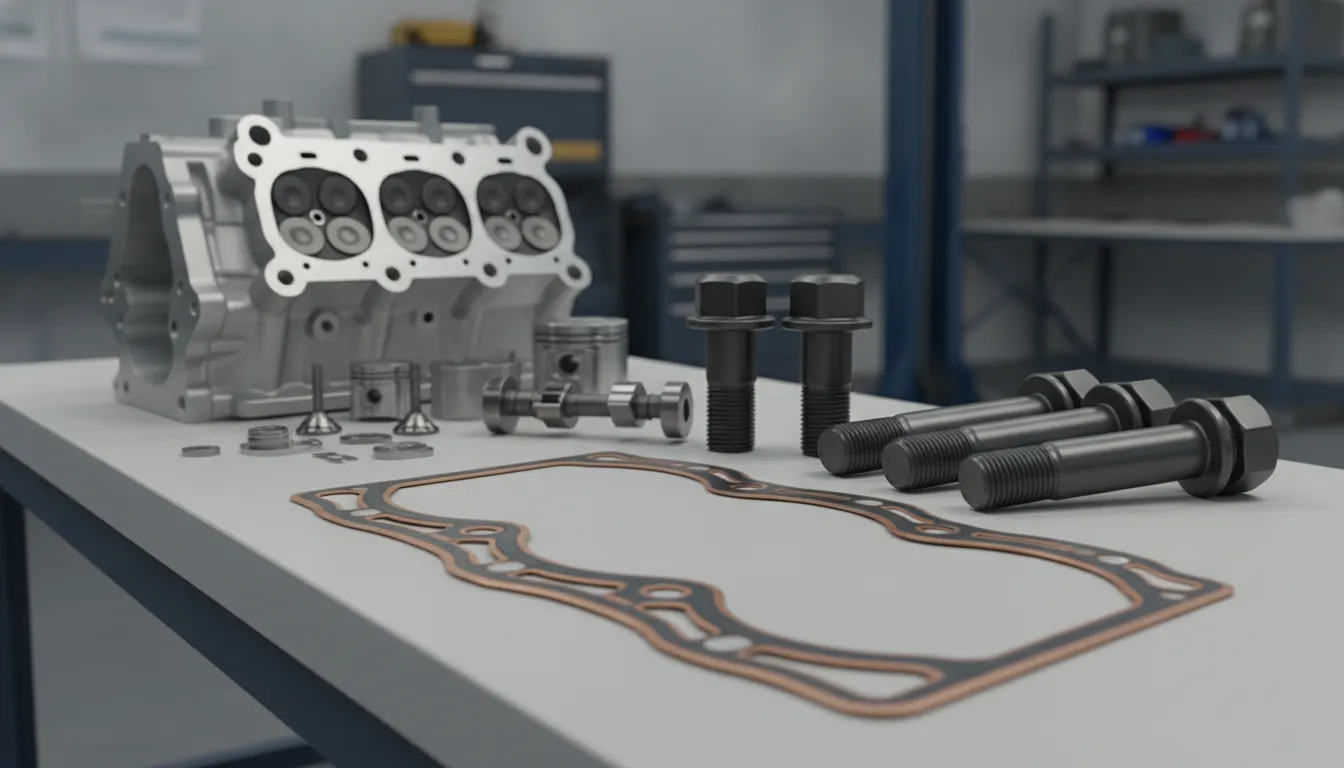
Fitment matters on EJ255 and EJ257 projects because engine configuration, head work, and intended use can change the correct parts list. A kit assembled for a routine top-end repair is not automatically complete for a rebuilt short block. Review the EJ25 short block installation kit when planning the lower-end portion of an EJ25 build. The Subaru cylinder head rebuild guide adds useful context for inspection and machine work.
Compare the kit contents against the parts being removed from the engine. Confirm the engine code, model-year range, gasket thickness, fastener type, and supplemental hardware before ordering. If the job involves more than a gasket replacement, the head gasket replacement guide can help map related disassembly and sealing steps.
OEM or MLS: Which Gasket Fits the Job?
Short answer: OEM-style gaskets can be appropriate for stock or near-stock engines with properly prepared surfaces. MLS gaskets are often selected for rebuilt or performance-oriented combinations, but they still require the correct surface finish, thickness, and clamping strategy.
Gasket choice should follow the engine's intended use, measured surfaces, and fastener plan. Neither an OEM-style gasket nor an MLS gasket can correct a warped head, damaged deck, or incorrect installation procedure.
| Consideration | OEM-style gasket | MLS gasket |
|---|---|---|
| Typical use | Stock or near-stock daily-driver rebuilds operating close to factory specifications. | Performance applications, rebuilt engines, and built blocks where combustion pressure and thermal cycling deserve additional attention. |
| Sealing priority | A factory-style seal for an engine whose boost, temperature, and power demands remain close to stock. | Layered steel construction can suit higher cylinder pressures when the rest of the combination supports it. |
| Surface requirements | Requires clean, flat, properly inspected block and head surfaces. | Typically demands especially careful surface-finish and flatness checks. Follow the gasket manufacturer's requirements. |
| Built-block suitability | May not be the first choice when the build adds substantial boost or upgraded hardware. | Often paired with upgraded studs on high-boost builds, with gasket, fasteners, deck condition, and calibration treated as one system. |
For an EJ255 or EJ257, the decision is not simply OEM versus MLS. Confirm block architecture, head condition, deck preparation, gasket thickness, and operating range before ordering a Subaru Head Gasket Kit. A stock replacement may make sense when the engine remains stock and measured surfaces meet factory requirements. A built combination may call for an MLS gasket and upgraded clamping hardware, but that does not make every MLS gasket interchangeable.
If the heads have been resurfaced or the block has been machined, verify that the selected thickness supports the planned compression ratio. Match the gasket to the actual engine plan instead of choosing the most aggressive-sounding option.
Why Do EJ255 and EJ257 Builds Need Careful Sealing?
Short answer: EJ255 and EJ257 sealing depends on the interaction between the gasket, cylinder heads, block deck, fasteners, and engine calibration. Engine-code matching alone does not confirm that a kit is correct.
Every drive brings repeated movement between cold start and operating temperature. The aluminum cylinder heads, block, fasteners, and gasket respond to heat at different rates. The horizontally opposed layout also creates a distinctive thermal environment. The gasket must maintain its seal across combustion, coolant, and oil passages as the engine cycles.
Block architecture adds another consideration. Cylinder-wall support and deck condition must work with the head gasket and clamping system to contain combustion pressure. Thermal expansion, deck movement, surface condition, and clamp load all matter. A gasket selected without considering those factors may be wrong even when the product listing includes the correct engine code.
Thermal cycling can expose a marginal seal
Repeated heat cycles place fatigue demands on the gasket. A stock-oriented repair and a turbocharged performance build may share an engine family, but they do not necessarily share sealing requirements. Construction, thickness, surface finish, and fastener choice should match the engine's use and the condition of the mating surfaces. An MLS gasket may be suitable for a built application, but it cannot compensate for poor machining or an uneven deck.
Symptoms need diagnosis before parts selection
Possible head-gasket symptoms include overheating, bubbles in the coolant reservoir, exhaust gases entering the cooling system, unexplained coolant loss, or oil and coolant contamination. Coolant can also leak toward a cylinder without creating an obvious external trail. These symptoms overlap with cooling-system, cylinder-head, and other engine problems, so replacing a gasket based on one symptom alone is a costly gamble.
Use appropriate cooling-system, compression, or leakdown testing for additional diagnostic context. Confirm the failure mode and inspect the heads and block before ordering. Diagnosis first, then parts selection, gives the repair or build a realistic foundation for a durable seal.
Talk with Crawford Performance about your EJ255 or EJ257 build
How Do You Spec a Subaru Head Gasket Kit for a Built Block?
Short answer: Record the exact engine and head combination, verify surface condition, select thickness from measured geometry, choose the fastener strategy, and confirm every supporting seal before ordering.
- Identify the exact engine and cylinder heads. Confirm the engine family, displacement, model-year range, block type, bore configuration, and cylinder-head application. Record whether the block is a stock case, sleeved case, closed-deck conversion, or another custom configuration. Verify that the kit is intended for that specific combination.
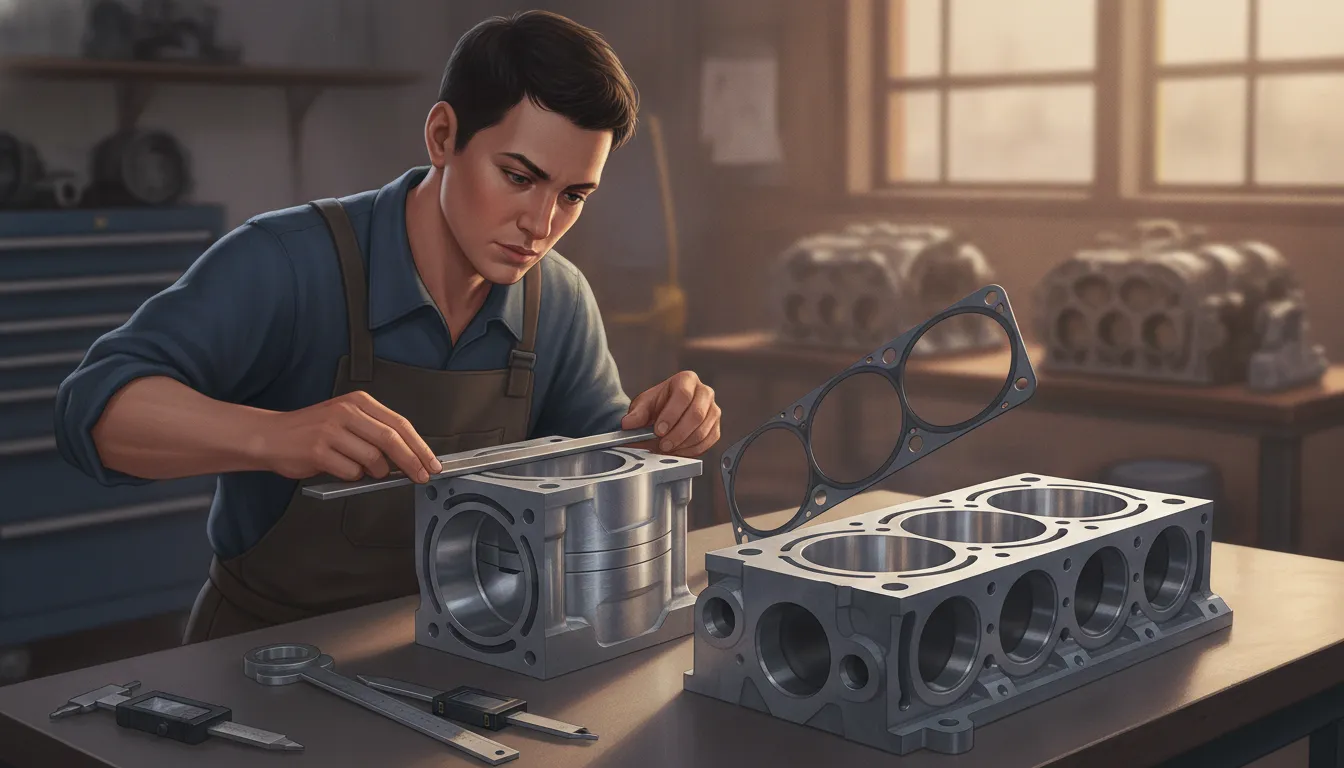
- Inspect deck and head flatness. Measure the block deck and inspect both cylinder heads after cleaning. Look for warpage, damage around the fire rings, corrosion at coolant passages, and evidence of overheating. Confirm the required surface finish with the machine shop and gasket manufacturer, especially when using MLS.
- Choose material and thickness from the measured combination. Thickness can affect deck clearance, piston-to-head clearance, and compression-ratio planning. Do not choose the thickest or most aggressive option by reputation alone. Match the gasket to the finished surfaces and documented engine geometry.
- Decide between new bolts and upgraded studs. Replace head bolts that are outside specification or unsuitable for reuse. A higher-output, high-boost build may need upgraded studs alongside the selected gasket. Confirm thread engagement, washer requirements, lubricant, and tightening sequence.
- Confirm every supporting seal and hardware item. Make sure the kit accounts for oil and coolant passage seals, intake and exhaust manifold gaskets, valve cover gaskets, spark plug tube seals, and supplemental hardware. Compare the contents against the parts removed from the engine and the machine-shop work order.
For the surrounding lower-end parts, review Crawford's EJ25 short block installation kit. For an engine that needs head service, pair the selection process with the cylinder head rebuild guide. These related resources help keep the gasket decision connected to the broader build plan.
Once the checks are complete, the kit should have a clear technical justification: confirmed engine fitment, verified surfaces, intentional gasket thickness, appropriate clamping hardware, and no missing secondary seals. That documentation is valuable when a built block is serviced later.
Which Installation Details Protect the Seal?
Short answer: Clean and measure both mating surfaces, prepare the fastener holes, follow the exact tightening procedure, and clean the cooling system before returning the vehicle to service.
Prepare the surfaces and fastener holes
Before installation, the block deck and cylinder head need to be clean, flat, and free of old gasket material, corrosion, oil, coolant, and debris. Have the head inspected for flatness and surfaced according to the gasket manufacturer's requirements. Verify the block deck rather than assuming it is usable because the engine was running before teardown.
Use the correct cleaning method and avoid gouging the deck with aggressive tools. Keep abrasive material out of oil and coolant passages. Bolt holes also deserve attention. Fluid or debris trapped in a blind hole can affect how the fastener tightens and produce a false torque reading. Clean the threads and mounting surfaces, then confirm that the gasket openings align with the block and head.
Control clamp load during assembly
Head bolts and studs are not interchangeable simply because they fit the same holes. A reusable fastener that has stretched beyond specification may no longer deliver the intended clamp load. Replace head bolts when the service procedure calls for replacement, or choose studs when the engine plan and manufacturer specifications support them.
Tighten the head fasteners in the specified sequence and stages. Do not substitute a generic torque value or tighten in a convenient order. Subaru service procedures can use torque-angle steps to achieve the intended bolt tension. Use a calibrated torque wrench and follow the procedure for the exact engine and fastener set. The verified service procedure illustrates why sequence, torque, and consistent clamping matter.
Clean the cooling system before service
A head-gasket failure can leave oil, combustion byproducts, or other contaminants in the cooling system. Flush the system thoroughly, inspect the radiator and hoses, and refill with the correct coolant mixture. Trapped contamination can undermine the repair even when the new gasket and machine work are correct. The complete head gasket replacement guide provides additional context for teardown, inspection, and reassembly.
Have your engine combination ready? Contact Crawford Performance before ordering.
Frequently Asked Questions
What is included in a complete Subaru head gasket kit?
A complete kit commonly includes the head gaskets, intake and exhaust manifold gaskets, valve cover gaskets, spark plug tube seals, and other oil or coolant passage seals needed for the top-end rebuild. Some applications also require new head bolts, upgraded studs, or supplemental hardware. Confirm the kit contents against the exact block and cylinder-head combination.
Should I choose an OEM or MLS head gasket?
For a stock EJ255 or EJ257 used as a daily driver within its factory operating range, an OEM-style gasket may be appropriate. A rebuilt or performance-oriented engine often calls for an MLS gasket. The choice still depends on deck and head condition, surface finish, gasket thickness, compression-ratio goals, and intended use. MLS cannot compensate for poor machine work.
Which Subaru head gasket kit is best for a built engine?
Start with the engine builder's specifications rather than choosing by gasket material alone. A built block operating under higher cylinder pressure may need an MLS gasket matched with upgraded head studs, the correct thickness, and properly prepared surfaces. Verify deck height, head flatness, fastener strategy, and combustion-pressure goals before ordering.
How do I know if my Subaru needs a head gasket kit?
Overheating, recurring bubbles in the coolant reservoir, unexplained coolant loss, white exhaust smoke, or oil and coolant mixing can indicate a head-gasket problem. These symptoms can have other causes, so confirm the diagnosis with appropriate cooling-system, compression, or leakdown testing before disassembling the engine.
Can I replace Subaru head gaskets without pulling the engine?
Some repairs may be physically possible in the vehicle, but removing the engine generally provides better access for cleaning, inspecting, and measuring the block and cylinder heads. That access matters because a new gasket will not reliably seal warped surfaces, contamination, or incorrect fastener installation.
For application-specific help, use the Crawford Performance contact page with the engine code, block configuration, head work, intended use, and fastener plan.
Ready to choose the right Subaru Head Gasket Kit? Contact Crawford Performance.