

FA20 Short Block: Der ultimative Kaufleitfaden
Es ist ein gewisses Unbehagen spürbar, einen Serienmotor bis an seine Grenzen zu bringen. Bei jeder sportlichen Fahrt oder Runde auf der Rennstrecke fragt man sich vielleicht, ob es diesmal so weit ist. Die Aufrüstung des Motorkerns bedeutet mehr als nur mehr PS; es geht darum, dieses Unbehagen durch Vertrauen zu ersetzen. Ein professionell aufgebauter FA20-Kurzblock bietet die Gewissheit, dass die inneren Komponenten des Motors für die erzeugte Leistung gerüstet sind. Er ist der Schlüssel, um das wahre Potenzial Ihres Fahrzeugs auszuschöpfen – ohne die ständige Angst vor einem Totalausfall.
Wichtigste Erkenntnisse
- Priorisieren Sie einen verstärkten Motorblock für zuverlässige Leistung : Der serienmäßige FA20-Motor stößt an seine Grenzen. Um die 350 PS-Marke sicher zu überschreiten, ist der Einbau eines verstärkten Motorblocks mit geschmiedeten Innenteilen der unerlässliche erste Schritt für den Bau eines langlebigen und leistungsstarken Motors.
- Budget für unterstützende Modifikationen und eine professionelle Abstimmung : Ein verstärkter Motorblock ist nur ein Teil des Ganzen. Ihr Projekt erfordert wichtige Upgrades des Kraftstoff- und Kühlsystems, und eine professionelle Abstimmung ist unerlässlich, um das sichere und effektive Zusammenspiel aller Komponenten zu gewährleisten.
- Passen Sie die Konfiguration Ihren Zielen an und achten Sie auf regelmäßige Wartung : Definieren Sie vor dem Kauf Ihre gewünschte PS-Zahl und Ihren Fahrstil, um Fehlkäufe oder eine Unterdimensionierung zu vermeiden. Schützen Sie Ihre Investition nach dem Einbau durch eine strikte Einfahrphase und einen konsequenten Wartungsplan, einschließlich häufiger Ölwechsel.
Was ist ein FA20 Short Block?
Betrachten Sie den FA20-Kurzblock als das Herzstück Ihres Motorprojekts. Es handelt sich um einen teilmontierten Motor, der den Motorblock selbst und die wichtigsten rotierenden Komponenten enthält: Kurbelwelle, Pleuelstangen und Kolben. Zylinderköpfe, Nockenwellen und andere Anbauteile wie Ansaugkrümmer oder Turbolader sind nicht enthalten. Damit ist er die perfekte Basis für alle, die einen Hochleistungsmotor für ihren Subaru WRX (2015–2021) oder BRZ bauen möchten.
Der Umbau auf einen verstärkten Shortblock bedeutet, dass Sie den serienmäßigen Kurbeltrieb durch eine Basis ersetzen, die für deutlich höhere Leistungen und Belastungen ausgelegt ist. Er bildet die Grundlage für ein wirklich individuelles Setup. Dieser Ansatz gibt Ihnen die Flexibilität, Ihre Zylinderköpfe und die passenden Performance-Teile selbst auszuwählen und so ein Motorpaket zu erstellen, das perfekt auf Ihre Ziele zugeschnitten ist. Ob Sie nun ein PS-starkes Rennfahrzeug oder einen zuverlässigen Alltagsbegleiter mit etwas mehr Power bauen – ein solider Shortblock ist der richtige Ausgangspunkt.
Was steckt drin? Ein Blick auf die Kernkomponenten
Die wahre Stärke eines getunten FA20-Kurzblocks liegt in seinen verbesserten Innenteilen. Während ein Serienmotor mit gegossenen Kolben und schwächeren Pleuelstangen ausgestattet ist, verfügt ein Performance-Kurzblock über deutlich robustere, geschmiedete Komponenten. Geschmiedete Kolben und Pleuelstangen werden unter extremem Druck gefertigt, wodurch eine dichtere und widerstandsfähigere Molekularstruktur entsteht. Dies ermöglicht es ihnen, der intensiven Hitze und den höheren Zylinderdrücken standzuhalten, die bei Subaru WRX-Upgrades wie einem größeren Turbolader und einer aggressiven Motorabstimmung auftreten. Diese zusätzliche Festigkeit gibt Ihnen die Sicherheit, mehr Leistung herauszuholen, ohne einen Motorschaden zu riskieren.
Verständnis von geschlossenen und offenen Terrassenkonstruktionen
Bei der Suche nach leistungsstarken Motorblöcken stößt man auf die Begriffe „Open Deck“ und „Closed Deck“. Der serienmäßige FA20-Motor hat ein Open-Deck-Design. Das bedeutet, dass die Zylinderwände oben offen sind, um einen maximalen Kühlmitteldurchfluss zu gewährleisten. Dies ist ideal, um die Temperaturen im Alltagsbetrieb niedrig zu halten, führt aber zu einer strukturellen Schwachstelle. Unter dem hohen Zylinderdruck eines leistungsstarken Motors können sich diese ungestützten Zylinderwände verformen oder sogar reißen. Ein Closed-Deck-Design löst dieses Problem durch eine zusätzliche Metallplatte auf dem Block, die die Zylinder verstärkt. Diese Modifikation erhöht die Steifigkeit des Blocks erheblich und ist daher unerlässlich für alle, die hohe Leistungen zuverlässig und sicher fahren wollen.
Die Rolle von kundenspezifischen Bauteilen und Verdichtungsverhältnissen
Neben der Blockkonstruktion spielen die für Ihren Motorblock ausgewählten Komponenten eine entscheidende Rolle für seine Leistung und seinen Charakter. Die Kolben bestimmen beispielsweise das Verdichtungsverhältnis des Motors – ein Maß dafür, wie stark das Luft-Kraftstoff-Gemisch vor der Zündung verdichtet wird. Ein höheres Verdichtungsverhältnis kann das Ansprechverhalten und die Effizienz verbessern, während ein niedrigeres Verhältnis bei sehr hohen Ladedrücken oft sicherer ist. Diese Wahl ist ein wichtiger Schritt, um den Motor optimal auf Ihre Bedürfnisse abzustimmen. Es geht nicht einfach darum, stärkere Teile einzubauen, sondern ein ausgewogenes System zu schaffen, in dem alle Komponenten harmonisch zusammenarbeiten. Deshalb ist eine professionelle Motorabstimmung unerlässlich, da sie sicherstellt, dass die finale Kalibrierung perfekt auf Ihre individuelle Hardware-Kombination abgestimmt ist.
Short Block, Long Block oder Stock: Was ist der Unterschied?
Ihr serienmäßiger FA20-Motor ist für den täglichen Gebrauch mit der Standardleistung bestens geeignet. Seine internen Komponenten sind jedoch nicht für die Belastung durch umfangreiche Leistungssteigerungen ausgelegt. Sobald Sie die Leistung deutlich erhöhen, stoßen Sie schnell an die Grenzen der Serienhardware. Ein vorgefertigter Shortblock bietet hier eine stabile Basis für weitere Modifikationen und ermöglicht Ihnen die freie Wahl von Zylinderköpfen und Nockenwellen. Ein Longblock geht noch einen Schritt weiter: Er ist eine komplette Einheit, die neben dem Shortblock auch Zylinderköpfe und Ventiltrieb umfasst und oft einbaufertig geliefert wird. Ein Longblock ist die ideale Wahl für alle, die ein bewährtes, vormontiertes Paket ohne unnötigen Aufwand bevorzugen.
Warum auf einen vormontierten FA20-Kurzmotor aufrüsten?
Der serienmäßige FA20-Motor Ihres Subaru ist ein technisches Meisterwerk, stößt aber an seine Grenzen. Sobald Sie mit Anbauteilen und einer Motorabstimmung mehr Leistung erzielen möchten, erreichen Sie schnell die Belastungsgrenze der Serienkomponenten. Hier kommt ein verstärkter Shortblock ins Spiel. Beim Tuning geht es nicht nur um maximale PS-Zahlen, sondern um den Aufbau einer zuverlässigen Basis, die Ihre Leistungsziele kompromisslos unterstützt. Ein verstärkter FA20-Shortblock ersetzt die serienmäßigen Innenteile – Kolben, Pleuel und Kurbelwelle – durch hochfeste, geschmiedete Komponenten, die der erhöhten Belastung durch höheren Ladedruck und aggressivere Abstimmung standhalten.
Es ist der wichtigste Schritt, um Ihren Subaru STI von einem alltagstauglichen Spaßfahrzeug in eine echte Performance-Maschine zu verwandeln. Dieses Upgrade gibt Ihnen die Sicherheit, auf der Straße oder der Rennstrecke an Ihre Grenzen zu gehen, denn Sie wissen, dass Ihr Motorkern dieser Aufgabe gewachsen ist. Indem Sie in eine stärkere Basis investieren, ermöglichen Sie nicht nur mehr Leistung, sondern sorgen auch für ein harmonisches Zusammenspiel des gesamten Systems. Dadurch können andere Subaru STI-Upgrades ihre volle Leistung entfalten und ein ausgewogenes und zuverlässiges Gesamtpaket schaffen. Letztendlich geht es bei einem verstärkten Motorblock darum, das Potenzial Ihres Fahrzeugs sicher und nachhaltig freizusetzen.
Mehr Leistung, bessere Performance: Die wichtigsten Vorteile
Das ist der häufigste Grund für ein Tuning. Ein serienmäßiger FA20-Motor ist bis ca. 350 PS in der Regel sicher, alles darüber hinaus ist riskant. Ein professionell aufgebauter FA20-Kurzblock ändert alles. Er ist so konstruiert, dass er 400–450 PS im Alltag und auf der Rennstrecke zuverlässig verkraftet und eine solide Basis für hohe Leistung bietet. Mit zusätzlichen Modifikationen wie einem verbesserten Kraftstoffsystem und einem größeren Turbolader kann derselbe Block weit über 600 PS leisten. Dieses Upgrade schöpft das wahre Potenzial Ihres Fahrzeugs aus und ermöglicht Ihnen den Einbau der benötigten Performance-Teile, ohne sich Sorgen um die Belastbarkeit Ihres Motors machen zu müssen.
Gebaut für die Ewigkeit: Überragende Zuverlässigkeit und Langlebigkeit
Leistung ist nichts ohne Zuverlässigkeit. Über zwei Jahrzehnte Erfahrung im Testen und im Rennsport mit Subaru-Motoren haben uns genau gezeigt, wo die Serienkomponenten versagen und bei welchen Leistungsstufen. Dieses Wissen nutzen wir, um robuste Motorblöcke zu entwickeln, die deutlich widerstandsfähiger sind als die Serienteile. Durch den Austausch schwächerer Gusskolben und Pleuelstangen gegen robuste Schmiedeteile schaffen wir einen Motor, der der extremen Hitze und dem hohen Druck im Hochleistungsbetrieb standhält. Dabei geht es nicht nur darum, Motorschäden zu vermeiden, sondern auch darum, einen Motor zu bauen, der Runde für Runde konstant Leistung bringt. Mit einem hochwertigen Motorblock investieren Sie in Langlebigkeit und die Gewissheit, dass Ihr Motor für alle Herausforderungen gerüstet ist – vom täglichen Pendeln bis hin zu anspruchsvollen Subaru WRX-Upgrades .
Gängige Mythen über getunte Motoren – widerlegt
Ein paar Dinge sollten wir klarstellen. Ein weit verbreiteter Irrglaube ist, dass getunte Motoren empfindlich und nur für die Rennstrecke geeignet seien. Das ist völlig falsch. Ein fachgerecht montierter FA20-Motor ist so konstruiert, dass er deutlich mehr Leistung und Belastung aushält als ein Serienmotor und ist daher bei korrekter Abstimmung zuverlässiger . Andererseits glauben manche, ein getunter Motorblock sei unzerstörbar. Er ist zwar extrem robust, aber nicht kugelsicher. Ein Hochleistungsmotor ist ein komplexes System, dessen Lebensdauer von der korrekten Installation, den passenden Modifikationen und professioneller Motorabstimmung abhängt. Die Vernachlässigung dieser wichtigen Schritte ist oft die eigentliche Ursache für Ausfälle, nicht der Motorblock selbst.
Wer stellt die besten FA20-Kurzblöcke her?
Wenn Sie in einen vorgefertigten Shortblock investieren möchten, ist die Wahl des richtigen Herstellers die wichtigste Entscheidung. Der Markt bietet zahlreiche renommierte Anbieter, und der „beste“ hängt oft von Ihren individuellen Leistungszielen, Ihrem Budget und Ihrem Vertrauen in die Erfahrung des Herstellers ab. Ein hochwertiger Shortblock ist die Basis für einen leistungsstarken und zuverlässigen Motor. Daher lohnt es sich, die Merkmale der führenden Hersteller zu kennen. Wir beleuchten, was einen hervorragenden Shortblock ausmacht – von der Designphilosophie und den verwendeten Materialien bis hin zu den feinen Details der Verarbeitung, die sicherstellen, dass Ihr Motor die geforderte Leistung problemlos bewältigt.
Was zeichnet Crawford Performance aus?
Mit über zwei Jahrzehnten Erfahrung im Ausreizen der Leistungsgrenzen von Subaru-Motoren wissen wir genau, wo Serienkomponenten versagen und wie wir dauerhafte Lösungen entwickeln. Dieses tiefe Verständnis steckt in jedem unserer Shortblocks. Wir montieren nicht einfach nur Teile, wir entwickeln sie komplett neu. Unsere eigens entwickelte Kolbenkonstruktion beispielsweise verbessert die Motoreffizienz und senkt den Innendruck, sodass Sie bei gleichem Ladedruck sicher mehr Leistung erzielen können. Dank dieser bewährten Technik und strengen Tests vertrauen Kunden auf die Shortblocks von Crawford Performance sowohl bei leistungsstarken Straßenfahrzeugen als auch bei Rennwagen.
Eigene Teile und Entwicklung
Unser Ansatz geht weit über die bloße Zusammenstellung robuster Standardkomponenten hinaus. Wir entwickeln und fertigen unsere eigenen, patentierten Teile, basierend auf jahrzehntelanger Erfahrung im Rennsport und fundierter Datenanalyse. Ein Paradebeispiel ist unser speziell entwickelter Kolben, der die Motoreffizienz steigert und den Zylinderinnendruck senkt. Dank dieser einzigartigen Konstruktion erzielen Sie bei gleichem Ladedruck sicher mehr Leistung – ein entscheidender Vorteil für Zuverlässigkeit und Performance. Diese Philosophie der sorgfältigen, hauseigenen Entwicklung wenden wir auf alle unsere Performance-Teile an. So stellen wir sicher, dass jede Komponente perfekt harmoniert und einen ausgewogenen, extrem langlebigen Motor bildet. Dieses Engagement für Innovation macht unsere Motoren so einzigartig.
Wie schneiden andere führende Bauunternehmen im Vergleich ab?
Wir stehen zwar voll und ganz hinter unseren Motoren, dennoch ist es hilfreich, sich mit dem Markt vertraut zu machen. Andere angesehene Motorenbauer wie IAG Performance bieten ebenfalls eine Reihe von FA20-Kurzblöcken an, die auf unterschiedliche Leistungsziele zugeschnitten sind. Sie genießen in der Szene einen hervorragenden Ruf, insbesondere für ihre Stufenblöcke, die für verschiedenste Projekte geeignet sind – von dezenten Straßen-Upgrades bis hin zu anspruchsvollen Rennstrecken-Anwendungen. Unternehmen wie diese haben sich ihren guten Ruf durch die konstant hohe Zuverlässigkeit ihrer Motoren erworben. Die Recherche zu verschiedenen Motorenbauern hilft Ihnen, die feinen Unterschiede in der Philosophie und der Komponentenauswahl zu verstehen und so die perfekte Lösung für die spezifischen Anforderungen und Leistungsziele Ihres Projekts zu finden.
Vergleich von IAG Performance und Outfront Motorsports
Bei der Suche nach passenden Motoren für Ihr Subaru-Projekt werden Sie häufig auf zwei etablierte Namen stoßen: IAG Performance und Outfront Motorsports. IAG Performance ist bekannt für seine gestaffelten Shortblocks, die eine klare Progression für verschiedene Leistungsstufen bieten. Das Sortiment umfasst Blöcke mit spezifischen Leistungszielen (BHP) sowie robustere Closed-Deck-Designs für alle, die leistungsstarke Motoren mit hohem Ladedruck planen. Die FA20DIT-Shortblocks von IAG Performance veranschaulichen den gestaffelten Ansatz. Auch Outfront Motorsports bietet verschiedene FA20DIT WRX-Shortblocks an – von Einsteigermodellen mit geschmiedeten Innenteilen bis hin zu Premium-Closed-Deck-Versionen für maximale Haltbarkeit. Beide Unternehmen haben sich in der Subaru-Community etabliert, und die Recherche ihrer Angebote hilft Ihnen, die unterschiedlichen Philosophien und Komponentenoptionen zu verstehen. Letztendlich hängt die Wahl des richtigen Anbieters von Ihren individuellen Leistungszielen, Ihrem Budget und den geplanten Modifikationen ab.
Ihre Checkliste: Qualität, Materialien und Verarbeitung
Unabhängig vom Hersteller weisen hochwertige Shortblocks einige wichtige Merkmale auf. Achten Sie stets auf geschmiedete Kolben und Pleuelstangen, da diese unerlässlich sind, um den höheren Temperaturen und Zylinderdrücken eines getunten Motors standzuhalten. Die Qualität der Bearbeitung und Montage ist genauso wichtig wie die Teile selbst – präzise Toleranzen und Spielräume entscheiden darüber, ob ein zuverlässiger Motor eine tickende Zeitbombe ist. Der Endpreis spiegelt oft direkt die Leistung des Blocks und die Qualität seiner Performance-Teile wider. Ein leistungsstärkerer Block verwendet robustere Komponenten, was naturgemäß höhere Kosten verursacht.
Wie viel Leistung kann ein FA20-Kurzblock verkraften?
Eine der ersten Fragen, die sich jeder Enthusiast stellt, lautet: „Wie viel Leistung verträgt er?“ Der serienmäßige FA20-Motor ist beeindruckend, hat aber seine Grenzen, insbesondere bei deutlichen Leistungssteigerungen. Wenn Sie die Werksgrenzen überwinden möchten, ist ein verstärkter Motorblock die Basis für echte, zuverlässige Leistung. Die genaue Leistung, die ein FA20 verträgt, hängt ganz von der Qualität der internen Komponenten, der Präzision der Montage und Ihren individuellen Leistungszielen ab.
Mit der richtigen Kombination aus Teilen und präziser Abstimmung verwandelt sich der FA20 von einem leistungsfähigen Straßenmotor in ein echtes Kraftpaket. Wir haben diese Motoren schon in allen Bereichen erlebt – von sportlichem Fahren im Alltag mit 400 PS bis hin zu kompromisslosen Rennstreckenumbauten mit weit über 600 PS. Letztendlich kommt es darauf an, die passenden Komponenten für die gewünschte Leistung und den vorgesehenen Einsatzzweck auszuwählen. Schauen wir uns genauer an, was Sie in den verschiedenen Phasen erwarten können.
Alltagstaugliche Leistung: Der optimale Bereich von 400-450 PS
Für die meisten Fahrer liegt die optimale Leistung eines getunten FA20-Motors im Bereich von 400–450 PS. Diese Leistungssteigerung gegenüber dem Serienmotor sorgt für einen enormen Fahrspaß im Alltag und bei gelegentlichen Trackdays, ohne Kompromisse bei der Zuverlässigkeit einzugehen. Ein gut getunter Motor bewältigt diese Leistung problemlos im täglichen Gebrauch. Dies ist das perfekte Ziel für Enthusiasten, die ein schnelles, reaktionsschnelles Auto suchen, das dennoch alltagstauglich ist. Viele Subaru WRX- Besitzer verfolgen dieses Ziel, um das wahre Potenzial ihres Fahrzeugs auszuschöpfen, ohne dabei ein zu aggressives Auto für die Straße zu schaffen.
Rennstreckentaugliche Leistung: Bis zu 600-800 PS
Wenn Sie im Wettbewerb bestehen oder ein echtes Rennstreckenmonster bauen wollen, ist der FA20 bestens dafür geeignet. Um 600–800 PS zu erreichen, ist ein erstklassiger Aufbau mit hochwertigen geschmiedeten Innenteilen und akribischer Montage erforderlich. Dabei geht es nicht nur um den Motorblock; auf diesem Niveau ist jede Komponente entscheidend. Sie benötigen ein robustes Kraftstoffsystem, einen größeren Turbolader und ein verbessertes Kühlsystem, um die erhöhte Belastung und Hitze zu bewältigen. Am wichtigsten ist jedoch, dass für das sichere Erreichen dieser Leistungswerte präzise Motorabstimmungen von einem Experten durchgeführt werden, der jeden Parameter perfekt auf maximale Leistung und Sicherheit abstimmt.
Ausrichtung Ihres Kurzblocks auf Ihre Leistungsziele
Ein aufgebauter Kurzblock ist keine Universallösung. Die Komponenten für einen 800-PS-Rennmotor unterscheiden sich deutlich von denen für einen 450-PS-Straßenmotor. Mehrere entscheidende Faktoren bestimmen die endgültigen Spezifikationen eines solchen Kurzblocks, wobei die angestrebte Leistung der wichtigste Faktor ist. Ein für 800 PS ausgelegter Block benötigt andere Kolben und Pleuelstangen als einer für 600 PS. Seien Sie realistisch in Bezug auf Ihre Ziele und Ihr Budget. Eine Überdimensionierung für eine Leistung, die Sie nie nutzen werden, verursacht unnötige Kosten, während eine Unterdimensionierung mit Sicherheit zu einem Motorschaden führt. Wägen Sie sorgfältig alle Performance-Teile ab, die zusammenwirken, um Ihr Ziel zu erreichen.
Was kostet ein FA20 Short Block?
Bei der Planung eines Motorumbaus spielt das Budget immer eine entscheidende Rolle. Die Kosten für einen getunten FA20-Kurzblock sind nicht pauschal zu beziffern; sie variieren je nach Ihren Leistungszielen, den verwendeten Komponenten und anderen Faktoren wie Altteilpfand. Im Folgenden erfahren Sie, mit welchen Kosten Sie für dieses grundlegende Upgrade Ihres Subaru rechnen können.
Aufschlüsselung der Kosten nach Leistungsstufe
Der wichtigste Faktor für den Preis eines getunten Motorblocks ist seine Leistung. Vereinfacht gesagt: Ein Block für 800 PS benötigt robustere – und damit teurere – interne Komponenten als einer für 450 PS. Denken Sie an Schmiedekolben, verstärkte Pleuelstangen und eine präzise ausgewuchtete Kurbelwelle. Beim Kauf von Tuningteilen werden Sie feststellen, dass die Preise mit der Leistungsfähigkeit steigen. Ein Block für ein zuverlässiges Alltagsfahrzeug mit moderaten Leistungsansprüchen ist am günstigsten, während ein rennstreckentauglicher Motor eine deutlich höhere Investition in Langlebigkeit und maximale Leistung darstellt.
OEM-Ersatz-Kurzblöcke
Wenn Ihr Motor unter normalen Serienbedingungen ausgefallen ist und Sie Ihr Auto einfach nur wieder fahrbereit machen möchten, ohne Leistungssteigerungen anzustreben, ist ein OEM-Ersatz-Shortblock die einfachste Lösung. Dieses Original-Subaru-Teil wird vormontiert mit einer neuen Kurbelwelle, Kolben und Pleuelstangen geliefert, die identisch mit den Originalteilen Ihres Fahrzeugs sind. Es ist darauf ausgelegt, Ihr Fahrzeug in den Originalzustand zurückzuversetzen. Für eine Standardreparatur ist dies eine solide Wahl, allerdings bietet es keine zusätzliche Festigkeit oder Belastbarkeit. Wenn Sie in Zukunft größere Leistungssteigerungen planen, werden Sie schnell an die Grenzen dieser Serienbasis stoßen.
Performance-Systeme der mittleren Preisklasse
Diese Kategorie ist für die meisten Enthusiasten genau das Richtige. Ein mittelpreisiger, verstärkter Shortblock stellt eine deutliche Verbesserung gegenüber dem Serienmotor dar und ist für zuverlässige Leistungen im Bereich von 400 bis 600 PS ausgelegt. Diese Blöcke, wie der beliebte IAG 600, sind mit geschmiedeten Kolben und Pleuelstangen ausgestattet und bieten die nötige Stabilität für höheren Ladedruck und aggressives Tuning. Sie bilden die ideale Basis für einen leistungsstarken Alltagsfahrer oder ein Rennstreckenfahrzeug, das auch starker Beanspruchung standhalten muss. Sie geben Ihnen die Sicherheit, Anbauteile wie einen größeren Turbolader und ein optimiertes Kraftstoffsystem zu verbauen, da Sie wissen, dass Ihr Motorkern für die zusätzliche Belastung gerüstet ist. Diese Kategorie bietet die perfekte Balance aus Leistung, Zuverlässigkeit und Kosten für die meisten Subaru WRX-Upgrades .
Optionen mit hoher PS-Zahl
Für alle, die maximale Leistung anstreben, sind Hochleistungs-Shortblocks für 600 PS und mehr ausgelegt. Diese High-End-Konstruktionen zeichnen sich durch robuste, geschmiedete Innenteile, Premium-Lager und eine sorgfältige Montage aus. Unser eigener Crawford Performance Built Shortblock beispielsweise ist für 660 PS ausgelegt und verwendet eigens entwickelte Komponenten, die auf jahrzehntelanger Rennerfahrung basieren. Auf diesem Niveau ist der Shortblock jedoch nur ein Teil eines kompletten Systems. Um diese Leistung zu nutzen, benötigen Sie außerdem ein leistungsstarkes Kraftstoffsystem, ein effizientes Kühlsystem und weitere unterstützende Modifikationen. Vor allem aber ist eine professionelle Abstimmung unerlässlich, um sicherzustellen, dass alle Komponenten sicher und effektiv zusammenarbeiten und Ihre Ziele erreichen.
Was Sie über Kerngebühren und Wartezeiten wissen sollten
Wenn Sie den Preis für einen Motorblock sehen, werden Sie möglicherweise auch eine „Altteilgebühr“ bemerken. Lassen Sie sich davon nicht überraschen – das ist branchenüblich. Betrachten Sie es als eine Art Kaution. Sie zahlen diese Gebühr im Voraus und erhalten sie zurück, sobald Sie Ihren alten, brauchbaren Motorblock an den Hersteller zurückgeschickt haben. Dieses System fördert das Recycling und hilft, die Kosten für alle Beteiligten niedrig zu halten. Es ist ein wichtiger Punkt, den Sie in Ihr Gesamtbudget einkalkulieren sollten. Bedenken Sie außerdem, dass diese Motoren oft auf Bestellung gefertigt werden. Hochwertige Handwerkskunst braucht Zeit, planen Sie daher mögliche Wartezeiten bei der Terminvereinbarung ein.
Wie Pfandgebühren funktionieren (und wann sie nicht anfallen)
Die Altteilgebühr ist im Prinzip eine rückzahlbare Kaution, die zum Preis Ihres neuen Motorblocks hinzugerechnet wird. Diese Gebühr dient als Anreiz, Ihren alten, originalen Motorblock an den Motorenbauer zurückzusenden. Der zurückgesendete Block, der sogenannte „Altteil“, wird geprüft und kann, sofern er wiederverwendbar ist, für ein zukünftiges Projekt eingesetzt werden. Dieses Verfahren trägt dazu bei, dass stets brauchbare Motorblöcke verfügbar sind und Hochleistungsteile leichter zugänglich werden. Um die volle Rückerstattung zu erhalten, darf der zurückgesendete Altteil keine größeren Schäden wie Risse oder Löcher aufweisen. Dies ist ein gängiges Verfahren, das einen nachhaltigeren Kreislauf in der Welt der Hochleistungsfahrzeuge fördert.
Geschätzte Lieferzeiten von beliebten Herstellern
Im Gegensatz zu Standardteilen liegen hochwertige, vorgefertigte Motorblöcke selten auf Lager und warten auf den Versand. Es handelt sich um komplexe Baugruppen, die oft auftragsbezogen gefertigt werden, um höchste Qualitäts- und Präzisionsstandards zu gewährleisten. Daher sollten Sie immer mit einer Lieferzeit rechnen. Diese kann je nach Auslastung des Motorenbauers und den benötigten Komponenten zwischen einigen Wochen und einigen Monaten variieren. Dies ist kein Zeichen für schlechten Service, sondern ein Kennzeichen handwerklicher Perfektion. Seriöse Motorenbauer nehmen sich die nötige Zeit, jeden Motor präzise zu bearbeiten, zu vermessen und zu montieren. So stellen sie sicher, dass die Basis für Ihr Projekt solide und zuverlässig ist – auch für alle später hinzugefügten Performance-Teile.
Lohnt sich die Investition?
Ein verstärkter FA20-Kurzblock ist eine beträchtliche Investition, aber er bildet das Fundament für jedes leistungsstarke Subaru-Projekt. Der Serienmotor ist zwar leistungsfähig, hat aber seine Grenzen. Diese ohne Verstärkung des Motorkerns zu überschreiten, führt unweigerlich zu Problemen. Mit einem verstärkten Block können Sie beruhigt höhere Leistungswerte anstreben. Um das volle Potenzial auszuschöpfen, bedenken Sie, dass der Kurzblock nur ein Teil des Ganzen ist. Er muss mit den passenden Modifikationen und professioneller Motorabstimmung kombiniert werden, um eine ausgewogene, leistungsstarke und langlebige Maschine zu schaffen, die ihr Potenzial voll ausschöpft.
Welche weiteren Mods benötigen Sie?
Der Einbau eines getunten FA20-Kurzblocks in Ihren Subaru ist ein großer Schritt in Richtung Ihrer Leistungsziele, doch damit ist die Arbeit noch nicht getan. Betrachten Sie den Kurzblock als das neue, kraftvolle Herzstück Ihres Fahrzeugs; er benötigt ein ebenso leistungsfähiges System zur Versorgung und Kühlung. Den Block einfach einzubauen, ohne die umliegenden Komponenten zu optimieren, führt unweigerlich zu Enttäuschung und potenziellen Motorschäden. Um das volle Potenzial Ihrer Investition auszuschöpfen und die Zuverlässigkeit Ihres Motors zu gewährleisten, müssen Sie die Systeme, die die neu gewonnene Leistung mit Kraftstoff versorgen, kühlen und steuern, optimieren.
Diese ergänzenden Modifikationen sind nicht nur Vorschläge – sie sind unverzichtbare Bausteine. Von der Kraftstoffpumpe über den Kühler bis hin zur finalen Motorsteuerungsabstimmung trägt jede Komponente entscheidend dazu bei, ein stimmiges, leistungsstarkes Fahrzeug zu schaffen, mit dem Sie sich auf der Straße oder der Rennstrecke gleichermaßen sicher fühlen können. Lassen Sie uns die wichtigsten Systeme durchgehen, die Sie für die Fertigstellung Ihres Projekts aufrüsten sollten.
Lassen Sie Ihren Motor nicht verhungern: Kraftstoffsystem-Upgrades
Mehr Leistung erfordert mehr Kraftstoff. Das ist eine einfache Gleichung. Mit einem größeren Turbolader und einem leistungsstärkeren Motor erhöht sich der Luftdurchsatz, und das Kraftstoffsystem muss entsprechend reagieren, um ein sicheres Luft-Kraftstoff-Gemisch zu gewährleisten. Ein getunter FA20 kann mit der serienmäßigen Direkteinspritzung zuverlässig 400–450 PS verkraften, was für den Alltag und gelegentliche Rennstreckeneinsätze beeindruckend ist. Wenn Sie jedoch höhere Leistungen anstreben, stoßen Sie an die Grenzen der Serienausstattung.
Um über 450 PS zu kommen, benötigen Sie ein zusätzliches Kraftstoffsystem, beispielsweise eine Saugrohreinspritzung. Die serienmäßigen Direkteinspritzdüsen liefern nicht genügend Kraftstoff für höhere Leistungen. Durch den Einbau einer optimierten Kraftstoffpumpe und verbesserter Einspritzdüsen wird sichergestellt, dass Ihr Motor auch unter Volllast nicht unter Kraftstoffmangel leidet. Dies schützt ihn vor Motorschäden und entfesselt sein volles Potenzial. Diese Leistungsteile bilden die Grundlage für einen zuverlässigen Hochleistungsmotor.
Cool bleiben: Anforderungen an Turbolader und Kühlsystem
Hitze beeinträchtigt Leistung und Lebensdauer. Ein getunter Motor mit deutlich mehr Leistung als der Serienmotor erzeugt auch wesentlich mehr Wärme, und das serienmäßige Kühlsystem ist dafür nicht ausgelegt. Der Motorblock ist nur ein Teil eines größeren Systems, zu dem auch Turbolader, Kühler und Ölkühler gehören. Alle diese Komponenten müssen zusammenarbeiten, um die Temperatur zu regulieren. Wird dieser Schritt vernachlässigt, kann es schnell zu Überhitzung kommen, die für jeden Motor – ob getunt oder nicht – fatal sein kann.
Um Ihre Investition zu schützen, ist die Aufrüstung Ihres Kühlsystems unerlässlich. Der Einbau eines Hochleistungskühlers, eines Thermostats mit niedrigerer Temperatur oder eines separaten Ölkühlers trägt dazu bei, die zusätzliche Wärme effektiv abzuführen. Diese Upgrades für Ihren Subaru WRX gewährleisten, dass Ihr Motor auch bei sportlicher Fahrweise in einem sicheren Temperaturbereich arbeitet, seine Lebensdauer verlängert und Ihnen Runde für Runde konstante Leistung bietet.
Alles zusammenfügen: Motormanagement und professionelles Tuning
Nach dem Einbau aller neuen Hardwarekomponenten ist es wichtig, dass alle Komponenten optimal miteinander kommunizieren. Hier kommen Motormanagement und eine professionelle Abstimmung ins Spiel. Die professionelle Abstimmung ist der letzte, entscheidende Schritt, der Ihr gesamtes System perfekt aufeinander abstimmt. Ein Tuner kalibriert das Motorsteuergerät (ECU) Ihres Fahrzeugs neu und passt wichtige Parameter wie Kraftstoffzufuhr, Zündzeitpunkt und Ladedruck an Ihr neues Setup an. Dadurch wird sichergestellt, dass Ihr Motor nicht nur kraftvoll, sondern auch sicher und effizient läuft.
Auf professionelles Tuning zu verzichten, ist, als würde man ein Weltklasse-Orchester engagieren und es ohne Dirigenten spielen lassen. Das Potenzial ist da, aber das Ergebnis wird chaotisch sein. Unsere Experten für Motortuning erwecken Ihren Traumwagen zum Leben, optimieren jedes neue Teil für eine gleichmäßige und zuverlässige Leistungsentfaltung und verwandeln Ihren modifizierten Subaru in das Kraftpaket Ihrer Träume.
Fertigstellung des Aufbaus: Die Bedeutung eines Installationskits
Der Einbau eines neuen Motorblocks ist ein komplexes Unterfangen, das von Anfang an korrekt ausgeführt werden muss. Der Block selbst ist zwar das wichtigste Bauteil, doch die dazugehörigen Dichtungen, Dichtringe und Befestigungsteile sind ebenso entscheidend. Viele dieser Komponenten sind für den einmaligen Gebrauch konzipiert oder verschleißen mit der Zeit durch Hitze und Druck. Die Wiederverwendung alter Teile ist ein riskantes Unterfangen, das zu Öllecks, Problemen mit dem Kühlmittel oder anderen Schäden führen und Ihre gesamte Investition gefährden kann. Um einen erfolgreichen und zuverlässigen Motoraufbau zu gewährleisten, ist es unerlässlich, diese wichtigen Teile während des Einbaus zu ersetzen und so eine perfekte Abdichtung für Ihren neuen Motor sicherzustellen.
Um diesen Vorgang zu vereinfachen, empfehlen wir dringend die Verwendung eines passenden Einbausatzes. Anstatt stundenlang nach einzelnen Teilenummern zu suchen, bietet Ihnen ein Komplettset alle notwendigen Komponenten in einem Paket. Wir bieten einen speziell für unsere Motoren entwickelten Short-Block-Einbausatz an, der sicherstellt, dass alle Dichtungen neu und für den Hochleistungsbetrieb geeignet sind. Die Verwendung sorgfältig ausgewählter Performance-Teile garantiert, dass jedes Teil perfekt passt, Ihren neuen Motor schützt und Ihnen die Gewissheit gibt, dass die Installation von Anfang an korrekt durchgeführt wurde.
Wie man den richtigen FA20-Kurzblock auswählt
Die Wahl eines speziell angefertigten Motorblocks ist eine der wichtigsten Verbesserungen, die Sie an Ihrem Subaru vornehmen können. Er bildet die Grundlage für Ihren gesamten Umbau, daher ist die richtige Entscheidung entscheidend. Die perfekte Wahl hängt davon ab, Ihre eigenen Bedürfnisse zu kennen und zu wissen, worauf es bei einem qualifizierten Motorenbauer ankommt. Wir gehen die zwei wichtigsten Faktoren durch, die Sie berücksichtigen sollten, um eine fundierte Entscheidung zu treffen.
Hier geht es los: Definieren Sie Ihre Ziele und Ihren Fahrstil
Das Wichtigste zuerst: Wofür bauen Sie dieses Auto? Bevor Sie sich auch nur ein einziges Teil ansehen, müssen Sie sich ehrlich über Ihre Leistungsziele und Ihre Fahrweise im Klaren sein. Wollen Sie ein zuverlässiges Alltagsauto mit etwas mehr Power für sportliche Wochenendausflüge? Oder bauen Sie ein reinrassiges Rennstreckenmonster, das auf Bestzeitenjagd ist? Ihre Antwort entscheidet maßgeblich darüber, welcher Motorblock der richtige für Sie ist.
Der größte Kostenfaktor und die Komplexität eines Motorblocks hängt maßgeblich von seiner Leistung ab. Ein Motor, der für 800 PS ausgelegt ist, benötigt andere Komponenten und Toleranzen als einer für moderatere 450 PS. Wenn Sie Ihre Zielleistung im Voraus festlegen, investieren Sie in einen Block, der Ihren Bedürfnissen entspricht, ohne unnötig Geld für Funktionen auszugeben, die Sie nie nutzen werden. Diese Überlegung hilft Ihnen, die optimale Balance zwischen Leistung, Zuverlässigkeit und Budget für Ihre Subaru WRX-Upgrades zu finden.
Markenreputation und Garantie nicht außer Acht lassen.
Sobald Sie wissen, was Sie benötigen, gilt es, den richtigen Partner für den Bau zu finden. Die Qualität eines Shortblocks hängt von der Erfahrung des Herstellers, den verwendeten Materialien und der Präzision der Montage ab. Suchen Sie nach Unternehmen mit langjähriger Erfahrung und nachweislichen Erfolgen in der Subaru-Community. Ein guter Ruf basiert auf jahrelangen erfolgreichen Projekten und zufriedenen Kunden. Hochwertige Motoren verwenden Premium-Komponenten wie geschmiedete Kolben und Pleuelstangen, die für die Bewältigung der erhöhten Hitze und Belastung im Hochleistungsbetrieb unerlässlich sind.
Eine solide Garantie ist ein weiteres klares Zeichen für einen seriösen Motorenhersteller. Sie zeigt, dass er hinter seiner Arbeit steht. Wir bieten beispielsweise 12 Monate bzw. 12.000 Meilen Garantie auf unsere Motoren, weil wir von unserer Arbeit überzeugt sind. Achten Sie außerdem auf Altteilpfand. Viele Motorenhersteller verlangen eine Kaution (das Altteilpfand), die Sie nach Einsendung Ihres alten Motorblocks zurückerhalten. Dies ist branchenüblich, sollte aber in Ihre Budgetplanung einbezogen werden. Letztendlich ist die Wahl eines vertrauenswürdigen Herstellers für Ihre Tuningteile genauso wichtig wie die Teile selbst.
Kundenrezensionen und Zufriedenheitsbewertungen
Wenn Sie eine größere Aufrüstung wie den Einbau eines verstärkten Kurzblocks planen, sind Erfahrungsberichte anderer Fahrer Gold wert. Sie durchschauen die Marketingversprechen und vermitteln Ihnen ein klares Bild von der Zuverlässigkeit und Leistung, die Sie tatsächlich erwarten können. Beispielsweise haben 95 % der Kunden unseren Crawford Performance Kurzblock mit 5 Sternen bewertet. Diese hohe Kundenzufriedenheit spricht für sich. Auch andere renommierte Anbieter wie IAG Performance haben sich mit ihren FA20 Kurzblöcken einen hervorragenden Ruf erworben. Nehmen Sie sich die Zeit, die Erfahrungen anderer Subaru-Fans zu lesen. Das hilft Ihnen bei Ihrer Entscheidung und ermöglicht es Ihnen, den richtigen Partner für Ihr Projekt zu finden.
Installation und Einlauf: So geht's richtig
Sie haben Ihren FA20-Kurzblock ausgewählt und sind bereit für den nächsten Schritt. Doch der Weg zu zuverlässiger Leistung endet nicht mit dem Kauf. Eine fachgerechte Installation und eine sorgfältige Einfahrphase sind unerlässlich, um Ihre Investition zu schützen und sicherzustellen, dass Ihr neuer Motor die erwartete Leistung und Langlebigkeit erbringt. Wenn Sie diese beiden Schritte richtig durchführen, legen Sie den Grundstein für tausende Kilometer Fahrspaß – egal ob auf der Straße, der Rennstrecke oder im Gelände. Betrachten Sie es als die letzte, entscheidende Phase des Motoraufbaus. Lassen Sie uns gemeinsam durchgehen, was Sie für eine korrekte Durchführung wissen müssen.
Professionelle Installation oder Selbstmontage: Was ist das Beste für Sie?
Die Entscheidung, wer Ihren neuen Motorblock einbaut, ist eine wichtige. Seien wir ehrlich: Einen Motor zu zerlegen, kann wie eine Mammutaufgabe wirken, und die Vorstellung, es selbst zu versuchen, kann einschüchternd sein. Mit dem richtigen Werkzeug, einem sauberen Arbeitsplatz und einer guten Anleitung schaffen es jedoch viele Hobbybastler, den Einbau erfolgreich durchzuführen. Die Do-it-yourself-Variante kann sehr lohnend sein und Ihnen zudem die Arbeitskosten sparen.
Andererseits bietet der professionelle Einbau durch einen renommierten Subaru-Spezialisten absolute Sicherheit. Diese Experten verfügen über die nötige Erfahrung, um alle Eventualitäten zu meistern und sicherzustellen, dass jedes Bauteil mit dem vorgeschriebenen Drehmoment angezogen wird. Wenn Sie Ihr Projekt einem Profi anvertrauen, der auch Motortuning anbietet, profitieren Sie zudem von dessen Expertise, wodurch kostspielige Fehler vermieden werden können. Letztendlich hängt die Entscheidung von Ihren handwerklichen Fähigkeiten, Ihrem Selbstvertrauen und Ihrem Budget ab.
So fahren Sie Ihren neuen Motor richtig ein
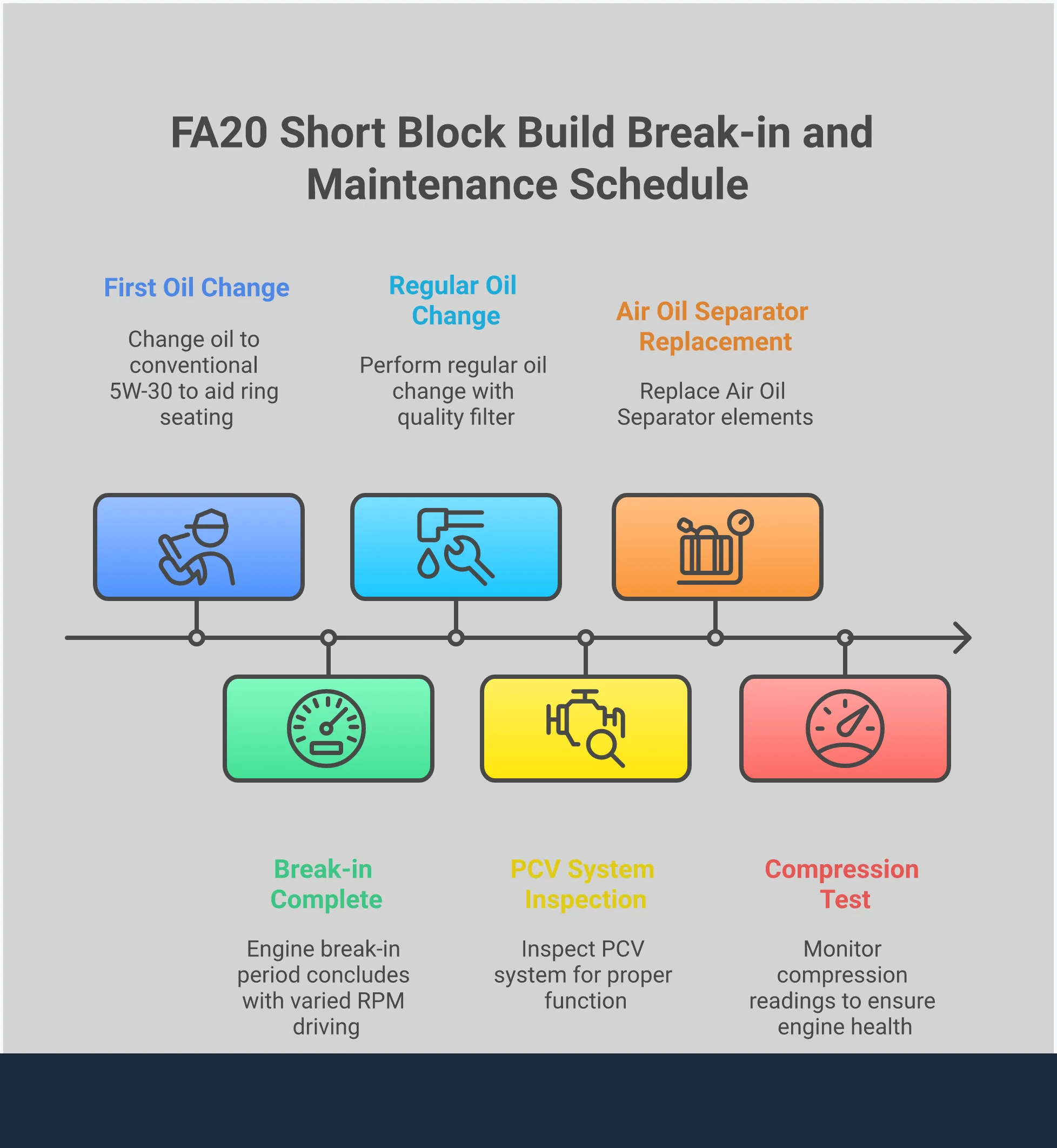
Ein getunter Motor benötigt mehr Pflege als ein Serienmotor, und die Einfahrphase ist unerlässlich. Die ersten 1.000 Meilen sind entscheidend für die langfristige Lebensdauer Ihres Motors, da sich die Kolbenringe in dieser Zeit optimal an die Zylinderwände anpassen müssen. Fahren Sie daher schonend mit variierenden Geschwindigkeiten und Drehzahlen – vermeiden Sie unbedingt hohe Drehzahlen und Unterdrehzahlen. Konstante Autobahngeschwindigkeiten sind hier nicht empfehlenswert.
Planen Sie einen frühen Öl- und Filterwechsel nach etwa 800 Kilometern ein, um Montagefett und anfängliche Verschleißpartikel auszuspülen. Nach der Einfahrphase ist ein häufigerer Ölwechsel, in der Regel alle 5.000 Kilometer, erforderlich. Es empfiehlt sich außerdem, den Zustand Ihres Motors regelmäßig mit Messgeräten zu überwachen. Durch die Einhaltung dieser Maßnahmen stellen Sie sicher, dass sich alle neuen Leistungsteile optimal einspielen und für eine lange und leistungsstarke Lebensdauer sorgen.
Schützen Sie Ihre Investition: Langfristige Instandhaltung
Sie haben in einen leistungsstarken FA20-Kurzblock investiert, und jetzt ist es an der Zeit, diese Investition zu schützen. Ein getunter Motor ist etwas ganz anderes als ein Serienmotor und benötigt dementsprechend eine sorgfältigere Wartung. Betrachten Sie es nicht als lästige Pflicht, sondern als den letzten, entscheidenden Schritt Ihres Projekts. Die richtige Langzeitpflege unterscheidet eine zuverlässige, leistungsstarke Maschine von einem kostspieligen Ärgernis. Indem Sie sich ein paar wichtige Gewohnheiten aneignen, stellen Sie sicher, dass Ihr Motor Kilometer für Kilometer die begeisternde Leistung erbringt, für die Sie bezahlt haben. Es geht nicht mehr nur darum, dem Werkstatthandbuch zu folgen; es geht darum, einen neuen Standard für die Pflege Ihres aufgerüsteten Subaru zu setzen.
Ihre Checkliste für die Wartung nach dem Bau
Damit Ihr modifizierter FA20-Motor weiterhin zuverlässig läuft, muss Ihr bisheriger Wartungsplan angepasst werden. Ein modifizierter Motor arbeitet unter höherer Belastung und benötigt daher häufigere Wartung. Beginnen Sie mit diesen unverzichtbaren Gewohnheiten:
- Regelmäßiger Ölwechsel: Planen Sie einen Öl- und Filterwechsel alle 5.000 bis 6.500 Kilometer mit einem hochwertigen Synthetiköl ein. Dies ist das Wichtigste, was Sie für die Gesundheit Ihres Motors tun können.
- Wichtige Parameter im Blick behalten: Installieren Sie Messgeräte für Öldruck und -temperatur. Dies sind die wichtigsten Vitalfunktionen Ihres Motors. Sie geben Ihnen einen Echtzeit-Einblick in seinen Zustand und ermöglichen es Ihnen, potenzielle Probleme zu erkennen, bevor sie sich zu ernsthaften Schwierigkeiten entwickeln.
- Professionelles Tuning ist unerlässlich: Nach dem Einbau neuer Leistungsteile ist ein professionelles Tuning zwingend erforderlich. Fachgerechte Motorabstimmung gewährleistet das optimale Zusammenspiel aller Komponenten, optimiert die Leistung und beugt schwerwiegenden Schäden vor.
Praktiken zur Sicherstellung der Langlebigkeit des Motors
Neben der üblichen Checkliste gibt es einige wichtige Maßnahmen, die die Lebensdauer Ihres FA20-Kurzblocks maximieren. Bei einem neu aufgebauten Motor ist die strikte Einhaltung der Einfahrphase unerlässlich. Dadurch können sich die neuen Komponenten, wie Kolbenringe und Lager, optimal einlaufen, was die Grundlage für langfristige Zuverlässigkeit bildet.
Verwenden Sie stets hochwertiges Öl und Kühlmittel, da minderwertige Flüssigkeiten die Leistung beeinträchtigen und den Verschleiß beschleunigen können. Führen Sie regelmäßige Inspektionen durch. Überprüfen Sie proaktiv Komponenten wie das PCV-Ventil und stellen Sie sicher, dass Ihr Ölabscheider (AOS) einwandfrei funktioniert, um Ölverunreinigungen und Druckprobleme zu vermeiden. Ein Ölabscheider ist eines der effektivsten Teile, die Sie zum Schutz der Motorinnenteile einbauen können. Mit diesen Maßnahmen werden Sie lange Freude an Ihrem Motor haben.
Verwandte Artikel
Häufig gestellte Fragen
Brauche ich wirklich einen verstärkten Motorblock für nur ein paar Anbauteile? Für einfache Modifikationen wie eine Sportauspuffanlage oder einen Sportluftfilter ist Ihr serienmäßiger FA20-Motor völlig ausreichend. Die entscheidende Frage ist, was Ihre langfristigen Ziele sind. Wenn Sie einen größeren Turbolader einbauen oder eine Leistung von über 350 PS anstreben, bewegen Sie sich in einem Bereich, in dem die Serieninnereien zum Risiko werden. Mit einem verstärkten Motorblock schaffen Sie eine zuverlässige Basis, die die gewünschte Leistung sowohl jetzt als auch in Zukunft sicher tragen kann.
Ist ein getunter Motor im Alltag weniger zuverlässig als ein Serienmotor? Das ist ein weit verbreiteter Irrglaube, tatsächlich ist das Gegenteil der Fall. Ein professionell aufgebauter Motor besteht aus Komponenten, die deutlich robuster sind als die Originalteile, die er ersetzt. In Kombination mit den passenden Modifikationen und einer professionellen Abstimmung ist ein getunter Motor wesentlich langlebiger und bewältigt die Belastungen des Alltags bei höheren Leistungsstufen zuverlässiger als ein Serienmotor, der bis an seine Leistungsgrenze gefahren wird.
Kann ich meine originalen Zylinderköpfe für einen neu aufgebauten Motorblock verwenden? Ja, absolut. Die Verwendung Ihrer originalen Zylinderköpfe auf einem aufgebauten Motorblock ist eine gängige und effektive Strategie, insbesondere für straßenorientierte Umbauten. Der Motorblock bietet die nötige Stabilität für höhere Leistungen, und Ihre originalen Zylinderköpfe sind bestens geeignet, deutliche Leistungssteigerungen zu ermöglichen. So können Sie zunächst in das wichtigste Bauteil des Motors investieren und haben die Option, die Zylinderköpfe später aufzurüsten, falls Ihre Leistungsziele steigen.
Was ist der häufigste Fehler beim Einbau eines getunten Motorblocks? Der größte Fehler ist, den Motor nicht als Gesamtsystem zu betrachten. Viele investieren in einen leistungsstarken Motorblock, vernachlässigen aber die notwendigen Modifikationen oder verzichten auf eine professionelle Abstimmung. Ein getunter Motor benötigt mehr Kraftstoff und erzeugt mehr Wärme, daher sind ein optimiertes Kraftstoff- und Kühlsystem unerlässlich. Der letzte, unabdingbare Schritt ist eine professionelle Abstimmung, die sicherstellt, dass alle neuen Komponenten sicher und effektiv zusammenarbeiten.
Warum ist die Einfahrphase für einen neu aufgebauten Motor so wichtig? Die ersten 1.000 Meilen sind entscheidend, da sich in dieser Zeit die neuen Kolbenringe an die Zylinderwände anpassen und eine perfekte Abdichtung gewährleisten. Eine ordnungsgemäße Einfahrphase mit variierenden Drehzahlen und ohne hohe Belastungen sichert maximale Kompression und minimalen Ölverbrauch über die gesamte Lebensdauer des Motors. Wird dieser Prozess übereilt oder ganz ausgelassen, kann dies zu dauerhaften Schäden führen und verhindern, dass Ihr neuer Motor jemals sein volles Leistungs- und Zuverlässigkeitspotenzial erreicht.