

FA20 Long Block-Motor: Ein vollständiger Käuferleitfaden
Mehr PS zu bekommen ist einfach. Zuverlässige Leistung zu erzielen, ist die wahre Herausforderung. Jeder kann einen größeren Turbolader montieren und den Ladedruck erhöhen, aber ein serienmäßiger FA20-Motor wird irgendwann protestieren – oft mit einem lauten Knall. Deshalb geht es bei einem getunten FA20-Motorblock um mehr als nur um hohe Leistungswerte auf dem Prüfstand; es geht darum, einen robusten Motor zu bauen, der den täglichen Belastungen standhält. Es ist eine Investition in Ihre Sicherheit. Dieser Leitfaden behandelt alles von den wichtigsten Komponenten bis hin zum entscheidenden Einfahrprozess und stellt sicher, dass Ihr Hochleistungsmotor auf Langlebigkeit ausgelegt ist.
Wichtigste Erkenntnisse
- Ein professionell aufgebauter Motor bildet die Grundlage für zuverlässige Leistung : Ein professionell aufgebauter FA20-Rumpfmotor dient nicht nur der Jagd nach hohen PS-Zahlen, sondern schafft eine robuste Basis. Durch den Austausch schwacher Serienteile gegen robuste, geschmiedete Innenteile erhalten Sie einen Motor, der deutliche Leistungssteigerungen sicher verkraftet, ohne an Zuverlässigkeit einzubüßen.
- Planen Sie das Budget für das gesamte System ein, nicht nur für den Motorblock : Um die gewünschte Leistung zu erzielen, müssen Sie notwendige Zusatzmodifikationen berücksichtigen. Ein vollständiger Umbauplan umfasst Upgrades für das Kraftstoffsystem, das Kühlsystem und den passenden Turbolader sowie die Kosten für professionellen Einbau und die Abstimmung.
- Ihre Verantwortung beginnt nach dem Einbau : Die langfristige Funktionsfähigkeit Ihres Motors hängt von der richtigen Pflege ab. Eine sorgfältige Einfahrphase, regelmäßige Wartung und die ständige Überwachung der wichtigsten Motorparameter sind unerlässlich, um Ihre Investition zu schützen.
Was ist ein vorgefertigter FA20-Longblock?
Wenn Sie die Leistung Ihres Subaru WRX oder BRZ über die Werksgrenzen hinaus steigern möchten, haben Sie wahrscheinlich schon einmal den Begriff „verstärkter Motorblock“ gehört. Er ist die optimale Lösung, wenn Ihre Leistungsziele die Belastbarkeit des Serienmotors übersteigen. Stellen Sie sich einen verstärkten Motorblock als Basis für maximale Performance vor – einen von Grund auf neu entwickelten Motor mit robusteren Komponenten, die der Belastung durch deutliche Leistungssteigerungen standhalten. Ein verstärkter FA20-Motorblock macht ambitionierte Tuning-Ziele zuverlässig möglich und bietet die nötige Stabilität für einen größeren Turbolader, aggressives Tuning und höhere Leistungsstufen – ohne die ständige Sorge vor einem Motorschaden.
Aufschlüsselung: Kernkomponenten und geschmiedete Innenteile
Was genau erhalten Sie also? Ein „Longblock“ ist ein nahezu kompletter Motor. Er umfasst die Kernkomponenten – Motorblock, Kurbelwelle, Pleuelstangen, Kolben und Zylinderköpfe – die alle fachmännisch montiert und eingestellt sind. Der entscheidende Unterschied liegt im „gefertigten“ Teil, der geschmiedete Innenteile enthält. Im Gegensatz zu den Gussteilen Ihres Serienmotors werden geschmiedete Kolben und Pleuelstangen unter enormem Druck hergestellt, wodurch sie extrem dicht und fest sind. Dieses Verfahren verleiht ihnen die nötige Widerstandsfähigkeit, um der intensiven Hitze und den Kräften bei hohen Leistungen standzuhalten und bildet die Grundlage für einen Motor, der zuverlässig 600 PS und mehr verkraftet.
Eigenbau vs. Serienausstattung: Was ist der wirkliche Unterschied?
Der Hauptunterschied zwischen einem getunten und einem serienmäßigen FA20 liegt in seiner Festigkeit und Zuverlässigkeit unter Belastung. Die serienmäßigen Pleuelstangen sind die bekannte Schwachstelle eines serienmäßigen FA20-Motors. Sobald man Leistungsteile wie einen größeren Turbolader einbaut, um die 350-400-PS-Marke zu überschreiten, ist die Lebensdauer dieser Serienpleuelstangen begrenzt. Ein getunter Motorblock ersetzt diese und andere kritische Komponenten durch Schmiedeteile, die sich auch unter erhöhter Belastung nicht verbiegen oder brechen. Hier geht es nicht nur um höhere PS-Zahlen, sondern um zuverlässige Leistung. Sie können sich darauf verlassen, dass Ihr Motor den Anforderungen standhält, die Sie an ihn stellen – egal ob auf der Rennstrecke oder im Straßenverkehr.
Warum sollte man sich für einen komplett überholten FA20-Longblock entscheiden?
Die Entscheidung für einen getunten FA20-Rumpfmotor ist ein bedeutender Schritt, aber für jeden leistungsorientierten Fahrzeughalter oft die logischste Wahl. Der serienmäßige FA20 ist zwar ein leistungsfähiger Motor, hat aber klar definierte Grenzen. Bei einem getunten Rumpfmotor geht es nicht nur darum, maximale PS-Zahlen zu erreichen, sondern vielmehr darum, eine robuste Basis für zuverlässige Leistung zu schaffen – egal ob Sie einen sportlichen Alltagsbegleiter oder ein reinrassiges Rennstreckenfahrzeug anstreben. Es ist der Unterschied zwischen dem Ausreizen der Belastungsgrenze Ihres Serienmotors und dem Bau eines Motors, der die gewünschte Leistung problemlos bewältigt. Dieser Schritt verändert Ihr Fahrzeug grundlegend, indem die Kompromisse des Herstellers durch speziell für Belastung und Leistung entwickelte Komponenten ersetzt werden.
Über 400 PS: Der Leistungsvorteil
Der serienmäßige FA20-Motor ist ab Werk schon gut, aber wenn Sie einen größeren Turbolader und deutlich mehr Leistung anstreben, stoßen Sie schnell an seine Grenzen. Die meisten Tuner sind sich einig, dass die sichere Grenze für einen serienmäßigen FA20 bei etwa 400–450 PS liegt. Alles darüber hinaus ist riskant. Wenn Sie richtig viel Leistung wollen, müssen Sie den Motor verstärken. Die serienmäßigen Innereien sind einfach nicht für die erhöhte Belastung ausgelegt. Ein professionell aufgebauter FA20 hingegen ist genau für diese Belastungen konstruiert. Mit geschmiedeten Kolben, Pleueln und anderen verstärkten Komponenten kann ein fachgerecht montierter Motorblock zuverlässig Leistungen von weit über 600 PS übertragen und bietet Ihnen so genügend Spielraum für den Einbau der benötigten Performance-Teile, um Ihre Ziele zu erreichen.
Gebaut für den Kampf: Zuverlässigkeit unter Belastung
Eines der größten Missverständnisse ist, dass getunte Motoren weniger zuverlässig seien als Serienmotoren. Tatsächlich ist ein professionell aufgebauter Motor deutlich zuverlässiger als ein Serienmotor, der über seine Grenzen hinaus beansprucht wird. Die Pleuelstangen des FA20 sind bekannte Schwachstellen und versagen oft als erste, wenn die Leistung deutlich gesteigert wird. Ein getunter Motorblock ersetzt diese und andere anfällige Teile durch geschmiedete Komponenten, die extremer Hitze und hohem Druck standhalten. Es geht nicht nur um mehr Leistung, sondern um zuverlässige Leistung. In Kombination mit den richtigen Modifikationen und professioneller Motorabstimmung bietet ein getunter Motor eine robuste Basis, die Sie nicht im Stich lässt.
Intelligente Investition: Der langfristige Wert
Die Anschaffungskosten für einen komplett aufgebauten Motorblock sind zwar hoch, aber eine kluge Investition in die Zukunft Ihres Fahrzeugs. Die Alternative – einen Serienmotor bis zum Ausfall zu betreiben – kann deutlich teurer werden. Ein Motorschaden kann weitere Komponenten wie Turbolader, Abgasanlage und Ladeluftkühler beschädigen und so zu wesentlich höheren Reparaturkosten führen. Ein professionell aufgebauter Motor von einem renommierten Anbieter wie Crawford Performance bietet zudem eine 12-monatige/12.000-Meilen-Garantie und damit eine Sicherheit, die ein modifizierter Serienmotor nicht bieten kann. Sie erwerben nicht nur Teile, sondern investieren in fachgerechte Montage, bewährte Komponenten und die Gewissheit, dass Ihr Hochleistungsmotor auf Langlebigkeit ausgelegt ist.
Wer baut die besten FA20-Langblöcke?
Wenn Sie in einen getunten Motor investieren möchten, ist die Wahl des richtigen Motorenbauers die wichtigste Entscheidung. Auf dem Markt gibt es mehrere renommierte Anbieter, jeder mit einem eigenen Ansatz beim Bau des FA20. Ihr Ziel ist es, einen Motorenbauer zu finden, dessen Philosophie, Komponentenauswahl und Erfolgsbilanz Ihren Leistungszielen und Ihrem Budget entsprechen. Achten Sie auf Transparenz im Vorgehen und eine solide Garantie.
Crawford Performance: Unser Ansatz für die FA20
Wir gehen davon aus, dass der serienmäßige FA20-Motor Schwächen aufweist, insbesondere im Bereich der Pleuelstangen. Bei Leistungssteigerungen durch Upgrades wie einen größeren Turbolader sind diese Serienteile die ersten, die versagen. Unsere Lösung ist ein sorgfältig montierter , geschmiedeter FA20-Rumpfmotor , der diese Schwachstellen durch robuste, geschmiedete Innenteile ersetzt, die für hohe Belastungen ausgelegt sind. Wir sind überzeugt, dass ein professionell aufgebauter Motor, kombiniert mit den richtigen Modifikationen und regelmäßiger Wartung, deutlich zuverlässiger ist als ein Serienmotor, der über seine Grenzen hinaus beansprucht wird. Es geht darum, eine solide Basis für zuverlässige Leistung zu schaffen – egal ob auf der Rennstrecke oder im Gelände.
Ein Blick auf die Leistung von IAG
IAG Performance ist ein weiterer namhafter Name in der Subaru-Motorenbranche. Das Unternehmen ist bekannt für seine „Stage“-Pakete und bietet komplette, einbaufertige Motorblöcke für den WRX (2015–2021) an. Die Motoren werden in der Regel komplett montiert und eingestellt geliefert, was den Einbau vereinfacht. Ein wesentliches Merkmal ist die Verwendung von ausschließlich Neuteilen. Sie müssen Ihren alten Motor also nicht als Altteil einsenden. IAG Performance verwendet seine eigenen geschmiedeten Innenteile, wie H-Schaft-Pleuel und geschmiedete Kolben. Diese sind deutlich robuster als die originalen Werkskomponenten und für höhere Leistungen und Ladedrücke ausgelegt.
Weitere wichtige Akteure auf dem Markt
Neben Crawford und IAG gibt es noch einige andere angesehene Motorenbauer, die sich auf die FA20-Plattform spezialisiert haben. Bei der Auswahl Ihres Motors sollten Sie stets zuverlässige Leistung im Blick behalten. Ein gut konstruierter, geschmiedeter FA20-Motor kann 600 PS oder mehr verkraften, doch ob diese Leistung sicher erreicht wird, hängt maßgeblich von der Qualität der Konstruktion und der Abstimmung ab. Für ambitionierte Leistungsziele ist der Kauf eines kompletten Motorblocks mit bereits von Experten eingebauten, robusten Innereien die beste Lösung. Unabhängig davon, für welchen Anbieter Sie sich entscheiden, achten Sie darauf, dass er über umfassende Erfahrung mit Subaru-Motoren verfügt und Ihnen einen Komplettplan inklusive der notwendigen Motorabstimmung für einen optimalen Motorlauf anbieten kann.
Wie viel Leistung verträgt ein getunter FA20?
Das ist die entscheidende Frage, nicht wahr? Wenn man in einen getunten Motor investiert, möchte man seine Grenzen kennen. Die Wahrheit ist: Es gibt keine allgemeingültige Antwort. Die Leistung, die ein getunter FA20 verträgt, hängt vollständig von der Qualität der Komponenten, der Präzision der Montage und der Stärke der vorgenommenen Modifikationen ab. Ein gut ausgeführter Umbau ist ein ausgewogenes System, in dem alle Teile harmonisch zusammenarbeiten.
Der serienmäßige FA20-Motorblock ist solide, hat aber seine Grenzen. Die meisten Tuner sind sich einig, dass die Serieninnereien bis etwa 350–400 PS unbedenklich sind. Alles darüber hinaus mit einem Serienmotor ist riskant. Sobald man diese Grenze überschreitet, betritt man die Welt der getunten Motoren, wo geschmiedete Innereien und eine professionelle Montage unerlässlich sind. Das Leistungspotenzial steigt von da an deutlich an, aber jede neue Stufe stellt höhere Anforderungen an den Motor und die umliegenden Komponenten. Schauen wir uns an, was Sie bei verschiedenen Leistungszielen erwarten können und was nötig ist, um diese zuverlässig zu erreichen.
Starker Start: Ausgelegt für 400-500 PS
Für viele Enthusiasten ist dies der ideale Punkt und der erste große Schritt, um die Grenzen des Serienmotors zu überwinden. Ein Tuning mit dem Ziel von 400–500 PS verwandelt Ihren WRX von einem spaßigen Alltagsauto in ein extrem schnelles Straßenfahrzeug, das auch auf der Rennstrecke mithalten kann. Um dies zuverlässig zu erreichen, benötigt der Motor grundlegende Verbesserungen wie Schmiedekolben und verstärkte Pleuelstangen. Diese zentralen Leistungskomponenten sorgen für die nötige Stabilität, um den erhöhten Zylinderdruck durch den höheren Ladedruck zu bewältigen. Dieses Leistungsniveau bietet einen enormen Leistungszuwachs, den Sie bei jedem Gasgeben spüren können, ohne die Alltagstauglichkeit des Fahrzeugs wesentlich einzuschränken.
Leistung der nächsten Stufe: Ausgelegt für 500-600+ PS
Um in den Leistungsbereich von 500–600 PS vorzustoßen, ist ein deutlich höheres Engagement beim Motorumbau erforderlich. Hier wird die Qualität der Komponenten absolut entscheidend. Ein robuster, hochwertig verarbeiteter geschmiedeter FA20-Motorblock bildet die Basis für diese Leistungsklasse und ist mit erstklassigen Kolben, Pleueln und oft auch einer verstärkten Kurbelwelle ausgestattet. Der Motor allein kann diese Leistung jedoch nicht erbringen. Um diese Leistung zu ermöglichen, benötigen Sie ein komplettes System von WRX-Upgrades , darunter ein Hochleistungs-Kraftstoffsystem, einen größeren Turbolader und einen effizienten Ladeluftkühler zur Wärmeableitung. Bei fachgerechter Montage und Abstimmung kann ein hochwertiger FA20-Motor problemlos in diesem Leistungsbereich eingesetzt werden und liefert beeindruckende Performance sowohl im Straßenverkehr als auch auf der Rennstrecke.
Maximaler Angriff: Über 600 HP
Für alle, die nach maximaler Leistung streben, ist es möglich, den FA20 auf über 600 PS zu bringen – doch das ist ein extremes Unterfangen. Dieser Bereich ist üblicherweise reinrassigen Rennwagen vorbehalten und erfordert kompromisslose Perfektion. Jede einzelne Komponente, von den Zylinderkopfschrauben bis zu den Lagern, muss von höchster Qualität sein. Der Motorblock selbst muss unter Umständen verstärkt werden, beispielsweise durch eine geschlossene Deckfläche, um der immensen Belastung standzuhalten. Auf diesem Niveau sind professionelle Motortuning-Dienstleistungen nicht nur empfehlenswert, sondern unerlässlich für den Erhalt des Motors. Während manche Tuner bei solchen Leistungszielen aus praktischen Gründen einen Motortausch in Betracht ziehen, kann ein sorgfältig aufgebauter FA20 dennoch Höchstleistungen erbringen und das Potenzial dieser Plattform eindrucksvoll unter Beweis stellen.
Das Komplettpaket zusammenstellen: Unverzichtbare unterstützende Mods
Der Einbau eines getunten FA20-Motorblocks in Ihren Subaru ist ein großer Schritt, aber noch nicht der letzte. Um die Leistung und Zuverlässigkeit zu erhalten, für die Sie bezahlen, müssen Sie auch die Systeme optimieren, die den Motor unterstützen. Stellen Sie sich vor: Sie würden einen Weltklasse-Sprinter nicht in abgelaufene Schuhe stecken und erwarten, dass er Rekorde bricht. Dasselbe Prinzip gilt für Ihren Motor. Um hohe Leistung sicher zu erzielen, müssen Sie wichtige Komponenten aufrüsten, die als Gesamtsystem zusammenarbeiten.
Um das volle Potenzial Ihrer Investition auszuschöpfen, benötigen Sie ein optimiertes Kraftstoffsystem, eine robustere Kühlung und den passenden Turbolader für Ihre Ziele. Dies sind keine bloßen Empfehlungen, sondern unerlässliche Bausteine. Sie zu vernachlässigen, ist der schnellste Weg, Ihren neuen Motor zu gefährden und viel Leistung ungenutzt zu lassen. Ein getunter Motor kann nur so gut funktionieren wie sein schwächstes Bauteil, und eine serienmäßige Kraftstoffpumpe oder einen serienmäßigen Kühler mit einem 500-PS-Motor zu betreiben, ist ein sicheres Rezept für eine Katastrophe. Lassen Sie uns gemeinsam durchgehen, was Sie für einen ausgewogenen und leistungsstarken Motoraufbau benötigen.
Das Feuer weiter anfachen: Verbesserte Kraftstoffsysteme
Sobald die Leistung steigt, benötigt Ihr Motor deutlich mehr Kraftstoff. Das serienmäßige Kraftstoffsystem ist nur für die Werksleistung ausgelegt und kann den Bedarf eines getunten Motors nicht decken. Eine zu hohe Belastung kann zu Kraftstoffmangel führen, was ein zu mageres Gemisch und im schlimmsten Fall einen Motorschaden zur Folge haben kann. Um dies zu verhindern, muss Ihr FA20 ausreichend mit Kraftstoff versorgt werden.
Das bedeutet den Einbau von Hochleistungs-Einspritzdüsen und einer leistungsstärkeren Kraftstoffpumpe. Diese Komponenten gewährleisten eine gleichmäßige und ausreichende Kraftstoffversorgung Ihres Motors, insbesondere unter Volllast. Die Aufrüstung Ihres Kraftstoffsystems dient nicht nur der Leistungssteigerung – sie ist ein entscheidender Schritt zum Schutz Ihres Motors und dessen zuverlässiger Funktion über viele Jahre.
Für optimale Kühlung: Verbesserungen bei Kühlung und Ladeluftkühler
Mehr Leistung erzeugt mehr Wärme. Das ist eine Grundregel der Leistungsfähigkeit, und die Ableitung dieser zusätzlichen Wärme ist entscheidend für die Gesundheit Ihres Motors. Das serienmäßige Kühlsystem ist für ein Serienfahrzeug ausreichend, stößt aber schnell an seine Grenzen, wenn es einen getunten Motor mit 400, 500 oder gar 600 PS kühlen soll. Überhitzung kann zu Klopfen, verzogenen Bauteilen und schweren Motorschäden führen.
Ein Hochleistungs-Aluminiumkühler ist eines der wichtigsten Tuningteile. Er erhöht die Kühlleistung und -effizienz deutlich. Bei Turbomotoren ist zudem ein größerer Frontladeluftkühler unerlässlich, um die komprimierte Luft vor dem Eintritt in den Motor zu kühlen. Dichte, kühlere Luft bedeutet mehr Leistung und ein geringeres Klopfrisiko. Ein optimiertes Kühlsystem hält die Temperaturen stabil, schützt Ihre Investition und ermöglicht eine gleichbleibende Leistung.
Den richtigen Turbolader für Ihr Fahrzeug auswählen
Der Turbolader ist das Herzstück der Leistungsentfaltung Ihres Fahrzeugs, und Ihre Wahl prägt dessen Charakter. Die Auswahl des richtigen Turboladers erfordert ein ausgewogenes Verhältnis zwischen Ihren angestrebten PS-Zahlen und dem gewünschten Fahrgefühl auf der Straße oder der Rennstrecke. Ein extrem großer Turbolader mag zwar hohe Spitzenwerte liefern, kann aber auch ein deutliches Turboloch verursachen und das Fahrzeug im Alltag weniger agil machen.
Mit der Wahl eines Turboladers entscheiden Sie sich für ein komplettes System. Ein größerer Turbolader benötigt mehr Kraftstoff, einen effizienteren Ladeluftkühler und eine Abgasanlage mit geringerem Abgasgegendruck, um optimal zu funktionieren. Es ist entscheidend, einen Turbolader zu wählen, der die Leistungsfähigkeit Ihres getunten FA20-Motors und die vorgenommenen Modifikationen optimal ergänzt. Egal, ob Sie ein agiles Straßenfahrzeug oder eine reinrassige Rennmaschine bauen – der richtige Turbolader vereint alle Ihre WRX-Upgrades und liefert die gewünschte Performance.
Was kostet Ihr Bauvorhaben wirklich? Budgetplanung
Die Planung eines solchen Projekts ist spannend, aber auch eine erhebliche finanzielle Verpflichtung. Um sich einen Überblick über die Gesamtkosten zu verschaffen, sollten Sie mehr als nur den Preis des Motorblocks berücksichtigen. Der Motor ist zwar das Herzstück Ihres Projekts, aber nur ein Teil des Ganzen. Ein realistisches Budget berücksichtigt den Motor, die Altteilpfandgebühren, notwendige Modifikationen und den professionellen Einbau. Wenn Sie diese Kosten im Voraus durchdenken, können Sie ein Projekt planen, das Ihre Leistungsziele erreicht und später keine unerwarteten Kosten verursacht. Schauen wir uns an, mit welchen Ausgaben Sie rechnen sollten, um Ihren FA20 für maximale Leistung fit zu machen.
Grundmotorpreise verstehen
Wenn Sie sich nach einem getunten FA20-Motor umsehen, werden Sie auf unterschiedliche Preise stoßen. Ein hochwertiger, speziell angefertigter Shortblock, der für über 600 PS ausgelegt ist, kostet in der Regel zwischen 5.000 und 6.000 US-Dollar. Dieser Preis spiegelt die präzise Konstruktion und die geschmiedeten Innenteile wider, die für diese hohe Festigkeit und Zuverlässigkeit erforderlich sind. Betrachten Sie es weniger als Kauf, sondern vielmehr als Investition in die Basis Ihres Fahrzeugs. Mit einem fachgerecht aufgebauten Motor von einem renommierten Hersteller erhalten Sie eine Plattform, die der Belastung durch hohe Leistung standhält und Ihnen Sicherheit gibt – egal ob auf der Rennstrecke oder im Straßenverkehr.
Kerngebühren und Kautionen erklärt
Beim Kauf eines überholten Motors wird in der Regel eine Kaution fällig. Diese Kaution, üblicherweise etwa 3.000 US-Dollar für einen FA20, wird Ihnen im Voraus erstattet. Sie soll Sie dazu anregen, Ihren alten Motor an den Motorenbauer zurückzusenden. Sobald dieser Ihren alten Motor erhalten und dessen einwandfreien Zustand bestätigt hat, erhalten Sie Ihre Kaution zurück. Beachten Sie jedoch, dass erhebliche Schäden an Ihrem alten Motor, wie beispielsweise eine defekte Kurbelwelle, zu einer teilweisen Rückerstattung oder einer zusätzlichen Gebühr führen können. Es ist ratsam, diese potenziellen Kosten von Anfang an in Ihr Budget einzuplanen, um finanzielle Überraschungen in letzter Minute zu vermeiden.
Berücksichtigung von Modifikationen und Installationskosten
Ein getunter Motor benötigt ein solides System, um sicher und zuverlässig zu laufen. Um das volle Potenzial Ihres neuen Motorblocks auszuschöpfen, müssen Sie Kraftstoff- und Kühlsystem an die neuen Leistungsanforderungen anpassen. Ein Ölabscheider ist ebenfalls unerlässlich, um Ihren Motor vor Ölverlusten durch Blow-by zu schützen. Diese Leistungsteile sind entscheidend für die Langlebigkeit Ihres Motors. Sofern Sie kein erfahrener Motorenbauer sind, sollten Sie auch die Kosten für einen professionellen Einbau und die Abstimmung einplanen. Die Beauftragung einer vertrauenswürdigen Werkstatt für die Montage gewährleistet eine fachgerechte Ausführung und vermeidet kostspielige Fehler, die Ihre Investition gefährden könnten.
Wie man den richtigen FA20-Langblock auswählt
Die Investition in einen komplett überholten FA20-Motorblock ist ein wichtiger Schritt, um das volle Leistungspotenzial Ihres Subaru auszuschöpfen. Doch angesichts der vielen Anbieter auf dem Markt stellt sich die Frage: Wie treffen Sie die richtige Wahl? Die Antwort geht weit über den Preis hinaus. Ein zuverlässiger, leistungsstarker Motor ist das Ergebnis der Summe seiner Bauteile, des Könnens des Motorenbauers und der dazugehörigen Garantie.
Eine fundierte Entscheidung erfordert die genaue Betrachtung dreier Schlüsselfaktoren: die Qualität der internen Komponenten, die Garantiebedingungen und den Ruf des Motorenbauers in der Subaru-Community. Ein billiger Motor, der vorzeitig ausfällt, ist kein Schnäppchen, und ein leistungsstarker Umbau ohne Garantie birgt ein erhebliches Risiko. Dieser Leitfaden zeigt Ihnen, worauf Sie in jedem dieser Bereiche achten sollten, damit Sie mit Zuversicht einen Motorblock auswählen können, der die gewünschte Leistung und die nötige Langlebigkeit für Straße oder Rennstrecke bietet.
Spezifikationen prüfen: Komponentenqualität ist entscheidend
Die Grundlage jedes leistungsstarken Motors ist die Qualität seiner Komponenten. Ein „Longblock“ ist ein nahezu kompletter Motor, bestehend aus Motorblock, Kurbelwelle, Pleuelstangen, Kolben und Zylinderköpfen – alles montiert und eingestellt. Der Begriff „geschmiedete Innenteile“ bedeutet, dass kritische Komponenten wie Kolben und Pleuelstangen unter enormem Druck gefertigt wurden. Dadurch sind sie extrem robust und widerstandsfähig gegen hohe Temperaturen und Belastungen. Dies ist für einen Hochleistungsmotor unerlässlich. Ein fachgerecht aufgebauter FA20 kann weit über 600 PS leisten, aber nur, wenn die internen Leistungskomponenten dieser Belastung standhalten. Verlangen Sie immer ein detailliertes Datenblatt und recherchieren Sie jede Komponente selbst.
Schützen Sie Ihre Investition: Garantien verstehen
Eine Garantie ist mehr als nur ein Stück Papier; sie ist ein Vertrauensbeweis des Herstellers in seine Arbeit. Jeder seriöse Motorenbauer sollte eine Garantie anbieten, wobei 12 Monate bzw. 12.000 Meilen branchenüblich sind. Lesen Sie das Kleingedruckte sorgfältig durch, bevor Sie sich entscheiden. Verstehen Sie, was abgedeckt ist und – noch wichtiger – was zum Erlöschen des Garantieanspruchs führen kann. Fehler wie unsachgemäßer Einbau, die Verwendung falscher Betriebsflüssigkeiten oder eine fehlerhafte Motorabstimmung können Ihre Garantie schnell ungültig machen und Ihnen teure Probleme bereiten. Professionelle Motorabstimmung ist nicht nur für die Leistung unerlässlich, sondern auch, um Ihre Investition zu schützen und den sicheren Betrieb Ihres neuen Motors innerhalb seiner Leistungsgrenzen zu gewährleisten.
Wer steckt hinter dem Bauprojekt? Reputation und Erfahrung
Die besten Teile der Welt nützen nichts, wenn sie nicht fachgerecht montiert werden. Der Ruf und die Erfahrung des Motorenbauers – insbesondere mit der FA20-Plattform – sind genauso wichtig wie die Komponenten selbst. Suchen Sie nach einer Werkstatt mit langjähriger, nachweislicher Erfahrung im Bau zuverlässiger Subaru-Motoren. Ein transparenter Motorenbauer legt offen seinen Montageprozess, die verwendeten Werkzeuge und die Sauberkeit in seiner Werkstatt dar. Diese Details reduzieren das Risiko von Montagefehlern drastisch und tragen zu einem zuverlässigeren Motor bei. Recherchieren Sie gründlich: Lesen Sie Bewertungen, schauen Sie in Foren nach und informieren Sie sich über Subaru WRX-Upgrades und die Ergebnisse, die andere Kunden mit dem von Ihnen in Betracht gezogenen Motorenbauer erzielt haben.
Mythen über gebaute FA20s entlarvt
Wenn Sie sich mit getunten Motoren beschäftigen, werden Sie auf viele Meinungen und einige hartnäckige Mythen stoßen. Gerade bei einer größeren Investition in Ihren Subaru kann man leicht den Überblick verlieren. Lassen Sie uns daher einige der häufigsten Missverständnisse über getunte FA20-Motoren ausräumen, damit Sie beruhigt weitermachen können.
Mythos oder Fakt: Sind getunte Motoren unzuverlässig?
Räumen wir zunächst mit dem größten Mythos auf: der Annahme, ein getunter Motor sei eine tickende Zeitbombe. Die Wahrheit ist: Ein professionell aufgebauter Schmiedemotor kann mit den richtigen Anbauteilen und regelmäßiger Wartung deutlich zuverlässiger sein als ein Serienmotor, der überlastet wird. Der serienmäßige FA20 ist ein großartiger Motor, aber er wurde für eine bestimmte Leistungsklasse entwickelt. Mit einem größeren Turbolader und aggressivem Tuning werden die Serienkomponenten Belastungen ausgesetzt, für die sie nicht ausgelegt sind. Ein getunter Motor ersetzt diese Schwachstellen durch Schmiedeteile, die von Grund auf für extreme Hitze und hohen Druck ausgelegt sind. Er ist auf Langlebigkeit ausgelegt, selbst bei starker Beanspruchung.
Selbstbau oder Profi-Projekt: Was ist die richtige Entscheidung?
Die Versuchung, einen Motor selbst zu bauen, ist groß, besonders wenn man gerne schraubt. Doch bei dieser Arbeit ist Erfahrung alles. Der Zusammenbau eines Motors erfordert äußerst präzise Messungen, Toleranzen und Arbeitsabläufe. Ein kleiner Fehler beim Zusammenbau kann später zu einem katastrophalen Ausfall führen. Sofern Sie kein erfahrener Motorenbauer sind, ist es ratsam, den Motorblock von einer vertrauenswürdigen Werkstatt montieren zu lassen. Von Experten gebaute und abgestimmte Motoren sind am zuverlässigsten. Ein professioneller Zusammenbau beugt teuren Fehlern vor, und eine fachgerechte Abstimmung durch erfahrene Motorentuner gewährleistet, dass alle neuen Teile sicher und effizient zusammenarbeiten.
Die optimale Balance zwischen Leistung und Zuverlässigkeit finden
Einen leistungsstarken Motor zu bauen, bedeutet mehr als nur hohe Leistungswerte auf dem Prüfstand zu erzielen; es geht um zuverlässige Leistung. Ein gut aufgebauter, geschmiedeter FA20-Rumpfmotor kann 600 PS oder mehr verkraften, doch um diese Leistung sicher zu erreichen, ist ein ganzheitlicher Ansatz erforderlich. Man kann nicht einfach einen aufgebauten Motor einbauen und erwarten, dass er ohne das richtige System einwandfrei läuft. Um den Motor gesund zu halten, müssen Kühlsystem, Kraftstoffsystem und Ölmanagement optimiert werden. Ein Ölabscheider (AOS) ist unerlässlich, um Ölverunreinigungen und Klopfen zu verhindern. Diese leistungsstarken Komponenten sind nicht optional – sie sind essenziell für ein ausgewogenes und langlebiges System, an dem Sie viele Jahre Freude haben werden.
Die ersten Kilometer: Installation und Einfahren
Sie haben in hochwertige Hardware investiert, und jetzt ist es an der Zeit, ihr den bestmöglichen Start zu ermöglichen. Die ersten Wochen mit Ihrem neu aufgebauten FA20-Motorblock sind entscheidend. Korrekter Einbau, eine sorgfältige Einfahrphase und regelmäßige Überwachung entscheiden darüber, ob aus einem zuverlässigen, leistungsstarken Motor ein kostspieliger Ärger wird. Betrachten Sie diese Phase als Grundsteinlegung für jahrelange Leistung. Wenn Sie diese Schritte richtig befolgen, läuft Ihr Motor optimal ein und ist bereit, die geplante Leistung zu bewältigen.
Warum eine professionelle Installation unerlässlich ist
Dies ist nicht die Zeit für ein Wochenendprojekt in der Garage. Ein überholter Motor ist eine Präzisionsmaschine, deren Einbau Fachkenntnisse erfordert. Wir empfehlen dringend, den Einbau von einer zertifizierten Werkstatt durchführen zu lassen. Ein professioneller Techniker verfügt über das Spezialwerkzeug und die Erfahrung, um sicherzustellen, dass alle Komponenten mit dem vorgeschriebenen Drehmoment angezogen, alle Verbindungen fest sitzen und der Motor vor dem ersten Start korrekt vorbereitet wird. Darüber hinaus ist ein professioneller Einbau oft Voraussetzung für den Erhalt Ihrer Garantie. Ein erfahrener Monteur arbeitet außerdem mit Ihrem Tuner zusammen, um sicherzustellen, dass die Erststart-Software geladen wird und Ihr Motor vom ersten Moment an geschützt ist. Dieser Schritt ist die beste Absicherung für Ihre Investition.
Der Einfahrprozess: Ihre ersten 1.000 Meilen
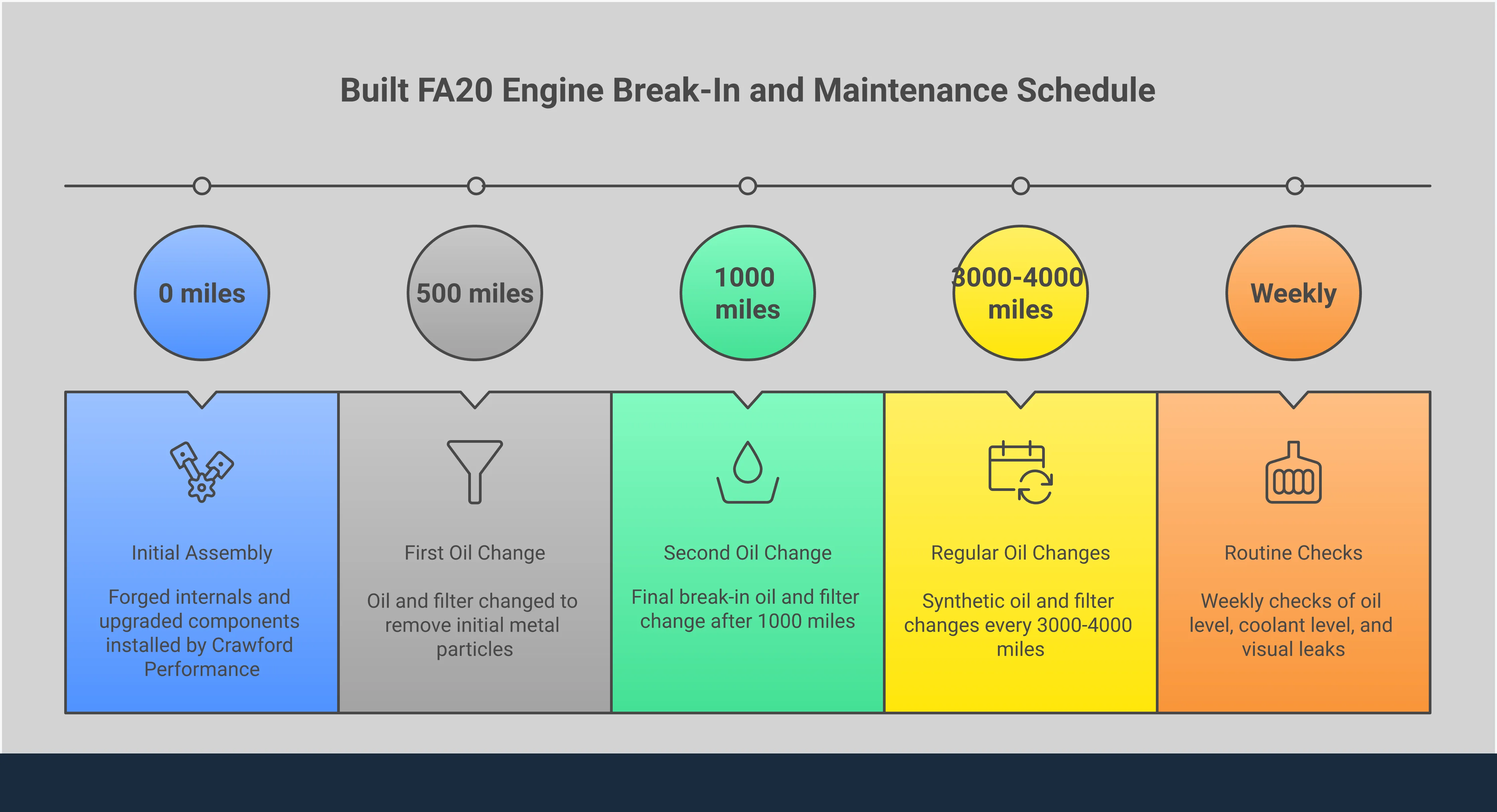
Sobald der Motor eingebaut ist, beginnt die Einfahrphase. Dies ist ein entscheidender Prozess, in dem sich die neuen Kolbenringe, Lager und andere interne Bauteile optimal aufeinander einlaufen. Fahren Sie die ersten 1.600 Kilometer schonend. Das bedeutet, die Drehzahl unter 4.000 U/min zu halten, die Drehzahl häufig zu variieren und Vollgasfahrten zu vermeiden. Lange Autobahnfahrten mit konstanter Geschwindigkeit sind ebenfalls nicht empfehlenswert. Ziel ist es, dass sich die neuen Teile gleichmäßig einlaufen. Nach dieser Phase ist ein wichtiger Öl- und Filterwechsel erforderlich, um eventuell vorhandene Metallpartikel zu entfernen. Die korrekte Einfahrprozedur ist für die langfristige Gesundheit und Zuverlässigkeit des Motors unerlässlich.
Behalten Sie Ihren neuen Motor im Auge
Ein getunter Motor braucht einen engagierten Besitzer. Nach der Einfahrphase ist es wichtig, die wichtigsten Motorparameter im Auge zu behalten, um potenzielle Probleme frühzeitig zu erkennen und zu beheben. Die Verwendung eines Cobb Accessports oder spezieller Messgeräte zur Überwachung dieser Parameter ist unerlässlich. Achten Sie besonders auf Öldruck, Öltemperatur, Kühlmitteltemperatur und das Luft-Kraftstoff-Verhältnis (AFR). Diese Werte sind die Sprache Ihres Motors und zeigen Ihnen, wie es ihm geht. Wenn Sie wissen, was für Ihre Konfiguration normal ist, können Sie Unregelmäßigkeiten frühzeitig erkennen. Diese proaktive Überwachung ist ein wesentlicher Bestandteil des Besitzes eines Hochleistungsfahrzeugs und entscheidend für den Schutz Ihres geschmiedeten FA20-Motorblocks .
Schutz Ihrer Stromversorgung: Langzeitpflege und Instandhaltung
Sie haben erheblich in die Leistung Ihres Subaru investiert, und nun liegt der Fokus auf dessen Schutz. Ein getunter FA20-Motor ist etwas ganz anderes als die Serienversion und erfordert eine sorgfältigere Wartung. Betrachten Sie es weniger als lästige Pflicht, sondern vielmehr als Partnerschaft mit Ihrem Auto. Die richtige Langzeitpflege stellt sicher, dass Ihr Motor Kilometer für Kilometer die zuverlässige Leistung erbringt, für die Sie bezahlt haben. Es geht darum, potenziellen Problemen vorzubeugen und Ihren Motor in Topform zu halten, egal ob auf der Rennstrecke oder im Gelände. Dabei geht es nicht nur darum, Regeln zu befolgen, sondern auch darum, zu verstehen, was Ihr Hochleistungsmotor zum optimalen Funktionieren benötigt. Mit einer vorausschauenden Herangehensweise können Sie das volle Potenzial Ihres Motors über Jahre hinweg genießen. Die Einfahrphase ist erst der Anfang. Wahre Langlebigkeit erreichen Sie durch konsequente und sachkundige Pflege, die den erhöhten Belastungen und Anforderungen eines modifizierten Motors gerecht wird. Das bedeutet, dass Sie die Geräusche, Gerüche und Leistungsdaten Ihres Fahrzeugs genauer als je zuvor wahrnehmen müssen. Es ist eine Verpflichtung, die sich mit jeder Zündung auszahlt.
Ihre neue Wartungscheckliste
Ihr alter Wartungsplan hat ausgedient. Ein getunter Motor arbeitet unter deutlich höherer Belastung und Hitze, was häufigere Wartung erfordert. Die wichtigste Änderung betrifft das Ölwechselintervall. Ein getunter Motor benötigt alle 5.000 bis 6.500 Kilometer frisches Öl, um die geschmiedeten Innenteile optimal zu schmieren und zu kühlen. Neben dem Öl sollten Sie regelmäßige Kontrollen durchführen. Öffnen Sie wöchentlich die Motorhaube, prüfen Sie Öl- und Kühlmittelstand und achten Sie auf Anzeichen von Lecks. Nutzen Sie diese Zeit auch, um den Zustand des Motors kontinuierlich zu überwachen und insbesondere auf Luft-Kraftstoff-Verhältnis und Ladedruck zu achten, um Abweichungen vom Normalzustand frühzeitig zu erkennen und Probleme zu vermeiden.
So erhalten Sie Ihre Garantie gültig
Die Garantie ist Ihr Sicherheitsnetz, und ihre Aufrechterhaltung ist unkompliziert, wenn Sie die Vorgaben des Herstellers befolgen. Der Prozess beginnt bereits vor dem Einbau des Motors in Ihr Auto. Sofern Sie kein erfahrener Motorenbauer sind, schreibt die Garantie mit ziemlicher Sicherheit vor, dass Montage und Einbau von einer vertrauenswürdigen Werkstatt durchgeführt werden. So wird sichergestellt, dass alle Schrauben mit dem vorgeschriebenen Drehmoment angezogen und alle Verbindungen fest sitzen. Sie müssen außerdem die vorgeschriebene Einfahrprozedur genau befolgen und die empfohlenen Öl- und Kraftstoffsorten verwenden. Schließlich ist eine professionelle Abstimmung unerlässlich. Das Auslassen eines dieser Schritte kann zum Verlust der Garantie und zum Risiko Ihrer gesamten Investition führen. Lesen Sie daher immer das Kleingedruckte und dokumentieren Sie alle Service- und Einbauarbeiten detailliert.
Bleiben Sie auf dem Laufenden: Laufende Leistungsüberprüfungen
Die Motorabstimmung ist das Betriebssystem Ihres Motors und entscheidend für Leistung und Sicherheit. Eine professionelle Abstimmung ist direkt nach dem Einbau unerlässlich, da sie dem Motorsteuergerät die sichere Steuerung der neuen Komponenten ermöglicht. Doch das ist keine einmalige Angelegenheit. Wenn Sie später weitere Leistungsteile wie einen größeren Turbolader oder neue Einspritzdüsen einbauen, ist eine erneute Abstimmung erforderlich, um diese Änderungen zu berücksichtigen. Um den Zustand Ihres Motors im Alltag stets im Blick zu behalten, installieren Sie Messgeräte, die wichtige Kennzahlen wie Öldruck, Öltemperatur und Luft-Kraftstoff-Verhältnis überwachen. Diese Messgeräte dienen als Frühwarnsystem und helfen Ihnen, Probleme frühzeitig zu erkennen . So können Sie das Fahrzeug abstellen, bevor kleinere Probleme zu schwerwiegenden Ausfällen führen.
Verwandte Artikel
Häufig gestellte Fragen
Was ist der Unterschied zwischen einem Longblock und einem Shortblock? Ein Shortblock ist die untere Hälfte Ihres Motors – er umfasst den Motorblock selbst sowie Kurbelwelle, Kolben und Pleuelstangen. Ein Longblock beinhaltet alles aus dem Shortblock plus Zylinderköpfe, Nockenwellen und Ventiltrieb, alles professionell montiert und eingestellt. Für ein so umfassendes Leistungs-Upgrade ist ein Longblock die vollständigste und zuverlässigste Lösung, da er sicherstellt, dass alle wichtigen Komponenten aufeinander abgestimmt und korrekt montiert sind.
Brauche ich wirklich einen komplett überholten Motor, wenn ich nur 400 PS anstrebe? Der serienmäßige FA20 erreicht zwar manchmal fast 400 PS, aber damit reizt man ihn bis zum Äußersten aus. Die Pleuelstangen sind die bekannte Schwachstelle, und bei dieser Leistung ist ein Ausfall sehr wahrscheinlich. Bei einem überholten Motor geht es nicht nur um höhere PS-Zahlen, sondern um zuverlässige und nachhaltige Leistung. Ein verstärkter Motorblock bietet die nötige Stabilität und die Gewissheit, dass Ihr Motor diese Leistung dauerhaft verkraftet, ohne dass ständig das Risiko eines Motorschadens besteht.
Wie wirkt sich ein getunter Motor auf die Alltagstauglichkeit meines Autos aus? Ein fachgerecht aufgebauter und abgestimmter Motor kann sich perfekt für den täglichen Gebrauch eignen. Entscheidend ist die professionelle Abstimmung, die den Motoraufbau begleitet. Ein guter Tuner sorgt dafür, dass das Auto bei niedrigen Geschwindigkeiten ruhig und reaktionsschnell fährt und gleichzeitig bei Bedarf beeindruckende Leistung abruft. Auch die Wahl des Turboladers spielt eine wichtige Rolle. Ein Setup, das auf ein reaktionsschnelles Leistungsband ausgelegt ist, fährt sich im Straßenverkehr deutlich besser als eines, das nur auf maximale Leistung im oberen Drehzahlbereich optimiert ist.
Warum ist ein Ölabscheider (AOS) für einen getunten FA20 so wichtig? Ein Ölabscheider ist unerlässlich, da Hochleistungsmotoren einen höheren Kurbelgehäusedruck erzeugen, der Ölnebel in das Ansaugsystem drücken kann. Dieses Öl verunreinigt das Kraftstoff-Luft-Gemisch, senkt die Oktanzahl des Kraftstoffs und erhöht das Risiko von Klopfen – einem schwerwiegenden Motorschaden. Ein Ölabscheider fängt diesen Ölnebel ab, trennt das Öl ab und führt es dem Motor zurück. So wird sichergestellt, dass nur saubere Luft in den Brennraum gelangt. Er ist eine unverzichtbare Sicherheitsmaßnahme für jeden getunten Motor.
Was ist das Wichtigste während der Einfahrphase? Geduld ist der Schlüssel. Die wichtigste Aufgabe in den ersten 1.600 Kilometern ist es, die Motordrehzahl kontinuierlich zu variieren, ohne den Motor stark zu belasten. Das bedeutet, Autobahnfahrten mit konstanter Drehzahl zu vermeiden und dem Drang zu widerstehen, Vollgas zu geben. Dadurch können sich die neuen Kolbenringe optimal an die Zylinderwände anpassen, was für die langfristige Kompression, Leistung und den Ölverbrauch des Motors unerlässlich ist. Ein übereiltes Einfahren kann den gesamten Motoraufbau gefährden.