

Kompressor oder Turbo: Was ist das Richtige für Ihren BRZ?
Die Entscheidung für eine Zwangsbeatmung Ihres BRZ ist mehr als nur eine Frage der PS-Zahl; sie prägt den Charakter Ihres Fahrzeugs. Die Diskussion um Kompressor oder Turbolader läuft im Kern auf eine zentrale Frage hinaus: Wie soll die Leistung aufgebracht werden? Wünschen Sie sich das direkte, lineare Ansprechverhalten eines Kompressors, perfekt für präzise Kontrolle auf der Rennstrecke oder beim Autocross? Oder sehnen Sie sich nach dem aufregenden, sich steigernden Schub eines Turboladers, der Beschleunigungsmanöver auf der Autobahn zu einem echten Erlebnis macht? Jeder dieser Wege verändert das Fahrgefühl, den Klang und die Reaktion Ihres BRZ auf Ihr Gaspedal grundlegend. Dieser Leitfaden hilft Ihnen, die passende Hardware für Ihren Fahrstil zu finden.
Wer sich schon einmal mit dem Thema Leistungssteigerung seines BRZ beschäftigt hat, kennt die unzähligen Forenbeiträge und YouTube-Videos, in denen die Frage brz supercharger vs turbo diskutiert wird. Für jeden Besitzer, der mehr als nur einfache Anbauteile sucht, ist dies eine entscheidende Entscheidung. Beide Systeme versprechen eine deutliche Leistungssteigerung, erzielen diese aber auf völlig unterschiedliche Weise. Ein Kompressor wirkt wie eine größere, stärkere Version des Serienmotors und liefert sofortige und gut dosierbare Leistung. Ein Turbolader hingegen bietet ein deutlich dramatischeres Erlebnis mit einem Drehmomentanstieg, der sich zu einem berauschenden Schub steigert. Um die richtige Wahl zu treffen, sollte man sich nicht von den Versprechungen blenden lassen, sondern die tatsächlichen Auswirkungen auf Leistung, Zuverlässigkeit und Budget berücksichtigen.
Wichtigste Erkenntnisse
- Entscheiden Sie sich für Ihre bevorzugte Leistungsabgabe: Ein Kompressor liefert Ihnen sofortige, lineare Leistung für ein reaktionsschnelles, kontrolliertes Fahrgefühl, während ein Turbolader für einen dramatischen Beschleunigungsschub sorgt, der sich mit der Drehzahl aufbaut.
- Passen Sie das Upgrade an Ihre Fahrgewohnheiten an: Kompressoren eignen sich ideal für präzises Fahren auf der Rennstrecke und berechenbares Fahren im Alltag, während Turbolader einen berauschenden Schub liefern, der perfekt für Beschleunigungen auf der Autobahn und Höchstgeschwindigkeiten auf gerader Strecke geeignet ist.
- Priorisieren Sie Zuverlässigkeit mit den passenden Komponenten: Ein erfolgreicher Umbau auf Zwangsbeatmung erfordert mehr als nur das Kit. Eine professionelle Abstimmung und ein optimiertes Kühlsystem sind unerlässliche Investitionen, um Ihren Motor zu schützen und eine sichere, konstante Leistung zu gewährleisten.
Kompressor vs. Turbo: Was ist der wirkliche Unterschied?
Wenn Sie Ihrem BRZ deutlich mehr Leistung verleihen möchten, werden Sie sich schnell mit dem Thema Zwangsbeatmung auseinandersetzen. Sowohl Kompressoren als auch Turbolader funktionieren, indem sie dem Motor mehr komprimierte Luft zuführen, als er von selbst ansaugen kann. Mehr Luft ermöglicht mehr Kraftstoff, was zu einer intensiveren Verbrennung und letztendlich zu mehr PS führt. Es ist die effektivste Methode, die Motorleistung signifikant zu steigern.
Obwohl sie dasselbe Ziel verfolgen, unterscheiden sie sich grundlegend in ihrem Weg dorthin. Dieser mechanische Unterschied beeinflusst das Fahrgefühl, die Kraftentfaltung und den Einbauprozess komplett. Bei der Wahl zwischen den beiden Systemen geht es nicht nur um die maximale PS-Zahl, sondern darum, welches Fahrerlebnis Sie sich bei jeder Fahrt wünschen. Wir erklären Ihnen die Funktionsweise beider Systeme, damit Sie den richtigen Weg für Ihr Projekt finden.
Die Wissenschaft von mehr Leistung: Luft, Kraftstoff und Zwangsbeatmung
Im Prinzip ist ein Motor eine Luftpumpe. Er saugt Luft an, mischt sie mit Kraftstoff, zündet sie zu einer kontrollierten Explosion und stößt die Abgase aus. Je mehr Luft und Kraftstoff in die Zylinder gelangen, desto größer die Explosion und desto höher die Leistung. Ein Saugmotor, wie der in Ihrem serienmäßigen BRZ, nutzt den atmosphärischen Druck, um seine Zylinder zu füllen. Aufladungssysteme – Kompressoren und Turbolader – wirken wie leistungsstarke Verdichter und pressen eine deutlich höhere Luftdichte in den Motor, als dieser es von selbst könnte. Dieses einfache Prinzip ist der Schlüssel zu einer signifikanten Leistungssteigerung aus einem kompakten Motor und verwandelt Ihren BRZ mit den richtigen Tuningteilen in ein völlig anderes Fahrzeug.
Ersatz für Verdrängung: Der moderne Ansatz
Sie kennen sicher den Spruch „Hubraum ist durch nichts zu ersetzen“, der besagt, dass mehr Leistung nur mit einem größeren Motor möglich ist. Die Zwangsbeatmung stellt diese Vorstellung auf den Kopf. Sie ermöglicht es kleineren, leichteren und effizienteren Motoren, die Leistung zu erbringen, die einst riesigen V8-Motoren vorbehalten war. Dies ist der moderne Ansatz für mehr Leistung und bietet eine elegante Möglichkeit, Ihre Leistungsziele zu erreichen. Der Clou: Sie entscheiden selbst. Ein Kompressor liefert sofortige, lineare Leistung für ein kontrolliertes, reaktionsschnelles Fahrgefühl, während ein Turbolader für einen dramatischen Beschleunigungsschub sorgt, der mit steigender Drehzahl zunimmt. Die richtige Wahl hängt ganz von Ihrem gewünschten Fahrgefühl ab, und eine professionelle Motorabstimmung ist unerlässlich, damit beide Systeme einwandfrei funktionieren.
Wie ein Kompressor Leistung liefert
Ein Kompressor ist ein riemengetriebener Luftverdichter. Er ist direkt mit der Kurbelwelle des Motors verbunden, ähnlich wie Lichtmaschine oder Servopumpe. Mit steigender Motordrehzahl treibt der Riemen die internen Komponenten des Kompressors (Zahnräder oder Verdichterräder) an, welche die Luft verdichten und direkt in den Ansaugkrümmer befördern.
Da die Drehzahl des Kompressors direkt mit der Motordrehzahl gekoppelt ist, liefert er sofort Ladedruck. Es gibt keine Verzögerung. Sobald man Gas gibt, setzt ein unmittelbarer und vorhersehbarer Leistungsschub ein, der sich gleichmäßig und linear bis zum Drehzahlbegrenzer aufbaut. Diese direkte Verbindung verleiht kompressorgeladenen Fahrzeugen ihr charakteristisches, direktes Ansprechverhalten – fast so, als würde man ein Auto mit einem deutlich größeren Saugmotor fahren.
Parasitenverlust verstehen
Diese direkte Verbindung zum Motor hat jedoch ihren Preis. Ein Kompressor benötigt einen Teil der Kurbelwellenleistung, um sich selbst zu betreiben. Dies wird als parasitärer Verlust bezeichnet. Man kann es sich wie eine Art Steuer auf die Leistungssteigerung vorstellen: Ein Teil der vom Kompressor erzeugten Leistung wird sofort verbraucht, um seine Komponenten am Laufen zu halten. Dadurch ist das System weniger effizient als ein Turbolader, der die Abgase geschickt zur Ladedruckerzeugung nutzt. Auch wenn dies zunächst wie ein Nachteil klingt, ist es der grundlegende Kompromiss für die sofortige, verzögerungsfreie Gasannahme. Man tauscht einen geringen Teil der Spitzeneffizienz gegen eine absolut vorhersehbare und unmittelbare Leistungskurve ein – ein Kompromiss, den viele Fahrer gerne eingehen, um auf der Rennstrecke oder im Straßenverkehr ein kontrollierteres Fahrgefühl zu genießen.
Wie ein Turbolader Leistung erzeugt
Ein Turbolader erreicht dasselbe Ziel, nutzt aber eine völlig andere Energiequelle: die Abgase des Motors. Das ist eine clevere Methode, Energie zurückzugewinnen, die sonst ungenutzt über den Auspuff entweichen würde. Ein Turbolader besteht aus zwei Hauptteilen, die durch eine Welle verbunden sind: einer Turbine und einem Verdichter. Heiße Abgase strömen aus dem Motor und treiben die Turbine an. Diese Rotation treibt den Verdichter auf der anderen Seite an, der Frischluft ansaugt, verdichtet und in den Motor drückt.
Dieser Prozess ist hocheffizient, aber nicht sofort. Es muss genügend Abgasdruck aufgebaut werden, damit die Turbine die effektive Drehzahl erreicht. Dies führt zu einer kurzen Verzögerung, dem sogenannten „Turboloch“. Sobald der Turbolader jedoch seine volle Drehzahl erreicht hat, kann er ein enormes Drehmoment liefern.
Riemenantrieb vs. Abgasantrieb: Der Kernunterschied
Der größte Unterschied liegt in der Energiequelle. Ein Kompressor nutzt die Rotationsenergie des Motors, um Leistung zu erzeugen, was zu geringen Leistungsverlusten führt. Ein Turbolader hingegen arbeitet mit Abgasen und ist daher energetisch effizienter. Dies bedingt ein sehr unterschiedliches Fahrverhalten. Kompressoren bieten eine sofortige, lineare und gut berechenbare Leistungsentfaltung und sind daher besonders auf der Rennstrecke beliebt. Turbolader hingegen sprechen zunächst etwas verzögert an, bevor die Leistung dann mit einem beeindruckenden Schub einsetzt.
Ein weiterer wichtiger Faktor ist die Hitze. Da Turbolader mit extrem heißen Abgasen betrieben werden, erzeugen sie viel Wärme im Motorraum. Daher sind oft zusätzliche Leistungskomponenten wie ein leistungsstärkerer Kühler oder ein Ölkühler erforderlich, um sichere Betriebstemperaturen zu gewährleisten.
Wie wird die Zwangsbeatmung das Fahrverhalten Ihres BRZ verändern?
Die Wahl zwischen Kompressor und Turbolader hängt nicht nur von der maximalen PS-Zahl ab. Entscheidend ist vielmehr, wie sich Ihr BRZ beim Gasgeben anfühlen soll. Jedes Aufladungssystem liefert die Leistung auf grundlegend andere Weise und verändert so das Fahrverhalten Ihres Wagens auf der Straße und der Rennstrecke komplett. Das eine System bietet eine gleichmäßige, berechenbare Kraftentfaltung, das andere einen aufregenden, dramatischen Schub. Diese Unterschiede zu verstehen, ist der Schlüssel zur Wahl des Upgrades, das perfekt zu Ihrem Fahrstil und Ihren Leistungszielen passt.
Das Kompressor-Gefühl: Sofortiges, lineares Ansprechverhalten
Ein Kompressor verleiht Ihrem BRZ sofortige und gleichmäßige Leistung über den gesamten Drehzahlbereich. Sobald Sie das Gaspedal berühren, spüren Sie die Reaktion – ohne Verzögerung. So entsteht eine gleichmäßige, lineare Leistungsentfaltung, die sich anfühlt, als hätten Sie gerade einen deutlich größeren und stärkeren Motor eingebaut. Dank der so berechenbaren Leistungsentfaltung ist er eine hervorragende Wahl für Rennstrecken oder Autocross, wo präzise Kontrolle beim Herausbeschleunigen aus Kurven unerlässlich ist. Wenn Sie das reaktionsschnelle Fahrverhalten Ihres serienmäßigen BRZ lieben, sich aber einfach mehr Leistung in allen Bereichen wünschen, bietet Ihnen ein Kompressor genau dieses Erlebnis, ohne den grundlegenden Charakter des Fahrzeugs zu verändern.
Das Turbo-Erlebnis: Eine Welle der Kraft
Ein Turbolader bietet ein ganz anderes Fahrgefühl. Es gibt einen kurzen Moment der Vorfreude, oft als „Turboloch“ bezeichnet, während die Abgase Druck aufbauen, um die Turbine anzutreiben. Dann setzt die Kraft mit einem berauschenden Schub ein, der einen in den Sitz drückt. Dieser dramatische Beschleunigungsschub ist unglaublich befriedigend, besonders auf der Autobahn und bei hohen Geschwindigkeiten. Moderne Turbolader haben zwar das Turboloch deutlich reduziert, aber gerade dieser charakteristische Leistungsaufbau und die anschließende Entfaltung der Kraft sind es, die viele Fahrer so süchtig machen. Sie verleihen dem Fahrerlebnis eine zusätzliche Dimension der Spannung und Dramatik, die nur turbogeladene Tuningteile bieten.
Wie viel Leistung kann man gefahrlos hinzufügen?
Bei einem serienmäßigen FA20- oder FA24-Motor können beide Systeme eine deutliche Leistungssteigerung erzielen. Ein Kompressor gilt im Allgemeinen als sicheres Upgrade bis zu etwa 300 PS an den Rädern, während ein Turbolader oft etwas weiter, bis zu etwa 325 PS an den Rädern, genutzt werden kann. Diese Werte sind jedoch nicht absolut. Der Schlüssel zu zuverlässiger Leistung liegt in der Qualität des Kits und vor allem in der Abstimmung. Eine professionelle Abstimmung gewährleistet, dass Ihr Motor mit dem zusätzlichen Ladedruck sicher und effizient läuft. Egal für welchen Weg Sie sich entscheiden, die Investition in professionelle Motorabstimmung ist entscheidend, um Ihren Motor zu schützen und das volle Potenzial Ihres neuen Setups auszuschöpfen.
Die Rolle des Ladeluftkühlers bei sicheren Leistungssteigerungen
Wenn Luft komprimiert wird, erhitzt sie sich. Dies ist ein physikalisches Grundgesetz und eine große Herausforderung für jedes aufgeladene System. Heiße Luft ist weniger dicht und enthält daher weniger Sauerstoff für die Verbrennung. Das begrenzt die Leistung und erhöht das Risiko von Motorklopfen. Hier kommt der Ladeluftkühler ins Spiel. Seine Aufgabe ist es, die komprimierte Ansaugluft nach dem Verlassen des Kompressors oder Turboladers und vor dem Eintritt in den Motor abzukühlen. Durch die Senkung der Ansauglufttemperatur ermöglicht der Ladeluftkühler eine dichtere, sauerstoffreichere Ladung. Das führt zu zuverlässigerer Leistung und einem gesünderen Motor. Beide Systeme profitieren davon, aber besonders wichtig ist dies für Turbolader, die mit heißen Abgasen arbeiten und dem System erhebliche Wärme zuführen. Ein hochwertiges Kit enthält daher immer einen Ladeluftkühler als Teil eines kompletten Systems von Performance-Teilen, die optimal aufeinander abgestimmt sind und sicher zusammenarbeiten.
Erwartungsmanagement: Reale Leistungssteigerungen
Auch wenn die angegebenen PS-Zahlen verlockend sind, ist die wahre Messlatte für ein gelungenes Tuning-Projekt die zuverlässige und nutzbare Leistung. Die online veröffentlichten Zahlen sind oft nur ein Ausgangspunkt. Die endgültige Leistung hängt maßgeblich von der Qualität der Komponenten, dem Zustand Ihres Serienmotors und – am wichtigsten – der Präzision der Abstimmung ab. Eine schlecht durchgeführte Abstimmung kann selbst die beste Hardware zu einem Risiko für Ihren Motor machen. Deshalb ist die Investition in professionelle Motorabstimmung nicht nur empfehlenswert, sondern unerlässlich, um Ihre Investition zu schützen und sicherzustellen, dass Ihr BRZ über Jahre hinweg zuverlässig läuft. Denken Sie daran: Ziel ist nicht nur, einmalig eine hohe Zahl auf dem Leistungsprüfstand zu erreichen, sondern ein Auto zu schaffen, das bei jeder Zündung konstant und sicher funktioniert.
Wie wird sich Ihr BRZ anhören und anfühlen?
Neben den reinen Leistungsdaten erzeugen Klang und Fahrgefühl jedes Systems ein unverwechselbares Sinneserlebnis. Kompressoren sind bekannt für ihr charakteristisches, hohes Pfeifen, das mit der Motordrehzahl ansteigt – ein sofort erkennbarer Klang. Turbolader hingegen erzeugen ein befriedigendes „Wusch“, wenn das Blow-off-Ventil den Druck ablässt, und ein dezentes Pfeifen, wenn die Turbine hochdreht. Letztendlich ist das Fahrgefühl der größte Unterschied. Bevorzugen Sie den sofortigen, permanenten Schub eines Kompressors, der das natürliche Ansprechverhalten des Fahrzeugs verbessert? Oder fasziniert Sie der aufregende, sich aufbauende Schub eines Turboladers, der einen dramatischen Geschwindigkeitsschub liefert?
Ein realistischer Blick auf Installation und Kosten
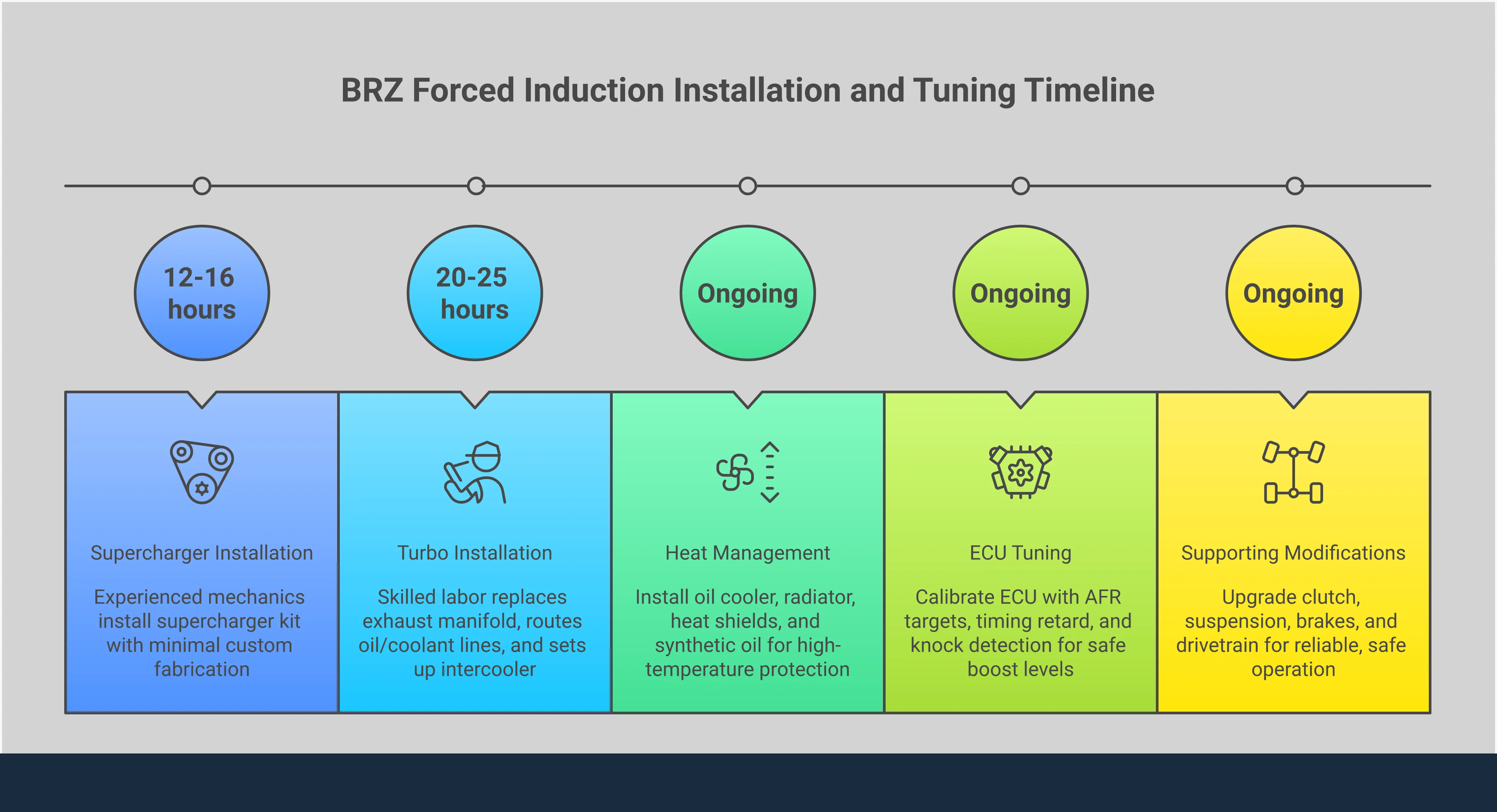
Die Entscheidung zwischen Kompressor und Turbolader hängt von mehr ab als nur vom Anschaffungspreis des Kits. Die Gesamtinvestition umfasst den Installationsaufwand, die professionelle Abstimmung und die notwendigen Modifikationen, um die zusätzliche Leistung sicher zu beherrschen. Schauen wir uns die tatsächlichen Kosten und den Aufwand an, die für die Nachrüstung Ihres BRZ mit Zwangsbeatmung anfallen.
Was beinhaltet der Einbau eines Kompressors?
Wenn Sie den Einbau eines Kompressors in Erwägung ziehen, gelten Kompressor-Kits allgemein als die unkompliziertere Option. Sie sind in der Regel weniger komplex und empfindlich als Turbosysteme, was einen reibungsloseren Einbau ermöglicht – egal ob Sie ein erfahrener Heimwerker sind oder einen Fachmann beauftragen. Da das System riemengetrieben und in sich geschlossen ist, entfällt direkt nach dem Einbau die aufwendige Verrohrung und Wärmeableitung. Diese Einfachheit führt oft zu weniger Arbeitsstunden und einem besser planbaren Einbau.
Was beinhaltet der Einbau eines Turboladers?
Turbolader-Kits erfordern hingegen ein hohes Maß an Präzision bei der Installation. Die Komplexität ergibt sich aus der Verlegung der Abgasrohre, der Anordnung der Öl- und Kühlmittelleitungen sowie dem Umgang mit der enormen Hitzeentwicklung des Turboladers. Eine fehlerhafte Installation kann zu ungleichmäßiger Leistungsentfaltung oder sogar gefährlichen Leistungsspitzen führen. Bei Projekten mit einer angestrebten Leistung von über 325 PS sind zusätzliche Kühlkomponenten zum Schutz des Motors erforderlich, was die Komplexität und die Kosten des Projekts weiter erhöht.
Hauptkomponenten: Abgasanlage, Ölleitungen und Kühlung
Der wesentliche Unterschied im Installationsaufwand liegt in drei kritischen Systemen: Abgasanlage, Ölleitungen und Kühlung. Für den Einbau eines Turboladers muss der Abgaskrümmer komplett umgeleitet werden, um die heißen Abgase der Turbine zuzuführen – ein erheblicher Arbeitsaufwand. Außerdem müssen Öl- und Kühlmittelleitungen des Motors angezapft werden, um den Turbolader direkt zu schmieren und zu betreiben. Diese komplexe Verrohrung birgt zusätzliche potenzielle Fehlerquellen, wenn sie nicht präzise ausgeführt wird. Im Gegensatz dazu sind die meisten Kompressor-Kits in sich geschlossene Einheiten, die mit minimalen Eingriffen in die anderen Systeme am Motor befestigt werden. Dies ermöglicht einen deutlich einfacheren und direkteren Einbau.
Neben der Verrohrung ist das Wärmemanagement die größte Herausforderung beim Turbo-Umbau. Da der Turbolader durch extrem heiße Abgase angetrieben wird, strahlt er enorme Hitze in den Motorraum ab. Diese Hitze kann mit der Zeit andere Bauteile beschädigen und das serienmäßige Kühlsystem stark belasten. Um einen Turbolader sicher und zuverlässig zu betreiben, insbesondere bei angestrebten höheren Leistungsstufen, ist die Investition in leistungsstarke Komponenten wie einen optimierten Kühler oder einen externen Ölkühler nicht nur empfehlenswert, sondern unerlässlich, um die Gesundheit des Motors zu schützen und eine gleichbleibende Leistung zu gewährleisten.
Preisvergleich von Kompressor- und Turbo-Kits
Beim Kauf eines Kompressor- oder Turbo-Kits für den BRZ werden Sie feststellen, dass die Preise zwischen einigen Tausend und über 7.000 Dollar liegen können. Der Preis hängt von der Marke, dem Umfang des Kits und dem Leistungspotenzial ab. Auch wenn ein Kit auf den ersten Blick günstiger erscheint, ist es entscheidend, auf den Lieferumfang zu achten. Ein teureres, umfassenderes Kit kann Ihnen langfristig Geld sparen, da es Komponenten enthält, die Sie bei einem günstigeren Kit separat erwerben müssten.
Vergessen Sie nicht, ein Budget für unterstützende Mods einzuplanen.
Das Wichtigste zuerst: Das Kit ist nur der Anfang. Als Faustregel gilt: Planen Sie für das gesamte Projekt etwa das Doppelte des Kit-Preises ein. Darin enthalten sind das Kit selbst, der professionelle Einbau und wichtige Motortuning-Leistungen. Auch die notwendigen Modifikationen sind inbegriffen – sie sind unerlässlich für die Zuverlässigkeit und Sicherheit Ihres Motors. Dazu gehören eine verstärkte Kupplung, die das höhere Drehmoment bewältigt, ein leistungsstärkeres Kraftstoffsystem für eine ausreichende Kraftstoffversorgung, ein verbessertes Kühlsystem zur Wärmeableitung sowie optimierte Bremsen und ein verbessertes Fahrwerk zur Kontrolle der zusätzlichen Leistung.
Hardware-Aufschlüsselung: Gewicht und Komplexität
Kommen wir nun zur eigentlichen Hardware. Ein Turboladersystem ist aufgrund seiner Abhängigkeit vom Abgassystem deutlich komplexer. Der Einbau erfordert die sorgfältige Verlegung neuer Abgasrohre zum und vom Turbolader sowie separater Öl- und Kühlmittelleitungen, um die Schmierung und Kühlung des Aggregats zu gewährleisten. Da Turbolader mit extrem heißen Abgasen betrieben werden, erzeugen sie eine erhebliche Wärmemenge im Motorraum. Dies bedeutet häufig, dass zusätzliche Leistungskomponenten wie ein leistungsstärkerer Kühler oder ein Ölkühler benötigt werden, um sichere Betriebstemperaturen zu gewährleisten. Dadurch wird der Einbauprozess zusätzlich erschwert.
Im Gegensatz dazu ist ein Kompressor in der Regel ein in sich geschlossenes System. Er wird direkt am Motor befestigt und über einen Riemen angetrieben, was die Verrohrung vereinfacht und die Anzahl potenzieller Fehlerquellen reduziert. Zwar benötigt er zum Betrieb eine geringe Menge Leistung direkt vom Motor – ein Phänomen, das als parasitäre Verluste bekannt ist –, doch gerade diese direkte Verbindung macht die Installation unkomplizierter. Man muss weder die extreme Hitze noch die komplexe Abgasführung eines Turboladers bewältigen, was den Einbau sowohl für professionelle Monteure als auch für erfahrene Heimwerker zu einem einfacheren Projekt macht.
Welche Option ist zuverlässiger für Ihren BRZ?
Wenn Sie Ihren BRZ mit einer Zwangsbeatmung ausstatten, wird der Motor stärker beansprucht. Daher ist es verständlich, sich Gedanken über die Zuverlässigkeit zu machen. Fakt ist: Sowohl Kompressoren als auch Turbolader können zuverlässige Ergänzungen für Ihr Auto sein, vorausgesetzt, das System ist fachgerecht installiert, optimal abgestimmt und mit den passenden Modifikationen ausgestattet. Zuverlässigkeit hängt nicht nur vom gewählten Kit ab, sondern auch vom Aufbau und der Wartung des gesamten Systems.
Der wichtigste Faktor für die Langlebigkeit eines Motors ist der Umgang mit der zusätzlichen Belastung und vor allem der zusätzlichen Hitze. Ein durchdachter Aufbau, der die Kühlung priorisiert und hochwertige Komponenten verwendet, ist einem System, bei dem an der falschen Stelle gespart wurde, deutlich überlegen. Man kann es sich so vorstellen: Der Kompressor oder Turbolader ist nur ein Teil des Ganzen. Die übrigen Komponenten – wie Ölkühler, Kühler und Kraftstoffsystem – sorgen dafür, dass Ihr Motor langfristig gesund bleibt. Eine professionelle Motorabstimmung ist ebenfalls unerlässlich, um sichere Parameter einzustellen und Ihre Investition zu schützen. Letztendlich entscheidet Ihr Engagement für die ordnungsgemäße Wartung und das Wärmemanagement darüber, wie zuverlässig Ihr aufgeladener BRZ wirklich ist.
Zuverlässigkeit des Kompressors und Motorbelastung
Kompressoren gelten beim BRZ als sehr zuverlässige Option. Da sie direkt über einen Riemen von der Kurbelwelle des Motors angetrieben werden, ist ihre Funktionsweise mechanisch unkompliziert. Diese direkte Verbindung sorgt für einen sofortigen Ladedruck, der linear mit der Drehzahl ansteigt und so eine gleichmäßige und vorhersehbare Belastung des Motors erzeugt. Diese sanfte Leistungsentfaltung ist für den Motor in der Regel schonender und einfacher abzustimmen, wodurch das Risiko plötzlicher Spannungsspitzen, die interne Bauteile beschädigen könnten, reduziert wird.
Da Kompressoren die Luft ohne heiße Abgase verdichten, erzeugen sie im Vergleich zu Turboladern weniger Wärme im Motorraum. Dies kann die Lebensdauer umliegender Bauteile wie Schläuche und Kabel verlängern. Zwar erhöhen sie auch die Ansaugtemperaturen und die Gesamttemperatur des Motors, der Effekt ist jedoch in der Regel deutlich geringer. Für viele Fahrer machen diese einfache Konstruktion und die überschaubare Wärmeentwicklung den Kompressor zu einer zuverlässigen Wahl für den Alltag und sportliche Wochenendausflüge.
Lebensdauer und Wartung des Turboladers
Die Zuverlässigkeit eines Turboladers hängt direkt von der Qualität des Einbaus und der zugehörigen Komponenten ab. Turbolader erzeugen erhebliche Hitze, da sie von extrem heißen Abgasen angetrieben werden. Diese Hitze stellt die größte Herausforderung für die langfristige Gesundheit des Motors dar. Werden die hohen Temperaturen nicht korrekt gehandhabt, kann dies den Ölabbau beschleunigen und zu vorzeitigem Verschleiß sowohl des Turboladers als auch des Motors führen. Daher ist ein Turbolader-Setup mehr als nur der Turbolader selbst; es ist ein komplettes System.
Bei Umbauten mit dem Ziel höherer PS-Zahlen wird der Bedarf an robusten, unterstützenden Modifikationen noch wichtiger. Die Langlebigkeit hängt von der Investition in hochwertige Performance-Teile ab, die der thermischen Belastung standhalten. Mit der richtigen Abstimmung, ausreichender Kühlung und sorgfältiger Wartung kann ein turbogeladener BRZ genauso zuverlässig sein wie ein kompressorgeladener. Entscheidend ist, die Wärmeentwicklung von Anfang an zu berücksichtigen und die Kühlung niemals zu vernachlässigen.
Für einen kühlen Kopf sorgen: Wichtiges zum Wärmemanagement
Hitze ist der größte Feind jedes Hochleistungsmotors, insbesondere nach dem Einbau einer Zwangsbeatmung. Sowohl Kompressoren als auch Turbolader erzeugen zusätzliche Wärme, wobei Turbolader aufgrund ihrer Abhängigkeit von Abgasen deutlich heißer werden. Um Ihren Motor zu schützen, ist die Aufrüstung des Kühlsystems unerlässlich. Ein überlastetes Serienkühlsystem ist einer der schnellsten Wege zu einem katastrophalen Motorschaden.
Als erste Verteidigungslinie sollte ein Hochleistungsölkühler dienen. Er hält das Öl auf einer stabilen Temperatur und gewährleistet so die optimale Schmierung der wichtigen Motorkomponenten auch unter Belastung. Zusätzlich empfiehlt sich ein leistungsstärkerer Kühler, um die Wärmeableitung des Systems insgesamt zu verbessern. Diese beiden Komponenten arbeiten zusammen, um ein stabiles thermisches Umfeld zu schaffen, in dem Ihr Motor zuverlässig läuft – egal ob im Stau oder auf der Rennstrecke.
Was Sie bei der langfristigen Wartung erwarten können
Mehr Leistung bedeutet mehr Verantwortung. Ihr BRZ benötigt regelmäßigere und sorgfältigere Wartung, um in Topform zu bleiben. Die wichtigste Änderung betrifft die häufigeren Ölwechsel. Planen Sie einen Ölwechsel alle 5.000 Kilometer (3.000 Meilen) mit einem hochwertigen, vollsynthetischen Öl ein, das höheren Temperaturen standhält. Dies ist entscheidend für den Schutz Ihres Motors und des Turboladers.
Neben dem Öl sollten Sie regelmäßig Ihre Zündkerzen prüfen, da diese unter Volllast schneller verschleißen können. Es empfiehlt sich außerdem, regelmäßig alle Flüssigkeiten, Riemen und Schläuche zu kontrollieren, um mögliche Probleme frühzeitig zu erkennen. Ein konsequenter Wartungsplan ist die beste Vorsorge für ein getuntes Fahrzeug. Wenn Sie diese einfachen Aufgaben nicht vernachlässigen, können Sie die zusätzliche Leistung jahrelang unbesorgt genießen.
Gängige Mythen über die Zwangsbeatmung beim BRZ
Die Nachrüstung Ihres BRZ mit einem Turbolader ist ein bedeutendes Upgrade, das von vielen Meinungen und Fehlinformationen umgeben ist. Wir räumen mit einigen der gängigsten Mythen auf. Wenn Sie die Fakten hinter den Gerüchten kennen, können Sie eine fundierte Entscheidung für Ihr Auto und Ihre Fahrziele treffen. Von der Leistungsentfaltung bis zum Zustand des Motors – die Fakten zu kennen, ist der erste Schritt zu einem erfolgreichen Umbau.
Mythen über Leistungsentfaltung und Turboloch
Ein weit verbreiteter Irrglaube ist, dass Turbolader immer leistungsstärker als Kompressoren sind. Bei einem Serienmotor können beide Systeme eine ähnliche Spitzenleistung erzielen. Der eigentliche Unterschied liegt in der Leistungsentfaltung. Ein Kompressor liefert ein sofortiges, lineares Drehmoment, das sich anfühlt, als hätte man einen deutlich größeren Motor eingebaut. Dieses sanfte, vorhersehbare Ansprechverhalten ist ideal für die Rennstrecke, wo präzise Gaspedalsteuerung gefragt ist.
Ein Turbolader hingegen bietet potenziell höhere Spitzenleistung, hat aber ein Turboloch und ist komplexer. Die Annahme, dass eines der beiden Systeme grundsätzlich „besser“ sei, ist ein Mythos; sie bieten lediglich unterschiedliche Fahrerlebnisse. Ihre Wahl hängt davon ab, ob Sie eine sofortige, gleichmäßige Leistungsentfaltung oder einen beeindruckenden Leistungsschub im oberen Drehzahlbereich bevorzugen.
Mythen über eine „einfache“ Wochenendinstallation
Viele glauben, der Einbau eines Turboladers oder Kompressors sei ein einfaches Wochenendprojekt. Das ist ein Trugschluss. Zwar werden manche Kits als unkompliziert beworben, doch beides sind aufwendige Installationen, die fundierte mechanische Kenntnisse erfordern. Kompressor-Kits gelten oft als etwas einfacher zu installieren, da ihre Verrohrung weniger komplex ist als die Abgas- und Ansaugführung eines Turboladersystems.
Beide Vorgehensweisen erfordern jedoch Präzision und ein tiefes Verständnis Ihres Fahrzeugs. Eine unsachgemäße Installation kann zu Leistungseinbußen oder sogar Motorschäden führen. Nach dem Einbau der Hardware sind professionelle Motorabstimmungsdienste unerlässlich, um einen sicheren und effektiven Betrieb des Systems zu gewährleisten.
Mythen über Heizung und Kühlung
Einer der gefährlichsten Irrtümer ist die Unterschätzung der durch Zwangsbeatmung erzeugten Hitze. Tatsächlich erzeugen beide Systeme enorme Mengen an zusätzlicher Wärme, für die das serienmäßige Kühlsystem nicht ausgelegt ist. Turbolader werden tendenziell heißer, da sie von heißen Abgasen angetrieben werden, aber auch Kompressoren erhöhen die Ansaugtemperaturen deutlich.
Dies zu ignorieren, ist ein sicheres Rezept für Probleme. Ein verbesserter Ölkühler und ein Hochleistungskühler sind keine optionalen Empfehlungen, sondern zwingend notwendige Modifikationen, um Ihren Motor vor Überhitzung und vorzeitigem Verschleiß zu schützen. Ein optimales Wärmemanagement ist ein entscheidender Faktor für den zuverlässigen Betrieb eines aufgeladenen Motors und sichert Ihnen so eine lange Lebensdauer Ihrer Investition.
Mythen über die Leistungsgrenzen des Serienmotors Ihres BRZ
Viele fragen sich, warum Subaru den BRZ nicht ab Werk mit Turbo angeboten hat. Es hält sich hartnäckig das Gerücht, der Motor sei dafür nicht ausgelegt, doch die Wahrheit liegt in der Konstruktionsphilosophie. Der BRZ wurde für außergewöhnliche Ausgewogenheit und agiles Fahrverhalten entwickelt, und ein werkseitiger Turbo hätte Gewicht und Komplexität erhöht und seinen Charakter grundlegend verändert. Der serienmäßige Antriebsstrang ist für eine zuverlässige Leistung von rund 200 PS ausgelegt.
Mit einer Zwangsbeatmung und einer Leistung von über 300 PS überschreiten Sie die ursprünglichen Konstruktionsgrenzen. Bei solchen Hochleistungsmotoren müssen Sie die internen Bauteile wie Kolben und Pleuelstangen verstärken, um die Zuverlässigkeit zu gewährleisten. Ihr Motor kann die Leistung verkraften, aber nur, wenn er entsprechend abgesichert ist.
Mythos: Kompressoren sind die beste Wahl für den Rennstreckeneinsatz
Dieser Mythos ist aus gutem Grund weit verbreitet: Kompressoren sind auf der Rennstrecke fantastisch. Ihr größter Vorteil ist die sofortige, lineare Leistungsentfaltung , die für berechenbare Kontrolle genau dann sorgt, wenn man sie braucht, insbesondere beim Herausbeschleunigen aus engen Kurven. Es gibt kein Turboloch oder plötzlichen Leistungsschub, der die Fahrzeugbalance stören könnte. Deshalb bevorzugen viele Fahrer sie für Autocross und anspruchsvolle Rennstrecken. Sie als die ultimative „Bestwahl“ zu bezeichnen, ist jedoch nicht ganz korrekt. Ein modernes Turbo-Setup mit minimalem Turboloch kann genauso effektiv sein, insbesondere auf Strecken mit langen Geraden, wo die hohe Leistung des Turbos im oberen Drehzahlbereich einen entscheidenden Vorteil bieten kann. Die beste Wahl hängt oft von der spezifischen Streckenführung und, noch wichtiger, vom persönlichen Fahrstil ab.
Über die Grundlagen hinaus: Die umfassendere Welt der Zwangsbeatmung
Die Frage, ob ein Kompressor oder ein Turbolader die richtige Wahl für Ihren BRZ-Umbau ist, steht zwar im Mittelpunkt, ist aber Teil einer viel umfassenderen Geschichte automobiler Innovationen. Das Prinzip, Luft in einen Motor zu pressen, um mehr Leistung zu erzeugen, existiert seit über einem Jahrhundert und hat die Performance in allen Bereichen – von Flugzeugen bis hin zu Rennwagen – vorangetrieben. Dieses breitere Verständnis hilft Ihnen, die Technologie moderner Performance-Teile besser zu verstehen und nachzuvollziehen, wie Ingenieure die Leistungsentfaltung perfektioniert haben. Von frühen mechanischen Kompressoren bis hin zu den heutigen hochentwickelten Hybridsystemen war das Ziel immer dasselbe: mit weniger Aufwand mehr zu erreichen und so ein aufregenderes und effizienteres Fahrerlebnis zu schaffen.
Die Entwicklung der Zwangsinduktion: Eine kurze Geschichte
Die Grundidee der Zwangsbeatmung ist einfach: Die Leistung eines Motors ist durch die Menge an Luft begrenzt, die er ansaugen kann. Sowohl Kompressoren als auch Turbolader lösen dieses Problem, indem sie als Verdichter fungieren und mehr Luft in die Zylinder pressen, als der Motor auf natürliche Weise ansaugen könnte. Mit mehr Luft kann mehr Kraftstoff verbrannt werden, was zu einem kraftvolleren Verbrennungstakt und einer deutlichen Leistungssteigerung führt. Dieses Prinzip wurde Anfang des 20. Jahrhunderts erstmals bei Flugzeugmotoren angewendet, um die dünne Luft in großen Höhen auszugleichen, bevor es schließlich auch in der Automobilwelt Einzug hielt und unsere Erwartungen an die Leistung nachhaltig veränderte.
Warum Turbos den modernen Markt dominieren
Wirft man einen Blick unter die Motorhaube der meisten modernen Sportwagen, findet man mit hoher Wahrscheinlichkeit einen Turbolader. Hersteller setzen überwiegend auf Turbolader, und zwar aus einem entscheidenden Grund: Effizienz. Anders als ein Kompressor, der seine Kraft von der Kurbelwelle des Motors bezieht, nutzt ein Turbolader die Abwärme des Abgasstroms. Dadurch können Automobilhersteller kleinere, leichtere Motoren verwenden, die beeindruckende Leistung erbringen und gleichzeitig strenge Kraftstoffverbrauchs- und Emissionsnormen erfüllen. Subaru blickt auf eine lange Tradition mit dieser Technologie zurück und hat seinen Ruf als Performance-Hersteller mit den Turbomotoren legendärer Modelle wie dem WRX und STI begründet. Das Unternehmen beweist damit, dass man keinen riesigen Motor braucht, um begeisternde Fahrleistungen zu erzielen.
Fortschrittliche Systeme: Doppelladung und E-Turbos
Die Suche nach dem perfekten Leistungsband hat zu faszinierenden Innovationen geführt. Eine der komplexesten ist die Twin-Charging-Technologie, ein System mit Kompressor und Turbolader. Der Kompressor sorgt für sofortigen Ladedruck bei niedrigen Drehzahlen, und mit steigender Drehzahl übernimmt der Turbolader und liefert kraftvollen Schub im oberen Drehzahlbereich. Obwohl selten, stellt diese Technologie den ultimativen Versuch dar, das Turboloch zu eliminieren. In jüngster Zeit sind elektrische Turbolader, sogenannte E-Turbos, auf den Markt gekommen. Diese Systeme nutzen einen kleinen Elektromotor, um den Verdichter sofort anzutreiben und so ein unmittelbares Ansprechverhalten aus dem Stand zu ermöglichen, bevor die Abgase die Leistungsentfaltung übernehmen. Sie geben einen Einblick in die Zukunft hochreaktiver und effizienter Leistung.
Die Wahl der Profis: Ein Blick auf den modernen Motorsport
Im professionellen Rennsport wird die Wahl des Aufladungssystems ausschließlich durch die Anforderungen des jeweiligen Sports bestimmt. Dragster-Fahrer beispielsweise setzen oft auf massive Kompressoren, um die explosive, sofortige Leistung für einen perfekten Start zu erzielen. Rallye- und Langstreckenrennen hingegen nutzen fortschrittliche Turboladertechnologie. Moderne Rallyeautos verwenden ausgeklügelte Anti-Lag-Systeme, um den Turbolader auch beim Gaswegnehmen auf Drehzahl zu halten und so in engen Kurven sofortige Kraftentfaltung zu gewährleisten. Diese Präzision erfordert eine fachmännische Kalibrierung. Deshalb sind professionelle Motortuning-Dienstleistungen unerlässlich, um das volle Wettbewerbspotenzial eines Fahrzeugs auf und neben der Rennstrecke auszuschöpfen.
Die besten Kompressor- und Turbo-Kits für Ihren BRZ
Sobald Sie sich zwischen einem Kompressor und einem Turbolader entschieden haben, geht es im nächsten Schritt um die Auswahl eines passenden Kits. Der Markt bietet zahlreiche Optionen, doch nicht alle sind gleichwertig. Ein Qualitätskit einer renommierten Marke enthält gut konstruierte, passgenaue und langlebige Komponenten. Wichtig ist auch der Lieferumfang. Manche Kits sind umfangreicher als andere und beinhalten alles von Einspritzdüsen und Kraftstoffpumpen bis hin zu Ladeluftkühlern. Gründliche Recherche im Vorfeld erspart Ihnen Ärger bei der Installation und stellt sicher, dass Sie die gewünschte Leistung erhalten.
Unsere Top-Empfehlungen für BRZ-Kompressor-Kits
Wenn Sie das reaktionsschnelle Fahrgefühl Ihres BRZ mit Saugmotor lieben, aber noch mehr Leistung wünschen, ist ein Kompressor die Lösung. Er liefert sofortige, gleichmäßige Kraftentfaltung, die sich wie eine deutlich stärkere Version des Serienmotors anfühlt. Das macht ihn zur idealen Wahl für die Rennstrecke, wo präzise Gaspedalsteuerung entscheidend ist, um Kurven schnell und sauber zu verlassen.
Es gibt zwei Haupttypen von Kompressoren. Roots-Kompressoren liefern sofort nach dem Anfahren ein starkes Drehmoment und eignen sich daher hervorragend für die spontane Beschleunigung bei niedrigen Geschwindigkeiten. Radialkompressoren hingegen bauen die Leistung linear mit steigender Motordrehzahl auf. Dadurch entsteht ein gleichmäßiges, vorhersehbares Leistungsband, das sich bis zum Drehzahlbegrenzer unglaublich ausgewogen und kontrolliert anfühlt.
Die besten Kompressor- und Turbo-Kits für Ihren BRZ
Sobald Sie sich zwischen einem Kompressor und einem Turbolader entschieden haben, geht es im nächsten Schritt um die Auswahl eines passenden Kits. Der Markt bietet zahlreiche Optionen, doch nicht alle sind gleichwertig. Ein Qualitätskit einer renommierten Marke enthält gut konstruierte, passgenaue und langlebige Komponenten. Wichtig ist auch der Lieferumfang. Manche Kits sind umfangreicher als andere und beinhalten alles von Einspritzdüsen und Kraftstoffpumpen bis hin zu Ladeluftkühlern. Gründliche Recherche im Vorfeld erspart Ihnen Ärger bei der Installation und stellt sicher, dass Sie die gewünschte Leistung erhalten.
Unsere Top-Empfehlungen für BRZ-Kompressor-Kits
Wenn Sie das reaktionsschnelle Fahrgefühl Ihres BRZ mit Saugmotor lieben, aber noch mehr Leistung wünschen, ist ein Kompressor die Lösung. Er liefert sofortige, gleichmäßige Kraftentfaltung, die sich wie eine deutlich stärkere Version des Serienmotors anfühlt. Das macht ihn zur idealen Wahl für die Rennstrecke, wo präzise Gaspedalsteuerung entscheidend ist, um Kurven schnell und sauber zu verlassen.
Es gibt zwei Haupttypen von Kompressoren. Roots-Kompressoren liefern sofort nach dem Anfahren ein starkes Drehmoment und eignen sich daher hervorragend für die spontane Beschleunigung bei niedrigen Geschwindigkeiten. Radialkompressoren hingegen bauen die Leistung linear mit steigender Motordrehzahl auf. Dadurch entsteht ein gleichmäßiges, vorhersehbares Leistungsband, das sich bis zum Drehzahlbegrenzer unglaublich ausgewogen und kontrolliert anfühlt.
Unsere Top-Empfehlungen für BRZ-Turbokits
Für alle, die sich nach einem dramatischen Beschleunigungsschub sehnen, bietet ein Turbolader ein unvergleichliches Erlebnis. Nach einem kurzen Moment des „Turbolochs“, während das System Druck aufbaut, trifft Sie eine gewaltige Kraftwelle, die Sie in den Sitz drückt. Das macht die Turboaufladung zu einer beliebten Wahl für Autobahnfahrten und hohe Geschwindigkeiten auf gerader Strecke, wo dieser plötzliche Drehmomentschub ungemein befriedigend ist.
Turbolader sind zwar sehr effizient in der Leistungserzeugung, erzeugen aber auch erhebliche Wärme. Daher sind zusätzliche Kühlmaßnahmen wie ein größerer Kühler oder ein Ölkühler erforderlich, um die Motortemperaturen im optimalen Bereich zu halten. Im Gegenzug bietet der Motor ein enormes Tuningpotenzial und das charakteristische, kraftvolle Fahrgefühl.
Warum ein Crawford Performance Kit wählen?
Egal welchen Weg Sie wählen, denken Sie daran, dass das Kit nur der Anfang ist. Ein sicherer und zuverlässiger Umbau mit Zwangsbeatmung erfordert einen ganzheitlichen Ansatz. Als Faustregel gilt: Planen Sie etwa das Doppelte der Kit-Kosten für den professionellen Einbau, ergänzende Modifikationen und eine individuelle Abstimmung ein. Der wichtigste Schritt ist die Abstimmung. Eine im Kit enthaltene generische „Basiskennlinie“ dient lediglich dazu, das Auto fahrbereit zu machen, damit Sie es für eine professionelle Motorabstimmung zu einem Fachmann fahren können. Dieser Schritt gewährleistet einen sicheren Motorlauf und maximiert das Potenzial Ihrer neuen Hardware. Ein erfolgreicher Umbau basiert auf einem kompletten System hochwertiger Performance-Teile, die nahtlos zusammenarbeiten.
Die beste Wahl für Rennstrecke oder Autocross
Für alle, die ihren BRZ auf der Rennstrecke oder bei Autocross-Veranstaltungen bis ans Limit treiben, ist ein Kompressor oft die beste Wahl. Auf der Rennstrecke ist Vorhersehbarkeit entscheidend. Die sofortige Leistungsentfaltung eines Kompressors ermöglicht eine präzise Gaspedalsteuerung beim Herausbeschleunigen aus Kurven, wodurch die Traktion optimiert und die Beschleunigung schneller wiederhergestellt werden kann. Viele Rennfahrer werden bestätigen, dass diese verzögerungsfreie, sofortige Leistungsentfaltung im Wettbewerb einfach besser ist. Der verzögerte Leistungsschub eines Turboladers kann die Fahrzeugbalance in der Kurve stören und die Kontrolle erschweren. Professionelle Motorabstimmung ist unerlässlich, um dieses Setup optimal zu nutzen und eine zuverlässige Leistungsentfaltung Runde für Runde zu gewährleisten.
Wie wird der Kraftstoffverbrauch beeinflusst?
Eines ist klar: Jede Form der Zwangsbeatmung führt mit ziemlicher Sicherheit zu einem höheren Kraftstoffverbrauch. Mehr Leistung bedeutet mehr Kraftstoffbedarf. Die Auswirkungen können jedoch variieren. Ein Turbolader kann bei normaler Fahrt eine etwas bessere Reichweite ermöglichen, da er erst bei starker Beschleunigung einen nennenswerten Ladedruck aufbaut. Ein Kompressor hingegen ist permanent über einen Riemen mit dem Motor verbunden und erzeugt so einen kleinen, aber konstanten Leistungsverlust. Letztendlich hat Ihr Fahrstil den größten Einfluss auf Ihren Kraftstoffverbrauch. Wenn Sie die zusätzliche Leistung ständig nutzen, müssen Sie unabhängig vom gewählten System mit häufigeren Tankstopps rechnen.
Verwandte Artikel
- BRZ Turbo-Kit vs. Kompressor: Der ultimative Leitfaden
- BRZ Turbo-Kit vs. Kompressor: Was ist das Richtige für Sie?
Häufig gestellte Fragen
Welches System ist also das bessere für meinen BRZ? Es gibt keine pauschale „bessere“ Option – die richtige Wahl hängt ganz von Ihrem gewünschten Fahrgefühl ab. Wenn Sie Wert auf ein spontanes Ansprechverhalten und eine gleichmäßige, vorhersehbare Leistungsentfaltung legen, die sich wie ein stärkerer Serienmotor anfühlt, ist ein Kompressor die beste Wahl. Wenn Sie hingegen einen deutlicheren Leistungsschub bevorzugen und den aufregenden Beschleunigungsschub nach dem Einsetzen des Ladedrucks genießen möchten, bietet Ihnen ein Turbolader genau dieses Erlebnis.
Wie viel PS kann ich meinem serienmäßigen BRZ-Motor gefahrlos hinzufügen? Bei einem gesunden Serienmotor kann ein Kompressor die Leistung zuverlässig auf etwa 300 PS an den Rädern steigern, während ein Turbo-Setup oft noch etwas mehr bis zu 325 PS ermöglicht. Diese Zahlen sind jedoch nicht der wichtigste Faktor. Entscheidend für die Motorsicherheit sind ein fachgerechter Einbau und vor allem eine professionelle Abstimmung, die sicherstellt, dass das Luft-Kraftstoff-Gemisch und der Zündzeitpunkt optimal auf den zusätzlichen Ladedruck abgestimmt sind.
Ist eine Option unterm Strich deutlich günstiger als die andere? Die Preise für die Kits sind zwar oft vergleichbar, die Gesamtkosten können jedoch stark variieren. Kompressor-Kits lassen sich in der Regel einfacher einbauen, was die Arbeitskosten senken kann. Turbo-Kits erfordern oft komplexere Leitungen und ein effektiveres Wärmemanagement, wie z. B. verbesserte Kühler und Ölkühler, was die Endrechnung erhöhen kann. Als Faustregel gilt: Planen Sie etwa das Doppelte des Kit-Preises für Einbau, Abstimmung und alle notwendigen Ersatzteile ein.
Ist ein professionelles Tuning wirklich notwendig? Ja, unbedingt. Ein professionelles Tuning ist die wichtigste Investition, die Sie nach dem Einbau einer Zwangsbeatmung in die Gesundheit und Leistung Ihres Motors tätigen können. Die Standardkennlinie, die möglicherweise mit einem Kit geliefert wird, ist lediglich dafür ausgelegt, das Auto zu starten und zum Tuner zu fahren. Ein fachgerechtes, individuelles Tuning passt die Motorparameter an, um einen sicheren Betrieb mit dem erhöhten Luftdurchsatz zu gewährleisten. So wird der Motor vor Schäden geschützt und gleichzeitig eine gleichmäßige und zuverlässige Leistungsentfaltung sichergestellt.
Wird der Einbau eines Kompressors oder Turboladers die Alltagstauglichkeit meines Autos beeinträchtigen? Beide Systeme machen Ihr Auto deutlich schneller, verändern aber das Fahrgefühl auf unterschiedliche Weise. Ein Kompressor verbessert den Seriencharakter des Autos und liefert sofortige Leistung, wodurch sich das Fahren im Alltag mühelos und reaktionsschnell anfühlt, ähnlich wie bei einem Auto mit größerem Motor. Ein Turbolader führt zu einer kurzen Verzögerung, gefolgt von einem starken Leistungsschub, der unglaublich viel Spaß machen kann, sich im Stop-and-go-Verkehr aber weniger geschmeidig anfühlen kann.