

Ölabscheider oder Auffangbehälter: Welchen sollten Sie wählen?
Der turbogeladene Boxermotor Ihres Subaru hat einen natürlichen Feind: Blow-by. Diese öligen Dämpfe setzen sich im Ansaugtrakt ab, senken die Oktanzahl des Kraftstoffs und können zu Motorklopfen führen – eine ernsthafte Bedrohung für jedes leistungsstarke Fahrzeug. Um Ihre Investition zu schützen, benötigen Sie ein Ölmanagementsystem. Damit stehen viele Besitzer vor einer entscheidenden Wahl: Ölabscheider oder Ölabscheider ? Beide Systeme sind darauf ausgelegt, diese schädlichen Verunreinigungen aufzufangen, funktionieren aber völlig unterschiedlich. Dieser Ratgeber erklärt Ihnen die Funktionsweise beider Systeme, damit Sie die richtige Schutzlösung für Ihren Motor auswählen können.
Wichtigste Erkenntnisse
- Wählen Sie Ihre Wartungsstufe : Ein Ölabscheider (AOS) ist ein System, das nach dem Einstellen automatisch Öl in den Motor zurückführt und keinerlei Wartung benötigt. Ein Ölabscheider ist ein einfacheres, passives Gerät, das Öl sammelt und regelmäßig geleert werden muss.
- Wählen Sie das System passend zu Ihrem Fahrzeug : Ein Ölabscheider ist unerlässlich für stark modifizierte oder auf der Rennstrecke eingesetzte Subarus, die unter Belastung mehr Blow-by produzieren. Ein Ölabscheider ist eine praktische und effektive Lösung für Alltagsfahrzeuge oder Fahrzeuge mit leichten Modifikationen.
- Schützen Sie Ihre Investition in Leistungssteigerung : Beide Systeme verhindern Ölverunreinigungen, die die Kraftstoffoktanzahl senken und zu Motorklopfen führen können. Die Wahl des richtigen Systems ist ein grundlegender Schritt, um andere Leistungskomponenten optimal zu nutzen und die langfristige Zuverlässigkeit Ihres Motors zu gewährleisten.
Blow-by und das PCV-System verstehen
Um zu verstehen, warum ein Ölabscheider so wichtig ist, muss man zunächst wissen, wogegen er wirkt: Kurbelgehäuseentlüftung. Während des Verbrennungsprozesses bleibt nicht der gesamte Druck im Zylinder. Eine geringe Menge unverbrannten Kraftstoffs, Abgase und Öldämpfe entweicht unweigerlich an den Kolbenringen vorbei ins Kurbelgehäuse. Dieser Vorgang ist völlig normal, erzeugt aber Druck, der abgeführt werden muss. Hier kommt die Kurbelgehäuseentlüftung (PCV) Ihres Fahrzeugs ins Spiel, deren werkseitige Konstruktion jedoch neue Probleme für leistungsoptimierte Motoren mit sich bringt.
Der Zweck des PCV-Systems
Das Kurbelgehäuseentlüftungssystem (PCV-System) Ihres Subaru ist darauf ausgelegt, den Kurbelgehäusedruck zu reduzieren, indem es die Kurbelgehäuseentlüftungsgase zurück in den Ansaugkrümmer leitet, wo sie verbrannt werden. Theoretisch ist dies eine einfache und effektive Lösung zur Abgasreinigung. Das Problem ist jedoch, dass diese Kurbelgehäuseentlüftungsgase nicht nur aus Luft bestehen, sondern ein Gemisch aus Öl und Kraftstoffdämpfen sind. Gelangt dieses Gemisch zurück in den Motor, lagert es sich im Ansaugkrümmer, an den Ventilen und im Ladeluftkühler ab. Noch gravierender ist, dass es die effektive Oktanzahl des Kraftstoffs verringert, wodurch der Motor anfälliger für Klopfen wird und an Leistung verliert.
Probleme, die durch Motor-Blow-by verursacht werden
Wenn Öldämpfe das Kraftstoff-Luft-Gemisch verunreinigen, kann dies zu einer Reihe von Problemen führen, darunter Leistungsverlust, höherer Kraftstoffverbrauch und sogar Rauchentwicklung aus dem Auspuff. Die gefährlichste Folge ist das Motorklopfen, auch bekannt als Frühzündung. Dabei entzünden sich die Öldämpfe zum falschen Zeitpunkt und erzeugen eine zerstörerische Druckwelle im Zylinder, die Kolben und andere wichtige Bauteile beschädigen kann. Durch den Einbau von Performance-Teilen in Ihren WRX oder STI erhöhen Sie den Zylinderdruck, was wiederum zu mehr Blow-by führt. Daher ist ein effektives Ölmanagementsystem ein unverzichtbarer Bestandteil jedes zuverlässigen Motorumbaus.
Was genau ist ein Luft-Öl-Abscheider (AOS)?
Betrachten Sie einen Ölabscheider (AOS) als den persönlichen Bodyguard Ihres Motors. In jedem Hochleistungsmotor, insbesondere im turbogeladenen Boxermotor Ihres Subaru, baut sich Druck im Kurbelgehäuse auf. Dieser Druck, auch „Blow-by“ genannt, ist ein Gemisch aus Luft, unverbranntem Kraftstoff und Öldämpfen, die an den Kolbenringen vorbeigeströmt sind. Um diesen Druck abzubauen, leitet das werkseitige PCV-System (Positive Kurbelgehäuseentlüftung) diese Gase zurück in den Ansaugkrümmer, wo sie erneut verbrannt werden. Das Problem? Die Öldämpfe gelangen dabei mit hinein.
Mit der Zeit lagert sich Öl in Ladeluftkühler, Ansaugkrümmer und Ventilen ab. Diese Ablagerungen behindern den Luftstrom, reduzieren die Kühlleistung des Ladeluftkühlers und können zu Kohlenstoffablagerungen an den Ventilen führen, was Leistungsverlust zur Folge hat. Noch wichtiger ist, dass Öl im Brennraum die effektive Oktanzahl des Kraftstoff-Luft-Gemisches senkt. Dies erhöht das Risiko von Klopfen (Detonation), einer der Hauptursachen für Motorschäden bei getunten Subarus. Ein Ölabscheider (AOS) ist eine elegante Lösung, die diese schädlichen Dämpfe abfängt, bevor sie Schaden anrichten können. Er gehört zu den wichtigsten Tuningteilen, die Sie einbauen können, um Ihre Investition zu schützen und sicherzustellen, dass Ihr Motor saubere Luft atmet, eine konstante Leistung erbringt und langfristig gesund bleibt. Er ist nicht nur ein Zubehörteil, sondern für einen getunten Subaru unerlässlich.
Wie trennt ein AOS Öl von Luft?
Die Magie eines Ölabscheiders (AOS) entfaltet sich im Inneren des Gehäuses. Die Kurbelgehäuseentlüftungsgase werden direkt aus dem Kurbelgehäuse in den AOS geleitet. Dort werden sie durch mehrere Kammern und Prallbleche gepresst. Dadurch wird der Dampf abgebremst und erhält eine große Oberfläche, an der er haften kann. Beim Kontakt mit den kühleren Oberflächen der Prallbleche kondensiert der heiße Öldampf schnell wieder zu flüssigem Öl. Die Schwerkraft zieht die schwereren Öltröpfchen nach unten, während die nun sauberere Luft zurück in den Ansaugtrakt des Motors geleitet und sicher verbrannt wird. Es ist ein einfacher, aber hocheffektiver Prozess der physikalischen Trennung.
Ein Blick ins Innere: Wichtige AOS-Komponenten
Ein Ölabscheider (AOS) ist ein vollständig integriertes System und nicht nur ein einfacher Behälter. Er besteht aus einem zentralen Behälter mit mehreren Anschlüssen für Kurbelgehäuseentlüftungs- und PCV-Schläuche. Die wichtigsten Komponenten sind jedoch die Kühlmittelleitungen und ein separater Ölablauf. Die Kühlmittelleitungen sind mit dem Kühlkreislauf des Motors verbunden und zirkulieren heißes Kühlmittel durch den Ölabscheider. Dadurch wird eine konstante Betriebstemperatur gewährleistet, was entscheidend ist, um die Kondensation von Wasserdampf und Kraftstoff und die Bildung eines dicken, milchigen Schlamms zu verhindern. Diese Konstruktion sorgt dafür, dass das abgesetzte Öl flüssig bleibt und ordnungsgemäß abfließen kann. Der korrekte Einbau ist für die Funktion unerlässlich und wird am besten von Werkstätten durchgeführt, die professionelle Motorabstimmungsdienste anbieten.
Wie ein AOS das Öl direkt zum Motor zurückführt
Das ist das entscheidende Merkmal eines Ölabscheiders und macht ihn zu einer echten „Einmal einstellen und vergessen“-Lösung. Das Öl, das sich im Behälter sammelt, verbleibt nicht einfach dort. Eine separate Ablaufleitung verbindet den Ölabscheider direkt mit dem Kurbelgehäuse oder der Ölwanne des Motors. So wird das vom Motor ausgestoßene Öl sicher und automatisch zurückgeführt, wodurch ein konstanter Ölstand ohne Ihr Zutun gewährleistet wird. Es handelt sich um ein geschlossenes System, das unauffällig im Hintergrund arbeitet und Ihren Motor schützt, während Sie sich auf das Fahren konzentrieren. Sie müssen den Ölstand nie kontrollieren, den Abscheider nie leeren und sich auch keine Sorgen um ein Überlaufen während eines Rennstreckentages oder einer langen Autofahrt machen.
Und was ist mit einem Auffangbehälter?
Wer sich schon mal mit getunten Autos beschäftigt hat, kennt wahrscheinlich Ölabscheider. Ein Ölabscheider ist ein Filter, der zwischen der Kurbelgehäuseentlüftung (PCV) und dem Ansaugkrümmer sitzt. Seine Aufgabe ist einfach: Öldämpfe, unverbrannter Kraftstoff und andere Verunreinigungen aufzufangen, bevor sie wieder in den Motor gelangen können. Dadurch bleiben Einlassventile, Kolben und Ladeluftkühler sauberer, was langfristig entscheidend für die Leistung und die Langlebigkeit des Motors ist.
Im Vergleich zu einem Luft-Öl-Abscheider ist es eine einfachere und passivere Methode zur Ölrückführung. Zwar erfordert sie etwas Aufmerksamkeit, doch ihre Effektivität und Einfachheit machen sie zu einem beliebten ersten Schritt für viele Subaru-Besitzer, die ihre Investition schützen möchten.
Der passive Ansatz: Wie ein Auffangbehälter funktioniert
Ein Ölabscheider funktioniert nach einem einfachen Prinzip: Kondensation. Wenn die heiße, ölhaltige Luft aus dem Kurbelgehäuse des Motors in den Ölabscheider strömt, dehnt sie sich aus und verlangsamt sich. Durch diese Druck- und Temperaturänderung kühlen die Öl- und Kraftstoffdämpfe ab und kondensieren wieder zu Flüssigkeit. Interne Leitbleche oder ein Sieb im Inneren des Behälters vergrößern die Oberfläche für die Kondensation und trennen so die flüssigen Verunreinigungen effektiv von der Luft. Die gereinigte Luft strömt dann zurück zum Ansaugtrakt, während sich das gesammelte Öl und der Schmutz am Boden des Behälters absetzen.
Der Haken: Warum Sie ihn manuell entleeren müssen
Da ein Ölabscheider das Öl passiv sammelt, kann es nicht zurück in den Motor geleitet werden. Das bedeutet, dass die gesammelte Flüssigkeit im Behälter verbleibt, bis er geleert wird. Regelmäßige Wartung ist daher entscheidend. Ist der Behälter zu voll, kann der Luftstrom das gesammelte Öl zurück in das Ansaugsystem saugen, wodurch der Zweck des Ölabscheiders zunichtegemacht wird. Für die meisten Autofahrer ist es ratsam, den Ölabscheider bei regelmäßigen Ölwechseln zu überprüfen und gegebenenfalls zu leeren. Diese schnelle Maßnahme stellt sicher, dass das System Ihren Motor weiterhin effektiv schützt.
Was macht die Konstruktion eines Auffangbehälters so einfach?
Die Schönheit eines Ölabscheiders liegt in seiner Einfachheit. Im Grunde ist er ein geschlossener Behälter mit einem Einlass für verschmutzte Luft und einem Auslass für saubere Luft. Im Inneren befinden sich Prallbleche oder Filtermedien, die die Ölabscheidung optimieren. Dank dieser unkomplizierten Konstruktion gehört er zu den am einfachsten zu installierenden Tuningteilen. Auch wenn er nicht den Komfort eines automatischen Ölabscheiders bietet, ist er aufgrund seiner simplen Bauweise eine zuverlässige und kostengünstige Lösung zur Reduzierung von Blow-by in Ihrem Subaru.
Was eine Catch-Dose tatsächlich sammelt
Wenn Sie Ihren Ölabscheider zum ersten Mal leeren, wundern Sie sich nicht über den Inhalt. Es handelt sich nicht um sauberes Öl. Stattdessen finden Sie eine üble Mischung aus Verunreinigungen, die Ihr Motor sonst angesaugt hätte. Dieser Cocktail besteht hauptsächlich aus Öldämpfen, unverbranntem Kraftstoff, der die Kolbenringe passiert hat, und Wasserdampf aus dem Verbrennungsprozess. Bei kälterem Wetter bildet diese Mischung oft eine milchige, schlammige Substanz, da sich Wasser und Öl emulgieren. Genau das ist der Zweck des Systems: diesen Schlamm aufzufangen. Dieser Schlamm darf nicht in die Einlassventile und das Kraftstoff-Luft-Gemisch gelangen, wo er die Oktanzahl des Kraftstoffs verringern kann. Durch das Auffangen sorgt ein Ölabscheider dafür, dass Ihr Motor sauberere Luft ansaugen kann. Dies ist essenziell für eine gleichmäßige Leistung und schützt vor Motorklopfen – ein kritischer Punkt bei jedem getunten Subaru STI.
Luft-Öl-Abscheider vs. Auffangbehälter: Ein direkter Vergleich
Obwohl sowohl ein Ölabscheider (AOS) als auch ein Ölabscheider den Motor Ihres Subaru vor schädlichem Ölverlust schützen sollen, verfolgen sie dabei zwei völlig unterschiedliche Ansätze. Man kann es sich wie den Unterschied zwischen einem System mit automatischer Rückführung und einem System, das das Öl lediglich sammelt, vorstellen. Dieses Verständnis ist entscheidend für die Wahl der richtigen Komponente für Ihr Projekt, egal ob Sie ein Alltagsfahrzeug oder einen Rennwagen modifizieren.
Bei der Wahl des richtigen Teils geht es nicht nur um die Optik im Motorraum. Entscheidend sind die Funktionsweise, die Integration in den Motor, das Verhalten unter Belastung sowie Kosten und Wartungsaufwand. Die richtige Entscheidung sorgt für einen gesunden und zuverlässigen Motorlauf, insbesondere nach anderen Modifikationen. Wir betrachten das Ölmanagement, die Installationskomplexität, die Leistungsfähigkeit in anspruchsvollen Fahrsituationen, die Kosten und den Wartungsaufwand jedes Systems. So erhalten Sie ein klares Bild davon, welche Lösung Ihren Zielen für Ihren Subaru entspricht, bevor Sie eines dieser wichtigen Performance-Teile einbauen.
Funktionalität: Aktive Rückgabe vs. passive Sammlung
Der größte Unterschied liegt darin, wie die Systeme mit dem aufgefangenen Öl umgehen. Ein Ölabscheider ist ein aktives System. Er trennt Öl und Kraftstoffdämpfe von den Kurbelgehäusegasen und leitet das aufgefangene Öl automatisch zurück in die Ölwanne des Motors. Dadurch entsteht ein geschlossener Kreislauf, der ohne Ihr Zutun funktioniert. Ein Ölabscheider hingegen ist ein passives Auffangsystem. Auch er trennt Öl von der Luft, leitet es aber nicht zurück, sondern sammelt das aufgefangene Öl und die Verunreinigungen in einem Behälter. Das bedeutet, dass das Öl vollständig aus dem Motorkreislauf entfernt wird, bis Sie den Behälter manuell leeren.
Installation: Welches System lässt sich einfacher integrieren?
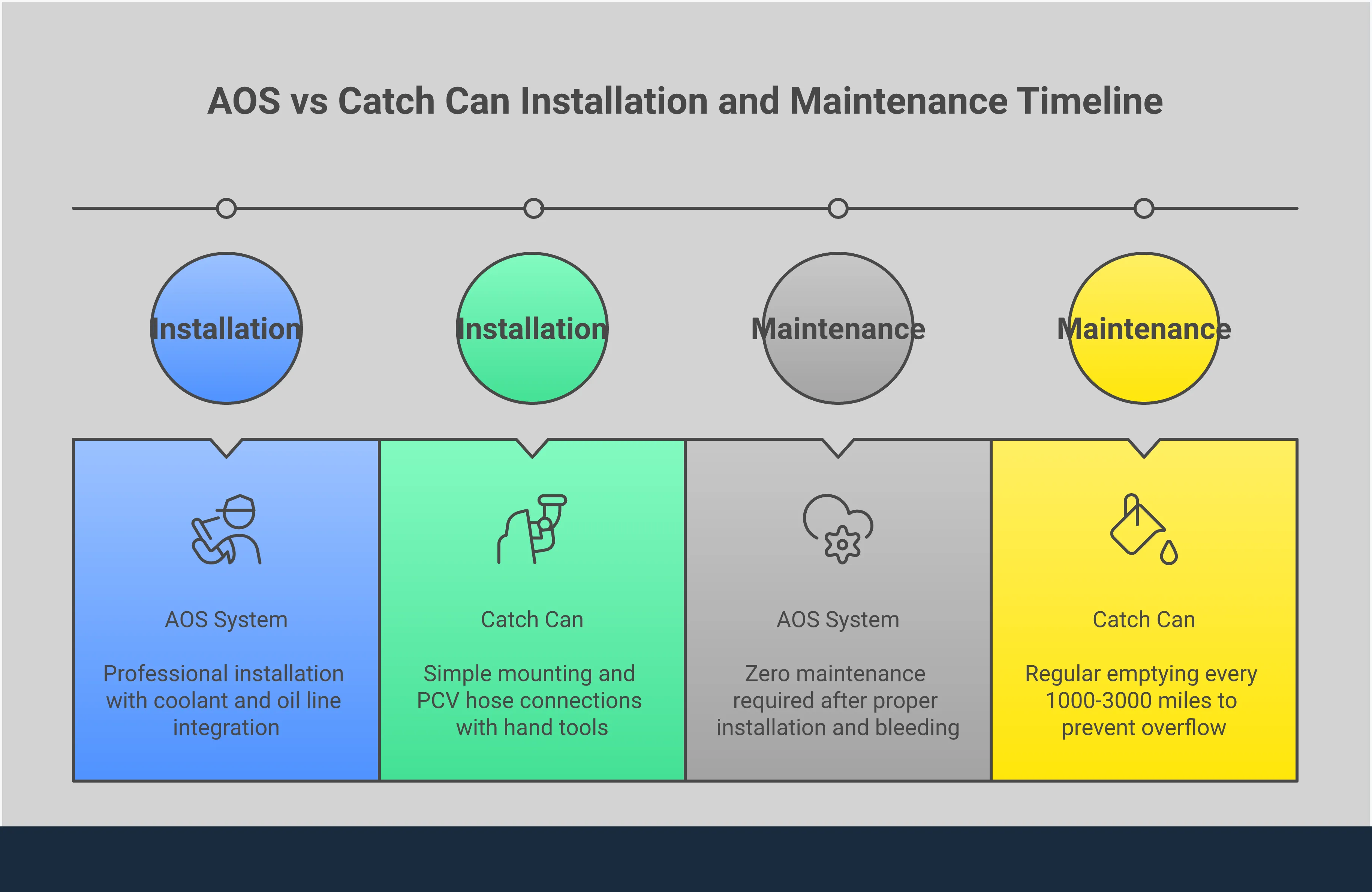
Ein Ölabscheider (AOS) ist aufgrund seiner tieferen Integration in den Motor komplexer zu installieren. Typischerweise werden Leitungen an das Kühlsystem angeschlossen, um Kondensation zu verhindern, und eine separate Ablaufleitung führt das gesammelte Öl zurück ins Kurbelgehäuse. Diese Komplexität ermöglicht die automatische, wartungsfreie Funktion. Im Gegensatz dazu ist ein Ölabscheider deutlich einfacher zu installieren. In der Regel wird er lediglich im Motorraum montiert und mit zwei Leitungen an das Kurbelgehäuseentlüftungssystem (PCV-System) angeschlossen. Diese unkomplizierte Lösung macht ihn zu einer beliebten Einsteigermodifikation, doch die Einfachheit geht mit dem Bedarf an manueller Wartung einher.
Korrekte Installation des Ölabscheiders
Der Einbau eines Ölabscheiders in Ihren Subaru ist ein überschaubares Projekt, doch die korrekte Ausführung ist entscheidend für seine effektive Funktion. Ein Ölabscheider ist im Grunde ein einfaches Bauteil: ein geschlossener Behälter, der die öligen Dämpfe aus der Kurbelgehäuseentlüftung Ihres Motors auffängt. Wenn heiße Blow-by-Gase in den Behälter gelangen, dehnen sie sich aus und kühlen ab, wodurch die Öl- und Kraftstoffdämpfe kondensieren. Interne Leitbleche oder ein Siebgewebe vergrößern die Oberfläche für diesen Vorgang und fangen die Verunreinigungen auf, während sauberere Luft zurück in den Ansaugtrakt gelangt. Dieser einfache Prozess macht ihn zu einem der effektivsten Basisteile für den Motorschutz.
Beim Einbau des Ölabscheiders ist der korrekte Anschluss der Schläuche entscheidend. Er verfügt über einen Einlass für die vom Motor kommende, verschmutzte Luft und einen Auslass für die sauberere Luft, die zum Ansaugtrakt zurückgeführt wird. Schließen Sie ihn unbedingt nur an eine einzige Leitung des Kurbelgehäuseentlüftungssystems (PCV-System) Ihres Motors an. Der Versuch, mehrere Motorschläuche an eine Öffnung des Ölabscheiders anzuschließen, kann den Druckausgleich des PCV-Systems stören. Auch die Größe ist wichtig. Als Faustregel gilt: Wählen Sie einen Behälter, der etwa doppelt so groß ist wie die Ölmenge, die Sie voraussichtlich zwischen den Ölwechseln auffangen werden. So stellen Sie sicher, dass er ausreichend Kapazität hat und nicht überläuft.
Denken Sie daran, dass ein Ölabscheider regelmäßige Wartung benötigt. Im Gegensatz zu einem Ölabscheider, der das Öl automatisch in den Motor zurückführt, sammelt ein Ölabscheider das aufgefangene Öl. Sie müssen ihn regelmäßig leeren, am besten im Rahmen des Ölwechsels. Ist der Ölabscheider zu voll, können Öl und Ablagerungen zurück ins Ansaugsystem gelangen, wodurch der ursprüngliche Zweck des Ölabscheiders zunichtegemacht wird. Eine kurze Kontrolle zwischendurch genügt, um den Schutz Ihres Motors zu gewährleisten.
Leistung unter Druck: Welches Modell hält stand?
Für leistungsstarke Subarus, insbesondere solche mit Turbolader und erhöhtem Ladedruck, ist ein Ölabscheider (AOS) die optimale Wahl. Unter den extremen Bedingungen von Rennstreckenfahrten oder sportlicher Fahrweise produziert Ihr Motor deutlich mehr Blow-by. Ein AOS ist so konstruiert, dass er dieses höhere Volumen effizient bewältigt und sicherstellt, dass das Öl effektiv abgetrennt und dem System wieder zugeführt wird, ohne überlastet zu werden. Dieses konstante Ölmanagement ist entscheidend für die Aufrechterhaltung der Leistung und den Schutz Ihres Motors unter anspruchsvollen Bedingungen und macht ihn zu einem unverzichtbaren Bestandteil jedes ambitionierten Subaru WRX- oder STI-Umbaus.
Mögliche Risiken eines Auffangbehälters
Das Hauptrisiko eines Ölabscheiders liegt nicht in einem Konstruktionsfehler, sondern in menschlichem Versagen. Da das System passiv ist, ist seine korrekte Funktion vollständig von Ihnen abhängig. Ist der Behälter zu voll, kann der Luftstrom das gesammelte Öl zurück in das Ansaugsystem saugen, wodurch der Zweck des Systems völlig zunichtegemacht wird. Dies ist nicht nur kontraproduktiv, sondern kann auch Schäden verursachen. Ein voller Ölabscheider verhindert, dass der Motor den Kurbelgehäusedruck ordnungsgemäß abbauen kann, was zu defekten Öldichtungen oder sogar zu Schäden am Turbolader führen kann. Wird das Leeren des Behälters vergessen, kann eine Schutzmaßnahme zur Gefahr werden, weshalb regelmäßige Wartung unbedingt erforderlich ist.
Potenzielle Risiken eines AOS
Ein Ölabscheider (AOS) macht zwar das manuelle Ablassen des Öls überflüssig, seine Komplexität bringt jedoch andere Herausforderungen mit sich. Die Anschaffungskosten sind höher, und der Einbau ist aufwendiger, da er an das Kühl- und Ölsystem des Motors angeschlossen werden muss. Zwar selten, aber wenn eine Ablass- oder Entlüftungsleitung des AOS verstopft ist, kann dies denselben gefährlichen Druckaufbau verursachen wie ein voller Ölabscheider. Da ein AOS das Öl automatisch zurückführt, kann er zudem manchmal zugrundeliegende Motorprobleme verschleiern. Verbraucht Ihr Subaru nach dem fachgerechten Einbau eines AOS weiterhin viel Öl, könnte dies auf ein ernsteres Problem hinweisen, wie beispielsweise verschlissene Kolbenringe. In diesem Fall ist eine professionelle Diagnose durch eine Werkstatt mit Expertise in der Motoroptimierung erforderlich.
Kosten vs. Nutzen: Was ist die tatsächliche Investition?
Beim Budget ist ein Ölabscheider fast immer günstiger in der Anschaffung. Sein einfacher Aufbau und die geringere Anzahl an Bauteilen machen ihn für viele Fahrzeughalter zu einer erschwinglicheren Option. Allerdings sollte man auch den langfristigen Nutzen berücksichtigen. Ein Ölabscheider stellt aufgrund seines komplexen Aufbaus und der zusätzlichen Komponenten eine höhere Anfangsinvestition dar. Für viele Fahrer bietet der Komfort eines wartungsfreien Systems, das einmal installiert wird und keine laufende Wartung erfordert, jedoch über die gesamte Lebensdauer des Fahrzeugs einen höheren Mehrwert, insbesondere in Kombination mit professionellen Motortuning-Services, die auf einem stabilen Motorbetrieb basieren.
Typische Kosten für jedes System
Wenn Sie die Kosten genauer betrachten, werden Sie einen deutlichen Unterschied zwischen den beiden Systemen feststellen. Ein hochwertiger Ölabscheider mit Schwallblechen kostet in der Regel zwischen 150 und 300 US-Dollar. Zwar gibt es günstigere Alternativen, diese verfügen jedoch oft nicht über die notwendigen internen Schwallbleche für eine wirklich effektive Funktion. Ein Ölabscheider hingegen ist eine deutlich größere Anschaffung. Die Preise beginnen üblicherweise bei etwa 400 US-Dollar und können aufgrund seiner komplexen, aktiven Konstruktion deutlich höher liegen. Betrachten Sie diese Kosten nicht nur als reinen Preis, sondern als Investition in die Langlebigkeit Ihres Motors. Die Wahl des richtigen Systems ist ein entscheidender erster Schritt, der alle anderen grundlegenden Leistungskomponenten unterstützt und sicherstellt, dass Ihre Modifikationen zuverlässig zusammenarbeiten, ohne die Motorgesundheit zu gefährden.
Wartung: Komfort ohne Eingriff vs. aktive Instandhaltung
Ihre Bereitschaft zur regelmäßigen Wartung ist ein entscheidender Faktor. Ein Ölabscheider (AOS) ist die ultimative, wartungsfreie Lösung. Nach korrekter Installation müssen Sie sich um nichts mehr kümmern – er funktioniert einfach. Ideal für alle, die maximalen Motorschutz ohne zusätzlichen Aufwand wünschen. Ein Ölabscheider hingegen erfordert regelmäßige Kontrolle des Füllstands und Entleerung des gesammelten Öls und Schmutzes. Die Häufigkeit hängt von Ihrem Fahrstil, dem Zustand des Motors und sogar dem Klima ab. Wird die Entleerung vergessen, läuft der Behälter über und verliert seine Funktion. Manchen Besitzern macht das nichts aus, andere möchten lieber keinen weiteren Punkt auf ihrer Wartungsliste haben.
AOS und Ölwechselintervalle
Eines der größten Verkaufsargumente für einen automatischen Ölabscheider (AOS) ist seine automatische Funktionsweise. Dieser Komfort hat jedoch einen kleinen Haken: Ihren Ölwechselrhythmus. Da ein AOS ein aktives System ist, das das gesammelte Öl automatisch zurück in den Motor leitet, werden dabei auch unerwünschte Bestandteile wie Spuren von Kraftstoff und Wasserdampf wieder abgegeben. Wie wir in unserem Vergleich bereits erläutert haben, können diese Verunreinigungen das Öl mit der Zeit verdünnen und seine Wirksamkeit verringern. Das bedeutet, dass Sie Ihr Öl möglicherweise häufiger wechseln müssen als mit einem Ölabscheider, der diese Verunreinigungen vollständig aus dem System entfernt. Dies ist ein entscheidender Faktor für die langfristige Gesundheit Ihres Motors und sollte bei der Beauftragung eines professionellen Motortuning-Services besprochen werden. Die regelmäßige Überprüfung der Ölqualität stellt sicher, dass Ihr AOS seine Funktion optimal erfüllen kann, ohne den Schutz Ihres Motors zu beeinträchtigen.
AOS oder Catch Can: Was ist das Richtige für Ihren Subaru?
Die Wahl zwischen einem Luft-Öl-Abscheider und einem Ölabscheider hängt ganz davon ab, wie Sie Ihren Subaru nutzen. Es gibt keine allgemeingültige Lösung; die beste Wahl richtet sich nach Ihren Fahrgewohnheiten, Ihren Leistungszielen und Ihrem Wartungsaufwand. Egal, ob Sie mit Ihrem Crosstrek zur Arbeit pendeln oder Ihren STI auf der Rennstrecke bis ans Limit bringen – eines dieser Systeme wird Ihren Motor optimal schützen. Wir erklären Ihnen, welches System das richtige für Sie ist.
Beste Wahl für den täglichen Gebrauch
Wenn Ihr Subaru Ihr zuverlässiges Alltagsfahrzeug mit Serienausstattung oder nur leichten Modifikationen ist, ist ein Ölabscheider oft die ideale Lösung. Bei Motoren mit niedrigem Ladedruck fängt ein gut konstruierter Ölabscheider zuverlässig den Ölverlust auf, der die Oktanzahl des Kraftstoffs senken und zu Kohlenstoffablagerungen führen kann. Er ist eine einfache und kostengünstige Möglichkeit, Ihren Motor zu schützen, ohne die höheren Anschaffungskosten eines Ölabscheiders. Zwar muss er regelmäßig geleert werden, doch ist dies eine einfache Wartungsmaßnahme, die Ihnen ein beruhigendes Gefühl gibt und Ihr Ansaugsystem sauber hält.
Beste Wahl für Rennstrecken- oder Performance-Umbauten
Wenn Sie Ihren Subaru mit Hochleistungs-Motortuning und Rennstreckeneinsatz an seine Grenzen bringen, wird ein Ölabscheider unerlässlich. Hoher Ladedruck und hohe Kurvenkräfte können einen einfachen Ölabscheider überfordern, aber ein Ölabscheider ist genau für diese extremen Bedingungen ausgelegt. Er trennt das Öl effektiver ab und führt es direkt zum Motor zurück, sodass Sie sich keine Gedanken mehr über das Entleeren eines Behälters oder Öl machen müssen, das während einer schnellen Runde in den Ansaugtrakt schwappt. Ein Ölabscheider erhöht zwar nicht die Leistung, ist aber eine wichtige unterstützende Modifikation, die die Leistung und Zuverlässigkeit Ihres Motors erhält. Er ist die unkomplizierte und hocheffiziente Lösung für jedes ernsthafte Performance-Projekt Ihres Subaru WRX .
Ölkapazitätsüberlegungen für die Streckennutzung
Auf der Rennstrecke wirkt auf Ihren Motor extreme G-Kräfte, die dazu führen können, dass Öl aus der Ölpumpe herausschwappt. Dies kann zu Ölmangel und einem Motorschaden führen. Ein herkömmlicher Ölabscheider wirkt hier kontraproduktiv, da er Öl aus dem Kreislauf entfernt. Während einer 20-minütigen Rennstreckensession kann ein hochbelasteter Motor erhebliche Mengen Öl als Blow-by abgeben. Wird dieses Öl in einem Behälter aufgefangen, sinkt der Gesamtölstand. Ein Ölabscheider (AOS) hingegen hält die Ölversorgung Ihres Motors aufrecht, indem er das aufgefangene Öl kontinuierlich in die Ölwanne zurückführt. Dadurch bleibt der Ölstand stabil und konstant, was insbesondere bei Kurvenfahrten mit hoher Geschwindigkeit ein wichtiges Sicherheitsnetz darstellt. Für jedes ernsthafte Rennstreckenfahrzeug ist dies nicht nur eine praktische Funktion, sondern ein grundlegender Bestandteil einer zuverlässigen Motorschutzstrategie und ein wichtiger Aspekt bei der professionellen Motorabstimmung.
AOS vs. Catch Can: Lasst uns einige Mythen entkräften
Lassen Sie uns mit einigen gängigen Missverständnissen aufräumen. Manche glauben, ein Ölabscheider sei lediglich eine günstigere Alternative zum Ölabscheider, doch ihre Funktionen unterscheiden sich grundlegend. Der größte Unterschied besteht darin, dass ein Ölabscheider ein aktives System ist, das Öl zum Motor zurückführt, während ein Ölabscheider ein passiver Behälter ist, der manuell entleert werden muss. Ein weiterer Mythos ist, dass ein Ölabscheider übermäßig komplex sei. Zwar ist die Installation etwas einfacher, aber die wartungsfreie Funktion macht ihn langfristig deutlich unkomplizierter. Letztendlich sind beide Systeme vorteilhaft und schaden Ihrem Auto nicht; entscheidend ist, das System zu wählen, das am besten zu den Leistungsanforderungen Ihres Fahrzeugs und Ihren Wartungspräferenzen passt.
Wie Sie das richtige System für sich auswählen
Die Entscheidung zwischen einem Ölabscheider und einem Ölabscheider hängt von Ihren individuellen Bedürfnissen, der Ausstattung Ihres Fahrzeugs und Ihren langfristigen Zielen ab. Es gibt keine allgemeingültige Lösung für jeden Subaru-Fahrer, aber es gibt die richtige für Sie . Um diese zu finden, sollten Sie Ihr Fahrverhalten, Ihr Budget und Ihren gewünschten Wartungsaufwand berücksichtigen. Wir gehen die wichtigsten Faktoren durch, damit Sie eine fundierte Entscheidung für Ihr Fahrzeug treffen können.
Entscheidungsfindung auf Basis des Ölverbrauchs
Am einfachsten lässt sich dies anhand des Ölverbrauchs Ihres Subaru feststellen. Verbraucht Ihr Fahrzeug nur wenig Öl – weniger als einen halben Liter zwischen den Ölwechseln –, ist ein Ölabscheider eine durchaus sinnvolle Option. Dies trifft typischerweise auf serienmäßige oder leicht modifizierte Alltagsfahrzeuge wie den Forester oder Crosstrek zu. Der Behälter füllt sich langsam, sodass Sie ihn einfach bei den regulären Ölwechseln leeren können. Er bietet zuverlässigen Schutz ohne die höheren Anschaffungskosten eines Ölabscheiders und ist somit eine effektive Lösung für Motoren, die nicht ständig unter hoher Belastung stehen.
Verbraucht Ihr Subaru jedoch zwischen den Ölwechseln einen Liter oder mehr, ist ein Ölabscheider (AOS) die eindeutig bessere Wahl. Dies kommt häufig bei leistungsstarken Fahrzeugen oder solchen vor, die auf der Rennstrecke stark beansprucht werden und daher mehr Blow-by produzieren. Ein Ölabscheider müsste so oft geleert werden, dass es lästig würde. Ein Ölabscheider ist hier die überlegene Lösung, da er dank seines wartungsfreien Systems das Öl automatisch zum Motor zurückführt und so einen gleichmäßigen Schutz ohne manuelle Wartung gewährleistet. Er ist die professionelle Lösung für anspruchsvolle Anwendungen.
Zunächst: Was sind Ihre Leistungsziele?
Seien Sie zunächst ehrlich, wie Sie Ihr Auto nutzen. Fahren Sie es täglich hauptsächlich in der Stadt und auf Autobahnen oder ist es ein ambitioniertes Wochenendfahrzeug für Rennstrecke und Gelände? Ihre Antwort führt Sie zur passenden Lösung. Für leistungsstarke, rennstreckentaugliche oder hochgeladene Fahrzeuge bietet ein Ölabscheider (AOS) deutlich mehr Komfort und Effizienz. Die ständige Belastung durch sportliches Fahren führt zu vermehrtem Blow-by, und ein AOS ist so konzipiert, dass er diese Menge durch aktives Ölrückführen in den Motor abführt. So können Sie sich auf Ihre Fahrlinie konzentrieren, anstatt auf den Ölstand. Wenn Ihr Subaru serienmäßig oder nur leicht modifiziert ist und hauptsächlich für den täglichen Arbeitsweg genutzt wird, reicht möglicherweise ein Ölabscheider aus.
Als Nächstes sollten Sie Ihr Budget und Ihre aktuellen Modifikationen berücksichtigen.
Die Kosten spielen beim Autobau immer eine Rolle. Ölabscheider sind in der Regel günstiger und einfacher zu installieren und bieten somit einen guten Einstieg ins Ölmanagement. Man sollte dies jedoch als Investition in die Gesundheit des Motors betrachten. Ein automatisierter Ölabscheider (AOS) ist zwar in der Anschaffung teurer, bietet aber eine umfassendere, automatisierte Lösung. Wer bereits in leistungsstarke Teile wie einen größeren Turbolader investiert hat oder professionelles Motortuning plant, für den ist ein AOS der logische nächste Schritt. Diese Modifikationen erhöhen den Zylinderdruck und die Blow-by-Gase, wodurch ein effektives Ölmanagement unerlässlich wird.
Die richtige Größe des Auffangbehälters auswählen
Wenn Sie sich für einen Ölabscheider für Ihren Subaru entschieden haben, ist der nächste wichtige Schritt die Wahl der richtigen Größe. Das Fassungsvermögen des Behälters beeinflusst direkt seine Effektivität und Ihren Wartungsplan. Ein zu kleiner Behälter füllt sich schnell und birgt die Gefahr, dass das aufgefangene Öl zurück in das Ansaugsystem gelangt – was den Sinn des Einbaus völlig zunichtemacht. Berücksichtigen Sie Ihre Fahrgewohnheiten und die Modifikationen an Ihrem Fahrzeug. Ein Motor mit Leistungssteigerungen, wie beispielsweise die vielen Subaru STI-Upgrades, produziert mehr Blow-by als ein Serienmotor. Als Faustregel gilt: Wählen Sie einen Behälter mit ausreichendem Volumen, um die Zeit zwischen Ihren regulären Ölwechseln problemlos zu überbrücken. So ist ein zuverlässiger Schutz ohne ständigen Wartungsaufwand gewährleistet.
Schließlich sollten Sie der Gesundheit Ihres Motors Priorität einräumen.
Beide Systeme schützen Ihren Motor, jedoch mit unterschiedlicher Effektivität. Sowohl ein Ölabscheider als auch ein Ölabscheider fangen Öldämpfe auf und tragen so zur Gesunderhaltung Ihres Motors bei. Zudem verhindern sie schädliche Ablagerungen an den Einlassventilen und im Brennraum. Dies ist besonders wichtig für Direkteinspritzmotoren, wie sie beispielsweise in neueren Subaru-Modellen wie dem WRX verbaut sind. Ein Ölabscheider bietet einen umfassenderen Schutz, indem er das Öl in einem mehrstufigen Verfahren abscheidet und ins Kurbelgehäuse zurückführt. Dadurch wird eine möglichst saubere Ansaugluft gewährleistet. Diese vorbeugende Maßnahme trägt dazu bei, die Motorleistung und -zuverlässigkeit über Jahre hinweg zu erhalten.
Alles zusammenfassend, um Ihre Entscheidung zu treffen
Letztendlich hängt die Wahl von Ihrem Fahrzeug, Ihrem Fahrstil und Ihren Wartungsvorlieben ab. Wenn Sie einen stark modifizierten Subaru WRX oder STI fahren, den Sie auf der Rennstrecke stark beanspruchen, ist ein Ölabscheider (AOS) die beste Wahl. Es handelt sich um ein System, das ohne Eingriff arbeitet und optimalen Schutz unter extremen Bedingungen bietet. Wenn Sie einen Crosstrek oder Forester im Alltag fahren, der nur geringfügig modifiziert ist und bei dem es Ihnen nichts ausmacht, alle paar Wochen einen Behälter zu leeren, ist ein hochwertiger Ölabscheider eine praktikable Option. Bedenken Sie jedoch: Sollte nach dem Einbau eines Ölmanagementsystems weiterhin ein signifikanter Ölverbrauch auftreten, könnte dies auf ein ernsteres Problem im Motor hinweisen, das behoben werden muss.
Verwandte Artikel
- Subaru Luft-Öl-Abscheider: Der ultimative Leitfaden
- 2015 Subaru WRX Luft-Öl-Abscheider: Ein Einkaufsführer
- Was ist ein Luft-Öl-Abscheider und braucht man einen?
Häufig gestellte Fragen
Brauche ich so etwas wirklich für einen serienmäßigen Subaru? Zwar produzieren getunte Motoren mit hohem Ladedruck mehr Blow-by, aber selbst ein komplett serienmäßiger Subaru profitiert von einem Ölmanagementsystem. Moderne Direkteinspritzmotoren neigen besonders zu Kohlenstoffablagerungen an den Einlassventilen, da diese nicht mehr durch Kraftstoff eingespritzt werden, um sie zu reinigen. Der Einbau eines Ölabscheiders oder eines Ölabscheiders von Anfang an ist eine hervorragende Präventivmaßnahme, die den Ansaugtrakt sauber hält und den Motor über seine gesamte Lebensdauer effizient laufen lässt.
Bringt ein Ölabscheider oder ein Ölabscheider mehr PS für mein Auto? Nein, weder ein Ölabscheider noch ein Ölabscheider erhöhen die PS-Zahl direkt. Vielmehr sind sie wichtige Komponenten, die Leistungsverluste verhindern. Indem sie Ölnebel daran hindern, das Kraftstoff-Luft-Gemisch zu verunreinigen, tragen sie dazu bei, die effektive Oktanzahl des Kraftstoffs zu erhalten. Dadurch läuft Ihr Motor optimal und verhindert Klopfen. So erhalten Sie die konstante und zuverlässige Leistung, die Sie erwarten, insbesondere nach einer professionellen Abstimmung.
Was passiert, wenn ich vergesse, meinen Ölabscheider zu leeren? Das Vergessen des Leerens kann mehr schaden als nutzen. Ist der Behälter voll, saugt der Luftstrom aus dem Kurbelgehäuse das gesamte angesammelte Öl, den Kraftstoff und die Ablagerungen mit einem Schlag direkt in den Ansaugkrümmer. Dadurch wird der Zweck des Behälters zunichtegemacht und es kann zu Rauchentwicklung, Leistungseinbußen und möglicherweise sogar zu verrußten Zündkerzen kommen. Es ist daher unerlässlich, das Leeren des Ölabscheiders in Ihre regelmäßige Wartungsroutine einzubauen.
Ist ein System besser für kaltes Wetter geeignet? Ja, ein Ölabscheider (Luft-Öl-Abscheider) arbeitet in kälteren Klimazonen in der Regel besser. Die Kühlmittelleitungen, die durch einen Ölabscheider verlaufen, halten ihn auf einer konstanten Betriebstemperatur. Dadurch wird verhindert, dass der im Blow-by natürlich entstehende Wasserdampf kondensiert und sich mit dem Öl vermischt. Dies verhindert die Bildung eines dicken, milchigen Schlamms, der unter Umständen gefrieren und das System verstopfen könnte. Ein Auffangbehälter sammelt diese Feuchtigkeit und muss im Winter oft häufiger geleert werden.
Kann ich einen Ölabscheider selbst einbauen? Der Einbau eines Ölabscheiders ist in der Regel unkompliziert und kann von vielen Hobbybastlern mit einfachem Werkzeug in der eigenen Garage durchgeführt werden. Im Wesentlichen muss der Behälter montiert und einige Schläuche angeschlossen werden. Ein Ölabscheider hingegen ist ein komplexeres Projekt. Da er in den Kühlkreislauf des Motors integriert wird und eine separate Rücklaufleitung zur Ölwanne benötigt, empfehlen wir generell den Einbau durch einen Fachmann. So wird sichergestellt, dass keine Leckagen auftreten und das System einwandfrei funktioniert.