

5 Best 2 Inch Lift Kits for a Subaru Forester
Your Subaru Forester is a capable crossover right off the lot, but its true potential for adventure is waiting to be unlocked. If you're ready to explore beyond the pavement and tackle more challenging trails, a lift kit is the single most effective upgrade you can make. It’s not just about looks; it’s about gaining real-world capability. This guide focuses on the sweet spot for many owners: the perfect 2 inch lift kit subaru forester. We'll cover how this modification provides crucial ground clearance, improves your approach angles, and creates room for bigger, more aggressive tires, transforming your daily driver into a confident off-road machine.
Key Takeaways
- Focus on Function, Not Just Height: A 2-inch lift is a practical upgrade that provides real-world benefits, including improved ground clearance for clearing obstacles and the necessary space to fit larger, more capable tires for the trail.
- Choose a System, Not Just Spacers: A quality lift kit is a complete system. Prioritize kits that include essential hardware like subframe spacers to maintain correct suspension geometry, ensuring proper alignment and preventing long-term drivetrain stress.
- Plan for the Full Process: The total investment goes beyond the kit itself and must include professional installation and a crucial post-lift wheel alignment. Regular inspections after installation are key to maintaining your vehicle's performance and safety.
Why Lift Your Forester? The Benefits of a 2-Inch Kit
If you’re looking to take your Subaru Forester beyond the pavement, a lift kit is one of the most effective upgrades you can make. While options vary, a 2-inch lift strikes the perfect balance for many owners, offering a significant boost in capability without drastically altering the vehicle's handling for daily driving. It’s the sweet spot that transforms your reliable crossover into a confident trail machine.
Lifting your Forester isn't just about looks—it’s a functional modification that directly enhances its performance where the asphalt ends. By raising the chassis, you create more room for the suspension to work and clear obstacles that would stop a stock vehicle in its tracks. This single upgrade opens up a new world of exploration, allowing you to fit more aggressive tires and tackle more challenging terrain. It’s the foundation for building a truly versatile vehicle ready for any adventure, from weekend camping trips to serious overlanding solutions.
Gain More Ground Clearance for Off-Roading
The most immediate and practical benefit of a 2-inch lift is the added ground clearance. That extra height puts more space between the ground and your Forester’s underbody, including critical components like the oil pan, exhaust, and suspension parts. When you’re navigating a rocky trail or a deeply rutted forest road, this clearance is what allows you to drive over obstacles instead of into them. This simple change can be the difference between a fun day on the trail and a costly repair bill, giving you the confidence to push further and explore more demanding routes without worry.
Improve Your Approach and Departure Angles
Beyond simple ground clearance, a lift kit improves your Forester’s approach and departure angles. Think of the approach angle as the steepest incline you can drive up without your front bumper hitting the slope. The departure angle is the same concept for the rear bumper when you’re coming down. Lifting your vehicle increases these angles, making it much easier to tackle steep hills, ditches, and ledges without scraping or damaging your bumpers. This is a key element of off-road geometry that allows your Forester to handle more aggressive terrain and follow trails typically reserved for more purpose-built 4x4s.
Fit Bigger, Better Tires
A stock Forester has limited space in its wheel wells, which restricts your tire options. Installing a 2-inch lift kit creates the necessary room to fit larger, more capable all-terrain or mud-terrain tires. Bigger tires offer several advantages for off-roading: their larger sidewalls provide a smoother ride over rough surfaces, their aggressive tread patterns deliver superior traction in dirt and mud, and their increased diameter gives you even more ground clearance. This upgrade is a game-changer for performance, as tires are your vehicle’s only connection to the trail. It’s a foundational step in building a truly capable Subaru Forester.
Get That Aggressive, Off-Road Look
Let’s be honest—performance is key, but aesthetics matter, too. A 2-inch lift gives your Subaru Forester a more commanding and rugged stance that sets it apart from the crowd. The added height and the ability to fit larger tires completely transform its appearance from a family crossover to a purpose-built adventure vehicle. It’s a look that communicates capability and readiness for anything the trail throws its way, giving your vehicle a "very rugged and commanding appearance." This visual upgrade not only reflects the vehicle's enhanced performance but also adds a significant amount of pride in ownership.
The Best 2-Inch Lift Kits for Your Subaru Forester
Choosing the right lift kit can completely transform your Forester's capabilities and look. With so many options on the market, it’s helpful to see how the top brands compare. We’ve broken down five of the best 2-inch lift kits to help you find the perfect fit for your off-road ambitions and daily driving needs. Each of these kits offers a unique approach to lifting your Subaru, from comprehensive systems focused on long-term durability to straightforward, effective solutions for gaining that extra clearance.
Crawford Performance
What sets the Crawford Performance lift kit apart is the focus on a complete system that maintains performance and safety. Beyond just providing the parts, we emphasize the importance of a proactive maintenance routine after installation. We recommend regular check-ups, especially after tough off-road trips, to inspect all hardware for wear and tear. This approach ensures your lifted suspension remains in optimal condition for the long haul. Our kits are engineered to integrate seamlessly with your Forester, providing a reliable lift that enhances your vehicle's capability without compromising its integrity. This commitment to durability makes it a top choice for serious enthusiasts.
ReadyLIFT
ReadyLIFT is a popular name in the suspension world, and their 2.0'' SST Lift Kit is a solid option for 2019-2024 Subaru Forester models. This kit is specifically designed to raise the front of your vehicle by two inches and the rear by 1.5 inches. This staggered lift levels out the factory rake, giving your Forester a more aggressive and balanced stance. The primary benefit here is creating enough room to fit larger, more capable tires, which significantly improves both off-road performance and the overall look of your vehicle. It’s a well-engineered, straightforward solution for drivers looking to make a noticeable upgrade.
RalliTEK
If your main goal is to improve your Forester’s off-road handling, RalliTEK's kit is worth a look. They emphasize how a two-inch lift can dramatically elevate your Subaru's ride height, directly translating to better performance on the trail. The increased ground clearance is a game-changer, allowing for much better maneuverability over rocks, ruts, and other obstacles you might encounter on your adventures. RalliTEK designs its kits with the adventure enthusiast in mind, focusing on creating a more capable and confident off-road machine. This makes it a great choice if you plan on spending more time on the trail than on the pavement.
Ironman 4x4
Ironman 4x4 offers a 2-inch ATS Suspension Lift Kit designed to be a versatile upgrade for 2019 and newer Subaru Foresters. Their system is engineered to improve both daily driving comfort and off-road performance, so you don't have to sacrifice one for the other. Like other quality kits, this lift provides the necessary ground clearance for tackling more challenging terrain and allows for the installation of larger tires. By enhancing the vehicle's overall capability without creating a harsh ride on the street, the Ironman 4x4 kit strikes a great balance for the Forester owner who uses their vehicle for everything from commuting to camping.
ADF (Anderson Design & Fabrication)
Anderson Design & Fabrication (ADF) brings a highly technical perspective to the table. They offer valuable insight into how a lift impacts your vehicle's overall geometry. For instance, ADF notes that while their two-inch kits may not strictly require rear subframe spacers, the lift can still change the position of the rear wheels within the wheel wells, pulling them forward slightly. This attention to detail is crucial for owners who want to understand every aspect of their modification. For those considering the finer points of suspension dynamics and alignment, ADF provides a well-crafted kit backed by deep technical knowledge.
How Much Do 2-Inch Forester Lift Kits Cost?
When you decide to lift your Subaru Forester, you’ll find that kits are available at several price points. The cost of a 2-inch lift kit generally ranges from around $300 to over $800, and this price difference reflects the quality of materials, the engineering behind the design, and the completeness of the kit. A basic spacer lift will be on the lower end, while a comprehensive system with high-grade components and additional hardware will command a higher price.
Understanding these price tiers will help you choose a kit that matches both your budget and your performance goals. Whether you're just starting to explore local trails or you're building a serious overlanding rig, there's a lift kit designed for your needs. Let's break down what you can expect to find in each price range.
Budget-Friendly Kits ($300-$500)
If you're looking for an economical way to get more ground clearance, budget-friendly kits are a great place to start. These kits typically include the essential spacers and hardware needed to lift your vehicle without a major investment. They are perfect for drivers who want to fit slightly larger tires and improve their Forester's stance for light off-roading. For example, the Raceland Subaru Forester 2" Lift Kit for 2014-2018 models provides a cost-effective solution to enhance your vehicle's capabilities without stretching your budget. While they may not have the advanced features of premium options, these kits deliver a solid entry into the world of lifted Subarus.
Mid-Range Options ($500-$750)
Mid-range lift kits strike an excellent balance between affordability, quality, and performance. In this price bracket, you’ll find kits made from more robust materials and often featuring more precise engineering. These systems are ideal for enthusiasts who spend more time on trails and demand greater durability. A great example is the ReadyLIFT 2.0'' SST Lift Kit for the 2019-2024 Forester, which lifts the front by 2 inches and the rear by 1.5 inches to achieve a level stance. This price point often provides a more complete solution for improving your vehicle's off-road readiness and on-road manners.
Premium Systems ($750+)
For the serious off-road enthusiast, premium lift kits offer the highest level of performance, durability, and engineering. These systems are built with top-tier materials and are designed to withstand the toughest conditions. They often include additional components to correct suspension geometry, ensuring your Forester handles predictably both on and off the pavement. Kits like the RalliTEK 2-inch suspension lift kit are tailored for demanding use, giving you the confidence to tackle challenging terrain. When you invest in a premium system, you're paying for superior design and peace of mind on your adventures.
Factoring in Installation and Alignment
Remember that the price of the lift kit is just one part of the total cost. You also need to account for installation and a professional wheel alignment. While some enthusiasts may handle the work themselves, we recommend having a certified mechanic install the kit to ensure everything is fitted correctly and safely. After installation, an alignment is absolutely essential to correct your suspension geometry and prevent premature tire wear. It's also smart to inspect all hardware after your off-road trips to ensure everything remains tight and secure. For a closer look at what the process involves, you can review a detailed Forester lift kit installation guide.
How to Choose Your Lift Kit: Key Features to Compare
Once you start shopping for a lift kit, you'll notice the market is full of options. While it's great to have choices, it can be tough to sort through them. A cheap kit might save you money upfront, but it could lead to alignment issues, a harsh ride, or even component failure down the road. To make a smart investment, you need to look past the price tag and compare the critical features that determine a kit's performance, safety, and longevity.
Focusing on a few key details will help you find a high-quality system that fits your Forester perfectly and meets your performance goals. From verifying the fitment for your specific model year to checking the material quality, these are the factors that separate a great lift kit from a problematic one.
Verify Your Forester's Model Year
This might seem obvious, but it’s the most important first step. Vehicle manufacturers often make small but significant changes to suspension geometry between model years and even trim levels. A kit designed for a 2019 Forester might not fit a 2018 model correctly. You’ll also see kits that fit standard models but exclude specific trims like the XT or Wilderness. Always double-check that the kit you’re considering is explicitly listed for your Forester’s exact year and trim. A quality manufacturer will provide clear fitment information, so you can be confident you’re getting parts designed for your vehicle’s specific setup.
Ensure It's a Complete Kit
A lift kit should include more than just strut spacers. To do the job right, a kit needs to correct the suspension and drivetrain geometry that changes when you lift a vehicle. Look for kits that include hardware like rear subframe spacers and multi-link arm spacers. These components are essential for maintaining proper alignment and preventing premature wear on your CV joints. A truly complete kit provides everything you need for a successful installation without forcing you to source extra performance parts to fix problems the lift created. A lower price often means missing components, which will cost you more in the long run.
Look for a Simple, Bolt-On Design
Unless you’re planning a custom fabrication project, you’ll want a lift kit with a 100% bolt-on design. This means the kit can be installed without any cutting, welding, or permanent modifications to your Forester. Bolt-on kits are engineered to fit your vehicle’s factory mounting points, which makes the installation process much more straightforward for both DIYers and professional shops. It also gives you the flexibility to return your vehicle to its stock height if you ever decide to sell it or change your setup. A well-designed bolt-on kit is a sign of quality engineering.
Confirm Maximum Tire Size
One of the biggest motivations for lifting a Forester is to fit larger, more capable tires. Before you buy a kit, check the manufacturer’s specifications for the maximum recommended tire size. Reputable brands will have tested their kits and can tell you exactly what size tire you can run without rubbing against the fenders or suspension components during turns or compression. This information is critical for planning your complete wheel and tire setup. If a manufacturer doesn’t provide a maximum tire size, it may be a sign they haven’t done thorough testing on their Subaru Forester upgrades.
Prioritize Material Quality and Durability
Your suspension components live in a harsh environment and are responsible for your safety on and off the road. That’s why material quality is non-negotiable. Look for spacers made from thick, heavy-gauge steel (like 3/16-inch or thicker) or solid billet aluminum. Pay attention to the finish as well. A durable powder coat or anodized finish is essential for protecting the metal components from rust and corrosion caused by road salt, mud, and water. Investing in a kit made from high-quality materials ensures it will withstand the abuse of trails and daily driving for years to come.
Installing and Maintaining Your Lift Kit: What to Expect
Once you’ve chosen the perfect lift kit, the next step is getting it onto your Forester. The installation is just the beginning; proper maintenance is what ensures your lifted Subaru performs safely and reliably for years to come, whether you're on the trail or the highway. Understanding the full process, from installation day to your first post-trip inspection, will help you protect your investment and get the most out of your upgraded ride. Let's walk through what you can expect when installing your kit and how to keep it in top condition.
Professional vs. DIY Installation
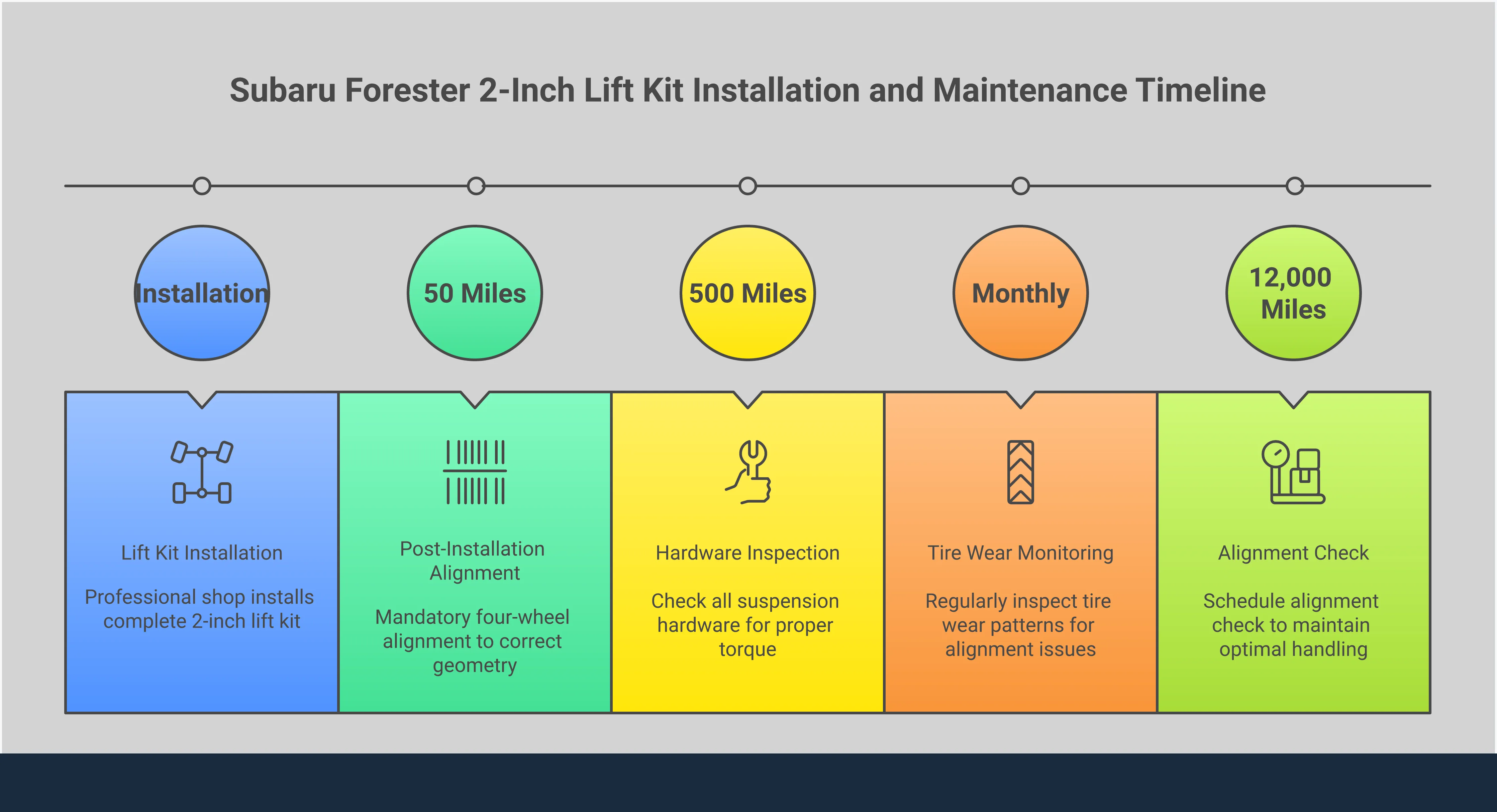
Deciding between professional installation and a DIY project comes down to your comfort level, tools, and time. If you have the right equipment and mechanical experience, installing a lift kit yourself can be a rewarding project. Just be sure to use quality tools and follow the instructions carefully. No matter how skilled you are, remember that a four-wheel alignment is essential immediately after installation to correct your suspension geometry. If you’re not confident in your abilities, there’s no shame in leaving it to the pros. A professional installer has the experience and specialized equipment to get the job done right, giving you peace of mind that everything is torqued to spec and perfectly aligned.
Why You Need an Alignment Post-Installation
Lifting your Forester alters its factory suspension geometry. This changes critical angles like camber, caster, and toe, which directly affect how your tires meet the road. Skipping a post-lift alignment is a recipe for disaster, leading to uneven and rapid tire wear, poor handling, and potential safety issues. A proper alignment resets these angles to accommodate the new ride height, ensuring your Forester drives straight, your steering feels responsive, and your tires wear evenly. Think of it as the final, non-negotiable step of the installation process that protects both your new lift kit and your tires.
The Role of Rear Subframe Spacers
When you lift your Forester, you risk pulling the rear wheels forward in the wheel wells, which can cause tire rubbing and throw off your suspension’s geometry. This is where rear subframe spacers come in. These components are designed to lower the entire rear subframe, correcting the axle angle and recentering the rear tires in the wheel wells. For a 2-inch lift, subframe spacers are crucial for maintaining proper alignment and ensuring the suspension cycles correctly without binding. High-quality overlanding solutions will always include these spacers to preserve factory-like geometry and ride quality.
Plan for Regular Inspections
A lifted suspension works harder than a stock one, especially when you’re exploring rough terrain. That’s why a proactive maintenance routine is key. After your first few hundred miles and after every off-road adventure, take the time to inspect all your suspension components. Get underneath your Forester and check that all nuts and bolts are still tight. Look for any signs of wear on bushings or leaks from your shocks. Catching a small issue early can prevent it from becoming a major problem down the road. Consistent check-ups will keep your performance parts in excellent shape and your Forester ready for anything.
Potential Drawbacks and Common Myths
Lifting your Forester is one of the most effective ways to prepare it for the trail, but it’s important to go in with a clear understanding of what the process involves. A 2-inch lift changes your vehicle's dynamics, and not all kits are created equal. Let’s clear up some common misconceptions and talk about what you should really expect when you raise your ride height. Being informed will help you make the best choice for your build and ensure you’re happy with the results both on and off the road.
Changes to Drivetrain Geometry and Ride Quality
Lifting your Forester raises its center of gravity and alters the stock suspension geometry. This can affect everything from handling on the highway to the lifespan of your CV joints. A well-designed lift kit accounts for this. For example, many quality 2-inch kits include rear subframe spacers specifically to correct the suspension geometry and keep your alignment in check. While your Forester will feel different after a lift—potentially with more body roll in corners—the right kit will minimize negative effects on ride quality while maximizing off-road capability.
Myth: Installation is Always Easy
While many lift kits feature a bolt-on design, "easy" is a relative term. The installation can be a complex job that requires the right tools, a safe workspace, and a good amount of mechanical know-how. If you’re an experienced home mechanic, you can likely tackle it yourself over a weekend. However, it’s crucial to use quality tools and follow the instructions precisely. No matter who does the installation, you absolutely must get a professional four-wheel alignment afterward to ensure your Forester drives straight and prevents premature tire wear.
Myth: You Don't Need Subframe Spacers
Some people believe that for a smaller 2-inch lift, subframe spacers aren't necessary. This is a risky shortcut. Even a modest lift can pull the rear wheels forward in the wheel well, which can affect suspension travel and alignment. Subframe spacers are designed to reposition the rear subframe to maintain the factory geometry as closely as possible. This ensures your wheels stay centered and your suspension functions as it should. The best Subaru Forester upgrades come as complete systems that include these critical components.
Managing Your Handling Expectations
A lifted Forester is going to handle differently than a stock one, and that’s okay. You’re trading some on-road sharpness for incredible off-road performance. The higher center of gravity means you’ll notice more body roll when cornering, and the vehicle might feel less planted at high speeds. This isn't a defect; it's the physics of a taller vehicle. Understanding this trade-off is key. Your Forester will be more capable than ever on rugged terrain, but you’ll need to adjust your driving style on the pavement to match its new characteristics.
Understanding Lift Kit Warranties
A lift kit is a significant investment in your Forester's capability, and you want that investment protected. Before you buy, it’s smart to understand what kind of warranty comes with your kit. A good warranty is more than just a piece of paper; it’s a manufacturer's promise that they stand behind their product's quality and durability. It provides peace of mind when you’re miles from the nearest paved road. Different brands offer varying levels of coverage, so knowing what to look for can save you from headaches down the line. From defects in materials to workmanship, the fine print matters. Let's break down what you can expect from standard warranties and what sets a premium brand apart.
Standard Manufacturer Coverage
Most reputable lift kit manufacturers offer some form of a limited lifetime warranty. This typically covers defects in materials and workmanship, meaning the company will replace a part that fails due to a manufacturing flaw. It’s important to understand that this doesn't usually cover damage from improper installation, accidents, or normal wear and tear from aggressive off-roading. Think of it as protection against a faulty weld or a spacer that cracks under normal use, not a bent component after a hard impact on the trail. Always read the specific terms, as "lifetime" can be defined differently by each company.
The Crawford Performance Advantage
While a written warranty is important, a company’s reputation for engineering and customer support is just as critical. At Crawford Performance, we build our overlanding solutions to withstand the toughest conditions, minimizing the chance you'll ever need a warranty claim. Our focus is on proactive quality control and robust design, ensuring our parts perform reliably from day one. We believe the best warranty is the one you never have to use. This commitment to product reliability and customer satisfaction means you're not just buying a part; you're investing in a component backed by decades of performance engineering experience.
What to Look for in Defect Protection
When comparing warranties, look for clear and comprehensive defect protection. A solid warranty should cover all components within the kit, not just the main spacers. Also, let's clear up a common myth: installing a lift kit will not automatically void your Subaru's factory warranty. Thanks to consumer protection laws, a dealer must prove that the aftermarket part directly caused the specific failure for which you are seeking a warranty repair. To be safe, always choose high-quality performance parts and consider professional installation to ensure everything is fitted correctly and functions as intended.
How to Choose the Right 2-Inch Lift Kit for Your Forester
With so many options on the market, picking the perfect 2-inch lift kit for your Forester can feel like a major decision. The right choice depends on more than just your vehicle's model year; it comes down to how you plan to use your Subaru, your budget, and your comfort level with installation. By focusing on a few key factors, you can narrow down the options and find a kit that delivers the performance and reliability you need for your adventures.
Match the Kit to Your Driving Style
First, think about what you want to achieve with your lifted Forester. Are you aiming for an aggressive look for your daily commute, or are you building a capable rig for serious trail runs? A 2-inch lift gives you a significant boost in ground clearance, allowing you to clear obstacles that would stop a stock vehicle. If your goal is to build a true off-road machine, you’ll want a kit designed for durability and performance under stress. Look for kits that are part of a complete ecosystem of overlanding solutions, as they are often engineered to handle rugged terrain while working seamlessly with other upgrades.
Compare Value, Not Just Price
It’s easy to sort lift kits by price, but the cheapest option isn't always the best value. A lower price tag might mean the kit is missing critical components, like subframe spacers, which are essential for maintaining proper suspension geometry. A quality kit is an investment in your vehicle’s performance and longevity. Look for systems designed to preserve your Forester’s original ride comfort and alignment settings. High-quality materials like powder-coated steel will resist corrosion and wear, saving you money on future repairs. A comprehensive kit from a reputable brand provides peace of mind and ensures your Subaru Forester upgrades perform as expected.
Be Honest About Your DIY Skills
While many lift kits are advertised as simple bolt-on installations, the reality can be more complex. Be realistic about your mechanical experience and the tools you have on hand. A project that seems straightforward can quickly become complicated without the right equipment or knowledge. If you’re not confident in your ability to safely install suspension components, it’s always best to have the work done by a certified mechanic. Regardless of who does the installation, a professional wheel alignment is absolutely necessary afterward. Once installed, get in the habit of performing frequent inspections of your suspension to check for any signs of wear or damage, ensuring your Forester stays safe and reliable.
Related Articles
Frequently Asked Questions
Will a 2-inch lift make my Forester handle poorly on the road? Your Forester will feel different after a lift, but a well-engineered kit won't make it handle poorly. The higher center of gravity means you'll notice more body roll in sharp turns. This is a natural trade-off for gaining significant off-road capability. A quality kit is designed to maintain proper suspension geometry, which keeps the ride stable and predictable for daily driving. You'll simply need to adjust your driving style to match the vehicle's new, taller stance.
Why do some kits cost so much more than others? Is a cheaper kit good enough? The price of a lift kit directly reflects the quality of its materials, the precision of its engineering, and how complete the system is. Budget-friendly kits often only include the basic spacers and may be made from less durable materials. Premium kits cost more because they include essential hardware like subframe spacers to correct your vehicle's geometry and are built from heavy-duty steel or aluminum designed to last. A cheaper kit might save you money initially, but it can lead to alignment issues and faster wear on other components down the road.
Do I really need a kit with subframe spacers for just a 2-inch lift? Yes, you absolutely do. When you lift your Forester, it changes the angle of the suspension and can pull the rear wheels forward in the wheel wells. Subframe spacers are critical because they lower the entire rear subframe assembly, which corrects the geometry and pushes the wheels back to their proper, centered position. A kit without these spacers is incomplete and can cause tire rubbing, alignment problems, and unnecessary stress on your drivetrain.
What other costs should I plan for besides the lift kit itself? The price of the kit is your starting point. You also need to budget for installation and a wheel alignment. While you can install the kit yourself if you have the right tools and experience, many owners opt for a professional shop to ensure it's done correctly. Afterward, a four-wheel alignment is not optional—it's essential. This service corrects your suspension angles to match the new ride height, which is critical for safe handling and preventing premature tire wear.
Will adding a lift kit void my car's factory warranty? This is a common concern, but installing a lift kit does not automatically void your entire vehicle warranty. Thanks to consumer protection laws, a dealership must prove that the aftermarket part you installed was the direct cause of a specific failure to deny a warranty claim. To protect yourself, choose a high-quality kit from a reputable manufacturer and ensure it is installed correctly. This minimizes the risk of any issues and shows you've taken care to modify your vehicle responsibly.