

WRX-Auspuff-Upgrade: Der vollständige Kaufratgeber
Seien wir ehrlich: Der Sound ist ein wesentlicher Bestandteil des WRX-Erlebnisses. Die Serienauspuffanlage dämpft das charakteristische Boxer-Grollen und beraubt Ihren Wagen seines wahren Charakters. Ein hochwertiges WRX-Auspuff-Upgrade ist die beste Möglichkeit, ihm den tiefen, aggressiven Klang zurückzugeben, den er verdient. Doch es geht nicht nur um Lautstärke. Es geht darum, den richtigen Ton zu finden – aufregend beim Beschleunigen, aber ohne das nervige Dröhnen auf der Autobahn. Dieser Ratgeber erklärt, wie verschiedene Systeme ihren einzigartigen Klang erzeugen und hilft Ihnen, den perfekten Soundtrack für Ihre Fahrt zu finden.
Wichtigste Erkenntnisse
- Eine verbesserte Auspuffanlage steigert die Leistung deutlich : Neben dem kernigen Sound verbessert eine gut konstruierte Auspuffanlage die Motoreffizienz durch Reduzierung des Abgasgegendrucks. Das führt direkt zu mehr PS, höherem Drehmoment und einem spürbar direkteren Ansprechverhalten.
- Wählen Sie Ihr System entsprechend Ihrem Ziel : Wählen Sie den passenden Abgasanlagentyp für Ihre individuellen Bedürfnisse. Eine Axle-Back-Anlage eignet sich perfekt zur Klangoptimierung, eine Cat-Back-Anlage bietet ein optimales Verhältnis von Leistung und Alltagstauglichkeit, und eine Turbo-Back-Anlage ist die ultimative Wahl für maximale Leistungssteigerung.
- Professionelle Motorabstimmung für mehr Sicherheit und Leistung : Der Einbau einer Cat-Back- oder Turbo-Back-Auspuffanlage erfordert eine Motorabstimmung. Dieser wichtige Schritt optimiert das Luft-Kraftstoff-Gemisch Ihres Fahrzeugs, um den erhöhten Luftdurchsatz sicher zu unterstützen, Ihren Motor zu schützen und die volle Leistungsentfaltung Ihrer neuen Komponenten zu gewährleisten.
Lohnt sich ein Upgrade der Auspuffanlage beim WRX?
Der Austausch der Serienauspuffanlage ist eine der lohnendsten ersten Modifikationen, die Sie an Ihrem Subaru WRX vornehmen können. Es geht dabei um mehr als nur eine optische Veränderung: Eine gut konzipierte Auspuffanlage verändert den Klang Ihres Fahrzeugs, verbessert seine Leistung und verleiht ihm einen aggressiveren Look. Die Serienanlage ist auf geringe Geräuschentwicklung und die Einhaltung strenger Abgasnormen ausgelegt, was oft bedeutet, dass sie den Abgasstrom drosselt und das wahre Potenzial Ihres Motors einschränkt.
Eine Sportauspuffanlage wurde entwickelt, um genau dieses Problem zu lösen. Indem sie die Effizienz der Abgasabfuhr verbessert, ermöglicht sie spürbare und hörbare Vorteile bei jeder Fahrt. Von einem direkteren Ansprechverhalten des Motors bis hin zum unverwechselbaren Subaru-Sound – ein neuer Auspuff ist ein grundlegender Schritt, der das gesamte Fahrerlebnis optimiert. Diese Modifikation bietet gleich in vielerlei Hinsicht Vorteile und ist daher ein beliebter Ausgangspunkt für Einsteiger und erfahrene Tuner, die mehr aus ihrem WRX herausholen möchten.
Sofort mehr PS und Drehmoment
Einer der Hauptgründe für eine Abgasanlagen-Aufrüstung ist die Steigerung von Leistung und Drehmoment. Ihr Motor funktioniert im Prinzip wie eine Luftpumpe – je effizienter er Luft ansaugen und ausstoßen kann, desto mehr Leistung erzeugt er. Die serienmäßige Abgasanlage erzeugt Gegendruck, der den Abgasstrom behindert. Ein Nachrüstsystem verwendet Rohre mit größerem Durchmesser und Hochleistungsschalldämpfer, um diesen Gegendruck zu reduzieren und Ihrem Motor so ein besseres „Atmen“ zu ermöglichen. Diese Effizienzsteigerung kann zu einem Leistungszuwachs von etwa 3 bis 5 % führen und die Beschleunigung spürbar verbessern. Es ist eine einfache Möglichkeit, mit einer einzigen Modifikation mehr Leistung aus Ihrem Motor herauszuholen.
WRX-Basisleistung verstehen
Um zu verstehen, warum ein Sportauspuff so einen großen Unterschied macht, ist es hilfreich, die Grenzen der Serienanlage zu kennen. Subaru hat den Serienauspuff so konzipiert, dass er einen breiten Markt anspricht. Das bedeutet, dass ein leises Fahrgefühl und die Einhaltung strenger Abgasnormen oberste Priorität haben. Das Ergebnis ist ein System mit engen Rohren und restriktiven Schalldämpfern, die einen erheblichen Abgasgegendruck erzeugen. Dieser Gegendruck würgt den Motor quasi ab und verhindert, dass die Abgase effizient abgeführt werden. Die Folge ist ein Auto, das sich weniger agil anfühlt und deutlich zahmer klingt, als es seine sportliche Leistung vermuten lässt. Der Austausch des Auspuffs ist der erste Schritt, damit der Motor Ihres WRX endlich frei atmen und seine volle Leistung entfalten kann. Damit wird die Basis für alle zukünftigen Leistungssteigerungen geschaffen.
Erziele deinen unverwechselbaren Sound – ganz ohne Dröhnen.
Seien wir ehrlich: Ein Großteil des Reizes liegt im Klang. Eine Sportauspuffanlage verleiht Ihrem WRX jenes tiefe, aggressive Grollen, das die Serienanlage einfach nicht erzeugen kann. Die Hersteller investieren unzählige Stunden in die Entwicklung ihrer Systeme, um einen spezifischen Klang zu erzeugen, der beim Beschleunigen kraftvoll ist, aber bei Autobahngeschwindigkeit kein störendes Dröhnen verursacht. Das bedeutet: Sie genießen einen mitreißenden Sound, wann immer Sie ihn wollen, und eine komfortable Fahrt bei entspanntem Cruisen. Es geht darum, den Charakter Ihres Autos zu unterstreichen und jede Fahrt zu einem Erlebnis zu machen. Der richtige Auspuffklang verbindet Sie auf eine Weise mit Ihrem Fahrzeug, wie es nur wenige andere Subaru WRX-Upgrades schaffen.
Erleben Sie ein direkteres Ansprechverhalten des Gaspedals
Eine weniger restriktive Abgasanlage steigert nicht nur die Spitzenleistung, sondern verbessert auch das Ansprechverhalten Ihres WRX. Indem die Abgase schneller aus dem Motor entweichen können, reagiert Ihr Motor dank einer Nachrüstanlage direkter auf Ihre Eingaben. Beim Gasgeben werden Sie eine direktere und spontanere Reaktion bemerken. Dieses verbesserte Ansprechverhalten sorgt für ein agileres und direkteres Fahrgefühl, egal ob im Stadtverkehr oder auf Ihrer Lieblingsstrecke. Es ist eine subtile, aber wichtige Veränderung, die bei jedem Gasgeben zu einem dynamischeren und genussvolleren Fahrerlebnis beiträgt.
Verleihen Sie Ihrem WRX einen aggressiveren Look
Neben Klang und Leistung bietet eine Auspuffanlagen-Aufrüstung auch eine deutliche optische Aufwertung. Serienmäßige Auspuffendrohre sind oft klein und schlicht, während Zubehöranlagen in der Regel größere, polierte oder gebrannte Endrohre aufweisen, die die Aussparung in der Stoßstange optimal ausfüllen und so für einen deutlich aggressiveren Look sorgen. Dank der vielfältigen Auswahl an Endrohrformen, Materialien und Konfigurationen finden Sie garantiert die passende Auspuffanlage für Ihren Wagen. Sie verleiht Ihrem WRX den letzten Schliff und signalisiert, dass er mehr ist als nur ein Auto unter vielen. Hochwertige Performance-Teile sehen nicht nur gut aus, sondern funktionieren auch einwandfrei und verleihen Ihrem Fahrzeug aus jedem Blickwinkel ein gepflegtes und dynamisches Erscheinungsbild.
Verbesserte Sicherheit und Langlebigkeit
Der verbesserte Klang und die gesteigerte Leistung sind zwar verlockend, doch eine Abgasanlagen-Aufrüstung ist auch eine sinnvolle Investition in die Langlebigkeit Ihres WRX. Die meisten Serienanlagen bestehen aus kostengünstigem Stahl, der anfällig für Rost ist, insbesondere in Regionen mit nassen oder schneereichen Wintern. Hochwertige Nachrüst-Abgasanlagen hingegen werden aus erstklassigem Edelstahl gefertigt und bieten eine hervorragende Korrosionsbeständigkeit. Diese Langlebigkeit gewährleistet, dass Ihre Anlage über Jahre hinweg dicht bleibt und einwandfrei funktioniert. So vermeiden Sie potenzielle Probleme und teure Reparaturen. Eine gut verarbeitete Abgasanlage ist ein grundlegendes Performance-Teil, das zur allgemeinen Zuverlässigkeit Ihres Fahrzeugs beiträgt und Ihnen bei jeder Fahrt ein sicheres Gefühl gibt.
Welches WRX-Auspuffsystem ist das richtige für Sie?
Die Wahl einer Auspuffanlage für Ihren WRX bedeutet mehr als nur mehr Lautstärke; es geht darum, Klang und Leistung optimal auf Ihre individuellen Ziele abzustimmen. Ob Sie einen dezenten Sound und etwas mehr Leistung oder ein komplettes Rennstrecken-Setup bevorzugen – es gibt die passende Lösung. Die Hauptunterschiede liegen darin, welche Teile der Serienanlage Sie austauschen. Wir stellen Ihnen die gängigsten Auspuff-Upgrades vor, damit Sie die perfekte Lösung für Ihr Projekt finden.
Cat-Back-Systeme: Die besten Allround-Leistungen
Wenn Sie eine ausgewogene Leistungssteigerung anstreben, ist ein Cat-Back-System aus gutem Grund die beliebteste Wahl. Dieses System ersetzt alle Komponenten vom Katalysator bis zu den Endrohren. Durch die Verwendung von Rohren mit größerem Durchmesser und einem Hochleistungs-Schalldämpfer reduziert ein Cat-Back-System den Abgasgegendruck und sorgt für einen effizienteren Abgasaustritt. Das Ergebnis ist ein tieferer, aggressiverer Auspuffsound, ohne dabei aufdringlich zu wirken, sowie eine spürbare Steigerung von Leistung und Drehmoment. Es ist der ideale Kompromiss: eine deutliche Verbesserung von Klang und Performance ohne größere Umbauten. Damit ist es ein hervorragender Ausgangspunkt für die meisten WRX-Upgrades .
Axle-Back-Systeme: Perfekt für einen besseren Klang
Für Fahrer, die vor allem den Sound ihres Autos verändern möchten, ohne gleich in eine komplette Auspuffanlage zu investieren, ist ein Axle-Back-Auspuff die ideale Lösung. Diese Anlage ersetzt lediglich den Schalldämpfer und die Endrohre – das letzte Abgasrohr nach der Hinterachse. Der Einbau ist in der Regel unkompliziert und günstiger als bei einer Cat-Back-Anlage. Zwar sind keine signifikanten Leistungssteigerungen zu erwarten, aber ein Axle-Back-Auspuff verleiht Ihrem WRX den sportlichen, aggressiven Klang, den Sie suchen. Es ist eine hervorragende Einstiegsmodifikation, die durch den verbesserten Sound Ihres Autos für ein deutlich angenehmeres Fahrerlebnis sorgt.
Turbo-Back-Systeme: Für maximale Leistungssteigerung
Wenn Sie die maximale Leistung aus Ihrem Motor herausholen möchten, ist eine Turbo-Back-Anlage die beste Wahl. Sie ist die umfassendste Option und ersetzt die gesamte Abgasanlage vom Turbolader bis zu den Endrohren. Durch den Wegfall des restriktiven Serien-Hosenrohrs und der Katalysatoren reduziert eine Turbo-Back-Anlage den Abgasgegendruck drastisch und maximiert den Abgasdurchsatz. Diese Modifikation liefert die größten Leistungs- und Drehmomentsteigerungen, erfordert aber unbedingt eine professionelle Motorabstimmung, um das Motorsteuergerät (ECU) Ihres Fahrzeugs an den erhöhten Luftdurchsatz anzupassen. Dies ist die erste Wahl für ambitionierte Enthusiasten, die ein Rennstreckenfahrzeug oder ein leistungsstarkes Straßenfahrzeug aufbauen.
Edelstahl oder aluminisierter Stahl: Welches Material ist das beste?
Das Material Ihrer Auspuffanlage spielt eine entscheidende Rolle für ihre Langlebigkeit und ihr Aussehen. Die meisten Tuningteile werden entweder aus aluminisiertem Stahl oder Edelstahl gefertigt. Aluminisierter Stahl ist eine preisgünstige Option mit einem guten Korrosionsschutz. In Regionen mit strengen Wintern und gesalzenen Straßen rostet er jedoch mit der Zeit. Edelstahl ist die Premium-Wahl. Er ist deutlich rost- und korrosionsbeständiger und garantiert so eine wesentlich längere Lebensdauer und ein dauerhaft ansprechendes Aussehen. Obwohl eine Edelstahlanlage teurer ist, stellt sie eine sinnvolle Investition in Langlebigkeit und dauerhafte Leistung dar.
Unsere Lieblingsauspuffmarken für den WRX
Sobald Sie wissen, welchen Auspuffanlagentyp Sie wünschen, geht es im nächsten Schritt um die Wahl der Marke. Der Markt bietet eine Vielzahl an großartigen Optionen, doch einige wenige Marken stechen durch ihre Qualität, Leistung und ihren Klang immer wieder hervor. Jede Marke hat etwas Einzigartiges zu bieten, sei es ein unverwechselbarer Auspuffsound, der Fokus auf leichte Materialien oder ein System, das perfekt mit anderen Leistungsmodifikationen harmoniert. Werfen wir einen Blick auf einige der Top-Auspuffmarken, die Sie für Ihren Subaru WRX in Betracht ziehen sollten.
Crawford Performance
Wenn Sie ein System suchen, das auf jahrzehntelanger Subaru-Tuning-Erfahrung basiert, ist Crawford Performance eine Top-Adresse. Bekannt für präzise Ingenieurskunst und rennstreckenerprobte Ergebnisse, sind ihre Auspuffanlagen für ambitionierte Enthusiasten konzipiert. Die Gymkhana-Auspuffanlagen beispielsweise werden aus hochwertigen Materialien gefertigt und mit sorgfältigen Schweißnähten versehen, um den Abgasgegendruck zu reduzieren. Dies führt direkt zu einer besseren Motoreffizienz und höheren Geschwindigkeiten. Besitzer loben diese Systeme häufig für die spürbare Leistungssteigerung und den kultivierten, aggressiven Klang, ohne dabei aufdringlich zu wirken. Für alle, die ein professionelles Upgrade suchen, das Leistung und Klang optimal vereint, bietet Crawford einige der besten WRX-Performance-Teile auf dem Markt.
Cobb Tuning
Cobb Tuning ist in der Subaru-Community ein Begriff – und das aus gutem Grund. Sie verfolgen einen ganzheitlichen Ansatz für Performance und entwickeln Teile, die perfekt aufeinander abgestimmt sind. Ihre Abgasanlagen bieten eine optimale Balance aus aggressivem Sound, Alltagstauglichkeit und Leistungssteigerung. Was Cobb wirklich auszeichnet, ist die perfekte Integration ihrer Abgasanlagen in den Accessport und die Tuning-Lösungen. So entsteht ein umfassender Upgrade-Pfad für WRX-Besitzer, die das Potenzial ihres Fahrzeugs voll ausschöpfen möchten – ganz ohne Rätselraten. Wenn Sie Ihr Auto tunen möchten, ist eine Cobb-Abgasanlage eine ausgezeichnete Wahl, die Kompatibilität und optimale Leistung vom ersten Tag an garantiert.
Borla
Wenn man an einen tiefen, aggressiven und unverwechselbaren Auspuffsound denkt, kommt einem oft Borla in den Sinn. Die Marke hat sich einen Namen für die Herstellung von Hochleistungs-Auspuffanlagen gemacht, die nicht nur fantastisch klingen, sondern auch den Abgasstrom optimieren. Gefertigt aus hochwertigem T-304-Edelstahl in Flugzeugqualität, sind Borla-Systeme besonders langlebig und korrosionsbeständig. Dank patentierter Mehrkerntechnologie liefern sie mehr Leistung und Drehmoment und erzeugen einen charakteristischen, aggressiven Sound beim Beschleunigen, der sich aber bei Reisegeschwindigkeit angenehm dosieren lässt. Für Fahrer, die mit einem kraftvollen und unverwechselbaren Sound ein Statement setzen wollen, ist Borla eine hervorragende und zuverlässige Wahl.
Tomei und HKS
Für Liebhaber japanischer Ingenieurskunst und Performance-Tradition sind Tomei und HKS legendäre Namen. Tomei ist berühmt für seine leichten, einflutigen Titan-Auspuffanlagen, die maximalen Durchfluss und eine deutliche Gewichtsreduzierung bieten. Eine Tomei-Auspuffanlage ist die ideale Wahl für Fahrer, die Wert auf Rennstreckenperformance legen, da sie das Ansprechverhalten des Turboladers und die Gesamtleistung erheblich verbessern kann. HKS, ein weiterer Gigant der japanischen Automobilindustrie, bietet eine breitere Palette an Auspuffanlagen für unterschiedliche Ansprüche – von straßentauglichen Systemen bis hin zu Rennsport-Setups. Beide Marken genießen hohes Ansehen für ihre außergewöhnliche Verarbeitungsqualität und die nachgewiesene Leistungssteigerung und sind daher die erste Wahl für Enthusiasten, die authentischen JDM-Stil und -Power suchen.
AWE Tuning und Perrin
AWE Tuning und Perrin sind beide für ihre innovativen und hochwertigen Abgasanlagen für die WRX-Plattform bekannt. AWE Tuning zeichnet sich durch seine ausgefeilte Technik aus und produziert Systeme, die dank der 180 Technology® auch bei Reisegeschwindigkeit ein dröhnfreies Fahrerlebnis bieten. Viele ihrer Abgasanlagen verfügen zudem über individuell anpassbare Endrohre, mit denen Sie das Aussehen Ihres Fahrzeugs personalisieren können. Perrin Performance bietet robuste, präzise gefertigte Systeme, die für ihre Langlebigkeit und ihren klaren, kraftvollen Klang bekannt sind. Perrin-Abgasanlagen sind so konstruiert, dass sie den Anforderungen sportlicher Fahrweise standhalten und gleichzeitig eine konstante Leistungssteigerung ermöglichen. Daher sind sie eine beliebte und vertrauenswürdige Wahl in der Subaru-Community.
Anmerkung und ETS
Remark und ETS (Extreme Turbo Systems) haben sich unter WRX-Besitzern einen hervorragenden Ruf für ihren unverwechselbaren Klang und ihre hochwertige Verarbeitung erworben. Remark wird oft für seinen aggressiven, klaren Ton gelobt, der die rauen Töne mancher anderer Systeme vermeidet. Es ist eine ausgezeichnete Wahl, wenn Sie beim Gaswegnehmen das satte Knallen und Blubbern genießen möchten, ohne im Alltag von einem dröhnenden Klang gestört zu werden. ETS-Systeme hingegen sind für ihren lauten Klang bekannt und bieten einen tiefen, kraftvollen Sound, der die Präsenz Ihres Fahrzeugs deutlich unterstreicht. Selbst ohne Resonator sind sie so konstruiert, dass das Dröhnen auf der Autobahn minimiert wird. Damit sind sie eine gute Option für Fahrer, die maximale Lautstärke ohne Komforteinbußen wünschen.
Werksseitige Leistungsoptionen
Es ist erwähnenswert, dass Subaru gelegentlich eigene, werksseitig unterstützte Performance-Auspuffanlagen anbietet, die oft über den STI-Performance-Teilekatalog erhältlich sind. Diese Anlagen stellen zwar eine deutliche Verbesserung gegenüber der Serienauspuffanlage dar, sind aber dennoch konservativ ausgelegt und vereinen einen etwas sportlicheren Klang mit breiter Marktakzeptanz und den geltenden Vorschriften. Sie bieten eine moderate Leistungssteigerung, schöpfen aber nicht das volle Potenzial des Motors aus. Eine echte Nachrüstanlage ist von Grund auf so konstruiert, dass sie den Abgasstrom maximiert und den Abgasgegendruck deutlich reduziert – weit über die Möglichkeiten einer Serienanlage hinaus. Aus diesem Grund sind spezielle Performance-Teile die bevorzugte Wahl für Enthusiasten, die eine signifikante Steigerung von Leistung, Ansprechverhalten und Klang anstreben.
Wie Sie den richtigen Auspuff für Ihren WRX auswählen
Die Wahl der richtigen Auspuffanlage für Ihren WRX erfordert ein ausgewogenes Verhältnis zwischen Klang, Leistung und Budget. Nicht umsonst gehört sie zu den beliebtesten ersten Modifikationen – sie verändert den Charakter Ihres Fahrzeugs grundlegend. Angesichts der vielen verfügbaren Optionen, von Endschalldämpfern bis hin zu kompletten Turbo-Back-Systemen, kann die Entscheidung jedoch schnell überfordernd wirken. Am besten gehen Sie so vor, dass Sie sich auf Ihre wichtigsten Kriterien konzentrieren.
Überlegen Sie sich, wie Sie Ihren Subaru im Alltag nutzen, welche Leistungsansprüche Sie haben und wie er wahrgenommen werden soll. Wünschen Sie sich ein dezentes, tiefes Brummen für den Arbeitsweg oder ein aggressives Brüllen, das Ihre Ankunft auf der Rennstrecke ankündigt? Die Beantwortung dieser Fragen hilft Ihnen, die Auswahl einzugrenzen und das perfekte System zu finden. Wir gehen die wichtigsten Faktoren durch, damit Sie eine Auspuffanlage wählen, mit der Sie jahrelang zufrieden sein werden.
Welche Art von Sound wünschen Sie?
Der Klang Ihres Auspuffs ist subjektiv; was dem einen gefällt, kann den anderen stören. Hören Sie sich zunächst online Klangbeispiele an, bedenken Sie aber, dass Videos den Klang oder das Dröhnen im Innenraum nicht immer originalgetreu wiedergeben. Viele WRX-Besitzer wünschen sich einen tieferen, aggressiveren Klang als beim Serienauspuff, ohne dass dieser übermäßig laut ist. Eine hochwertige Abgasanlage ab Katalysator bietet oft den idealen Kompromiss: Sie sorgt für einen aufregenden Sound beim Beschleunigen und bleibt bei Reisegeschwindigkeit angenehm leise. Überlegen Sie, wie viel Lärm Sie im Alltag und bei sportlichen Wochenendausflügen vertragen.
Videos mit Soundbeispielen ansehen
Da der Auspuffklang Geschmackssache ist, hören Sie am besten selbst nach. YouTube ist hierfür eine unschätzbare Quelle. Suchen Sie nach Videos, die den Klang verschiedener Auspuffanlagen an einem WRX zeigen, idealerweise an einem Fahrzeug derselben Generation. Durch das Anhören verschiedener Clips bekommen Sie ein viel besseres Gefühl für Lautstärke, Klangfarbe und Charakter der einzelnen Systeme. Sie können den Unterschied zwischen Kaltstart, normaler Fahrt und Vollgasbeschleunigung hören . Dies kommt dem persönlichen Eindruck am nächsten und hilft Ihnen, nach dem Einbau keine unangenehmen Überraschungen zu erleben.
Klangprofile: Von der Straße zum Rennwagen
Hersteller kategorisieren ihre Auspuffanlagen oft, damit Sie die passende Klangqualität für Ihre Bedürfnisse finden. Wenn Sie einen tiefen, satten Klang wünschen, der eine Verbesserung gegenüber dem Serienklang darstellt, aber keine unerwünschte Aufmerksamkeit erregt, suchen Sie nach Systemen mit der Bezeichnung „Street“ oder „Touring“. Für einen lauteren, kernigeren Klang empfehlen wir Auspuffanlagen der Serien „Competition“ oder „Sport“. Diese sind für Enthusiasten konzipiert, die einen aggressiveren Sound bevorzugen. Für den lautesten Klang und maximale Leistung sind „Race“-Systeme die beste Wahl, obwohl sie aufgrund ihrer Lautstärke und des potenziellen Dröhnens oft am besten für die Rennstrecke geeignet sind.
Technologie zur Einstellung des Schallpegels
Sie können sich nicht zwischen einem leisen Alltagsauto und einem sportlichen Wochenend-Sportwagen entscheiden? Kein Problem! Viele Hersteller bieten mittlerweile Auspuffanlagen mit einstellbarer Lautstärke an. Diese Systeme nutzen elektronisch gesteuerte Ventile, die den Abgasstrom verändern und so per Knopfdruck zwischen einem leisen und einem lauten Modus wechseln. Damit haben Sie die volle Kontrolle über den Sound Ihres Fahrzeugs: In der Nachbarschaft angenehm leise, auf der Landstraße mit dem vollen Klang des Boxermotors. Die perfekte Lösung für alle, die Vielseitigkeit ohne Kompromisse wünschen.
Was sind Ihre Leistungsziele?
Ihre Leistungsziele spielen eine entscheidende Rolle bei Ihrer Entscheidung. Wenn Sie eine deutliche Steigerung von PS und Drehmoment anstreben, benötigen Sie ein System mit maximalem Abgasdurchsatz. Ein Abgassystem mit hohem Durchfluss reduziert den Abgasgegendruck, wodurch der Motor freier atmen und effizienter arbeiten kann. Hier werden Sie spürbare Verbesserungen beim Ansprechverhalten und der Leistung feststellen. Für Fahrer, die die Leistung für Trackdays oder Wettbewerbe maximieren möchten, ist ein komplettes Turbo-Back-System oft die beste Wahl. Für den Alltagsgebrauch bietet ein Cat-Back-System eine optimale Balance zwischen verbessertem Durchfluss und Klang. Alle diese Subaru WRX-Upgrades tragen zu einem reaktionsschnelleren und kraftvolleren Fahrerlebnis bei.
Wie hoch ist Ihr Budget? (Und können Sie es selbst installieren?)
Auspuffanlagen gibt es in vielen Preisklassen, daher ist die Festlegung eines Budgets ein sinnvoller erster Schritt. Material, Marke und Komplexität der Anlage beeinflussen den Endpreis. Auch wenn die günstigste Option verlockend sein mag, bedenken Sie, dass hochwertige Materialien wie Edelstahl T304 eine bessere Haltbarkeit und Korrosionsbeständigkeit bieten. Berücksichtigen Sie außerdem die Installationskosten. Viele Anlagen sind als direkter Austausch konzipiert und lassen sich daher mit einfachem Werkzeug selbst montieren. Wenn Sie sich jedoch die Arbeit an Ihrem Auto nicht zutrauen, sollten Sie unbedingt eine professionelle Installation einplanen.
Typische Kosten für ein WRX-Auspuff-Upgrade
Die Kosten für eine WRX-Auspuffanlage variieren stark je nach Systemtyp und Marke. Einfache Endrohrsysteme oder optische Endrohre sind relativ günstig, doch für eine echte Leistungssteigerung empfiehlt sich ein Komplettsystem ab Katalysator oder ab Turbolader. Ein hochwertiges Komplettsystem eines namhaften Herstellers kostet in der Regel zwischen 700 und über 1.800 US-Dollar. Auch wenn das viel erscheint, investieren Sie in erstklassige Materialien wie Edelstahl, präzise Verarbeitung und einen perfekt abgestimmten Klang. Angesichts der sofort spürbaren Verbesserungen bei Klang, Ansprechverhalten und Leistung ist es eines der lohnendsten Tuningteile, die Sie einbauen können – eine Veränderung, die Sie bei jeder Fahrt fühlen und hören werden.
Vergessen Sie nicht, Bewertungen zu lesen und den Ruf zu überprüfen.
Bevor Sie sich endgültig entscheiden, informieren Sie sich gründlich über die infrage kommenden Marken. Achten Sie auf Unternehmen mit langjährigem Ruf für hochwertige Technik und exzellenten Kundenservice in der Subaru-Community. Rezensionen und Video-Testimonials anderer WRX-Besitzer liefern Ihnen ehrliches Feedback zu Klangqualität, einfacher Installation und Langlebigkeit. Beachten Sie Kommentare zur Passform und Hinweise auf Dröhngeräusche bei Autobahngeschwindigkeit. Die Wahl aus einem Angebot bewährter Performance-Teile garantiert Ihnen ein Produkt, das nicht nur leistungsstark, sondern auch langlebig ist.
Berücksichtigen Sie den visuellen Stil
Eine Auspuffanlagen-Aufrüstung ist nicht nur eine Leistungssteigerung, sondern auch ein optisches Statement. Die serienmäßigen Endrohre eines WRX wirken oft unscheinbar und gehen im Heckstoßfänger fast unter. Nachrüstsysteme beheben dieses Problem durch größere, markantere Endrohre, die die Aussparungen im Stoßfänger optimal ausfüllen und so für eine dynamischere und aggressivere Optik sorgen. Diese ästhetische Aufwertung ist ein wesentlicher Bestandteil des Upgrades und signalisiert, dass Ihr Fahrzeug auf Leistung ausgelegt ist. Sie rundet das Gesamtbild ab und verleiht dem Fahrzeug einen edlen, individuellen Look, der perfekt zu seinem verbesserten Klang und seiner gesteigerten Leistung passt.
Auspuffendrohr-Oberflächen
Die Oberfläche Ihrer Auspuffendrohre trägt maßgeblich zum Gesamteindruck Ihres Fahrzeugs bei. Ihnen stehen verschiedene Optionen zur Auswahl, die Ihrem persönlichen Stil entsprechen. Polierter Edelstahl sorgt für ein klassisches, elegantes Erscheinungsbild, während schwarzes Chrom einen dezenteren, moderneren Look verleiht. Wer einen Hightech-Look im Rennsport-Stil bevorzugt, greift gerne zu Endrohren aus Carbonfaser, die dem Fahrzeug eine hochwertige Note verleihen. Die richtige Oberfläche kann die Farbe Ihres Autos, Ihre Felgen und andere äußere Modifikationen optimal ergänzen. Überlegen Sie daher genau, wie die einzelnen Optionen zu Ihrem Gesamtbild passen.
Verschiedene Ausgangsstile
Auch bei der Abgasanlage haben Sie die Wahl. Viele moderne Anlagen für den WRX verfügen über ein vierflutiges, geteiltes Heckendrohr, das für eine symmetrische und dynamische Optik sorgt und die Heckstoßstange optimal ausfüllt. Dieser beliebte Stil unterstreicht das moderne Design des Fahrzeugs. Alternativ bieten einige leistungsorientierte Anlagen ein einflutiges Design. Diese sind oft leichter als zweiflutige Systeme und ermöglichen einen direkteren Abgasweg, was sie besonders bei Rennstreckenfahrzeugen beliebt macht, wo jedes Gramm und jeder Tropfen Luftdurchsatz zählt.
Produktverfügbarkeit prüfen
Bevor Sie Ihre Wahl endgültig treffen, ist es entscheidend, die Kompatibilität der Auspuffanlage mit Ihrem spezifischen WRX-Modell und -Baujahr zu überprüfen. Der WRX wurde in mehreren Generationen produziert, und eine Auspuffanlage für ein Modell von 2015 passt nicht an ein Modell von 2022. Seriöse Hersteller geben die Kompatibilität genau an und listen die exakten Baujahre auf, für die ihre Performance-Teile konzipiert sind. Überprüfen Sie daher immer die Produktbeschreibung, um sicherzustellen, dass sie zu Ihrem Fahrzeug passt. Dieser einfache Schritt erspart Ihnen den Ärger, ein nicht passendes Teil zu erhalten, und gewährleistet eine reibungslose Installation.
Was Sie nach der Installation erwarten können
Sobald Ihre neue Auspuffanlage montiert ist, geht der Spaß erst richtig los. Sie werden sofort einen Unterschied im Klang bemerken, aber es gibt noch ein paar andere Dinge zu beachten, damit Ihr WRX reibungslos läuft und Sie das Beste aus Ihrer Investition herausholen. Die richtige Pflege nach dem Einbau ist entscheidend, um die Leistungssteigerung zu maximieren und Ihren Motor langfristig zu schützen. Von der Feinabstimmung bis zur Überwachung – hier erfahren Sie, was Sie nach dem Verlassen der Werkstatt wissen müssen.
Brauchen Sie einen Song?
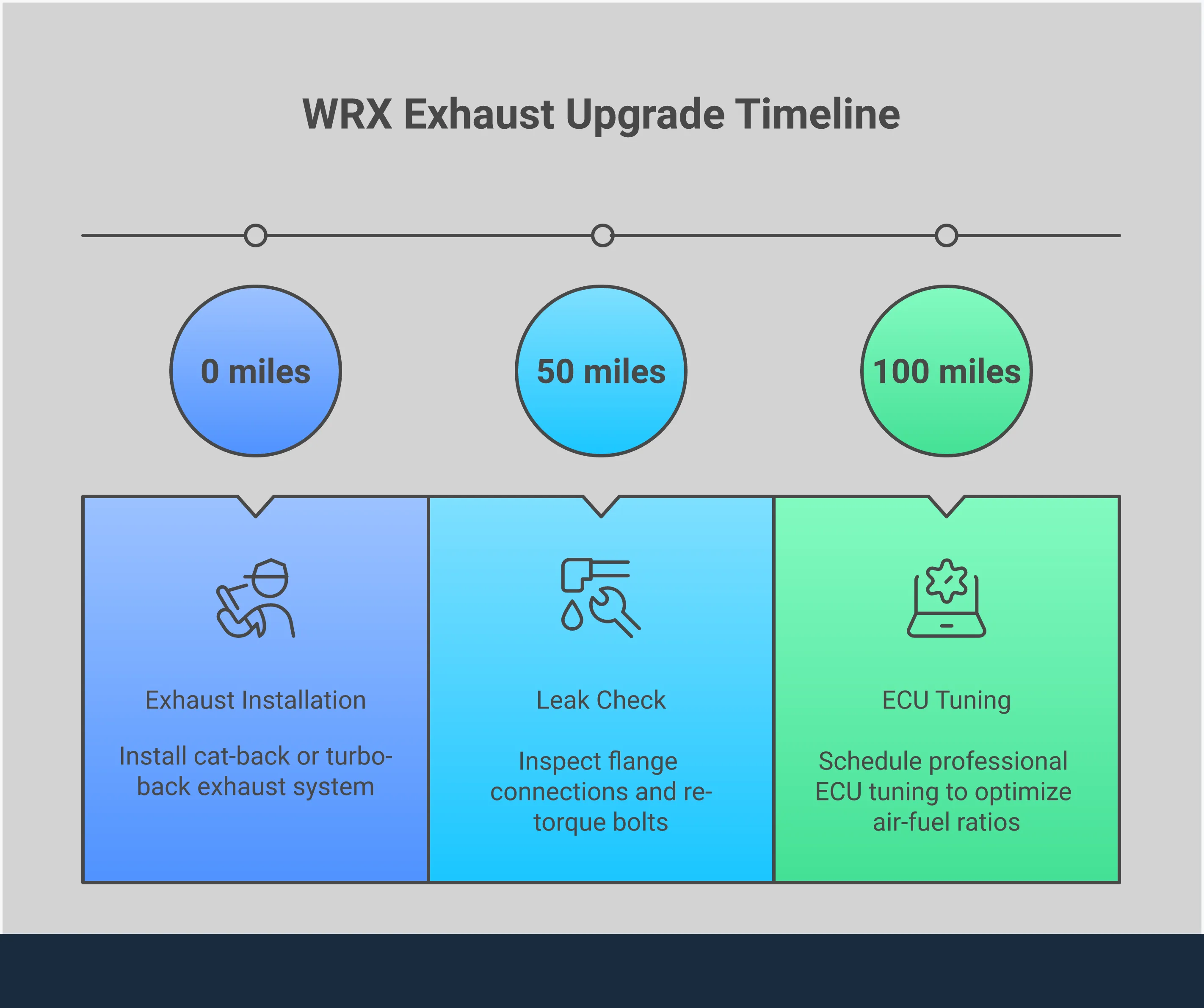
Dies ist eine der häufigsten Fragen, und die Antwort hängt von Ihrer Fahrzeugkonfiguration ab. Bei einer einfachen Auspuffanlage ab Hinterachse ist eine Motorabstimmung in der Regel nicht notwendig. Bei einer Komplettanlage ab Katalysator und insbesondere bei einer Abgasanlage ab Turbolader ist eine Abstimmung jedoch dringend zu empfehlen – und oft sogar erforderlich. Eine verbesserte Abgasanlage verändert die Abgasführung und damit die Effizienz der Motorbeatmung. Ohne Anpassung des Motorsteuergeräts an diese Änderung kann es zu einem falschen Luft-Kraftstoff-Gemisch kommen, was zu Leistungseinbußen oder sogar Motorschäden führen kann. Um das volle Potenzial Ihrer neuen Hardware auszuschöpfen, sind professionelle Motorabstimmungsdienste die beste Lösung.
Auspuffknallen erzielen
Das befriedigende Knistern oder „Plopp“, das man beim Gaswegnehmen aus dem Auspuff hört, ist ein Kennzeichen eines leistungsstarken Systems. Diese Geräusche entstehen, wenn geringe Mengen unverbrannten Kraftstoffs im heißen Abgassystem nach dem Verlassen des Motors entzündet werden. Zwar kann die Motorabstimmung Einfluss darauf nehmen, doch die Konstruktion des Auspuffs selbst spielt eine entscheidende Rolle. Systeme mit hohem Durchfluss und speziellen Resonatorkonstruktionen erzeugen dieses Knallen eher auf natürliche Weise. Marken wie Tomei sind beispielsweise bekannt für ihren aggressiven, klaren Klang, der das Knallen beinhaltet, ohne dabei rau zu wirken. Es ist ein erwünschter akustischer Effekt, der auf ein effizientes, durchflussoptimiertes System hinweist und oft eine natürliche Folge des Einbaus hochwertiger Performance-Teile ist.
Eine Warnung vor „Pops and Bangs“-Melodien
Es ist entscheidend, zwischen dem natürlichen Knallen einer Hochleistungsabgasanlage und dem lauten, wiederholten Knallen durch ein spezielles „Pops and Bangs“- oder „Crackle“-Tuning zu unterscheiden. Solche Tunings leiten absichtlich zu viel Kraftstoff in den Auspuff und verstellen den Zündzeitpunkt, um diese Explosionen zu erzwingen. Das mag zwar aggressiv klingen, wird aber von vielen in der Szene als geschmacklos empfunden und kann vor allem dem Motor erheblich schaden. Turbolader, Auslassventile und Katalysator können dadurch mit der Zeit beschädigt werden. Dieses erzwungene Knallen ist ein riskantes Unterfangen, bei dem die Motorgesundheit dem Lärm geopfert wird. Ein professionelles Tuning sollte stets sichere und zuverlässige Leistung priorisieren, nicht Soundeffekte, die zu teuren Reparaturen führen können.
So pflegen Sie Ihren Motor nach dem Upgrade
Nach dem Einbau sollten Sie mit Ihrem WRX eine Probefahrt machen und genau hinhören. Sie werden den neuen Auspuffklang sofort bemerken, der sich in den ersten paar hundert Kilometern, während sich das System einläuft, noch leicht verändern kann. Achten Sie auf ungewöhnliche Geräusche wie Klappern oder Zischen, die auf einen Einbaufehler hindeuten könnten. Die wichtigste Änderung betrifft die Art und Weise, wie Ihr Motor die Abgase ausstößt. Dies sollte zu einem verbesserten Ansprechverhalten und einem gleichmäßigeren Leistungsband führen, insbesondere wenn Sie das Upgrade mit einer Motorabstimmung kombiniert haben. Es empfiehlt sich, nach ein bis zwei Tagen Fahrt eine kurze Sichtprüfung durchzuführen, um sicherzustellen, dass alle Schrauben fest sitzen und alles korrekt verbaut ist.
Häufige Installationsprobleme und wie man sie behebt
Selbst bei perfekter Installation können kleinere Probleme auftreten. Am häufigsten ist eine Abgasleckage, die oft an den Dichtungen zwischen den Bauteilen auftritt. Eine Leckage lässt sich in der Regel an einem tickenden oder zischenden Geräusch erkennen, dessen Lautstärke sich mit der Motordrehzahl ändert. Die Behebung ist meist so einfach wie das Nachziehen der Flanschschrauben. Ein weiteres mögliches Problem ist Klappern, das auftritt, wenn die neuen Rohre zu nah am Chassis oder anderen Teilen verlaufen. Dies lässt sich oft durch Justieren der Abgashalterungen beheben. Nach dem Einbau einer kompletten Turbo-Back-Auspuffanlage kann die Motorkontrollleuchte aufgrund eines Fehlers an den Lambdasonden aufleuchten. Eine korrekte Motorabstimmung behebt dieses Problem jedoch.
Leistung (und Ihre Garantie) im Blick behalten
Ihr WRX sollte sich nach dem Upgrade reaktionsschneller und kraftvoller anfühlen. Achten Sie auf das Fahrverhalten – die Kraftentfaltung sollte gleichmäßig und konstant sein. Jegliches Ruckeln oder Stottern kann auf ein Problem mit der Abstimmung oder dem Einbau hinweisen. Die Investition in hochwertige Performance-Teile ist der erste Schritt, doch erst deren harmonisches Zusammenspiel schützt Ihren Motor wirklich. Bedenken Sie, dass umfangreiche Modifikationen Ihre Werksgarantie beeinträchtigen können. Deshalb bieten wir auf unsere Umbauten eine 12-monatige/12.000-Meilen-Motorgarantie. So können Sie Ihren Subaru beruhigt bis an seine Grenzen ausreizen, denn er profitiert von unserer Expertise.
Verwandte Artikel
- WRX 3-Zoll-Auspuffanlage: Der ultimative Kaufratgeber
- Die 5 besten Turbo-Back-Auspuffanlagen für Ihren WRX
Häufig gestellte Fragen
Ist nach dem Einbau einer Cat-Back-Auspuffanlage wirklich eine Motorabstimmung nötig? Obwohl eine Abstimmung für ein Cat-Back-System nicht zwingend erforderlich ist wie für ein Turbo-Back-System, wird sie dringend empfohlen. Eine Cat-Back-Auspuffanlage verbessert den Luftdurchsatz, und eine Motorabstimmung optimiert die Motorsteuerung, um diese Verbesserung voll auszuschöpfen. Ohne sie verschenken Sie potenzielle Leistung und ein besseres Ansprechverhalten. Betrachten Sie es als den letzten Schritt, um sicherzustellen, dass Ihr Motor mit der neuen Hardware so effizient und sicher wie möglich läuft.
Was ist der Hauptunterschied zwischen einer Axle-Back- und einer Cat-Back-Auspuffanlage? Die Wahl hängt von Ihrem Hauptziel ab. Wenn Sie einen aggressiveren Sound und eine einfache, kostengünstige Modifikation suchen, ist eine Axle-Back-Anlage ein guter Anfang. Sie ersetzt lediglich den Endschalldämpfer. Wenn Sie neben dem Sound auch eine spürbare Leistungssteigerung – einschließlich mehr PS und einem direkteren Ansprechverhalten – wünschen, ist eine Cat-Back-Anlage die bessere Investition. Sie ersetzt einen größeren Teil der Abgasanlage und reduziert so den Abgasgegendruck für ein echtes Leistungsplus.
Ich habe von „Auspuffdröhnen“ gehört. Was ist das und wie kann ich es vermeiden? Auspuffdröhnen ist dieses tieffrequente, summende Geräusch, das den Innenraum beim Fahren mit konstanter Geschwindigkeit, typischerweise auf der Autobahn, erfüllen kann. Es kann auf langen Fahrten sehr störend sein. Am besten vermeidet man es, indem man in eine Anlage eines renommierten Herstellers investiert. Marken wie Crawford, Cobb und AWE investieren viel Zeit in die Entwicklung ihrer Schalldämpfer und Resonatoren, um diese spezifischen Frequenzen zu eliminieren. So erhält man beim Beschleunigen einen kernigen Sound ohne störende Geräusche während der Fahrt.
Führt eine Abgasanlagen-Aufrüstung bei meinem WRX zu einem negativen Abgastest? Das hängt ganz vom eingebauten System ab. Axle-Back- und Cat-Back-Auspuffanlagen werden nach den Katalysatoren montiert und haben daher in der Regel keinen Einfluss auf die Abgaswerte. Sie sind in den meisten Regionen zulässig. Eine Turbo-Back-Anlage hingegen ersetzt das serienmäßige Hosenrohr und die Katalysatoren. Dies führt mit ziemlicher Sicherheit zu einem negativen Abgastest und ist typischerweise nur für den Einsatz im Gelände oder auf der Rennstrecke vorgesehen. Informieren Sie sich vor dem Kauf unbedingt über die geltenden Gesetze in Ihrer Region.
Wie wirkt sich ein Zubehörauspuff auf die Werksgarantie meines Autos aus? Rechtlich gesehen darf ein Autohaus Ihre Garantie nicht allein aufgrund des Einbaus eines Zubehörteils verweigern. Es muss nachweisen, dass Ihr neuer Auspuff den konkreten Schaden, dessen Garantie er nicht übernehmen will, direkt verursacht hat. Es ist höchst unwahrscheinlich, dass ein hochwertiges Abgassystem Probleme mit Ihrem Motor oder Getriebe verursacht. Da Ihre Beziehung zu Ihrer Werkstatt jedoch wichtig ist, empfiehlt es sich, Ihre Umbauten stets offenzulegen.