

Subaru Wilderness Höherlegungssatz: Ein vollständiger Kaufratgeber
Wer mit seinem serienmäßigen Forester Wilderness schon einmal auf anspruchsvollen Offroad-Strecken unterwegs war, kennt das unangenehme Gefühl, wenn der Unterboden an einem Stein aufsetzt. Oder vielleicht ist der Stoßfänger an einem steilen Hang im Erdreich hängen geblieben. In solchen Momenten wird einem klar, dass die Serienausstattung ihre Grenzen hat. Die Lösung: mehr Bodenfreiheit. Am besten erreicht man diese mit einem Höherlegungssatz für den Subaru Forester Wilderness . Dieses Upgrade bietet die nötige Höhe, um Hindernisse zu überwinden, die besseren Winkel für schwieriges Gelände und Platz für größere Reifen für optimale Traktion. So wird aus Angst vor Offroad-Strecken Selbstvertrauen.
Wichtigste Erkenntnisse
- Wählen Sie die Höherlegung passend zu Ihrem Einsatzzweck : Eine moderate Höherlegung von 2,5 bis 5 cm ist ideal für den Alltag und Wochenendausflüge, während ein System mit mehr als 5 cm für anspruchsvolles Offroad-Fahren und die Montage schwerer Ausrüstung notwendig ist. Ihr geplanter Einsatz sollte bei Ihrer Entscheidung im Vordergrund stehen.
- Schützen Sie die Geometrie Ihres Antriebsstrangs : Ein hochwertiges Höherlegungskit erhöht nicht nur die Fahrzeughöhe, sondern erhält auch die werkseitigen Fahrwerksgeometrien Ihres Subaru. Achten Sie auf Kits mit Komponenten wie Hilfsrahmen-Distanzstücken, um vorzeitigen Verschleiß an den Antriebswellen zu verhindern und langfristige Zuverlässigkeit zu gewährleisten.
- Schauen Sie über den Preis des Kits hinaus : Die Gesamtkosten einer Höherlegung umfassen das Kit selbst, den fachgerechten Einbau, die obligatorische Achsvermessung und die benötigten neuen Reifen. Planen Sie Ihr Budget für alle vier Komponenten ein, um eine erfolgreiche und vollständige Aufrüstung zu gewährleisten.
Was sind die tatsächlichen Vorteile eines Forester Wilderness Lifts?
Der Subaru Forester Wilderness ist schon ab Werk ein leistungsstarkes Fahrzeug, das für mehr als nur asphaltierte Straßen ausgelegt ist. Wer aber ernsthaft anspruchsvolle Offroad-Strecken erkunden und seine Abenteuer voll auskosten möchte, für den ist ein Höherlegungssatz eine der effektivsten Aufrüstungsmöglichkeiten. Die Höherlegung Ihres Foresters verändert nicht nur sein Aussehen, sondern verbessert seine Geländegängigkeit grundlegend. Sie gibt Ihnen das Vertrauen, weiter zu fahren, denn Sie wissen, dass Ihr Fahrzeug für die bevorstehenden Herausforderungen bestens gerüstet ist. Vom Überwinden von Steinen bis hin zur Montage größerer Reifen – ein hochwertiger Höherlegungssatz bildet die Basis für einen wirklich geländetauglichen Forester.
Überwinden Sie jedes Hindernis dank größerer Bodenfreiheit
Einer der unmittelbarsten und praktischsten Vorteile eines Höherlegungssatzes ist die erhöhte Bodenfreiheit. Diese bezeichnet den Abstand zwischen dem tiefsten Punkt des Fahrzeugunterbodens und dem Boden. Mehr Bodenfreiheit bedeutet, dass Sie größere Steine, tiefere Spurrillen und andere Hindernisse im Gelände überfahren können, ohne wichtige Bauteile wie Ölwanne, Auspuff oder Fahrwerk zu beschädigen. Diese zusätzliche Höhe ist unerlässlich für anspruchsvolle Offroad-Touren, bei denen unvorhersehbares Terrain zum Abenteuer dazugehört. Sie entscheidet darüber, ob Sie mühelos über ein Hindernis gleiten oder kilometerweit von der nächsten Straße entfernt auf dem Boden aufsetzen.
Bis zu 11,5 Zoll Bodenfreiheit werden erreicht.
Wie viel bringt eine Höherlegung tatsächlich? Mit einem hochwertigen 2-Zoll-Höherlegungssatz erreicht Ihr Forester Wilderness schätzungsweise 11,5 Zoll Bodenfreiheit. Dieses Upgrade schafft Platz für größere, griffigere Reifen, die die Gesamthöhe erhöhen und die Traktion deutlich verbessern. Eine fachgerechte Höherlegung besteht jedoch aus mehr als nur dem Einbau von Distanzscheiben. Die besten Upgrades für den Subaru Forester sind so konstruiert, dass die werkseitige Fahrwerksgeometrie Ihres Fahrzeugs erhalten bleibt. Dazu gehören Komponenten wie Hilfsrahmen-Distanzscheiben. Diese wichtige Funktion verhindert vorzeitigen Verschleiß an den Antriebswellen und anderen Antriebsteilen und sorgt dafür, dass Ihr Offroad-Fahrzeug jahrelang zuverlässig bleibt. Es handelt sich um eine grundlegende Modifikation, mit der Sie anspruchsvollere Strecken souverän bewältigen und Ihr ideales Overlanding-Setup zusammenstellen können.
Bezwinge anspruchsvollere Strecken mit besserer Leistung
Mehr Bodenfreiheit bedeutet direkt eine bessere Geländegängigkeit. Eine Höherlegung verbessert die Böschungs-, Rampen- und Rampenwinkel Ihres Foresters. Vereinfacht gesagt: Sie können steilere Anstiege bewältigen und scharfe Abhänge hinunterfahren, ohne mit der Front- oder Heckstoßstange aufzusetzen. Auch Kuppen und Hügel, an denen ein Serienfahrzeug scheitern würde, lassen sich problemlos überwinden. Diese Verbesserung eröffnet Ihnen völlig neue Strecken, die Ihnen zuvor vielleicht verschlossen waren. Mit den passenden Forester-Upgrades verwandeln Sie Ihren Forester vom Wochenend-Camper in ein souveränes Offroad-Fahrzeug, bereit für anspruchsvolle Abenteuer.
Erreiche diese aggressive, geländetaugliche Haltung
Neben den funktionalen Vorteilen verleiht ein Höherlegungssatz Ihrem Forester Wilderness eine aggressivere und imposantere Erscheinung. Die zusätzliche Bodenfreiheit sorgt für eine kraftvolle Optik, die Ihr Fahrzeug von anderen abhebt. Noch wichtiger ist jedoch, dass dadurch die nötige Freigängigkeit im Radkasten geschaffen wird, um größere, geländegängigere All-Terrain- oder Mud-Terrain-Reifen zu montieren. Diese größeren Reifen vervollständigen nicht nur den robusten Look, sondern bieten auch eine größere Aufstandsfläche für verbesserte Traktion auf losem Untergrund wie Erde, Sand und Schlamm. Die Kombination aus Höherlegung und größeren Reifen sieht nicht nur gut aus, sondern trägt auch zu besserer Stabilität und einem optimierten Fahrverhalten auf anspruchsvollen Strecken bei und macht Ihren Forester so leistungsfähig, wie er aussieht.
Welches Forester Wilderness Höherlegungskit ist das beste? Ein Vergleich
Sobald Sie sich für eine Höherlegung Ihres Forester Wilderness entschieden haben, geht es im nächsten Schritt um die Wahl des passenden Kits. Der Markt bietet zahlreiche hervorragende Optionen, und die beste Lösung hängt von Ihren individuellen Zielen ab. Wünschen Sie sich lediglich eine einfache Erhöhung der Fahrzeughöhe, um größere Reifen montieren und einen sportlicheren Look erzielen zu können, oder benötigen Sie ein robustes System für anspruchsvolle Offroad-Touren? Ihre Wahl beeinflusst alles – von der Bodenfreiheit und dem Fahrkomfort bis hin zum gesamten Fahrverhalten Ihres Fahrzeugs.
Eine fundierte Entscheidung erfordert mehr als nur die Höherlegung. Berücksichtigen Sie die verwendeten Materialien, die Auswirkungen des Kits auf die Fahrwerksgeometrie Ihres Fahrzeugs sowie den Ruf des Herstellers hinsichtlich Qualität und Kundenservice. Wir stellen Ihnen einige der Top-Anbieter vor, damit Sie das perfekte Kit für Ihre Abenteuer und Ihren Subaru finden. Jede dieser Marken bietet unterschiedliche Vorteile, sei es ein Fokus auf Sicherheitsstandards, eine komplette Fahrwerksüberarbeitung oder ein speziell für das Wilderness-Modell entwickeltes Design.
Crawford Performance Lift Solutions
Bei Crawford Performance entwickeln wir unsere Teile nach dem Systemprinzip. Unsere Höherlegungslösungen für den Subaru Forester sind nicht nur darauf ausgelegt, Ihr Fahrzeug anzuheben, sondern dabei auch die für Subaru typische Balance und das Fahrverhalten zu erhalten. Wir konzentrieren uns auf die Entwicklung von Komponenten, die optimal mit den vorhandenen Systemen Ihres Fahrzeugs und unseren anderen Leistungssteigerungen harmonieren. So erhalten Sie die gewünschte Bodenfreiheit und Geländegängigkeit, ohne Kompromisse beim Fahrkomfort oder der langfristigen Zuverlässigkeit einzugehen. Unsere Kits werden aus hochfesten Materialien gefertigt, um auch härtesten Bedingungen standzuhalten und Ihren Forester für jedes Gelände gerüstet zu machen.
LP Adventure Höherlegungssätze
LP Aventure ist in der Subaru-Offroad-Szene ein bekannter Name. Ihre Höherlegungskits sind speziell für Forester-Modelle entwickelt und bei Fahrern, die mehr Bodenfreiheit für Offroad-Abenteuer wünschen, sehr beliebt. Ein wichtiges Merkmal ihrer Kits ist die Einhaltung des Sicherheitsstandards FMVSS 126, der für die Funktionsfähigkeit des Stabilitätskontrollsystems Ihres Fahrzeugs unerlässlich ist. Mit über 20 Jahren Erfahrung im Offroad-Bereich stehen bei ihren Produkten Qualität und Zuverlässigkeit im Vordergrund. Sie sind daher eine hervorragende Wahl, um die Geländetauglichkeit und das Erscheinungsbild Ihres Forester zu verbessern.
Ironman 4x4 ATS-Systeme
Wenn Sie Ihr Fahrwerk komplett überholen möchten, ist das Ironman 4x4 ATS-System eine ernstzunehmende Option. Dieses Kit bietet eine Höherlegung um 5 cm (2 Zoll) mithilfe robuster Stoßdämpfer in Militärqualität mit Zweirohr-Design und Nitro-Gas-Technologie. Das Ergebnis ist nicht nur mehr Bodenfreiheit, sondern auch eine spürbare Verbesserung von Fahrkomfort, Stabilität und Kontrolle, insbesondere in unwegsamem Gelände. Das System ermöglicht zudem die Montage größerer Reifen für noch mehr Geländegängigkeit. Ironman 4x4 bietet eine beeindruckende 4-Jahres-Garantie ohne Kilometerbegrenzung – ein beruhigendes Gefühl für Fahrer, die ihre Fahrzeuge bis an die Grenzen ausreizen.
Anderson Design- und Fertigungsoptionen
Anderson Design & Fabrication (ADF) hat sich auf die Entwicklung von abenteuertauglichen Teilen für den Subaru Forester Wilderness spezialisiert. Das Produktsortiment ist darauf ausgerichtet, die Offroad-Performance und den Nutzen für Outdoor-Fans zu optimieren. ADF ist bekannt für die große Auswahl an Höherlegungsoptionen und Konfigurationen, mit denen Sie das Setup individuell an Ihre Bedürfnisse anpassen können. Starker Kundenservice und solide Garantien haben ADF eine treue Anhängerschaft in der Subaru-Community eingebracht. Wenn Sie eine spezielle Lösung für Ihren Wilderness suchen, sollten Sie sich das Angebot von ADF unbedingt genauer ansehen.
Was kostet ein Forester Wilderness Höherlegungssatz?
Wenn Sie Ihren Forester Wilderness höherlegen möchten, werden Sie sich als Erstes nach den Kosten fragen. Der Preis kann zwischen einigen Hundert und mehreren Tausend Dollar liegen und hängt ganz von Ihren Wünschen ab. Die Gesamtinvestition richtet sich nach dem gewählten Umbausatz, der Qualität der Komponenten und danach, ob Sie die Installation selbst durchführen oder einen Fachmann beauftragen.
Es gibt zwei Hauptwege: Distanzscheiben-Kits und komplette Fahrwerksysteme. Distanzscheiben-Kits sind die kostengünstigere Option und ermöglichen vor allem eine höhere Bodenfreiheit für einen aggressiveren Look und größere Reifen. Komplette Fahrwerksysteme sind zwar eine größere Investition, ersetzen aber wichtige Komponenten und sorgen so für eine deutliche Verbesserung der Offroad-Performance und des Fahrverhaltens. Die Unterschiede zwischen diesen Optionen zu verstehen, ist der erste Schritt, um ein realistisches Budget für Ihr Projekt festzulegen und die passenden Overlanding-Lösungen für Ihre Abenteuer zu finden.
Distanzscheiben-Kits: Die budgetfreundliche Option
Wenn Sie die Fahrzeughöhe unkompliziert und ohne großen finanziellen Aufwand erhöhen möchten, sind Distanzscheiben-Kits ein guter Anfang. Diese Kits kosten in der Regel zwischen 200 und 600 US-Dollar und funktionieren durch das Anbringen einer Distanzscheibe auf den vorhandenen Federbeinen Ihres Foresters. So erreichen Sie effektiv eine Höherlegung von 2,5 bis 5 cm, was Ihnen die nötige Bodenfreiheit für größere Reifen und eine souveränere Straßenlage im Gelände verschafft. Obwohl Distanzscheiben-Kits das Fahrzeug höherlegen, ist es wichtig zu wissen, dass sie die Fahrwerksleistung nicht grundlegend verändern. Sie sind eine ausgezeichnete Wahl für eine optische Aufwertung und leichte Offroad-Fahrten.
Üblicher Preisbereich: ab 160 US-Dollar
Wenn Sie sich nach Höherlegungskits für Ihren Forester Wilderness umsehen, werden Sie feststellen, dass die Preise je nach Ausführung, Material und Lieferumfang stark variieren. Für einen budgetfreundlichen Einstieg bieten sich Distanzscheiben-Kits an, die in der Regel ab etwa 160 US-Dollar erhältlich sind und bis zu 600 US-Dollar kosten können. Diese Kits ermöglichen eine einfache Höherlegung um 2,5 bis 5 cm und sorgen so für eine sportlichere Optik und mehr Platz für größere Reifen – ohne dass Sie viel Geld ausgeben müssen. Sie sind eine hervorragende Option, um das Erscheinungsbild Ihres Fahrzeugs zu verbessern und das Fahrverhalten auf leichten Offroad-Strecken zu optimieren. Beachten Sie jedoch, dass Distanzscheiben-Kits zwar Ihr Fahrzeug anheben, die Leistung Ihres Fahrwerks aber nicht grundlegend verändern. Daher eignen sie sich perfekt für optische Aufwertungen Ihres Forester und leichte Offroad-Abenteuer.
Wenn Sie anspruchsvollere Strecken befahren möchten, sollten Sie sich nach umfassenderen Systemen umsehen. Diese Kits, deren Preise zwischen 500 und über 1.200 US-Dollar liegen können, enthalten oft wichtige Komponenten wie Hilfsrahmen-Distanzstücke. Diese Distanzstücke korrigieren die Fahrwerksgeometrie, verhindern vorzeitigen Verschleiß an Teilen wie den Gleichlaufgelenken und erhalten das Fahrverhalten wie im Serienzustand. Im oberen Preissegment finden Sie komplette Fahrwerksysteme, die Ihre serienmäßigen Stoßdämpfer und Federn durch robuste, leistungsoptimierte Komponenten ersetzen. Diese Systeme bieten eine deutliche Verbesserung der Geländegängigkeit und des Fahrkomforts und sind daher unverzichtbare Lösungen für alle, die schweres Gepäck transportieren oder anspruchsvolles Gelände bewältigen.
Abschließend ist es wichtig zu bedenken, dass der Preis des Höherlegungssatzes nur einen Teil der Gesamtkosten ausmacht. Für eine fachgerechte Montage müssen Sie weitere Ausgaben einkalkulieren. Sofern Sie kein erfahrener Mechaniker sind, sollten Sie die Kosten für einen professionellen Einbau einplanen, der eine korrekte und sichere Montage gewährleistet. Nach jeder Höherlegung ist eine professionelle Achsvermessung unerlässlich, um die Fahrzeuggeometrie zu korrigieren und ungleichmäßigen Reifenverschleiß zu vermeiden. Und natürlich werden Sie wahrscheinlich in einen neuen Satz größerer Geländereifen investieren wollen, um die Höherlegung abzurunden und die neu gewonnene Bodenfreiheit optimal zu nutzen. Wenn Sie diese zusätzlichen Kosten von Anfang an einplanen, verläuft Ihr Umbau reibungslos.
Komplette Fahrwerksysteme: Ein Premium-Leistungs-Upgrade
Für alle, die höhere Ansprüche an ihr Fahrzeug stellen, ist ein komplettes Fahrwerkssystem die ultimative Aufrüstung. Diese Kits, deren Preise zwischen 1.500 und über 3.000 US-Dollar liegen können, ersetzen die serienmäßigen Stoßdämpfer, Federbeine und Federn durch robuste Performance-Teile, die speziell für anspruchsvolles Gelände entwickelt wurden. Oftmals verwenden diese Systeme hochfeste Materialien und fortschrittliche Stoßdämpfertechnologie, um das Handling zu verbessern, den Federweg zu vergrößern und für ein komfortableres Fahrgefühl auf unebenem Untergrund zu sorgen. Viele Premium-Kits bieten zudem hervorragende Garantien, die Ihnen zusätzliche Sicherheit geben. Diese Option ist ideal für ambitionierte Offroad-Fahrer und Overlander, die abseits befestigter Straßen auf Zuverlässigkeit und Geländegängigkeit angewiesen sind.
Typischer Preisbereich: 750 $ - 1.200 $ +
In dieser Preisklasse geht es über einfache optische Höherlegungen hinaus und hin zu echten Leistungsverbesserungen. Für diese Investition erhalten Sie in der Regel ein umfassendes Kit mit speziell entwickelten Komponenten wie neuen Federn und Stoßdämpfern, die den Anforderungen im Gelände gewachsen sind. Diese Systeme verbessern das Handling und die Langlebigkeit Ihres Foresters im Gelände und sorgen gleichzeitig für komfortables Fahrverhalten auf der Straße. Der Preis spiegelt die höheren Materialqualität, umfangreiche Forschung und Entwicklung sowie ein Design wider, das optimal auf die Geometrie Ihres Fahrzeugs abgestimmt ist. Dies ist die ideale Lösung für alle, die eine zuverlässige Höherlegung wünschen, die die Geländegängigkeit ihres Fahrzeugs für anspruchsvolle Offroad-Abenteuer kompromisslos verbessert.
Verständnis von steiferen Federraten
Viele Komplettfahrwerke beinhalten Federn mit einer höheren Federrate als die serienmäßigen Federn. Dies ist ein entscheidendes Merkmal für jedes Fahrzeug, das für Offroad-Touren oder den Transport schwerer Ausrüstung vorgesehen ist. Straffere Federn verhindern, dass die Federung unter dem Gewicht von Dachzelten, Stoßstangen und anderer Ausrüstung durchhängt. Dies ist unerlässlich für die Bodenfreiheit und den Fahrkomfort. Ein gut durchdachtes Kit enthält außerdem Komponenten wie Hilfsrahmen-Distanzstücke zur Korrektur der Federungswinkel und beugt so vorzeitigem Verschleiß der Antriebswellengelenke vor. Dieser ganzheitliche Ansatz gewährleistet das optimale Zusammenspiel aller Performance-Teile und sorgt für eine Höherlegung, die sowohl leistungsstark als auch langlebig ist.
Budgetplanung für Installation und Ausrichtung
Der Preis auf der Verpackung ist nicht der Endpreis. Die fachgerechte Montage ist ein wichtiger Faktor und kostet je nach Werkstatt und Komplexität des Kits oft zwischen 500 und 1.200 US-Dollar. Obwohl sie die Kosten erhöht, ist eine korrekte Montage unerlässlich. Viele Berichte über „verpatzte Fahrten“ gehen auf minderwertige Kits oder Pfusch bei der Montage zurück. Nach der Höherlegung ist unbedingt eine professionelle Achsvermessung erforderlich, die weitere 100 bis 200 US-Dollar kostet. Vergessen Sie schließlich nicht, die größeren Reifen einzuplanen, die die neue Optik und Geländegängigkeit Ihres Foresters perfekt abrunden.
Ihre Checkliste für die Auswahl des perfekten Höherlegungssatzes
Wenn Sie sich für eine Höherlegung Ihres Forester Wilderness entschieden haben, ist der nächste Schritt die Wahl des richtigen Kits. Angesichts der vielen Optionen auf dem Markt kann man leicht den Überblick verlieren. Nicht alle Höherlegungskits sind gleich, und die Wahl des richtigen Kits hat einen erheblichen Einfluss auf die Leistung, Sicherheit und Lebensdauer Ihres Fahrzeugs. Um eine fundierte Entscheidung zu treffen, sollten Sie nicht nur die Höherlegung selbst berücksichtigen. Sie müssen die Qualität der Komponenten, die Kompatibilität des Kits mit den vorhandenen Systemen Ihres Subaru und die Eignung für Ihre individuellen Bedürfnisse im Gelände beachten.
Betrachten Sie ein Höherlegungskit als grundlegende Verbesserung. Ein billiges, schlecht konstruiertes Kit kann später zu einer Reihe von Problemen führen, von vorzeitigem Verschleiß der Antriebskomponenten bis hin zu einem unkomfortablen Fahrgefühl. Ein hochwertiges, durchdachtes System hingegen verbessert die Leistungsfähigkeit Ihres Foresters, ohne seine Stabilität zu beeinträchtigen. Wir erläutern Ihnen die wichtigsten Faktoren, damit Sie in ein Kit investieren können, das Ihnen die gewünschte Leistung und die nötige Zuverlässigkeit für jede Fahrt bietet – egal ob Sie anspruchsvolles Gelände bewältigen oder gemütlich über die Autobahn cruisen.
Achten Sie auf hochwertige Materialien und Sicherheitsmerkmale.
Bei der Modifizierung des Fahrwerks Ihres Fahrzeugs sollte Sicherheit oberste Priorität haben. Achten Sie auf Höherlegungssätze aus hochwertigen Materialien wie dickwandigem Stahl und Flugzeugaluminium, da diese Komponenten für die Belastungen im Gelände ausgelegt sind. Es empfiehlt sich außerdem, einen Satz zu wählen, der die US-amerikanische Norm FMVSS 126 (Federal Motor Vehicle Safety Standard) erfüllt. Diese Zertifizierung stellt sicher, dass die Höherlegung das elektronische Stabilitätsprogramm (ESP) Ihres Foresters, ein wichtiges Sicherheitsmerkmal, nicht beeinträchtigt. Die Investition in hochwertige Performance-Teile eines renommierten Herstellers gibt Ihnen die Gewissheit, dass Ihr Fahrzeug in jedem Gelände sicher und berechenbar bleibt.
Gängige Materialien: Edelstahl 304 vs. HDPE
Die in einem Höherlegungssatz verwendeten Materialien spiegeln dessen Qualität und Langlebigkeit wider. Die Distanzstücke bestehen häufig aus einem von zwei gängigen Materialien: Edelstahl 304 oder HDPE. Edelstahl ist eine Premium-Wahl, bekannt für seine außergewöhnliche Festigkeit und Beständigkeit gegen Rost und Korrosion. Hochwertige Sätze verwenden oft WIG-geschweißten Edelstahl 304 für wichtige Strukturbauteile wie die Distanzstücke der oberen Montageplatte. Dieses Verfahren gewährleistet, dass das Teil der enormen Belastung beim Offroad-Fahren über Jahre hinweg standhält. Wenn Sie in Performance-Teile für Ihren Forester investieren, bietet die Stahlkonstruktion die langfristige Zuverlässigkeit, die für anspruchsvolle Abenteuer erforderlich ist.
Ein weiteres gängiges Material ist HDPE, die Abkürzung für Polyethylen hoher Dichte. Dabei handelt es sich nicht um gewöhnlichen Kunststoff, sondern um ein extrem robustes und widerstandsfähiges Polymer, das aufgrund seiner Beständigkeit gegenüber extremen Temperaturen – von sengender Hitze bis hin zu eisiger Kälte – ausgewählt wurde. HDPE ist ein langlebiges und kostengünstiges Material, das in vielen Anwendungsbereichen seinen Zweck bestens erfüllt. Obwohl Metall eine solide Wahl darstellt, gilt es allgemein als das überlegene Material für wichtige Fahrwerkskomponenten, die das Gewicht des Fahrzeugs tragen und Stöße absorbieren. Die Entscheidung zwischen den beiden Materialien hängt oft von der Konstruktionsphilosophie des Herstellers und der geplanten Nutzungsintensität des Kits ab.
Sicherheitswarnungen wie Prop 65 verstehen
Möglicherweise bemerken Sie einen Aufkleber mit dem Warnhinweis „Proposition 65“ auf Ihrem Höherlegungssatz und fragen sich, was das bedeutet. Keine Sorge, das ist bei Autoteilen üblich. Prop 65 ist ein kalifornisches Gesetz, das Unternehmen verpflichtet, Warnhinweise anzubringen, wenn ihre Produkte eine der über 900 Chemikalien enthalten, die in Kalifornien als krebserregend oder fortpflanzungsschädigend gelten. Da viele gängige Industriematerialien – darunter Metalle, Kunststoffe und Beschichtungen – Spuren dieser Chemikalien enthalten können, bringen Hersteller, die ihre Produkte landesweit vertreiben, diesen Hinweis oft auf all ihren Produkten an, um die Einhaltung der Vorschriften zu gewährleisten. Der Warnhinweis bedeutet nicht, dass das Produkt unsicher in der Anwendung oder im Einbau ist.
Betrachten Sie den Warnhinweis gemäß Proposition 65 eher als Informationspflicht denn als Warnsignal hinsichtlich der Produktqualität. Solche Warnhinweise finden sich auf einer Vielzahl von Konsumgütern. Im Zusammenhang mit Ihrem Höherlegungssatz für den Forester bedeutet er lediglich, dass das Produkt den kalifornischen Vorschriften entspricht. Er ist kein Hinweis auf einen Mangel oder eine Gefahr bei der vorgesehenen Verwendung. Für alle, die mehr über die Details erfahren möchten, bietet die offizielle Website zu Proposition 65 in Kalifornien detaillierte Informationen zum Gesetz und den aufgeführten Chemikalien.
Stellen Sie sicher, dass das Kit Ihre Antriebsstranggeometrie schützt.
Durch die Höherlegung Ihres Forester verändert sich die Fahrwerksgeometrie. Wird dies nicht fachgerecht behoben, können die Antriebswellen, Achsen und Gelenkwellen zusätzlich belastet werden. Ein hochwertiges Höherlegungskit korrigiert diese Winkel und sorgt für die korrekte Ausrichtung des Antriebsstrangs. Achten Sie auf Kits mit Hilfsrahmen-Distanzstücken. Diese senken den gesamten Hilfsrahmen ab, um die Achswinkel nahe an den Werksvorgaben zu halten. Dieses kleine, aber entscheidende Bauteil beugt vorzeitigem Verschleiß des Antriebsstrangs vor und gewährleistet so einen reibungslosen und zuverlässigen Betrieb Ihres Subaru über viele Jahre. Der Erhalt der Fahrzeuggeometrie ist bei allen unseren Subaru Forester-Upgrades unerlässlich.
Die Bedeutung von versetzten Konstruktionen und Mehrgelenk-Abstandshaltern
Bei der Prüfung eines Höherlegungssatzes sind Details wie die versetzte Konstruktion und die Verwendung von Mehrlenker-Distanzstücken entscheidend, um ein durchdachtes Upgrade von einer einfachen Höhenerhöhung zu unterscheiden. Die versetzte Konstruktion der vorderen Distanzstücke ist unerlässlich, da sie die korrekte Ausrichtung der Räder nach der Höherlegung gewährleistet, das Fahrverhalten Ihres Forester erhält und ungleichmäßigen Reifenverschleiß verhindert. An der Hinterachse erfüllen Mehrlenker-Distanzstücke eine ähnliche Funktion, indem sie die korrekten Aufhängungswinkel beibehalten. Dies ist wichtig, um die Antriebswellengelenke vor vorzeitigem Verschleiß durch den durch die Höherlegung vergrößerten Winkel zu schützen. Diese Komponenten sind nicht nur optionales Zubehör, sondern Kennzeichen eines gut konstruierten Satzes, der auf die Geometrie Ihres Subaru abgestimmt ist und sicherstellt, dass die Leistungsteile die Fahreigenschaften verbessern, ohne neue Probleme zu verursachen.
Unterstützt es Ihre Ausrüstung und Ihr Zubehör?
Wie Sie Ihren Forester Wilderness nutzen, sollte Ihre Wahl des Höherlegungssatzes maßgeblich beeinflussen. Wenn Sie häufig schweres Gepäck für Offroad-Touren transportieren – wie Dachzelt, Ersatzreifen und Bergungsausrüstung – benötigen Sie ein Fahrwerk, das dieses zusätzliche Gewicht tragen kann. Viele Sätze bieten verschiedene Federraten an, beispielsweise für mittlere oder hohe Belastungen. Eine mittlere Federrate ist oft ideal für den Alltag und leichte Wochenendausflüge. Bei dauerhafter Beladung verhindert eine hohe Federrate jedoch ein Durchhängen und erhält die Fahreigenschaften. Prüfen Sie sorgfältig Ihre typische Zuladung, um einen Satz auszuwählen, der Ihre Offroad-Pläne optimal unterstützt.
Prüfen Sie die Garantiebedingungen und den Herstellersupport.
Die Herstellergarantie ist ein starkes Indiz für das Vertrauen des Herstellers in sein Produkt. Ein Höherlegungssatz ist eine bedeutende Investition. Achten Sie daher auf eine solide Garantie, die Material- und Verarbeitungsfehler sowie vorzeitigen Verschleiß abdeckt. Einige der besten Sätze auf dem Markt bieten mehrjährige oder sogar kilometerunbegrenzte Garantien. Neben der Garantie sollten Sie auch den Ruf des Herstellers in puncto Kundenservice berücksichtigen. Sollten Sie oder Ihre Werkstatt bei der Installation auf Probleme stoßen, kann der Zugang zu kompetenter Unterstützung entscheidend sein. Ein Unternehmen, das mit einer hervorragenden Garantie und einem gut erreichbaren Service hinter seinen Produkten steht, ist vertrauenswürdig.
Wie viel Hubkraft benötigen Sie tatsächlich?
Die richtige Höherlegung Ihres Forester Wilderness hängt nicht von der Wahl des höchsten Wertes ab. Die optimale Höhe ist eine individuelle Entscheidung, die ganz von Ihrer Fahrzeugnutzung abhängt. Benötigen Sie etwas mehr Bodenfreiheit für Wochenendausflüge oder planen Sie ein Fahrzeug für anspruchsvolle Offroad-Strecken? Jeder Einsatzbereich erfordert eine andere Herangehensweise. Die perfekte Balance zwischen Geländegängigkeit und Fahrkomfort auf der Straße ist entscheidend. Überlegen Sie sich Ihre typischen Abenteuer, Ihren täglichen Arbeitsweg und Ihre langfristigen Ziele für Ihren Subaru, bevor Sie sich für eine bestimmte Höherlegung entscheiden.
1-2 Zoll: Perfekt für Wochenend-Krieger
Für die meisten Forester Wilderness-Besitzer ist eine Höherlegung um 2,5 bis 5 cm optimal. Diese moderate Erhöhung sorgt für eine spürbare Verbesserung der Bodenfreiheit und hilft Ihnen, Steine und Spurrillen auf Forststraßen zu überwinden, ohne das Fahrverhalten Ihres Fahrzeugs im Alltag wesentlich zu verändern. Sie bietet Ihnen außerdem genügend Platz für etwas größere Geländereifen, was die Traktion und Haltbarkeit verbessern kann. Zwar ist eine Höherlegung nicht immer notwendig, um größere Reifen zu montieren, doch diese Höhe gewährleistet ausreichend Freiraum, um ein Schleifen der Reifen während des Federwegs zu vermeiden. Eine Höherlegung um 2,5 bis 5 cm aus unserem Subaru Forester Upgrade-Sortiment ist die ideale Lösung für alle, die ihren SUV unter der Woche als Alltagsfahrzeug und am Wochenende als Abenteuerfahrzeug nutzen.
2+ Zoll: Für den ambitionierten Offroader
Wenn Sie anspruchsvollere Strecken und herausfordernde Hindernisse bewältigen möchten, bietet Ihnen eine Höherlegung um mindestens fünf Zentimeter die nötige Geländegängigkeit. Diese deutliche Erhöhung der Bodenfreiheit maximiert die Böschungswinkel und ermöglicht die Montage deutlich größerer Reifen für schwieriges Terrain. Allerdings erfordert eine so hohe Höherlegung Ihres Foresters ein umfassenderes System. Für eine fachgerechte Montage benötigen Sie mehr als nur Distanzscheiben. Achten Sie auf Komplettsets, die Komponenten zur Korrektur der Fahrwerksgeometrie und zur Vermeidung vorzeitigen Verschleißes der Antriebswellen enthalten. Bei einem ernsthaften Offroad-Umbau sind hochwertige Komponenten unerlässlich, da eine größere Höherlegung die Fahrzeugkomponenten stärker beansprucht.
Wie sich die Wahl des Fahrwerks auf die Reifengröße auswirkt
Die Fahrzeughöhe und die Reifengröße hängen eng zusammen. Ein Höherlegungssatz schafft zwar den nötigen Platz, aber die Reifen sind es letztendlich, die Achsen und das Differential anheben. Bevor Sie sich für eine Höherlegung entscheiden, legen Sie die gewünschte Reifengröße fest. Dies hilft Ihnen, die minimale Höherlegung zu bestimmen, die erforderlich ist, um Schleifen zu vermeiden und die volle Federwegsfreiheit zu gewährleisten. Eine Höherlegung um 7,6 cm (3 Zoll) mit Serienreifen bringt nicht die volle Leistungssteigerung und kann unproportioniert aussehen. Umgekehrt führt der Versuch, übergroße Reifen mit zu geringer Höherlegung zu montieren, zu Problemen mit der Bodenfreiheit. Die gemeinsame Planung dieser beiden Verbesserungen stellt sicher, dass alle Leistungskomponenten optimal zusammenarbeiten und ein leistungsstarkes und zuverlässiges Fahrzeug entsteht.
Essenzielle Upgrades zur Ergänzung Ihres Höherlegungssatzes
Der Einbau eines Höherlegungssatzes ist ein fantastischer erster Schritt und bildet die Grundlage für Ihr Fahrzeug. Um die neu gewonnene Höhe und Geländegängigkeit optimal zu nutzen, sollten Sie einige weitere wichtige Verbesserungen in Betracht ziehen. Eine Höherlegung verändert die Geometrie und den Schwerpunkt Ihres Foresters. Die Kombination mit den passenden Komponenten sorgt für ein stimmiges Gesamtbild. Diese zusätzlichen Modifikationen dienen nicht nur der optischen Aufwertung, sondern verbessern auch die Leistung, erhalten die Zuverlässigkeit und gewährleisten, dass Ihr Fahrzeug die neuen Anforderungen sicher bewältigt. Von der Feinabstimmung des Fahrwerks bis hin zur Bewältigung schwerer Lasten – diese Upgrades machen Ihr geländetaugliches Fahrzeug komplett.
Verbesserte Stoßdämpfer und Querlenker für höhere Fahrwerke
Bei einer Höherlegung von fünf Zentimetern oder mehr stoßen die serienmäßigen Stoßdämpfer und Querlenker oft an ihre Grenzen. Wer in unwegsamem Gelände optimale Fahreigenschaften benötigt, sollte das Fahrwerk komplett überholen. Der Einbau von robusten Stoßdämpfern und Federbeinen mit langem Federweg sorgt für bessere Dämpfung und Kontrolle, gleicht Unebenheiten auf der Strecke aus und verbessert die Stabilität. Zusätzlich können Zubehör-Querlenker die durch die Höherlegung veränderte Fahrwerksgeometrie korrigieren, die Spurtreue gewährleisten und vorzeitigen Reifenverschleiß verhindern. Die Investition in ein komplettes System aus hochwertigen Performance-Teilen garantiert, dass alle Komponenten optimal aufeinander abgestimmt sind und beste Ergebnisse erzielen.
Zusatzblattsysteme und Abstandshalter für hohe Lasten
Ihr Forester Wilderness ist für Abenteuer gebaut, und das bedeutet oft, ihn mit Ausrüstung vollzupacken. Wenn Sie ein Dachzelt, ein vollwertiges Reserverad, Bergungsausrüstung und Kühlboxen mitnehmen, erhöht sich das Gewicht Ihres Fahrzeugs schnell um mehrere hundert Kilogramm. Dieses zusätzliche Gewicht kann, selbst mit einem Höherlegungssatz, zum Absacken der Hinterachse führen, was die Bodenfreiheit verringert und das Fahrverhalten negativ beeinflusst. Um dem entgegenzuwirken, sollten Sie den Einbau von steiferen Federn oder eines Zusatzfederblattsystems in Betracht ziehen. Diese Komponenten sind darauf ausgelegt, dauerhaft hohe Lasten zu tragen, Ihren Forester in der Waagerechten zu halten und die korrekte Fahrzeughöhe wiederherzustellen. Die Wahl der richtigen Federrate für Ihre übliche Zuladung ist ein entscheidender Faktor für eine effektive Offroad-Lösung.
Entkopplung der Stabilisatoren für maximale Verschränkung
Im Gelände ist maximaler Bodenkontakt der Reifen für optimale Traktion entscheidend. Hier kommt die Achsverschränkung – die Fähigkeit der Räder, sich unabhängig voneinander auf und ab zu bewegen – ins Spiel. Der serienmäßige Stabilisator sorgt zwar für Stabilität auf der Straße, kann diese Bewegung aber im Gelände einschränken. Entkoppelbare Stabilisatoren sind eine sinnvolle Aufrüstung, mit der Sie den Stabilisator vor anspruchsvollen Offroad-Passagen vorübergehend lösen können. Dadurch kann sich die Federung voll entfalten, was die Geländegängigkeit Ihres Foresters verbessert und das Überfahren von Steinen und tiefen Spurrillen deutlich erleichtert. Es ist eine der effektivsten Aufrüstungen für den Subaru Forester im anspruchsvollen Gelände.
Einbau Ihres Höherlegungssatzes: Was Sie erwartet
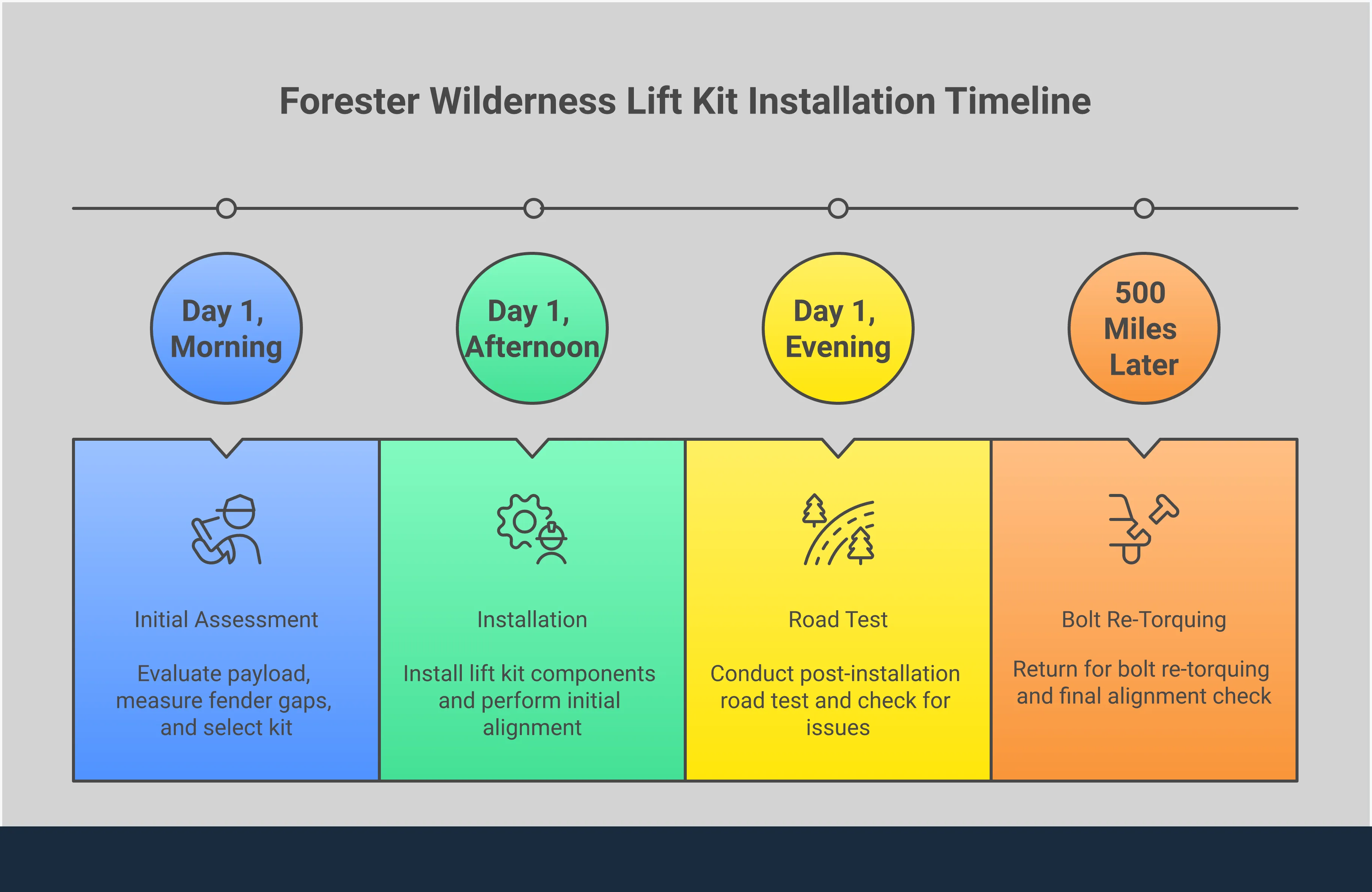
Der Einbau eines Höherlegungssatzes ist eine bedeutende Verbesserung, aber mit dem nötigen Wissen ist er unkompliziert. Ob Sie ein erfahrener Hobbyschrauber sind oder die Arbeit lieber einem Profi überlassen – die Kenntnis der einzelnen Schritte hilft Ihnen bei der Vorbereitung. Ziel ist es, die neuen Performance-Teile korrekt einzubauen und gleichzeitig die Sicherheit und das Fahrverhalten Ihres Foresters zu erhalten. Ein hochwertiger Höherlegungssatz ist so konstruiert, dass er sich nahtlos in das Fahrwerk Ihres Fahrzeugs einfügt. Der Einbau erfordert jedoch Präzision. Es geht um mehr als nur um zusätzliche Höhe; es geht darum, die Fahrzeuggeometrie sorgfältig an die neue Bodenfreiheit anzupassen. Wenn Sie sich die Zeit nehmen, alles richtig zu machen, profitieren Sie von allen Vorteilen der Höherlegung ohne Nachteile. Von der Auswahl des richtigen Werkzeugs bis zur finalen Achsvermessung ist jeder Schritt entscheidend für eine erfolgreiche und zuverlässige Modifikation, die Ihnen sowohl auf der Straße als auch im Gelände gute Dienste leisten wird.
Die benötigten Werkzeuge und der Platz
Bevor Sie beginnen, stellen Sie sicher, dass Sie das richtige Werkzeug und einen sicheren Arbeitsplatz haben. Ein komplettes Höherlegungskit enthält zwar alle notwendigen Distanzstücke, Halterungen und Befestigungsteile, das Werkzeug müssen Sie jedoch selbst besorgen. Sie benötigen einen soliden Satz metrischer Steckschlüssel und Schraubenschlüssel, einen zuverlässigen Drehmomentschlüssel zum Anziehen der Schrauben mit dem vorgeschriebenen Drehmoment, stabile Unterstellböcke und einen Wagenheber. Je nach Kit benötigen Sie möglicherweise auch Federspanner. Ihr Arbeitsbereich sollte eben und waagerecht sein, wie beispielsweise ein Garagenboden oder eine gepflasterte Einfahrt. Diese Arbeit sollten Sie nicht an einem Hang oder auf weichem Untergrund durchführen. Sicherheit hat oberste Priorität, daher sind ein stabiler Arbeitsbereich und die richtige Ausrüstung unerlässlich.
Sollten Sie es selbst installieren oder einen Fachmann beauftragen?
Ob Sie den Höherlegungssatz selbst einbauen oder einen Fachmann beauftragen, hängt von Ihren mechanischen Kenntnissen, Ihrem Werkzeug und Ihrem Selbstvertrauen ab. Wenn Sie gerne an Fahrwerkskomponenten arbeiten und ein freies Wochenende haben, kann der Selbsteinbau ein sehr lohnendes Projekt sein. Die meisten Hersteller bieten detaillierte Einbauanleitungen und Drehmomentangaben an. Sollten Sie jedoch unsicher sein oder wenig Zeit haben, ist es völlig in Ordnung, die Arbeit den Experten zu überlassen. Ein professioneller Einbauer in einer auf Subarus spezialisierten Werkstatt verfügt über die Erfahrung und die spezielle Ausrüstung, um die Arbeit effizient und korrekt auszuführen und Ihnen so ein gutes Gefühl zu geben. Dank ihrer Expertise ist sichergestellt, dass jede Komponente perfekt passt, was für die langfristige Leistung Ihres Fahrzeugs entscheidend ist.
Installationszeit und Schwierigkeitsgrad verstehen
Die meisten Hersteller geben eine geschätzte Einbauzeit und einen Schwierigkeitsgrad an, damit Sie den Umfang des Projekts besser einschätzen können. Diese Angaben können von zwei bis drei Stunden für ein einfaches Distanzscheiben-Set bis zu sechs Stunden oder mehr für ein komplettes Fahrwerk reichen. Oft wird auch ein Schwierigkeitsgrad angegeben, beispielsweise 3 von 5. Dies deutet darauf hin, dass die Arbeit für jemanden mit etwas Erfahrung im Mechanikerhandwerk und einem guten Werkzeugsatz gut zu bewältigen ist. Diese Angaben sollten Sie jedoch nur als Richtwert betrachten. Die tatsächliche Zeit kann je nach Ihren Fähigkeiten, dem vorhandenen Werkzeug und eventuell festsitzenden Schrauben – ein häufiges Problem bei Arbeiten am Fahrwerk – variieren. Planen Sie daher immer etwas mehr Zeit ein, um sorgfältig und sicher arbeiten zu können.
Der Reiz von 100% Bolt-On-Kits
Wenn ein Kit als „100 % Bolt-on“ beworben wird, bedeutet das, dass für die Montage kein Schneiden, Bohren oder Schweißen erforderlich ist. Alle Komponenten sind so konstruiert, dass sie an den vorhandenen Befestigungspunkten Ihres Foresters montiert werden können. Dies ist aus mehreren Gründen ein entscheidender Vorteil. Erstens ist die Modifikation vollständig reversibel, was den Wiederverkaufswert Ihres Fahrzeugs erhält. Zweitens zeugt es von hochwertiger Ingenieurskunst. Ein gut konstruiertes Bolt-on-Kit integriert sich nahtlos in das Fahrwerk Ihres Fahrzeugs und passt dessen Geometrie präzise an die neue Fahrzeughöhe an, während gleichzeitig der für Ihren Subaru typische Fahrkomfort erhalten bleibt. Diese Kits sind eine zuverlässige Wahl für alle Forester-Upgrades, da sie mit Ihrem Fahrzeug harmonieren, anstatt es zu beeinträchtigen.
Häufige Installationshürden und warum die Ausrichtung entscheidend ist
Einer der größten Irrtümer über Höherlegungssätze ist, dass sie den Fahrkomfort beeinträchtigen. Diese Sorge rührt meist von Berichten über minderwertige Sätze oder unsachgemäße Montage her. Ein gut konstruierter Satz ist jedoch so ausgelegt, dass er bei korrekter Installation das Fahrverhalten und den Komfort Ihres Foresters erhält. Der wichtigste Schritt nach der Montage ist die professionelle Achsvermessung. Diese ist unerlässlich. Durch die Höherlegung verändert sich die Fahrwerksgeometrie, und eine Achsvermessung ist notwendig, um Sturz, Nachlauf und Spur zu korrigieren. Wird dieser Schritt ausgelassen, führt dies zu schlechtem Fahrverhalten, ungleichmäßigem Reifenverschleiß und potenziellen Sicherheitsrisiken. Investieren Sie in hochwertige Subaru Forester-Upgrades und lassen Sie die Achsvermessung abschließen, stellen Sie sicher, dass Ihr höhergelegter Forester so gut fährt, wie er aussieht.
Vermeidung häufiger Probleme wie Geräusche nach der Installation
Nichts trübt die Freude über einen frisch höhergelegten Forester so sehr wie unerwartete Klapper-, Quietsch- oder Knarrengeräusche bei der ersten Fahrt. Diese Geräusche sind keine normale Begleiterscheinung der Höherlegung, sondern Anzeichen dafür, dass etwas nicht stimmt. Meistens lassen sich Geräusche nach dem Einbau auf zwei Dinge zurückführen: die Qualität der Bauteile oder die Präzision des Einbaus. Lose Schrauben, die nicht mit dem vom Hersteller vorgegebenen Drehmoment angezogen wurden, sind eine Hauptursache für Klappergeräusche. Ebenso können minderwertige Kits mit ungenauer Passform unerwünschte Bewegungen zwischen den Teilen ermöglichen, was zu anhaltenden Quietsch- und Klappergeräuschen führt, deren Ursache nur schwer zu finden ist.
Die effektivste Methode, diese Probleme zu vermeiden, ist die Verwendung eines durchdachten Kits und dessen korrekte Montage. Hochwertige Performance-Teile sind passgenau konstruiert und eliminieren so Spiel und Spalten, die Geräusche verursachen. Bei der Montage ist das Einhalten der Drehmomentvorgaben für jede einzelne Schraube nicht nur empfehlenswert, sondern unerlässlich für ein leises, stabiles und sicheres Fahrwerk. In Kombination mit einer professionellen Achsvermessung direkt nach dem Einbau wird sichergestellt, dass alle Fahrwerkskomponenten optimal zusammenarbeiten. Bei korrekter Montage sollte sich Ihr höhergelegter Forester so solide anfühlen und genauso leise sein wie im Originalzustand.
Wie ein Höherlegungssatz das Fahrverhalten Ihres Foresters auf der Straße verändert
Die Höherlegung Ihres Forester Wilderness verändert das Fahrverhalten deutlich, daher ist es ratsam, sich im Vorfeld realistische Erwartungen zu machen. Ein höherer Schwerpunkt, eine veränderte Fahrwerksgeometrie und möglicherweise größere Reifen tragen zur neuen Fahrdynamik bei. Mit einem hochwertigen Kit und fachgerechter Montage müssen diese Veränderungen jedoch nicht negativ sein. Ziel ist es, die Geländegängigkeit Ihres Forester zu verbessern, ohne die Fahreigenschaften auf der Straße zu beeinträchtigen. Ein gut durchdachtes System berücksichtigt diese Anpassungen und sorgt so für ein ausgewogenes Fahrerlebnis.
Der Schlüssel liegt darin zu verstehen, dass ein Höherlegungssatz eine bedeutende Modifikation darstellt. Er beeinflusst alles, vom Fahrverhalten bis zur langfristigen Pflege. Indem Sie sich auf diese Veränderungen vorbereiten, stellen Sie sicher, dass Ihr höhergelegter Forester ein zuverlässiges und angenehmes Fahrzeug für all Ihre Abenteuer bleibt – egal ob Sie anspruchsvolle Offroad-Strecken bezwingen oder einfach nur Besorgungen in der Stadt erledigen. Lassen Sie uns im Detail erläutern, was Sie erwartet.
Veränderungen im Fahrverhalten und der Fahrqualität verstehen
Eine der größten Sorgen von Autofahrern ist, dass ein Höherlegungssatz den Fahrkomfort ihres Foresters beeinträchtigt. Dieser Mythos beruht meist auf Berichten über schlecht eingebaute oder minderwertige Sätze. Werden minderwertige Teile verwendet oder bei der Installation gespart, kann das Ergebnis tatsächlich ein hartes und unkomfortables Fahrgefühl sein. Ein fachgerecht konstruierter Höherlegungssatz hingegen ist so ausgelegt, dass er optimal mit dem Fahrwerk Ihres Subaru harmoniert und ein komfortables und kontrolliertes Fahrgefühl gewährleistet. Hochwertige Forester-Upgrades beinhalten oft Komponenten, die die Fahrwerksgeometrie korrigieren und so ein vorhersehbares Fahrverhalten auf und abseits befestigter Straßen sicherstellen. Sie werden eine höhere Sitzposition bemerken, die Gesamtstabilität bleibt jedoch erhalten.
Wird sich ein Höherlegungssatz auf Ihren Kraftstoffverbrauch und Ihre Garantie auswirken?
Um es gleich vorwegzunehmen: Das Höherlegen Ihres Foresters und die Montage größerer, schwererer Offroad-Reifen erhöhen wahrscheinlich Ihren Kraftstoffverbrauch. Die größere Bodenfreiheit führt zu einem höheren Luftwiderstand, und das zusätzliche Gewicht erfordert mehr Energie. Dies ist der Preis für die deutlich gewonnene Bodenfreiheit und Geländegängigkeit. Was die Fahrzeuggarantie betrifft: Der Einbau eines Höherlegungssatzes führt nicht automatisch zum Erlöschen der Garantie. Dank des Magnuson-Moss Warranty Act muss ein Hersteller nachweisen, dass ein Zubehörteil einen konkreten Defekt verursacht hat, um einen Garantieanspruch abzulehnen. Die Wahl eines hochwertigen Satzes und die fachgerechte Montage minimieren dieses Risiko.
Auswirkungen auf den Wiederverkaufswert und die Versicherungskosten
Die Modifizierung Ihres Foresters ist eine Investition. Daher ist es ratsam, die Auswirkungen auf den Wert und die Unterhaltskosten langfristig zu bedenken. Subarus sind für ihren hohen Wiederverkaufswert bekannt, und ein hochwertiges Höherlegungskit kann Ihr Fahrzeug für Offroad- und Overlanding-Fans sogar noch attraktiver machen. Entscheidend ist die Verwendung hochwertiger Performance-Teile und eine fachgerechte Installation – das signalisiert einen durchdachten und zuverlässigen Umbau. Andererseits können Versicherer eine Höherlegung als erhöhtes Risiko einstufen, was zu höheren Prämien führen kann. Es ist daher wichtig, alle Umbauten transparent mit Ihrem Versicherer zu besprechen. Ein kurzes Gespräch mit Ihrem Versicherungsvertreter vor Beginn des Projekts klärt, wie sich die Höherlegung auf Ihren Versicherungsschutz und Ihre Kosten auswirkt und beugt späteren Überraschungen vor.
Langzeitwartung für Ihren höhergelegten Forester
Ein höhergelegtes Fahrzeug benötigt etwas mehr Aufmerksamkeit, um in Topform zu bleiben. Nach der Montage ist es wichtig, die Achsvermessung überprüfen und gegebenenfalls korrigieren zu lassen. Ziehen Sie außerdem nach den ersten paar hundert Kilometern alle Fahrwerksschrauben nach, um sicherzustellen, dass sich alles richtig gesetzt hat. Danach sind regelmäßige Inspektionen unerlässlich. Überprüfen Sie im Rahmen der routinemäßigen Wartung Ihre Antriebswellen, Kugelgelenke und Buchsen auf Anzeichen von erhöhtem Verschleiß. Die frühzeitige Erkennung potenzieller Probleme ist der beste Weg, die langfristige Zuverlässigkeit Ihrer Offroad-Ausrüstung zu gewährleisten und sicherzustellen, dass Ihr Forester in jedem Gelände optimale Leistung erbringt.
Gängige Mythen über Höherlegungssätze – widerlegt
Wer sich schon einmal mit Höherlegungssätzen beschäftigt hat, ist wahrscheinlich auf einige gängige Warnungen gestoßen, die einen stutzig machen. Gerade wenn es um Fahrzeugsicherheit und Langlebigkeit geht, kann man sich leicht von Fehlinformationen verunsichern lassen. Lassen Sie uns mit einigen der hartnäckigsten Mythen rund um die Höherlegung Ihres Foresters aufräumen. Fakt ist: Ein hochwertiger, fachgerecht eingebauter Höherlegungssatz verbessert die Geländegängigkeit Ihres Fahrzeugs enorm und stellt keine Gefahr dar.
Mythos: Höherlegungssätze sind unsicher
Eine der größten Sorgen vieler Autofahrer ist, dass eine Höherlegung die Sicherheit ihres Fahrzeugs beeinträchtigt. Diese Annahme beruht meist auf der Vorstellung, dass ein höherer Schwerpunkt das Fahrzeug automatisch instabil macht und die Kippgefahr erhöht. Zwar kann ein schlecht konstruiertes oder unsachgemäß eingebautes Höherlegungskit Probleme verursachen, doch ein hochwertiges Kit ist speziell auf die werkseitigen Systeme Ihres Foresters abgestimmt. Namhafte Hersteller investieren viel, um die Stabilität ihrer Kits zu gewährleisten. Korrekt eingebaut, ist ein hochwertiges Höherlegungskit eine sichere und zuverlässige Möglichkeit, die Leistung Ihres Subaru zu verbessern.
Mythos: Sie verursachen vorzeitigen Verschleiß
Ein weiterer weit verbreiteter Irrglaube ist, dass ein Höherlegungssatz zwangsläufig zu erhöhtem Verschleiß an Fahrwerksteilen, Kugelgelenken und Antriebswellen führt. Diese Sorge ist berechtigt, doch das Problem liegt nicht in der Höherlegung selbst, sondern in der Qualität der Komponenten und der fachgerechten Montage . Minderwertige Sätze mit ungünstiger Geometrie können den Antriebsstrang stark belasten. Ein professionell entwickelter Satz einer renommierten Marke wie Crawford Performance hingegen verwendet hochwertige Materialien und ist so konstruiert, dass die korrekten Fahrwerkswinkel erhalten bleiben. Mit hochwertigen Komponenten können Sie Ihren Forester höherlegen, ohne die Lebensdauer der Teile zu beeinträchtigen.
Mythos: Die Installation ist zu kompliziert
Der Gedanke an den Einbau eines Höherlegungssatzes kann einschüchternd wirken, weshalb viele diese Arbeit lieber meiden. Zwar erfordert der Einbau mechanisches Wissen, das richtige Werkzeug und Sorgfalt, doch ist er für einen geübten Heimwerker durchaus machbar. Die meisten hochwertigen Kits werden mit einer detaillierten Anleitung geliefert. Ein korrekter Einbau ist jedoch entscheidend für Sicherheit und Fahrverhalten. Wenn Sie sich unsicher fühlen, ist die Beauftragung eines Fachmanns immer die beste Wahl, um sicherzustellen, dass alles fachgerecht ausgeführt wird und Ihr Fahrzeug anschließend korrekt ausgerichtet ist.
Verwandte Artikel
- Einbauanleitung für ein Forester Wilderness Höherlegungskit – Crawford Performance
- Das Crawford Forester Höherlegungskit: Ein vollständiger Leitfaden
- Einbau eines Höherlegungssatzes für den Forester: Ihre DIY-Anleitung – Crawford Performance
Häufig gestellte Fragen
Führt der Einbau eines Höherlegungssatzes zum Verlust der Subaru-Garantie? Dies ist eine der häufigsten Fragen, und die kurze Antwort lautet: Nein. Dank des Magnuson-Moss Warranty Act kann ein Hersteller Ihre gesamte Fahrzeuggarantie nicht allein aufgrund des Einbaus eines Zubehörteils aufheben. Er müsste nachweisen, dass der Höherlegungssatz den spezifischen Defekt, den Sie reklamieren möchten, direkt verursacht hat. Um sich abzusichern, wählen Sie stets einen hochwertigen Satz einer renommierten Marke und lassen Sie ihn von einem Fachmann einbauen, um eine fachgerechte Installation zu gewährleisten.
Kann ich meinen höhergelegten Forester weiterhin als Alltagsauto nutzen? Absolut. Ein gut konstruiertes Höherlegungskit verbessert die Geländegängigkeit, ohne den Fahrkomfort auf der Straße zu beeinträchtigen. Zwar werden Sie einen höheren Schwerpunkt bemerken, aber ein hochwertiges System sorgt für ein berechenbares Fahrverhalten und hohen Fahrkomfort im Alltag. Ziel einer guten Höherlegung ist es nicht, Ihren Forester in ein schwerfälliges Monster zu verwandeln, sondern ein vielseitigeres Fahrzeug zu schaffen, das auf der Straße genauso gut zurechtkommt wie im Gelände.
Wie entscheide ich mich zwischen einem Distanzscheiben-Kit und einem kompletten Fahrwerk? Die beste Wahl hängt von Ihrem Budget und Ihren Zielen ab. Wenn Sie hauptsächlich größere Reifen montieren und eine sportlichere Optik für leichte Offroad-Einsätze erzielen möchten, ist ein Distanzscheiben-Kit eine kostengünstige Lösung. Sind Sie hingegen ein ambitionierter Offroader oder Overlander, der auf unwegsamem Gelände besseres Handling, mehr Stabilität und höhere Leistung benötigt, ist die Investition in ein komplettes Fahrwerk die richtige Wahl. Dabei werden die serienmäßigen Komponenten durch Teile ersetzt, die für die höhere Belastung ausgelegt sind und echte Leistungssteigerungen ermöglichen.
Ist nach dem Einbau eines Höherlegungssatzes wirklich eine professionelle Achsvermessung nötig? Ja, dieser Schritt ist unerlässlich. Durch die Höherlegung Ihres Foresters verändert sich die Fahrwerksgeometrie, was sich auf Sturz, Nachlauf und Spur Ihrer Räder auswirkt. Nur eine Achsvermessung kann diese Winkel wieder auf die korrekten Werte einstellen. Wird sie ausgelassen, führt dies zu schlechtem Fahrverhalten, unberechenbarem Lenkverhalten und schnellem, ungleichmäßigem Reifenverschleiß – ein teurer Fehler.
Woran erkenne ich, ob ich ein Fahrwerkskit für schwere Lasten benötige? Ein solches Kit ist empfehlenswert, wenn Ihr Forester regelmäßig mit viel Zusatzgewicht beladen ist. Überlegen Sie sich Ihre typische Beladung. Wenn Sie beispielsweise meistens ein Dachzelt, einen robusten Dachträger, ein vollwertiges Reserverad und weitere Ausrüstung für Offroad-Touren mitführen, verhindert eine Federung für schwere Lasten ein Durchhängen und erhält die Fahreigenschaften. Wenn Sie hingegen nur gelegentlich schweres Gepäck für Wochenendausflüge transportieren, reicht ein Standard- oder Mittellast-Kit vollkommen aus.