

Wilderness Stoßstangenschutz: Ein Einkaufsführer
Der Aufbau des ultimativen Abenteuerfahrzeugs ist ein schrittweiser Prozess. Doch wo fängt man an? Für Ihren Forester ist der Wilderness-Frontschutzbügel der Grundstein für Ihren gesamten Offroad-Umbau. Er ist nicht nur ein einzelnes Bauteil, sondern die Basis für alles Weitere. Diese einzelne Komponente bietet entscheidenden Frontschutz, dient als Plattform für wichtige Beleuchtung und ihr Gewicht ist ein Schlüsselfaktor bei der Planung zukünftiger Fahrwerksverbesserungen. Er ist der logische erste Schritt, um Ihren Forester in ein wirklich geländegängiges Fahrzeug zu verwandeln.
Wichtigste Erkenntnisse
- Schutz vor Optik : Ein echter Stoßstangenschutz ist funktionale Panzerung. Wählen Sie ein Modell aus hochfesten Materialien wie DOM-Stahl, das echten Schutz im Gelände und eine stabile Montageplattform für Zusatzscheinwerfer bietet – und nicht nur eine aggressive Optik.
- Kennen Sie die Realitäten auf und abseits der Straße : Die Montage eines Stoßstangenschutzes ist eine dauerhafte Modifikation, die das Gewicht erhöht und die Kollisionsdynamik auf der Straße verändert. Sein Hauptzweck ist der Schutz bei niedrigen Geschwindigkeiten im Gelände, was jedoch das Fahrverhalten bei einem Autobahnunfall beeinträchtigt.
- Wählen Sie den passenden Stoßstangenschutz für Ihren Fahrstil : Der beste Stoßstangenschutz ist der, der Ihren individuellen Bedürfnissen entspricht. Analysieren Sie ehrlich, wie Sie Ihren Forester nutzen – von der Schwierigkeit der Fahrten bis hin zu Ihren Beleuchtungsanforderungen –, um ein Modell auszuwählen, das zu Ihrem Fahrzeug und Ihrem Budget passt.
Was ist ein Forester Wilderness Stoßstangenschutz?
Ein Stoßstangenschutz ist eines der funktionalsten und optisch ansprechendsten Upgrades für Ihren Forester Wilderness. Es handelt sich um einen speziell entwickelten Rahmen, der an der Fahrzeugfront montiert wird und Stoßstange, Kühlergrill und Scheinwerfer vor Steinen, Ästen und anderen Gefahren im Gelände schützt. Ein hochwertiger Stoßstangenschutz bietet aber nicht nur Schutz, sondern dient auch als Montageplattform für Zusatzscheinwerfer, Seilwinden und weitere wichtige Ausrüstung für Ihre Abenteuer.
Aufschlüsselung der Kernmerkmale und des Designs
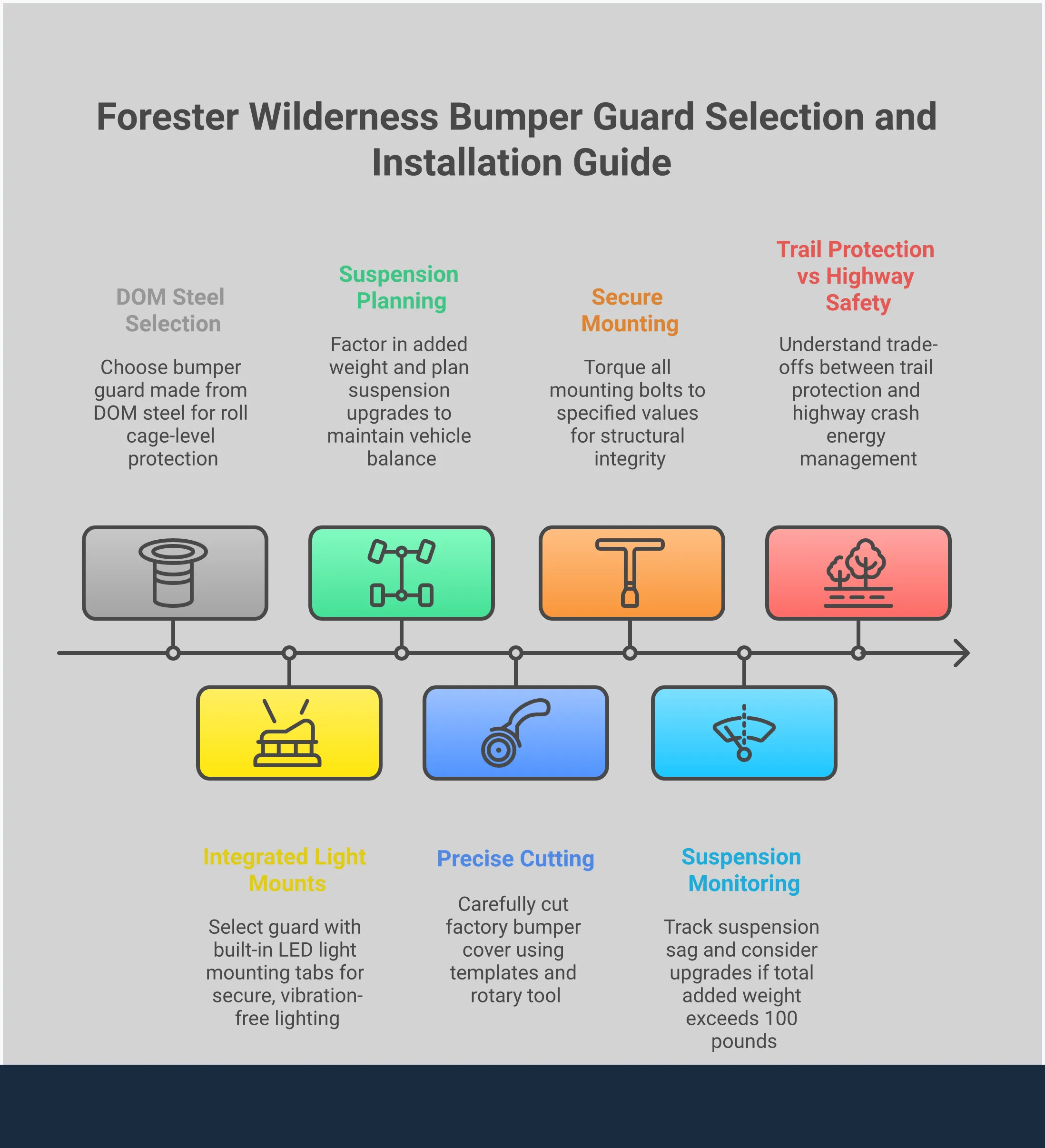
Die besten Stoßstangenschutzvorrichtungen sind auf maximale Stabilität bei minimalem Gewicht ausgelegt. Viele Premium-Modelle bestehen aus DOM-Stahlrohren (Drawn Over Mandrel), oft in robusten Abmessungen wie 1,25 Zoll, um auch unter anspruchsvollen Offroad-Bedingungen höchste Langlebigkeit zu gewährleisten. Ein wichtiges Konstruktionsmerkmal ist häufig eine integrierte Frontplatte, typischerweise aus Aluminium, die den unteren Stoßfänger und den Kühler zusätzlich schützt. Diese Platte schützt nicht nur vor Stößen, sondern unterstreicht auch die robuste Optik und ist somit ein unverzichtbarer Bestandteil Ihrer Offroad-Ausrüstung.
Warum DOM-Stahlkonstruktionen wichtig sind
Beim Kauf von Offroad-Teilen stößt man häufig auf die Bezeichnung „DOM-Stahl“ – und das aus gutem Grund. Im Gegensatz zu herkömmlichen Schweißrohren ist DOM-Stahl extrem robust und widerstandsfähig gegen Dellen und Verbiegen. Deshalb wird er auch für den Bau professioneller Überrollkäfige verwendet. Auf engen, steinigen Strecken ist es wichtig, dass der Stoßstangenschutz Stöße abfängt und die wichtigen Frontkomponenten Ihres Fahrzeugs schützt. Mit einem Schutz aus hochwertigen Materialien wie DOM-Stahl investieren Sie in zuverlässigen Schutz und nicht nur in ein optisches Accessoire. Das ist ein Beweis für die Qualität, die Sie von allen Performance-Teilen erwarten können.
LP Adventure gegen Crawford: Ein direkter Vergleich
Bei der Suche nach Optionen für Ihren Forester stehen Marken wie LP Aventure und Crawford Performance oft ganz oben auf der Liste. LP Aventure ist bekannt für seine robusten, pulverbeschichteten Stahlschutzbügel mit hervorragendem Rostschutz. Wir bei Crawford verfolgen einen ganzheitlichen Ansatz und entwickeln unsere Stoßstangenschutzbügel nicht nur für den sofortigen Schutz, sondern auch im Hinblick auf die optimale Integration in die Gesamtperformance Ihres Fahrzeugs. Ein gut designter Stoßstangenschutzbügel sollte zukünftige Fahrwerksoptimierungen ergänzen, nicht behindern. Indem wir das gesamte Fahrzeugsystem berücksichtigen, stellen wir sicher, dass unsere Subaru Forester-Upgrades einen nahtlosen Übergang zu Ihrem ultimativen Abenteuerfahrzeug ermöglichen.
Wie ein Stoßstangenschutz Ihren Forester aufwertet
Die Montage eines Stoßstangenschutzes an Ihrem Forester Wilderness ist mehr als nur eine optische Aufwertung; es ist ein funktionales Upgrade, das Ihr Fahrzeug optimal für Offroad-Abenteuer rüstet. Diese Schutzvorrichtungen sind so konzipiert, dass sie sich nahtlos in die bestehende Struktur Ihres Subaru einfügen und genau dort eine wichtige Schutzschicht und zusätzliche Funktionalität bieten, wo Sie sie am meisten benötigen. Ob zum Abwehren von Hindernissen am Wegesrand oder zum Befestigen wichtiger Ausrüstung – ein hochwertiger Stoßstangenschutz verwandelt die Frontpartie Ihres Forester in ein leistungsfähigeres und robusteres Werkzeug für jedes Abenteuer. Er bildet die erste Verteidigungslinie gegen Steine, Äste und unerwartete Stöße und schützt so Ihre Originalstoßstange und die dahinterliegenden empfindlichen Bauteile.
Neben dem Schutz dient ein Stoßstangenschutz auch als Plattform für weiteres Offroad-Zubehör. Er bietet einen stabilen und sicheren Platz für Zusatzscheinwerfer, die bei Dunkelheit unerlässlich sind. Zudem verleiht er Ihrem Fahrzeug ein markantes, geländetaugliches Aussehen und unterstreicht sein wahres Potenzial. Ob Sie nun Wert auf praktischen Schutz, bessere Sicht oder reine Ästhetik legen – ein gut gewählter Stoßstangenschutz ist eine der effektivsten Modifikationen, die Sie an Ihrem Forester vornehmen können.
Die Vorteile (und Grenzen) in der Praxis
Die Hauptaufgabe eines Stoßstangenschutzes ist der Schutz der Frontpartie Ihres Foresters vor Gefahren im Gelände. Er schützt vor Gestrüpp, Ästen und kleinen Steinen, die sonst Ihre Kunststoff-Stoßstangenabdeckung zerkratzen, verbeulen oder beschädigen könnten. Hochwertige Schutzvorrichtungen werden aus Materialien wie DOM-Stahlrohr (Drawn Over Mandrel) gefertigt – dem gleichen Material, das auch für professionelle Überrollkäfige verwendet wird – und bieten dadurch hohe Stabilität. Diese Konstruktion gewährleistet, dass der Schutz Stöße von typischen Offroad-Hindernissen absorbieren und ablenken kann.
Es ist jedoch wichtig, ihre Grenzen zu kennen. Ein leichter, schlecht montierter Frontschutzbügel mag zwar optisch ansprechend sein, kann aber bei einem leichten Aufprall einknicken und so Ihren Kühlergrill und Kühler beschädigen. Ein echter Stoßstangenschutz ist am Rahmen befestigt und so konstruiert, dass er zusätzlichen Schutz bietet, ohne die Sicherheitssysteme Ihres Fahrzeugs zu beeinträchtigen. Er ist für Fahrten im Gelände bei niedrigen Geschwindigkeiten konzipiert, nicht für Kollisionen bei hohen Geschwindigkeiten, und bietet praktischen Schutz dort, wo er am wichtigsten ist.
Beleuchtung anbringen: Ihre Montageoptionen
Einer der größten Vorteile eines Stoßstangenschutzes ist die Möglichkeit, problemlos Zusatzbeleuchtung anzubringen. Ob auf unbefestigten Wegen oder beim Campen in der Nacht – mehr Licht ist unerlässlich, als die serienmäßigen Scheinwerfer bieten. Die meisten hochwertigen Schutzvorrichtungen verfügen über integrierte Halterungen oder Befestigungspunkte speziell für LED-Lichtleisten oder Zusatzscheinwerfer. So erhalten Sie eine sichere und vibrationsfreie Plattform für Ihre Beleuchtung, ohne in Ihre Stoßstange bohren zu müssen. Der Crawford-Frontstoßstangenschutz beispielsweise bietet integrierte Halterungen für bis zu drei LED-Scheinwerfer im Rallye-Stil und sorgt so für eine leistungsstarke Ausleuchtung nach vorn bei jedem nächtlichen Abenteuer.
Hol dir den aggressiven Offroad-Look, den du willst
Seien wir ehrlich: Die Optik zählt. Ein Stoßstangenschutz verleiht Ihrem Subaru Forester sofort ein robusteres und geländegängigeres Aussehen. Er wertet die Frontpartie optisch auf, hebt sie vom typischen Crossover-Look ab und verleiht ihr einen aggressiveren, rallye-inspirierten Stil. Diese einzelne Modifikation kann das Profil Ihres Fahrzeugs deutlich verändern und signalisieren, dass es für mehr als nur die Stadt gebaut ist. Details wie integrierte Unterfahrschutzplatten oder markenspezifische Frontplatten sorgen nicht nur für eine individuelle Note, sondern tragen auch zur Schutzfunktion des Schutzes bei. Mit dieser Modifikation sieht Ihr Forester so abenteuerbereit aus, wie er es tatsächlich ist.
Wie ein Stoßstangenschutz Ihre Offroad-Ausrüstung unterstützt
Für Offroad-Fans bietet ein Stoßstangenschutz mehrere funktionale Vorteile. Er dient als robuster Auflagepunkt beim Durchfahren von dichtem Gestrüpp, ohne dass man sich Sorgen um Lack- und Kunststoffschäden machen muss. Zwar ist der Austausch der kompletten Stoßstange die optimale Lösung zur Verbesserung des Böschungswinkels, doch ein gut konstruierter Schutzbügel schützt die unteren und vorderen Bereiche der Serienstoßstange, ohne dabei zu behindern. Er dient außerdem als solide Basis für zukünftige Offroad-Lösungen. Die Montage eines Stahlschutzbügels und von Zusatzscheinwerfern erhöht das Gewicht an der Vorderachse. Daher ist es ratsam, dies bei der Planung von späteren Fahrwerksverbesserungen zur Bewältigung der zusätzlichen Last zu berücksichtigen.
Welche Stoßstangenschutzoptionen sind die besten?
Wenn Sie sich nach einem Stoßstangenschutz umsehen, werden Sie auf dem Markt einige überzeugende Optionen finden. Die beste Wahl für Ihren Forester Wilderness hängt letztendlich von Ihren individuellen Bedürfnissen ab – vom Gelände, in dem Sie unterwegs sind, bis hin zum gewünschten Erscheinungsbild. Die Hauptunterschiede liegen oft in den verwendeten Materialien, dem Montageaufwand und integrierten Funktionen wie Scheinwerferhalterungen. Manche Schutzbügel sind für maximalen Schutz mit robustem Stahl ausgelegt, während andere eine ausgewogene Kombination aus Stabilität und Stil bieten.
Wir vergleichen zwei der beliebtesten Optionen: unseren eigenen Crawford Performance Stoßstangenschutz und die LP Aventure Premium-Serie. Beide sind hervorragende Optionen, weisen aber unterschiedliche Merkmale auf, die den einen oder anderen für Sie besser geeignet machen könnten. Wir gehen auch auf die wichtigsten Faktoren ein, die Sie bei der Auswahl von Verarbeitungsqualität und Oberflächenoptionen berücksichtigen sollten. Dieses Wissen hilft Ihnen, einen Stoßstangenschutz zu wählen, der nicht nur Ihr Fahrzeug schützt, sondern auch Ihre Overlanding- und Offroad-Abenteuer optimiert. Lassen Sie uns die Unterschiede dieser Schutzvorrichtungen genauer betrachten, damit Sie eine fundierte Entscheidung treffen können.
Ein genauerer Blick: Der Crawford Performance Stoßstangenschutz
Suchen Sie einen robusten, speziell entwickelten Frontschutzbügel mit kinderleichter Montage? Dann ist der Crawford Performance Stoßstangenschutzbügel genau das Richtige für Sie. Er wurde speziell für Subaru Forester Modelle der Baujahre 2019–2024, inklusive Wilderness, entwickelt und bietet zuverlässigen Frontschutz. Gefertigt aus hochwertigem Stahl und mit einer widerstandsfähigen Pulverbeschichtung versehen, ist er rostbeständig und trotzt selbst härtesten Bedingungen. Das Beste daran? Er wird mit nur vier Schrauben direkt am Hilfsrahmen Ihres Fahrzeugs befestigt – Schneiden oder sonstige Modifikationen sind nicht erforderlich. Zusätzlich verfügt er über integrierte Befestigungspunkte für bis zu drei LED-Scheinwerfer im Rallye-Stil, mit denen Sie Ihre Sicht bei nächtlichen Offroad-Touren deutlich verbessern können.
Ein genauerer Blick: Die LP Adventure Premium-Serie
Der LP Aventure Stoßstangenschutz ist eine weitere erstklassige Option, die für ihre außergewöhnliche Robustheit bekannt ist. Er besteht aus DOM-Stahlrohr (Drawn Over Mandrel), demselben Material, das auch bei der Herstellung von Überrollkäfigen verwendet wird. Dadurch ist er extrem widerstandsfähig. Der Schutz verfügt außerdem über eine elegante Aluminium-Frontplatte, die zusätzlichen Schutz und eine markante Optik bietet. Für maximale Ausleuchtung sind vier Befestigungspunkte vorhanden, an denen Sie flexibel mehrere LED-Lichtleisten oder Nebelscheinwerfer anbringen können. Er ist eine vielseitige und langlebige Wahl für jeden ambitionierten Offroad-Fan, der seinen Forester für die anspruchsvollsten Strecken ausrüsten möchte.
Welches ist robuster gebaut? Materialien und Qualität
Ein hochwertiger Stoßstangenschutz aus Stahl bietet mehr als nur Schutz; er ist eine funktionale Aufrüstung. Er kann den Böschungswinkel Ihres Foresters verbessern und Ihnen so ermöglichen, steilere Hindernisse ohne Aufsetzen der Frontpartie zu bewältigen. Prüfen Sie bei der Auswahl unbedingt, ob der Schutz mit Ihrem Fahrzeugmodell und -baujahr kompatibel ist. Berücksichtigen Sie auch das zusätzliche Gewicht. Eine robuste Stoßstange kann die Federung beeinflussen, seien Sie also darauf vorbereitet. Beachten Sie außerdem, dass je nach Hersteller bei vielen Montagearbeiten die werkseitige Stoßstangenabdeckung zugeschnitten werden muss, um einen korrekten und sicheren Sitz zu gewährleisten.
Blankstahl oder pulverbeschichtet: Welche Oberfläche ist die richtige für Sie?
Die meisten Stoßstangenschutzbügel sind in zwei Hauptausführungen erhältlich: blanker Stahl oder pulverbeschichtet. Ein Stoßstangenschutzbügel aus blankem Stahl ist ideal, wenn Sie ihn individuell an die Farbe Ihres Fahrzeugs oder Ihren persönlichen Stil anpassen möchten. Allerdings müssen Sie ihn selbst lackieren oder beschichten, um Rost zu vermeiden. Eine Pulverbeschichtung hingegen bietet von Anfang an einen robusten und langlebigen Schutz. Sie ist so konzipiert, dass sie Absplitterungen, Kratzern und Korrosion durch Witterungseinflüsse widersteht. Obwohl die pulverbeschichtete Variante in der Anschaffung meist teurer ist, sparen Sie sich die Zeit und Mühe der Selbstlackierung und profitieren von einer langen Lebensdauer.
Stoßstangenschutz für den Subaru Outback Wilderness
Der Outback Wilderness ist schon ab Werk unglaublich geländegängig, doch für ernsthafte Offroad-Einsätze braucht er auch einen robusten Schutz. Ein Frontstoßstangenschutz ist ein unverzichtbares Upgrade für alle, die die Grenzen ihres Fahrzeugs ausloten wollen. Er schützt die empfindliche Frontpartie vor Steinen, Schlaglöchern und Ästen und bietet gleichzeitig eine stabile Basis für wichtige Ausrüstung wie Zusatzscheinwerfer. Er ist ein grundlegender Bestandteil jeder echten Overlanding-Lösung. Schauen wir uns einige der besten Modelle auf dem Markt an, die speziell für die Anforderungen im Gelände entwickelt wurden, ohne die robuste Optik des Outback zu beeinträchtigen.
aFe POWER Terra Guard Stoßstange
Der aFe POWER Terra Guard ist eine beliebte Wahl für Outback Wilderness Modelle der Baujahre 2022–2025 – und das aus gutem Grund. Er bietet die perfekte Balance zwischen robustem Schutz und einer eleganten, hochwertigen Optik. Gefertigt aus hochbelastbarem 1-1/2-Zoll-Stahlrohr mit einer Wandstärke von 1/8 Zoll, absorbiert er Stöße von typischen Offroad-Hindernissen, die sonst Ihren Serienstoßfänger beschädigen würden. Ein großer Vorteil ist die einfache Montage. Der Schutzbügel wird ohne Schneiden oder Bohren direkt am Fahrzeugrahmen verschraubt. So ist er ein ideales Wochenendprojekt, das Ihrem Fahrzeug sofort mehr Sicherheit und ein beruhigendes Gefühl für Ihr nächstes Abenteuer verleiht.
Hauptmerkmale und Installation
Neben seiner robusten Konstruktion wurde der Terra Guard mit Blick auf die Praxis entwickelt. Er verfügt über eine stabile Montageplattform zur Anbringung von Zusatzscheinwerfern – ein unverzichtbares Element für alle, die nach Sonnenuntergang im Gelände unterwegs sind. Die einfache, bohrfreie Montage ist ein großer Vorteil, da sie die Originalteile Ihres Fahrzeugs schont und mit einfachem Werkzeug durchgeführt werden kann. Dank dieser einfachen Installation verbringen Sie weniger Zeit in der Garage und mehr Zeit im Gelände, während Sie gleichzeitig sicher sein können, dass Ihre Fahrzeugfront durch einen Schutzbügel geschützt ist, der den Belastungen im Gelände standhält.
LP Adventure Premium Series Stoßstangenschutz
Für alle, die höchste Strapazierfähigkeit benötigen, ist der LP Aventure Premium Series Stoßstangenschutz die optimale Lösung für den Outback Wilderness (Modelljahre 2022–2025). Dieser Schutzbügel besteht aus hochfestem DOM-Stahlrohr (Drawn Over Mandrel), demselben Material, das auch bei professionellen Überrollkäfigen zum Einsatz kommt. Er überzeugt nicht nur durch seine Optik, sondern bietet auch überragende Widerstandsfähigkeit gegen Dellen und Verbiegen unter Belastung. Die Designphilosophie von LP Aventure konzentriert sich auf die Performance im Gelände und bietet einen Schutzbügel, der selbst härtesten Stößen standhält und die wichtigen Komponenten der Fahrzeugfront schützt – eine lohnende Investition für jeden ambitionierten Offroader.
Die Option „Vollpanzerung“
Wenn Sie häufig auf anspruchsvollen Strecken unterwegs sind, wo Frontalaufprälle ein hohes Risiko darstellen, bietet LP Aventure die Option „Full Armor“ an. Dieses Upgrade umfasst eine zusätzliche Unterfahrschutzplatte für noch umfassenderen Schutz und schützt den unteren Teil Ihres Stoßfängers und Kühlers vor Steinschlag und Schmutz. Der Schutz selbst besteht aus robusten 1,25-Zoll-DOM-Stahlrohren mit einer Wandstärke von 0,120 Zoll und hält somit auch starken Stößen stand. Diese Option ist ideal für Fahrer, die nichts dem Zufall überlassen und den bestmöglichen Schutz für ihr Adventure-Fahrzeug benötigen.
Preisdetails
LP Aventure bietet Ihnen bei der Oberflächenbehandlung Ihres Stoßstangenschutzes Flexibilität, was sich direkt auf den Preis auswirkt. Sie können ihn in blankem Stahl bestellen – ideal für eine individuelle Lackierung in Ihrer Wunschfarbe. Allerdings ist eine zusätzliche Beschichtung zum Schutz vor Rost erforderlich. Alternativ bietet sich die robuste, schwarze Pulverbeschichtung an, die sofort Schutz vor Witterungseinflüssen bietet. Auch die Option „Full Armor“ beeinflusst den Endpreis. Dank dieser gestaffelten Preisgestaltung finden Sie garantiert die passende Lösung für Ihr Budget und Ihre ästhetischen Ansprüche.
Optionen zum Schutz der hinteren Stoßstange
Während die Frontpartie im Gelände am stärksten beansprucht wird, sollten Sie das Heck Ihres Outbacks nicht vergessen. Der hintere Stoßfänger ist ständig Kratzern und Schrammen ausgesetzt, insbesondere beim Be- und Entladen schwerer Ausrüstung wie Kühlboxen, Bergungsausrüstung oder Campingzubehör. Ein einfaches Schutzzubehör kann den Lack Ihres Fahrzeugs bewahren und dafür sorgen, dass es auch nach vielen Fahrten noch gut aussieht. Es ist ein kleines Detail, das langfristig einen großen Unterschied für den Zustand und den Wiederverkaufswert Ihres Fahrzeugs ausmacht und ein wichtiger Bestandteil eines umfassenden Sets an Performance-Teilen und Zubehör ist.
Originale Subaru-Heckstoßstangenabdeckung
Eine der einfachsten und effektivsten Möglichkeiten, Ihren Heckstoßfänger zu schützen, ist die originale Subaru Heckstoßfängerabdeckung. Als Originalteil ist sie passgenau für den Outback Wilderness gefertigt und fügt sich nahtlos in das Fahrzeugdesign ein. Ihre Hauptaufgabe ist es, die Oberseite Ihres Stoßfängers vor Kratzern und Schrammen zu schützen, die beim Be- und Entladen des Kofferraums unweigerlich entstehen. Sie ist eine praktische und preisgünstige Ergänzung zu einem robusteren Frontstoßfängerschutz und sorgt dafür, dass Ihr Subaru rundum geschützt ist.
Was kostet ein hochwertiger Stoßstangenschutz?
Wenn Sie sich nach einem Stoßstangenschutz für Ihren Forester Wilderness umsehen, werden Sie feststellen, dass die Preise stark variieren können. Das ist kein Zufall; die Kosten hängen direkt mit den Materialien, der Komplexität des Designs und dem Herstellungsprozess zusammen. Wenn Sie verstehen, wie sich der Preis zusammensetzt, können Sie einen Schutz wählen, der zu Ihrem Budget passt, ohne Kompromisse beim Schutz Ihres Subaru im Gelände einzugehen. Betrachten Sie es weniger als einen einfachen Kauf, sondern vielmehr als Investition in die Leistungsfähigkeit und Langlebigkeit Ihres Fahrzeugs, damit es für jede Herausforderung gerüstet ist.
Aufschlüsselung der Kosten
Die Preise für Stoßstangenschutzbügel liegen üblicherweise zwischen 500 und über 1.600 US-Dollar. Beispielsweise kostet der Crawford Performance Front Off-Road Bumper 499,99 US-Dollar und bietet ein hervorragendes Verhältnis von Preis und Robustheit. Im höheren Preissegment finden sich Optionen wie der LP Aventure Stoßstangenschutzbügel, der je nach Ausführung zwischen 1.400 und 1.700 US-Dollar kosten kann. Dieser Preisunterschied spiegelt oft Faktoren wie die verwendete Stahlsorte, die Komplexität des Designs und die Integration von Funktionen wie Scheinwerferhalterungen oder Seilwindenplatten wider. Wenn Sie nach Upgrades für Ihren Forester suchen, ist es wichtig, das Preis-Leistungs-Verhältnis zu vergleichen.
Lohnt sich die Investition?
Ein hochwertiger Stoßstangenschutz lohnt sich absolut, wenn Sie mit Ihrem Forester abseits befestigter Straßen unterwegs sein wollen. Er schützt Sie vor Steinen, Ästen und unerwarteten Hindernissen, die teure Schäden an der Frontpartie, einschließlich Kühler und Sensoren, verursachen können. Premium-Schutzbügel werden oft aus Materialien wie DOM-Stahl (Drawn Over Mandrel) gefertigt, der für seine außergewöhnliche Festigkeit bekannt ist und auch in professionellen Überrollkäfigen zum Einsatz kommt. Die Anschaffungskosten sind zwar höher, aber im Vergleich zur Reparatur oder dem Austausch Ihrer Original-Stoßstange, des Kühlergrills oder der Scheinwerfer ist das ein geringer Preis. Investieren Sie in einen soliden Schutz, damit Ihre Offroad-Abenteuer nicht mit einem teuren Werkstattbesuch enden.
Langfristig denken: Langlebigkeit und Wert
Bei der Wahl eines Stoßstangenschutzes ist Langlebigkeit entscheidend. Sie benötigen ein Bauteil, das auch unter härtesten Bedingungen und bei wiederholten Stößen zuverlässig funktioniert. Achten Sie auf Schutzvorrichtungen aus hochwertigem Stahlrohr mit einer robusten Pulverbeschichtung. Diese Beschichtung ist unerlässlich, da sie einen widerstandsfähigen, abriebfesten Schutz gegen Rost und Korrosion bietet, insbesondere bei Fahrten in nassem Wetter oder auf gesalzenen Winterstraßen. Ein gut verarbeiteter Schutz ist eine langfristige Investition in Ihr Fahrzeug. Wählen Sie daher aus einem Sortiment hochwertiger Performance-Teile mit stabilen Schweißnähten und robuster Konstruktion, um jahrelange Zuverlässigkeit im Straßen- und Geländeeinsatz zu gewährleisten.
Was Sie während der Installation erwarten können
Nachdem Sie sich für einen Stoßstangenschutz entschieden haben, geht es an die Montage an Ihrem Forester. Hier haben Sie die Wahl: Sie montieren ihn selbst oder beauftragen einen Fachmann. Es gibt keine allgemeingültige Lösung – es kommt auf Ihre Fähigkeiten, Ihr Werkzeug und Ihre Zeit an. Eine gelungene Montage, egal ob in Eigenregie oder von einem Profi durchgeführt, gewährleistet, dass Ihr Stoßstangenschutz sicher sitzt, gut aussieht und einwandfrei funktioniert. Bevor Sie beginnen, sollten Sie sich über die jeweiligen Voraussetzungen informieren – von den benötigten Werkzeugen bis hin zu möglichen Garantiebedingungen. Diese Vorbereitung hilft Ihnen, häufige Probleme zu vermeiden und stellt sicher, dass Sie mit dem Endergebnis zufrieden sind.
Können Sie es selbst installieren? Benötigte Werkzeuge und Zeit
Wenn Sie gerne an Ihrem Auto schrauben, ist die Montage eines Stoßstangenschutzes ein gut machbares Wochenendprojekt. Viele Subaru-Besitzer sind handwerklich begabt, und die Hersteller bieten oft detaillierte Anleitungen an. Sehen Sie sich vor Beginn einige Installationsvideos für Ihr spezifisches Modell an, um sich ein klares Bild vom Ablauf zu machen. Stellen Sie sicher, dass Sie alle benötigten Werkzeuge bereitlegen, darunter einen Drehmomentschlüssel, Steckschlüssel und gegebenenfalls ein Werkzeug zum Zuschneiden von Kunststoffteilen. Am wichtigsten ist ausreichend Zeit. Hektik führt schnell zu Fehlern. Planen Sie daher einen Nachmittag ein, an dem Sie ungestört arbeiten können.
Sollten Sie einen Fachmann mit der Installation beauftragen?
Wer die Montage lieber einem Experten überlässt, findet in der professionellen Installation ein beruhigendes Gefühl. Ein Techniker in einer renommierten, auf Subarus spezialisierten Werkstatt verfügt über das richtige Werkzeug, die nötige Erfahrung und ein Auge fürs Detail. Dies ist besonders wichtig, da die meisten Stoßstangenschutz-Montagen ein präzises Zuschneiden der werkseitigen Stoßstangenabdeckung erfordern – eine Aufgabe, die keine Fehler verzeiht. Ein Profi ist zudem für seine Arbeit verantwortlich, sodass er eventuelle Probleme beheben muss. Fragen Sie bei der Suche nach einem Monteur nach dessen Erfahrung mit Ihrem spezifischen Fahrzeugmodell und dem gekauften Teil. Spezialisierte Motorentuning-Werkstätten und Tuning-Unternehmen sind oft die beste Wahl.
Führt ein Stoßstangenschutz zum Verlust der Garantie?
Eine häufig gestellte Frage ist, wie sich Zubehörteile auf die Fahrzeuggarantie auswirken. Die Montage eines Stoßstangenschutzes führt nicht automatisch zum Erlöschen der gesamten Subaru-Garantie. Dank Verbraucherschutzgesetzen muss der Hersteller nachweisen, dass das Zubehörteil direkt einen bestimmten Defekt verursacht hat, um einen Garantieanspruch abzulehnen. Führt ein unsachgemäß montierter Stoßstangenschutz jedoch zu Sensorschäden oder anderen Problemen, kann der Händler die Kostenübernahme für diese Reparatur zu Recht ablehnen. Um sich abzusichern, verwenden Sie stets hochwertige Performance-Teile von vertrauenswürdigen Marken und achten Sie auf eine fachgerechte Montage, egal ob durch Sie selbst oder einen Fachmann.
Installationsfehler, die es zu vermeiden gilt
Die größte Fehlerquelle bei der Montage ist das falsche Zuschneiden der werkseitigen Stoßstangenabdeckung. Dieser Schritt ist bei den meisten robusten Stoßstangenschutzbügeln notwendig, um einen bündigen und sicheren Sitz zu gewährleisten. Ein falscher Schnitt ist irreparabel und kann teuer werden, da oft eine komplett neue Stoßstangenabdeckung benötigt wird, die farblich angepasst werden muss. Ein weiteres häufiges Problem ist die falsche Ausrichtung, wodurch der Schutzbügel schief sitzen oder klappern kann. Schließlich kann das Nichtanziehen aller Schrauben mit dem vom Hersteller empfohlenen Drehmoment die Stabilität des Schutzbügels beeinträchtigen. Hier sind Geduld und Präzision gefragt, damit Ihr Forester-Upgrade ein voller Erfolg wird.
Wie Sie den richtigen Stoßstangenschutz für sich auswählen
Die Wahl des richtigen Stoßstangenschutzes für Ihren Forester Wilderness ist mehr als nur eine Frage des Aussehens. Es geht darum, die Ausrüstung optimal auf Ihre individuellen Bedürfnisse abzustimmen – von den geplanten Offroad-Strecken bis hin zu Ihren langfristigen Ansprüchen an Ihr Fahrzeug. Die beste Wahl für einen Wochenendausflügler auf leichten Waldwegen unterscheidet sich möglicherweise von den Anforderungen eines passionierten Offroad-Fahrers. Um die richtige Entscheidung zu treffen, sollten Sie einige wichtige Faktoren berücksichtigen: Ihren Fahrstil, das Verhältnis von Optik und Funktionalität, den Wartungsaufwand und die praktischen Vor- und Nachteile des Schutzes auf und abseits der Straße. Wenn Sie diese Punkte bedenken, stellen Sie sicher, dass Sie in einen Schutz investieren, der Sie auf jedem Abenteuer zuverlässig begleitet.
Finde einen Schutz, der zu deinem Abenteuerstil passt
Seien Sie zunächst ehrlich, wie Sie Ihren Forester nutzen. Fahren Sie damit auf dichten Pfaden, wo Sie regelmäßig Gestrüpp beiseite schieben müssen, oder suchen Sie hauptsächlich nach einer stabilen Befestigungsmöglichkeit für Zusatzscheinwerfer auf abgelegenen Campingplätzen? Ein gut konstruierter Stoßstangenschutz ist eine sinnvolle Investition für jeden Offroad-Fan, da er die Frontpartie Ihres Fahrzeugs vor Steinen, Ästen und anderen Hindernissen schützt. Noch wichtiger ist, dass er den Böschungswinkel Ihres Fahrzeugs verbessern kann, sodass Sie steilere Anstiege bewältigen können, ohne die Stoßstange zu beschädigen. Bedenken Sie, dass die Montage solcher Teile oft Teil eines größeren Umbaus ist. Daher sollten Sie bedenken, wie sich das Gewicht auf zukünftige Fahrwerkslösungen für Offroad-Touren auswirken könnte.
Aussehen vs. Funktion: Die richtige Balance finden
Seien wir ehrlich – Ihr Forester soll gut aussehen. Ein Stoßstangenschutz ist eine der effektivsten Möglichkeiten, Ihrem Fahrzeug ein aggressiveres, geländetaugliches Aussehen zu verleihen. Die besten Modelle vereinen robustes Design mit praktischer Funktion. Manche Schutzbügel verfügen beispielsweise über einen Unterfahrschutz vorne, der nicht nur zusätzlichen Schutz bietet, sondern auch die Optik aufwertet. Achten Sie beim Vergleich verschiedener Optionen auf die Linienführung des Schutzbügels und wie sie zur Karosserie des Forester passt. Berücksichtigen Sie auch die Oberfläche: Eine strukturierte Pulverbeschichtung sorgt für einen modernen, robusten Look, während blanker Stahl einen industriellen, individuellen Eindruck vermittelt. Ziel ist es, einen Schutzbügel zu finden, der gut aussieht und gleichzeitig spürbare Leistungssteigerungen bietet.
Wie sieht die langfristige Wartung aus?
Ein Stoßstangenschutz ist robust und widerstandsfähig, dennoch sollten Sie bedenken, wie Sie ihn in gutem Zustand halten. Material und Oberflächenbehandlung spielen dabei eine entscheidende Rolle. DOM-Stahl ist extrem widerstandsfähig, aber die Beschichtung bestimmt seine Rost- und Korrosionsbeständigkeit. Eine hochwertige Pulverbeschichtung hält jahrelanger Beanspruchung stand, doch Kratzer im Gelände können das darunterliegende Metall freilegen, sodass Ausbesserungen zum Schutz vor Rost erforderlich sind. Auch die Montage sollten Sie bedenken. Die meisten Stoßstangenschutze erfordern das Ausschneiden der originalen Stoßstangenabdeckung für einen sicheren Halt – eine dauerhafte Veränderung. Das ist nicht unbedingt schlecht, aber Sie sollten sich darüber im Klaren sein, bevor Sie mit der Montage beginnen.
Geländeschutz vs. Alltagsfahrt: Was ist zu beachten?
Es ist entscheidend zu verstehen, wofür ein Stoßstangenschutz gedacht ist – und wofür nicht. Seine Hauptaufgabe ist der Schutz Ihres Fahrzeugs vor leichten Stößen im Gelände, beispielsweise durch das Anstoßen an einen Stein oder das Ablenken eines Astes. Er dient außerdem als stabile Befestigungsmöglichkeit für Scheinwerfer und anderes Zubehör. Ein Stoßstangenschutz ist jedoch kein Ersatz für die werkseitige Crashstruktur Ihres Fahrzeugs. Bei einem schweren Aufprall auf der Straße kann der Schutz die vorgesehenen Knautschzonen umgehen und die Aufprallenergie direkt auf den Rahmen übertragen, was potenziell zu größeren Schäden führen kann. Dies ist ein grundlegender Kompromiss: Sie gewinnen hervorragende Geländegängigkeit, müssen aber die Fahrdynamik auf der Straße in Kauf nehmen. Wenn Sie sich dessen bewusst sind, können Sie eine fundierte Entscheidung treffen, die Ihren Prioritäten entspricht.
Verwandte Artikel
Häufig gestellte Fragen
Verliert meine Subaru-Garantie durch den Einbau eines Stoßstangenschutzes? Diese Sorge ist weit verbreitet und durchaus berechtigt. Die kurze Antwort lautet: Nein, der Einbau eines Stoßstangenschutzes führt nicht automatisch zum Verlust der Fahrzeuggarantie. Rechtlich gesehen muss der Hersteller nachweisen, dass das von Ihnen eingebaute Zubehörteil die direkte Ursache für einen bestimmten Schaden war, um einen Garantieanspruch abzulehnen. Um es einfach zu halten, wählen Sie ein hochwertiges Teil einer renommierten Marke und achten Sie auf den korrekten Einbau. Eine fachgerechte Montage schützt Ihr Fahrzeug und gibt Ihnen Sicherheit.
Muss ich meine Originalstoßstange für die Montage wirklich zerschneiden? Bei den meisten hochwertigen, rahmenmontierten Stoßstangenschutzvorrichtungen ist ein geringfügiges Zuschneiden der Kunststoffabdeckung der Originalstoßstange erforderlich. Auch wenn es zunächst abschreckend wirken mag, ist dieser Schritt notwendig, um eine sichere Befestigung der Schutzvorrichtung am Fahrzeugrahmen und damit einen wirksamen strukturellen Schutz zu gewährleisten. Betrachten Sie es weniger als einen Eingriff, sondern vielmehr als eine notwendige Modifikation für ein wirklich integriertes und funktionales Bauteil.
Wie wirkt sich das zusätzliche Gewicht eines Stoßstangenschutzes auf die Fahreigenschaften meines Foresters aus? Ein Stoßstangenschutz aus Stahl erhöht das Gewicht an der Vorderachse in der Regel um 18 bis 27 kg. Im Alltag werden Sie wahrscheinlich keinen Unterschied bemerken, dennoch sollten Sie dies bei der Planung Ihres Fahrzeugumbaus berücksichtigen. Wenn der Stoßstangenschutz die erste von vielen geplanten Ergänzungen wie Unterfahrschutz, Dachgepäckträger und anderer Ausrüstung ist, sollten Sie über zukünftige Fahrwerksoptimierungen nachdenken, um das Gesamtgewicht optimal zu verteilen und ein optimales Fahrverhalten zu gewährleisten.
Was ist der Unterschied zwischen einem Stoßstangenschutz und einem Frontbügel? Die Begriffe werden oft synonym verwendet, beschreiben aber grundverschiedene Dinge. Ein echter Stoßstangenschutz, wie die bereits besprochenen, ist eine robuste, am Rahmen befestigte Konstruktion, die echten Schutz vor Gefahren im Gelände bietet. Ein Frontbügel hingegen ist oft ein leichteres, eher optisch ansprechendes Zubehörteil, das am vorhandenen Stoßfänger montiert wird. Bei einem leichten Aufprall können diese leichteren Bügel manchmal nach hinten klappen und mehr Schaden an Kühlergrill und Kühler verursachen, als wenn gar kein Schutz vorhanden wäre.
Kann ich an diesen Stoßstangenschutzbügeln eine Seilwinde montieren? Die hier beschriebenen Stoßstangenschutzbügel sind primär zum Schutz und zur Montage von Zusatzscheinwerfern konzipiert. Sie sind nicht für die erheblichen Kräfte einer Bergungsseilwinde ausgelegt. Für die sichere Montage einer Seilwinde ist ein kompletter Austausch der Stahlstoßstange mit integrierter, verstärkter Seilwindenaufnahme erforderlich. Diese Schutzbügel sind ein hervorragender erster Schritt zur Geländetauglichkeit, die Montage einer Seilwinde ist jedoch eine aufwändigere Nachrüstung.