

Die besten Offroad-Teile für den Subaru Forester: Kaufberatung
Ihr Subaru Forester ist zwar geländegängig, aber Sie möchten ihn über die üblichen Offroad-Strecken hinaus testen? Im anspruchsvollen Gelände stoßen Sie schnell an seine Grenzen. Zu geringe Bodenfreiheit kann zum Festfahren führen, die Serienreifen bieten nur unzureichenden Grip und der ungeschützte Unterboden ist anfällig für Beschädigungen. Anstatt aufzugeben, können Sie Ihr Fahrzeug souveräner machen. Die Lösung: Wählen Sie die passenden Offroad-Teile für Ihren Subaru Forester, um die jeweiligen Schwächen zu beheben. Dieser Leitfaden bietet Ihnen eine klare Anleitung für die Umrüstung Ihres Fahrzeugs und konzentriert sich dabei auf die wichtigsten Modifikationen für Fahrwerk, Unterfahrschutz und Traktion.
Wichtigste Erkenntnisse
- Konzentrieren Sie sich auf die drei wichtigsten Komponenten : Investieren Sie zunächst in die drei Upgrades, die den größten Vorteil im Gelände bieten: eine Höherlegung des Fahrwerks für mehr Bodenfreiheit, Geländereifen für optimale Traktion und Unterfahrschutzplatten zum Schutz des Unterbodens Ihres Foresters. Diese Komponenten bilden zusammen das Fundament eines geländegängigen Fahrzeugs.
- Wählen Sie die passenden Performance-Teile für Ihre Ziele : Entscheiden Sie sich für Upgrades, die zu Ihrem spezifischen Forester-Modelljahr (2002 bis heute) und Ihrem geplanten Einsatzzweck passen – egal ob leichte Offroad-Touren oder anspruchsvolles Offroad-Fahren. Greifen Sie stets zu Performance-Teilen, die die Werksspezifikationen übertreffen, anstatt zu einfachen Ersatzteilen, um sicherzustellen, dass Ihr Fahrzeug den zusätzlichen Belastungen im Gelände gewachsen ist.
- Setzen Sie auf fachgerechte Installation und Wartung : Die Zuverlässigkeit Ihres Fahrzeugs hängt von einer korrekten Installation und regelmäßiger Pflege ab. Entscheiden Sie je nach Komplexität des Bauteils zwischen Selbstmontage und professioneller Installation und führen Sie nach jeder Fahrt eine regelmäßige Kontrolle durch, um lose Teile und potenzielle Probleme zu erkennen. Diese vorausschauende Pflege sorgt dafür, dass Ihr Forester sicher und geländetauglich bleibt.
Was macht den Subaru Forester so geländegängig?
Der Subaru Forester hat sich als zuverlässiger Alltagsbegleiter einen Namen gemacht, doch seine wahre Stärke liegt in seinen überraschenden Offroad-Fähigkeiten. Was macht diesen Crossover so beliebt bei Offroad-Fans? Alles beginnt mit einem Design, das von Natur aus für Abenteuer geschaffen ist. Anders als viele SUVs seiner Klasse, bei denen Allradantrieb nur gegen Aufpreis erhältlich ist, ist jeder Forester serienmäßig mit Subarus symmetrischem Allradantrieb ausgestattet. Dieses System verteilt die Kraft konstant auf alle vier Räder und bietet so hervorragende Traktion auf jedem Untergrund – von glattem Asphalt über losen Schotter bis hin zu schlammigen Pisten.
Neben seinem intelligenten Antriebsstrang besticht der Forester ab Werk durch eine beeindruckende Bodenfreiheit von 22 cm. Damit lassen sich Steine, Spurrillen und andere Hindernisse mühelos überwinden, an denen andere Fahrzeuge scheitern würden. Die Kombination aus serienmäßigem Allradantrieb und hoher Bodenfreiheit bietet eine solide Grundlage für leichte bis mittelschwere Offroad-Fahrten – ganz ohne Umbauten.
Der wahre Reiz des Forester liegt jedoch in seinem unglaublichen Potenzial. Seine robuste Bauweise und sein durchdachtes Design machen ihn zur idealen Basis für anspruchsvolle Offroad-Abenteuer. Schon in der Serienausstattung ist er bestens geeignet, doch mit den richtigen Upgrades wird der Subaru Forester zu einem Fahrzeug, das selbst schwierigstes Terrain souverän meistert. Durch Investitionen in hochwertige Teile steigern Sie seine Langlebigkeit und Leistung und stellen sicher, dass Ihr umgebautes Fahrzeug über Jahre hinweg zuverlässig bleibt. Diese einzigartige Kombination aus Alltagstauglichkeit und robustem Potenzial macht den Forester zur herausragenden Wahl für Abenteurer.
Die Fähigkeiten des Försterbestands verstehen
Basisleistung: Kraftstoffverbrauch, Anhängelast und Zuladung
Der Subaru Forester ist auf Vielseitigkeit ausgelegt und vereint die Anforderungen des Alltags mit Abenteuerlust. Sein Design legt Wert auf Praktikabilität mit großzügigem Stauraum für Ausrüstung und einem respektablen Kraftstoffverbrauch für lange Fahrten. Seine Offroad-Qualitäten beginnen jedoch mit seiner Bodenfreiheit. Der Forester bietet bereits ab Werk beachtliche 22 cm Bodenfreiheit, mehr als genug, um unbefestigte Forststraßen und leichte Offroad-Strecken problemlos zu bewältigen. Dank dieser Höhe überwindet er viele gängige Hindernisse, an denen eine typische Limousine oder ein kleinerer Crossover scheitern würde. Obwohl seine Anhängelast moderat ist, machen ihn seine Kernstärken – Bodenfreiheit, Stauraum und der serienmäßige symmetrische Allradantrieb – zu einem äußerst praktischen und leistungsstarken Einstiegsmodell für jeden Outdoor-Fan.
Vergleich der Forester-Ausstattungsvarianten: Basis vs. Wildnis
Obwohl jeder Forester geländetauglich ist, bietet Subaru verschiedene Ausstattungsvarianten für unterschiedliche Bedürfnisse an. Die Wilderness-Edition ist dabei das Topmodell für Offroad-Abenteuer. Der größte Unterschied liegt in der serienmäßigen Offroad-Ausstattung. Der Forester Wilderness verfügt über eine erhöhte Bodenfreiheit von 23,6 cm (9,3 Zoll), die zusätzlichen Schutz vor Steinen und Spurrillen bietet. Serienmäßig ist er außerdem mit All-Terrain-Reifen für besseren Grip auf losem Untergrund und einem optimierten Getriebe für langsames Kriechen und Bergauffahren ausgestattet. Dank dieser Verbesserungen ist der Wilderness die ideale Lösung für alle, die direkt in anspruchsvolles Gelände wollen, ohne sofort Umbauten vornehmen zu müssen. Er bietet von Anfang an ein fokussiertes und leistungsstarkes Offroad-Paket.
Wie sich der Forester im Vergleich zum Outback beim Offroad-Fahren schlägt
Bei der Wahl eines Subaru für Offroad-Abenteuer kommt es oft auf die Entscheidung zwischen Forester und Outback an. Beide sind hervorragende Fahrzeuge und verfügen über den bewährten symmetrischen Allradantrieb, der zuverlässige Traktion unter schwierigen Bedingungen gewährleistet. Der Hauptunterschied liegt in Karosserieform und Abmessungen. Der Forester hat eine höhere, klassische SUV-Form mit kürzeren Überhängen vorne und hinten, was ihm bessere Böschungswinkel beim Überwinden steiler Hindernisse ermöglicht. Der Outback hingegen bietet mit seiner längeren, kombiartigen Karosserie mehr Laderaum und ein komfortableres Fahrgefühl auf der Straße, ist aber auf engen, anspruchsvollen Strecken etwas weniger wendig. Die Entscheidung hängt oft davon ab, ob man maximale Wendigkeit (Forester) oder ein Fahrzeug bevorzugt, das Langstreckenkomfort mit Geländegängigkeit (Outback) vereint.
Häufige Schwächen von Förstern und wie man sie behebt
Die Serienleistung des Forester ist beeindruckend, doch auf anspruchsvolleren Strecken zeigen sich einige Bereiche mit Verbesserungspotenzial. Viele Besitzer empfinden die Werkseinstellung eher als komfortabel für den täglichen Pendelverkehr denn als reaktionsschnell, was sich als Nachteil erweisen kann, wenn man sofortige Kraftentfaltung oder präzise Kontrolle benötigt. Die beiden häufigsten Kritikpunkte sind träge Beschleunigung und eine unpräzise, indirekte Lenkung. Diese Schwächen sind zwar nicht ausschlaggebend, stellen aber die Hauptbeschränkungen des Fahrzeugs dar. Glücklicherweise sind sie nicht dauerhaft. Mit der richtigen Auswahl hochwertiger Tuningteile lassen sich diese Probleme gezielt beheben. Durch die Optimierung der Motoreffizienz und der Fahrwerksdynamik können Sie Ihren Forester von einem fähigen Crossover in ein souveränes und mitreißendes Offroad-Fahrzeug verwandeln, das genau so reagiert, wie Sie es wünschen – egal ob Sie auf die Autobahn auffahren oder eine steinige Steigung bewältigen.
Behebung von Problemen mit langsamer Beschleunigung und Motorleistung
Ein häufiger Kritikpunkt von Forester-Besitzern ist die gefühlte träge Beschleunigung. Der serienmäßige 2,5-Liter-Motor mit rund 180 PS ist für den Alltag ausreichend, wirkt aber untermotorisiert, wenn es steil bergauf geht oder man plötzlich beschleunigen möchte. Dieses verzögerte Ansprechverhalten ist typisch für Saugmotoren, die auf Kraftstoffeffizienz ausgelegt sind. Die Lösung liegt nicht in einer Generalüberholung, sondern in der Verbesserung der Motoreffizienz. Upgrades wie ein Ölabscheider (AOS) verhindern Leistungsverluste durch Ölverluste, während andere Motorkomponenten die Atmung des Forester verbessern und für eine gleichmäßigere Leistungsentfaltung sorgen. Diese gezielten Upgrades für den Subaru Forester helfen Ihnen, das volle Potenzial des vorhandenen Motors auszuschöpfen und ein reaktionsschnelleres und angenehmeres Fahrerlebnis zu genießen.
Verbesserung der schwammigen Lenkung und des schlechten Fahrverhaltens
Ein weiterer häufiger Kritikpunkt am Forester ist sein schwammiges Lenkgefühl, das den Kontakt zur Straße oder zum Gelände beeinträchtigen kann. Das Serienfahrwerk ist zwar darauf ausgelegt, Stöße abzufedern und für eine komfortable Fahrt zu sorgen, doch dies geht oft auf Kosten eines präzisen Handlings und einer besseren Rückmeldung. Dieses Gefühl kann sich nach dem Einbau eines Höherlegungssatzes oder größerer Reifen noch verstärken. Um dem entgegenzuwirken, muss das Fahrwerk optimiert werden. Hochwertige Fahrwerkskomponenten bieten die nötige Bodenfreiheit für Offroad-Einsätze und verbessern gleichzeitig die Fahrdynamik. Diese Systeme sind so konstruiert, dass sie die korrekte Fahrwerksgeometrie beibehalten, was zu einer präziseren Lenkung und einem stabilen, sicheren Fahrgefühl führt. So können Sie Ihre Reifen auf anspruchsvollen Trails präzise positionieren oder auf kurvenreichen Landstraßen ein intensiveres Fahrerlebnis genießen.
Unverzichtbare Offroad-Upgrades für Ihren Forester
Um Ihren Subaru Forester vom Alltagsfahrzeug zum geländetauglichen Offroader zu machen, sind einige wichtige Modifikationen nötig. Diese Upgrades verbessern Geländegängigkeit, Robustheit und Sicherheit abseits befestigter Straßen. Die Konzentration auf diese wesentlichen Bereiche gibt Ihnen das nötige Selbstvertrauen, um anspruchsvolleres Terrain zu meistern und Ihre Abenteuer in vollen Zügen zu genießen. Jede Komponente baut auf der vorherigen auf und schafft so ein vielseitiges Fahrzeug, das für alle Herausforderungen im Gelände bestens gerüstet ist.
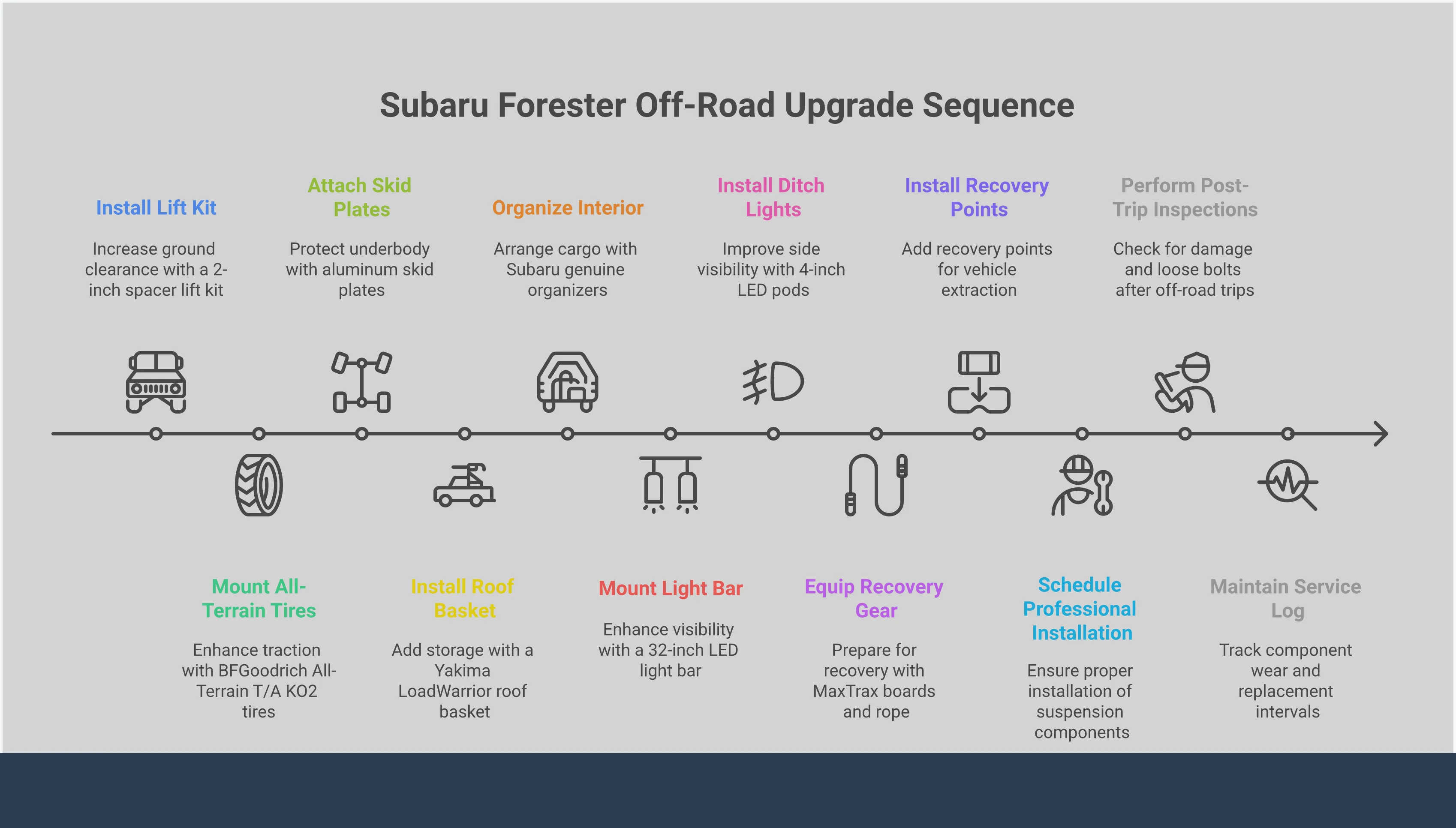
Mehr Bodenfreiheit durch ein Fahrwerkshöherlegungskit
Der erste und wichtigste Schritt bei jedem Offroad-Umbau ist die Erhöhung der Bodenfreiheit. Eine Fahrwerkshöherlegung schafft die nötige Höhe, um Steine, Spurrillen und andere Hindernisse zu überwinden, die Sie sonst aufhalten würden. Für die meisten Forester-Besitzer ist ein Distanzscheiben-Höherlegungssatz ein hervorragender Ausgangspunkt. Er bietet die notwendige Bodenfreiheit für die Montage größerer, griffigerer Reifen, ohne dass eine komplette Fahrwerksüberholung erforderlich ist. Diese eine Modifikation verändert die Geländegängigkeit Ihres Fahrzeugs grundlegend und bildet die Basis für alle weiteren Offroad-Lösungen.
Schützen Sie Ihren Unterboden mit Unterfahrschutzplatten.
Sobald Sie mehr Bodenfreiheit haben, ist der Schutz der wichtigsten Bauteile Ihres Foresters die nächste Priorität. Der Unterboden beherbergt kritische Komponenten wie Motor, Ölwanne und Getriebe, die im Gelände anfällig für Stöße sind. Robuste Unterfahrschutzplatten wirken wie eine Panzerung, absorbieren Schläge und verhindern teure Schäden fernab der Heimat. Unternehmen wie Primitive Racing sind bekannt für ihren Subaru-spezifischen Schutz, doch entscheidend ist, eine Lösung zu finden, die die am stärksten gefährdeten Bereiche abdeckt. Die Investition in einen Unterbodenschutz ist eine der klügsten Maßnahmen, um sicherzustellen, dass Ihre Offroad-Touren unbeschadet enden.
Sichern Sie sich optimalen Grip mit All-Terrain-Reifen und -Felgen
Ihre Reifen sind die einzige Verbindung zwischen Ihrem Forester und dem Gelände und gehören daher zu den wirkungsvollsten Upgrades, die Sie vornehmen können. Der Austausch der Serienreifen gegen hochwertige All-Terrain-Reifen (A/T) verbessert die Traktion auf Schotter, Schlamm und Felsen deutlich. Achten Sie auf ein Reifenprofil, das Fahrkomfort auf der Straße mit Geländegriff vereint. Die Kombination Ihrer neuen Reifen mit robusten, leichten Performance-Felgen rundet nicht nur die Optik ab, sondern hält auch den höheren Belastungen im Gelände besser stand als die Serienfelgen.
Zusätzlicher Schutz mit robusten Stoßstangen und Schwellerrohren
Während Unterfahrschutzplatten den Unterboden Ihres Foresters schützen, bleiben Front, Heck und Seiten in anspruchsvollem Gelände ungeschützt. Hier werden robuste Stoßfänger und Schwellerrohre unerlässlich. Ein Stahlstoßfänger ersetzt den serienmäßigen Kunststoffstoßfänger und bietet echten Schutz vor Stößen. Zudem verbessert er oft die Böschungswinkel bei steileren Anstiegen. Schwellerrohre schützen Ihre Schweller und verhindern teure Schäden durch Steinschlag. Sie ermöglichen es Ihnen, Hindernisse zu umfahren, ohne die Türen zu beschädigen. Diese Upgrades dienen nicht nur der Optik, sondern sind wichtige Bestandteile eines umfassenden Schutzsystems. Mit einem kompletten Set an Offroad-Lösungen ausgestattet, können Sie anspruchsvolle Strecken souverän bewältigen, denn Ihr Fahrzeug ist rundum optimal geschützt.
Beleuchte den Trail mit Offroad-Beleuchtung
Offroad-Abenteuer enden nicht immer mit Sonnenuntergang. Eine zuverlässige Beleuchtung ist unerlässlich, um nachts oder bei schlechten Sichtverhältnissen wie Nebel oder starkem Regen sicher unterwegs zu sein. Ein LED-Lichtbalken auf dem Dachgepäckträger oder der Stoßstange sorgt für helles Licht nach vorn, während kleinere Zusatzscheinwerfer in der Nähe der Motorhaube die Wegeränder ausleuchten. Dank dieser verbesserten Sicht erkennen Sie Hindernisse frühzeitig und können Ihre Fahrlinie mit mehr Sicherheit wählen – für sicherere und angenehmere Nachtfahrten.
Nicht stranden: Unverzichtbare Bergungsausrüstung
Egal wie geländegängig Ihr Forester ist, festzufahren ist immer möglich. Deshalb ist die richtige Bergungsausrüstung unerlässlich. Hier geht es nicht um Leistung, sondern um Unabhängigkeit und Sicherheit. Ihr Set sollte mindestens Traktionsplatten, ein stabiles Abschleppseil mit geeigneten Schäkeln und ein zuverlässiges Reifenreparaturset enthalten. Die Investition in hochwertige Bergungsausrüstung stellt sicher, dass Sie unerwartete Situationen selbst meistern oder anderen helfen können und so ein potenzielles Reiseende-Problem in eine kleine Unannehmlichkeit verwandeln.
Fürs Abenteuer packen: Dachgepäckträger und Stauraum
Wenn Ihre Reisen länger und anspruchsvoller werden, stoßen Sie im Forester schnell an die Grenzen des Stauraums. Ein Dachgepäckträger ist die ideale Lösung, um Ihre Ladekapazität zu erweitern. Er ermöglicht den Transport sperriger Gegenstände wie Ersatzreifen, Bergungsausrüstung, zusätzlichen Kraftstoff und Campingausrüstung und schafft so mehr Platz im Innenraum für Passagiere und wichtige Dinge. Ein hochwertiger Dachgepäckträger ist ein wesentlicher Bestandteil jeder ernsthaften Aufrüstung Ihres Subaru Forester und verwandelt Ihr Fahrzeug in eine vollwertige Expeditionsplattform für mehrtägige Touren.
Unsere Top-Marken für Forester-Offroad-Teile
Wenn Sie Ihren Forester modifizieren, werden Sie schnell feststellen, dass die Marke auf der Verpackung eine Rolle spielt. Die Wahl der richtigen Teile ist mehr als nur eine Frage des Namens; sie ist eine Investition in Qualität, Zuverlässigkeit und Leistung, auf die Sie sich verlassen können, selbst wenn Sie kilometerweit von der nächsten befestigten Straße entfernt sind. Die richtigen Komponenten sorgen gemeinsam für ein leistungsstarkes und zuverlässiges Fahrzeug, während minderwertige Teile Sie im Stich lassen können.
Damit Sie die beste Wahl für Ihr Offroad-Projekt treffen können, habe ich eine Liste führender Marken zusammengestellt, die sich in der Subaru-Offroad-Community einen Namen gemacht haben. Diese Unternehmen sind bekannt für ihre innovativen Designs, robusten Materialien und ihr tiefes Verständnis dafür, was einen Forester wirklich geländetauglich macht. Von grundlegenden Fahrwerksverbesserungen bis hin zu essenzieller Schutzausrüstung – diese Marken liefern konstant Ergebnisse für Enthusiasten, die das Beste von ihren Fahrzeugen erwarten. Ob Wochenend-Campingausflug oder ausgedehnte Overlanding-Expedition – mit diesen Marken sind Sie bestens für den Erfolg gerüstet.
Crawford Performance: Premium-Upgrades und individuelle Lösungen
Wenn Sie Teile suchen, die von echten Subaru-Enthusiasten entwickelt wurden, sind Sie bei Crawford Performance genau richtig. Wir sind spezialisiert auf hochwertige Overlanding-Lösungen, die speziell für Modelle wie den Forester und Crosstrek entwickelt wurden. Unsere Komponenten machen Ihren Subaru geländegängiger und zuverlässiger auf anspruchsvollen Strecken. Wir konzentrieren uns auf die Entwicklung integrierter Systeme, die die Leistung steigern, ohne den Fahrkomfort im Alltag zu beeinträchtigen. Von unserem bewährten Luft-/Ölabscheider über Höherlegungssätze bis hin zum Motortuning – jedes Teil erfüllt höchste Ansprüche an Langlebigkeit und Funktionalität und sorgt dafür, dass Ihr Fahrzeug für jedes Abenteuer bereit ist.
Old Man Emu: Federung für Abenteuer gebaut
Ein hochwertiges Fahrwerk ist die Basis für jedes ernsthafte Offroad-Projekt, und Old Man Emu (OME) ist in diesem Bereich eine Legende. OME ist bekannt für seine abenteuertauglichen Fahrwerkskits und konzentriert sich auf die Verbesserung von Fahrverhalten, Handling und Zuladung. Die Systeme sind so konstruiert, dass sie das zusätzliche Gewicht von Ausrüstung wie Dachträgern, Stoßstangen und Bergungsgeräten problemlos bewältigen und gleichzeitig ein stabiles und komfortables Fahrgefühl in unwegsamem Gelände bieten. Ein Old Man Emu-Fahrwerk ist eine sinnvolle Investition, die sicherstellt, dass Ihr Forester auch schwierige Hindernisse souverän meistert und auf langen Fahrten ruhig und gelassen bleibt.
Primitive Racing: Panzern Sie Ihren Subaru
Die Unterseite Ihres Foresters ist anfällig für Steine, Baumstümpfe und andere Hindernisse im Gelände. Hier kommt Primitive Racing ins Spiel. Mit tiefen Wurzeln im Subaru-Rallyesport sind sie Experten für Fahrzeugschutz. Primitive Racing ist vor allem für seine extrem robusten Unterfahrschutzplatten bekannt, die wichtige Komponenten wie Motor, Getriebe und Hinterachsdifferenzial vor teuren Schäden schützen. Die aus hochwertigem Aluminium gefertigten Unterfahrschutzplatten bieten zuverlässigen Schutz ohne unnötiges Gewicht. Ihren Forester mit diesen Schutzplatten auszustatten, ist einer der wichtigsten Schritte, um nach jedem Offroad-Trip sicher nach Hause zu kommen.
Mehr als nur Unterfahrschutzplatten: Höherlegungssätze und Felgen
Während Unterfahrschutzplatten einen wichtigen Schutz vor Beschädigungen bieten, geht es bei einem hochwertigen Höherlegungssatz und der passenden Radkonfiguration um vorausschauende Geländegängigkeit. Eine Fahrwerkshöherlegung ist der erste Schritt: Sie schafft die nötige Bodenfreiheit, um Hindernisse zu überwinden, und bietet Platz für größere, griffigere All-Terrain-Reifen. Da Ihre Reifen die einzige Verbindung zwischen Ihrem Forester und dem Gelände darstellen, sorgt der Wechsel von den Serienreifen auf einen passenden All-Terrain-Satz für eine deutliche Verbesserung der Traktion auf Schotter, Schlamm und Felsen. Es handelt sich hierbei nicht um einfache Reifenwechsel; sie sind grundlegende Upgrades für den Subaru Forester, die Ihr Fahrzeug optimal auf die Anforderungen des Offroad-Fahrens vorbereiten und die Basis für eine wirklich leistungsfähige Overlanding-Lösung bilden.
BFGoodrich: Der Standard für Geländereifen
Ihre Reifen sind der einzige Teil Ihres Fahrzeugs, der den Untergrund berührt, und gehören daher zu den wichtigsten Upgrades für Offroad-Fahrten. Gute All-Terrain-Reifen sind unerlässlich, und BFGoodrich setzt seit Jahrzehnten den Branchenstandard. Der All-Terrain T/A KO2 ist bei Offroadern besonders beliebt, da er ein aggressives Profil, hervorragende Traktion auf unterschiedlichen Untergründen und extrem robuste Seitenwände bietet, die Pannen widerstehen. Mit einem Satz BFGoodrich-Reifen verbessern Sie die Geländegängigkeit Ihres Foresters auf Schlamm, Sand und steinigen Wegen deutlich und erhalten den nötigen Grip für längere Touren.
Yakima: Zuverlässige Systeme für den Transport von Ausrüstung
Offroad-Abenteuer erfordern viel Ausrüstung, und der Innenraum Ihres Foresters kann schnell voll sein. Yakima ist ein führender Hersteller von externen Aufbewahrungslösungen, mit denen Sie alles Notwendige transportieren können. Die vielseitigen Dachträger, Gepäckkörbe und Halterungen von Yakima zeichnen sich durch Langlebigkeit und Benutzerfreundlichkeit aus. Mit einem Yakima-Dachträgersystem transportieren Sie sperrige Gegenstände wie Dachzelte, Bergebretter, Reserveräder und Kraftstoffkanister sicher. Das spart nicht nur wertvollen Platz im Innenraum, sondern sorgt auch für einen ausgewogenen Schwerpunkt und damit für mehr Stabilität auf unebenem Gelände.
Body Armor 4x4: Robuste Außenverkleidungs-Upgrades
Wenn Sie Ihrem Forester einen aggressiveren Look und die entsprechende Robustheit verleihen möchten, sollten Sie Body Armor 4x4 kennen. Das Unternehmen ist auf robuste Exterieur-Upgrades spezialisiert, die Ihren Subaru optimal für Offroad-Abenteuer rüsten. Dank der Fokussierung auf Modelle wie Forester, Crosstrek und Outback erhalten Sie passgenaue Teile für maximalen Schutz. Das Sortiment umfasst eine Reihe funktionaler Schutzvorrichtungen, darunter robuste Front- und Heckstoßstangen, Trittbretter und Rockslider, die Ihr Fahrzeug vor Steinen und anderen Hindernissen schützen. Diese Offroad-Teile sind für den harten Einsatz konzipiert und bieten zusätzliche Bergepunkte sowie eine weitere Schutzschicht, mit der Sie die Grenzen Ihres Foresters mit mehr Sicherheit ausloten können.
Wie Sie die richtigen Offroad-Teile für Ihren Forester auswählen
Der Bau Ihres idealen Offroad-Foresters beginnt mit einer soliden Planung. Die Wahl der richtigen Teile von Anfang an erspart Ihnen nicht nur späteren Ärger, sondern sorgt auch dafür, dass Ihr Fahrzeug sicher, zuverlässig und perfekt für Ihre Abenteuer geeignet ist. Bevor Sie etwas in den Warenkorb legen, sollten Sie einige wichtige Faktoren bedenken, die Ihre Entscheidungen leiten. Indem Sie das spezifische Modelljahr Ihres Fahrzeugs berücksichtigen, Ihre Offroad-Ziele definieren und wissen, welche Teile Sie benötigen, können Sie ein leistungsstarkes Fahrzeug zusammenstellen, das für jede Herausforderung bereit ist. Diese durchdachte Vorgehensweise garantiert, dass jeder investierte Euro direkt zu einem besseren und angenehmeren Erlebnis im Gelände beiträgt.
Passt es? Überprüfen Sie das Baujahr Ihres Foresters
Der erste Schritt bei jedem Tuning-Projekt ist die Prüfung, ob die gewünschten Teile auch tatsächlich zu Ihrem Fahrzeug passen. Der Subaru Forester hat seit 2002 mehrere Generationen durchlaufen, wobei sich Fahrgestell, Fahrwerksgeometrie und Motorkomponenten im Laufe der Zeit verändert haben. Ein Höherlegungssatz für ein Modell von 2010 ist beispielsweise nicht mit einem Modell von 2022 kompatibel. Überprüfen Sie daher immer die Produktbeschreibung auf Kompatibilität mit dem jeweiligen Baujahr. Seriöse Anbieter geben klar an, für welche Modelle ihre Teile vorgesehen sind, sodass Sie die passenden Upgrades für Ihren Subaru Forester leicht finden können. Diese einfache Prüfung erspart Ihnen teure Rücksendungen und Probleme beim Einbau.
Was ist dein Ziel? Teile passend zu deinem Abenteuer
Welcher Abenteurertyp bist du? Deine Antwort bestimmt den gesamten Aufbau deines Fahrzeugs. Planst du, felsige Pfade zu bezwingen, abgelegene Forststraßen zu erkunden oder lange Offroad-Touren zu unternehmen? Jedes Ziel erfordert unterschiedliche Modifikationen. Wenn du hauptsächlich auf leichten Strecken unterwegs bist, reichen vielleicht eine moderate Höherlegung und Geländereifen aus. Wenn du aber ein robustes Fahrzeug für längere Reisen baust, solltest du über ein verstärktes Fahrwerk, einen kompletten Unterbodenschutz und spezielle Offroad-Lösungen nachdenken. Investiere von Anfang an in hochwertige Upgrades, die deinen Zielen entsprechen, damit dein Forester über Jahre hinweg langlebig und zuverlässig ist.
Leistung vs. Ersatzteile: Worin liegt der Unterschied?
Es ist wichtig, zwischen Ersatzteilen und Tuningteilen zu unterscheiden. Ersatzteile dienen dazu, Ihren Forester wieder in den Originalzustand zu versetzen. Tuningteile hingegen übertreffen die Werksvorgaben und bieten Ihnen mehr Leistung, Stabilität und Langlebigkeit. Für Offroad-Umbauten sollten Sie sich stets auf Tuningteile konzentrieren. Beispielsweise ist eine moderate Höherlegung um fünf Zentimeter in Kombination mit hochwertigen All-Terrain-Reifen ein Tuning-Upgrade, das einen optimalen Kompromiss zwischen Geländegängigkeit und Fahrkomfort auf der Straße schafft. Diese Komponenten sind so konstruiert, dass sie den besonderen Belastungen im Gelände standhalten und Ihnen das nötige Vertrauen geben, Ihren Forester an seine Grenzen zu bringen.
Was Sie mit einem geländetauglichen Forester gewinnen
Die Geländetauglichkeit Ihres Subaru Forester zu verbessern, bedeutet mehr als nur eine optische Aufwertung. Es geht darum, sein wahres Potenzial zu entfalten und ihn für jedes erdenkliche Abenteuer vorzubereiten. Die richtigen Upgrades bieten spürbare Vorteile, die Sie bei jeder Fahrt abseits befestigter Straßen erleben werden. Ein optimal ausgestatteter Forester wird zu einem leistungsfähigeren, robusteren und zuverlässigeren Partner im Gelände und ermöglicht Ihnen, die Welt mit mehr Selbstvertrauen zu erkunden.
Diese Verbesserungen verwandeln Ihren Alltags-Forester in ein vielseitiges Fahrzeug, das für Wochenendausflüge, anspruchsvolle Offroad-Touren und Fernreisen bestens gerüstet ist. Von der Erhöhung der Bodenfreiheit bis zum Schutz wichtiger Bauteile – jede Modifikation erfüllt ihren Zweck. Sie können mehr Ausrüstung transportieren, schwierigeres Gelände bewältigen und sicher nach Hause kommen. Der praktische Nutzen dieser Upgrades zeigt sich besonders deutlich, wenn Sie einen steinigen Pass oder eine schlammige Nebenstraße durchfahren – es ist der Unterschied zwischen Umkehren und Weiterkommen. Sehen wir uns die konkreten Vorteile an, die Sie durch die Investition in hochwertige Subaru Forester-Upgrades erzielen.
Bezwinge Schnee, Felsen und Schlamm mit Leichtigkeit
Der symmetrische Allradantrieb und der X-Mode des Subaru Forester bieten bereits eine solide Basis für schwieriges Gelände. Mit einigen gezielten Offroad-Komponenten erreicht er jedoch ein ganz neues Leistungsniveau. Eine moderate Höherlegung des Fahrwerks um fünf Zentimeter sorgt für die nötige Bodenfreiheit, um Steine, Spurrillen und tiefen Schnee problemlos zu überwinden, ohne den Unterboden zu beschädigen. In Kombination mit griffigen All-Terrain-Reifen erhalten Sie die Traktion, die Sie benötigen, um Schlamm, Sand und glatte Oberflächen zu meistern, wo Serienreifen an ihre Grenzen stoßen würden. Diese Upgrades ermöglichen es Ihnen, sich souverän auf Strecken zu begeben, die für einen serienmäßigen Forester unzugänglich wären.
Schützen Sie Ihren Förster für die lange Lebensdauer
Offroad-Fahrten beanspruchen Ihr Fahrzeug stark, und der Schutz seiner wichtigsten Komponenten ist für seine langfristige Zuverlässigkeit unerlässlich. Der serienmäßige Unterboden bietet nur minimalen Schutz vor Steinen, Baumstümpfen und anderen Hindernissen im Gelände. Die Montage robuster Unterfahrschutzplatten ist eine der sinnvollsten Investitionen, die Sie tätigen können. Diese Platten schützen Motor, Getriebe und Differential vor Stößen, die andernfalls katastrophale Schäden verursachen und Sie im Gelände stranden lassen könnten. Indem Sie von Anfang an in hochwertige Performance-Teile investieren, stellen Sie sicher, dass Ihr Forester den Belastungen im Gelände standhält und Ihnen über Jahre hinweg ein zuverlässiges Abenteuerfahrzeug bleibt.
Mehr Ausrüstung für größere Abenteuer mitnehmen
Ob Wochenendausflug mit Camping oder einwöchige Offroad-Expedition – die richtige Ausrüstung ist entscheidend. Ein serienmäßiger Forester bietet nur begrenzten Stauraum, doch mit den richtigen Upgrades lässt sich die Ladekapazität deutlich erweitern. Ein nachträglich eingebauter Dachträger ist die ideale Basis für Dachzelt, Markisen und zusätzliche Staukästen für Kraftstoff, Wasser und Bergungsausrüstung. Mit diesen Offroad-Lösungen können Sie alles Notwendige für autarkes Reisen mitnehmen, ohne auf Innenraum oder Komfort verzichten zu müssen. So lassen sich größere, längere und anspruchsvollere Reisen planen.
Bleibt sicher und zuverlässig auf dem Wanderweg
Jede Modifikation, die die Geländegängigkeit Ihres Foresters verbessert, erhöht auch seine Sicherheit im Gelände. Die erhöhte Bodenfreiheit durch ein Höherlegungskit hilft Ihnen nicht nur, Hindernisse zu überwinden, sondern verringert auch das Risiko, aufzusetzen oder wichtige Bauteile fernab jeglicher Hilfe zu beschädigen. Verbesserte Geländereifen bieten überlegenen Grip und Pannenschutz, wodurch Sie auf unebenem Untergrund mehr Kontrolle haben und die Wahrscheinlichkeit einer Reifenpanne in abgelegenen Gebieten sinkt. Diese Upgrades geben Ihnen die Gewissheit, dass Ihr Fahrzeug für unerwartete Herausforderungen gerüstet ist und machen jedes Offroad-Erlebnis sicherer und angenehmer.
Wo man die besten Angebote für hochwertige Offroad-Teile findet
Die Aufrüstung Ihres Foresters ist eine Investition, und wie bei jeder klugen Investition möchten Sie das beste Preis-Leistungs-Verhältnis. Ein gutes Angebot zu finden, bedeutet nicht nur, den niedrigsten Preis zu erzielen, sondern vor allem, hochwertige und langlebige Teile zu erhalten, die genau dann funktionieren, wenn Sie sie am dringendsten brauchen. Ein billiges Teil, das im Gelände versagt, ist weitaus teurer als eine Qualitätskomponente zu einem fairen Preis. Mit etwas Strategie können Sie Ihren Subaru mit erstklassigem Zubehör ausstatten, ohne zu viel auszugeben. Der Schlüssel liegt darin, zu wissen, wo und wann man suchen muss.
Sollten Sie direkt oder im Einzelhandel kaufen?
Wenn Sie zum Kauf bereit sind, haben Sie in der Regel zwei Möglichkeiten: Sie kaufen direkt beim Hersteller oder über einen Online-Händler. Große Online-Shops bieten zwar oft wettbewerbsfähige Preise, doch der Direktkauf bei einem Spezialisten wie Crawford Performance hat entscheidende Vorteile. Sie erhalten fachkundige Beratung von denjenigen, die das Teil entwickelt und hergestellt haben, und können so die perfekte Kompatibilität mit Ihrem Forester sicherstellen. Dieser direkte Draht vereinfacht zudem die Abwicklung von Garantieansprüchen und bietet Zugang zu erstklassigem Support. Bei wichtigen Komponenten, die die Geländegängigkeit Ihres Fahrzeugs bestimmen, garantiert der Kauf direkt beim Hersteller, dass Sie authentische, speziell für Ihren Subaru entwickelte Overlanding-Lösungen erhalten.
So finden Sie saisonale Angebote und Aktionen
Geduld zahlt sich aus. Wenn Sie es nicht eilig haben, können Sie durch Einkäufe rund um große Rabattaktionen kräftig sparen. Halten Sie Ausschau nach Angeboten am Black Friday, Cyber Monday und anderen Feiertagen, wenn Marken oft ihre Lagerbestände reduzieren. Am besten bleiben Sie auf dem Laufenden, indem Sie Ihren Lieblingsherstellern in den sozialen Medien folgen und deren Newsletter abonnieren. Unternehmen kündigen exklusive Angebote für Tuningteile häufig zuerst ihren Followern an, sodass Sie sich frühzeitig die besten Preise für alles von Höherlegungskits bis hin zu Motorkomponenten sichern können.
Vergessen Sie nicht die Versandkosten und Angebote.
Bei der Budgetplanung für Ihr Projekt sollten Sie bedenken, dass der angezeigte Preis nicht immer der Endpreis ist. Versandkosten können die Gesamtkosten erheblich erhöhen, insbesondere bei schweren Artikeln wie Unterfahrschutz oder Fahrwerkskomponenten. Eine clevere Möglichkeit, dies zu vermeiden, ist die Suche nach Angeboten mit kostenlosem Versand. Viele Unternehmen bieten kostenlosen Versand für Bestellungen ab einem bestimmten Wert an, wodurch Sie viel Geld sparen können, wenn Sie mehrere Artikel zusammen kaufen. Wenn Sie gleich die richtigen Teile bestellen, vermeiden Sie außerdem die zusätzlichen Kosten und den Aufwand für Rücksendungen aufgrund falscher Passform. Auch deshalb ist der Kauf bei einem vertrauenswürdigen Fachhändler, der die Kompatibilität bestätigen kann, so wertvoll – so stellen Sie sicher, dass Ihre Investition vom Moment des Kaufs an gut angelegt ist.
Sparen Sie Geld mit individuellen oder Großbestellungen
Wenn Sie für Ihren Forester eine spezielle Vision haben, die über Standardteile hinausgeht, zögern Sie nicht, sich direkt an einen Hersteller zu wenden. Viele Spezialisten, darunter auch unser Team von Crawford Performance, sind auf individuelle Umbauten spezialisiert und können Lösungen exakt auf Ihre Bedürfnisse zuschneiden. Dies ist auch eine hervorragende Option, wenn Sie ein umfangreiches Upgrade planen oder mehrere Fahrzeuge mit Freunden ausstatten möchten. Durch die direkte Besprechung Ihres Projekts können Sie von Paketangeboten oder Mengenrabatten profitieren und so sicherstellen, dass Sie genau die gewünschte Konfiguration erhalten und gleichzeitig die Gesamtkosten Ihrer Tuningteile senken.
So installieren und warten Sie Ihre neuen Upgrades
Nachdem Sie die passenden Offroad-Teile ausgewählt haben, geht es im nächsten Schritt darum, diese an Ihrem Forester zu montieren und ihre zuverlässige Funktion über Jahre hinweg sicherzustellen. Die fachgerechte Montage ist die Grundlage für optimale Leistung, während regelmäßige Wartung Ihre Investition schützt und Ihre Sicherheit im Gelände gewährleistet. Es ist außerdem wichtig zu wissen, welche Unterstützung Ihnen der Hersteller im Problemfall bietet.
Die richtige Installation und Wartung sind genauso wichtig wie die Wahl der passenden Ausrüstung. Wir zeigen Ihnen, was Sie von der Erstinstallation bis zur langfristigen Pflege und dem Garantieschutz beachten sollten. So stellen Sie sicher, dass Ihr Forester jederzeit für das nächste Abenteuer bereit ist.
Professionelle Installation vs. Selbstinstallation: Was Sie beachten sollten
Die Befriedigung, eigene Umbauten vorzunehmen, ist unbestreitbar, doch es ist wichtig, die eigenen Fähigkeiten, Werkzeuge und den Zeitaufwand realistisch einzuschätzen. Manche Subaru Forester-Upgrades, wie z. B. anschraubbare Lichtleisten oder Unterfahrschutzplatten, eignen sich hervorragend als Wochenendprojekte für Hobbyschrauber. Komplexere Arbeiten, insbesondere Höherlegungssätze, die die Fahrwerksgeometrie und -ausrichtung verändern, profitieren jedoch oft von professioneller Expertise.
Bevor Sie sich entscheiden, fragen Sie sich, ob Sie das richtige Werkzeug für die Arbeit haben, wie z. B. einen Drehmomentschlüssel und Unterstellböcke, und ob Sie einen sicheren Arbeitsplatz haben. Eine professionelle Installation spart Ihnen nicht nur Zeit, sondern gibt Ihnen auch die Gewissheit, dass die Arbeit korrekt ausgeführt wurde – besonders wichtig bei sicherheitsrelevanten Bauteilen. Bei komplexen Systemen kann die Beauftragung eines Experten teure Fehler vermeiden und sicherstellen, dass Ihr Forester einwandfrei funktioniert.
Budgetplanung für Ihr Bauprojekt: Beispielhafte Teile- und Installationskosten
Die Budgetplanung ist ein entscheidender Schritt, und es ist hilfreich, eine realistische Vorstellung von den zu erwartenden Kosten zu haben. Die Preise variieren zwar, doch die Investition in hochwertige Performance-Teile von Anfang an spart langfristig Geld, da Pannen im Gelände vermieden werden. Für eine grundlegende Offroad-Ausrüstung – Höherlegungssatz, Unterfahrschutz und Geländereifen – können Sie allein mit Kosten zwischen 1.500 und 2.500 US-Dollar rechnen. Diese Anfangsinvestition deckt die wichtigsten Komponenten ab, die die größten Verbesserungen in Geländegängigkeit und Schutz für Ihren Forester bieten.
Schauen wir uns das genauer an. Ein hochwertiges 2-Zoll-Spacer-Lift-Kit kostet in der Regel zwischen 250 und 500 US-Dollar. Ein kompletter Satz Unterfahrschutzplatten zum Schutz von Motor und Getriebe liegt bei etwa 600 bis 800 US-Dollar. Ein guter Satz Geländereifen wird wahrscheinlich die größte Ausgabe darstellen und zwischen 800 und 1.200 US-Dollar kosten. Für den professionellen Einbau sollten Sie zusätzlich 600 bis 1.000 US-Dollar einplanen, da der Einbau eines Lift-Kits arbeitsintensiv sein kann. Damit beläuft sich ein professionell installiertes Starterpaket auf insgesamt etwa 2.100 bis 3.500 US-Dollar und bietet Ihnen eine solide und zuverlässige Grundlage für all Ihre zukünftigen Offroad-Abenteuer.
Ihr Wartungsplan für dauerhafte Leistung
Die Investition in hochwertige Teile ist der erste Schritt, doch erst die regelmäßige Wartung sorgt für die Zuverlässigkeit Ihres umgebauten Fahrzeugs. Offroad-Fahrten belasten das Fahrzeug stark – von Vibrationen und Stößen bis hin zu Schlamm und Wasser. Deshalb sollte die Inspektion nach jeder Fahrt zur Gewohnheit werden. Nehmen Sie sich nach jedem Abenteuer ein paar Minuten Zeit, um nach lockeren Schrauben zu suchen, die Reifen auf Beschädigungen zu prüfen und den Unterboden auf neue Lecks oder Kratzer abzusuchen.
Eine einfache Checkliste kann diesen Prozess beschleunigen und effektiver gestalten. Regelmäßiges Nachziehen der Fahrwerkskomponenten, Reinigen des Unterbodens zur Rostvorbeugung und Prüfen der Flüssigkeitsstände helfen Ihnen, kleinere Probleme zu erkennen, bevor sie unterwegs zu größeren Schwierigkeiten führen. Diese vorausschauende Vorgehensweise ist entscheidend, um Ihre Offroad-Ausrüstung zu schützen und sicherzustellen, dass Ihr Forester jederzeit einsatzbereit ist.
Wie sieht es mit Garantien aus? Ihre Optionen im Überblick
Eine gute Garantie ist ein Zeichen dafür, dass ein Hersteller hinter seinen Produkten steht. Bevor Sie kaufen, sollten Sie sich die Garantiebedingungen der infrage kommenden Teile genau ansehen. Wie lange gilt die Garantie? Deckt sie nur Material- und Verarbeitungsfehler ab oder auch die Belastungen im Gelände? Wichtig ist auch zu wissen, ob eine Selbstmontage zum Verlust der Garantie führen kann.
Wir bei Crawford Performance sind von der Langlebigkeit unserer Produkte überzeugt. Deshalb bieten wir standardmäßig 12 Monate oder 12.000 Meilen Garantie auf unsere Performance-Teile. Mit diesem Schutz können Sie Ihren Forester beruhigt bis an seine Grenzen ausreizen. Wählen Sie stets Marken, die transparent mit ihren Garantiebedingungen umgehen und sich für ihre Kunden engagieren.
Verwandte Artikel
- Ihr Leitfaden zum Forester Wilderness Fahrwerks-Upgrade
- Ultimativer Leitfaden: Die besten Offroad-Mods für den Forester
Häufig gestellte Fragen
Wenn ich mir zunächst nur eine Aufrüstung leisten kann, welche sollte es sein? Ganz klar: Investieren Sie als Erstes in einen hochwertigen Satz Geländereifen . Ein Höherlegungssatz ist zwar fantastisch, aber die Reifen sind die Verbindung Ihres Foresters zum Gelände. Ein guter Satz A/T-Reifen verbessert die Traktion auf Schotter, Schlamm und Felsen sofort und deutlich und bietet Ihnen somit das beste Preis-Leistungs-Verhältnis.
Wie wirken sich diese Offroad-Upgrades auf das Fahrverhalten und den Kraftstoffverbrauch meines Foresters im Alltag aus? Es ist wichtig, die Vor- und Nachteile realistisch einzuschätzen. Ein Höherlegungssatz und größere, schwerere All-Terrain-Reifen erhöhen den Luftwiderstand und den Rollwiderstand, was in der Regel zu einem geringfügig höheren Kraftstoffverbrauch führt. Möglicherweise bemerken Sie auch, dass die Fahrt auf befestigten Straßen etwas straffer ist. Die meisten hochwertigen Fahrwerke sind jedoch so konzipiert, dass sie Fahrkomfort auf der Straße und Geländegängigkeit optimal vereinen. Daher ist die Veränderung meist minimal und der enorme Gewinn an Geländegängigkeit lohnt sich allemal.
Wie hoch kann ich meinen Forester anheben, bevor Probleme auftreten? Für die meisten Forester-Besitzer ist eine Höherlegung um 5 cm (2 Zoll) optimal. Dadurch erhöht sich die Bodenfreiheit deutlich, sodass Hindernisse problemlos überfahren und größere Reifen montiert werden können, ohne die Fahrwerksgeometrie wesentlich zu verändern. Höherlegungen über 5 cm hinaus erfordern oft komplexere und teurere Modifikationen, um beispielsweise die Winkel der Antriebswellen zu korrigieren. Werden diese Korrekturen nicht fachgerecht durchgeführt, kann dies zu vorzeitigem Verschleiß und Zuverlässigkeitsproblemen führen.
Muss ich all diese Upgrades gleichzeitig einbauen? Überhaupt nicht. Das Tolle am Ausbau eines Geländewagens ist, dass man ihn schrittweise an Budget und sich ändernde Bedürfnisse anpasst. Ein guter Ansatz ist, mit Geländereifen zu beginnen und dann Unterfahrschutz wie Unterfahrschutzplatten hinzuzufügen. Wenn du anspruchsvollere Strecken in Angriff nimmst, kannst du eine Höherlegung des Fahrwerks einbauen und später Ausrüstung wie Offroad-Beleuchtung und einen Dachträger hinzufügen, wenn deine Abenteuer größer werden.
Wird durch den Einbau dieser Teile meine Subaru-Werksgarantie ungültig? Diese Frage wird häufig gestellt, die Antwort lautet jedoch in der Regel nein. Rechtlich gesehen darf der Hersteller Ihre gesamte Fahrzeuggarantie nicht aufheben, nur weil Sie ein Zubehörteil eingebaut haben. Damit ein Garantieanspruch abgelehnt wird, muss der Händler nachweisen, dass das von Ihnen eingebaute Teil die direkte Ursache des Defekts war. Die Verwendung hochwertiger, fahrzeugspezifischer Teile und deren fachgerechter Einbau sind der beste Weg, sich und Ihr Fahrzeug zu schützen.