


Subaru AOS V2 vs V3: Which Kit Fits Your Build?
The Subaru AOS V2 vs V3 choice comes down to fitment, PCV strategy, and how the car is used. Crawford's single-chamber V2 deletes the PCV valve and offers broad fitment for track-oriented setups. The dual-chamber V3 retains factory PCV functionality and targets owners who prioritize additional separation and emissions-system continuity.
Shop Subaru Single Chamber V2 AOS kits or explore Subaru Dual Chamber V3 AOS kits by exact vehicle fitment.
What are the Subaru AOS V2 vs V3 differences at a glance?
An air oil separator manages oil-laden vapor in the crankcase ventilation path before that vapor returns to the intake. On a modified or heavily driven Subaru, this can help limit the amount of oil entering the intake tract. It is one part of an overall engine-management plan, not a guarantee against knock, carbon buildup, oil consumption, or engine failure.
Crawford's two AOS generations approach that job differently. The V2 uses one separation chamber and requires removal of the PCV valve. The V3 uses a proprietary dual-chamber design while preserving factory PCV functionality. Neither is universally right for every Subaru. The correct choice starts with an exact application match, followed by the owner's driving environment and build priorities.
| Buyer question | Single-chamber V2 | Dual-chamber V3 |
|---|---|---|
| What is the core design? | Single separation chamber | Dual separation chambers |
| What happens to the PCV valve? | PCV valve is deleted | Factory PCV functionality is retained |
| What use case does Crawford emphasize? | Track setups and buyers needing broad fitment options | Street or performance builds prioritizing PCV retention and additional separation |
| How should a buyer choose? | Confirm a V2 kit exists for the exact model, year, engine, and layout | Confirm a V3 kit exists for the exact model, year, engine, and layout |
| Does it guarantee engine protection? | No | No |
How the single-chamber V2 design works
The V2 routes crankcase vapor through a single chamber so suspended oil can separate from the airflow. Crawford positions this version as its broad-fitment option and specifically notes that it requires deleting the PCV valve. That PCV strategy makes the V2 especially relevant to owners building around a track-oriented ventilation layout, but it also means the buyer must be comfortable moving away from the factory PCV arrangement.
Who should put V2 on the shortlist?
Consider the V2 collection when the exact vehicle is supported and PCV deletion is compatible with the build plan. This can include a dedicated track car, an older supported Subaru, or a project where the V2's application coverage solves the fitment question. The collection includes kits for several WRX, STI, Forester XT, Legacy GT, and Outback XT model-year ranges, plus a universal option. Availability must still be checked against the current collection and individual product page.
What should a V2 buyer verify?
First, verify that the selected kit matches the chassis, model year, and engine configuration. Then review the required hose routing and the consequences of deleting the PCV valve. Engine swaps, aftermarket intake manifolds, turbo changes, intercooler layouts, and relocated components can change available space or connection points even when the original chassis appears in a fitment list.
The V2 is not automatically the lesser option simply because it has one chamber. Its defining advantages are its single-chamber layout, track-oriented PCV strategy, and wide selection of listed applications. Those traits may align closely with one build and conflict with another.
How the dual-chamber V3 design differs
The V3 adds a second separation chamber and retains factory PCV functionality. Crawford describes the dual-chamber arrangement as capturing more oil and contaminants than a traditional separator while allowing the factory PCV system to continue operating. That combination makes V3 relevant to owners who want an AOS without choosing a PCV-delete configuration.
Who should put V3 on the shortlist?
Consider the V3 when the exact application is offered, retaining the factory PCV function is a priority, and the buyer wants Crawford's dual-chamber approach. The current collection includes application-specific options across selected Subaru platforms, including several later-model vehicles. Product availability and configurations can change, so the collection and product page remain the source of truth before ordering.
What should a V3 buyer verify?
A dual-chamber design does not remove the need for fitment review. Confirm mounting space, bracket location, hose routing, and compatibility with existing modifications. Buyers should also review local emissions requirements rather than assuming that any aftermarket component is automatically compliant in every jurisdiction. PCV retention is an important design distinction, but compliance depends on the vehicle, location, and complete setup.
Why is PCV strategy the deciding design question?
The positive crankcase ventilation system routes crankcase gases back toward the intake under defined operating conditions. Those gases can carry suspended oil vapor. An AOS is intended to separate some of that oil from the airflow, but the V2 and V3 integrate with the ventilation path differently.
The V2 deletes the PCV valve. The V3 retains factory PCV functionality. This is more than a small hardware difference: it affects routing, installation decisions, and how closely the completed system follows the factory ventilation strategy. A buyer should decide whether PCV deletion or PCV retention is appropriate before comparing secondary factors.
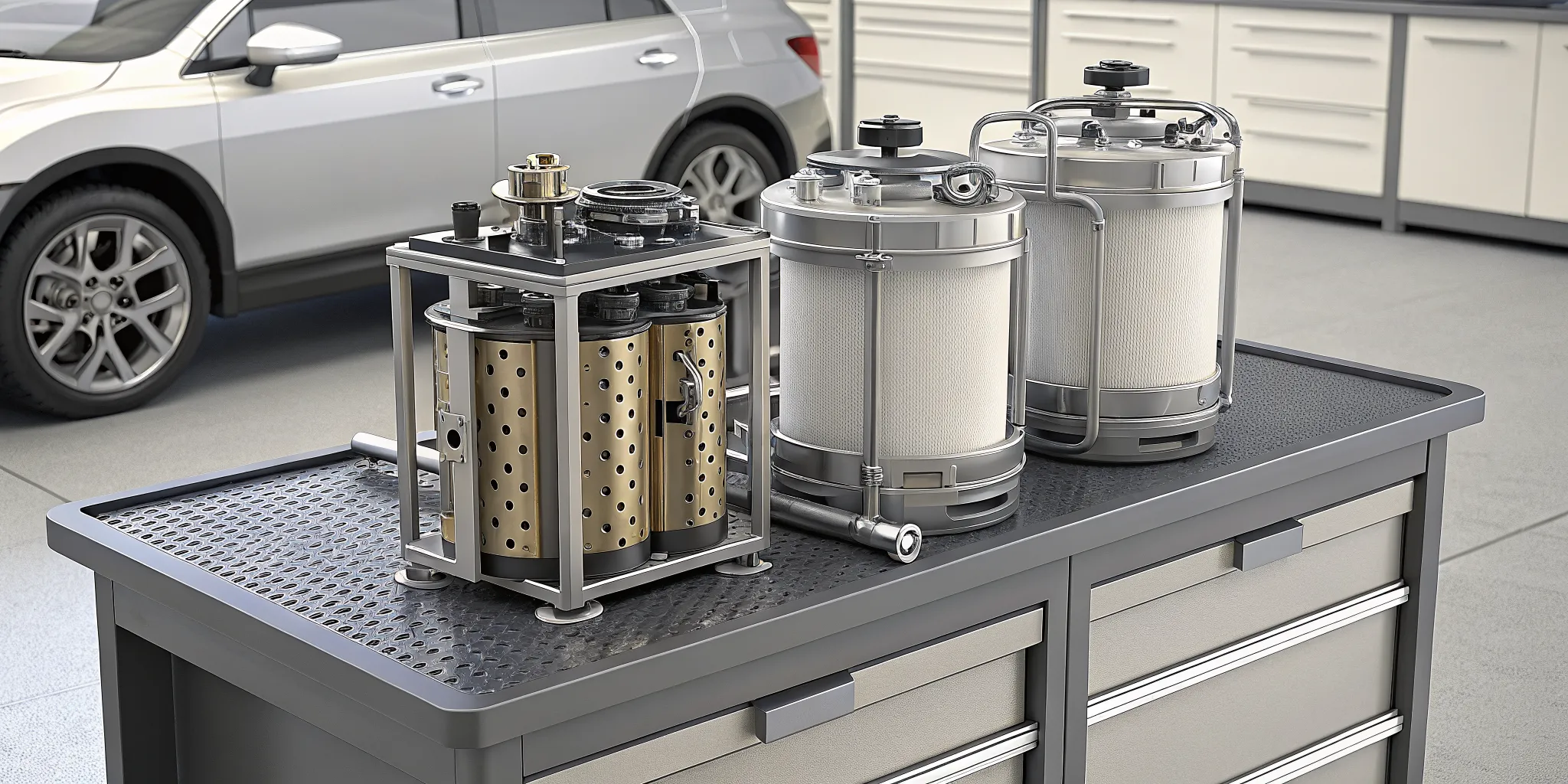
Review V2 applications for a PCV-delete setup, then compare V3 applications that retain factory PCV functionality.
Compare use cases without oversimplifying
Track-focused and competition builds
Crawford identifies the single-chamber V2 as best suited for track setups, and its broad application list can benefit owners working with earlier Subaru platforms. That does not mean every track car needs a V2. A track build may still favor V3 if PCV retention, supported fitment, and the dual-chamber design better match its requirements. Sustained high-load use also raises the importance of correct installation and routine inspection.
Street-driven performance builds
A street-driven owner may prioritize the V3 because it retains factory PCV functionality. The dual-chamber arrangement can also appeal to drivers who want Crawford's more advanced separation design. Still, V3 should not be selected from its generation number alone. If there is no correct V3 application for the vehicle or existing modifications prevent proper installation, a supported V2 configuration may be the more workable choice.
Older platforms and modified engine bays
Application coverage matters most when the vehicle is older, engine-swapped, or heavily modified. The V2 collection lists a wide range of model-year-specific kits, while the V3 range covers a different set of applications. A collection-level match is only the beginning. Review the individual product's fitment details and compare them with every modification that affects mounting or ventilation routing.
Which Subaru applications support V2 or V3?
A model name alone is not enough to establish compatibility. Subaru changes engines, intake layouts, brackets, and ventilation routing across generations. Two cars wearing the same badge can require different kits. Crawford's collection pages organize the currently available application-specific products, while individual product pages provide the details needed for a final decision.
V2 application pattern
The V2 collection currently shows fitments across multiple generations of WRX and STI, along with selected Forester XT, Legacy GT, and Outback XT applications. A universal V2 is also listed, but universal does not mean bolt-on for every vehicle. Custom planning may be required, and buyers should not infer compatibility without reviewing requirements.
V3 application pattern
The V3 collection covers selected later-model and performance applications, with product-specific options that retain factory PCV functionality. Because available products, variants, and inventory can change, avoid relying on an old forum post or a model-year assumption. Confirm the live collection, open the exact product page, and read its stated fitment before ordering.
For more context before choosing, review Crawford's explanation of how a Subaru air oil separator works, its Subaru AOS installation guide, and the seven-point AOS buying guide.
Buyer priorities that should guide the decision
1. Exact fitment
Fitment outranks every other priority. A correctly engineered kit must mount securely, connect to the proper ports, and route hoses without interference, pinching, or heat exposure. Start with year, model, engine, and transmission where relevant, then account for modifications.
2. PCV retention or deletion
Choose the desired ventilation strategy deliberately. The V2 requires a PCV delete; the V3 retains factory PCV functionality. If the owner, builder, or local regulations require one approach, that decision can narrow the choice immediately.
3. Driving environment
Track frequency, sustained load, climate, and street use all affect priorities. Crawford positions V2 for track setups, while V3's PCV-retention and dual-chamber design may align with a street-focused performance build. Treat these as decision inputs, not universal rules.
4. Existing and planned modifications
Consider both the current engine bay and the next phase of the build. Turbo kits, front-mount intercooler piping, intake manifolds, strut braces, relocated batteries, and engine swaps may affect mounting and hose routing. A kit that fits a stock application may need additional planning on a modified car.
5. Installation and inspection
Follow the instructions supplied for the exact kit. Verify every connection, avoid hose kinks, and inspect the system after installation and during routine service. An AOS can help manage oil vapor, but incorrect routing or a loose connection can create problems. It does not replace appropriate tuning, oil checks, maintenance, or diagnosis of excessive blow-by.
Questions to resolve before ordering
A strong purchase decision should be specific enough that an installer can validate it. Ask which product part number matches the exact chassis and engine, whether the planned PCV strategy is appropriate, and whether any current modification changes the supplied routing. Confirm where the separator mounts, how the hoses avoid hot or moving components, and which areas must remain accessible for service.
Also ask what should be inspected after the first heat cycles and during normal maintenance. If the Subaru has unexplained oil consumption, smoke, pressure, or drivability concerns, diagnose those symptoms instead of assuming an AOS will correct them. The separator manages vapor in the ventilation path; it does not repair worn components or replace a sound calibration. Resolving these questions before ordering prevents a chamber-design preference from overriding the more important fitment and installation requirements.
Fitment-first Subaru AOS selection checklist
Use this checklist before choosing between the Subaru AOS V2 vs V3. If any answer is uncertain, pause at that step and verify it against the exact product listing or with the installer who will complete the work.
- Identify the vehicle precisely: record the model, model year, engine, and relevant drivetrain details.
- Confirm the live application: find the exact vehicle in the V2 or V3 collection, then open the individual product page.
- Choose the PCV strategy: decide whether the build calls for the V2's PCV-delete arrangement or the V3's factory-PCV-retention design.
- Inventory modifications: list every component that changes mounting space, connection points, or hose routing.
- Inspect available space: check brackets, clearance, heat sources, moving parts, and service access.
- Match the use case: weigh track use, street use, sustained load, and future power plans without treating any one factor as decisive.
- Review requirements: read the supplied installation information and check applicable local emissions rules.
- Plan post-install checks: inspect routing and connections after installation and as part of regular maintenance.
Frequently asked questions
What is the main difference between the Crawford V2 and V3 AOS?
The V2 is a single-chamber AOS that requires deleting the PCV valve and is positioned for track setups with broad fitment coverage. The V3 uses a dual-chamber design and retains factory PCV functionality. Exact vehicle compatibility should determine which option remains on the shortlist.
Is V3 always better than V2?
No. V3 adds dual-chamber separation and PCV retention, but that does not make it the correct choice for every build. V2 may better match a supported track-oriented application or a vehicle outside the V3 range. Fitment, PCV strategy, modifications, and use case should guide the decision.
Does installing a Crawford AOS guarantee that my engine will not fail?
No. An AOS is designed to manage oil vapor in the crankcase ventilation path, but it cannot guarantee prevention of knock, carbon buildup, oil consumption, or engine failure. Proper installation, tuning, diagnostics, fluid checks, and routine maintenance remain essential.
How do I confirm whether a V2 or V3 kit fits my Subaru?
Start on the appropriate Crawford collection page, find the exact model and year, and review the individual product listing. Then compare its requirements with the engine, existing modifications, available mounting space, and hose-routing path. Do not order based only on the Subaru model name.
Confirm fitment in the Subaru V2 AOS collection or check the Subaru V3 AOS collection before selecting a kit.