

Catback vs. Axleback: Welches System ist das beste für Ihren WRX?
Der Motor Ihres WRX ist im Grunde eine Luftpumpe, und eine bessere Abgasanlage hilft ihm beim Atmen. Dieses einfache Prinzip steht im Mittelpunkt der Diskussion um Catback- vs. Axleback- Anlagen. Mit einer Axleback-Anlage lässt sich der Klang Ihres Fahrzeugs schnell verändern, indem lediglich die Schalldämpfer ausgetauscht werden. Eine komplette Catback-Anlage hingegen ist eine grundlegende Leistungssteigerung. Sie optimiert den gesamten Abgasweg nach dem Katalysator mit größeren, glatteren Rohren. Dadurch wird der Abgasgegendruck reduziert und der Motor kann freier atmen. Wir werden die technischen Details untersuchen, um Ihnen genau zu zeigen, wie sich die einzelnen Systeme auf die Leistung und das Ansprechverhalten Ihres Fahrzeugs auswirken.
Wichtigste Erkenntnisse
- Priorisieren Sie Ihr Ziel: Klang oder Leistung ? Wählen Sie ein Endschalldämpfersystem für eine kostengünstige und einfache Möglichkeit, einen aggressiveren Auspuffsound zu erzielen. Entscheiden Sie sich für ein Katalysatorsystem , wenn Sie spürbare Leistungssteigerungen und ein verbessertes Ansprechverhalten sowie einen tieferen, kultivierteren Klang wünschen.
- Berücksichtigen Sie den Gesamtaufwand: Budget und Installation : Axleback-Systeme sind budgetfreundlich und in der Regel einfach genug für eine Selbstmontage. Catback-Systeme stellen eine größere Investition dar und erfordern eine komplexere Installation, die unter Umständen professionelle Hilfe für die korrekte Ausrichtung benötigt.
- Planen Sie Ihre Upgrade-Optionen : Wenn Ihnen nur ein besserer Sound wichtig ist, ist ein Endschalldämpfer (Axleback) die perfekte Einzelmaßnahme. Planen Sie jedoch zukünftige Upgrades wie ein Downpipe oder eine Motoroptimierung, ist ein Komplettsystem (Catback) die strategische Wahl und bildet die Grundlage für zukünftige Leistungssteigerungen.
Catback vs. Axleback: Welcher Auspuff ist der richtige für Sie?
Wenn Sie die Abgasanlage Ihres Subaru aufrüsten möchten, stoßen Sie schnell auf zwei Begriffe: Catback und Axleback. Beide verändern zwar Klang und Fahrverhalten, sind aber grundverschiedene Systeme. Stellen Sie sich den Unterschied vor: eine komplette Küchenrenovierung oder nur der Austausch des Wasserhahns. Beides bewirkt eine Veränderung, doch Umfang, Kosten und Auswirkungen sind grundverschieden. Zu verstehen, worin die Unterschiede liegen, ist der erste Schritt, um die richtige Lösung für Ihr Projekt zu finden – egal, ob Sie einen aggressiveren Sound für den Alltag oder mehr Leistung für die Rennstrecke anstreben. Im Folgenden erklären wir Ihnen genau, was die einzelnen Systeme beinhalten und was das für Ihr Auto bedeutet.
Was ist ein Catback-Auspuffsystem?
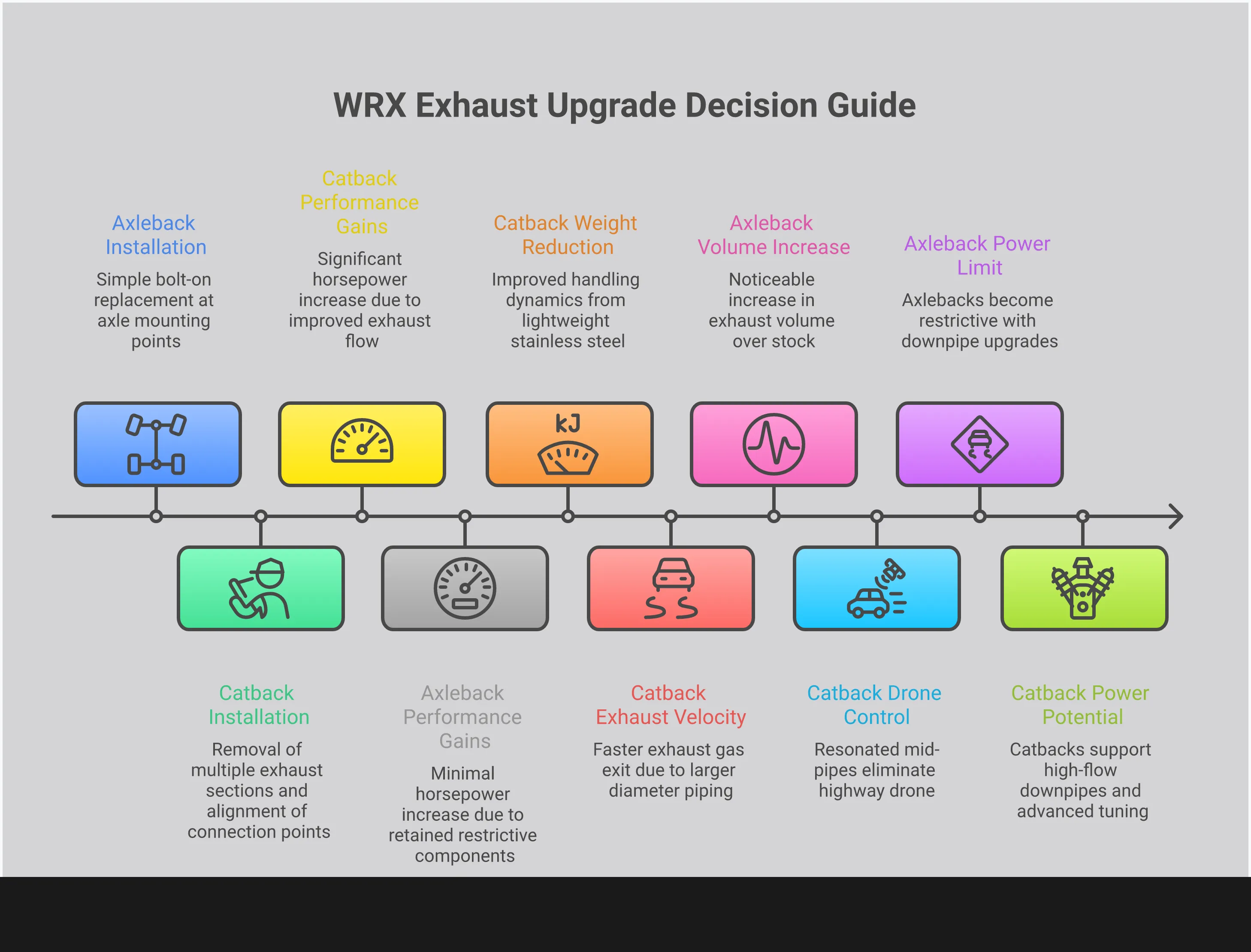
Eine Catback-Auspuffanlage ist die umfassendere der beiden Optionen. Der Name ist Programm: Sie ersetzt alle Komponenten vom Katalysator bis zu den Endrohren. Dazu gehören Mittelrohr, Resonator (falls vorhanden) und Schalldämpfer. Durch den Austausch eines Großteils der Serienanlage gegen breitere, glattere Rohre verbessert eine Catback-Anlage den Abgasstrom und reduziert den Abgasgegendruck. Diese Effizienzsteigerung kann zu einer moderaten Leistungssteigerung von oft 10–15 PS führen. Es handelt sich um eine Komplettlösung, die Klang, Leistung und sogar Gewicht beeinflusst und daher eine beliebte Wahl für Fahrzeughalter ist, die eine deutliche Leistungssteigerung anstreben.
Was ist ein Axleback-Auspuffsystem?
Während eine Catback-Anlage eine Komplettsanierung darstellt, dient eine Axleback-Anlage der gezielten optischen und akustischen Aufwertung. Dieses System ersetzt lediglich den letzten Abschnitt Ihrer Abgasanlage, vom Hinterachsgehäuse bis zu den Endrohren. Im Wesentlichen wird also nur der Schalldämpfer ausgetauscht. Da das serienmäßige Mittelrohr und der Resonator erhalten bleiben, hat eine Axleback-Anlage nur minimale Auswirkungen auf den Abgasstrom und bietet kaum messbare Leistungssteigerungen. Ihr Hauptzweck ist die Veränderung von Klang und Optik Ihres Fahrzeugs. Sie ist eine hervorragende Einstiegsmodifikation, die in der Regel günstiger und einfacher zu installieren ist als eine komplette Catback-Anlage.
Rohre und Bauteile: Die wichtigsten strukturellen Unterschiede
Der Hauptunterschied liegt in der Anzahl der auszutauschenden Teile. Ein Catback-System ist ein mehrteiliges System mit Mittelrohr und Endschalldämpfer und bietet eine technisch ausgereiftere Lösung für Klang und Leistung. Ein Axleback-System besteht hingegen nur aus Endschalldämpfer und Endrohren. Aufgrund dieses strukturellen Unterschieds bieten Catback-Systeme in der Regel einen tieferen, kultivierteren Klang und können das unerwünschte Dröhnen bei Autobahngeschwindigkeit reduzieren. Da sie weniger Material benötigen und einfacher konstruiert sind, sind Axleback-Systeme fast immer die kostengünstigere Option. Die Wahl zwischen den beiden Systemen hängt ganz von Ihren Zielen für die Upgrades und den Gesamtumbau Ihres Subaru WRX ab.
Neben Cat-Back- und Axle-Back-Auspuffanlagen: Weitere Abgassysteme
Während Cat-Back- und Axle-Back-Systeme die beliebtesten Optionen für Alltagsfahrer und Enthusiasten sind, stellen sie nicht das Ende der Möglichkeiten dar. Für alle, die maximale Leistung und einen wirklich aggressiven Sound anstreben, gibt es umfassendere Optionen, die noch mehr Teile der Serienauspuffanlage ersetzen. Diese Systeme sind für leistungsstarke Umbauten konzipiert, bei denen jedes PS zählt. Sie erfordern ein höheres Maß an Engagement und oft eine professionelle Installation sowie eine Motorabstimmung, um ihr volles Potenzial auszuschöpfen. Betrachten wir nun die Systeme, die die Abgasmodifikation noch einen Schritt weiter treiben: Header-Back-, Turbo-Back- und Straight-Pipe-Auspuffanlagen.
Header-Back- und Turbo-Back-Systeme
Für turbogeladene Fahrzeuge wie den WRX und STI ist eine Turbo-Back-Auspuffanlage die ultimative Abgasoptimierung. Dieses System ersetzt sämtliche Komponenten vom Turbolader bis zu den Endrohren, einschließlich des Hosenrohrs. Dies ist die effektivste Methode, den Abgasgegendruck zu reduzieren und dem Turbolader ein schnelleres Ansprechverhalten zu ermöglichen, was zu einer deutlichen Leistungssteigerung führt. Eine Header-Back-Anlage ist ähnlich, kommt aber bei Saugmotoren zum Einsatz und ersetzt alles ab dem Abgaskrümmer. Beide Anlagen gelten als unverzichtbare Performance-Teile für jedes ambitionierte Rennstrecken- oder Rennfahrzeug. Beachten Sie jedoch, dass sie fast immer eine individuelle Motorabstimmung erfordern, um den massiv erhöhten Luftdurchsatz auszugleichen und Motorschäden zu vermeiden.
Auspuffanlagen mit geraden Rohren
Wenn es Ihnen nur um maximale Lautstärke und ungehinderten Abgasstrom geht, ist ein gerades Auspuffrohr der direkteste Weg. Diese Konstruktion entfernt alle Schalldämpfer und Resonatoren und schafft so einen geraden, offenen Weg für die Abgase. Das Ergebnis ist ein roher, ungefilterter und extrem lauter Auspuffklang, der nichts für schwache Nerven ist. Zwar kann dadurch durch den Wegfall aller Einschränkungen etwas Leistung freigesetzt werden, doch bringt diese Methode erhebliche Nachteile mit sich. Gerade Auspuffrohrsysteme sind aufgrund von Lärm- und Emissionsvorschriften oft nicht für den Straßenverkehr zugelassen, und das intensive Dröhnen bei Reisegeschwindigkeit kann im Alltag unerträglich sein. Diese Modifikation eignet sich am besten für Rennwagen oder Geländewagen, bei denen keine Lärmschutzbestimmungen gelten.
Soundcheck: Wie die einzelnen Systeme den Sound Ihres WRX verändern
Bei der Wahl der Auspuffanlage geht es nicht nur um Leistung, sondern auch um den passenden Sound für Ihr Fahrerlebnis. Das gewählte System verändert den Charakter Ihres WRX grundlegend – von einem dezenten Brummen bis hin zu einem kraftvollen Brüllen. Sowohl Endschalldämpfer als auch Katalysatorsysteme bieten jeweils ein eigenes Klangprofil. Wenn Sie die Unterschiede kennen, treffen Sie die perfekte Wahl, mit der Sie bei jeder Fahrt zufrieden sein werden. Im Folgenden erklären wir Ihnen, was Sie von den verschiedenen Systemen erwarten können.
Erwartungen an Lautstärke und Tonhöhe festlegen
Der Hauptunterschied zwischen diesen beiden Systemen liegt in der Lautstärke und Klangtiefe des Auspuffs. Ein Axle-Back-System ersetzt im Wesentlichen den Endschalldämpfer oder entfernt ihn, wodurch sich hauptsächlich der endgültige Klang verändert. Es ist ein guter Ausgangspunkt, wenn Sie einen markanteren Klang als den Serienklang wünschen, ohne die Lautstärke massiv zu verändern. Ein Cat-Back-System hingegen ersetzt einen größeren Teil der Auspuffanlage, was eine deutlichere Veränderung sowohl der Lautstärke als auch des Klangcharakters ermöglicht.
Das aggressive Dröhnen einer Catback-Auspuffanlage
Wenn Sie Ihrem WRX einen tiefen, aggressiven Sound verleihen möchten, ist eine Cat-Back-Auspuffanlage die beste Wahl. Durch den Austausch des Mittelrohrs und die Entfernung oder den Austausch der Resonatoren erzeugt eine Cat-Back-Auspuffanlage einen lauteren, offeneren Klang, der pure Leistung ausstrahlt. Dieses System sorgt für das satte Knallen und Knistern beim Gaswegnehmen. Da der gesamte Abgasweg nach dem Katalysator frei ist, entsteht ein vollerer, komplexerer Klang, der Ihre Ankunft ankündigt. Viele unserer beliebtesten Subaru WRX-Upgrades beinhalten aus diesem Grund eine komplette Cat-Back-Auspuffanlage.
Der verfeinerte Klang einer Endschalldämpferanlage
Für alle, die eine dezentere Klangverbesserung bevorzugen, bietet eine Endschalldämpferanlage ab Hinterachse die perfekte Lösung. Sie verleiht Ihrem WRX einen sportlicheren, markanteren Auspuffklang als die Serienanlage, ohne dabei zu laut zu sein oder unerwünschte Aufmerksamkeit zu erregen. Damit ist sie die ideale Wahl für den Alltag und bietet eine angenehme Klangverbesserung, die Sie genießen können, ohne Ihre Nachbarn zu stören. Es ist eine einfache und effektive Möglichkeit, den Klang Ihres Wagens zu verbessern und ihm mit neuen Endrohren eine optische Note zu verleihen – ganz ohne großen Aufwand.
Wie man Abgasdröhnen im Innenraum behebt
Ein potenzieller Nachteil von Abgasmodifikationen ist das Dröhnen – dieses tieffrequente Brummen, das bei Reisegeschwindigkeit den Innenraum erfüllen kann. Dröhnen tritt häufiger bei Endschalldämpfern oder nicht-resonanten Cat-Back-Systemen auf, da diese die schalldämpfenden Komponenten entfernen. Wenn Ihnen eine ruhige und komfortable Fahrt auf der Autobahn wichtig ist, sollten Sie nach einem Cat-Back-System mit einem resonanten Mittelrohr suchen. Dieses Bauteil filtert die unerwünschten Frequenzen heraus und bietet Ihnen so einen kernigen Sound, wenn Sie ihn wünschen, und eine angenehme Fahrt, wenn Sie es ruhiger mögen. Es gibt verschiedene Performance-Teile, die Klang und Komfort optimal ausbalancieren.
Leistungssteigerungen: Was realistisch zu erwarten ist
Wenn Sie Ihre Abgasanlage modifizieren, verändern Sie die Atmung Ihres Motors. Dies kann zu spürbaren Leistungssteigerungen führen, doch es ist wichtig, realistische Erwartungen zu haben. Die Wahl zwischen einer Catback- und einer Axleback-Anlage hat einen erheblichen Einfluss auf den tatsächlichen Leistungszuwachs. Prüfstandswerte sind zwar hilfreich, der wahre Test ist jedoch das Fahrgefühl auf der Straße oder Rennstrecke. Wir erklären Ihnen im Folgenden, was Sie von den beiden Systemen realistisch erwarten können, damit Sie eine fundierte Entscheidung für Ihr Projekt treffen können.
Wie Catback-Systeme die PS-Zahl erhöhen
Wer eine spürbare Leistungssteigerung sucht, ist mit einer Catback-Auspuffanlage bestens beraten. Durch den Austausch der restriktiven Rohre ab dem Katalysator kann eine Catback-Auspuffanlage 5 bis 15 PS zusätzlich einbringen. Bei turbogeladenen Fahrzeugen wie dem Subaru WRX liegen die Zuwächse oft im oberen Bereich dieser Spanne. Das ist nicht nur eine Zahl auf dem Papier; es ist ein Unterschied, den man beim Beschleunigen spürt. Der Motor reagiert direkter und dreht williger hoch, was für ein deutlich intensiveres Fahrerlebnis sorgt. Dieses Upgrade ist ideal für Fahrer, die Wert auf Klang und Leistung legen.
Die subtilen Leistungsauswirkungen eines Axleback-Auspuffs
Um es gleich vorwegzunehmen: Man baut keine Endschalldämpfer ein, um die Leistung zu steigern. Zwar kann es zu einem minimalen Zuwachs von ein oder zwei PS kommen, aber das werden Sie am Steuer nie spüren. Der Hauptzweck eines Endschalldämpfers ist die Verbesserung von Klang und Optik Ihres WRX. Er ersetzt den letzten Teil der Abgasanlage, einschließlich der Schalldämpfer, wo der Großteil der Klangformung stattfindet. Wenn Sie einen aggressiveren Auspuffsound und eine bessere Optik ohne große Investition wünschen, ist ein Endschalldämpfer eine fantastische und kostengünstige Wahl. Erwarten Sie aber keine schnelleren Rundenzeiten.
Wie sich ein verbesserter Abgasstrom auf die Leistung auswirkt
Die Wissenschaft hinter der Abgasleistung lässt sich auf ein zentrales Konzept zurückführen: den Abgasgegendruck. Stellen Sie sich diesen Widerstand vor, dem die Abgase beim Verlassen des Motors begegnen. Die Serienanlage ist auf Geräuscharmut und geringe Emissionen ausgelegt, was oft zu einer Engstelle führt. Eine Komplettanlage ab Katalysator (Catback) verwendet breitere, glattere Rohre, um diesen Gegendruck zu reduzieren und dem Motor so ein freieres „Atmen“ zu ermöglichen. Diese verbesserte Effizienz führt dazu, dass der Motor mehr Leistung erbringt, ohne so stark beansprucht zu werden. Das ist der Hauptgrund, warum eine komplette Catback-Anlage spürbare Leistungssteigerungen gegenüber einer Endschalldämpferanlage ab Katalysator (Axleback) bietet, bei der die restriktiven Serienrohre größtenteils erhalten bleiben.
Die Rolle von Dornbiegungen
Bei hochwertigen Auspuffanlagen stößt man häufig auf die Bezeichnung „dorngebogen“ als wichtiges Ausstattungsmerkmal. Das ist keine bloße Marketingfloskel, sondern ein entscheidendes Detail, das die Leistung direkt beeinflusst. Stellen Sie sich vor, Sie biegen einen Trinkhalm – knicken Sie ihn einfach, entsteht ein Knick, der den Durchfluss behindert. Das ist im Prinzip eine Quetschbiegung, die bei günstigeren Serienauspuffanlagen üblich ist. Beim Dornbiegen hingegen wird während des Biegevorgangs ein Stützstab im Rohr verwendet. Dadurch behält das Rohr über die gesamte Krümmung seinen vollen, gleichmäßigen Durchmesser bei, was besonders bei engeren Biegungen wichtig ist, wo der Durchfluss leicht eingeschränkt werden kann.
Dieser gleichmäßige Abgasstrom ist entscheidend für den Abgasaustritt. Er ermöglicht den Abgasen, den Motor mit minimalem Widerstand zu verlassen, wodurch der Abgasgegendruck deutlich reduziert wird. Wie bereits erwähnt, bedeutet weniger Abgasgegendruck, dass Ihr Motor effizienter atmen kann und somit mehr Leistung und Drehmoment freisetzt. Dies ist ein wesentlicher Bestandteil der Leistungsfähigkeit einer echten Performance-Abgasanlage. Neben der Leistungssteigerung trägt dieser gleichmäßigere Abgasstrom auch zu einem saubereren, kultivierteren Auspuffklang bei und eliminiert die Turbulenzen, die raue, unangenehme Geräusche verursachen können. Wenn Sie in eine hochwertige Catback-Abgasanlage investieren, bezahlen Sie für Details wie diese, die einen echten Unterschied machen.
Wie wirkt sich Gewichtsreduzierung auf das Fahrverhalten aus?
PS-Zahl ist nicht das einzige Leistungsmerkmal. Serienmäßige Auspuffanlagen bestehen typischerweise aus schwerem Stahl und sind auf Langlebigkeit, nicht auf Höchstleistung ausgelegt. Viele Nachrüst-Performance-Teile, darunter auch Catback-Systeme, werden aus leichteren Materialien wie Edelstahl oder sogar Titan gefertigt. 7 bis 9 kg weniger Gewicht am Heck klingen vielleicht nicht viel, aber diese Gewichtsreduzierung kann das Fahrverhalten spürbar verbessern. Ihr Auto wirkt in Kurven agiler und reaktionsschneller, was die Performance jenseits der reinen Höchstgeschwindigkeit steigert. Dies ist ein positiver Nebeneffekt, der zu einer insgesamt besseren Fahrdynamik beiträgt.
Konstruktion und Materialien: Was gehört in einen Hochleistungsauspuff?
Nicht alle Auspuffanlagen sind gleich, und ein wesentlicher Unterschied zwischen einer hochwertigen Aufrüstung und einem billigen Nachbau liegt in den verwendeten Materialien und der Verarbeitung. Die Art des Metalls beeinflusst alles – vom Gewicht und der Haltbarkeit der Anlage über ihren Klang bis hin zum Preis. Wenn Sie verstehen, was eine hochwertige Auspuffanlage ausmacht, erkennen Sie auch, warum eine gut gefertigte Anlage eine lohnende Investition für Ihren Subaru ist. Es geht um mehr als nur gebogene Rohre; es geht um die Entwicklung eines Bauteils, das starker Hitze und Vibrationen standhält und dabei konstant gute Ergebnisse liefert.
Gängige Materialien für Nachrüstauspuffanlagen
Wenn Sie sich nach einer Auspuffanlage umsehen, werden Sie auf verschiedene Materialien stoßen, vor allem Edelstahl, Titan und Inconel. Jedes Material hat seine Vor- und Nachteile, und die richtige Wahl hängt von Ihrem Budget und Ihren geplanten Nutzungszwecken ab. Für ein Alltagsauto oder ein Wochenend-Rennfahrzeug kann das ideale Material ein anderes sein als für ein reinrassiges Rennfahrzeug, bei dem jedes Gramm zählt. Schauen wir uns die gängigsten Optionen an, die Ihnen bei der Suche nach dem passenden Upgrade für Ihr Fahrzeug begegnen werden.
Edelstahl
Edelstahl gilt aus gutem Grund als Goldstandard für die meisten Nachrüst-Auspuffanlagen. Er bietet ein optimales Verhältnis von Leistung, Langlebigkeit und Kosten. Dank seiner natürlichen Rost- und Korrosionsbeständigkeit hält er den Belastungen des Alltags, wie Regen und Streusalz, problemlos stand. Obwohl er schwerer ist als exotischere Alternativen, bietet er eine deutliche Gewichtsersparnis gegenüber der Serienanlage. Für die große Mehrheit der Subaru-Fahrer, die nach zuverlässigen Upgrades für ihren Subaru STI suchen, ist eine hochwertige Edelstahl-Auspuffanlage ab Katalysator die perfekte Wahl: Sie liefert einen großartigen Sound und dauerhafte Leistung zu einem erschwinglichen Preis.
Titan und Inconel
Wenn Sie ein Auto für den ambitionierten Rennsport bauen, bei dem Gewichtseinsparungen entscheidend sind, sind Titan und Inconel die erste Wahl. Titan ist unglaublich leicht und gleichzeitig extrem robust und eignet sich daher ideal, um wertvolle Pfunde einzusparen. Inconel ist eine Superlegierung, die für ihre Beständigkeit gegenüber extremen Temperaturen bekannt ist und daher häufig in leistungsstarken Rennwagen zum Einsatz kommt. Beide Materialien sind deutlich teurer und gehören daher in den Bereich der speziell für Hochleistungsfahrzeuge entwickelten Fahrzeuge. Sie repräsentieren die Spitze der Abgastechnologie und bieten spürbare Vorteile für alle, die ihre Fahrzeuge bis ans Limit ausreizen.
Wie Hochleistungsauspuffanlagen hergestellt werden
Die Herstellung einer erstklassigen Abgasanlage ist ein sorgfältiger Prozess, der Technologie und handwerkliches Können vereint. Alles beginnt am Computer, wo Ingenieure mithilfe von CAD-Software ein System entwerfen, das den Abgasstrom optimiert und perfekt auf Ihr Fahrzeug abgestimmt ist. Nach der finalen Konstruktion wird das gewählte Material präzise zugeschnitten und gebogen, oft mit einer Dornbiegemaschine, um einen gleichbleibenden Rohrdurchmesser über alle Kurven hinweg zu gewährleisten. Anschließend werden die Teile von erfahrenen Technikern fachmännisch verschweißt. Abschließend wird das System strengen Tests unterzogen, um eine perfekte Passform und Dichtheit sicherzustellen und Ihnen die Langlebigkeit der verbauten Performance-Teile zu garantieren.
Budgetplanung für Ihr Upgrade: Kostenvergleich zwischen Catback- und Axleback-Anlage
Wenn es um das Tuning Ihres WRX geht, ist Ihr Budget oft ausschlaggebend. Sowohl Catback- als auch Axleback-Systeme bieten deutliche Vorteile, unterscheiden sich aber preislich stark. Um langfristig zufrieden zu sein, ist es wichtig, die anfallenden Kosten – von den Teilen selbst bis zum Einbau – zu kennen. Wir zeigen Ihnen, mit welchen Kosten Sie rechnen müssen und wo der wahre Mehrwert jeder Option liegt, damit Sie Ihr Upgrade optimal auf Ihre finanziellen Pläne und Leistungsziele abstimmen können.
Was kostet eine Auspuffanlage?
Wenn Sie auf der Suche nach einer kostengünstigen Möglichkeit sind, einen aggressiveren Auspuffsound zu erzielen, ist eine Endschalldämpferanlage ein hervorragender Einstieg. Da diese Anlagen nur den letzten Teil Ihrer Abgasanlage – Schalldämpfer und Endrohre – ersetzen, benötigen sie weniger Material und sind einfacher konstruiert. Diese unkomplizierte Bauweise hält die Herstellungskosten niedrig und macht sie zur günstigsten Option, um den Sound Ihres Autos zu verändern. Viele WRX-Besitzer finden in einer Endschalldämpferanlage genau den satten Sound, den sie sich wünschen, ohne dabei viel Geld auszugeben. Daher ist sie eine beliebte erste Modifikation.
Was kostet ein Catback-System?
Ein Catback-System stellt eine bedeutende Investition in die Leistung und den Klang Ihres Fahrzeugs dar. Es handelt sich um ein Komplettsystem, das alles ab dem Katalysator, einschließlich Mittelrohr und Endschalldämpfer, ersetzt. Die höheren Kosten resultieren aus dem größeren Umfang an hochwertigen Rohren, den komplexeren Bauteilen und dem Entwicklungsaufwand für ein spezifisches Klangprofil und einen optimierten Abgasstrom. Obwohl der Preis höher ist, erhalten Sie ein umfassendes Upgrade mit spürbaren Leistungssteigerungen und sind daher ein wichtiger Bestandteil vieler WRX-Upgrades.
Vergessen Sie nicht, die Installationskosten einzuplanen.
Neben den Teilekosten sollten Sie auch die Montage berücksichtigen. Axleback-Systeme lassen sich in der Regel direkt anschrauben und sind somit mit einfachem Werkzeug an einem Wochenendnachmittag problemlos selbst zu montieren, wodurch Sie Arbeitskosten sparen. Die Installation eines kompletten Catback-Systems ist hingegen aufwendiger. Hierfür muss ein wesentlich größerer Teil der Serienauspuffanlage entfernt werden, und eine korrekte Ausrichtung ist entscheidend, um Undichtigkeiten zu vermeiden. Viele Enthusiasten können die Montage selbst durchführen, andere bevorzugen jedoch die professionelle Installation, was die Gesamtkosten erhöht.
Welcher Auspuff bietet das beste Preis-Leistungs-Verhältnis?
Welches System bietet also das bessere Preis-Leistungs-Verhältnis? Die Antwort hängt von Ihren Zielen ab. Wenn Ihr Hauptziel ein lauterer, aggressiverer Sound bei begrenztem Budget ist, ist der Axleback-Auspuff die eindeutig beste Wahl. Er bietet eine deutliche Klangverbesserung für eine geringe Investition. Wenn Sie jedoch zukünftige Leistungssteigerungen planen und ein System wünschen, das die Performance verbessert und gleichzeitig einen fein abgestimmten Auspuffklang liefert, ist der Catback-Auspuff langfristig die deutlich bessere Option. Er ist eines der grundlegenden Performance-Teile, das die Basis für weitere Modifikationen in der Zukunft bildet.
Die richtige Wahl treffen: Welches System ist das richtige für Ihren WRX?
Die Wahl zwischen einer Catback- und einer Axleback-Auspuffanlage hängt davon ab, was Sie mit Ihrem Subaru WRX erreichen möchten. Es gibt keine allgemeingültige „beste“ Lösung – nur die, die am besten zu Ihren Zielen, Ihrem Budget und Ihren Zukunftsplänen passt. Indem Sie sich überlegen, wie Sie Ihr Auto nutzen und was Sie sich von einem Upgrade wünschen, können Sie eine fundierte Entscheidung treffen, mit der Sie jahrelang zufrieden sein werden. Lassen Sie uns die wichtigsten Faktoren gemeinsam durchgehen.
Alltagsauto vs. Rennstreckenmaschine: Definiere dein Ziel
Seien Sie zunächst ehrlich, wie Sie Ihren WRX nutzen. Ist er Ihr zuverlässiger Alltagsbegleiter, den Sie etwas aufregender gestalten möchten, oder bauen Sie eine reinrassige Rennmaschine für Wochenendausflüge auf der Rennstrecke? Wenn Ihr Hauptziel darin besteht, Ihren Alltagsfahrten einen satteren Auspuffsound zu verleihen, ohne viel Geld auszugeben, ist eine Endschalldämpferanlage eine hervorragende Wahl. Sie bietet eine einfache und kostengünstige Möglichkeit, mehr Klang und Charakter zu erzielen.
Wer jedoch eine höhere Leistung anstrebt, sollte ein Catback-System in Betracht ziehen. Es optimiert den Abgasstrom, was zu einem besseren Ansprechverhalten des Gaspedals und einer leichten Leistungssteigerung führen kann. Für Fahrer, die das Leistungspotenzial ihres Fahrzeugs voll ausschöpfen möchten, ist ein Catback-System ein grundlegender Bestandteil umfassender Upgrades für den Subaru WRX .
Wie man großartigen Sound mit lokalen Gesetzen in Einklang bringt
Der Klang ist oft der Hauptgrund für ein Auspuff-Upgrade. Eine Endschalldämpferanlage verleiht Ihrem WRX einen deutlich lauteren und tieferen Ton als die Serienanlage. So genießen Sie das klassische Subaru-Grollen noch intensiver. Eine Komplettanlage ab Katalysator geht noch einen Schritt weiter und liefert ein aggressiveres, kultivierteres und oft lauteres Klangprofil, da sie einen größeren Teil der Serienrohre ersetzt. Hochwertige Komplettanlagen ab Katalysator sind zudem in der Regel so konstruiert, dass unerwünschtes Dröhnen bei Autobahngeschwindigkeit minimiert wird.
Vor dem Kauf sollten Sie sich unbedingt über die örtlichen Lärmschutzbestimmungen informieren. Obwohl beide Systeme nach dem Katalysator installiert werden und in der Regel keine Emissionsprobleme verursachen, gelten in manchen Gebieten strenge Grenzwerte für die Abgaslautstärke. Eine kurze Recherche der lokalen Vorschriften kann Ihnen später viel Ärger ersparen.
Selbstmontage oder Installation durch einen Fachmann?
Auch Ihre Erfahrung mit Schraubenschlüsseln wird Ihre Entscheidung beeinflussen. Eine Auspuffanlage ab Hinterachse gehört zu den einfachsten Modifikationen, die Sie vornehmen können. In der Regel müssen Sie lediglich die serienmäßigen Schalldämpfer abschrauben und die neuen an deren Stelle montieren – eine Arbeit, die viele Autoenthusiasten in weniger als einer Stunde selbst in ihrer Einfahrt erledigen können.
Der Einbau einer Catback-Auspuffanlage ist etwas aufwendiger. Man tauscht die gesamte Abgasanlage ab dem Katalysator aus, was mehr Teile, mehr Schrauben und mehr Zeit unter dem Auto bedeutet. Für jemanden mit Erfahrung ist es zwar immer noch ein machbares Heimwerkerprojekt, erfordert aber oft eine Hebebühne und eine präzise Ausrichtung, um Undichtigkeiten zu vermeiden. Wenn Sie sich Ihre Fähigkeiten nicht zutrauen, ist der Einbau durch einen Fachmann eine lohnende Investition.
Zu berücksichtigende Installationsherausforderungen
Während der Austausch eines Endschalldämpfers ab der Achse relativ einfach ist, erfordert der Einbau einer kompletten Abgasanlage ab Katalysator deutlich mehr Sorgfalt. Es werden nicht nur die Schalldämpfer ersetzt, sondern ein wesentlich größeres Rohrsystem, das sich über die gesamte Fahrzeuglänge erstreckt, demontiert und montiert. Die größte Herausforderung besteht darin, die perfekte Ausrichtung sicherzustellen. Sitzen die Rohre nicht korrekt, besteht die Gefahr von Abgaslecks, die die Leistung beeinträchtigen und ein unangenehmes Geräusch verursachen können. Falsch ausgerichtete Halterungen können außerdem zu Klappergeräuschen am Unterboden führen. Wenn Sie wenig Erfahrung mit Autoreparaturen haben oder keinen Zugang zu einer Hebebühne besitzen, kann dies eine knifflige Angelegenheit sein. Es ist keine Schande, einen Fachmann zu beauftragen; es ist eine lohnende Investition, um sicherzustellen, dass Ihre neue Anlage vom ersten Tag an einwandfrei funktioniert.
Tipps für eine erfolgreiche Selbstinstallation
Wenn Sie die Installation selbst in Angriff nehmen möchten, ist eine Endschalldämpferanlage ein idealer Einstieg. Die Montage erfolgt direkt per Verschraubung und ist von den meisten Hobbybastlern mit einfachem Werkzeug an einem Nachmittag erledigt. Verwenden Sie für einen reibungslosen Ablauf stets neue Dichtungen, um eine perfekte Abdichtung zu gewährleisten und Leckagen zu vermeiden. Achten Sie beim Festziehen der Schrauben darauf, dass die Auspuffhalterungen korrekt ausgerichtet sind, um störende Klappergeräusche zu vermeiden. Stellen Sie sicher, dass zwischen den neuen Rohren und anderen Bauteilen unter dem Fahrzeug ausreichend Platz ist. Ziehen Sie abschließend alle Schrauben gleichmäßig über Kreuz fest, um einen sicheren Sitz zu gewährleisten. Die Verwendung hochwertiger Performance-Teile erleichtert die Installation zusätzlich, da diese passgenau für Ihr spezifisches Fahrzeugmodell entwickelt wurden.
Wie wird sich diese Entscheidung auf zukünftige Mods auswirken?
Überlegen Sie sich Ihre langfristigen Pläne für Ihren WRX. Ist dies die einzige geplante Modifikation oder die erste von vielen? Wenn Sie lediglich einen besseren Sound wünschen, ist ein Endschalldämpfer (Axleback) eine perfekte Einzellösung. Planen Sie jedoch eine deutliche Leistungssteigerung, ist eine Komplettanlage (Catback) die strategischere Wahl.
Wenn Sie beispielsweise später ein Sport-Downpipe einbauen und eine professionelle Abstimmung vornehmen lassen möchten, stellt eine 3-Zoll-Catback-Anlage sicher, dass Ihr gesamtes Abgassystem den erhöhten Luftdurchsatz bewältigen kann. Die Kombination einer High-Flow-Downpipe mit einem restriktiven Serien-Mittelrohr würde einen Engpass erzeugen und Ihre potenziellen Leistungssteigerungen begrenzen. Investieren Sie von Anfang an in eine komplette Catback-Anlage, um sicherzustellen, dass Ihre Performance-Komponenten optimal zusammenarbeiten und so mehr Leistung erzeugen.
Langzeitpflege: Wartung Ihres neuen Abgassystems
Sie haben in eine hochwertige Abgasanlage investiert, um den perfekten Sound und die optimale Leistung Ihres WRX zu erzielen. Jetzt ist es an der Zeit, diese Investition zu schützen. Die richtige Pflege ist unkompliziert, aber mit etwas Aufmerksamkeit stellen Sie sicher, dass Ihre neue Abgasanlage auch in den kommenden Jahren einwandfrei funktioniert und gut aussieht. Wie bei allen anderen Leistungskomponenten Ihres Fahrzeugs verhindern regelmäßige Kontrollen und Reinigungen, dass kleine Probleme zu größeren werden und der charakteristische Subaru-Sound erhalten bleibt.
Regelmäßige Inspektionen und Wartung
Sobald Ihre neue Auspuffanlage eingebaut ist, sollten Sie sie bei jedem Ölwechsel einer kurzen Sichtprüfung unterziehen. Schauen Sie unter das Auto und achten Sie auf Anzeichen von Problemen. Prüfen Sie die Halterungen auf festen Sitz und darauf, ob das Gummi rissig oder gedehnt ist. Untersuchen Sie die Schellen und Flansche auf Rußablagerungen, die auf ein Abgasleck hindeuten können. Ein Leck verursacht nicht nur ein schlechtes Geräusch, sondern kann auch die Motorleistung beeinträchtigen. Die frühzeitige Erkennung solcher Probleme ist entscheidend für die Langlebigkeit Ihrer Anlage und den Erhalt der erzielten Leistungssteigerung.
Korrosion und Verschleiß verhindern
Selbst hochwertige Edelstahl-Auspuffanlagen können durch Witterungseinflüsse beeinträchtigt werden, insbesondere in Regionen, in denen im Winter Streusalz verwendet wird. Vorbeugung ist der beste Schutz: Halten Sie Ihre Auspuffanlage sauber. Durch regelmäßiges Waschen des Fahrzeugunterbodens werden korrosive Ablagerungen entfernt, die das Metall mit der Zeit angreifen können. Dieser einfache Schritt beugt außerdem Oberflächenrost vor und sorgt dafür, dass Ihre polierten Endrohre lange wie neu aussehen. Durch die regelmäßige Wartung Ihrer Auspuffanlage stellen Sie sicher, dass sie weiterhin den Klang und die Effizienz liefert, die Sie von hochwertigen Performance-Teilen erwarten, und vermeiden Probleme wie erhöhte Geräuschentwicklung oder vermindertes Ansprechverhalten des Motors.
Verwandte Artikel
- Die 5 besten Cat-Back-Auspuffanlagen für den WRX (Leitfaden 2025)
- WRX 3-Zoll-Auspuffanlage: Der ultimative Kaufratgeber
Häufig gestellte Fragen
Muss mein WRX nach dem Einbau einer Catback- oder Axleback-Auspuffanlage abgestimmt werden? Bei einer Axleback-Anlage ist eine Abstimmung nicht unbedingt notwendig, da sie den Luftstrom des Motors nicht wesentlich verändert. Bei einer Catback-Anlage ist eine Abstimmung zwar nicht zwingend erforderlich, aber dringend zu empfehlen. Der verbesserte Abgasstrom einer Catback-Anlage ermöglicht es einem professionellen Tuner, die Motorparameter optimal einzustellen und so die maximale Leistungs- und Drehmomentsteigerung aus Ihrer Investition herauszuholen.
Führt der Einbau einer Zubehör-Auspuffanlage zum Verlust der Subaru-Garantie? Diese Sorge ist weit verbreitet, aber Sie können beruhigt sein. In den USA schützt der Magnuson-Moss Warranty Act die Verbraucher. Ein Händler darf Ihre gesamte Fahrzeuggarantie nicht einfach aufgrund des Einbaus eines Zubehörteils verweigern. Er muss nachweisen, dass das betreffende Teil den von Ihnen beanstandeten Schaden direkt verursacht hat. Da sowohl Catback- als auch Axleback-Systeme nach dem Katalysator montiert werden, gelten sie im Allgemeinen als sehr sichere Modifikationen, die in der Regel keine Garantieprobleme verursachen.
Lohnt sich der Aufpreis für ein Catback-System gegenüber einem Axleback-System wirklich? Das hängt ganz von Ihren Zielen mit dem Auto ab. Wenn Sie mit einem begrenzten Budget einen besseren Sound erzielen möchten, bietet ein Axleback-System ein hervorragendes Preis-Leistungs-Verhältnis. Wenn Sie jedoch echte Leistungssteigerungen anstreben und später weitere Modifikationen planen, ist das Catback-System die klügere Investition auf lange Sicht. Es schafft die optimale Basis für zukünftige Leistungssteigerungen und bietet ein umfassenderes Upgrade in Klang und Leistung.
Ich fahre meinen WRX täglich. Wird eine Catback-Anlage zu laut oder nervig sein? Nicht unbedingt. Viele hochwertige Catback-Anlagen sind so konstruiert, dass sie beim Beschleunigen einen kernigen Sound liefern und gleichzeitig das störende Dröhnen bei Reisegeschwindigkeit minimieren. Wichtig ist, auf eine Anlage mit Resonator zu achten. Dieses Bauteil filtert unerwünschte tiefe Frequenzen heraus und sorgt so für ein komfortables Fahrgefühl auf der Autobahn und einen tollen Sound, wann immer Sie ihn wünschen.
Welches System liefert mir mehr von diesem Knallen und Blubbern beim Gaswegnehmen? Wenn Sie dieses befriedigende Knallen und Blubbern beim Gaswegnehmen suchen, ist eine komplette Catback-Anlage die beste Wahl. Durch den Austausch eines größeren Teils der Serienrohre und die Entfernung von restriktiven Kammern ermöglicht eine Catback-Anlage ein deutlich aggressiveres und lebendigeres Klangprofil. Während ein Axleback-Endschalldämpfer den Auspuffklang tiefer macht, entfesselt eine Catback-Anlage den wahren akustischen Charakter des Fahrzeugs.