

WRX Dyno Proven Mods: Verified Wheel Horsepower Gains
The best wrx dyno proven mods provide clear, repeatable wheel horsepower gains on a calibrated Dynojet rather than any unverified power claims or empty aftermarket tuner marketing promises. These essential performance hardware upgrades include high-flow cold-air intakes, upgraded J-pipes, larger top-mount intercoolers, and built engine short blocks designed to handle much higher operating boost levels safely. When you match these high-performance engine parts with a custom Cobb or EcuTek tune, you can easily raise your boost pressure safely without risking any severe engine knock. Our detailed data guide outlines the exact wheel horsepower ranges you can expect from each modification level, helping you build a very fast and highly reliable Subaru WRX.
Ready to build a dyno-proven WRX that hits your power goals? Contact Crawford Performance today to plan your build with our tuning team.
Dyno-Proven WRX Mods, Explained
Every Subaru owner wants more speed. If you shop for parts, you will see many claims. But a part is only useful when you can prove its gains. This post is the data-backed partner to our ranked list of the best WRX power mods. We focus on real numbers from a chassis dyno. If you want to build a fast car, you need to look for wrx dyno proven mods. These parts have proven power gains.
What is a chassis dyno?
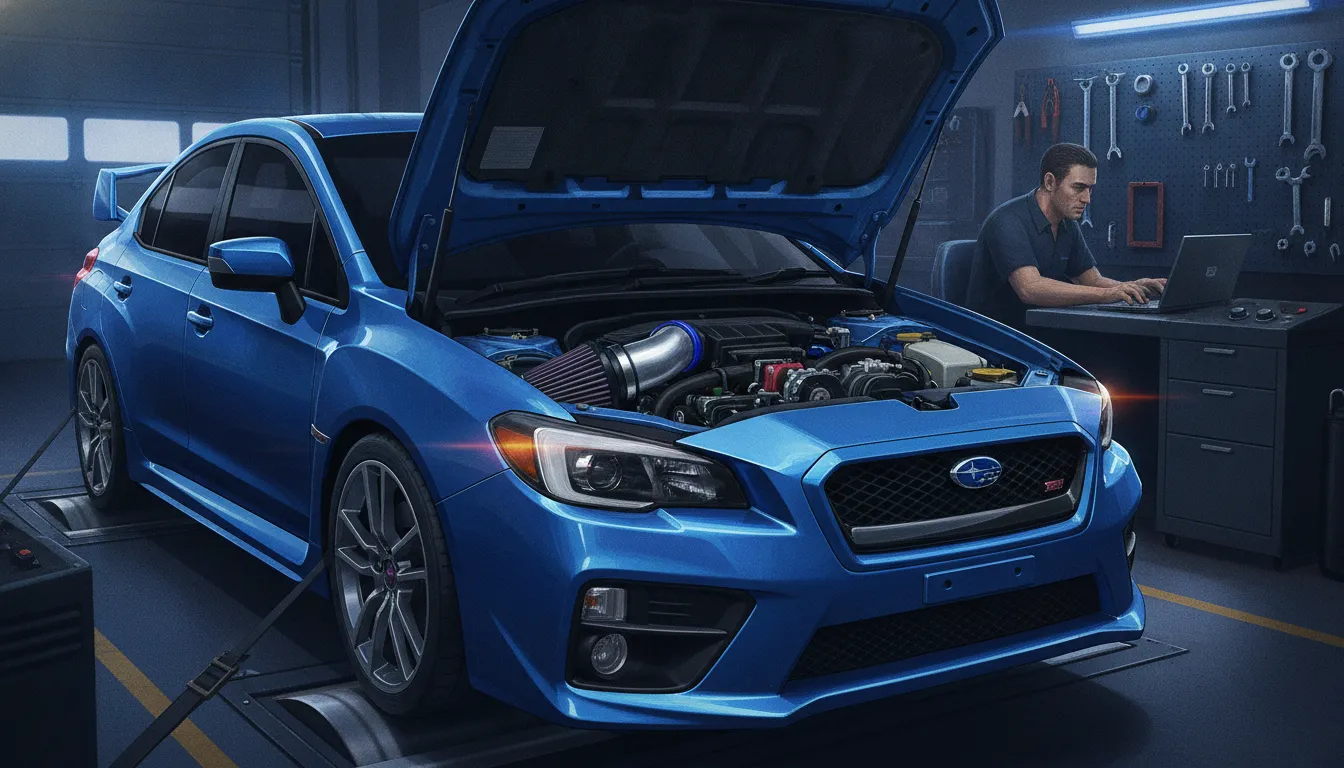
A chassis dyno is a tool. It measures how much power your car puts down to the ground. Your car sits on rollers. When you press the gas, the tires turn these rollers. The machine measures force and speed. There are two main types of dynos in most shops. A DynoJet has heavy rollers. It uses the weight of the rollers to find power. A Mustang dyno uses a brake to add load. It mimics the real weight of the car on the street. This gap is why a Mustang dyno often shows lower numbers than a DynoJet.
You must also know the gap between wheel and crank power. Subaru rates the WRX at the crank. This rating is the power the engine makes by itself. It does not account for the parts that turn the wheels. When power goes through the transmission and axles, some of it is lost. This is called drivetrain loss. Subarus have an all-wheel-drive system. This system has many moving parts. So, a WRX loses about twenty percent of its power before it hits the ground. If your car is rated at 271 horsepower, the dyno may only show 220 wheel horsepower.
Why dyno numbers vary
Dyno numbers are not set in stone. Many things change the readings. Air temperature and humidity play a big role. Cool air is dense, which helps the engine make more power. Warm, wet air has less oxygen, so power drops. Fuel quality is also key. A car run on cheap pump gas will make less power than one run on high-octane fuel or ethanol.
Even shop height matters. A shop at sea level will get higher numbers than a shop in the mountains. Because of these factors, you cannot compare runs from different shops. A mod is only proven when the same car shows a clear gain on the same dyno under the same conditions.
When you change your WRX parts, you aim to improve how the engine breathes. Good parts change the path of the air. This helps the engine pull in more oxygen. It increases what engineers call volumetric efficiency.
According to a study on volumetric efficiency, proper intake manifold design is crucial for raising engine torque and airflow performance. When you improve this airflow, the engine can burn more fuel and make more power. A dyno is the only way to measure these real-world changes. It shows if your parts actually help the engine breathe better or if they just look good under the hood.
How Much Power Can a Subaru WRX Handle?
Every WRX owner wants to know the safe limits of their engine before bolting on parts. Pushing too far can cause engine knock. When planning your build, you must look at real data from a chassis dyno. By choosing proven parts, you can build a strong setup that lasts.
Baseline wheel horsepower vs factory ratings
The factory rates the newer VB chassis WRX at 271 horsepower and 258 pound-feet of torque at the crank. But crank numbers do not show what gets to the road. Real-world power is measured at the wheels on a chassis dyno. These baseline numbers can vary by dyno brand, weather, and fuel quality.
On a Dynojet, a stock 2022 or newer WRX will make about 225 to 250 wheel horsepower (whp). It will also make about 219 to 250 wheel torque (wtq). Runs show a stock car making 225.3 horsepower and 219.3 foot-pounds of torque. This was done at a boost level of 8 to 12 psi.
Stage 1 goals and octane limits
Adding a simple tune is the best way to get more power. A basic Stage 1 tune changes boost, spark timing, and fuel targets. With 91 octane fuel, a tune alone can bring power up to about 260 to 270 whp. It also raises torque to about 310 to 324 wtq.
If you can get 93 octane fuel, you can push the car a bit further. Dyno tests show that a 93 octane tune alone can yield about 280 whp and 330 wtq. This is a big jump over stock. You can get these gains safely by using a Crawford Performance WRX tune to manage the engine.
Pushing the limits with ethanol blends
To reach the upper limits on a stock engine, you need better fuel. Ethanol has a high octane rating and cools where the fuel burns. When you use E50 to E85 fuel blends, a stock WRX can make about 290 to 310 whp and 350 to 370 wtq. These are some of the best wrx dyno proven mods for quick power.
For example, a Stage 1 setup running E85 can hit 289.4 hp and 351 ft-lb of torque. That is a gain of 65 hp and 132 ft-lb over stock. Under the curve, this setup can make over 80 extra horsepower between 3200 and 5000 rpm. This mid-range boost makes the car feel much faster on the street.
But pushing more boost also means hotter intake air. This heat can lead to engine knock, which can destroy your engine. Research from Garrett Motion shows that hot air triggers knocking unless the intake charge is cooled. This is why a proper tune and high-octane fuel are needed to keep your WRX safe.
Where Do Intake and Downpipe Dyno Gains Really Start?
Many owners look for best performance tuning parts to boost power. When you search for wrx dyno proven mods, the intake and exhaust paths are the first parts to change. But you must know what real dyno tests show before you spend your cash. Simply bolting parts on without a plan will not give you the best results. You need to know how these parts work as one on a dyno to build a strong setup.
The role of controlled testing and baselines
To find true gains, experts use controlled testing on a Dynojet. They start with a fully stock car with no changes to set a baseline run. This baseline shows how the car works in its stock state. From there, they run the car again in the same room with the new parts. This strict path ensures that air heat, fuel types, and strap tension do not skew the numbers. By testing under the exact same settings, they can find the gains from each single change.
Verified intake gains on the FA24 engine
A top cold-air intake is a common first step for WRX owners. On the FA24 engine, a stock car often makes about 250 wheel horsepower (whp) and 250 wheel torque (wtq) on a Dynojet. Adding a top cold-air intake can add 10 to 15 whp for each fuel type. Engine research shows that manifold design and air paths direct how pressure waves and flow affect engine torque.
But the intake needs a proper tune to shine. If you combine an intake with an E50 to E85 fuel blend and a custom tune, the gains jump. This setup can push the car to about 350 whp and 375 wtq. Without a tune, the stock computer cannot adjust to the extra air flow safely. The tune keeps the air-to-fuel mixture safe and prevents knocking under boost.
Downpipe flow limits and exhaust bottlenecks
The next major part to inspect is the exhaust path. The stock J-pipe flows well on the new WRX. In fact, dyno tests show that the stock J-pipe is not a limit up to about 350 whp. This means you do not need to swap it out for early power stages. It has enough flow to handle basic bolt-on upgrades and tunes. Keeping the stock J-pipe also saves you money that you can spend on better fuel or a custom tune first.
But once you install a larger turbo, the rest of the exhaust system becomes key. On cars with a larger turbo that made 430 whp, the stock catback exhaust was too small. Switching from the stock catback to a high-flow catback exhaust added about 20 whp. This shows that backpressure drops can free up hidden power once you move past basic limits.
Not sure which dyno-proven mods fit your WRX and your budget? Talk to Crawford Performance and we will map out the right upgrade path for your goals.
Intercoolers Hold the Power a Dyno Run Confirms
Turbochargers compress air to make power, but compressing air makes heat. Heat is the main enemy of any turbocharged Subaru engine. Whether you run an EJ255, EJ257, FA20, or FA24 engine, high heat leads to knock, warped heads, or blown gaskets. When looking at VB chassis WRX upgrades, a better intercooler is not just for making power. It is a vital upgrade that keeps your engine safe.
How heat soak drains power
On a dyno run, the first pull often shows great numbers. But as the car runs again, heat builds up in the engine bay. This is called heat soak. When the stock intercooler gets too hot, it cannot cool the incoming air. Hot air has less oxygen because it is less dense. As a result, the ECU pulls timing to protect the engine, and power drops. To keep your horsepower steady across many pulls, you need supporting hardware that can handle constant stress. This cooling power is why a strong intercooler is one of the best wrx dyno proven mods you can install.
Why cooling prevents knock
Compressed air from a turbocharger has high heat and high pressure. An intercooler cools this compressed air so that its volume goes down and more air can fit in the engine. Research on turbocharger intercooling shows that if intake air is too hot, knocking can occur. Knock happens when the fuel-air mix ignites too early. This early burn puts massive stress on the pistons and rods. A larger intercooler cools the air to keep the engine safe and prevent knock under high boost.
Top-mount versus front-mount options
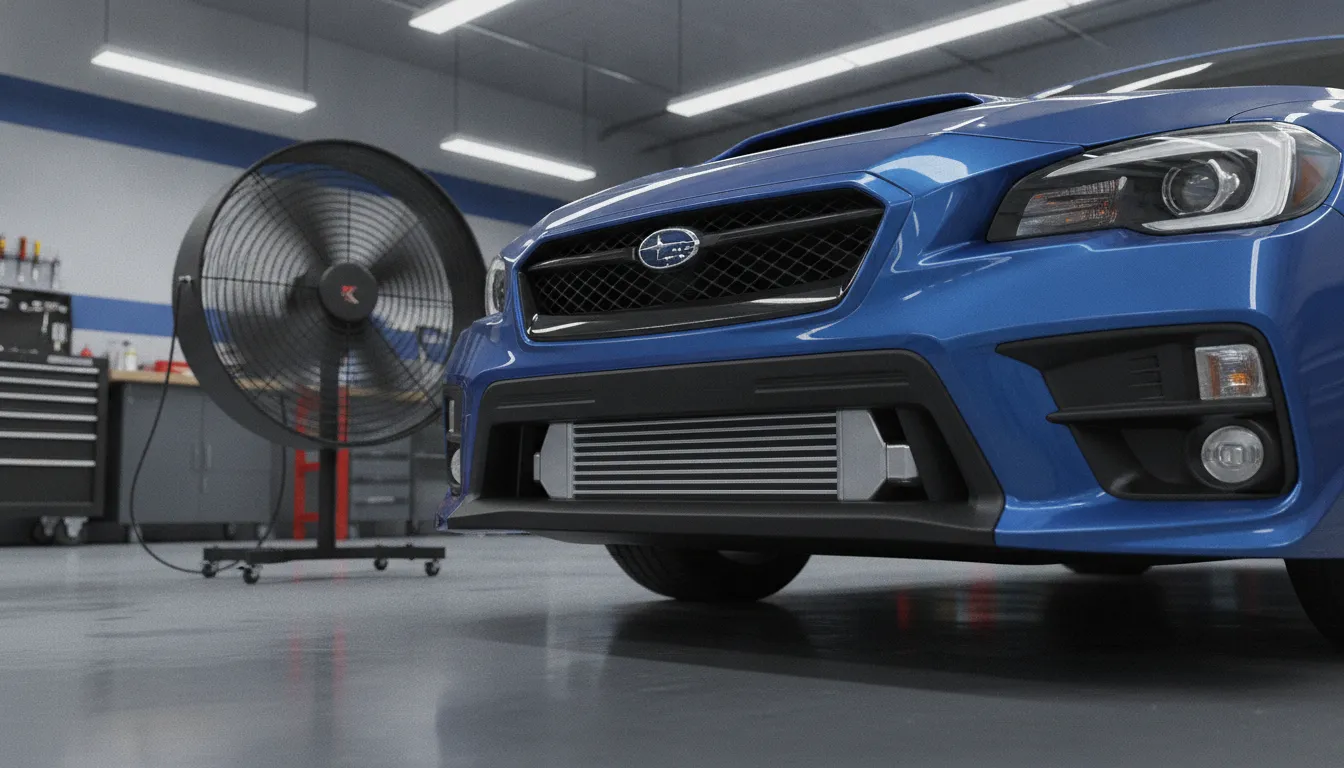
Subaru owners can choose between two main layouts. A top-mount intercooler sits above the engine and uses the hood scoop. It has short piping, which means faster throttle response and less turbo lag. But it sits right above a hot engine, making it prone to heat soak when the car is stopped. A front-mount intercooler sits at the front of the car behind the grill. It gets direct cold air, which makes it much better for cooling. But a front-mount needs long piping, which can increase lag slightly.
For most street cars, an upgraded top-mount is enough to hold power on hot days. Track cars or high-boost builds need the better cooling of a front-mount. No matter which you choose, dyno testing shows that a good intercooler does not just make power. It allows your WRX to hold its power run after run.
Turbo Upgrades: Why a Built Block Comes First
The limits of factory internals
Many owners want big power from a larger turbocharger. But rushing into a big turbo upgrade on a stock engine often ends in failure. Subaru engines like the EJ and FA platforms have limits on how much boost their factory parts can take.
Heat is the main threat to any turbocharged Subaru engine. Extreme heat and high pressure can cause knock, warp heads, or blow head gaskets. Stock pistons and rods simply cannot hold up to high boost for long. Using the wrong parts can destroy your engine in seconds. That is why planning each step is key to a reliable build. If you want an engine that lasts, you must plan your build sequence.
A proven build progression
To get the most out of your car, you must install parts in a specific order. This list shows the best path to follow when you plan your wrx dyno proven mods. This method keeps your car safe while you chase higher power targets on the dyno.
- Start with an expert tune. A custom tune on a dyno makes the stock parts run well and sets a safe baseline before you add more hardware.
- Add basic supporting parts. You will need a cold air intake, larger fuel injectors, and a stronger exhaust. You must also install a front-mount intercooler to cool compressed air and prevent engine knock. Upgrading your fuel pump also ensures your engine gets enough fuel under load.
- Choose the right turbocharger. Select a turbo size that matches your power goals and the fuel type you plan to run. Do not choose a turbo that is too big for your street needs.
- Upgrade to a built short block. You must install a built FA20 short block before you push high boost. These strong engine blocks handle high boost safely because they use tough internal parts.
- Tune and verify on the dyno. You must test and tune your car on a dyno at every step to check the air and fuel mix.
Matching supporting parts for reliability
A larger turbo cannot make big power on its own. It only works well when you have the fuel and cooling parts to support it. If you run high boost without these parts, your intake air gets too hot. A good manifold design also helps balance airflow and torque in your system.
Above all, stock engine internals limit how much safe boost you can run. This limit is true for both EJ and FA engines. Rushing to add a larger turbo before you build the block is a major risk. A built block lets you find the true limit of your mods with peace of mind. You can push the limits of your turbo upgrades when you have a strong block to back it up.
Why Does Your Modified WRX Need an AOS to Keep Dyno Gains?
Getting a high number on a dyno run is a great feeling. But keeping that power over miles of driving needs more than just performance parts. You must also protect your engine from oil blow-by. In turbocharged Subaru engines, heat is a major threat that can lead to knock events, warped heads, and blown head gaskets. To stop these issues, Crawford Performance recommends using an air-oil separator with your other upgrades.
Crankcase blow-by and spark knock
When your turbocharger builds boost, some high-pressure gas slips past the piston rings. This gas enters the crankcase and mixes with engine oil to form a fine oil mist. The factory ventilation system then sends this oil mist back into your intake manifold. Research shows that lubricating oil in the combustion chamber can lower the fuel octane rating. This oil lowers the knock resistance of your air-fuel mixture, which can cause spark knock and cost you power. When spark knock starts, the factory computer cuts engine timing to protect the pistons. This sudden drop in timing cuts your real power right away.
Air-oil separators as a shield
An air-oil separator solves this problem by catching the oily mist before it reaches your intake. The system spins crankcase air to strip liquid oil from the light gases. It sends the clean air back to your intake and drains the oil back to your oil pan. Installing one of the Crawford Air Oil Separator kits stops oil from coating your intercooler and intake valves. This keeps your engine running on clean air and fuel, which protects your dyno-proven gains. Standard catch cans store this oil and need to be emptied by hand. But a true separator works on its own without having you drain it.
Retaining power over miles
Many WRX owners focus only on mods that add power on a dyno graph. But without proper oil control, your new power can fade as oil coats your system. In time, oily buildup can lower the performance of your intercooler. A clean intake tract keeps the right octane levels and keeps your engine safe under heavy boost. Protecting your engine with a strong separator makes sure that your car keeps its peak power for years to come. This is why a separator is one of the key wrx dyno proven mods for long-term health. It makes sure you get the real performance you paid for on every drive.
Every Dyno-Proven Build Still Depends on a Matched Tune
How Hardware and Software Work Together
Adding high-flow parts to your car is only half of the job. Mechanical parts need correct software setup to run safely on the street or track. Tuning systems like Cobb and EcuTek adjust boost pressure, ignition timing, and air-fuel ratios. Proper software tuning prevents lean runs under heavy load and protects engine internals.
Without a matched tune, your engine can run too lean and fail. For example, if intake air gets too hot, engine detonation or knocking can occur. Good Crawford parts work with Cobb and EcuTek to keep your engine safe.
Measured Power Gains on the Dyno
What does a matched tune really do for your Subaru WRX? Let us look at real dyno numbers to understand the potential of your car. The factory rates the modern VB WRX at 271 horsepower at the crank. Testing by JM Automotive shows how much of that power hits the road.
On a Dynojet, their stock test car made 225.3 horsepower and 219.3 foot-pounds of torque. Adding a Stage 1 tune bumped those numbers to 260.6 horsepower and 324 foot-pounds. This setup gave peak gains of 35 horsepower and 105 foot-pounds over stock. They also saw 60 plus horsepower over stock from 3200 to 5000 rpm.
When they used E85 fuel on Stage 1, the car made 289.4 horsepower and 351 foot-pounds. That is a major jump of 65 horsepower and 132 foot-pounds. This setup also made 80 plus horsepower over stock from 3200 to 5000 rpm. A custom Crawford Performance WRX tune ensures you get these gains safely.
While these dyno gains are impressive, these final numbers are never fixed. Actual power ranges vary based on the dyno brand, air temp, and fuel type. The table below shows typical results across different build stages using BCP Tuning data.
| Build Stage | Typical WHP | Typical WTQ | Fuel and Requirements |
|---|---|---|---|
| Stock FA24 WRX | ~250 whp | ~250 wtq | 91 or 93 octane pump gas. |
| Stage 1 Tune | ~270 to 280 whp | ~310 to 330 wtq | 91 or 93 octane pump gas. |
| Stage 1 E85 Tune | ~310 whp | ~370 wtq | E50 to E85 ethanol blend. |
| Stage 1 plus Intake | ~350 whp | ~375 wtq | E50 to E85 and upgraded intake. |
A Reliable Roadmap for Your Car
Choosing your upgrade path is easy when you look at these stages. When you search for wrx dyno proven mods, you should start with VB chassis WRX upgrades. Each of these performance parts needs a proper tune to work safely and efficiently.
Proper software tuning makes sure your parts work as a single, healthy system. It keeps your engine reliable and efficient while you are pushing for maximum power. Planning your tune alongside your parts is the best way to build a fast, durable Subaru.
Ready to get honest, dyno-verified power numbers for your WRX? Request a free consultation with Crawford Performance and we will help you plan the right proven mods.
Frequently Asked Questions
Do I need a Cobb or EcuTek tune for bolt-on WRX mods?
Yes, you must tune your car when you add new parts. Bolt-on upgrades change how air flows into the engine. Without a custom tune to calibrate your engine control unit, you risk running lean, which causes severe engine knock. Using a Cobb Accessport or EcuTek system is the safest way to calibrate your engine for the best performance tuning parts.
How does a larger intercooler protect a modified WRX?
Heat is the main enemy of turbo Subaru engines. A larger intercooler cools the compressed air from the turbocharger, which raises air density. According to research from Garrett Motion, this prevents severe engine knock or detonation. Lower intake temps help maintain steady power during hard runs.
What does it take to get a WRX to 400 wheel horsepower?
Reaching 400 wheel horsepower needs more than just bolt-on parts. You will need a larger turbocharger, a high-flow fuel system, and a custom flex-fuel tune. Most of all, you need a built FA20 short block to handle the high boost. Stock engine parts will bend or break under that much stress.
Why should you install an air-oil separator on a tuned WRX?
An air-oil separator keeps engine oil out of your intake system. On turbo Subaru engines, oil vapor can blow past the pistons and enter the intake, which lowers fuel octane and causes engine knock. Installing one of the Crawford Air Oil Separator kits protects your engine and keeps your dyno numbers steady.
Are You Ready to Plan Your Dyno-Proven Subaru WRX Build Today?
Installing cheap, unproven aftermarket parts on your Subaru can put your engine at severe risk of head gasket, piston, and ringland failures down the road. If you wait to upgrade your cooling and oil systems, excessive engine heat will wear down your block and cost you thousands in repair bills. You can prevent these issues now by choosing our best performance tuning parts that are engineered and fully dyno-tested for reliability and safety.
Ready to request a free consultation about dyno-proven WRX upgrades to reach your power goals safely? Contact Crawford Performance today to talk with our build team and book a time for your new dyno tune.