

Subaru Turbo Upgrade Guide: Stock Location vs. Rotated Mount
Turbo choice sets the direction of a WRX or STI build long before the first pull on the dyno. The right setup should match your power target, driving habits, engine strength, and budget, not simply the largest compressor that fits.
Shop Crawford Performance turbo-compatible engine packages and find the foundation that matches your power target. Stock-location short blocks for street builds, long blocks for rotated setups , every option is built around the turbo you choose. Browse short blocks or explore long blocks.
A Subaru turbo upgrade can use a stock-location unit for simpler installation, lower total cost. And factory-like street manners, or a rotated mount for larger turbo sizing and higher top-end potential. Either route requires supporting fuel, intercooling, exhaust, heat management, and professional ECU tuning to make the added airflow reliable.
Stock-location options are often the practical choice for responsive street power. While rotated systems make more sense when the build has the engine, fuel system, and fabrication budget to support substantially greater output. Crawford Performance can help match the turbo and supporting parts to a custom engine package. Explore the performance parts collection, then compare the tradeoffs before choosing a direction.
Choosing the Right Subaru Turbo Upgrade for Your Power Goals
The right turbo is determined by the way you use the car, not just the largest dyno number. For most WRX and STI builds. The decision comes down to keeping the turbo in its factory location or moving it to a rotated mount at the front of the engine bay. Both can produce serious power, but they create very different requirements for packaging, budget, response, and supporting hardware.
| Consideration | Stock-location | Rotated mount |
|---|---|---|
| Best fit | Street cars, dual-purpose builds, and mid-range power goals | Track, drag, and high-output builds that need substantial airflow |
| Installation | Bolts to factory headers, up-pipe, intake, and related plumbing without extensive modification. Generally easier and more cost-effective. | Relocates the turbo and typically requires custom intake, exhaust, downpipe, and intercooler plumbing. Professional installation is recommended. |
| Turbo sizing | Works well with compact upgrades such as VF-series, Blouch, and Garrett drop-in units. Factory location limits physical compressor and turbine housing size. | Creates room for larger units including Garrett GTW and BorgWarner EFR options. Front-mounted position accommodates aggressive sizing. |
| Power direction | Practical path toward roughly 300 to 450 whp with the right fuel system, exhaust, intercooling, and tune. | Platform for approximately 500 to 1,000 or more whp with the engine, fuel system, and engine management built for the target. |
| Street manners | Usually preserves factory-like driving dynamics. The stronger choice for daily drivability and predictable packaging. | More top-end capacity, but larger sizing and additional fabrication may affect response, heat management, and service requirements. |
| Cost and complexity | Lower initial cost and fewer system-wide changes. Final budget depends on fuel, cooling, exhaust, and engine requirements. | Higher initial investment for the rotated kit and custom plumbing. Better access and thermal-management potential when engineered correctly. |
Choose stock-location when the car must remain easy to drive, service, and package for regular street use. Choose rotated mount when the power target demands a larger turbo and the build can support the extra fabrication and systems work. In either case, the turbo is only one part of the combination. Fuel capacity, charge-air cooling, oil control, engine strength, and professional ECU tuning must be planned together. Tuning is non-negotiable after the hardware changes, because the ECU must be recalibrated for the new airflow and boost characteristics. Air Oil Separators and other reliability-focused supporting components should be considered as part of the complete build, not added after problems appear.
Stock-Location Turbo Options for WRX and STI
Stock-location turbos are the practical choice when you want more power without redesigning the engine bay. They bolt to the factory headers and up-pipe, retain the factory heat shielding, and work with stock intake and exhaust plumbing. That keeps installation complexity and total project cost under control, especially for a mid-range power target. The stock-location layout also preserves factory-like driving dynamics, which matters when your WRX or STI is still a daily driver.
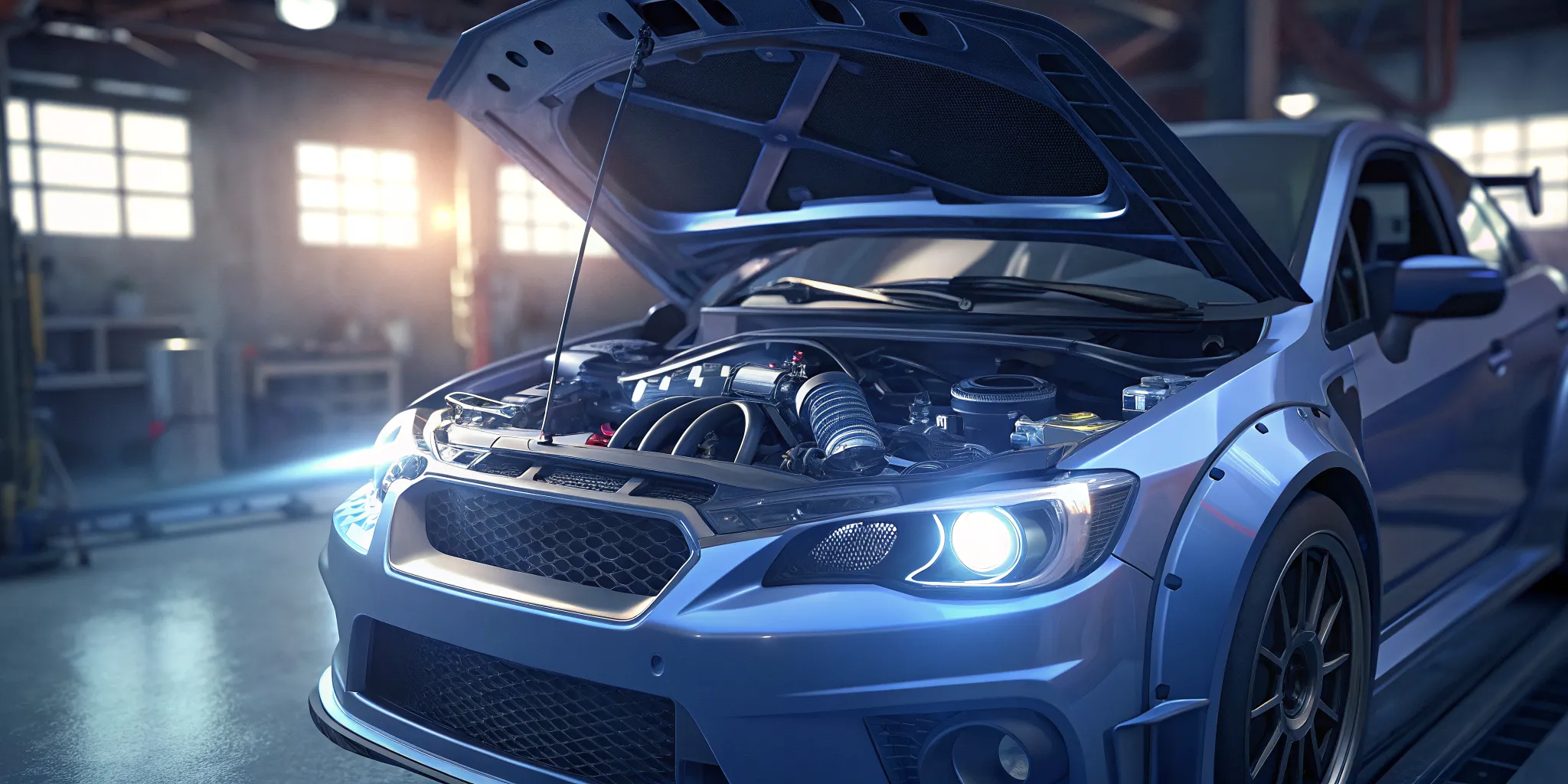
The ranges below are realistic planning bands, not guarantees. Actual wheel horsepower depends on engine condition, fuel system, intercooling, exhaust flow, fuel quality, and calibration. Every turbo upgrade requires a professional tune. Larger units also need appropriately sized injectors and a fuel pump so the engine does not run lean under boost. See the essential engine upgrades before selecting a turbo.
| Turbo | Power Range | Spool Character | Install Complexity | Price Range |
|---|---|---|---|---|
| Subaru VF48 / VF52 | 280-330 whp | Quick response, OEM+ feel | Low; factory-location bolt-on | Varies by turbo and supporting parts |
| Blouch Dominator 1.5 | 320-380 whp | Fast spool with a broader top end | Low to moderate; stock-location installation | Varies by configuration |
| Blouch Dominator 2.5 / 3.0 | 350-450 whp | More top-end airflow, later response | Moderate; verify fueling and calibration | Varies by configuration |
| Garrett drop-in GTW | 350-450 whp | Responsive, with strong high-rpm potential | Low to moderate; factory-location fitment | Varies by turbo and supporting parts |
| Tomioka Racing TD05-16G / TD05-20G | Model and setup dependent | 16G favors response; 20G favors airflow | Low to moderate; confirm model-specific fitment | Varies by model and configuration |
How to narrow the stock-location choice
Choose the VF48 or VF52 when response and OEM-like behavior are more important than peak output. A Dominator 1.5 is a sensible middle ground for a street build, while the Dominator 2.5, 3.0. Or a Garrett drop-in GTW makes more sense when the supporting systems and engine can use the additional airflow. Tomioka Racing's TD05-16G and TD05-20G options provide another path to match response or upper-rpm power to the car's purpose. Confirm flange, inlet, wastegate, and intercooler compatibility before ordering, then calibrate the complete combination rather than the turbo alone.
Rotated Mount Turbo Setups: When Stock Location Is Not Enough
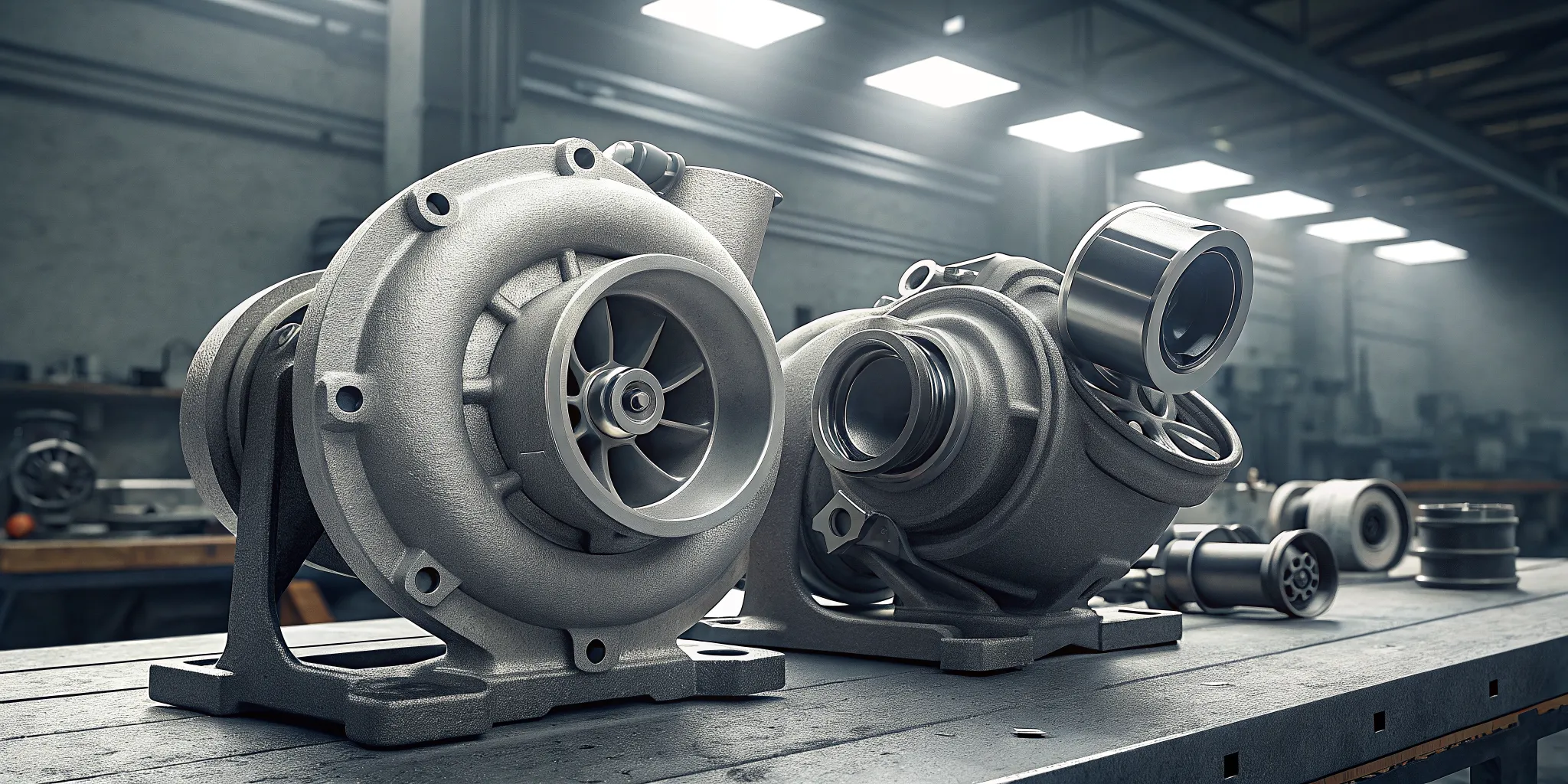
Rotated mount systems are for Subaru builds where the stock turbo location has become the limiting factor. Relocating the turbocharger to the front of the engine bay eliminates the restrictive, long-run piping associated with the factory layout and creates room for larger compressor housings. That packaging advantage can support substantially more airflow, but it also turns a turbo swap into a complete engine-system project.
Garrett GTW and BorgWarner EFR options
Garrett's GTW series is a common direction for serious power builds. A GTW3884 or GTW4094 can support approximately 550 to 900+ whp, depending on engine configuration, fuel, boost strategy, and the rest of the combination. BorgWarner's EFR line moves further toward extreme output. The EFR 8374 and 9180 are commonly matched to builds targeting roughly 600 to 1,000+ whp. Those figures are planning ranges, not guarantees. The engine, fuel, calibration, drivetrain, and intended use determine what is practical and reliable.
The front-mounted position allows more aggressive turbo sizing than the stock location can typically accommodate. It can also improve thermal management and make the turbo easier to access for service. The tradeoff is a higher initial cost, more fabrication, and more time spent integrating every system around the new location. Crawford's approach is to match the turbo to the engine and the use case rather than selecting the largest compressor on a parts list.
Supporting hardware is part of the setup
A rotated kit is not complete when the turbo is bolted to the manifold. Plan for the following components before ordering parts:
- Custom intake piping: The compressor inlet and outlet move, so the factory intake path will not provide the required routing.
- Custom downpipe: The relocated turbine requires exhaust fabrication that fits the turbo position, engine bay, and remaining exhaust system.
- Front-mount intercooler: A FMIC and its charge piping are needed to manage the new compressor outlet and control intake temperatures.
- Complete fuel system: Larger injectors, a higher-capacity pump, and appropriately sized fuel lines are essential to prevent the engine from running lean under boost. Air Oil Separators are also worth considering as part of a reliability-focused build.
- Built engine: A built short block or long block should be selected before the turbo, based on the intended power level and duty cycle.
- Professional tuning: ECU recalibration is mandatory. Higher airflow and boost require a qualified tuner to control fueling, ignition, boost, and knock response safely.
When a rotated setup makes sense
Rotated systems suit serious track, drag, and high-output street goals, not casual bolt-on upgrades. The fabrication and calibration work require professional installation by a shop experienced with Subaru engine management and chassis integration. A properly planned Subaru turbo upgrade should account for heat shielding, oil and coolant routing. Boost-leak testing, and the engine's actual power limit before the first pull on the dyno.
How to Choose Your Power Target: 400, 600, or 800+ Wheel Horsepower
Choose the use case first, then size the turbo and engine around the power you will actually use. Each step up in wheel horsepower demands more fuel, airflow, engine strength, and calibration. A turbo alone cannot deliver a reliable build.
-
Street: target about 400 whp
For a responsive daily-driven WRX or STI, a Blouch Dominator 1.5 is a sensible stock-location starting point. Pair it with larger injectors, an upgraded fuel pump, a cat-back exhaust, and a properly matched tune. This path keeps the supporting hardware relatively focused while improving usable power without turning the car into a full fabrication project. Stock-location systems are generally easier to install and more cost-effective for mid-range goals, but the fuel system still has to support the turbo under boost.
-
Track: target about 600 whp
A 600 whp target moves beyond a basic bolt-on combination. Plan around a Garrett GTW turbo, front-mount intercooler, full fuel system, headers, a built short block, and an ECUtek tune. The intercooler and fuel upgrades are not optional extras at this level. They address the increased airflow and fuel demand that come with a larger turbo, while the short block provides a stronger foundation for repeated track use. Review the EJ257 engine build guide before selecting the engine combination.
-
Drag: target 800+ whp
For an 800+ whp drag build, start with a BorgWarner EFR and a complete rotated turbo kit. That package should be matched with a built long block, E85, and a stand-alone ECU, along with the fuel, intercooling, exhaust, and heat-management equipment required by the layout. A rotated system accommodates larger turbo hardware, but it also adds complexity and cost. The engine, fuel, and management choices must be designed as one system rather than assembled piecemeal.
Tuning is mandatory at every level, not a final convenience. The ECU must understand the new airflow and boost behavior, and higher boost requires recalibration to help prevent detonation. Professional tuning is required for reliable power, with data logging used to confirm the combination remains safe under load. As the target rises, supporting modifications must increase incrementally with it. These power bands are planning frameworks, not guarantees, because fuel, engine condition, drivetrain loss, and calibration all affect the final result.
Essential Supporting Mods and Tuning for Your Turbo Upgrade
A turbocharger does not create a reliable power increase by itself. Fuel delivery, charge-air cooling, exhaust flow, crankcase ventilation, and ECU calibration must be planned as one system. Tuning is mandatory because the engine management system must understand the upgraded airflow and boost potential. Regardless of whether the turbo remains in the stock location or moves to a rotated setup.
Build the fuel system before you increase boost
Larger turbos require more fuel, and an undersized system can leave the engine lean under boost. For a build targeting 400 whp or more, plan for appropriately sized injectors. A higher-capacity fuel pump, and fuel lines that can support the intended fuel and flow demand. The correct combination depends on the engine, fuel type, injector data, and power target, so sizing should be confirmed before parts are ordered.
Fuel system upgrades are not a substitute for a complete engine plan. Review the supporting requirements in this WRX motor guide before choosing a turbo or committing to a boost target.
Control charge temperature and exhaust restriction
An intercooler upgrade helps deliver cooler, denser intake air as airflow and heat increase. A quality top-mount intercooler is generally appropriate for stock-location builds in the 350 to 450 whp range. While a front-mount intercooler is the practical direction for rotated setups targeting 500 whp or more. Confirm fitment, piping, intake placement, and heat management together rather than selecting the intercooler in isolation.
Exhaust flow also needs to match the turbo. A complete system may include an up-pipe, downpipe, and cat-back exhaust. Crawford's Gymkhana exhaust is one option for a high-flow, performance-focused build. Every connection must be sealed correctly, since boost and exhaust leaks can undermine both performance and tuning accuracy.
Choose engine management for the build, not the brochure
A COBB AccessPort can suit a mild, stock-location street build when paired with a qualified calibration. More aggressive combinations may call for EcuTek and a professional pro-tune, with data logging used to verify operation across load, boost, and temperature conditions. At 800 whp and beyond, a stand-alone ECU may provide the control and expansion capacity the combination requires.
Professional tuning is essential. ECU recalibration helps control fueling, ignition timing, boost, and sensor inputs, reducing the risk of detonation while making the power usable. Do not rely on a generic map for a custom turbo, fuel system, or rotated conversion.
Use an air-oil separator as part of the reliability plan
An air-oil separator helps manage oil vapor and crankcase pressure in a hard-driven turbo Subaru. Crawford Performance invented the air-oil separator category, and its AOS collection is designed for performance-oriented Subaru applications. Treat it as one part of a complete reliability strategy alongside correct oil routing, maintenance, heat shielding, and a verified tune.
Match Your Turbo to the Right Crawford Performance Engine Package
Your turbo choice should determine the engine package, not the other way around. A stock-location setup intended for a responsive street car has different cylinder-pressure, airflow, and packaging demands than a rotated turbo built for serious track power. Crawford Performance matches the short block or long block to the intended use so the engine supports the turbo's operating range instead of becoming the limiting component.
Stock-location builds up to 450 whp
For a stock-location turbo upgrade targeting up to approximately 450 whp, the Crawford EJ257 short block is a practical reliability-focused foundation. Listed at $4,999, it uses forged internals and preserves a straightforward path for a street-oriented build. This pairing makes sense when you want stronger internals and dependable power without committing to the fabrication, front-mount intercooler, and custom plumbing normally associated with a rotated system.
Fueling, cooling, oil control, and professional ECU calibration still matter. A stronger short block does not make an oversized turbo, inadequate injectors, or an unsafe tune acceptable. Plan the complete combination before ordering parts, then review Crawford's short block collection for the available foundation.
Rotated setups from 500 to 770 whp
Once the build moves into the 500 to 770 whp range, a rotated turbo setup is better matched to the Crawford EJ257 long block. The $6,999 package includes the complete assembly with heads, forged internals, and precision-machined heads designed to support a larger turbo and the increased demand that comes with it. A rotated layout also provides room for larger compressor housings. But it requires the rest of the system to be engineered around that location, including intake, downpipe, intercooler, fuel system, and heat management.
Use Crawford's long block collection to compare the complete assembly options, and reference the EJ257 engine build guide when planning supporting modifications.
800+ whp rotated builds
For an 800+ whp rotated race build, the $12,000 Ken Block Spec EJ257 long block is the high-end option. It is built to exacting Gymkhana standards and draws on the Crawford engines used in Ken Block's cars. This is a purpose-built choice for an advanced combination, not a shortcut to a dyno number. The turbo, fuel system, engine management, and heat rejection equipment must be coordinated around this foundation. A rotated kit matched to a 1,000+ hp turbo, full fuel system, stand-alone ECU, and complete thermal management package is the realistic scope for this level.
Start with the long block collection to see the full assembly options, and confirm supporting parts with a Crawford Performance specialist before placing any orders.
How Much Does a Subaru Turbo Upgrade Cost?
Total project cost varies widely based on the turbo, supporting systems, and whether you do the labor yourself. A stock-location turbo upgrade with supporting injectors, pump, intercooler, and tune typically lands between $3,000 and $6,000 in parts alone. A rotated mount system with full fabrication, fuel system, intercooler, and professional installation can range from $8,000 to $15,000 or more. These figures cover the turbo-related systems only and assume the engine is already in good condition.
When the build requires a built engine, the total picture changes significantly:
- Street build (stock-location turbo + short block): Approximately $4,999 for the Crawford EJ257 short block plus $3,000 to $6,000 for the turbo and supporting parts.
- Track build (rotated turbo + long block): Approximately $6,999 for the Crawford EJ257 long block plus $8,000 to $15,000 for the rotated kit and supporting systems.
- Race build (rotated turbo + Ken Block Spec long block): Approximately $12,000 for the long block plus $10,000 to $20,000 for the rotated turbo system and full supporting hardware.
These are planning ranges, not fixed quotes. Contact Crawford Performance to discuss your specific build goals and get a tailored recommendation.
Frequently Asked Questions
What is the best turbo upgrade for a daily-driven WRX?
For a daily-driven WRX that sees occasional pulls on-ramp, a Blouch Dominator 1.5 or a VF52 upgrade in the stock location is the most balanced path. Both deliver noticeable power gains while keeping spool quick and installation straightforward. The fuel system, intercooler, and tune must still be matched to the turbo choice.
Can I install a rotated turbo kit myself?
Rotated kits require welding, custom intercooler piping, intake fabrication, and oil/coolant line routing that goes well beyond a bolt-on swap. While experienced DIY builders have completed rotated conversions, professional installation is strongly recommended to avoid fitment issues. Boost leaks, and oiling problems that can damage the turbo or engine.
How much horsepower can a stock EJ257 handle with a turbo upgrade?
A healthy stock EJ257 short block is generally considered reliable up to around 400 whp with proper tuning and supporting modifications. Beyond that, forged internals become necessary. The Crawford EJ257 short block at $4,999 is the practical upgrade path for builds targeting 400 to 500+ whp with a stock-location turbo.
Do I need a front-mount intercooler for a stock-location turbo?
A quality top-mount intercooler is usually sufficient for stock-location builds in the 350 to 450 whp range. A front-mount intercooler becomes necessary when pushing toward 500 whp or when running a rotated setup, where charge-air temperatures rise significantly with higher boost and airflow.
What supporting mods are required for a 400 whp WRX build?
A 400 whp WRX build typically needs larger injectors (around 1,000 cc). A high-flow fuel pump, a quality intercooler, a cat-back or turbo-back exhaust, and a professional ECU tune. An air-oil separator is strongly recommended for reliability. At this level, the stock EJ257 short block is near its limit, so a built short block should be planned as the next step.
How does Subaru turbo tuning work with a Cobb AccessPort?
The Cobb AccessPort allows you to flash an aftermarket calibration to the ECU and monitor engine parameters in real time. For a mild bolt-on turbo upgrade, an off-the-shelf Cobb map can get the car running. But a professional pro-tune is always recommended to optimize timing, fueling, and boost control for your specific turbo, fuel system, and engine combination.
Ready to build your Subaru turbo upgrade package? Crawford Performance engines are designed to match your turbo choice, not the other way around. Tell us your power target and driving style, and we will recommend the right short block, long block, or complete package. Explore short blocks or browse long blocks to get started.