


Subaru Exhaust Horsepower Gain: Real Dyno Numbers
If you have seen a claim that a cat-back exhaust adds 25 wheel horsepower to a stock-turbo Subaru, treat it skeptically. Real dyno results usually show a smaller gain from the exhaust itself, with the larger improvement arriving when airflow changes are matched to calibration.
For a stock-turbo Subaru, a realistic subaru exhaust horsepower gain is about 0-5 whp from a cat-back, while a J-pipe or downpipe can contribute roughly 10-15 whp when the setup is properly tuned. The tune typically unlocks the most repeatable power, and the result depends on the engine platform, fuel, turbocharger, and supporting parts.
That distinction matters when comparing an FA20 or FA24 WRX with an EJ255 or EJ257 build. An exhaust can improve sound, weight, and flow, but it cannot remove every restriction in the system or compensate for an unsuitable factory calibration. Start by separating what the exhaust physically changes from what it enables the rest of the build to do.
Contact Crawford Performance to spec your Subaru exhaust build
What a Subaru Exhaust Actually Changes (and What It Does Not)
Exhaust design affects two things that are easy to confuse: how efficiently the engine moves exhaust gas, and how the car sounds. On a turbocharged Subaru, the exhaust leaving the engine must pass through the turbine before it reaches the rest of the system. That turbine is the primary restriction in the system on a stock-turbo car, so replacing the pipes behind it does not automatically create a large horsepower increase.
Scavenging and backpressure in plain terms
Scavenging describes the tendency of fast-moving exhaust pulses to help pull the next pulse out of the cylinder. Good exhaust sizing and smooth transitions preserve that pulse energy while reducing unnecessary restriction. Backpressure is the resistance the engine sees as it tries to move exhaust gas out. Less unnecessary backpressure can help a modified engine, but simply making a pipe larger is not the same as optimizing the complete system. If exhaust gas velocity falls too far, the result can be a louder car without better performance.
That distinction matters on a turbo Subaru. The exhaust turbine still controls the major part of the flow path, and the factory exhaust hardware may already flow well enough for the stock turbo's output. A freer-flowing cat-back can improve the sound, reduce weight, and change the character of the car. It may also provide headroom for a larger turbo or more heavily modified combination. It is not, by itself, a reliable shortcut to substantial power.
What testing shows on a stock car
A dyno test of a 2019 WRX recorded 244 whp in stock form. An axle-back change produced 248.44 whp, a gain of 4.63 whp, while the more complete cat-back reached 248.67 whp. The power curves showed minimal improvement, and the test noted that the original mid-pipe was efficient enough from the factory. The most noticeable change was the exhaust note, not a dramatic increase in acceleration.
Testing on the FA24 WRX points in the same direction. The stock cat-back flows well to approximately 350 whp, with sound as its main benefit at lower output levels. Once the car uses a larger turbo, a high-flow cat-back can contribute more, with reported gains reaching roughly 20 whp in that higher-output context. Those are different operating conditions from a stock turbo car and should not be used as a promise for every Subaru.
For a street-focused build, start with the result you want. Explore Crawford exhaust systems for sound, fitment, weight, and future power goals. Then match the exhaust to the turbo, fuel, and calibration rather than assuming that louder means faster.
Cat-Back vs Turbo-Back: Which Exhaust Adds More Horsepower
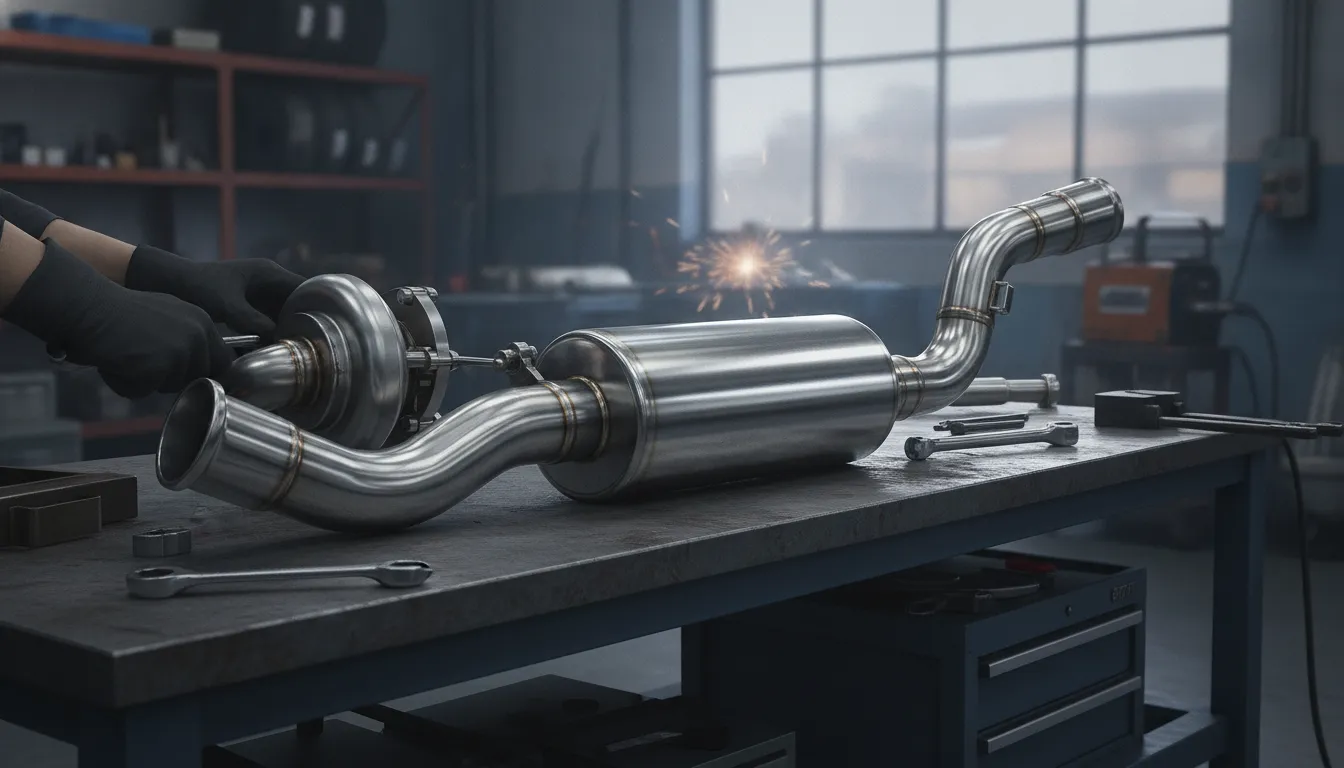
For a stock-turbo Subaru, the answer depends on where the restriction is removed. A cat-back replaces the exhaust components after the catalytic converter. A turbo-back system goes farther upstream, typically combining a cat-back with a higher-flow downpipe or J-pipe. That distinction matters because the turbocharger and its turbine housing are closer to the main bottleneck than the rear muffler.
| Upgrade | What it changes | Typical gain on a stock turbo | Tune needed |
|---|---|---|---|
| Cat-back | Replaces the mid-pipe, resonator, and muffler section behind the catalytic converter. It changes sound, appearance, weight, and some downstream flow. | About 0-5 whp. The main result is usually a stronger exhaust note, not a large peak-power increase. | Usually not required for the hardware alone, but a tune helps verify the car and supporting parts are operating safely. |
| Downpipe or J-pipe | Changes the exhaust path directly after the turbocharger, reducing backpressure and giving the turbine more room to move exhaust gas. | About 10-15 whp on an FA24 reference setup, depending on fuel, calibration, and the rest of the vehicle. | Yes. Calibration should accompany the change, with emissions compliance and local regulations considered before installation. |
| Turbo-back | Combines the downpipe or J-pipe with a freer-flowing exhaust from the turbocharger to the tailpipe. | Often more potential than a cat-back alone, but the total cannot be assigned to the exhaust hardware without accounting for the tune and other modifications. | Yes. A properly matched tune is essential for safe, repeatable results. |
A 2019 WRX dyno test illustrates why cat-back claims should stay realistic. The car made 244 whp in stock form. An axle-back reached 248.44 whp, while a full cat-back reached 248.67 whp. The measured improvement was modest, and the most noticeable change was the exhaust note. The factory mid-pipe was already efficient enough that replacing the rear section did not create a dramatic horsepower jump. See the DSPORT dyno data for the complete test sequence.
The FA24 shows the same pattern from a different angle. Its factory J-pipe is reported to flow effectively to approximately 350 whp, while an aftermarket J-pipe can produce roughly 10-15 whp and reduce backpressure. The cat-back's primary gain remains sound until the engine is making enough power for the factory exhaust to become a meaningful restriction. On a larger-turbo build, a high-flow cat-back can contribute substantially more, but that is not the expectation for a stock-turbo daily driver.
For a deeper look at system design, fitment, and turbo-back exhaust benefits, compare the upgrade against your turbo, fuel, emissions requirements, and intended power level. The best choice is the one that supports the next calibration step, rather than the loudest system in isolation.
Real Dyno Expectations by Platform: EJ255, EJ257, FA20, FA24
Dyno numbers are useful when they are treated as baselines, not promises. The same Subaru can show different results because of fuel, correction method, drivetrain loss, weather, dyno type, and calibration. The figures below provide practical reference points for understanding where an exhaust fits in a complete build. They also show why the largest improvement usually comes from pairing the airflow change with a proper tune.
| Platform | Typical reference | Exhaust-related expectation | Tune-related expectation |
|---|---|---|---|
| FA20DIT 2015-2021 WRX |
About 244 whp stock | Cat-back or axle-back: roughly 0-5 whp, with the most noticeable change usually being sound. A full cat-back tested at essentially the same peak power as an axle-back. | About +12 whp over the tuned car's cat-back baseline in a 91-octane test. DSPORT Magazine's FA20 dyno test also found that tuning smoothed the midrange power dip. |
| EJ257 2004-2021 STI |
About 265 whp stock | A cat-back alone should be viewed primarily as a sound and flow upgrade. It is not reasonable to assign a major peak-power gain without a freer-flowing turbo-side system and calibration. | Tune alone produced about +12 whp in the documented test. Adding the intake brought the total improvement to about +17 whp, or approximately 6%. See the DSPORT EJ257 dyno results. |
| FA24 2022+ WRX |
About 250 whp stock | The factory J-pipe works well at lower output. An aftermarket J-pipe can add roughly 10-15 whp by reducing backpressure, while a cat-back is mainly a sound change on a stock-turbo car. | A 91-octane tune is listed at about +20 whp from the stock baseline. The BCP E-Tuning FA24 reference shows why fuel and supporting hardware materially change the result. |
| EJ255 2004-2014 WRX, Forester XT, Legacy GT |
Roughly 210-265 hp across the family, depending on model and configuration | Expect the same general pattern as the EJ257: modest cat-back-only gains, with more potential as the downpipe, turbo, and supporting system become less restrictive. | Use the EJ257 pattern as a planning reference, not a guaranteed result. A downpipe and tune are the conventional next step, but the exact gain depends on the specific EJ255 variant and its hardware. |
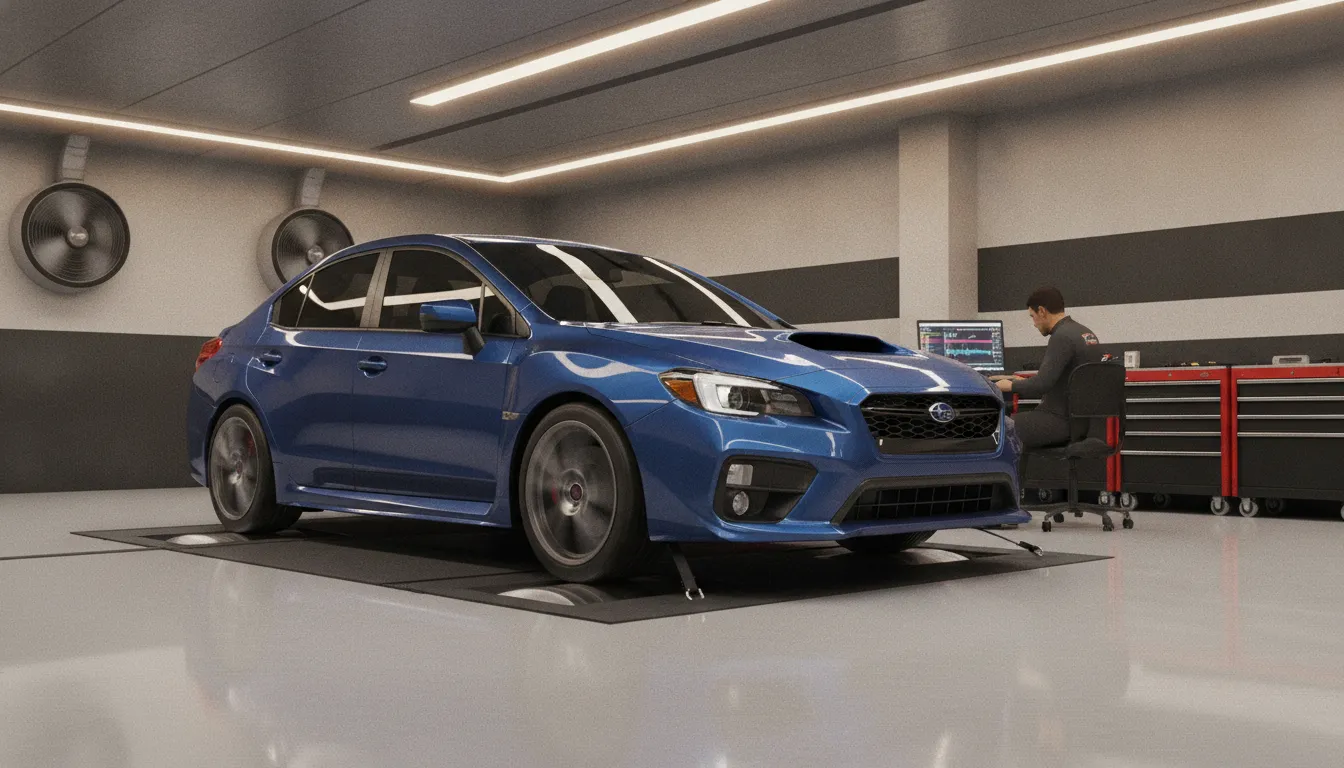
For context, the FA20 test measured 244 whp stock, then 248.44 whp with an axle-back and 248.67 whp with a full cat-back. That is a clear example of why a louder exhaust does not automatically create a large subaru exhaust horsepower gain. The FA24 data follows a similar principle: the J-pipe and tune affect power more directly than a cat-back when the original system already supports the stock turbo.
Choose the exhaust around the intended power level, noise tolerance, emissions requirements, and future turbo plans. A quality system such as the Crawford Gymkhana exhaust can be the right hardware foundation, but the dyno result still belongs to the whole combination, not one part in isolation.
The Tune Is What Unlocks Subaru Exhaust Horsepower Gain
Exhaust hardware creates the opportunity for more power, but the ECU calibration determines whether the engine can use that opportunity. A freer-flowing cat-back or downpipe can reduce restriction and change exhaust velocity. It does not automatically command the additional boost, ignition timing, fueling, and torque management needed to turn that airflow into a reliable result. On a turbocharged Subaru, the tune is the part that connects the hardware change to the engine's operating strategy.
A DSPORT dyno test of a 2019 WRX with the FA20 shows the difference clearly. The car made 248.67 whp with a full cat-back, almost identical to its axle-back result. Adding a 91-octane tune produced approximately 12.1 whp over the cat-back setup and smoothed the pronounced power and torque dip between 4,200 and 5,000 rpm. The exhaust helped provide the supporting flow, but the calibration delivered the measurable improvement. DSPORT's FA20 dyno results document both changes.
Tuning also addresses consistency, not just peak output. In the same test, otherwise similar factory-tune pulls ranged from 217 to 243 whp. That spread makes a single before-and-after claim difficult to interpret. A properly developed reflash can make the car's output more repeatable while improving the portions of the curve that drivers actually feel. The goal is not to chase the largest isolated dyno number. It is to create a controlled calibration that matches the exhaust, fuel, boost targets, and intended use.
The EJ257 tells a similar story. DSPORT recorded 264.62 whp on a stock STI baseline, then 276.45 whp with a tuning map, an increase of 11.83 whp. Adding an intake after the tune brought the result to 281.40 whp, or about 6% above the baseline. The sequence matters: the tune produced the larger initial gain, while the additional airflow hardware worked more effectively once the calibration could account for it. The EJ257 test data supports treating airflow parts and calibration as one system.
On the FA24 WRX, BCP's reference data lists approximately 250 whp stock and about 270 whp with a 91-octane tune alone, a 20-whp increase. Its data also places an aftermarket J-pipe at roughly 10 to 15 whp. Depending on the setup, while noting that the factory cat-back already flows well at moderate power levels. Those figures reinforce the same principle: a cat-back may change sound and provide useful headroom, but the ECU tune unlocks the meaningful, platform-specific gain. BCP's FA24 power-gain reference provides the stated 91-octane figures.
For that reason, a tune should be treated as mandatory when safely capitalizing on downpipe, J-pipe, or other substantial exhaust changes. The exact calibration depends on the engine, fuel, turbocharger, emissions configuration, and supporting parts. Exhaust alone can be worthwhile for sound, packaging, and future headroom. Exhaust plus a matched tune is what turns that hardware into a coherent performance upgrade.
Crawford Performance can help match your exhaust hardware with dyno and engine services
Why Gains Stay Modest Without Supporting Mods
A single bolt-on rarely transforms a stock-turbo Subaru because each part works within the limits of the parts around it. The factory exhaust system may already flow well enough for the turbo and power level, while the engine computer still controls fueling, ignition, boost, and torque targets. Adding a louder exhaust without addressing those limits can change the character of the car without producing a meaningful increase in wheel horsepower. The sensible approach is to build a compatible system, then calibrate it as a package.
This order keeps expectations realistic and helps each modification support the next:
- Start with a cat-back for sound and flow groundwork. A cat-back is a practical first upgrade for owners who want a different exhaust note, improved appearance, and a foundation for later changes. On a stock-turbo WRX, however, its peak-power gain is usually modest. In one 2019 WRX dyno test, an axle-back added 4.63 whp, while the full cat-back produced essentially the same peak horsepower because the original mid-pipe was already efficient. That is a useful reminder that sound and power are separate outcomes. A quality system should complement the car rather than simply maximize volume.
- Move to the downpipe or J-pipe when power is the priority. This section of the exhaust is closer to the turbo and has greater influence on backpressure. Depending on the Subaru platform, fuel, calibration, and supporting hardware, an aftermarket J-pipe or downpipe can contribute approximately 10 to 15 whp. The result is not universal, and emissions equipment, local regulations, turbo selection, and engine health all matter. The hardware should be chosen for the intended power level, not as an isolated horsepower promise.
- Add the intake as a matched component. An intake can help provide the airflow the turbo and calibration are prepared to use, but intake-only gains are limited. On an EJ257 test, the intake added about 5 whp after tuning, while the tune itself produced the larger improvement. Intake diameter, airflow measurement, filtration, and calibration must work together. Installing a mismatched intake can create drivability or fueling problems instead of useful power.
- Install the ECU tune before expecting the real gain. This is the step that turns compatible hardware into a functioning combination. A tune adjusts the engine's operating strategy for the actual intake, exhaust, fuel, boost targets, and safety margins. A 2019 WRX dyno test recorded roughly 12 whp from a 91-octane tune over the cat-back setup, along with a smoother midrange. Crawford's position is straightforward: a tune is almost always necessary to safely capitalize on exhaust modifications. That is why the realistic subaru exhaust horsepower gain is best evaluated as part of a tuned system, not from the exhaust component alone.
- Add cooling and intercooling for consistency. Once airflow and calibration are improved, charge-air temperature and heat management become increasingly important. A capable intercooler and supporting cooling strategy help the car repeat its performance across pulls, traffic, and warm conditions. They do not turn a stock turbo into a larger turbo, but they help protect the consistency that makes a street or track build usable. Review the complete combination with Crawford dyno and machine-shop services before selecting the next power-adder.
The pattern is simple: the exhaust creates opportunity, the intake supplies matched airflow, and the calibration unlocks the combination. Supporting mods are not padding around a headline number. They are what allow a Subaru to make repeatable power without confusing louder operation with faster performance.
Talk to Crawford Performance about your Subaru exhaust and tuning plan
Frequently Asked Questions
How much horsepower will I gain with a Subaru exhaust?
On a stock-turbo Subaru, expect a cat-back or axle-back system to deliver roughly 0 to 5 wheel horsepower. With sound and weight reduction often being the more noticeable changes. A J-pipe or downpipe can add approximately 10 to 15 wheel horsepower when the system is properly tuned. Results vary with the platform, fuel, calibration, and supporting parts. BCP E-Tuning testing reports a 10 to 15 whp range for an FA24 J-pipe.
Does an aftermarket exhaust really increase horsepower?
Yes, but the gain depends on which portion of the exhaust you replace. A cat-back may show little peak-power improvement on a stock turbo because the factory mid-pipe already flows effectively. The restriction becomes more significant as airflow demand rises, particularly with a larger turbo or a downpipe upgrade. A louder exhaust is not automatically a faster exhaust, so dyno data matters more than sound level.
Do I need a tune after installing a cat-back exhaust?
A cat-back alone typically does not require a new calibration, provided it does not alter the downpipe, catalytic converter, or other emissions-related hardware. A downpipe or J-pipe should be paired with a professional tune. Tuning is also what turns additional airflow into repeatable, safe power rather than leaving potential on the table.
Which exhaust adds more horsepower, cat-back or turbo-back?
A turbo-back system generally has more power potential because it replaces more restrictive sections closer to the turbocharger. A cat-back is usually the sensible first step for sound, weight, and modest flow improvement. On a high-output, larger-turbo build, a high-flow cat-back can contribute meaningfully, but the same part may produce almost no measurable peak gain on a stock-turbo car.
Ready to Plan Your Subaru Exhaust Upgrade?
Realistic power gains depend on your Subaru platform, exhaust configuration, supporting modifications, and calibration. A focused plan can help you choose parts that work together rather than chasing a single advertised number. Contact Crawford Performance to spec your exhaust and dyno package around your goals.