

STI 6 Speed Swap Guide: Complete WRX Transmission Upgrade
The STI 6-speed swap is a drivetrain project, not a transmission-only upgrade. A successful WRX conversion depends on matching the gearbox to the correct clutch, axles, driveshaft, rear differential, shifter components, and, where applicable, a DCCD controller. Miss one compatibility detail and a promising build can become an expensive collection of parts that does not work together.
An STI 6 speed swap gives a WRX a stronger, more performance-focused drivetrain. But the right parts package depends on your chassis, transmission year, power target, and differential strategy. Retaining some WRX components can reduce cost, while a complete STI-style setup offers a more integrated path for high-power or track-focused builds.
This guide breaks down the parts, costs, installation complexity, and performance tradeoffs so you can plan the conversion before buying a used gearbox. The first decision is understanding why the STI unit has earned its reputation among serious WRX builds.
Sti 6 Speed Swap: Why the STI 6-Speed Is the Gold Standard for WRX Builds
The STI 6-speed is the foundation that lets a serious WRX build put power down with confidence. The stock WRX 5-speed is commonly treated as reliable near the 300 WHP range. While the STI unit is built with stronger internals and a more robust case for substantially higher-output applications. That difference matters before you add a larger turbo, increase boost, or start launching the car at the track.
Built for High Horsepower
The advantage is not simply one extra gear. STI gears, shafts, bearings, and case structure are designed to manage higher torque loads than the lighter WRX transmission. A properly matched STI 6-speed can support builds above 500 WHP. Although actual reliability still depends on torque delivery, tire grip, maintenance, and the condition of the donor transmission.
The front differential is another important upgrade. Many STI 6-speed units use a Torsen front differential, which responds to differences in wheel speed and helps distribute torque when one front tire starts to unload. That can improve corner-exit traction and make power delivery more predictable than an open front differential. A swap is still a complete drivetrain project, so the transmission, rear differential ratio, axles, and driveshaft must be cross-referenced before installation.
Better Gearing and DCCD
Compared with the WRX 5-speed, the STI transmission provides closer spacing through the middle gears. The engine stays nearer its useful power band between shifts, which improves acceleration and reduces the drop in boost that can occur with wider-ratio gearing. Final-drive differences are critical, however. The rear differential must match the transmission, or the all-wheel-drive system can suffer mechanical stress.
| Specification | WRX 5-speed | STI 6-speed |
|---|---|---|
| Reliable power range | About 300 WHP in typical modified use | 500+ WHP potential with a healthy, properly matched unit |
| Gear ratios | Wider five-speed spread | Closer six-speed spacing; verify transmission code |
| Front differential | Typically open | Torsen-type limited-slip differential on applicable units |
| Center differential control | No factory DCCD | DCCD allows adjustable center-diff torque bias |
| Weight | Generally lighter | Generally heavier because of added strength and hardware |
DCCD adds another layer of control by allowing the center differential behavior to be adjusted for street, wet, gravel, or track conditions. The right controller and setup depend on the transmission and chassis. For the engine side of a build, see Crawford's guide to building power in your STI, then match the drivetrain to the torque your combination will actually produce.
Complete STI 6-Speed Swap Parts List: What You Need
An STI 6-speed swap is a drivetrain package, not a transmission-only upgrade. Start by identifying the donor transmission code and the target chassis, then match the differential, axles, clutch, linkage, mount, and driveshaft before ordering parts. Subaru changed fitment details across the 2004-2021 STI range, so a year-specific swap list is essential.
Transmission and drivetrain components
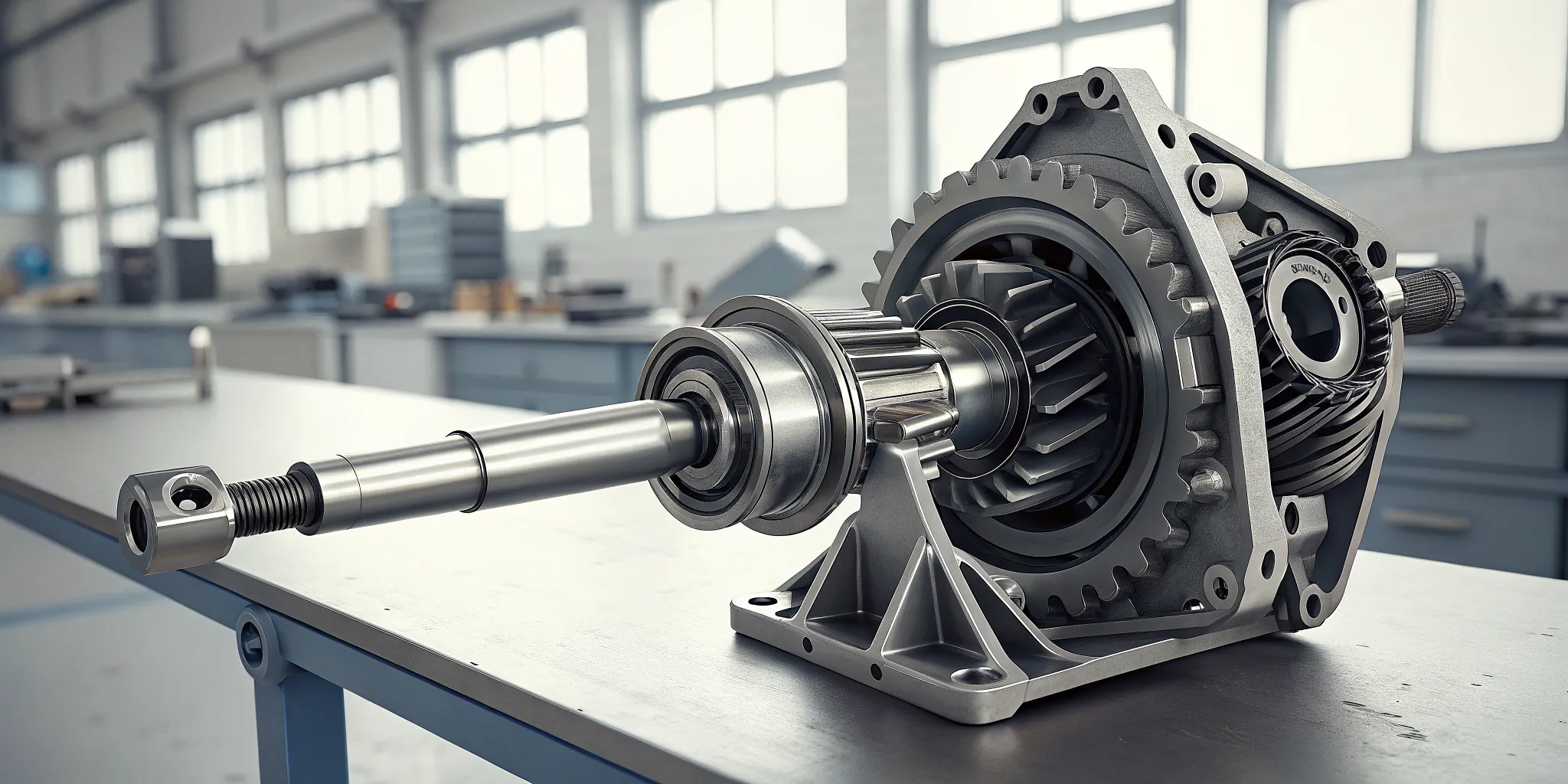
For 2004-2007 GD applications, a GD STI 6MT is the usual starting point, with the 2007 unit widely favored by swap builders. GR owners typically look for a 2008-2014 STI transmission, while VA and VB builds require later STI 6MT components and careful chassis-specific verification. Confirm the transmission code, bellhousing, starter position, gear ratio, sensors, and output flange before treating any donor unit as compatible. Year-specific variation is well documented in swap-kit guides, including separate kits for 2002-2003 and 2004-2005 WRX applications (Flatirons Tuning's year-specific swap reference).
The rear differential is the largest planning decision after the transmission. An STI R180 can be paired with STI axles and hubs for a more complete STI-style conversion. But retaining the WRX R160 and WRX hubs can reduce parts cost when the ratios and spline interfaces are correctly matched. Do not mix components by appearance. Verify the final-drive ratio, axle splines, differential stubs, and driveshaft flange together. A mismatch can create AWD bind or leave the car mechanically incompatible.
| Component | GD, 2002-2007 | GR, 2008-2014 | VA/VB, 2015+ |
|---|---|---|---|
| Transmission | GD STI 6MT; confirm year and code | GR STI 6MT; use GR-specific fitment | Later STI 6MT; verify chassis and sensors |
| Rear differential | R180 conversion or matched R160 retention | R180 is common; R160 requires ratio and spline checks | Match differential, axles, hubs, and final drive as a system |
| Axles and driveshaft | STI axles for R180, or compatible WRX parts with R160 | GR-specific axle and driveshaft measurements | VA/VB-specific interfaces and clearance checks |
| Clutch and flywheel | Match push-type or pull-type transmission design | Match the donor transmission's clutch type | Verify later clutch, flywheel, and release hardware |
| Linkage and crossmember | STI shifter assembly, linkage adapter, and compatible crossmember | GR linkage, shifter, mount, and crossmember | Chassis-specific linkage, mount, and crossmember |
| DCCD control | Standalone MAP controller recommended; integrate wiring and sensors correctly | ||
Clutch, linkage, and control hardware
Include the complete STI shift linkage and shifter assembly, not just the transmission-side selector. Earlier chassis often need an adapter or different linkage geometry. The clutch and flywheel must match the transmission's release design. Push-type and pull-type systems are not interchangeable without the correct fork, bearing, pressure plate, and related hardware.
Finish the list with the transmission crossmember, mount, driveshaft, axles, rear differential hardware, fluids, and a DCCD controller. A standalone MAP controller is generally the cleanest way to manage DCCD in a WRX swap, provided the wiring and sensor inputs are configured for the selected transmission. The parts list should be finalized as one matched system, because changing the differential choice can change the axle and driveshaft requirements.
How Much Does an STI 6-Speed Swap Cost?
Plan on spending about $5,000 to $6,000 or more for a complete STI 6-speed swap with the supporting hardware. The transmission is only one part of the budget, so a low purchase price does not always mean a low installed cost.
Transmission and swap kit pricing
A used STI transmission by itself commonly lands in the $3,000 to $4,000 range for a bare unit. That price may be attractive, but it leaves you responsible for the clutch, flywheel, driveshaft, axles, crossmember, shift linkage, differential decisions, and any DCCD control hardware. A full swap kit typically costs $5,000 to $6,000 or more because it groups those compatibility parts together.
Inspect the transmission history and confirm the year before buying. The clutch and release setup must match the transmission, including the push-type or pull-type arrangement used by the specific unit. Replacing a mismatched clutch after the transmission is installed can erase any savings from the original deal.
Where a budget build can save money
A cost-conscious build can retain the factory R160 rear differential and WRX hubs when the gearing and application allow it. That approach can reduce the need for an R180 differential, matching axles, and additional supporting parts. Used axles, a serviceable marketplace driveshaft, and careful shopping for a complete donor package can also lower the parts bill, but verify fitment before paying for used components.
Clutch and flywheel costs vary by power level and intended use. Do not choose the cheapest combination simply to protect the initial budget. A clutch that cannot hold the engine's torque, or a flywheel that does not match the transmission and release system, creates a second round of labor.
Controller and installation costs
If you want adjustable DCCD functionality, budget approximately $300 to $500 for a standalone controller. Installation labor at a performance shop commonly adds another $1,500 to $2,500. Depending on the chassis, parts condition, wiring, and how much preparation is required before the car arrives.
That total is expensive, but it can still make financial sense beside rebuilding a failed WRX 5-speed and then limiting the car around the same weak point. For broader drivetrain planning, see Crawford Performance's STI power-building guide before choosing the transmission, clutch, and differential combination.
Which WRX Models Can Accept the STI 6-Speed?
The STI 6-speed swap is possible across several Subaru platforms, but it is not a universal bolt-in conversion. Chassis year, transmission clutch style, rear differential, axle configuration, and driveshaft length all determine the parts list. The GD and GR generations are the most established candidates, while newer VB cars typically require more custom planning.
GD Chassis (2002-2007 WRX)
GD WRXs can accept an STI 6-speed with the correct transmission, clutch, crossmember, shift linkage, driveshaft, and rear differential strategy. These cars use a push-type clutch arrangement, so the clutch and release components must match the transmission being installed. Mixing a transmission and clutch package from the wrong generation can create fitment and engagement problems.
The 2006-2007 GD models also deserve extra attention because their front axle requirements differ from earlier GD applications. Confirm the transmission year, front axles, hubs, and rear differential before ordering parts. Retaining the WRX R160 differential and hubs can reduce conversion cost, but moving to an R180 changes the axle and driveshaft requirements.
GR Chassis (2008-2014 WRX)
GR WRXs are compatible with STI 6-speed conversions, but narrow-body and wide-body cars should not be treated as identical. Track width, hubs, axles, and rear differential fitment can vary with the chassis and donor parts. A complete donor package is often easier to plan than collecting a transmission, axles, and differential from unrelated model years.
Verify whether the selected transmission uses a push-type or pull-type clutch before buying the clutch kit. The transmission year also affects the required crossmember, linkage, driveshaft, and DCCD control strategy.
VA and VB Chassis (2015+ WRX)
VA WRXs have a well-established path to an STI 6-speed, provided the conversion is matched to the car's hubs, differential, and wiring. A standalone DCCD controller is commonly used when factory integration is not practical, allowing the center differential settings to be managed independently.
VB WRXs from 2022 onward can require substantially more custom work. Plan for chassis-specific mounting, driveline, electronics, and clearance questions rather than assuming VA parts will transfer directly. Forester XT and Legacy GT platforms can also be compatible, but their suspension, hubs, differential, and driveshaft combinations must be checked individually. For a useful baseline on earlier WRX fitment, review Crawford's WRX Subaru 2002 buyer's guide before selecting a donor transmission.
STI 6-Speed Swap Installation Overview: What to Expect
An STI 6-speed swap is a complete drivetrain integration job, not simply a transmission replacement. The exact parts depend on the WRX chassis, STI transmission year, differential choice, clutch design, and wiring strategy. A careful installation prevents mismatched ratios, clearance problems, and clutch or DCCD issues later.
-
Gather the parts and verify compatibility
Start with the transmission code and model year, then cross-reference the bellhousing, starter mounting points, gear ratio, rear differential ratio, axle splines, shift linkage, crossmember, driveshaft, and hubs. Decide whether the car will use an R180 rear differential or retain the R160 where the combination allows it. Confirm whether the transmission uses a push-type or pull-type clutch before ordering the flywheel and pressure plate. Year-specific fitment matters because GD and GR applications do not share every swap component. A mismatch here is far more expensive to correct after the car is on the lift. The WRX clutch upgrade guide is useful when selecting a clutch for the engine's power level and intended use.
-
Remove the WRX 5-speed and related components
Drain the fluids, disconnect the battery, remove the exhaust and underbody obstructions, and support the engine and transmission before separating the WRX 5-speed. Remove the original clutch, flywheel, shifter hardware, crossmember, driveshaft, and axles as required by the selected parts package. Label electrical connectors and retain hardware that will be reused. Follow the applicable factory service procedure for removal and torque requirements.
-
Prepare and inspect the STI transmission
Clean the case and inspect the input shaft, output shaft, mounts, seals, sensor connectors, and shifter mechanism before installation. Replace accessible seals, inspect the fluid for metal, and address worn bushings or linkage components while the transmission is out of the car. This is the right time to verify the final drive and confirm that the transmission and rear differential will operate as a matched AWD system.
-
Install the transmission, clutch, and flywheel
Install the correct flywheel and clutch assembly, set the release hardware for the transmission's push or pull configuration. And mate the STI transmission to the engine without forcing the input shaft. Use the correct crossmember and mount for the chassis. Starter clearance is a common pitfall, especially when combining parts from different years, so check engagement and physical clearance before final tightening. Verify that the bellhousing seats evenly and torque fasteners to the service specification.
-
Install the rear differential and driveline components
If the build uses an R180, install the matching rear hardware, axles, and related mounts. If the R160 is retained, confirm that the chosen transmission ratio and axle arrangement support that configuration. Install the driveshaft, axles, shift linkage, and exhaust, checking tunnel, crossmember, and propeller-shaft clearance through the suspension's range of movement.
-
Wire and configure the DCCD controller
Connect the DCCD controller and verify power, ground, sensor inputs, and chassis-side wiring before securing the harness. A standalone controller is often simpler than attempting to replicate factory integration, but the wiring still needs strain relief and protection from heat and moving parts. Confirm that the controller responds correctly before the undertrays and interior trim are reinstalled.
-
Bleed, inspect, and test the car
Bleed the clutch hydraulic system, fill the transmission and differential with the specified fluids, and inspect for leaks. With the car safely raised, verify clutch engagement, gear selection, axle rotation, and DCCD operation. Complete a cautious road test, listening for vibration or driveline noise, then recheck fluid levels and fastener security.
For a professional installation, plan on approximately $1,500 to $2,500 in shop labor, depending on the chassis, parts condition, wiring requirements, and any repairs discovered during inspection. A documented parts plan and transmission-year match are the best ways to keep the project within that range.
Frequently Asked Questions
What clutch should I use with an STI 6-speed?
Match the clutch and flywheel to the specific transmission year and clutch actuation style. Earlier and later STI gearboxes can use different push-type or pull-type arrangements, so confirm the transmission code, input shaft, and release hardware before ordering. A complete matched clutch kit is safer than mixing individual components.
Do I need to replace the rear differential?
Not always. Some swap configurations retain the WRX R160 differential and hubs, while others use an STI R180. The correct choice depends on the transmission's final-drive ratio, axle spline configuration, and the parts available for your chassis. The front and rear ratios must match for the AWD system to operate correctly.
Is a DCCD controller required?
If the transmission includes DCCD, a controller is the practical way to manage its center differential in a WRX that does not have the factory STI integration. A standalone controller gives you control over the available torque-bias settings, but wiring and sensor compatibility still need to be verified for the specific gearbox and chassis.
How much does a used STI 6-speed transmission cost?
A used transmission alone commonly falls in the $3,000 to $4,000 range, while a complete swap kit can reach $5,000 to $6,000 or more. Those figures do not necessarily include labor, clutch parts, differential changes, driveshaft work, or DCCD control. Source: ClubWRX swap checklist.
Can I use an STI 6-speed in a Forester XT or Legacy GT?
Potentially, but do not assume a direct fit. Forester XT and Legacy GT swaps require year-specific checks of the bellhousing, transmission code, final-drive ratio, axles, driveshaft, crossmember, shifter linkage, and clutch. Verify every interface against the donor gearbox and target chassis before buying parts.
Ready to Plan Your STI 6-Speed Swap?
The right transmission, clutch, differential, and supporting hardware make the swap easier to plan and help keep the finished build aligned with your goals. Review Crawford Performance's drivetrain components and transmission parts before you finalize your parts list. Browse drivetrain components for your STI 6-speed swap build, or call Crawford Performance at (859) 394-4248 if you need help identifying the parts your application requires.