

How to Choose the Best Performance Radiator
It's easy to get caught up chasing more horsepower and torque. But what good is that power if it vanishes after a few minutes of fun? That frustrating power loss you feel during spirited driving is heat soak—a clear signal your stock cooling system can't keep up. Sustained performance isn't just about big numbers; it's about consistency. A performance radiator is the foundation for that reliability. It provides the superior cooling needed to keep your engine in its sweet spot, ensuring you get the power you paid for, every single time.
Key Takeaways
- Protect your engine and maintain consistent power: An upgraded radiator is essential for managing the extra heat from modifications or demanding driving. It prevents overheating, protects critical components, and ensures your engine delivers reliable performance without power loss from heat soak.
- Prioritize quality materials and construction: A radiator's performance depends on its build. Choose units with all-aluminum construction and strong TIG welds to ensure durability and efficient cooling, avoiding the common failure points of factory radiators with plastic components.
- Match the radiator to your specific needs: Select a direct-fit model for your Subaru to guarantee a secure and straightforward installation. Just as important, align the radiator's cooling capacity with your engine's power output and how you drive to get the protection you actually need.
What Makes a Radiator a Performance Radiator?
A performance radiator is a cooling system upgrade designed to pull heat away from your engine more efficiently than the standard, factory-installed version. Think of it as a high-capacity cooling solution built for Subarus that are pushed harder than the average daily driver. Whether you're adding power with engine tuning services or tackling demanding trails, a performance radiator ensures your engine stays at its optimal operating temperature. This prevents overheating, protects against potential damage, and helps you get consistent power when you need it most.
Stock vs. Performance: What's the Real Difference?
Your Subaru's stock radiator is designed for typical driving conditions, but it can struggle to keep up once you start adding modifications or heading to the track. Performance radiators are engineered for superior cooling with key design improvements. They often have larger cores with more surface area, allowing them to hold more coolant and dissipate heat faster. They also feature a higher fin density and improved airflow designs, which work together to transfer heat away from the coolant more effectively. This means even when your engine is working hard, the radiator can manage the extra heat and maintain stable temperatures.
How Better Materials Lead to Better Cooling
Most factory radiators use a combination of plastic and aluminum, which is cost-effective but not ideal for high-performance use. Upgraded radiators are typically built entirely from aluminum, a material known for its excellent thermal conductivity and light weight. This all-aluminum construction not only improves heat transfer but also adds significant durability. The tanks are welded, not crimped like on stock units, which prevents leaks under high pressure and heat. This robust build provides the increased cooling capacity needed for modified engines or demanding driving, giving you peace of mind on the road or trail.
Cooling Tech That Makes a Difference
Modern performance radiators use advanced technology to maximize their cooling power. Many feature multi-pass designs, which force the coolant to flow across the radiator core multiple times before exiting. This increases the time the coolant spends in the radiator, allowing for more heat to be removed. Combined with high-efficiency cores that have specially designed tubes and fins, these radiators are incredibly effective at their job. By maintaining optimal engine temperatures, these performance parts help prevent overheating, which is critical for protecting your engine and ensuring it runs at peak efficiency.
Quantifying Cooling Gains: Up to 40% More Efficiency
It's one thing to talk about better cooling, but what do the numbers actually say? The gains can be substantial. Some high-end designs, for instance, feature specialized tubes that can provide up to 40% more cooling than other performance options. This isn't just a marginal improvement; it's a significant leap in thermal management that directly impacts your engine's health and output. This efficiency comes from smart engineering—larger cores that hold more coolant, fins designed for maximum air contact, and multi-pass systems that keep coolant in the radiator longer to shed more heat. For your Subaru, this translates directly into reliability, ensuring your engine stays protected from thermal stress and delivers consistent power, lap after lap or mile after mile on the trail.
When Should You Upgrade Your Subaru's Radiator?
Your Subaru's stock radiator is perfectly capable of handling daily driving with a factory setup. But once you start adding performance parts and demanding more from your engine, you’re generating significantly more heat. That factory radiator can quickly become the weak link in your cooling system, struggling to keep temperatures in check. Upgrading to a performance radiator isn't just about adding a shiny new part; it's a foundational step to protect your engine, maintain consistent power, and give you the confidence to push your car harder, whether you're on the track or a remote trail.
Got Mods? You Need Better Cooling
Every performance upgrade, from a new turbo to an aggressive tune, increases your engine's power output. With more power comes more heat, and your stock radiator was only designed to handle the heat from a stock engine. When you push past those factory limits, the original radiator can't dissipate heat fast enough, leading to rising coolant temperatures. A performance radiator is built with a larger capacity and more efficient design to manage this extra thermal load. It effectively pulls heat away from the engine, preventing overheating that can cause serious damage and a major hit to your wallet.
Prevent Overheating During Hard Driving
Spirited driving on backroads, intense track sessions, or navigating challenging terrain for overlanding solutions puts your engine under immense stress. These conditions generate a constant, high level of heat that can overwhelm a stock cooling system. The result is often heat soak, where components become so hot that performance drops off noticeably. A high-performance radiator provides the superior cooling capacity needed to keep engine temperatures stable even under the most demanding circumstances. This ensures your Subaru delivers reliable and consistent power when you need it most, without you having to worry about watching the temperature gauge climb into the red.
Safeguard Your Engine for the Long Haul
Consistently running your engine at high temperatures is a recipe for premature wear and tear. Overheating can damage head gaskets, warp cylinder heads, and degrade engine oil, leading to catastrophic failure. A performance radiator is one of the best investments you can make for your engine's longevity. By maintaining optimal operating temperatures, it protects critical components from heat-related stress. This also allows your engine tuning services to deliver their full potential, as the ECU won't need to pull timing to compensate for excessive heat. The result is a healthier, more reliable engine that consistently performs at its peak.
How to Spot a High-Quality Performance Radiator
When you start shopping for a performance radiator, you'll quickly notice they aren't all built the same. The differences go far beyond brand names and price tags. A truly effective performance radiator is defined by its materials, construction, and internal design. These elements work together to manage heat far more efficiently than a stock unit, giving you the reliability you need when pushing your Subaru hard.
Understanding what to look for is key to making a smart investment. The best radiators are built from high-grade aluminum and feature strong, precise welds that prevent leaks under pressure. Inside, the design of the core, including the number of rows, the size of the tubes, and the density of the cooling fins, determines how quickly and effectively it can pull heat from your engine's coolant. A well-engineered radiator considers all these factors to deliver stable temperatures whether you're on the track, trail, or street. Choosing a unit with these quality markers ensures your engine stays protected and performs its best.
Why Full Aluminum and TIG Welds Are Non-Negotiable
The first thing you'll notice about a quality performance radiator is its all-aluminum construction. Unlike stock radiators that often use plastic end tanks crimped onto an aluminum core, a performance unit is built entirely from aluminum. This material is prized for being both lightweight and an excellent conductor of heat. More importantly, an all-aluminum build eliminates the weak points found in factory radiators, which are prone to cracking and leaking over time.
To join these aluminum components, top manufacturers use TIG (Tungsten Inert Gas) welding. This precise welding method creates clean, strong, and durable seams that can withstand the high pressures and vibrations common in performance driving. This robust construction gives you peace of mind that your radiator won't fail when you need it most.
The Strength of a 100% Brazed Aluminum Core
Beyond the external welds, the internal construction of the core is what really defines a top-tier radiator. The best units feature a 100% brazed aluminum core, where all internal components—the tubes, fins, and headers—are fused together in a high-temperature furnace. This process creates a single, solid piece, eliminating the weak points of mechanically bonded cores that can separate and leak over time. For a modified engine that produces more pressure and vibration, this robust, unified construction is essential for reliability under stress.
This unified design also provides a major advantage in cooling performance. The brazing process creates a seamless, gap-free bond between the coolant tubes and the cooling fins. This perfect connection allows heat to transfer from the coolant to the air with incredible efficiency, which is exactly what you need to keep temperatures stable during a track day or a tough climb. It’s this meticulous construction that ensures your investment in performance parts delivers the reliable, consistent power you expect from your Subaru.
How Core Design Affects Cooling Performance
The core is the heart of your radiator, and its design is critical for cooling performance. Performance radiators often feature a multi-row core, such as a 2-row or 3-row design. Each additional row increases the coolant capacity and the surface area available for heat exchange, allowing the radiator to dissipate heat more effectively. This is a significant upgrade over the typical single-row core found in most stock radiators.
The right core design depends on your specific needs. A daily driven Subaru WRX with light modifications might only need a 2-row core, while a heavily modified STI built for the track will benefit from the superior cooling of a 3-row design. Choosing a radiator with a core engineered for your application ensures you get the cooling power you need without adding unnecessary weight or complexity.
Why Fin and Tube Specs Matter
Looking closer at the radiator core, you'll see it's made of tubes that carry coolant and fins that transfer heat to the air. The specifications of these components directly influence cooling efficiency. Fin density, or the number of fins per inch, determines how much surface area is available to pull heat away from the coolant. A higher fin density generally means better heat dissipation.
Tube size also plays a major role. Wider tubes allow for greater coolant flow, moving more liquid through the radiator core at a faster rate. This increased flow, combined with a high-density fin design, maximizes the radiator's ability to keep your engine cool under load. This is especially important after receiving engine tuning services, which can increase heat output.
Your Checklist for Picking the Perfect Radiator
Selecting the right performance radiator is about more than just picking the biggest one. It’s about finding a component that integrates seamlessly with your Subaru and supports your performance goals. A radiator perfect for a track-built STI might be overkill for a daily-driven Forester. To make the best choice, you need to balance three key factors: vehicle fitment, cooling capacity relative to your modifications, and the physical size and mounting of the unit. Getting this right ensures your engine stays cool and reliable, from canyon runs to demanding track sessions.
Get the Fitment Right the First Time
Your first priority should be choosing a radiator designed as a direct fit for your vehicle. A direct-fit performance radiator is engineered to drop right into your Subaru’s engine bay, using factory mounting points and aligning with existing hoses. This eliminates the need for custom brackets or modifications that can compromise stability. Whether you drive a WRX or a Crosstrek, a direct-fit model guarantees a clean installation. This precision fit ensures the radiator is held securely, preventing vibrations that could lead to leaks or damage over time.
Direct-Fit vs. Universal Fit Radiators
When you're looking at performance radiators, you'll see two main types: direct-fit and universal. For nearly every Subaru owner, a direct-fit model is the way to go. It’s engineered to match your car’s factory specifications, meaning it bolts right into the existing mounting points and connects to your hoses without any fuss. This guarantees a secure, stable installation that won't vibrate loose or require you to drill new holes in your chassis. A universal radiator, on the other hand, is designed to be a one-size-fits-many solution. While it might work for a custom project, it almost always requires modifications like creating custom brackets or altering hoses, which adds complexity and potential points of failure.
Custom Radiators for Unique Subaru Builds
While a direct-fit radiator is ideal for most builds, some projects push beyond what off-the-shelf performance parts can support. If you're working on a full-on race car, have a unique engine swap, or have custom intercooler piping that interferes with the stock radiator location, a custom radiator might be necessary. Companies like Griffin can build a radiator to your exact specifications, allowing you to define the dimensions, core thickness, and inlet/outlet placement. This is an advanced solution for highly modified vehicles where every component is tailored to a specific purpose. For most modified Subarus, including heavily tuned track cars, a high-quality direct-fit unit provides all the cooling performance you'll ever need.
How Much Cooling Do You Really Need?
Your radiator's cooling capacity should align with your engine's heat output. While a stock engine may not need an upgrade, a performance radiator becomes essential as you add modifications. Upgrades like a larger turbo, an aggressive tune, or other performance parts significantly increase engine heat. An undersized radiator will struggle to keep temperatures in check, leading to heat soak and potential damage. Consider your current and future plans. If you’re building a high-horsepower machine, you need a radiator that can efficiently dissipate that extra thermal load.
Check Core Size and Mounting Points
Beyond a direct fit, pay attention to the radiator's physical dimensions, especially its core thickness. A thicker core offers better cooling but must fit within the available space without interfering with other components. It’s critical that the radiator uses the correct mounting points. Forcing a unit with incompatible mounts can lead to improvised solutions that fail to support the radiator’s weight or absorb engine vibrations. A well-designed radiator provides a secure installation that ensures durability, whether you’re on rough trails in an overlanding build or pulling high Gs on the track.
3 Performance Radiator Myths, Busted
When you start exploring cooling system upgrades, you’ll likely run into a few common misconceptions. It’s easy to get sidetracked by bad advice, so let’s clear up some of the biggest myths surrounding performance radiators. Understanding the truth will help you make a confident and informed decision for your Subaru, whether you’re hitting the track or just looking for extra reliability on your daily commute. The right information ensures you invest in a part that truly protects your engine and delivers the results you expect.
Myth #1: "It's Only for Race Cars"
One of the most persistent myths is that a performance radiator is only necessary for race cars or Subarus with extensive engine builds. While it’s true that highly modified engines generate more heat, even a stock or lightly tuned vehicle can benefit from improved cooling. Spirited driving, towing, overlanding, or simply living in a hot climate can push your factory radiator to its limits. An upgraded radiator provides a larger safety margin, keeping temperatures stable and protecting your engine from overheating. It’s a proactive upgrade that adds reliability to any performance parts you have installed, not just the final piece of a full-blown build.
Myth #2: "The Install Is Too Complicated and Expensive"
The thought of a complicated installation can be intimidating, but it doesn't have to be. Many people assume upgrading a radiator involves custom fabrication and hours of labor. The reality is that high-quality performance radiators are often designed as direct-fit, bolt-in replacements for your factory unit. This means they use the same mounting points and connections, making the process straightforward for a skilled DIYer or any professional mechanic. Choosing a radiator specifically designed for your Subaru WRX or Forester ensures a clean installation without the need for improvised brackets or modifications, saving you time and money.
Myth #3: "A Radiator Is Just a Radiator"
It’s easy to assume that any aluminum radiator will offer the same benefits, but that couldn’t be further from the truth. The market is filled with options that vary dramatically in quality. The difference lies in the details: the grade of aluminum used, the precision of the TIG welds, and the engineering behind the core and fin design. Some companies simply assemble generic components, while reputable brands invest in research and development to maximize heat dissipation and durability. A well-constructed radiator provides superior cooling efficiency and is built to withstand the pressures of performance driving, unlike a cheaper alternative that might fail when you need it most.
How to Choose a Reputable Radiator Brand
Once you start comparing performance radiators, you’ll notice that many look similar. But the brand behind the product makes all the difference. A reputable company doesn’t just sell parts; it delivers on a promise of quality, reliability, and support. When you’re investing in a critical component that protects your engine, you want to choose a brand with a history of excellence. The right brand provides peace of mind, knowing your radiator was designed, built, and tested to handle whatever you throw at it, from daily driving to demanding track days. Look for a company that is transparent about its processes and stands firmly behind its products.
Look for Proven, Track-Tested Designs
A performance radiator is more than just a piece of metal; it’s an engineered solution. The best brands invest heavily in research and development, using advanced fluid dynamics and heat-transfer principles to design their products. But theory only goes so far. The ultimate proof of a radiator’s capability comes from real-world testing.
Look for brands that have a strong presence in motorsports or have track-tested their products under extreme conditions. This demonstrates that their engineering holds up when it matters most. A radiator that can keep an engine cool during a race will have no problem managing heat during spirited driving or a long overland trip. By keeping the engine cool, a performance radiator helps prevent overheating, which can lead to serious engine damage and reduced performance.
Don't Overlook the Warranty and Support
A strong warranty is a clear sign that a manufacturer has confidence in its products. It protects your investment and shows the company is committed to quality. Before you buy, review the warranty terms to understand what is covered and for how long. A limited lifetime warranty often indicates a high level of trust in the materials and craftsmanship.
Equally important is accessible customer support. If you have questions about installation or run into an issue, you want a team of experts ready to help. A great brand provides clear instructions, fitment guarantees, and knowledgeable staff. This is especially critical for ensuring the radiator fits seamlessly into your Subaru’s cooling system for optimal performance. Excellent engine tuning services and support are hallmarks of a company that cares about its customers' results.
The Peace of Mind of a Lifetime Warranty
A warranty is more than just a policy; it’s a direct reflection of a manufacturer's confidence in their product. When a company offers a limited lifetime warranty, they are making a clear statement about the quality of their materials and the precision of their craftsmanship. This is your assurance that the investment you're making in your Subaru's health is a sound one. It protects you from defects and shows the company is committed to quality, which is exactly what you need when you’re relying on performance parts to keep your engine safe under pressure. This level of backing provides the peace of mind to push your vehicle, knowing the components are built to last.
Insist on High-Quality Manufacturing
The quality of a performance radiator comes down to its materials and construction. While most are made of aluminum, the grade of the aluminum and the manufacturing process vary significantly. Top-tier brands use high-quality, braised aluminum cores and TIG-welded end tanks for maximum strength and durability, preventing leaks under high pressure.
Be aware that many companies claim to "make" aluminum radiators when they actually just purchase components and assemble them. True performance brands control the entire manufacturing process to ensure every detail meets their standards. The benefits of a high-performance radiator built this way include better engine performance, improved reliability, and a longer lifespan. When browsing for Subaru WRX upgrades, always check for details on the manufacturing process.
Why "Made in the USA" Can Be a Mark of Quality
When you see "Made in the USA" on a performance part, it often signifies more than just its origin. It can be an indicator of a deep commitment to quality control and superior craftsmanship. Many American manufacturers build their reputation on using high-grade materials and adhering to strict production standards, which is critical for components that need to withstand the intense heat and pressure of a modified engine. This focus on quality ensures that the performance parts you install are not only effective but also durable enough for demanding applications, from track days to rugged off-road adventures.
Choosing a domestically manufactured radiator also often means better accountability and support. US-based companies are typically more accessible, offering responsive customer service and comprehensive warranties that provide real peace of mind. This level of support is invaluable when you have questions about installation or need assistance down the road. The emphasis on quality manufacturing ensures that the product is built to last, protecting your investment and, more importantly, your engine. It’s about trusting that the part was engineered and built by experts who stand behind their work.
Your Guide to a Smooth Radiator Installation
Installing a performance radiator is a straightforward process, but proper execution is critical to unlocking its full cooling potential. Whether you decide to handle it yourself or bring it to a professional, knowing what the job involves will help you ensure it’s done right. The goal is to integrate the new radiator seamlessly into your Subaru’s cooling system so it can effectively protect your engine when you’re pushing it hard on the track or trail.
Should You DIY or Hire a Pro?
Deciding between a professional or DIY installation often comes down to your comfort level and toolset. If you choose the DIY route, it’s essential to select a radiator designed for a direct fit. Many aftermarket radiators have incompatible mounting points that require you to create improvised brackets. These custom solutions may not properly support the radiator’s weight or handle engine vibration, leading to stress fractures and leaks over time.
A professional installation ensures every connection is secure and that the radiator is mounted correctly to prevent future issues. Technicians have the experience to handle any unexpected fitment challenges and can guarantee the system is properly bled. If you’re already getting other work done, like engine tuning services, having a trusted shop install your radiator at the same time can be a convenient and reliable option.
What Else Should You Upgrade at the Same Time?
A performance radiator is a key part of a larger cooling system, and installing one might require a few other adjustments. Depending on the radiator’s size and thickness, you may need to upgrade to silicone hoses for better durability or install slim fans for proper clearance. This upgrade is most effective when it complements other modifications. A high-capacity radiator allows your tuned engine to perform at its best by keeping temperatures stable under high-stress conditions.
Think of the radiator as a foundational cooling component. It enables other performance parts to operate safely and efficiently. While a performance radiator can benefit a stock engine in extreme climates or towing situations, its true value shines when supporting an engine built for more power.
Considering a Radiator and Fan Combo Unit
Your radiator is only as effective as the airflow moving through it. While a performance radiator is designed to dissipate heat efficiently, it relies on a fan to pull air through the core, especially at low speeds or when idling. A radiator and fan combo unit ensures these two critical components are engineered to work in harmony. This takes the guesswork out of matching a fan to your new radiator, guaranteeing the fan has the right clearance, shroud design, and airflow capacity (CFM) to maximize the radiator's cooling potential. For Subarus with significant performance parts that generate substantial heat, a matched set provides the most reliable and efficient cooling solution, keeping temperatures stable whether you're stuck in traffic or waiting on the starting grid.
How to Prep Your System and Choose the Right Coolant
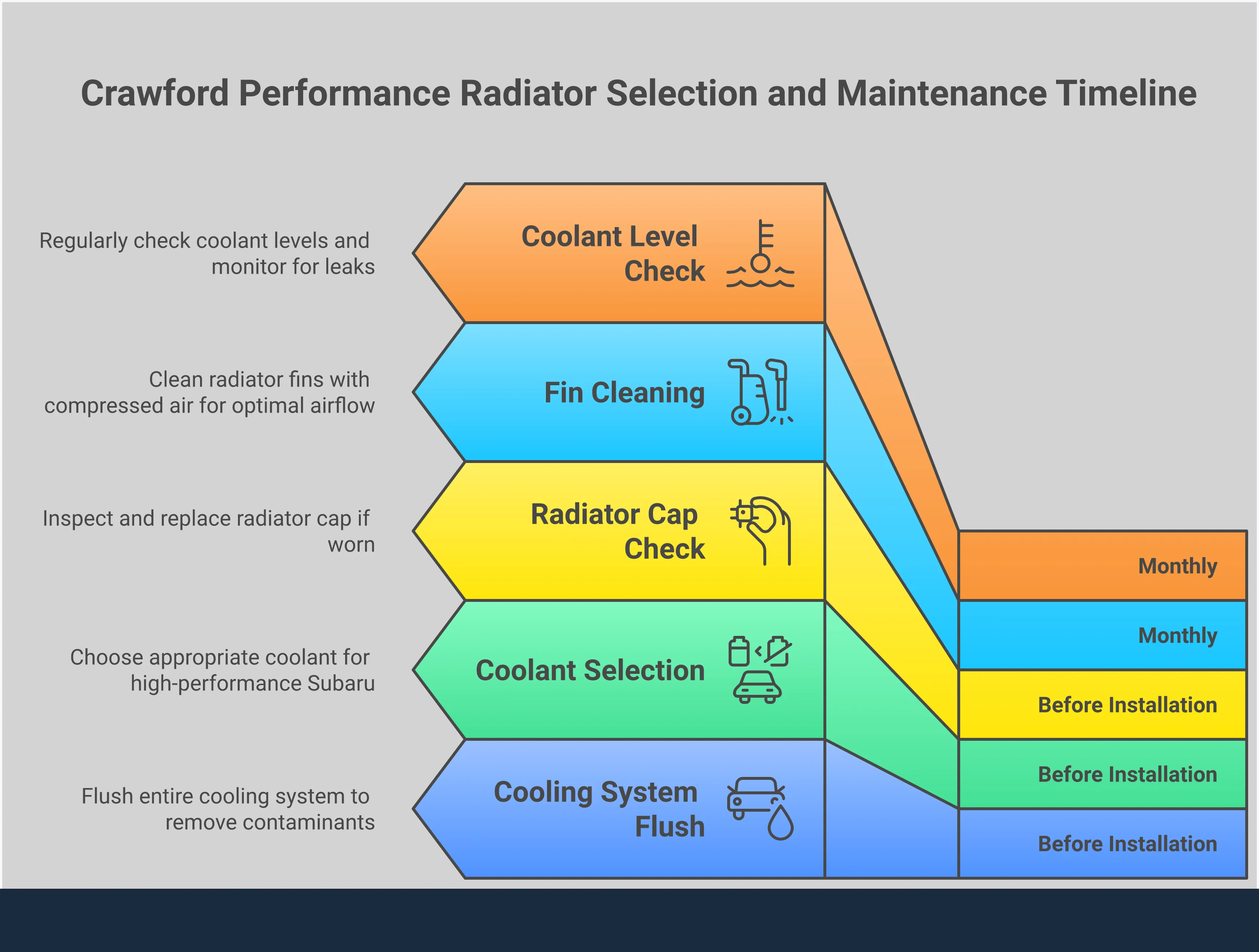
Before the new radiator goes in, preparing your cooling system is a crucial first step. You’ll need to completely flush the old coolant to remove any sediment, rust, or contaminants that could clog the finer channels of your new radiator. Starting with a clean system ensures optimal heat transfer and extends the life of all your cooling components.
Choosing the right coolant is just as important. Your selection should match your Subaru’s specifications and your driving needs. Some coolants are formulated for daily driving, while others offer enhanced protection for high-performance track use. Making sure you have the right parts and fluids on hand will make the installation process much smoother. For example, finding model-specific Subaru WRX upgrades ensures everything fits and functions as intended from the start.
How Much Does a Good Performance Radiator Cost?
When you start looking at performance radiators, you'll notice prices can range from a few hundred to over a thousand dollars. It’s easy to wonder if the more expensive options are really worth it, and the short answer is: it depends entirely on your goals. It’s helpful to think of a performance radiator not as a simple replacement part, but as a critical investment in your Subaru’s health and capability. The price tag almost always reflects the quality of the materials, the precision of the construction, and the advanced engineering behind its cooling efficiency.
A budget-friendly radiator might seem like a good deal upfront, but it could lack the durability and cooling capacity your modified engine truly needs under stress. On the other hand, a top-tier, race-spec radiator might be overkill for a lightly modified daily driver that rarely sees the track. The key is to find that sweet spot where the radiator’s performance aligns with your car’s power output and how you drive it. Investing in the right unit means you’re buying peace of mind, protecting your engine from the damaging effects of excess heat, and ensuring your car delivers consistent power when you need it most.
What You Get at Different Price Points
The cost of a performance radiator is directly tied to its construction and materials. Premium models are typically made entirely of aluminum, which is lightweight and excellent at dissipating heat. Look for features like a brazed aluminum core and TIG-welded end tanks. This type of construction creates strong, leak-proof seams that can handle the high pressure and vibrations of performance driving. Cheaper alternatives might use weaker epoxy or crimp-on plastic end tanks, which are common points of failure on stock radiators. A higher price tag often gets you superior engineering, better build quality, and a direct-fit design that makes installation much smoother.
Matching Your Budget to Your Driving Style
The best radiator for you depends entirely on how you use your Subaru. If you have a mostly stock Forester for daily commuting and occasional weekend trips, a basic upgrade will likely suffice. But if you’re pushing your WRX on the track, navigating tough trails in your Crosstrek, or have installed significant performance parts, your cooling needs increase dramatically. An engine making more power generates more heat, and your stock radiator simply wasn’t designed for that extra load. The real value comes from matching the radiator’s cooling capacity to your driving style, ensuring your engine stays at a safe operating temperature no matter how hard you push it.
How an Upgrade Can Save You Money Later
Spending a bit more on a quality performance radiator now can save you a fortune later. Overheating is one of the quickest ways to cause catastrophic engine damage, and the cost of an engine rebuild far exceeds the price of a good radiator. By maintaining stable coolant temperatures, a high-performance radiator protects critical engine components from premature wear and tear, extending the life of your engine. This upgrade also ensures your car delivers consistent power, as the ECU won’t need to pull timing to compensate for high temps. It’s a foundational upgrade that protects your other investments and keeps your Subaru running strong for years to come.
Factoring in Shipping and Availability
The final cost of your radiator upgrade isn't just the price tag; you also need to account for shipping costs and lead times. A delay in receiving your radiator can stall your entire project, which is especially frustrating if you have a shop appointment scheduled or a weekend set aside for the installation. Before you commit to a purchase, always check the availability of the specific radiator for your model. Popular performance parts can sometimes go on backorder, so confirming stock levels helps you set a realistic timeline for your upgrade. This simple step prevents unexpected delays and keeps your build on track.
What Real-World Results Can You Expect?
Upgrading your radiator is about more than just adding another shiny part to your engine bay. It’s a foundational modification that directly impacts your Subaru’s power, reliability, and longevity. While it won’t add horsepower like a turbo or a tune, a performance radiator allows your engine to deliver its full potential consistently and safely. By improving your cooling system's ability to remove heat, you create an environment where your engine can operate at its peak without risking damage. This upgrade is what allows all your other performance parts to work in harmony, especially when you’re pushing the car hard on the track, trail, or street.
More Consistent Temps, Less Worry
When you’re demanding maximum performance from your Subaru, whether it's on a track day or a challenging overland route, your engine generates a massive amount of heat. The stock radiator is designed for daily driving, and it can quickly become overwhelmed, leading to overheating. A performance radiator provides the enhanced cooling capacity needed to dissipate that extra heat effectively. This prevents your engine from getting too hot, which can cause the ECU to cut power to protect itself. With stable temperatures, you can count on your engine to perform reliably lap after lap, without the frustrating power loss that comes from heat soak.
Prevent Heat Soak and Power Loss
An engine that runs at its optimal temperature is an engine that runs efficiently. By maintaining consistent coolant temperatures, a performance radiator helps your engine deliver predictable and repeatable power. When your engine isn't struggling with excess heat, it can maintain more aggressive ignition timing and achieve a more complete fuel burn. This translates directly into reliable horsepower and torque every time you put your foot down. This is especially critical for tuned vehicles, where engine tuning services have already optimized the engine for higher output. A performance radiator ensures you get the power you paid for, from the start of your drive to the end.
A Healthier Engine for Years to Come
Heat is the enemy of engine longevity. Consistently high operating temperatures can accelerate the breakdown of engine oil, warp cylinder heads, and cause gaskets to fail prematurely. A performance radiator is one of the best investments you can make to protect your Subaru’s boxer engine. By efficiently managing heat, you reduce the thermal stress on critical components, which significantly extends their lifespan. Think of it as an insurance policy for your engine. This proactive upgrade helps prevent catastrophic failures and reduces the likelihood of expensive repairs, ensuring your Subaru WRX or STI stays healthy for years to come.
Keeping Your Performance Radiator in Top Shape
Installing a performance radiator is a smart move for protecting your engine, but it’s not a set-it-and-forget-it upgrade. To get the most out of your investment, you need to give it a little attention. The good news is that maintenance is straightforward and goes a long way in ensuring your Subaru runs cool and strong, whether you’re on the track or exploring a new trail. A few simple habits will keep your cooling system in top shape and prevent minor issues from turning into major headaches.
Your Regular Maintenance Checklist
Think of regular inspections as your first line of defense. It’s a good habit to check your radiator every time you change your oil or before a big trip. Take a few minutes to look over the radiator and its hoses for any signs of trouble. You’re searching for visible corrosion, bent fins that could block airflow, or any leaks. Also, clear away any leaves, bugs, or road debris caught in the fins. Catching these small problems early is the key to preventing overheating and ensuring your cooling system performs as it should when you push your engine hard.
The Importance of Regular Coolant Flushes
Your coolant is the lifeblood of your cooling system, so keeping it in good condition is essential. Regularly check that the coolant is at the proper level in the reservoir and that it looks clean. If it’s cloudy or has particles floating in it, it’s time for a flush. Don’t forget to inspect the radiator cap, too. A faulty cap can’t hold pressure correctly, which lowers the boiling point of your coolant and can lead to overheating. Keeping the exterior fins clean is just as important, as it ensures air can flow freely to dissipate heat. This simple care routine is vital for all performance parts that rely on a healthy engine.
How to Spot Trouble Before It Starts
Knowing what to look and listen for can save you from serious engine damage. Keep an eye out for puddles of coolant under your car, which is a clear sign of a leak. You should also look for corrosion on the radiator itself or on the hose connections. Unusual sounds like hissing or bubbling when the engine is hot can point to a leak or boiling coolant. Most importantly, pay attention to your temperature gauge. If it starts creeping higher than normal or spikes unexpectedly, it’s a signal that your cooling system needs immediate attention. Addressing these signs quickly helps maintain your engine’s health and the integrity of its expert tuning.
Related Articles
Frequently Asked Questions
Will installing a performance radiator void my Subaru's warranty? This is a common concern, and the short answer is no, it shouldn't. Legally, a manufacturer has to prove that an aftermarket part directly caused a specific failure to deny a warranty claim. Simply installing a high-quality, direct-fit radiator won't automatically void your entire vehicle warranty. To be safe, choose a reputable brand and consider professional installation to ensure everything is fitted correctly. This gives you a strong foundation if any issues arise down the road.
Is a 2-row or 3-row radiator better for my Subaru? The right choice depends entirely on how you use your car. For a daily-driven WRX or Forester with light modifications, a 2-row radiator provides a significant cooling improvement over stock and is more than enough to keep temperatures stable during spirited driving. If you have a heavily modified STI that sees track time or a Crosstrek built for demanding overland routes, the superior heat dissipation of a 3-row core is a worthwhile investment to handle the extreme thermal load.
Can a performance radiator make my engine run too cold? This is a myth that comes from a misunderstanding of how your cooling system works. Your engine's thermostat is responsible for regulating the operating temperature. It stays closed until the engine is warm and then opens to allow coolant to flow to the radiator. A performance radiator simply provides a higher cooling capacity, giving your system the ability to shed heat more effectively when needed. It won't force your engine to run below its optimal temperature; the thermostat will still do its job perfectly.
Do I need to upgrade my radiator fans at the same time? For most direct-fit performance radiators, your factory fans will bolt right on and work just fine. They are designed to pull a specific amount of air through the core, and a quality radiator is engineered to work with them. The only time you might need to consider slim fans is if you choose an exceptionally thick radiator core that creates clearance issues with the engine or other components. Always check the radiator's specifications to confirm fitment with your stock fan shroud.
My car is completely stock. Is there still a benefit to upgrading my radiator? While a performance radiator is essential for modified cars, it can still be a valuable reliability upgrade for a stock Subaru. If you live in a hot climate, do a lot of mountain driving, or use your vehicle for towing, the factory radiator can be pushed to its limit. An upgraded radiator provides a much larger safety margin, ensuring your engine stays cool and protected even under stressful conditions. Think of it as proactive engine protection that adds peace of mind.